



Sungei Buloh Wetland Reserve: Birdwatching & Nature Guide (2026)
16 min read
- Sungei Buloh Wetland Reserve is free to enter, open daily from 7:00 AM to 7:00 PM, and sits in Singapore's northwest corner near Kranji.
- Over 200 bird species have been recorded here — visit between August and April for migratory shorebirds from as far as Siberia.
- Four main trails (totalling roughly 5 km) range from the 500 m Mangrove Boardwalk to the 1.95 km Migratory Bird Trail, all beginner-friendly.
- Beyond birds, look for smooth-coated otters, estuarine crocodiles, monitor lizards, mudskippers and 27 species of mangrove trees.
Sungei Buloh Wetland Reserve is a 202-hectare mangrove wetland in Singapore's northwest, recognised as the country's first ASEAN Heritage Park and an internationally important stopover on the East Asian-Australasian Flyway. With over 200 bird species, free admission, and multiple easy trails through mangroves and mudflats, it is one of the best places in Southeast Asia for birdwatching — and one of the few spots in Singapore where you can see estuarine crocodiles in the wild.
Most visitors to Singapore fill their days with Marina Bay, hawker centres and Sentosa. Fewer realise that 40 minutes north of the city centre, a reserve of tidal ponds, secondary forest and coastal mudflats hosts thousands of migratory shorebirds every year. Sungei Buloh Wetland Reserve is not a manicured park — it is a working ecosystem where herons stalk through shallow water, monitor lizards sun themselves on boardwalks, and otters fish in the mangrove channels. Originally slated for agricultural development in the 1980s, the land was saved after birdwatchers from the Malayan Nature Society documented its extraordinary species diversity and persuaded the government to protect it. Today it stands as living proof that wild habitats can survive — and thrive — inside one of the world's most densely built cities.
This guide covers everything you need to plan a visit in 2026: what birds to watch for and when, which trails suit your fitness and interests, how to get here, and what to do if you spot one of the resident crocodiles.
Why Sungei Buloh Wetland Reserve Matters
Sungei Buloh is more than a nature walk. It holds formal conservation status at both regional and international levels, which shapes how the reserve is managed and why its wildlife populations remain healthy.
Singapore's First ASEAN Heritage Park
The reserve was gazetted as a nature reserve in January 2002 and designated Singapore's first ASEAN Heritage Park in 2003. That status places it alongside sites such as Australia's Kakadu National Park and Hong Kong's Mai Po marshes in a network of protected wetlands across the region. The designation means the reserve receives formal government protection under the Parks and Trees Act, and unauthorised destruction or alteration of the habitat is prohibited by law.
What started as 87 hectares of abandoned prawn ponds in 1989 has expanded to 202 hectares of mangroves, mudflats, ponds and secondary forest. The expansion happened in phases — most recently in 2014 — and each stage added buffer habitat that strengthened the reserve's ecological viability.
A Critical Stop on the East Asian-Australasian Flyway
The East Asian-Australasian Flyway is one of the world's busiest migration corridors, stretching from breeding grounds in Siberia and northern China to wintering sites in Australia and New Zealand. Sungei Buloh's mudflats serve as a refuelling station along this route. Migratory shorebirds land here between August and April to feed on worms, crustaceans and small invertebrates buried in the tidal mud before continuing south.
In 2002, Wetlands International formally recognised Sungei Buloh as a site of international importance for migratory shorebird conservation, cementing its place in the Flyway Site Network. For visiting birdwatchers, this means Sungei Buloh is not a secondary nature spot — it is a globally significant birding destination.
What Wildlife Lives Here Beyond Birds
Birds get the headlines, but the reserve supports a much broader ecosystem. Here is what else you may encounter along the trails:
- Smooth-coated otters — often spotted in pairs or family groups fishing in the mangrove channels, active day and night
- Estuarine (saltwater) crocodiles — occasional visitors that bask on mudflats or float near the water's edge (see safety section below)
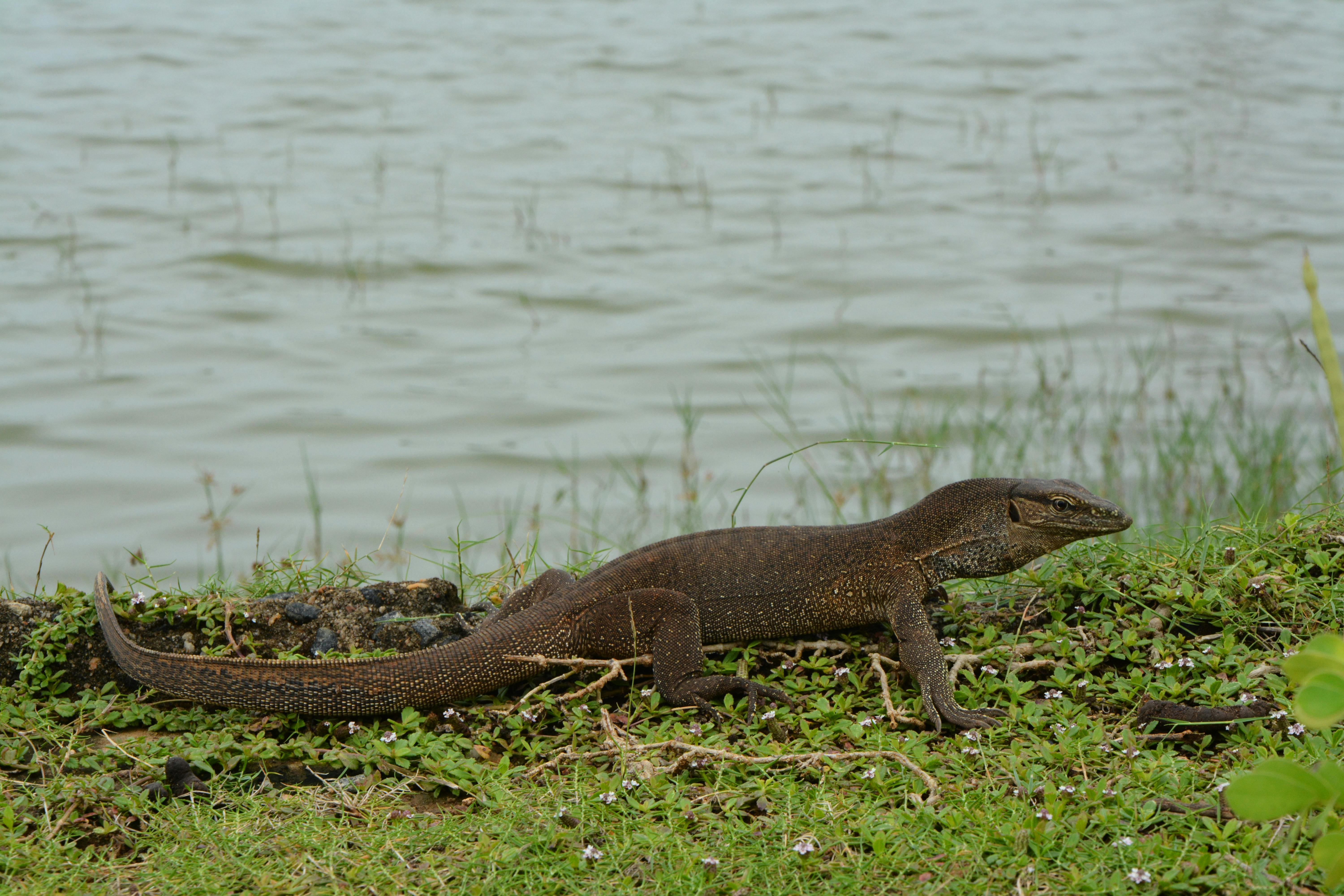
- Malayan water monitor lizards — common throughout the reserve; look for the rarer Clouded Monitor and Dumeril's Monitor as well
- Mudskippers — amphibious fish that "skip" across the mudflats on modified pectoral fins
- Orange signaller crabs and mud lobsters — visible across the tidal flats, especially at low tide
- 27 mangrove species — out of roughly 70 species found worldwide and 31 in Singapore, including Api-api Putih, Bakau Minyak and Sea Holly
Birdwatching at Sungei Buloh — Species, Seasons & Where to Look
Birdwatching at Sungei Buloh Wetland Reserve rewards patience and timing. The species you see depend heavily on the season and the time of day. Early mornings — between 7:00 AM and 9:00 AM — offer the best activity, cooler temperatures and fewer visitors.
Resident Birds You Can Spot Year-Round
The reserve supports a stable population of resident species that do not migrate. These birds breed and feed within the wetland year-round, so you can expect to see them regardless of when you visit:
- Herons and egrets — Little Egret, Grey Heron, Purple Heron and Striated Heron are common along the ponds and channels
- Kingfishers — White-throated Kingfisher and Collared Kingfisher perch on low branches near the water; the Stork-billed Kingfisher is a rarer find
- Sunbirds and tailorbirds — small, colourful species active in flowering bushes near the Visitor Centre
- Bitterns — Yellow Bittern and Cinnamon Bittern hide in the reeds, easier to spot at dawn
- Bulbuls and doves — frequently seen along all trails, especially in the secondary forest areas
Rarer resident sightings include the Lesser Adjutant (a large stork), the Milky Stork (an endangered species), and the Lesser Whistling-Duck.
Migratory Shorebirds (August–April)
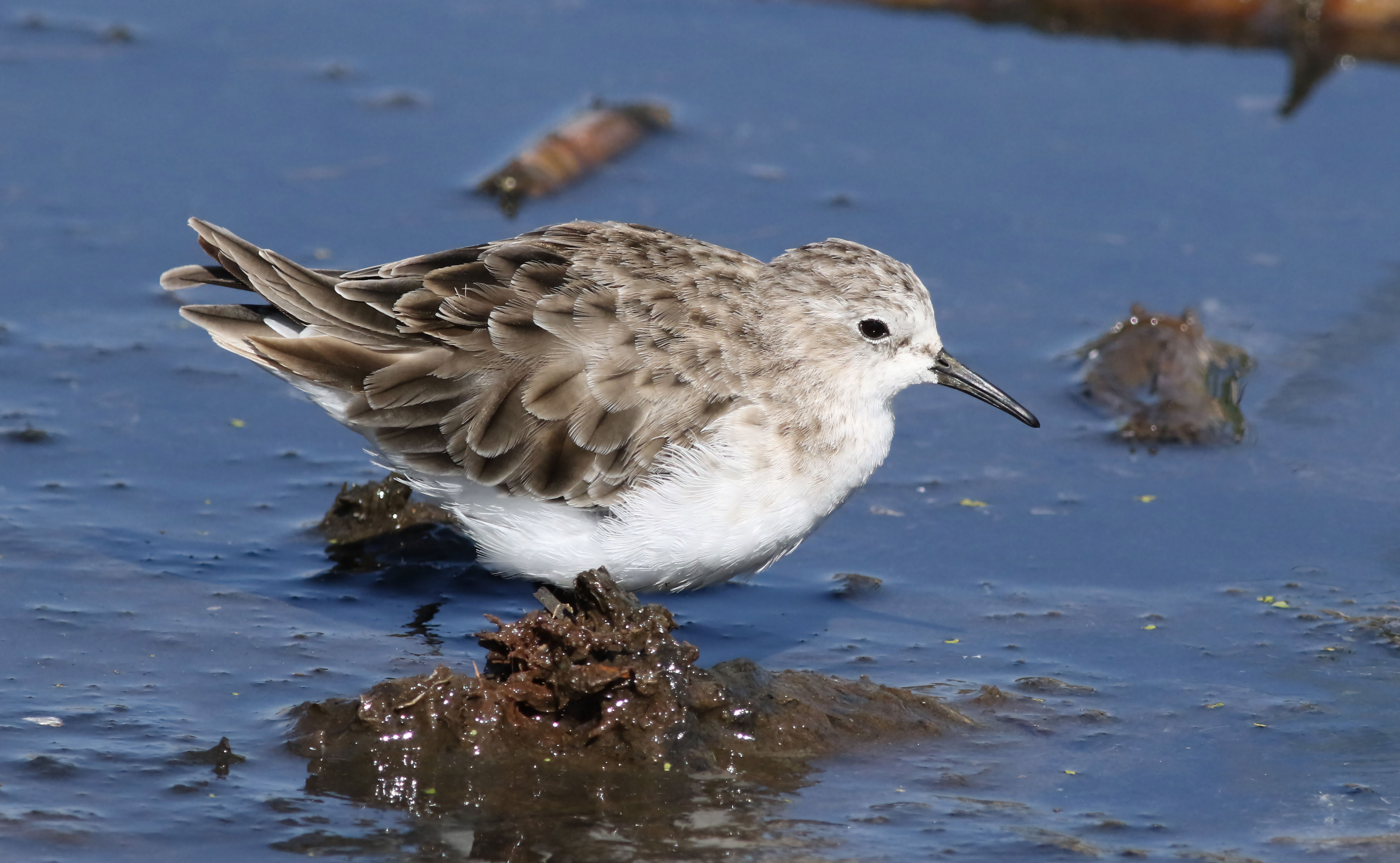
The migratory season transforms the reserve. Thousands of shorebirds arrive from breeding grounds in Siberia, Mongolia and northern China, with peak numbers between November and January. Key species include:
- Whimbrel — large, long-billed wader; one of the most commonly spotted migrants
- Common Greenshank and Common Redshank — medium-sized waders that feed actively in the shallows
- Pacific Golden Plover — arrives in non-breeding plumage, often seen on the mudflats near the Buloh Tidal Ponds
- Lesser Sand Plover — smaller and harder to spot, blending with the mud and pebble flats
- Curlew Sandpiper and Marsh Sandpiper — slim, elegant birds feeding at varying mud depths
Different shorebird species have different bill lengths and shapes, allowing them to feed on prey at different depths in the mud. This is why you will often see several species feeding side by side on the same mudflat without competing directly.
Best Spots for Birdwatching Inside the Reserve
Although birds appear across the entire reserve, certain locations consistently offer better sightings:
- Buloh Tidal Ponds (Migratory Bird Trail) — the single best location for migratory shorebirds; five bird hides and two shelters let you observe without disturbing the flocks
- Aerie Tower — an elevated observation point on the Migratory Bird Trail with panoramic views across the tidal ponds and even Johor Bahru across the strait
- Eagle Point (Coastal Trail) — a raised vantage point where you may spot Brahminy Kites and White-bellied Sea Eagles soaring above the water
- Kingfisher Pod (Coastal Trail) — the highest point on the Coastal Trail, offering elevated views over the surrounding mangroves; a reliable spot for kingfisher sightings
- Mangrove Boardwalk edges — look in the tree branches for perching kingfishers and in the mud below for bitterns stalking through the shallows
Birdwatching Etiquette at Sungei Buloh
- Keep noise to a minimum — avoid loud conversation, artificial bird calls and speaker music
- Wear dark, earthy colours (greens, browns, olive) to blend with the surroundings
- Stay on designated trails and use the bird hides rather than approaching open mudflats
- Do not use flash photography — it startles birds and can cause them to abandon feeding areas
- Bring binoculars (8x or 10x magnification) and a camera with at least 200 mm zoom for meaningful sightings
Trail-by-Trail Guide to Sungei Buloh Wetland Reserve
The reserve has four main trails plus a children's area, totalling roughly 5 km of walkable paths. All trails are beginner-friendly, and several are wheelchair and stroller accessible. Here is what each one covers.
Migratory Bird Trail (1.95 km)
The longest and most rewarding trail for birdwatchers. It circles the Buloh Tidal Ponds — the primary feeding ground for migratory shorebirds — and includes five observation hides with narrow viewing slots that let you watch birds without being seen. The trail also passes the Aerie Tower, where you can scan the wider landscape and sometimes spot bats roosting under the tower's roof. The path is flat, paved and suitable for wheelchairs and strollers.
- Distance: 1.95 km
- Difficulty: Easy, flat terrain
- Time: 45–90 minutes depending on stops
- Best for: Birdwatchers, wildlife photographers
- Accessibility: Wheelchair and stroller friendly
Coastal Trail (1.3 km)
The second-longest trail runs along the reserve's northern edge, offering views of the Johor Strait and occasional sightings of eagles overhead. The trail features five pod-shaped viewing platforms, with the Kingfisher Pod providing the highest coastal vantage point. A modern pavilion partway along the route has become a popular photography spot.
- Distance: 1.3 km
- Difficulty: Easy
- Time: 30–60 minutes
- Best for: Coastal scenery, eagle spotting, photography
- Accessibility: Mostly flat, wheelchair accessible
Mangrove Boardwalk (500 m)
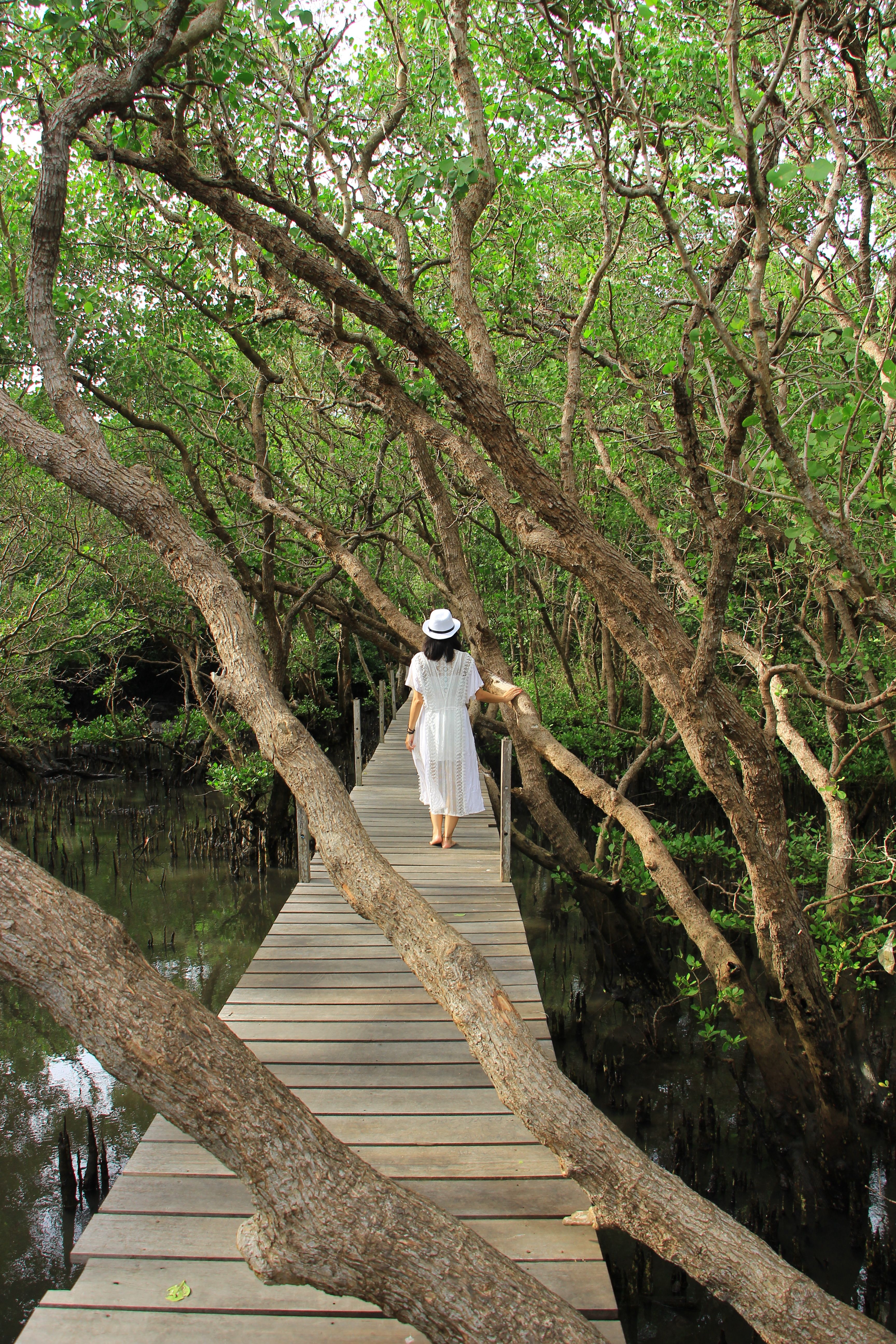
A raised wooden walkway that threads directly through the mangrove forest. This is the most immersive trail — you walk at the same level as the mangrove roots, with tidal water and mudflats visible below. Mudskippers, orange signaller crabs and monitor lizards are regularly spotted here. Because the boardwalk is elevated, your shoes stay dry and clean even at high tide.
- Distance: 500 m
- Difficulty: Very easy
- Time: 15–30 minutes
- Best for: First-time visitors, families with young children, anyone wanting a quick mangrove experience
- Accessibility: Stroller and wheelchair friendly
Forest Trail & Mid-Canopy Walk
Two short connected trails that take you through the reserve's secondary forest. The Forest Trail (300 m) passes through dense vegetation where you may hear cicadas and spot Pied Fantails. The Mid-Canopy Walk (150 m) is an elevated boardwalk through the forest understory — a different perspective from the ground-level mangrove trails. Both are shaded, making them a good option when the afternoon heat is strong.
- Combined distance: 450 m
- Difficulty: Easy
- Time: 15–20 minutes
- Best for: Forest-dwelling bird species, a shaded break from the open trails
If you have at least two hours, combine all four trails into a single loop for the full reserve experience. Start at the Visitor Centre, walk the Mangrove Boardwalk, continue to the Migratory Bird Trail, then loop back via the Coastal Trail. Add the Forest Trail and Mid-Canopy Walk if you have an extra 20 minutes.
Practical Tips for Visiting Sungei Buloh
A comfortable visit comes down to timing, preparation and knowing the ground rules. The reserve is free to enter, but the experience improves significantly with a little planning.
Best Time to Visit
Two factors shape your timing: the season and the time of day.
- For migratory birds: Visit between August and April, with peak numbers from November to January
- For resident wildlife: Any time of year works — year-round species are present in every season
- Time of day: Arrive between 7:00 AM and 9:00 AM for the best bird activity, cooler temperatures and thinner crowds
- Tides: Low tide exposes the mudflats and brings shorebirds closer to the observation hides; check tide tables before your visit for optimal viewing
- Weather: Most trails are unsheltered, so avoid rainy days — check the forecast before heading out. Some areas close during flooding caused by high tides or heavy rain
What to Bring
- Binoculars — essential for birdwatching (the birds feed far from the trail edges)
- Camera with zoom lens (200 mm minimum) — standard phone cameras will struggle at distance
- Sunblock, hat and sunglasses — most trails have minimal shade
- Insect repellent — mosquitoes are active near standing water, especially in the morning
- Comfortable closed-toe walking shoes — the paths are paved but some sections near the boardwalk can be slippery
- Long sleeves and lightweight trousers — to reduce insect bites and sun exposure
- At least 500 ml of water — there are no drink stalls inside the reserve
Crocodile Safety — What You Need to Know
Estuarine crocodiles are part of the reserve's natural ecosystem. Sightings are occasional, not guaranteed, but the reserve treats them seriously. Follow these rules:
- Stay on designated trails at all times — never wade into water or walk on mudflats
- Do not approach, provoke or feed any crocodile
- If you spot a crocodile on land, remain calm, back away slowly and maintain at least 10 metres of distance
- Alert reserve staff or call NParks at 1800 476 1600 if you need assistance
- Heed all warning signs posted around the reserve — they mark areas with recent sightings
The crocodiles typically stay near the water's edge and pose minimal risk to visitors who remain on the boardwalks and trails.
How to Get to Sungei Buloh Wetland Reserve
The reserve sits in Singapore's northwest, in the Kranji area. It is accessible by public transport and by car, though the journey from central Singapore takes roughly 40–60 minutes depending on your starting point.
By MRT & Bus
- Monday to Saturday: Take the MRT to Kranji MRT Station (North-South Line). From there, board Bus 925 and alight at Kranji Reservoir Carpark B. Walk across the road to the Visitor Centre entrance on Kranji Way.
- Sundays and Public Holidays: Board Bus 925M from Kranji MRT Station (note: this bus also operates from Woodlands Interchange on Sundays). It stops directly at the Wetland Centre entrance on Neo Tiew Crescent.
- The Kranji Countryside Express also runs daily from Kranji MRT and serves the reserve.
By Car (Parking Options)
Two free car parks serve the reserve:
- Visitor Centre car park — off Kranji Way (60 Kranji Way). This is the main entrance and the starting point for most trails.
- Wetland Centre car park — off Neo Tiew Crescent (301 Neo Tiew Crescent). This entrance is closer to the Migratory Bird Trail. Capacity: 69 car lots, 10 motorcycle lots, 2 accessible lots and 5 bus lots.
At a Glance — Visitor Essentials
- Address: 60 Kranji Way (Visitor Centre) / 301 Neo Tiew Crescent (Wetland Centre)
- Opening hours: 7:00 AM – 7:00 PM daily (last entry 6:30 PM)
- Admission: Free
- Guided tours: Free English tours every Saturday, 9:30 AM – 11:30 AM (15 participants max, registration required). Malay, Mandarin and Japanese tours on selected dates.
- Pets: Not allowed
- Cycling / PMDs: Not allowed
- Drones: Not allowed
Who Should Visit Sungei Buloh?
The reserve suits a wider range of travellers than most visitors expect. Here is how different groups can get the most from a visit.
Best for Birdwatchers & Wildlife Photographers
If you are visiting Singapore specifically for birdwatching, Sungei Buloh Wetland Reserve is the single most productive site on the main island. The Migratory Bird Trail's observation hides put you within viewing distance of feeding flocks without disturbing them, and the tidal ponds attract species you will not find in the city's urban parks. Arrive at 7:00 AM during migratory season (November–January peak) for the best light and bird activity. Wildlife photographers should budget at least three hours and bring a long lens — the birds feed across wide mudflats, so a 400 mm or longer focal length makes a noticeable difference.
Best for Families with Kids
The reserve is family-friendly in a way that feels hands-on rather than tokenistic. The Mangrove Boardwalk is short enough for small children (500 m), and the Junior Wetland area near the Visitor Centre has a freshwater pond where kids can spot dragonflies, fish and frogs from stone stepping paths. Older children often enjoy the novelty of spotting mudskippers and monitor lizards in the wild — it is a different experience from seeing them in a zoo. The Junior Adventure Trail adds obstacle courses and pulley boats inspired by mangrove creatures. If your family enjoys wildlife, pair this visit with a trip to Singapore Zoo in nearby Mandai for a full nature day.
Best for Solo Travellers & Nature Seekers
If you want a break from Singapore's retail and dining circuits, Sungei Buloh offers something rare: genuine quiet. On weekday mornings the reserve is nearly empty, and the only sounds are birdsong and the occasional splash of a monitor lizard entering the water. Solo walkers can complete all trails in two to three hours at a comfortable pace. Combine the visit with a morning at Bukit Timah Nature Reserve for a full day of Singapore's wild side — the two reserves showcase completely different ecosystems (wetland versus primary rainforest) and together give you a well-rounded picture of what the island's protected habitats look like.
Make Sungei Buloh Part of Your Singapore Trip
Sungei Buloh Wetland Reserve is one of those places that changes how you think about Singapore. Behind the skyline and shopping malls sits a 202-hectare wetland where migratory birds from Siberia share mudflats with resident crocodiles, and smooth-coated otters fish in mangrove channels just metres from a boardwalk. It costs nothing to visit, the trails are accessible to all fitness levels, and the wildlife encounters — from a Purple Heron lifting off a tidal pond to a Stork-billed Kingfisher catching the morning sun — are the kind of moments that stick with you longer than any observation deck selfie.
Whether you are a serious birder timing your trip around migratory season or a family looking for a morning outdoors with monitor lizards and mudskippers, this reserve delivers. Check out Sungei Buloh Wetland Reserve on Travjoy for activity options, or browse Singapore's top 20 experiences to build the rest of your itinerary. Start planning your Singapore nature trip on Travjoy, where every experience has been researched and approved by local experts — so you spend less time second-guessing and more time watching.

.svg&w=1920&q=75)