



Singapore Internet & Wi-Fi: Best Options for Tourists in 2026
7 min read

Raj Varma
Author
SHARE BLOG
TABLE OF CONTENTS
- Key Takeaways
- How Safe Is Singapore? A Data-Backed Reality Check
- Safest Neighbourhoods in Singapore for Solo Female Travellers
Key Takeaways
- Singapore ranks among the world's safest countries, with the World Justice Project placing it 2nd globally for order and security in 2025 — violent crime against tourists is extremely rare.
- Well-lit streets, extensive CCTV networks, and an efficient MRT system make late-night travel comfortable for women travelling alone.
- Scams and cybercrimes — not street crime — are Singapore's primary safety concern, so awareness and common sense matter more than physical caution.
- Neighbourhoods like Marina Bay, Orchard Road, and Chinatown are safe to explore solo at virtually any hour, with consistent foot traffic and visible police presence.
Singapore is one of the safest destinations in the world for solo female travelers. The city-state recorded just two murders in the first half of 2025 across a population of more than six million, and violent crime targeting tourists is virtually unheard of. The bigger concern is scams and online fraud, which means your phone habits matter more than your walking route. If you can keep your wits about digital safety, Singapore's streets, trains, and hawker centres are yours to explore freely — day or night.
You've probably seen the reassuring headlines: Singapore tops safety rankings, women jog alone at midnight, you can leave your phone on a table and find it still there an hour later. All of that tracks. But if you're a solo female traveller weighing up your first trip to Southeast Asia, you want more than headlines. You want to know which neighbourhoods feel comfortable after dark, whether the MRT is actually safe at 11 pm, how nightlife works when you're on your own, and what the actual risks look like beyond the glossy statistics.
This guide covers all of it — real crime data from the Singapore Police Force's 2025 reports, neighbourhood-by-neighbourhood safety assessments, transport protocols, dining-alone etiquette, nightlife tips, and the scam landscape that most travel guides gloss over. Whether you're planning your first solo trip or returning to Singapore as a confident repeat visitor, this is everything you need to move through the city with clarity and confidence.
How Safe Is Singapore? A Data-Backed Reality Check
Singapore is safe for solo female travelers by virtually every measurable standard — and the data backs up the reputation. The city-state was ranked 2nd globally for order and security in the 2025 World Justice Project Index, and it has consistently held one of the lowest intentional homicide rates in the world (0.17 per 100,000 people as of the most recent available data).
Crime Rates in Context
The Singapore Police Force's 2025 Annual Crime Brief reported a slight increase in physical crime cases, but the numbers remain low by global standards. The most common physical offence is shop theft — accounting for roughly one in five cases. Violent crimes against tourists are statistically negligible.
The more relevant concern is scams and cybercrimes, which the police now report as a separate category. E-commerce fraud, phishing schemes, job scams, and investment fraud make up the bulk of Singapore's crime figures. These are risks that apply to everyone — locals included — and are managed through digital hygiene rather than street awareness.
- Physical crime (H1 2025): 10,341 cases reported across 6+ million residents — a 5.4% increase from the same period in 2024, but still extremely low per capita
- Top physical offence: Shop theft (2,097 cases), not violent crime
- Scams: Reported scam cases and total losses decreased in 2025, but scams remain the government's top crime-prevention priority
- Murders (H1 2025): 2 cases, down from 3 in the same period of 2024
How Singapore Compares to Other Asian Destinations
For context, Singapore consistently outperforms other popular solo female travel destinations in Asia on safety metrics. Japan and South Korea rank closely behind, with similarly low violent crime rates and reliable public transport. Thailand and Bali offer warm, welcoming environments but require more street awareness — scams, transport safety, and drink spiking in party areas are more common concerns in those destinations.
What sets Singapore apart is the combination of low crime, English-language signage everywhere, a world-class public transport network, and a cultural norm of minding one's own business. You won't attract unwanted attention simply for being alone, and you won't feel like a target in any mainstream neighbourhood.
What "Safe" Actually Feels Like on the Ground
Statistics are useful, but what matters to a solo traveller is how safety feels in practice. In Singapore, it feels like this: streets are well-lit even in residential areas. CCTV cameras are everywhere — in MRT stations, shopping malls, public housing corridors, and along major pedestrian routes. Police neighbourhood centres (NPCs) are distributed across the island, and officers are visible without being intimidating.
Locals regularly walk, jog, and cycle alone after dark. It's common to see women running at 10 pm or picking up groceries at midnight from 24-hour supermarkets. That normalcy is perhaps the strongest safety indicator — when the people who live here treat late-night solo movement as routine, it tells you more than any ranking.
Safest Neighbourhoods in Singapore for Solo Female Travellers
Every major tourist neighbourhood in Singapore is safe for solo female travelers, but some areas stand out for their combination of lighting, foot traffic, transport access, and after-dark atmosphere. Here's a practical breakdown.
Marina Bay and the Civic District
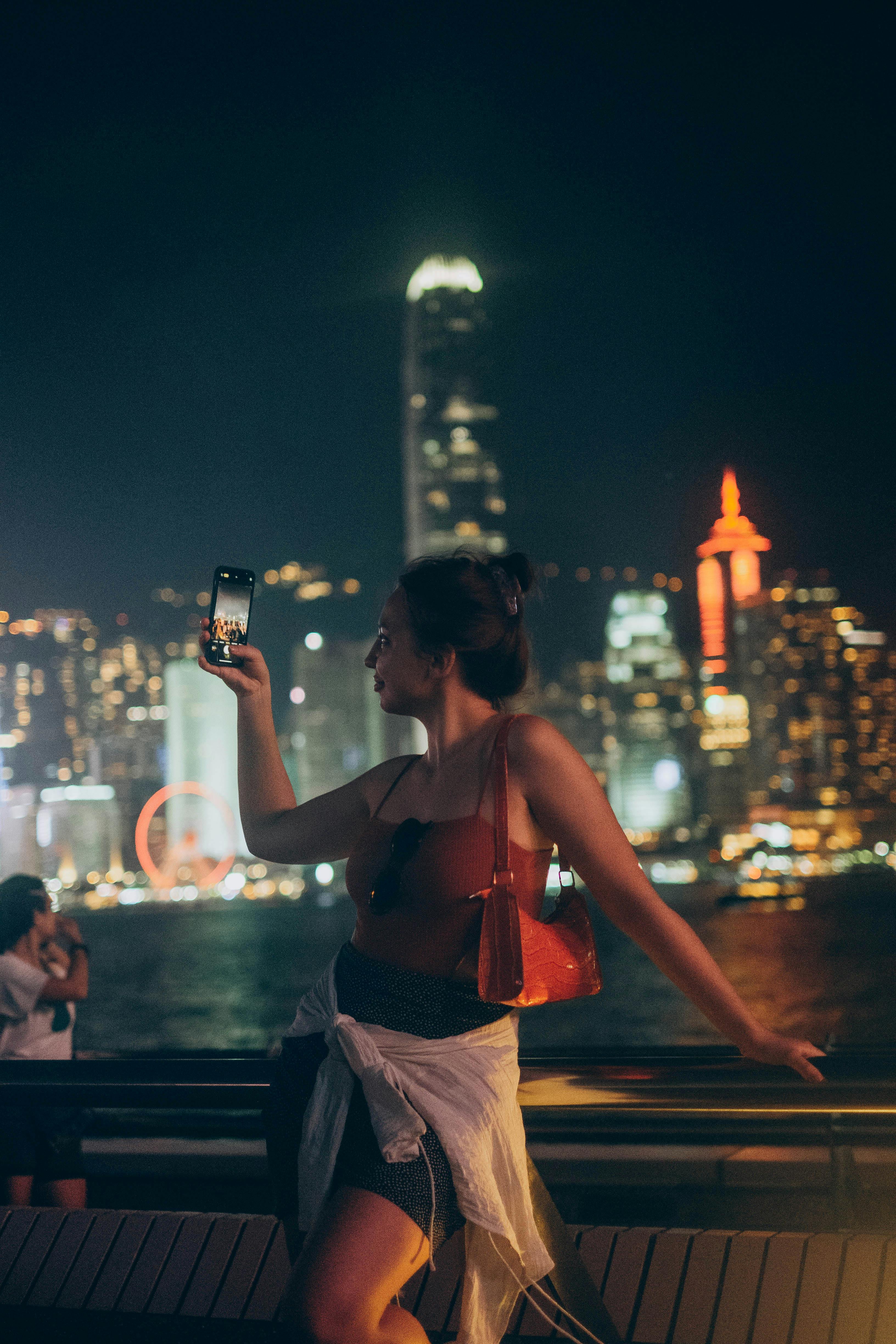
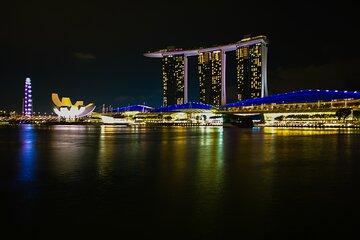
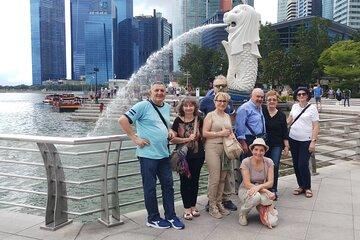
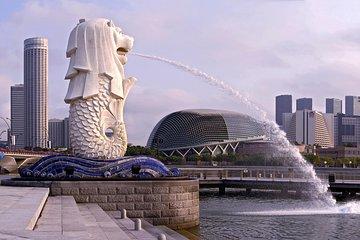
This is Singapore's most polished and well-patrolled precinct. The area around Gardens by the Bay, Marina Bay Sands, and the Merlion stays busy well into the evening, with strong lighting and constant security presence. Walking the waterfront promenade alone at 11 pm feels no different from walking it at 11 am — just quieter and cooler.
The Civic District (National Gallery, Esplanade, Fort Canning) is equally comfortable. If you're based in this area, you'll find restaurants, convenience stores, and MRT stations within easy reach at all hours.
Orchard Road
Singapore's main shopping corridor stays active until late, with malls closing around 9:30–10 pm and restaurants and bars carrying foot traffic well beyond that. Orchard Road is heavily surveilled and well-lit from end to end. Solo dining here is unremarkable — plenty of restaurants cater to individual diners, and food courts in ION Orchard and Paragon make eating alone completely natural.
Chinatown, Little India, and Kampong Glam
These heritage neighbourhoods are safe to explore solo during the day and into the early evening. Chinatown's food centres and shophouses stay busy until around 9–10 pm. Little India gets livelier on weekends, particularly Sunday evenings when the local migrant worker community gathers — the atmosphere is festive, not threatening, but you'll notice the change in energy.
Kampong Glam (around Haji Lane and Arab Street) has a relaxed café-and-bar scene that runs until late. It's a comfortable spot for solo drinks or dinner.
Neighbourhood Safety at a Glance
- Marina Bay: Safe at all hours — bright, busy, heavily patrolled
- Orchard Road: Safe at all hours — consistent foot traffic from shoppers and diners
- Chinatown: Safe during the day and early evening — quieter after 10 pm in back streets
- Little India: Safe — busier and louder on Sunday evenings, which is normal
- Kampong Glam: Safe — relaxed bar scene, comfortable for solo drinks
- Geylang: Singapore's red-light district — not dangerous, but you'll feel more comfortable elsewhere after midnight
Areas to Approach with Awareness
Singapore doesn't have dangerous neighbourhoods by global standards. But Geylang — known for its red-light district alongside excellent supper spots — is an area where solo women may feel less comfortable late at night. It's not unsafe in the "risk of violence" sense, but the atmosphere after midnight shifts noticeably. If you're heading there for the famous frog porridge or durian stalls, going before 11 pm and sticking to the main roads keeps the experience comfortable.
Yishun and some outer residential districts occasionally appear in local crime reports, but these are residential areas that tourists rarely visit. Nothing in Singapore's tourist core requires the kind of heightened vigilance you'd exercise in many other global cities.
For a broader view of what to explore across the island, check out the top 20 experiences in Singapore — many of the highest-rated activities are in the safest, most walkable parts of the city.








Getting Around Singapore Safely as a Solo Woman
Singapore's transport network is one of the safest and most efficient in Asia, and it removes most of the logistical anxiety that solo female travellers face in other destinations. You don't need to worry about unlicensed taxis, confusing bus routes, or poorly lit stations — the system is clean, well-signposted in English, and monitored by cameras at every turn.
The MRT: Your Best Friend in Singapore
The Mass Rapid Transit system is the backbone of getting around Singapore, and it's a consistently comfortable experience for women travelling alone. Stations are bright, spotlessly maintained, and staffed. Platform screen doors prevent accidents. CCTV coverage is extensive. Trains run from approximately 5:30 am to midnight, and even the last services feel safe — you won't find yourself in an empty carriage in a deserted station.
- Signage: All in English with clear colour-coded lines — no language barrier
- Payment: Use an EZ-Link or SimplyGo contactless card, or tap with a Visa/Mastercard
- Peak hours: 7:30–9:30 am and 5:30–7:30 pm — crowded but safe
- Last train: Around midnight on most lines — plan your return accordingly
If you're staying out past the last train, Grab (Southeast Asia's equivalent of Uber) and metered taxis fill the gap reliably.
Grab and Taxis
Grab is widely used and trusted in Singapore. The app shows your driver's name, licence plate, photo, and live GPS tracking — and you can share your trip details with a friend or family member in one tap. Metered taxis are equally safe and regulated. Both options are available 24/7.
A few practical habits that experienced solo travellers follow:
- Share your trip link with someone back home or a travel contact
- Confirm the driver's name and plate number before getting in
- Sit in the back seat — this is standard practice in Singapore anyway
- If a fare seems unusually high, check the Grab estimate before booking a street taxi
Walking at Night
Walking alone after dark in Singapore is comfortable in most areas, particularly in Marina Bay, Orchard Road, and the CBD. Streets are well-lit, pedestrian pathways are maintained, and you'll often encounter other people — joggers, dog walkers, late-night diners — even at midnight.
The one exception is isolated park connectors and nature trails. MacRitchie Reservoir, Bukit Timah, and Southern Ridges are wonderful during daylight but poorly lit after sunset. Treat these the way you'd treat any unlit trail anywhere in the world — save them for daytime walks.
Nightlife, Dining Solo, and Practical Safety Tips
Eating and going out alone in Singapore is socially normal — there's no stigma attached to dining solo at a hawker centre, sitting at a bar by yourself, or attending a show without a companion. The city's solo-friendly culture is one of the reasons it appeals to independent travellers.
Eating Alone at Hawker Centres and Restaurants
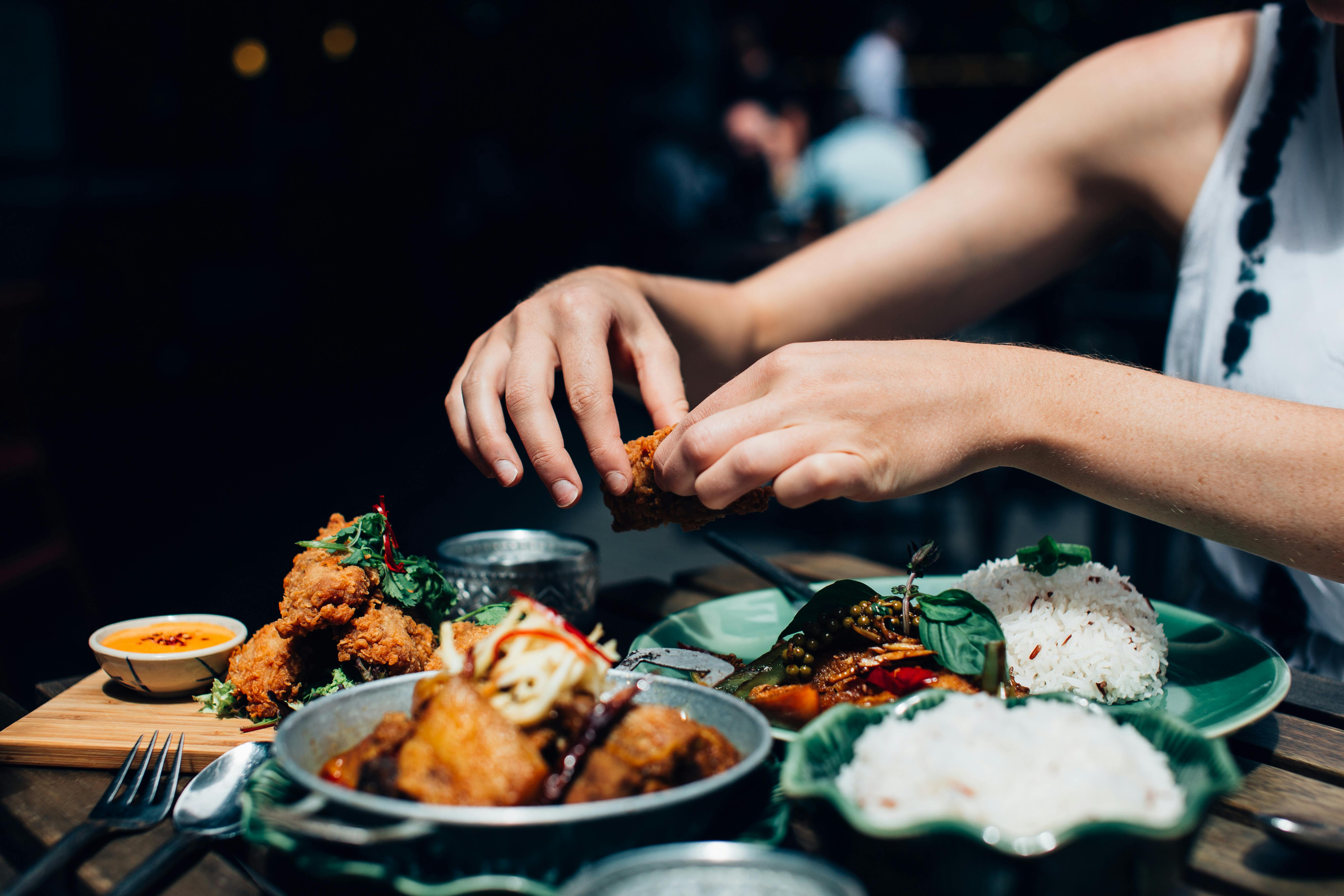
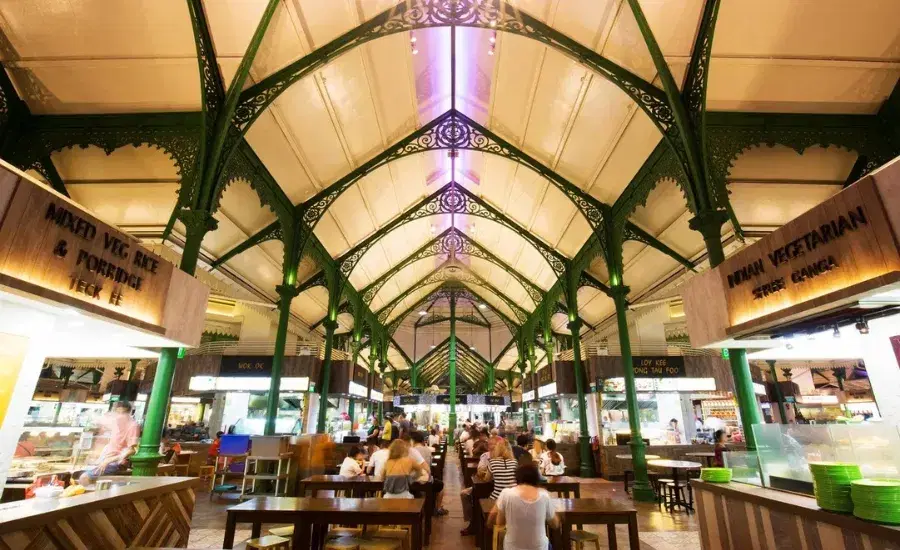
Hawker centres are the most natural place for solo dining in Singapore. The communal seating layout means everyone shares tables — you'll sit alongside families, office workers, and other solo diners without anyone thinking twice about it. Order at individual stalls, bring your food back to the table, and eat at your own pace.
Popular hawker centres that feel comfortable for solo diners at all hours:
- Lau Pa Sat (Marina Bay) — open late, well-lit, busy with after-work crowds
- Maxwell Food Centre (Chinatown) — daytime and early evening, home to the famous Tian Tian chicken rice stall
- Newton Food Centre — open until late, popular with both locals and visitors
- Chinatown Complex Food Centre — the largest hawker centre in Singapore, buzzing with solo diners throughout the day
For a more structured experience, guided food tours are a strong option for solo travellers — you'll join a small group, eat your way through a neighbourhood, and get local context you'd miss on your own. Travjoy's options are vetted by local experts, so you're not rolling the dice on quality.

Nightlife Safety
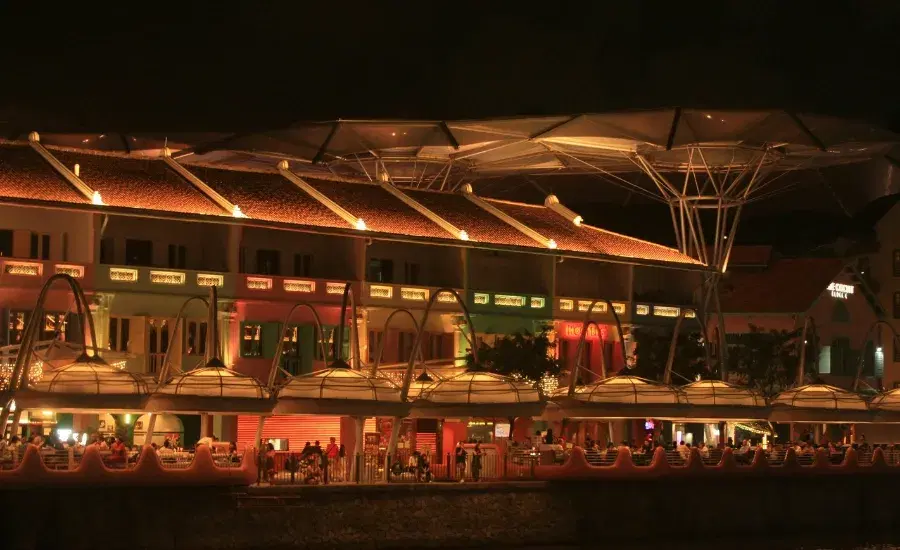
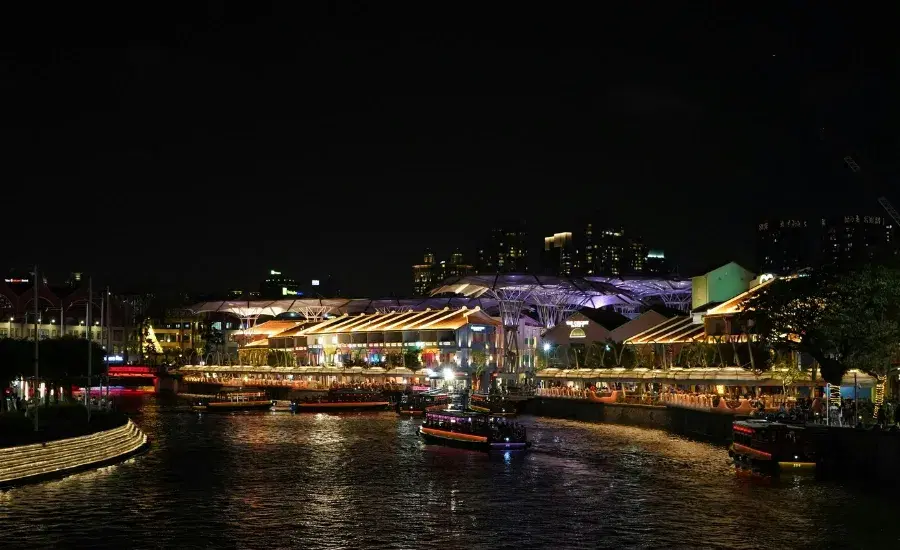
Clarke Quay is Singapore's main nightlife hub — a riverside strip of bars, clubs, and restaurants that stays active until the early hours. It's busy, well-lit, and patrolled. Solo women can comfortably have a drink at one of the riverside bars without feeling out of place.
Orchard Road after dark offers a slightly more upscale bar scene — rooftop lounges, hotel bars, and wine bars where solo patrons are common.
Standard nightlife safety habits apply here, just as they would in London, New York, or Tokyo:
- Watch your drink — don't leave it unattended. The Singapore Police Force has actively distributed drink-safety coasters and awareness videos across entertainment outlets
- Keep your phone charged and your Grab app ready for the ride home
- If you're drinking, set a return plan before you head out — know which MRT line gets you home or have Grab preloaded
- Stick to established venues with visible crowds rather than dimly lit side-street bars in unfamiliar areas
Scam Awareness — The Real Risk in Singapore
If there's one risk that deserves more attention than it typically gets in solo female travel guides, it's scams. Singapore's biggest crime challenge isn't street violence or theft — it's digital fraud. The top five scam types in 2025 were e-commerce scams, phishing, job scams, investment fraud, and government official impersonation scams.
As a tourist, the most relevant risks are:
- Overcharging by unlicensed "tour guides": Rare but not unheard of at popular spots. If someone approaches you offering a private tour, verify their credentials or book through a trusted platform
- Fake QR codes: Some scam reports involve tampered QR codes on restaurant tables or parking metres. Use official payment apps and double-check the merchant name before confirming
- Phishing texts and calls: You may receive SMS messages claiming to be from Singapore customs or delivery services. Ignore any message asking you to click a link or provide personal information
- Taxi overcharging: Uncommon with metered taxis and Grab, but if a driver quotes a flat fare instead of using the metre, politely decline and book through the app instead
Emergency Contacts and What to Do If Something Goes Wrong
Singapore has a responsive and accessible emergency services system. Save these numbers in your phone before you arrive:
- Police: 999
- Ambulance / Fire: 995
- Non-emergency police hotline: 1800-255-0000
- Tourist Assistance: Visit any Neighbourhood Police Centre (NPC) — they're spread across the island and staffed around the clock
If you lose your passport, contact your country's embassy or consulate. Most are located in the Orchard Road or Tanglin area, within easy reach of the city centre.
Solo Safety Checklist — Quick Reference
- Save emergency numbers (999 police, 995 ambulance) in your phone before arrival
- Share your daily itinerary and hotel address with someone back home
- Keep digital copies of your passport, visa, and insurance on a cloud drive
- Download the Grab app and set up payment before your first night out
- Avoid isolated park trails after dark — save nature walks for daytime
- Trust the MRT for safe, affordable transport until midnight
- Watch your drink at bars and clubs — never leave it unattended
Plan Your Solo Singapore Trip with Confidence
Singapore doesn't just earn its safety reputation through low crime numbers — it earns it through the everyday experience of walking, eating, and exploring without a second thought. Well-lit streets, a transport system that runs like clockwork, culturally normalised solo dining, and a population that simply minds its own business make this city one of the most comfortable solo female travel destinations anywhere.
No destination is completely risk-free, and common-sense precautions still apply — particularly around digital scams and drink safety. But if you're weighing up whether Singapore is the right place for your first solo trip, the answer is a confident yes.
Start planning your solo Singapore trip on Travjoy — every experience listed has been vetted by local experts, so you can spend less time second-guessing and more time exploring.



.svg&w=1920&q=75)