



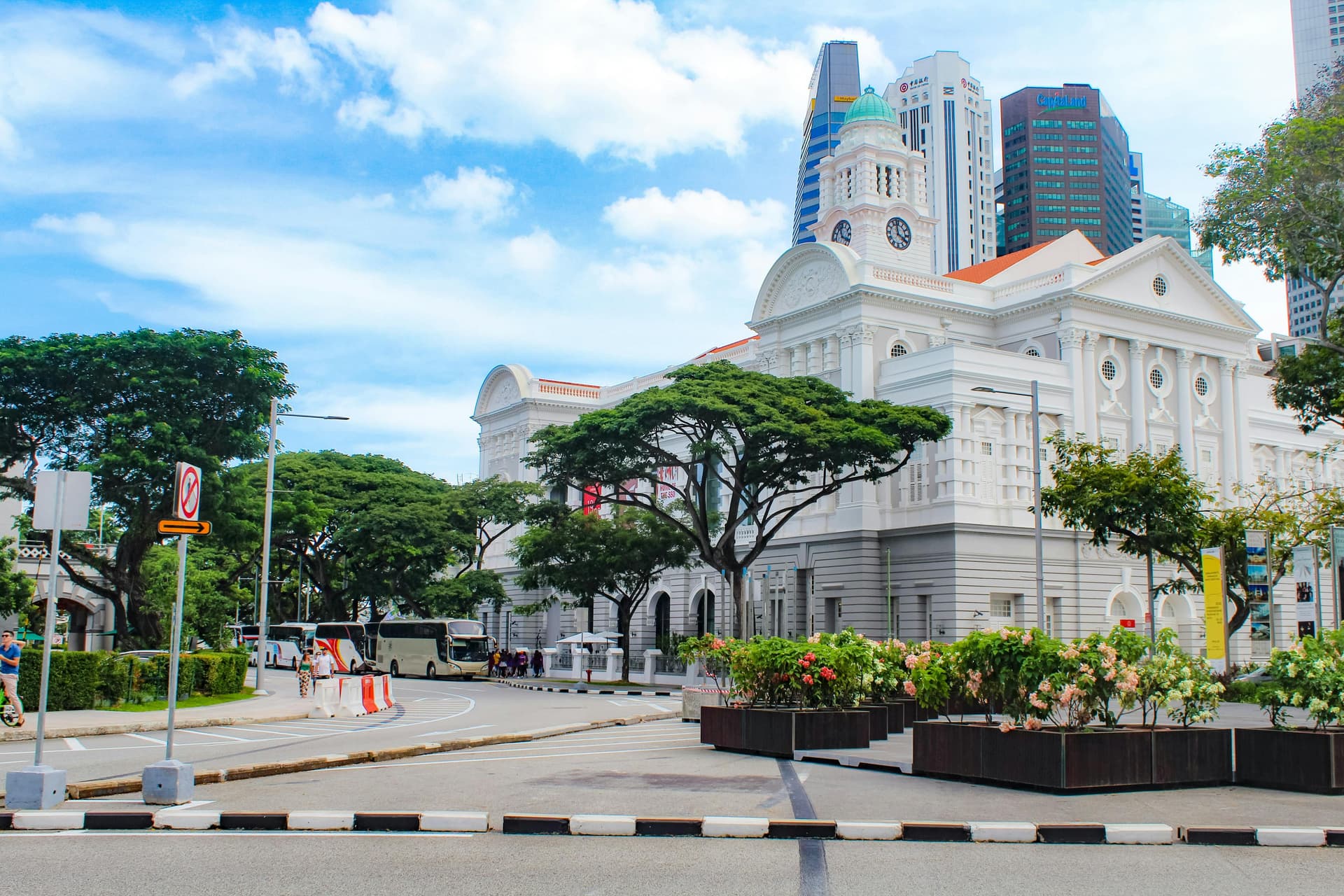
Singapore Civic District Culture Walk: Museums, Art & Heritage Route
10 min read

Raj Varma
Author
SHARE BLOG
TABLE OF CONTENTS
- Key Takeaways
- What Is the Civic District and Why Walk It?
- The Culture Walk Route — Stop by Stop
- National Gallery Singapore — The Centrepiece
Key Takeaways
- The Civic District packs five major museums and over a dozen national monuments into a walkable 2 km loop between City Hall MRT and Raffles Place MRT.
- National Gallery Singapore, Asian Civilisations Museum, Peranakan Museum, and National Museum of Singapore are all within 10 minutes of each other on foot.
- A focused route takes 2–3 hours for exteriors and selected galleries; a full museum-hopping day takes 5–6 hours.
- Free admission applies for Singapore citizens and PRs at all national museums, and tourists can save with combo tickets and Friday evening free windows at several venues.
A Singapore Civic District culture walk covers roughly 2 km of flat, paved ground between City Hall MRT and Raffles Place MRT, passing through the National Gallery Singapore, Asian Civilisations Museum, Peranakan Museum, and National Museum of Singapore. Most visitors spend 2–3 hours on the outdoor route alone, or a full half-day if they go inside two or three museums. Admission for tourists runs SGD 15–20 (~USD 11–15) per museum, with free entry for Singapore residents at all national museums.
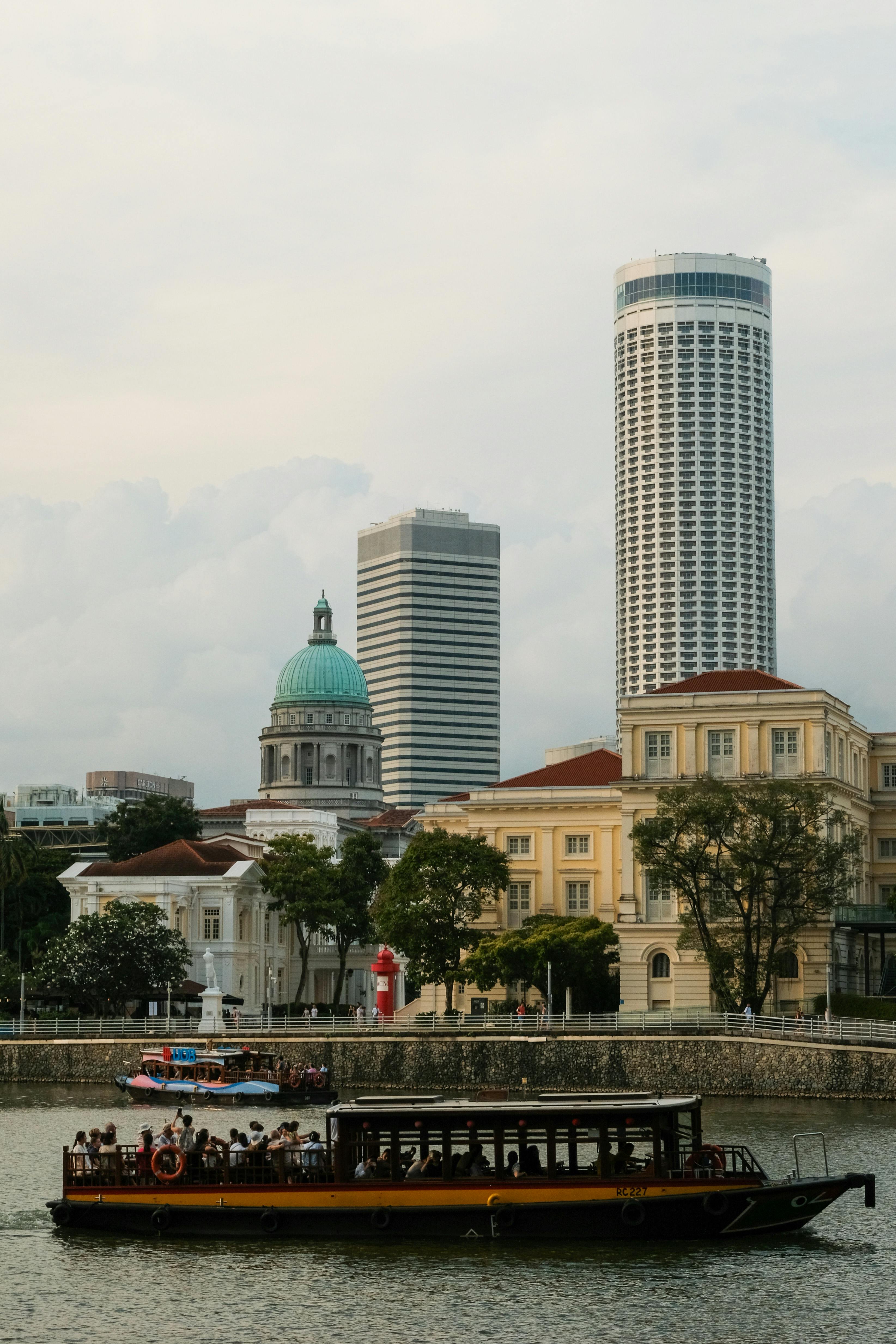
Singapore's skyline gets all the attention. Marina Bay Sands, the Supertree Grove, the light shows over the water — that is what fills most first-timer itineraries. But the buildings on the north bank of the Singapore River, five minutes from the Merlion, tell a deeper story. The Civic District is where a British trading post became a colonial capital, where Japan's surrender was signed in 1945, and where Singapore's first parliament sat in 1965. Today, the same district houses some of Southeast Asia's most important art collections, set inside restored courtrooms, assembly halls, and a former post office.
This guide maps out a self-guided culture walk through Singapore's Civic District — stop by stop, with current ticket prices, opening hours, exhibition highlights, and honest advice on what to prioritise if you have limited time. Whether you spend two hours or a full day, you will leave with a sharper understanding of Singapore than any observation deck can offer.

What Is the Civic District and Why Walk It?
The Civic District is Singapore's oldest colonial core, stretching from the northern bank of the Singapore River to Fort Canning Park and along Bras Basah Road to the Padang. It covers roughly 1.5 to 2 km end to end, and every major building within it has a role in how modern Singapore came to be.
A 200-Year Story in 2 Kilometres
When Sir Stamford Raffles landed in 1819, this stretch of riverbank was the first area the British developed. His 1822 Town Plan laid out government offices, law courts, churches, and open recreation grounds in the same grid you walk through today. The Civic District Heritage Trail, maintained by Singapore's National Heritage Board, marks over 30 historical sites across the area — monuments, former schools, places of worship, and government buildings that span from the 1830s to the post-independence era.
What makes this walk different from a standard sightseeing list is density. Within a 15-minute stroll, you pass the country's oldest surviving bridge (Cavenagh Bridge, 1869), its oldest fire station (Central Fire Station, 1909), the building where the Japanese formally surrendered in 1945 (now part of National Gallery Singapore), and the chamber where Lee Kuan Yew's government held its first parliamentary session.
How the Civic District Connects to Marina Bay and Chinatown
The Civic District sits between three areas most visitors already have on their itinerary. Marina Bay is a 10-minute walk south across the Esplanade Bridge. Chinatown is a 12-minute walk via Boat Quay or one MRT stop from Raffles Place to Chinatown station. Kampong Gelam (Arab Street, Haji Lane) is 15 minutes northeast on foot. This makes the Civic District a natural pivot point for a day that starts with museums and ends with hawker food, shophouse streets, or the Marina Bay light show.
The Culture Walk Route — Stop by Stop
This route starts at City Hall MRT (Exit B) and ends near Raffles Place MRT, following a roughly clockwise loop through the district's key landmarks. Each stop lists the walk time from the previous one so you can plan your pace.
Start at City Hall MRT → St Andrew's Cathedral
Exit City Hall MRT at Exit B and you are standing on St Andrew's Road, directly facing St Andrew's Cathedral — Singapore's largest cathedral and a national monument. The neo-Gothic structure dates to 1862, and entry is free. The interior is worth five minutes for the stained-glass windows and the unusually bright white plaster walls, which were originally coated using a mixture of shell lime, egg white, and coconut husk (a technique called Madras chunam).
- Walk time from MRT: 1 minute
- Entry: Free
- Opening hours: Daily, 9 am – 5 pm (services may restrict access on Sundays)
- Time needed: 5–10 minutes
The Padang and Victoria Theatre & Concert Hall
From the cathedral, walk south across the open green of the Padang — the historic field where colonial cricket matches, national day parades, and the country's post-war rallies all took place. The Singapore Cricket Club (1852) flanks one end; the Singapore Recreation Club sits opposite. Neither is open to the public, but the colonial facades are part of the view.
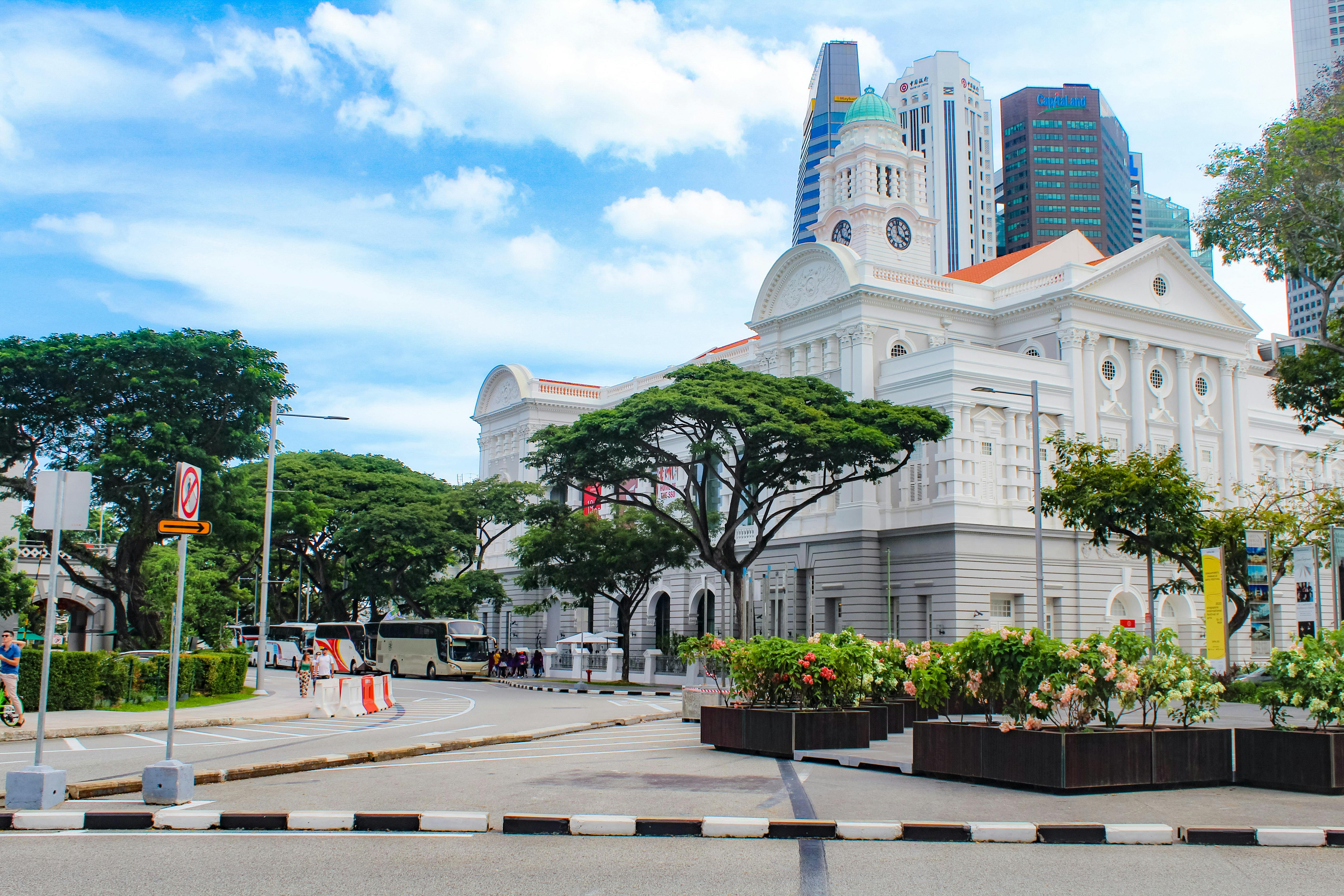
At the southern edge of the Padang stands Victoria Theatre & Concert Hall, Singapore's oldest performing arts venue. The two buildings are joined by a 54-metre clock tower and house the Singapore Symphony Orchestra. The original Raffles statue stands in front, relocated here from the Padang after cricket balls kept hitting it.
- Walk time from St Andrew's Cathedral: 5 minutes
- Entry to Padang and exterior viewing: Free
- Victoria Theatre interior: Accessible during performances or events only
The Arts House and Cavenagh Bridge
Continue south past the Victoria Theatre to reach The Arts House at the Old Parliament — Singapore's oldest surviving building, originally built as a private residence in the 1820s and later repurposed as the country's first courthouse and then its parliament. It now operates as a literary and performing arts venue with free exhibitions and occasional film screenings.
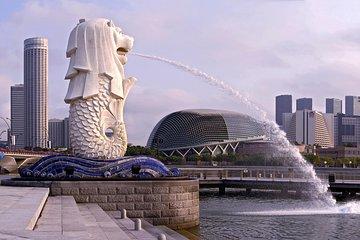
A two-minute walk from The Arts House brings you to Cavenagh Bridge, a pedestrian-only suspension bridge built in Scotland in 1869 and shipped to Singapore in sections. It is the oldest bridge in Singapore still standing in its original form, and it connects the Civic District to the Fullerton Hotel and Merlion Park on the opposite bank.
- Walk time from Victoria Theatre: 3 minutes
- Entry to The Arts House: Free (exhibition-dependent)
- Cavenagh Bridge: Open 24/7, pedestrian only
Asian Civilisations Museum
From Cavenagh Bridge, walk along the riverfront path to the Asian Civilisations Museum (ACM), housed inside the former Empress Place Building — completed in 1867 and one of the last major colonial structures built using convict labour. The museum covers five millennia of Asian material culture across seven galleries on three floors, with a focus on how Chinese, South Asian, Southeast Asian, and West Asian trade networks shaped Singapore.
The 2026 exhibition calendar includes "Let's Play! The Art and Design of Asian Games" (until June 2026) and "Garden of Senses: A Tea Reverie" — a multi-sensory tea showcase running through mid-2026. Free guided highlight tours in English run daily and last about an hour.
- Walk time from Cavenagh Bridge: 3 minutes
- Address: 1 Empress Place, Singapore 179555
- Opening hours: Daily, 10 am – 7 pm (Fridays until 9 pm)
- Tickets: SGD 20 (~USD 15) for adult tourists; free for Singapore citizens and PRs; free for all visitors on Friday evenings 6–9 pm
- Nearest MRT: Raffles Place (Exit H), 5-minute walk
- Time needed: 1–2 hours for a thorough visit; 30–45 minutes for highlights
National Gallery Singapore — The Centrepiece
National Gallery Singapore is the anchor of any Civic District culture walk. Housed inside two restored national monuments — the former Supreme Court (1939) and City Hall (1929) — it holds the world's largest public collection of modern art from Singapore and Southeast Asia, with over 8,000 works spanning the 19th century to the present.
What to See Inside
The permanent galleries split into two core exhibitions. The DBS Singapore Gallery traces Singapore's art history from colonial-era watercolours to post-independence abstraction. The UOB Southeast Asia Gallery presents over 300 works in chronological order, connecting visual art to the region's political upheavals and cultural movements.
For 2026, the Gallery's exhibition programme includes "Fear No Power: Women Imagining Otherwise" (running until November 2026), spotlighting five Southeast Asian women artists. "Ink & Intent: He Xiangning's Artistic Masterpieces" (April–August 2026) showcases over 50 ink works from this pioneering Chinese artist. In May 2026, a major new show — "After the Monsoon: Art & War in Southeast Asia" — opens in the Special Exhibition Galleries.
If time is short, prioritise the City Hall Chamber on Level 3. This is the room where the Japanese surrendered in 1945 and where Lee Kuan Yew was sworn in as Prime Minister in 1959. The original wood-panelled chamber has been preserved, and a short video explains both events.
Tickets, Hours, and How to Save
- General admission (tourists): SGD 20 (~USD 15) — covers permanent galleries, the Singapore Gallery, Southeast Asia Gallery, Level 4 Gallery, and the Chief Justice's Chamber
- Special exhibition ticket: Additional fee, varies by show
- Combo ticket: Covers general admission plus all special exhibitions, valid for 180 days
- Concessions: SGD 5 off for children (7–12), seniors (60+), students, and full-time national servicemen
- Free entry: Singapore citizens and PRs get free access to permanent galleries; children under 7 free for all nationalities
- Opening hours: Daily, 10 am – 7 pm (some Fridays and Saturdays until 9 pm or later — check the website)
- Entrances: Padang Atrium (facing the Padang) or Coleman Street entrance
The Rooftop and Dining
The Gallery's rooftop terrace offers one of the best free views in Singapore — a panorama across the Padang to Marina Bay Sands, the Esplanade, and the CBD skyline. No ticket required to access the rooftop if you enter through the Coleman Street entrance.
For dining, the Gallery houses several notable restaurants. National Kitchen by Violet Oon serves Peranakan and Singaporean classics on Level 1. Odette, a three-Michelin-starred French restaurant, operates on Level 1 of the City Hall wing. Smoke & Mirrors, the rooftop cocktail bar, is worth a stop at sunset for drinks with the Marina Bay view. Budget option: the Gallery's café on Level 1 serves coffee and light bites for under SGD 10.





Beyond the Core — Peranakan Museum, National Museum, and Fort Canning
The main Civic District loop covers the riverfront museums and the Padang landmarks, but three more stops sit within a 10-minute walk north — each worth the detour if your schedule allows a half-day rather than a quick pass-through.
Peranakan Museum
Located on Armenian Street, a 7-minute walk from the National Gallery's Coleman Street entrance, the Peranakan Museum reopened in 2023 after a three-year renovation. It is the only museum in the region dedicated entirely to Peranakan culture — the hybrid traditions that emerged when Chinese, Malay, Indian, and European influences blended across centuries of Southeast Asian trade.
The revamped galleries span three floors and use multimedia displays alongside traditional artefacts — intricate beadwork, ornate kebaya textiles, gold jewellery, and ceremonial items. The ground-floor gallery on Peranakan foodways is particularly strong, connecting recipes and tableware to migration stories that still shape Singapore's hawker culture today.
- Address: 39 Armenian Street, Singapore 179941
- Opening hours: Daily, 10 am – 7 pm (Fridays until 9 pm)
- Tickets: SGD 16 (~USD 12) for adult tourists; free for Singapore citizens and PRs
- Time needed: 45 minutes – 1.5 hours
National Museum of Singapore
Continue five minutes up Stamford Road to reach the National Museum of Singapore — the country's oldest museum, established in 1887 and housed in a distinctive neo-Palladian and Renaissance-style building with a glass rotunda. The permanent Singapore History Gallery walks through 700 years of the island's story using artefacts, oral histories, and immersive AV installations.
The museum's strength is making local history feel personal rather than textbook. A recreation of a 1950s provision shop, archival footage from the Japanese Occupation, and first-person interviews with post-independence citizens give the timeline texture that the National Gallery's art-focused approach does not cover.
- Address: 93 Stamford Road, Singapore 178897
- Opening hours: Daily, 10 am – 7 pm
- Tickets: SGD 15 (~USD 11) for adult tourists; free for Singapore citizens and PRs
- Time needed: 1–2 hours
Fort Canning Park — History Without a Ticket
Behind the National Museum, a short uphill walk leads to Fort Canning Park — a green hilltop that served as the seat of Malay kings in the 14th century, a British military command post, and the site where the British surrendered Singapore to Japan in 1942. Entry to the park is free.
Key stops inside the park include the Fort Canning archaeological dig site (where 14th-century artefacts were unearthed), the Spice Garden (a recreation of the experimental garden Raffles established in the 1820s), and the former underground command bunker known as the Battle Box. The Battle Box is the only site that requires a ticket (SGD 20/~USD 15 for tourists) and runs guided tours that reconstruct the decision to surrender Singapore.
- Entry to the park: Free, open 24/7
- Battle Box tickets: SGD 20 (~USD 15) for tourists; guided tours run hourly
- Walk time from National Museum: 5–8 minutes (uphill, shaded paths)
- Time needed: 30 minutes for a walk-through; 1 hour if visiting the Battle Box
Singapore Art Museum (SAM) — Worth the Detour?
If the Civic District covers Singapore's colonial and modern-national history, Singapore Art Museum (SAM) fills the contemporary gap. SAM holds one of the most important collections of contemporary art from Southeast Asia and the wider region. But it is no longer in the Civic District — and that matters for planning your walk.
SAM's Move to Tanjong Pagar Distripark
SAM originally operated from a converted 19th-century school on Bras Basah Road, right in the Civic District. After closing for redevelopment, the museum reopened at its current home in the Tanjong Pagar Distripark — a repurposed waterfront warehouse in the Tanjong Pagar area, roughly 3 km south of the main Civic District loop. The new space suits SAM's large-scale installation work, but it means you cannot simply walk there from the Padang.
Current Exhibitions and SAM's 30th Anniversary 2026
2026 marks SAM's 30th anniversary, and the programming reflects it. "Talking Objects" and "The Living Room" (running until July 2026) explore how meaning shifts across time through 23 works by 22 artists from across Asia. Later in the year, internationally acclaimed photographer Hiroshi Sugimoto makes his Southeast Asian debut with a major retrospective spanning five decades of photography, sculpture, and Buddhist-influenced philosophy (opening May 2026).
SAM is also representing Singapore at the 61st Venice Biennale in 2026, with artist Amanda Heng and curator Selene Yap presenting work on the body, memory, and care through performance and installation.
- Address: 39 Keppel Road, Tanjong Pagar Distripark, Singapore 089065
- Opening hours: Daily, 10 am – 7 pm (Fridays until 9 pm)
- Tickets: SGD 14–20 (~USD 10–15) for tourists depending on exhibition; free for Singapore citizens and PRs
- Time needed: 1–2 hours
How to Get There from the Civic District
From the Civic District, the most efficient route to SAM is the Downtown MRT Line: take the train from Downtown station (near the Asian Civilisations Museum) one stop to Tanjong Pagar station, then walk 10 minutes south to the Distripark. A taxi from the Padang area takes about 10 minutes and costs SGD 8–12. If you are already finishing your Civic District walk near Raffles Place MRT, it is an easy ride.
The honest assessment: SAM is worth the detour if contemporary art is a priority for you. If you are choosing between SAM and a second Civic District museum, most first-time visitors will get more value from the National Gallery or the Asian Civilisations Museum, both of which are steps from the main walking route.
Practical Tips for Your Civic District Culture Walk
The route is flat, paved, and well-signposted, but a few planning details will make the difference between a comfortable walk and a sweaty one.
Best Time to Go
Weekday mornings between 10 am and noon offer the fewest crowds at every museum on the route. If you want to combine the outdoor walk with free admission at the Asian Civilisations Museum, aim for a Friday evening — ACM opens free to all visitors from 6 pm to 9 pm, and the riverfront setting is noticeably cooler after dark.
Avoid Sunday afternoons if you prefer quiet galleries. Local families and school groups tend to visit on weekends, particularly at the National Museum and the Peranakan Museum.
What to Wear and Bring
- Shoes: Flat, comfortable walking shoes — some stretches between stops are exposed pavement with no shade
- Clothing: Light, breathable layers — museum interiors are heavily air-conditioned (bring a light cardigan or scarf)
- Sun protection: Hat, sunscreen, and sunglasses for the Padang and riverfront stretches
- Water: Carry a refillable bottle — water fountains are available inside all national museums
- Umbrella: Singapore's afternoon rain showers are sudden and heavy, especially between November and January
Combining with Neighbouring Walks
If you have a full day, the Civic District pairs well with at least one adjacent neighbourhood. The choice depends on what you are after.
2-Hour Quick Route vs Half-Day Deep Dive
- 2-hour quick route: City Hall MRT → St Andrew's Cathedral (exterior, 5 min) → Padang & Victoria Theatre (10 min) → Cavenagh Bridge (5 min) → Asian Civilisations Museum exterior & river walk (15 min) → National Gallery Singapore (1 hour inside, prioritise City Hall Chamber and rooftop) → Raffles Place MRT
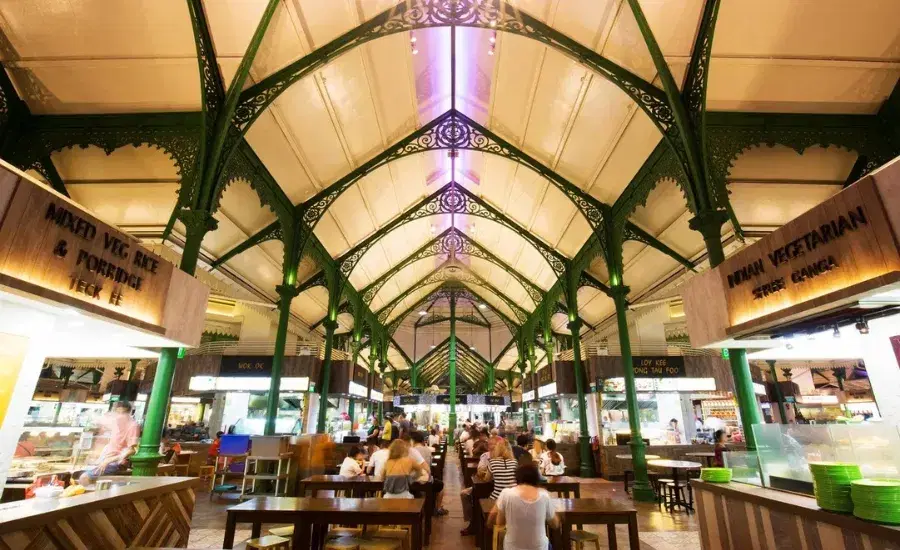
- Half-day deep dive: Start at 10 am. Full quick route above, plus Peranakan Museum (45 min), National Museum (1 hour), and Fort Canning Park (30 min). Finish with lunch at Lau Pa Sat or National Kitchen by Violet Oon. Total: 5–6 hours.
- If you only enter one museum: National Gallery Singapore is the strongest overall choice — the building itself is a monument, the collection is the region's best, and the rooftop view is free.
- If you want to extend into Chinatown: From Cavenagh Bridge, cross to the south bank and walk 10 minutes via Boat Quay to Chinatown — adding Sri Mariamman Temple, the Buddha Tooth Relic Temple, and the Chinatown Street Market to the day.
- If you want Marina Bay: From the ACM riverfront, walk 10 minutes east across the Esplanade Bridge to Merlion Park, then continue to Marina Bay Sands and Gardens by the Bay.
For a broader look at what to prioritise across the whole city, Travjoy's top 20 things to do in Singapore ranks the best attractions by traveller type — a useful filter if you are deciding between the Civic District and other half-day options like Sentosa or the Southern Ridges.
Travjoy's selection of heritage tours in Singapore includes guided options that cover many of the same Civic District landmarks with local commentary — worth considering if you prefer a structured walk with a knowledgeable guide. Every option on Travjoy has been reviewed and approved by local experts, so you can book with confidence rather than guessing at quality.
Plan Your Civic District Culture Walk
The Civic District is one of the rare places in Singapore where two hours on foot can cover five centuries of history, from the 14th-century Malay kingdom on Fort Canning Hill to a contemporary Hiroshi Sugimoto show at SAM. The walking distances are short. The museums are world-class. And the practical logistics — flat paths, nearby MRT stations, affordable entry fees — make it accessible whether you are a solo art enthusiast or a family fitting culture between hawker meals.
Start at City Hall MRT, walk south through the Padang, and let the route unfold. If nothing else, stand on the National Gallery rooftop at sunset and look across the water — that view alone makes the case for why the Singapore Civic District culture walk belongs on every itinerary.
Start planning your Singapore trip on Travjoy to find the best experiences, attractions, and tours across the city.


.svg&w=1920&q=75)