



Scuba Diving in Bali: Beginner's Guide to Bali's Underwater World
10 min read

Raj Varma
Author
Travel & Tourism Expert Ex-Thomas Cook, Kuoni, Times of India & Travel Triangle.
SHARE BLOG
TABLE OF CONTENTS
- Key Takeaways
- Is Bali a good place to learn scuba diving?
- What you'll see underwater — Bali's marine life calendar
- Best scuba diving spots in Bali for beginners
Key Takeaways
- Bali sits inside the Coral Triangle — peak diving runs April to November, with the dry season delivering the clearest water
- Discover Scuba day trips for absolute beginners run IDR 1,500K to 3,500K (~USD 95 to 225); no certification required
- The most beginner-friendly base is Tulamben for shore diving and Sanur for boat trips to Nusa Penida
- South Bali resort areas like Kuta and Seminyak are bad diving bases — plan a 2 to 3 night relocation east or to Sanur
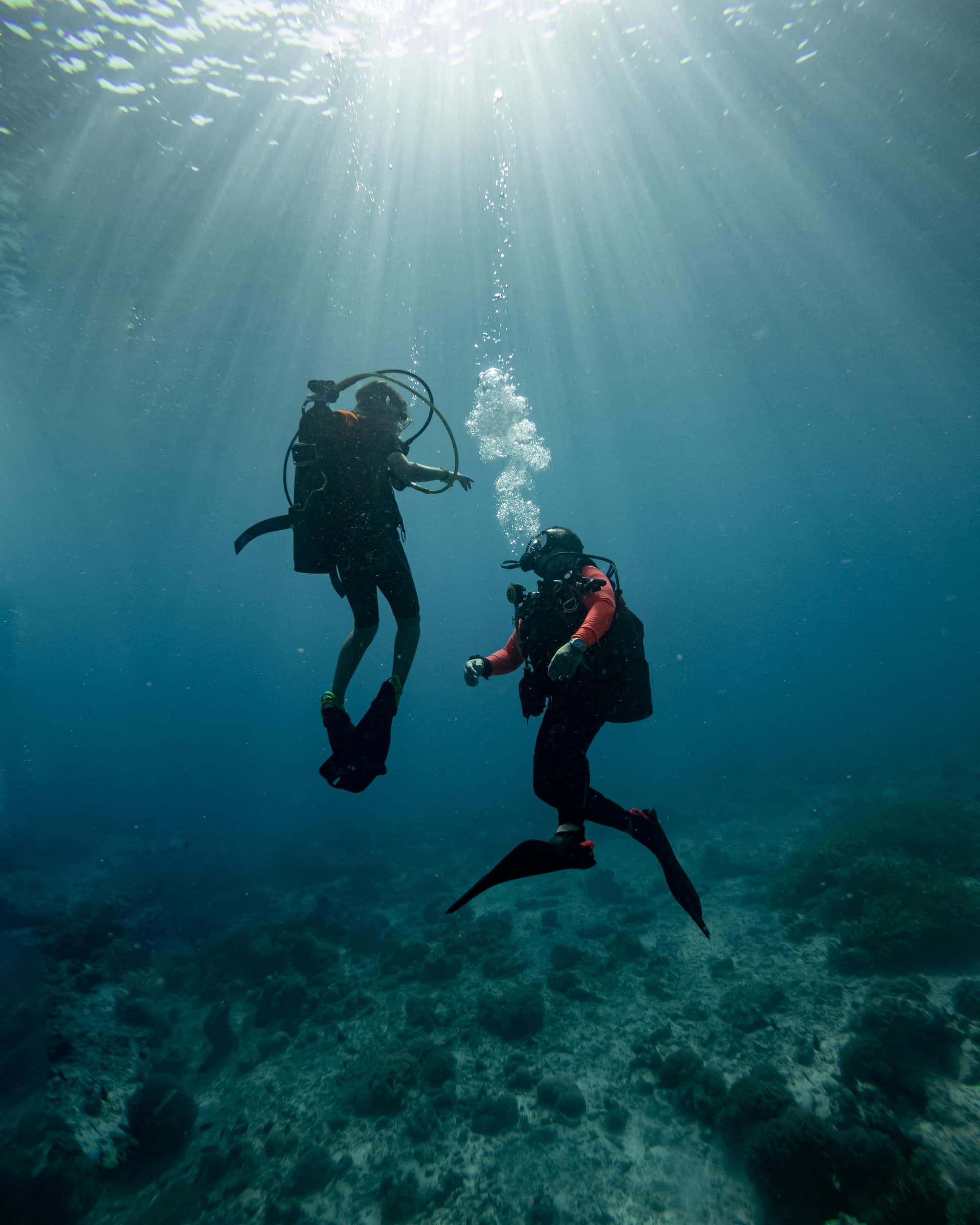
Scuba diving in Bali is one of the easiest entry points into the sport anywhere in the world. Warm water year-round, shore-access dive sites including a world-class wreck, manta-ray boat dives, and a dense network of PADI and SSI dive schools mean a complete beginner can do their first underwater breath in a single half-day for around IDR 1,500K. The best months are April to November during the dry season; July to October adds the rare Mola Mola sunfish window at Nusa Penida.
Most travellers arrive in Bali, settle into a Seminyak or Kuta hotel, and then assume diving is a 30-minute drive away. It isn't. The diving belt sits on the east and north coasts and around the Nusa islands — anywhere from 90 minutes to four hours from the south. The "I'll book it from my beach hotel" plan costs you a full day in transit each way and limits you to the least interesting sites.
This guide covers the four things first-time divers actually need: where to dive (and where to skip), what it costs in 2026 across both IDR and USD, where to base yourself for different trip lengths, and what your first dive day actually looks like minute by minute. The dive operators featured on Travjoy have been vetted after extensive research and approved by local experts — useful if you want a shortlist that filters out the operators with thin safety records.
Is Bali a good place to learn scuba diving?
Yes — Bali is one of the world's most accessible places to learn scuba diving, especially for nervous first-timers. Water temperatures sit at 26 to 29°C year-round, several beginner sites have walk-in shore entry, dive instructor density is high, and a Discover Scuba session costs roughly a third of what it would in Europe or Australia. The trade-off is that the best sites are not where most travellers stay, so the trip needs deliberate planning.
Worth it as a beginner if...
- You're visiting between April and November and have at least one full day to spend east of Ubud or in Sanur
- You want shore-access diving — no boat-related sea sickness on your first try
- You're considering a PADI Open Water course (Bali is among the cheapest places globally to certify)
- Warm 26 to 29°C water with no wetsuit drama appeals more than a thermocline-heavy Mediterranean experience
Less ideal if...
- You're locked into a December to February trip — wet season plankton blooms and rain hurt visibility
- You only have south-Bali hotel time and can't relocate or commit to a long day trip
- You've already dived in Raja Ampat, Komodo, or the Maldives — Bali is excellent but won't out-headline those
- You have unresolved sinus or ear issues — get a GP clearance before booking anything
Why Bali punches above its weight
Bali sits inside the Coral Triangle, the region biologists call the global epicentre of marine biodiversity. The same waters that wash the island also host more than 500 reef-building coral species and 2,000-plus fish species. For a beginner, the practical translation is simple: even a shallow 6-metre training dive at Tulamben puts you in front of more reef life than most certified divers see in a year in colder seas. The volcanic geology also creates dramatic underwater topography — drop-off walls, black sand slopes, and the kind of macro-photography opportunities that draw advanced divers from around the world.
What you'll see underwater — Bali's marine life calendar
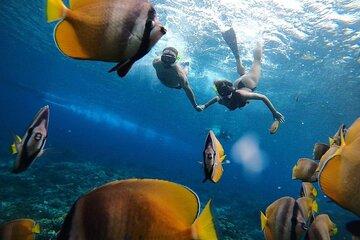
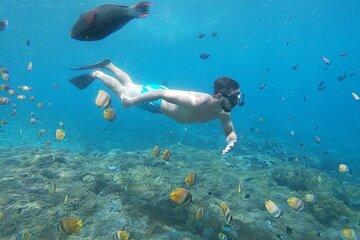
Bali's marine life rotates by season, and the headline animals each have a peak window worth planning around. Manta rays are reliably present year-round at Nusa Penida, the Mola Mola (oceanic sunfish) appears from roughly July to October, and turtles, reef sharks, and macro critters like pygmy seahorses are visible across most months. Knowing which animal you most want to see should drive your trip dates more than the weather.
The headliners
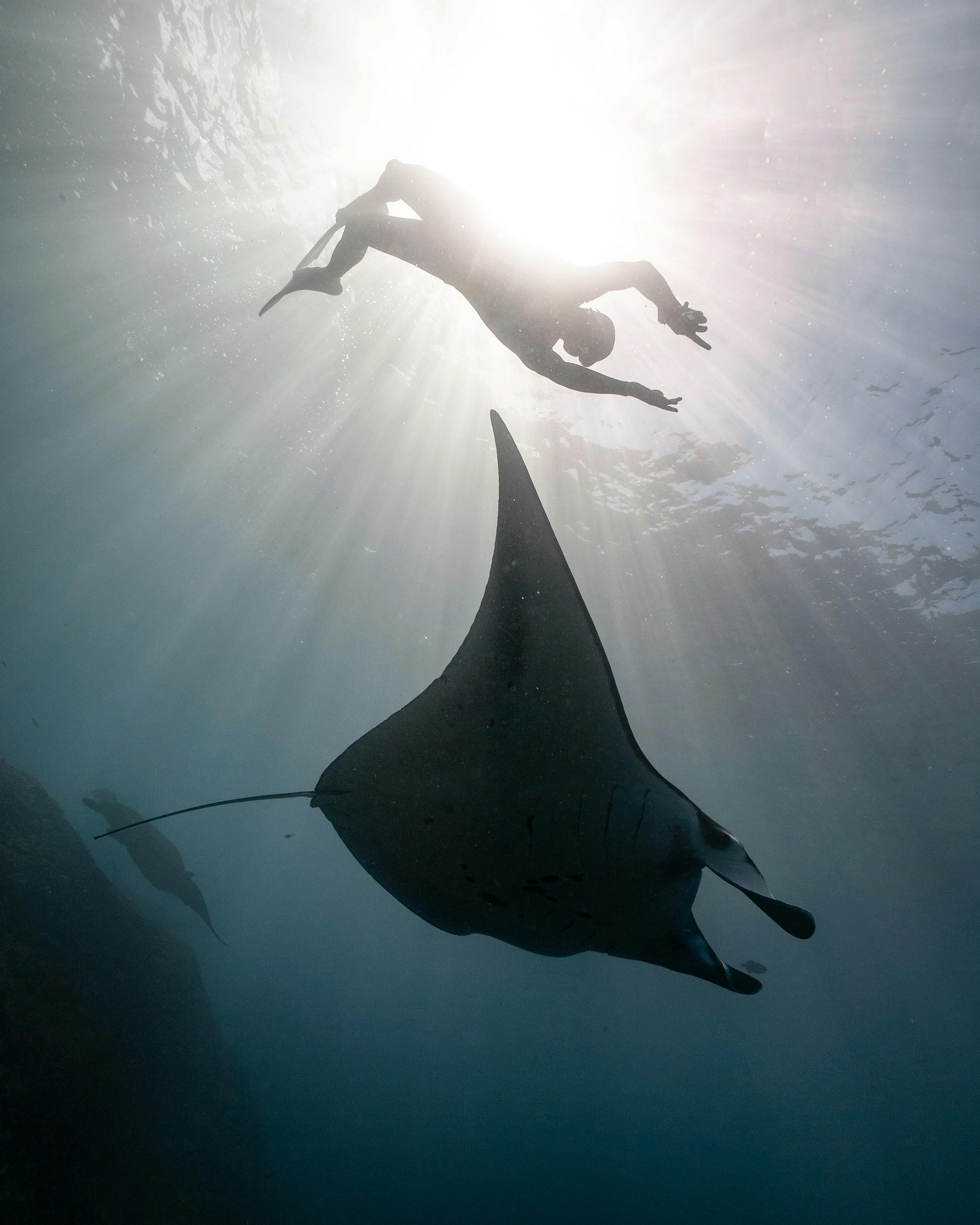
- Manta rays — Nusa Penida's Manta Point hosts a resident cleaning-station population. Sightings are very reliable year-round, with the highest concentrations April to October when currents push plankton into the bay
- Mola Mola (oceanic sunfish) — One of the strangest-looking fish on Earth, weighing up to 1,000 kg. Visible at Crystal Bay and Blue Corner (Nusa Penida) from July to October; water can be a chilly 18 to 22°C when they appear
- Green and hawksbill turtles — Common across Tulamben, Amed, and Menjangan
- Reef sharks — White-tip and black-tip reef sharks at Padang Bai and around Gili Tepekong (Tepekong itself is an advanced site)
Coral, wrecks, and macro
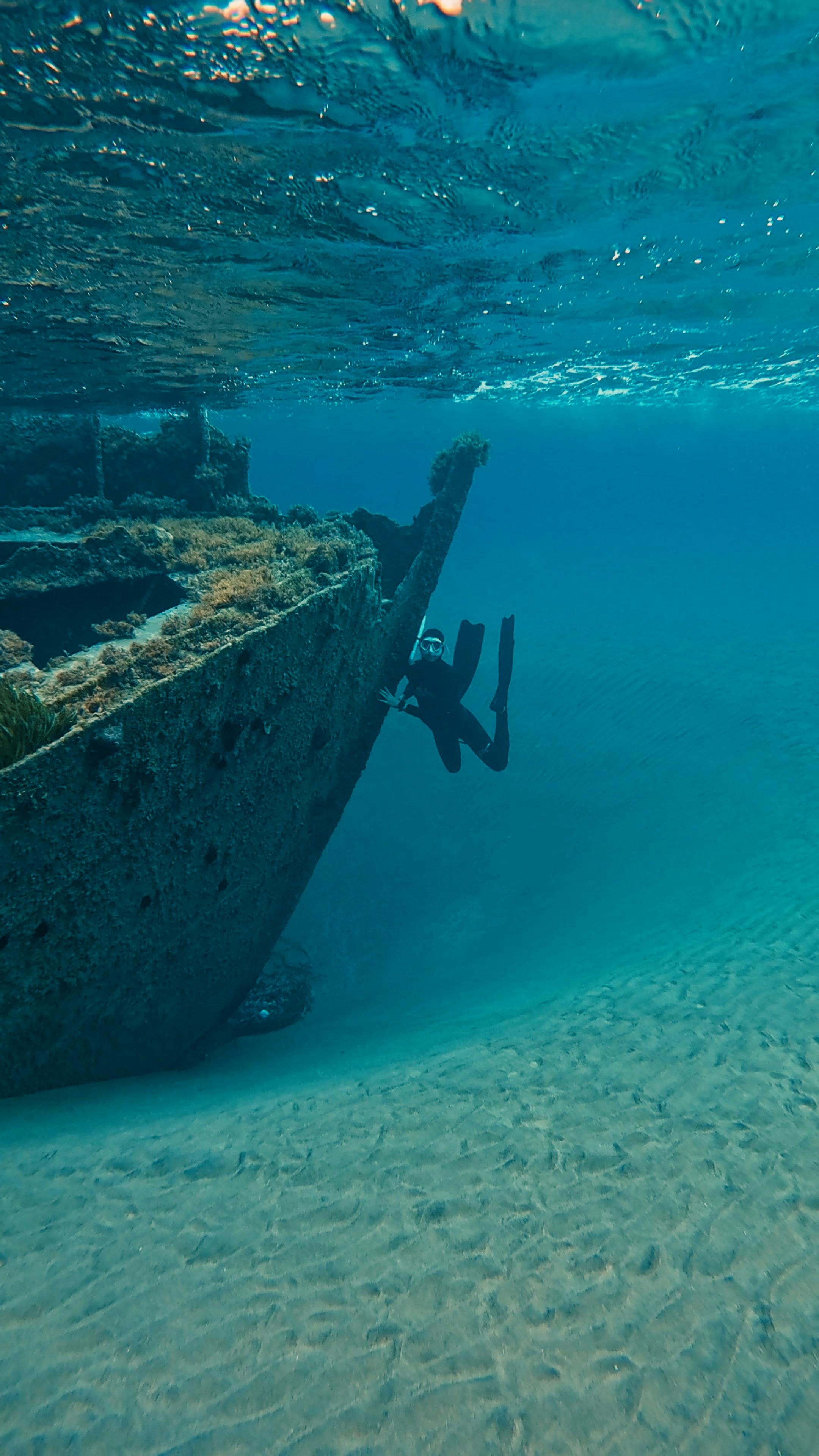
Hard and soft corals cover most reef sites, and Pemuteran on the north coast is home to one of the world's largest artificial reef projects (the Biorock installations) where coral regrowth is accelerated by mild electrical current passing through steel frames. The USAT Liberty wreck at Tulamben is a 120-metre WWII cargo ship resting in 5 to 30 metres of water, just 30 metres off the beach — one of the few world-class wreck dives accessible to beginners directly from shore. Amed adds a smaller Japanese Patrol Boat wreck for variety.
For divers who get hooked, Bali's macro scene is exceptional. Tulamben's black sand muck-dives surface pygmy seahorses, frogfish, ornate ghost pipefish, mimic octopus, and the bizarre rhinopias. Most of these are 5 cm or smaller — a dive guide with a pointer and a sharp eye is the difference between seeing them and missing them entirely.
Best scuba diving spots in Bali for beginners
The most beginner-friendly dive sites in Bali are Tulamben, Amed, and Padang Bai's Blue Lagoon — all calm-water sites with gentle gradients and easy entry. Menjangan offers the clearest water on the island but requires a longer drive. Nusa Penida delivers the bucket-list manta rays, but currents and cold-water thermoclines make it better suited to your second or third dive rather than your very first. A handful of sites — Gili Tepekong, Mimpang, and Biaha near Padang Bai — should be skipped entirely as a beginner.
Tulamben — the world-class beginner site
The USAT Liberty Wreck at Tulamben is the single dive that travels to Bali for the diving alone, and the most beginner-friendly world-class wreck dive anywhere. The ship sits 5 to 30 metres deep, parallel to a black-sand beach, and a complete beginner can see the upper bow at 5 metres on a Discover Scuba dive. Currents are minimal, visibility runs 15 to 25 metres on a good day, and the marine life is dense — schooling jacks, big-eye trevally, bumphead parrotfish at dawn. The Coral Garden site next door is a softer, shallower reef ideal for confined-water skill practice.
Amed — calm beginner shore dives
Amed is the quieter east-coast option, a string of fishing villages with calm bays, black-sand beaches, and coral gardens that start metres from shore. Jemeluk Bay is the headline beginner site — sandy slope, gradient, coral wall, and a small underwater shrine for photos. The Japanese Patrol Boat wreck adds variety. Conditions stay calm most of the year, water entries are walk-in, and accommodation is cheap.
Padang Bai — Blue Lagoon and reef sharks
Padang Bai is the ferry port for Lombok and the Gili Islands, but it's also one of Bali's most underrated dive areas. Blue Lagoon is a sheltered cove with gentle currents and depths of 8 to 18 metres — almost all marine life is concentrated in the shallow zone where beginners spend most of their time. The current at the outer sites (Jepun, Ferry Channel) can pick up, but a competent dive operator picks calm windows for beginner trips. Reef sharks make occasional appearances.
Menjangan Island — the clearest water in Bali
Menjangan sits inside West Bali National Park, four hours' drive from south Bali but worth it for divers who prioritise visibility above all else. Visibility of 25 to 40 metres is normal, the walls drop vertically into deep blue, and intact hard coral covers the reef. Beginner-suitable on the calm days; the marine park fee (around IDR 200K) is paid on top of the dive package. Most travellers combine Menjangan with two or three nights in Pemuteran rather than day-tripping.
Nusa Penida — manta rays, but plan it right
Nusa Penida is the manta-ray spot, and a non-negotiable bucket-list dive for most visitors. Manta Point delivers consistent sightings year-round, and Crystal Bay holds the Mola Mola from July to October. Both sites have caveats beginners should hear up front: surface chop on the crossing from Sanur (motion-sickness tablets help), thermoclines that can drop water to 22°C at Crystal Bay, and currents that range from manageable to seriously demanding. Most dive operators classify Manta Point as suitable for beginners on calm days; Crystal Bay is intermediate territory.
Sites to skip on your first trip
- Gili Tepekong, Mimpang, and Biaha (off Padang Bai) — currents and swim-throughs are advanced territory
- Secret Bay (Gilimanuk) — exceptional muck diving but visibility is low and the site rewards experience
- Sites marketed as "drift dives" until you have at least 10 to 15 logged dives
Beginner-friendly Bali dive site comparison
| Site | Region | Best for | Visibility | Marine life highlight | Difficulty | Avg cost (2 dives) |
|---|---|---|---|---|---|---|
| Tulamben (USAT Liberty) | East coast | Wreck on your first dive | 15 to 25 m | Schooling fish, bumphead parrotfish | Beginner | IDR 2,400K (~USD 155) |
| Amed (Jemeluk Bay) | East coast | Calm coral garden, easy entry | 10 to 20 m | Soft coral, turtles, small wreck | Beginner | IDR 2,560K (~USD 165) |
| Padang Bai (Blue Lagoon) | South-east | Sheltered cove, reef sharks | 10 to 20 m | Reef sharks, octopus, frogfish | Beginner | IDR 2,720K (~USD 175) |
| Menjangan Island | North-west | Visibility, wall diving | 25 to 40 m | Intact coral walls, turtles | Beginner (calm days) | IDR 3,040K (~USD 195) |
| Nusa Penida (Manta Point) | South-east islands | Manta rays, big-fish encounters | 10 to 20 m | Manta rays year-round, Mola Mola Jul to Oct | Beginner+ (calm days) | IDR 2,720K (~USD 175) |
| Pemuteran (Biorock reef) | North coast | Conservation site, calm bays | 15 to 25 m | Artificial reef regrowth | Beginner | IDR 2,400K (~USD 155) |
Prices are 2026 typical-operator ranges for two-dive day trips including transfer within the operator's standard zone, gear, guide, and lunch. Marine park fees, GoPro hire, and Nitrox are usually extra. The Nusa Penida figure assumes departure from Sanur on Bali's main island; staying overnight on Nusa Lembongan or Nusa Penida itself drops the cost slightly. For the wider Bali experience landscape, see Travjoy's destination hub.


How much does scuba diving in Bali cost in 2026?
Scuba diving in Bali costs IDR 1,500K to 3,500K (~USD 95 to 225) for a Discover Scuba day, IDR 2,400K to 2,800K (~USD 155 to 180) for two certified fun dives, and IDR 6,500K to 9,500K (~USD 415 to 605) for a full PADI Open Water certification course. Prices vary by site (Tulamben cheapest, Menjangan most expensive), by operator service level, and by whether your hotel is inside the operator's free pickup zone. South Bali pickups add roughly IDR 200K to 400K for the longer transfer.
What you'll actually pay (2026 ranges)
- Discover Scuba Diving (no certification, 1 to 2 dives at 5 to 12 m): IDR 1,500K to 3,500K (~USD 95 to 225)
- Two certified fun dives (Tulamben/Amed): IDR 2,400K to 2,800K (~USD 155 to 180)
- Two certified fun dives (Nusa Penida or Menjangan): IDR 2,720K to 3,200K (~USD 175 to 205)
- PADI Open Water Diver (3 days, 4 open-water dives): IDR 6,500K to 9,500K (~USD 415 to 605)
- PADI Advanced Open Water (2 days, 5 dives): IDR 4,800K to 7,200K (~USD 305 to 460)
- SSI Open Water Diver (same structure as PADI, often cheaper): IDR 5,800K to 8,500K (~USD 370 to 540)
What's usually included and what isn't
Most reputable Bali dive operators include hotel pickup inside a defined zone (typically Sanur, Kuta, Legian, Seminyak, Nusa Dua for South Bali operators), all dive equipment (mask, fins, BCD, regulator, tank, weights), a certified guide at a 1:4 ratio maximum, water and snacks, and lunch on full-day trips. Knowing what's not included matters more — these are the line items that surprise first-time bookers:
- Marine park fees: Nusa Penida ~IDR 100K (~USD 6), Menjangan ~IDR 200K (~USD 13), often payable in cash on the day
- Dive computer rental: IDR 200K to 250K per day (~USD 13 to 16) — bring your own if you have one
- GoPro/underwater camera hire: IDR 300K to 500K per day (~USD 19 to 32)
- Nitrox enriched air: IDR 70K to 95K per tank (~USD 5 to 6)
- Private guide upgrade: IDR 250K per dive (~USD 16)
- Boat dive surcharge at sites that are normally shore dives: IDR 225K to 300K per dive (~USD 14 to 19)
- South Bali pickup surcharge for east-coast or Sanur-based operators
Reality check — the cheap online quote isn't always the cheapest dive
Operators advertising the lowest sticker price often build the difference back through add-ons: equipment fees for items most operators include free, extra charges for boat dives at sites where shore entry was expected, marine-park fees presented as "operator fees", or guide-to-diver ratios of 1:6 or 1:8 that turn a relaxed dive into crowd-control. Read the inclusions list line by line before booking, and compare price-after-add-ons not headline price.
Where to base yourself for a Bali dive trip
The best base for a Bali dive trip depends on how many nights you can spend and what you want to dive. Sanur is the most flexible single base — Nusa Penida boat trips depart from here, and most operators include south-Bali pickup. Tulamben suits divers focused on the wreck and willing to commit two to three nights to the east coast. Pemuteran is the only sensible base for Menjangan. South Bali resort areas (Kuta, Seminyak, Canggu) work as starting points but not as bases — every dive day becomes a 4 AM wake-up.
Sanur — the all-rounder base
Sanur is where most serious Bali dive shops keep their headquarters because the harbour offers fast-boat access to Nusa Penida (~30 minutes), and the road network to Tulamben and Padang Bai is direct. A Sanur base lets you dive Nusa Penida day 1, Tulamben day 2, Padang Bai day 3, then add a Mt Batur sunrise or Ubud detour on a rest day. Hotels run from IDR 400K budget guesthouses to luxury beachfront resorts.
Tulamben — wreck divers and overnight dawn dives
Tulamben is a small village built around the wreck — it doesn't have the night-market buzz of Amed or the polish of Sanur. What it has is the ability to dive the USAT Liberty at dawn before the day-trippers arrive from Sanur (the wreck is famously crowded by 11 AM). Stay two nights, dive three sessions, and you'll get the wreck almost to yourself for at least one of them. Budget homestays from IDR 200K, dive-resort packages from IDR 1,200K per night including two dives.
Amed — quieter east coast, longer stays
Amed suits divers who want to settle in for three to five nights, dive most mornings, and spend afternoons on the black-sand beach or eating nasi campur at warungs that haven't moved in 20 years. It pairs well with Tulamben (15 minutes north), and many divers split their east-coast time between the two. For non-diving food context, see the Bali F&B experiences hub.
Pemuteran — the Menjangan base
Pemuteran is the only sensible base for Menjangan diving, four hours' drive north-west of the airport. Most divers come here as a 2 to 3 night side trip from a longer Bali itinerary, or as part of a multi-base safari that also includes Tulamben and Amed. The artificial reef project (Biorock) gives the village a conservation identity, and the dive shops are accustomed to first-timers.
Why South Bali doesn't work as a dive base
Kuta, Legian, Seminyak, and Canggu all have dive shops, but every dive from these bases involves at least a 2-hour pre-dive drive (longer for Tulamben). That means 4 to 5 AM wake-ups, mid-afternoon returns, and zero chance to dive a second session in the same day. The shops here primarily exist to sell day trips to travellers who didn't plan their accommodation around diving. If your hotel is already booked in the south, accept the early start for one or two days rather than trying to make the south a "dive holiday" base. Sanur is only 20 minutes from Seminyak by car and gives a far better dive trip.
Reality check — multi-base dive safaris are the best value
Most reputable operators offer 3 to 5 day "dive safari" packages that combine Tulamben, Amed, Padang Bai, and Nusa Penida with one set of transfers and bundled accommodation. These typically work out cheaper per dive than booking each day separately, and they remove the daily "where to and when" decision. For beginners doing an Open Water course, a safari structure means your four certification dives happen across three different sites — far better experience than four dives in the same bay.
When is the best time to dive in Bali?
The best months to scuba dive in Bali are April to November during the dry season, when visibility, sea state, and rain levels all peak. July to October adds the Mola Mola window at Nusa Penida. December to February is the wet season — diving is still possible, but plankton blooms reduce visibility, rain affects surface transits, and some operators reduce schedules. If you can flex your dates, aim for May, June, September, or October — fewer crowds than peak July to August but excellent water conditions.
Month-by-month dive conditions
- April to June: Shoulder season — calm seas, low rainfall, manta sightings climbing, fewer crowds than peak
- July to September: Peak dive season — visibility at its best, Mola Mola window opens, busiest at popular sites
- October to November: Late dry season — still excellent, Mola Mola tapering, water still warm
- December to February: Wet season — visibility 5 to 15 metres typical, more cancellations, lower prices and fewer divers at sites
- March: Transitional — improving daily, good value, fewer guaranteed days
For a more detailed seasonal picture across all Bali activities, see Travjoy's best time to visit Bali guide. For diving specifically, the daily window matters as much as the month — first dives at 7 AM consistently deliver better visibility than 10 AM departures, because afternoon thermal winds churn the surface.
What to expect on your first dive in Bali
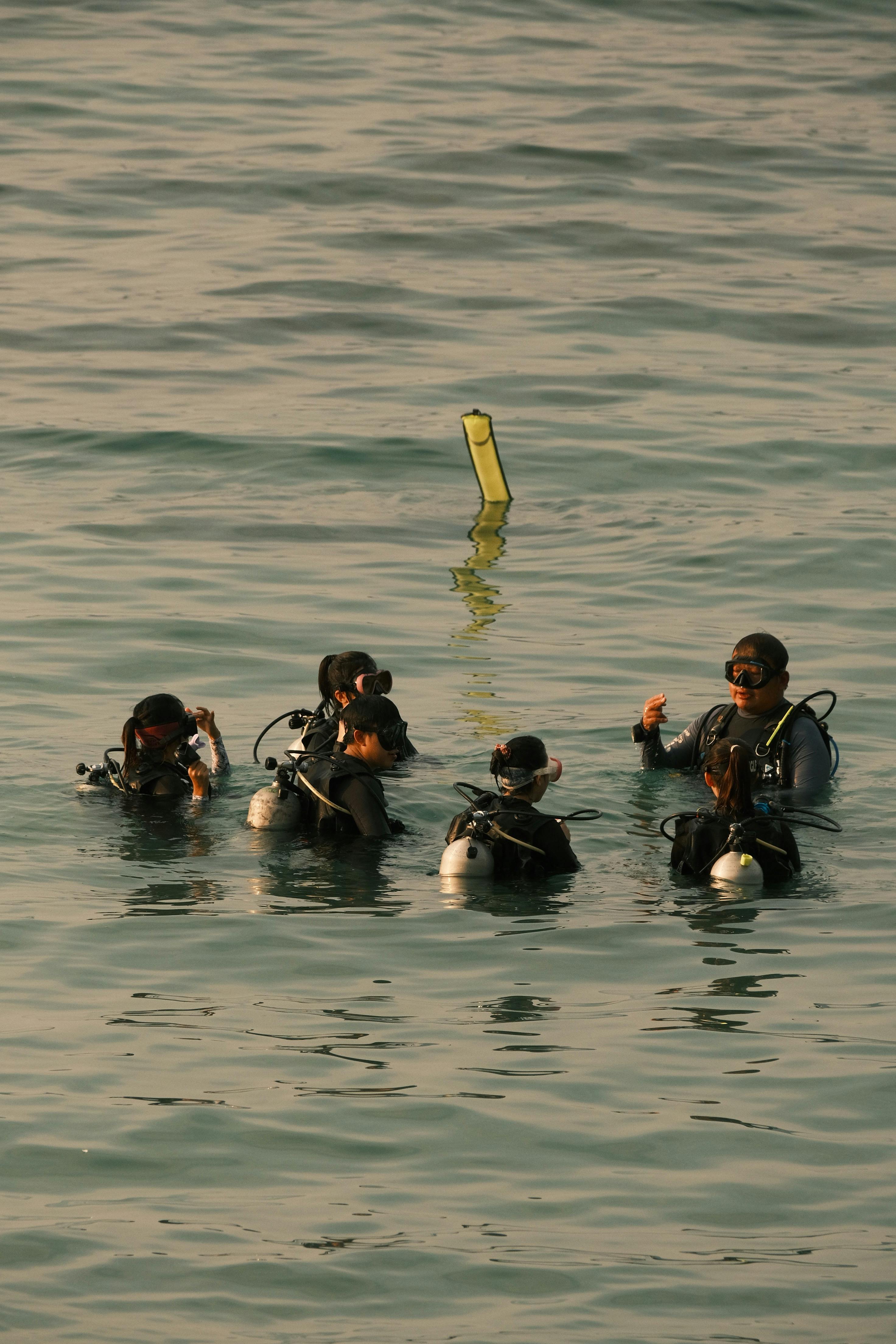
Your first scuba dive in Bali typically follows a 9-hour day: 7 AM hotel pickup, 1 to 2 hour drive to the dive site, briefing and equipment fitting, a 30-minute confined-water skills session, a first open-water dive at 5 to 12 metres, lunch, a second dive, then the drive back arriving 5 to 6 PM. The diving itself is shorter than first-timers expect — each dive is 40 to 50 minutes underwater. The rest of the day is logistics, training, and the post-dive sandwich that may be the best you've ever eaten.
The Discover Scuba day in detail
- 7:00 AM: Pickup from hotel, drive to dive site (Sanur to Tulamben is ~2 hours; Sanur to Padang Bai ~1 hour)
- 9:00 AM: Arrive at the dive base, paperwork (medical form, liability waiver), fitted for mask, fins, wetsuit, BCD, and regulator
- 9:30 AM: 30 to 45 minute classroom briefing — basics of pressure, equalising, hand signals, what to do if something goes wrong
- 10:15 AM: Walk to the beach for a confined-water session at 1 to 2 metres — practice breathing, mask clearing, regulator recovery
- 11:00 AM: First open-water dive to 5 to 8 metres for ~30 minutes, instructor holds your BCD strap throughout
- 12:00 PM: Surface interval, snacks and drinks at the dive shop
- 1:30 PM: Lunch — typically nasi goreng or grilled fish at a warung the operator works with
- 2:30 PM: Second dive to 6 to 12 metres for 35 to 45 minutes (slightly more freedom, instructor stays close)
- 4:00 PM: Pack up, debrief, log book entry, drive back
- 6:00 PM: Drop at hotel — exhausted, hungry, and probably booking a second day
What to bring
- Swimsuit worn under clothes, plus a dry change for the drive home
- Towel (some operators provide one; check the inclusions list)
- Reef-safe sunscreen — non-oxybenzone formulations only
- Motion-sickness tablets (Stugeron or ginger capsules) if you're prone, especially for Nusa Penida trips
- Cash in IDR for marine park fees, tips, and warung lunch top-ups
- Passport copy and medical form completed in advance to save 15 minutes of paperwork
- A long-sleeve rash guard helps with sun and stinging-plankton protection
Medical clearance — when to book a doctor first
All dive operators require a signed medical questionnaire before any underwater activity. Conditions that may require a doctor's sign-off include asthma, diabetes, recent surgery, ear or sinus surgery in the past 12 months, pregnancy, and any heart condition. The form is the standard RSTC questionnaire — if any "yes" answer applies, get clearance from a dive-trained doctor in your home country before you fly. Bali has hyperbaric chambers in Sanur and Denpasar, but treatment for an unmanaged condition is a holiday-ending event.
Safety and what dive operators don't always mention upfront
Safe scuba diving in Bali comes down to four things: choosing an operator with PADI or SSI affiliation and a 1:4 maximum guide ratio, respecting the 18-hour no-fly rule after your last dive, getting basic dive insurance through DAN Asia-Pacific, and not letting cost be the deciding factor between two operators. Bali's accident statistics are reassuring, but the few incidents that do occur typically trace back to either an inexperienced operator pushing beyond a beginner's depth comfort or a diver flying out hours after their last dive.
The 24-hour rule before flying
Decompression illness is rare in recreational diving, but the risk is dramatically higher if you fly within 24 hours of your last dive. Plan your dives at the start of your Bali trip, not the end — finish diving with at least a day of land-only activities (Ubud, beaches, temples like Uluwatu Temple) before flying home. If you've done multiple dives across multiple days, some dive medicine guidance suggests 24 to 48 hours surface time.
Sea sickness — the Nusa Penida reality
The fast-boat crossing from Sanur to Nusa Penida is choppy in any season, and the dive boats stationed at Manta Point bob constantly while waiting between dives. Even people who never get motion sick have been caught out. Take a Stugeron tablet 30 minutes before boarding, sit in the middle of the boat (least movement), keep your eyes on the horizon during the crossing, and avoid eating heavy food right before. If you know you're sensitive, do Tulamben or Amed before attempting Nusa Penida.
The good-operator checklist
- PADI 5-star or SSI Instructor Training Centre status visible on their website
- Guide-to-diver ratio of 1:4 maximum (1:2 for Discover Scuba)
- Tanks visibly newer than 10 years; regulators serviced annually
- In-depth briefings (15+ minutes), not just a "let's go" wave-through
- Insurance for each diver included or available — DAN Asia-Pacific is the gold standard
- Transparent pricing with all add-ons listed upfront
- Written cancellation policy for bad weather days
Bali's larger PADI 5-star centres in Sanur and Tulamben have invested heavily in safety infrastructure over the past decade, and the dive operators surfaced on Travjoy have been vetted through this checklist after detailed research. That filter alone removes the bulk of the budget operators with thin maintenance records, the single biggest source of dive-day frustration for first-timers.
Plan your Bali dive trip with confidence
Scuba diving in Bali rewards travellers who plan a little ahead. The best months are April to November, the best beginner base is Sanur (with at least one east-coast night thrown in), and the right operator matters more than the cheapest quote. A first-time diver doing a Discover Scuba day on the USAT Liberty wreck will spend roughly IDR 1,500K to 3,500K and come back with a story they'll retell for decades. A traveller doing the full Open Water certification will spend three days, IDR 6,500K to 9,500K, and leave with a lifetime qualification that opens up dive trips from the Maldives to Mexico.
Start planning your scuba diving in Bali trip — and the rest of the island holiday around it — on Travjoy's Bali destination hub, where the dive operators, transfers, and supporting experiences have been pre-vetted by local experts so you can focus on the underwater part.



.svg&w=1920&q=75)