



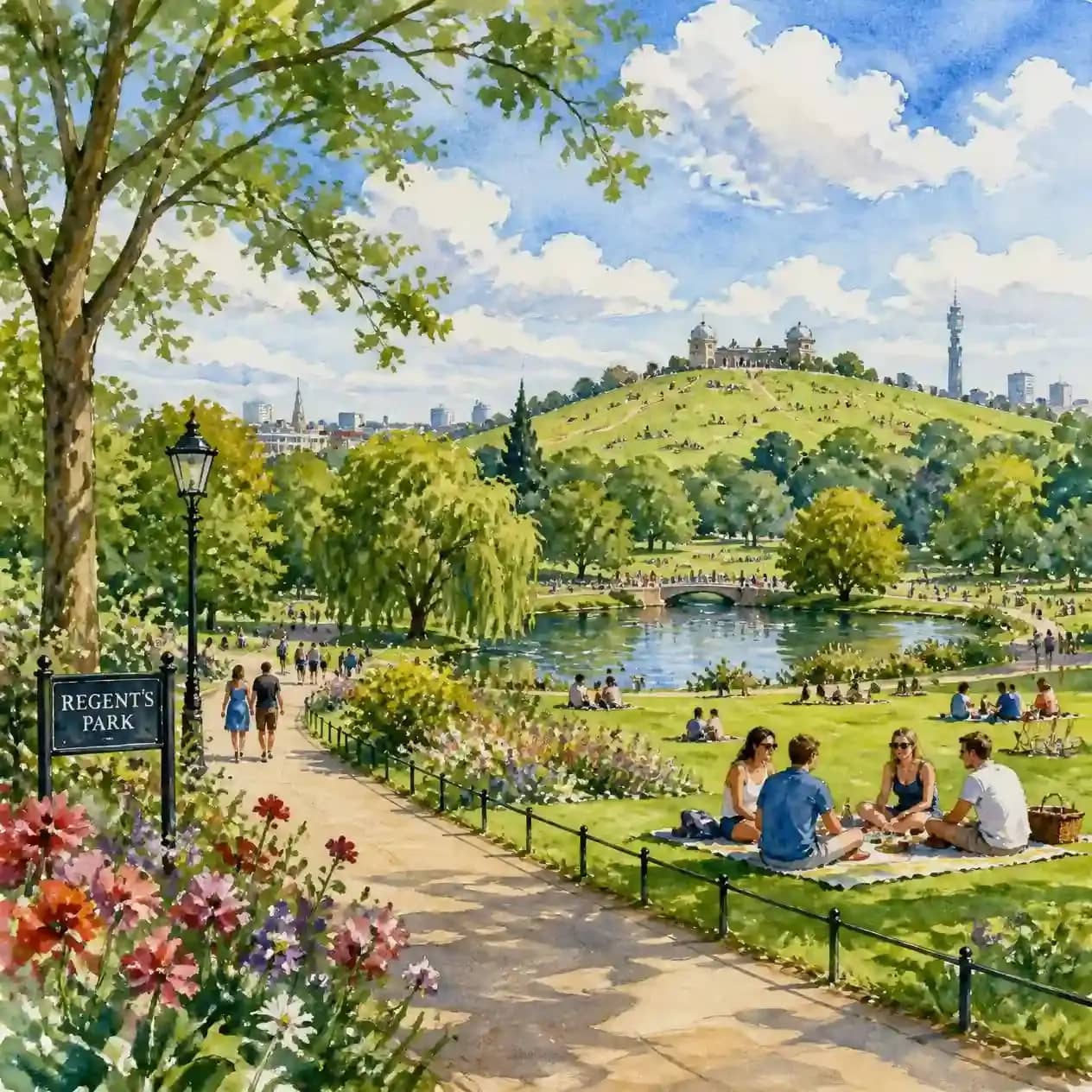
Regent's Park and Primrose Hill: A Complete Guide to London's Most Elegant Green Day Out
9 min read
Key Highlights
- Regent's Park is the largest single Royal Park in central London — 410 acres of formal gardens, open lawns, a boating lake and the world's oldest scientific zoo, laid out by John Nash for the Prince Regent.
- Queen Mary's Gardens holds around 12,000 roses; the best window is mid-June to July, when the whole Inner Circle is in scent as well as colour.
- The Regent's Park Open Air Theatre runs May to September, and ZSL London Zoo sits on the park's northern edge — two ticketed set-pieces you plan around rather than stumble on.
- Primrose Hill, just north across the road, gives one of only six legally protected views in London — the full central skyline from a single 63-metre rise.
- You can see the headlines in half a day, but the gardens, the zoo, the villages and the canal reward a full one.
A day in Regent's Park and Primrose Hill works best as two halves: the manicured park itself — rose gardens, an open-air theatre, a boating lake and London Zoo — and the wilder rise of Primrose Hill just north, which delivers a protected panorama across the whole city. The park opens at 5am and the gardens peak from June to July; the zoo and theatre are ticketed, so both are worth booking ahead.
Most of London's famous green space sits where the tourists already are — Hyde Park by the museums, St James's by the palaces. Regent's Park sits slightly apart, north of Marylebone, and rewards you for the short detour. It is the most designed of the Royal Parks and, for many Londoners, the most complete: you can spend a morning among roses, an afternoon watching gorillas, and an evening under a Shakespeare comedy without leaving its perimeter.
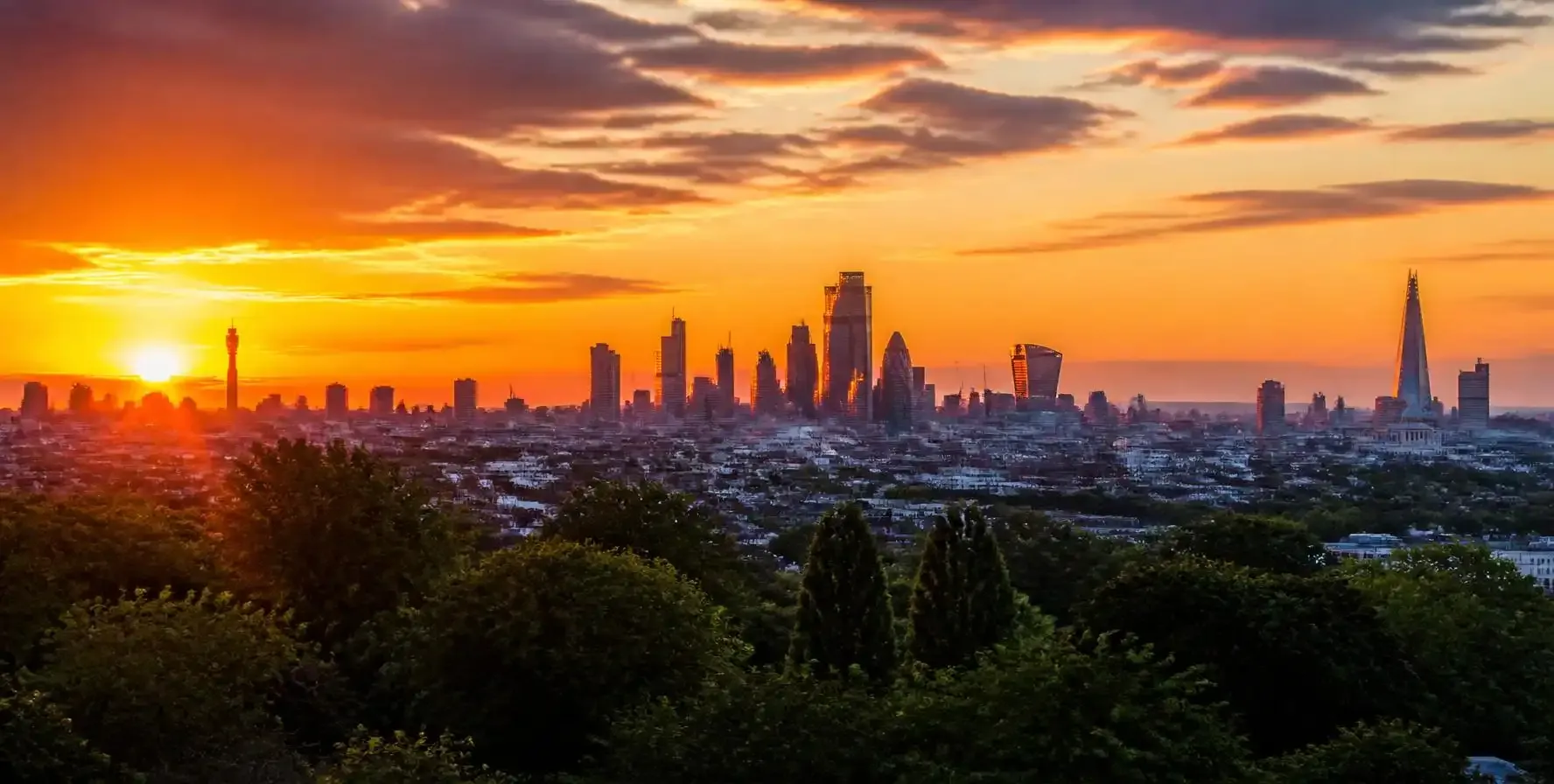
Then there is Primrose Hill. It rises just across Prince Albert Road, and from its summit you get a view the park itself can't offer — the entire central skyline in one sweep, protected by law so nothing can be built to block it. This guide covers the whole of Regent's Park and Primrose Hill: how the park is laid out, what to see in it, when the gardens and theatre are at their best, and how to fold in the surrounding villages and the canal for a day that feels planned rather than wandered.
Getting Your Bearings in Regent's Park
Regent's Park is built around two rings, and knowing them turns a confusing sprawl into a simple map. The Outer Circle is the road that loops the whole park; the Inner Circle is a smaller ring at the centre holding Queen Mary's Gardens and the Open Air Theatre. The long straight avenue running north from the southern gates is the Broad Walk, which takes you up towards the zoo and the canal.
At 410 acres it is the largest single Royal Park in central London — a little bigger than Hyde Park — and it was landscaped in the early 1800s by architect John Nash for the Prince Regent, later George IV, which is where the name comes from. The cream Regency terraces you see around the edges are part of the same scheme. It is a park with a designed feel: formal in the middle, open at the fringes.
Where to enter, and which Tube to use
Four Underground stations sit within a short walk of the park, and which one you choose shapes your day. Come in from the south for the gardens and theatre; come in from the north or east for the zoo, the canal and Primrose Hill.
- Baker Street (Bakerloo, Jubilee, Circle, Hammersmith & City, Metropolitan) — best for the Inner Circle, Queen Mary's Gardens and the Open Air Theatre; roughly a 10-minute walk in.
- Regent's Park (Bakerloo) — closest to the southern gardens and the Avenue Gardens.
- Great Portland Street (Circle, Hammersmith & City, Metropolitan) — handy for the southeastern corner.
- St John's Wood (Jubilee) — best for the western side and a quieter approach.
- For Primrose Hill specifically, Chalk Farm or Camden Town (Northern line) put you at the foot of the hill.
Opening times and orientation at a glance
- The park opens at 5am daily; closing follows dusk, so it varies through the year — check the day's time before an evening visit, as gates lock after dark.
- Entry to the park and to Primrose Hill is free; only the zoo, the theatre, boating and sports facilities are ticketed.
- The Inner Circle (gardens and theatre) is the calm, designed heart; the Broad Walk is your spine north; the Outer Circle rings the lot.
The Gardens: Queen Mary's, the Avenue and the Inner Circle
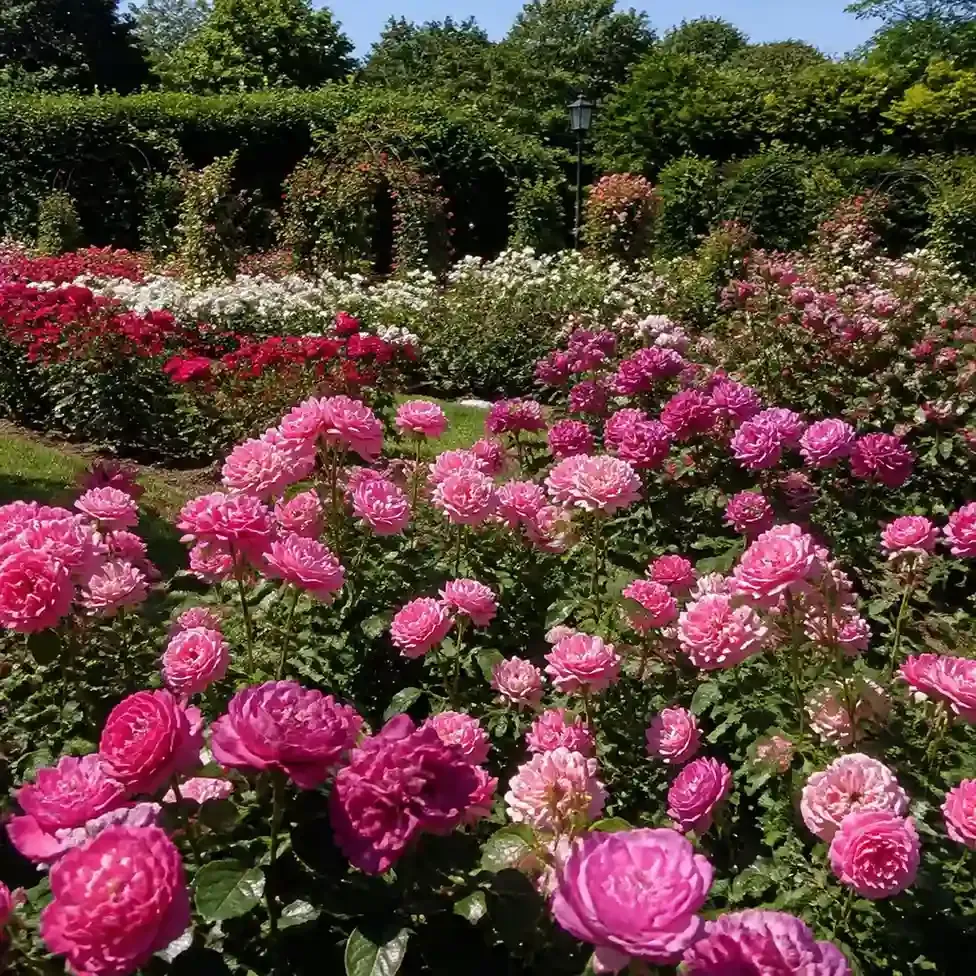
The horticultural heart of Regent's Park and Primrose Hill is Queen Mary's Gardens, set inside the Inner Circle, and it is the single best reason to time your visit for early summer. The gardens hold around 12,000 roses across formal beds, and when they open in June the Inner Circle fills with scent as much as colour — the poet Sylvia Plath once called it a "wonderland". If you visit in mid-June or July, this is where to start.
Beyond the roses, the Inner Circle rewards a slow loop. There is a small lake with a wooded island laid out in a Japanese style, the Triton Fountain, and quiet benches that stay peaceful even when the rose beds are busy. It feels almost enclosed — a garden within the park rather than part of the open lawns.
Avenue Gardens and the formal south
South of the Inner Circle, the Avenue Gardens give you the park's most formal face: a Victorian design of geometric beds, ornamental fountains and stone urns running along the Broad Walk. It is a good stretch to walk if you have entered from Regent's Park station, and it links the southern gates cleanly to the gardens and the zoo beyond.
When the gardens are at their best
The gardens shift character through the year, and the payoff varies with the season. Plan around what you most want to see.
- Roses (peak): mid-June to July, when Queen Mary's Gardens is in full bloom.
- Spring colour: late April to May, for blossom and the Avenue Gardens' first planting.
- Autumn: October, for turning trees along the Broad Walk and quieter paths.
- Quiet slots: weekday mornings soon after opening, before the Inner Circle fills.
The Set-Pieces: Open Air Theatre, London Zoo and the Boating Lake
Three ticketed attractions sit inside or on the edge of the park, and each is worth planning a visit around rather than leaving to chance. The Open Air Theatre and the zoo in particular are things you book ahead; the boating lake you can simply turn up for.
Regent's Park Open Air Theatre
Tucked inside Queen Mary's Gardens, the Regent's Park Open Air Theatre is Britain's oldest permanent outdoor theatre, running since 1932, with a horseshoe of stadium seating open to the sky. Its season runs from May to September only, so it is a summer fixture — an evening here, with the light fading over the trees mid-scene, is one of the more memorable ways to spend a night in London.
The 2026 season at the Open Air Theatre in Regent's Park runs from early May to mid-September. Key productions this year include:
- A new stage Sherlock Holmes (early May to early June)
- A Life in Four Seasons, a contemporary dance reworking of Vivaldi (mid-June)
- A Midsummer Night's Dream (late June to mid-July)
- Andrew Lloyd Webber's CATS, the season's headline musical (late July to mid-September)
- Anansi the Spider, a family show on the theatre lawn (mid-August to early September)
Tickets start from around £15 (about $19), with a large share of seats priced at £25 (about $32) or under, including capped-price Monday performances. Performances usually continue in light rain, so bring a layer. It is a 10-minute walk from Baker Street, and at the end of the night you follow the crowd out through the Baker Street gates rather than back across the park, since most park gates close at dusk. (Exact 2026 dates and prices to be confirmed against the venue at publication.)
ZSL London Zoo
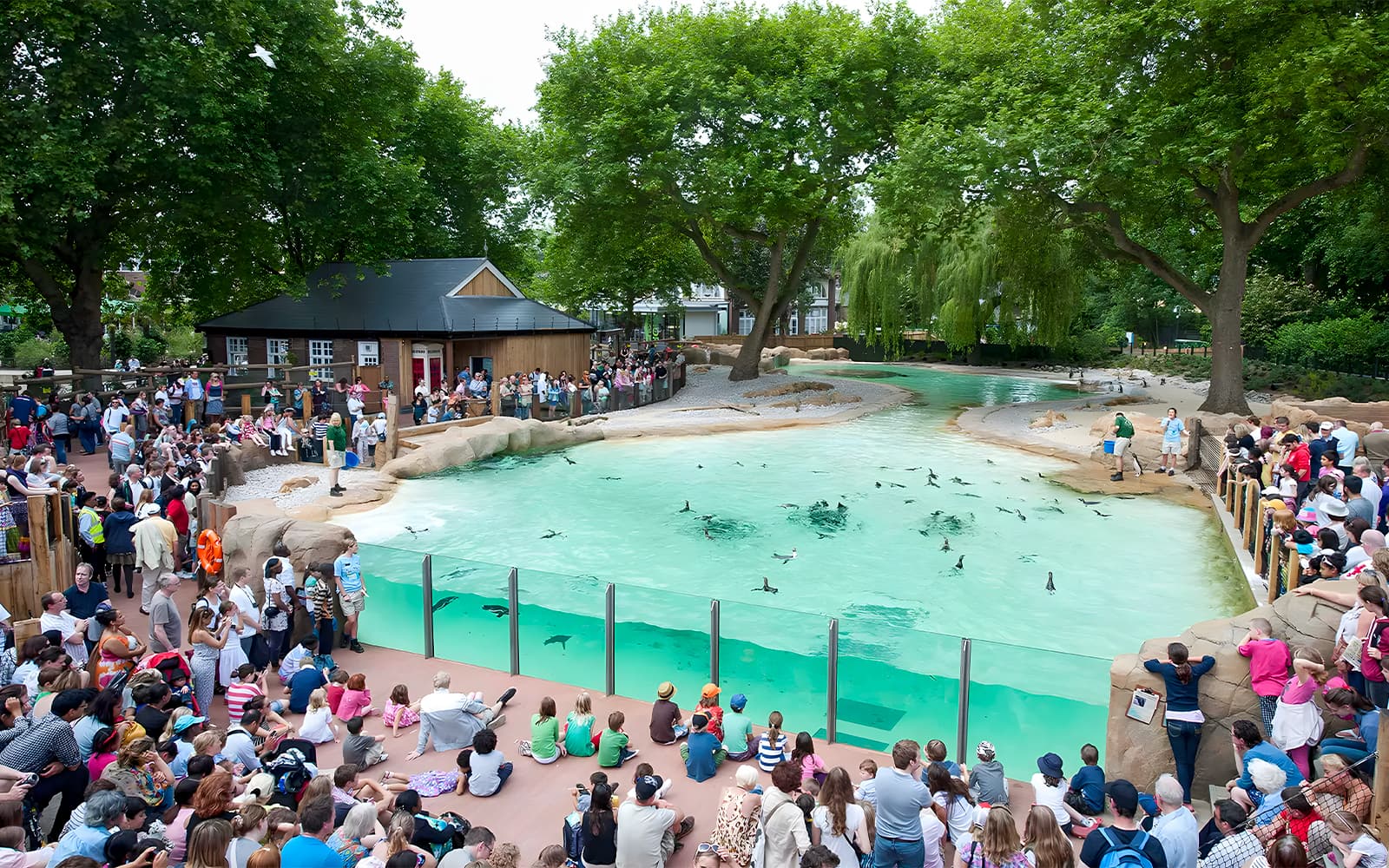
On the park's northern edge sits ZSL London Zoo, the world's oldest scientific zoo, home to more than 700 species across immersive zones such as Land of the Lions, Tiger Territory, Gorilla Kingdom and Penguin Beach. 2026 is a landmark year — the Zoological Society of London marks its bicentenary, 200 years since its founding, with special events through the year.
- Adult (online): from around £31.80 (about $40); at the gate, closer to £37 (about $47)
- Child 3–15 (online): from around £22 (about $28); under 3s enter free
- Concession (senior, student, disabled adult): from around £30 (about $38), with a free carer ticket on request
- Hours: daily from 10am, closing around 4pm in winter and up to 6pm in summer; last entry an hour before close
Booking online is both cheaper and quicker than the gate, and because ZSL is a charity, admission is free of VAT. In June, adults-only "Zoo Nights" open the zoo on Friday evenings. Allow at least half a day here; with young children, a full one. The experiences surfaced on Travjoy have been researched and approved by local experts, so you can book the zoo and the theatre with confidence rather than second-guessing which ticket is which. (Prices vary by date and donation option — confirm at booking.)
The boating lake, sports and wildlife
For something you can do on the day, the park's main lake hires out rowing boats and pedalos in the warmer months — an easy, low-effort hour among the waterfowl. The park also holds The Hub, central London's largest outdoor sports area, with pitches and courts you can book for tennis, padel and team sports. And it is quietly rich in wildlife: over 120 bird species are recorded here each year, alongside 5,000 varieties of tree and London's only breeding population of hedgehogs.




Primrose Hill: The View, and How to Time It
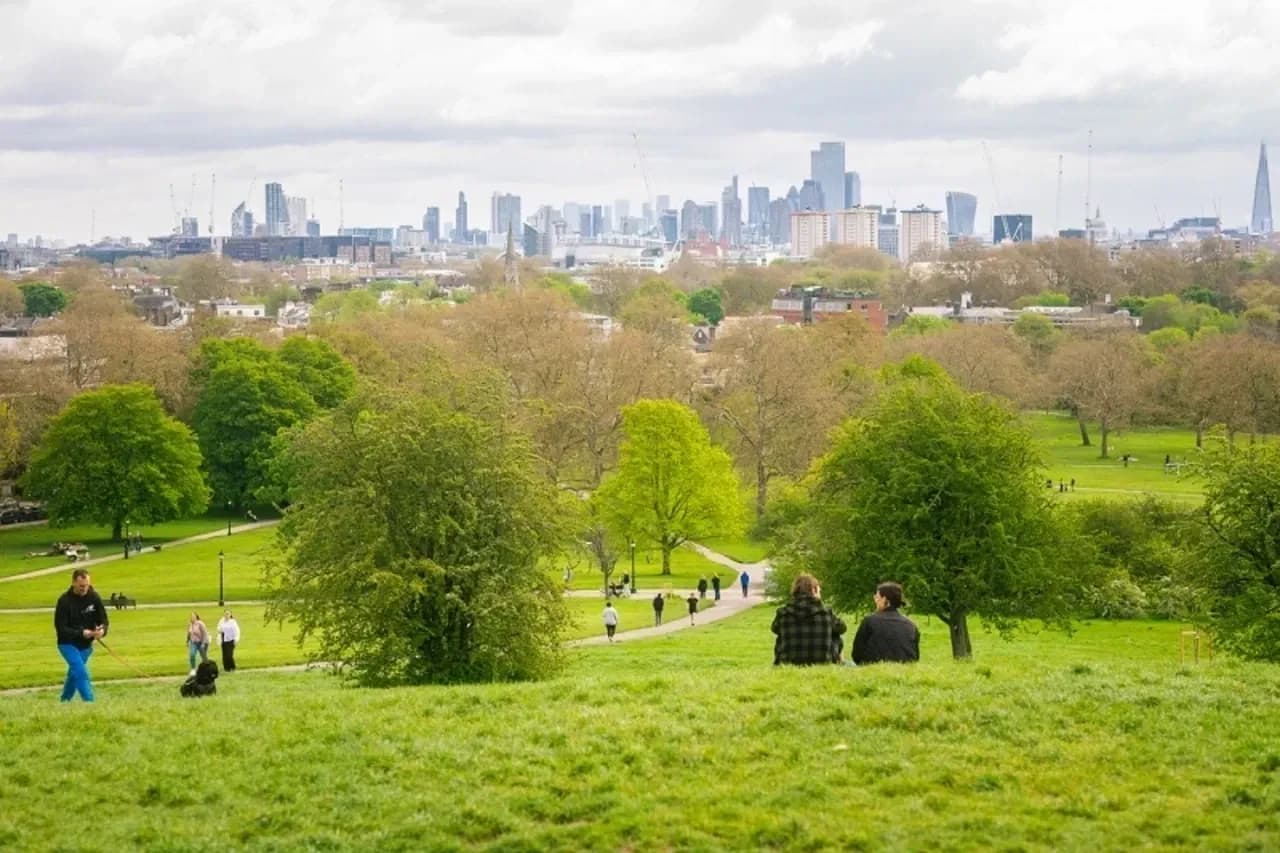
Primrose Hill delivers the single best free view in central London, and it is the reason many people cross the road from the park at all. From the summit — a modest 63 metres — you get the whole central skyline in one sweep, from St Paul's and the City towers across to the London Eye and the Shard. It is one of only six views in London protected by law, meaning nothing can be built to obstruct the sightline.
The hill sits just north of the main park, across Prince Albert Road, and has long pulled in Londoners rather than only tourists — families, couples, runners, friends with a ball. At the top you'll find Shakespeare's Tree, planted to mark the 300th anniversary of his birth, and a stone carved with William Blake's line about conversing with the spiritual sun on this very hill. It is a short, unstrenuous climb, and the payoff is immediate.
Sunrise or sunset — pick your window
The view is good at any hour, but two windows are worth planning for, and they trade off against each other.
- Sunrise: the quietest slot, with soft light on the towers and the hill largely to yourself — best if you want the panorama without the crowd.
- Sunset: the busiest and most atmospheric, as the skyline lights up; arrive early to claim a spot on the upper slope.
- Practicalities: the Primrose Hill Café at the foot of the hill handles coffee and a light snack, or bring a picnic; there is no charge and no ticket.
The Villages Around the Park
Part of what makes a day at Regent's Park and Primrose Hill feel complete is the string of neighbourhoods around its edges, each with a distinct character. You can treat the park as the centre and pick a village to bookend it — a coffee and a browse before, or lunch and a wander after.
Primrose Hill and St John's Wood
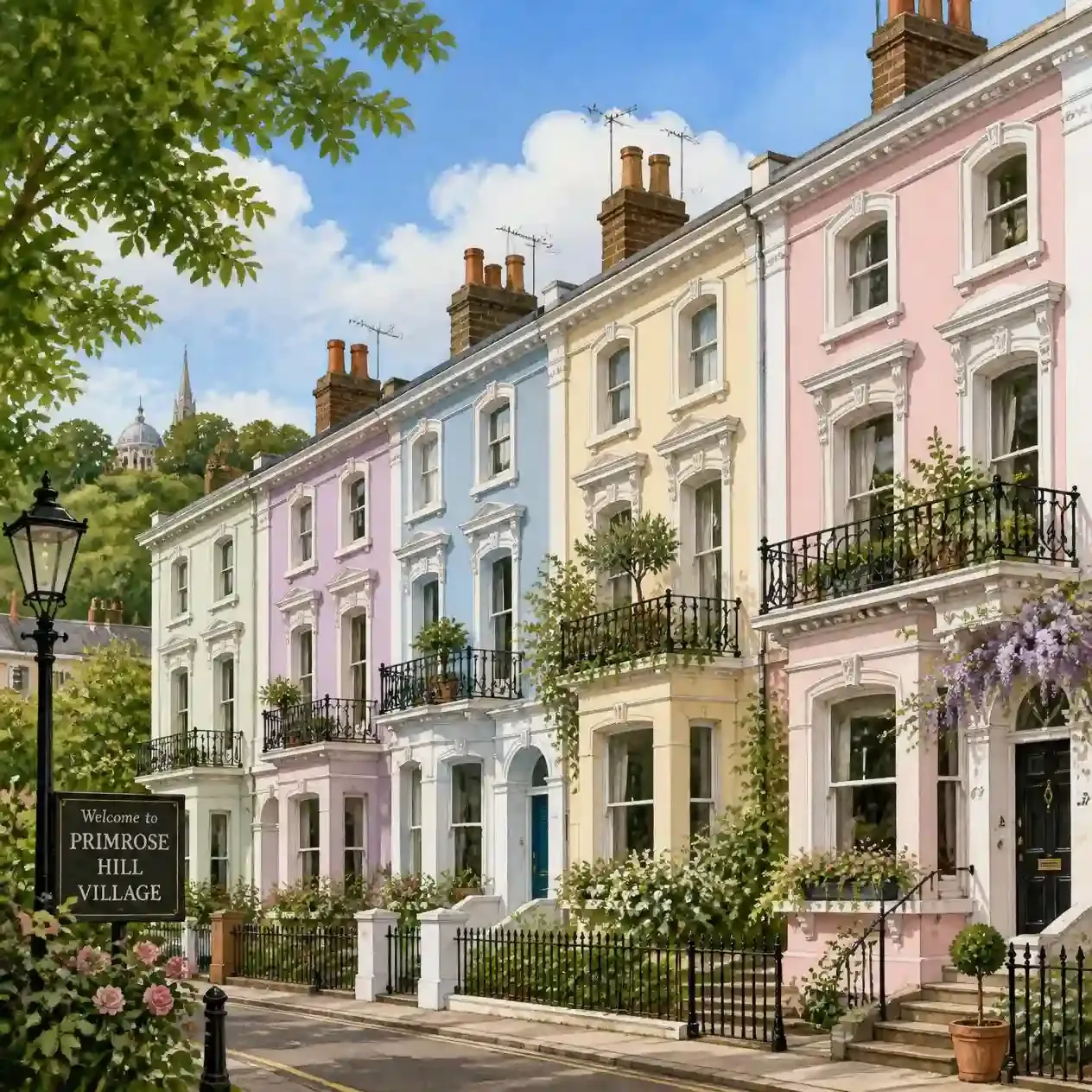
Primrose Hill village, at the northern foot of the hill, is one of London's prettier residential pockets — pastel terraces, independent cafés and a real village feel a few minutes from the summit. To the west, St John's Wood is leafier and quieter, best known for Lord's Cricket Ground and, a little further on, the Abbey Road crossing. Both suit a slow start to the day rather than a packed itinerary.
Marylebone and Camden
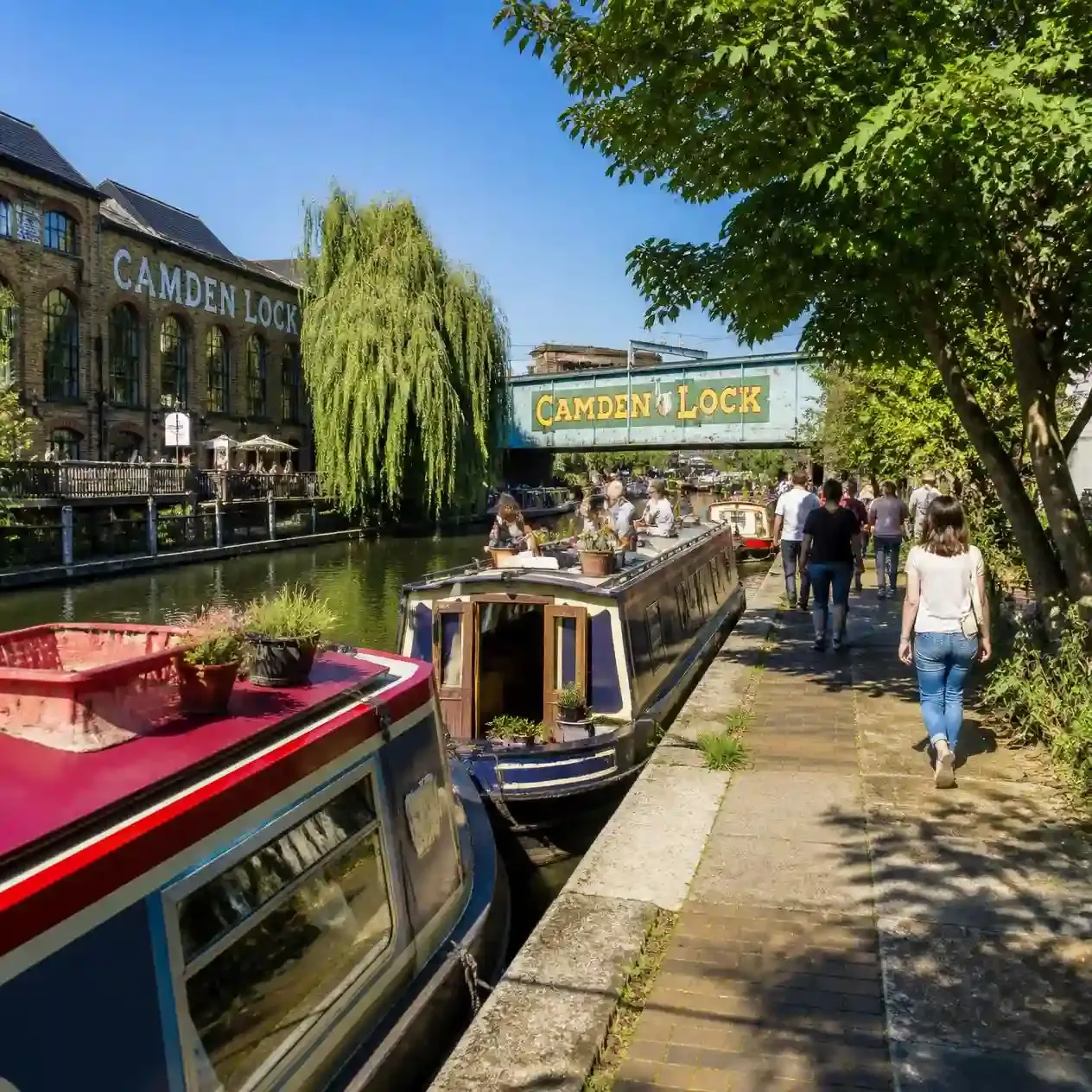
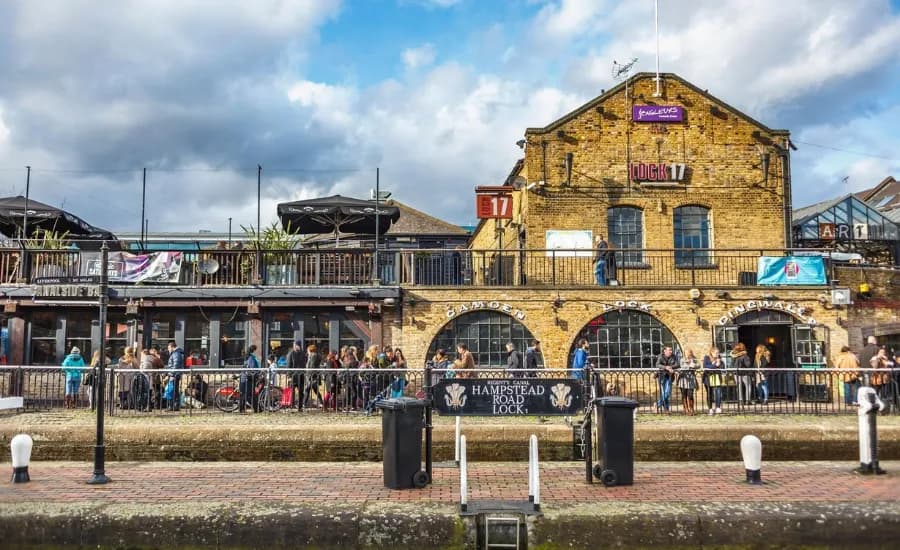
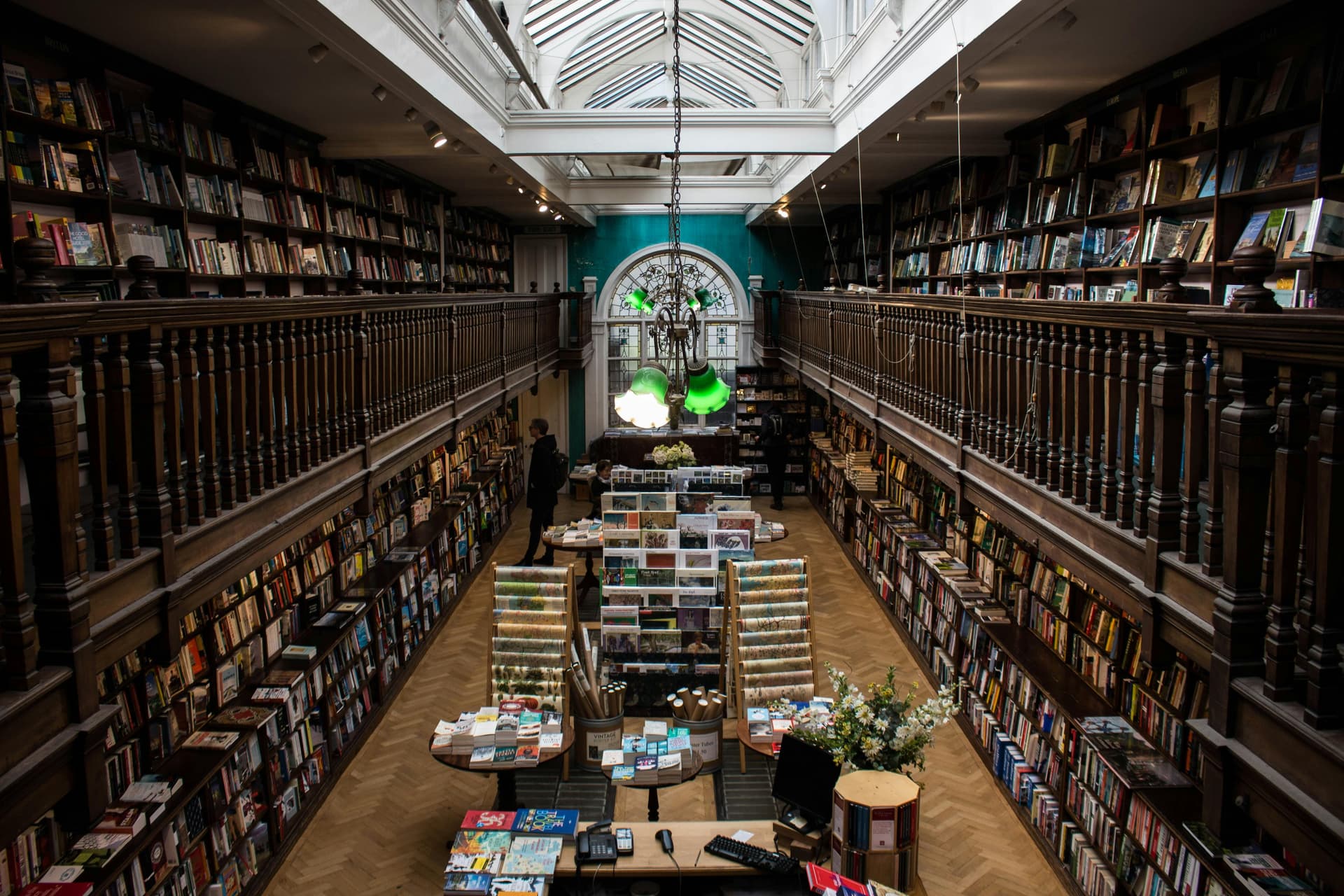
South of the park, Marylebone is the elevated option — Georgian streets, a strong dining scene, and the Regent's Park approaches lined with good coffee. The Marylebone bookshop Daunt Books, with its long oak galleries, is worth the detour on the way in. East of Primrose Hill, the mood changes entirely at Camden Market and Camden Town — canalside stalls, street food and live music, louder and more crowded than anywhere else on this route.
The Regent's Canal walk
The most rewarding link between the park and Camden is the water. The Regent's Canal runs along the park's northern edge, past the back of the zoo, and you can follow the towpath east to Camden Lock in around 20–25 minutes on foot. It is flat, largely traffic-free, and passes moored narrowboats and the zoo's aviary — a quieter, more scenic route into Camden than the main roads. For more green space across the city, browse Travjoy's nature and parks experiences, or see how this park sits within London's Royal Parks.
How to Plan Your Day
You can see the headline sights of Regent's Park and Primrose Hill in half a day, but the park rewards a full one — the gardens, a set-piece attraction, the hill and a village add up to a satisfying, low-stress day out. Here is how to structure it either way.
Half a day (3–4 hours)
- Enter from Baker Street, loop Queen Mary's Gardens and the Inner Circle
- Walk the Broad Walk north toward the zoo
- Cross to Primrose Hill for the view, then down into the village or up to Camden
A full day
- Morning: gardens and a boat on the lake
- Midday: London Zoo (half a day in itself) or an Open Air Theatre matinee in season
- Late afternoon: Primrose Hill for the view, timed for sunset
- Evening: dinner in Primrose Hill village or Marylebone, or an Open Air Theatre performance
At a glance
- Time needed: 3–4 hours for the highlights; a full day with the zoo or theatre
- Best months: June–July for roses and theatre; October for autumn colour
- Quietest slots: weekday mornings after the 5am opening; sunrise on the hill
- Book ahead: the zoo and the Open Air Theatre; boating and the park itself need no booking
- Free: the park, the gardens and Primrose Hill all cost nothing to enter
Plan Your Visit
Regent's Park and Primrose Hill give you the fullest single green day in London: formal rose gardens and a designed Inner Circle, an open-air theatre and the world's oldest zoo, and a protected skyline view a short climb away. Time it for June or July if you can, when the roses and the theatre season overlap, and let the park set the pace — this is a day to slow down rather than rush. Fold in a village and the canal, and you have something closer to a proper outing than a tick-box stop. Start planning your trip to Regent's Park, Primrose Hill and the rest of the city on Travjoy's London guide, where every experience has been researched and approved by local experts.



.svg&w=1920&q=75)