




Lau Pa Sat Singapore: History, Best Stalls & Visiting Guide
9 min read

Pratima Alvares
Author
SHARE BLOG
TABLE OF CONTENTS
- Key Takeaways
- The History Behind Lau Pa Sat — From Fish Market to National Monument
- Best Food Stalls at Lau Pa Sat — What to Eat
Key Takeaways
- Lau Pa Sat is Singapore's only hawker centre housed inside a gazetted national monument — a cast-iron Victorian structure built in 1894 and designed by Scottish engineer James MacRitchie.
- Over 80 stalls serve everything from Michelin-recognised char kway teow and nasi lemak to pao fan, fishball noodles, and international dishes, with most meals priced between S$5–S$12 (~US$3.70–US$9).
- Satay Street on Boon Tat Street opens every evening — 7 pm on weekdays, 3 pm on weekends — and runs until 3 am, with around a dozen stalls grilling chicken, beef, lamb, and prawn skewers over charcoal.
- Raffles Place MRT (EW14/NS26) and Telok Ayer MRT (DT18) are both a 4–5 minute walk away, making Lau Pa Sat one of the most accessible hawker centres in Singapore's CBD.
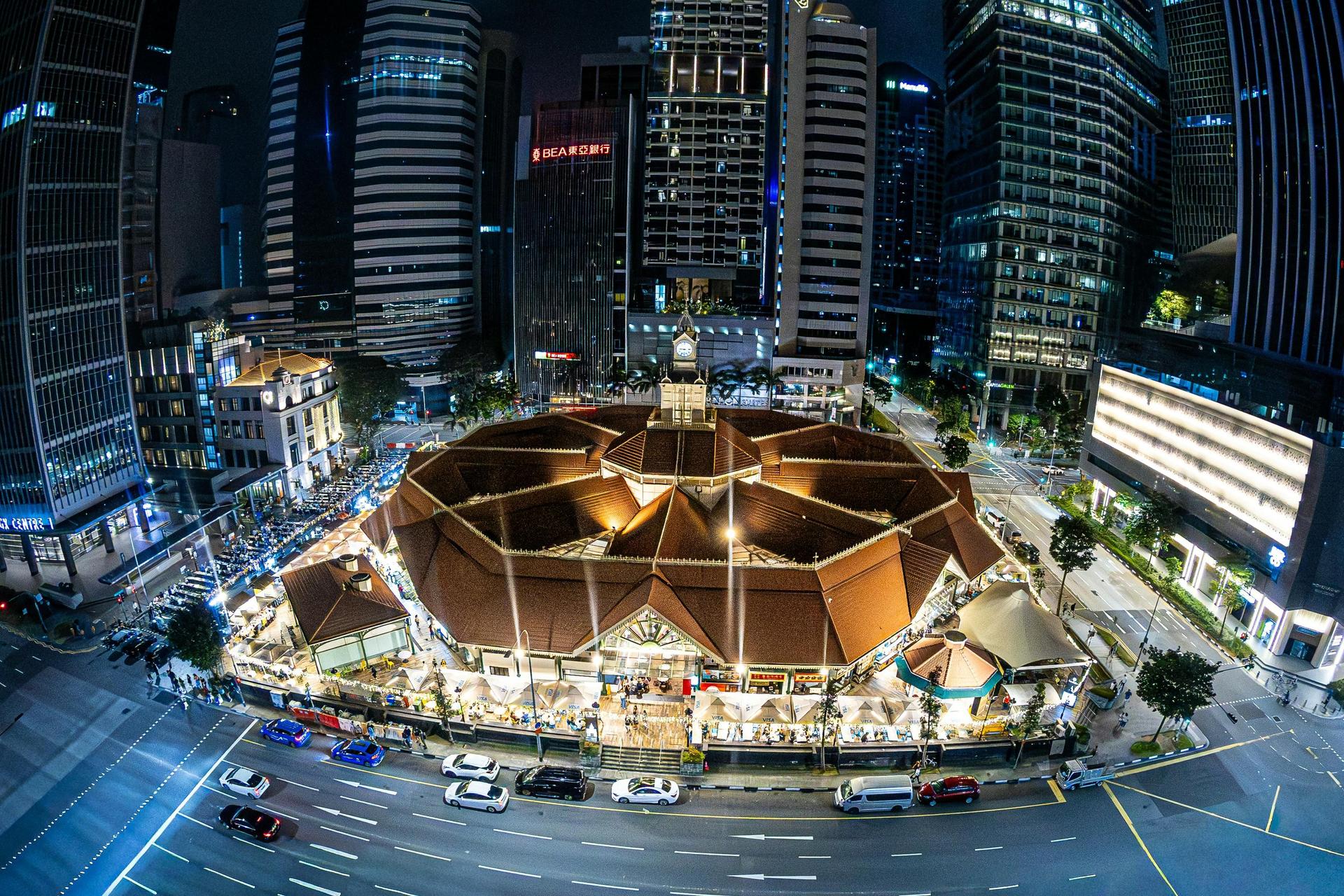
Lau Pa Sat Singapore is a heritage hawker centre at 18 Raffles Quay, in the middle of Singapore's Central Business District. Originally built as a fish market in 1824 and rebuilt with imported Scottish cast iron in 1894, it holds the distinction of being the only hawker centre operating inside a gazetted national monument. By day, office workers fill its 2,500 seats for quick lunches. By evening, the adjacent Boon Tat Street shuts to traffic and transforms into Satay Street — an open-air stretch of charcoal grills, cold beer, and skyline views.
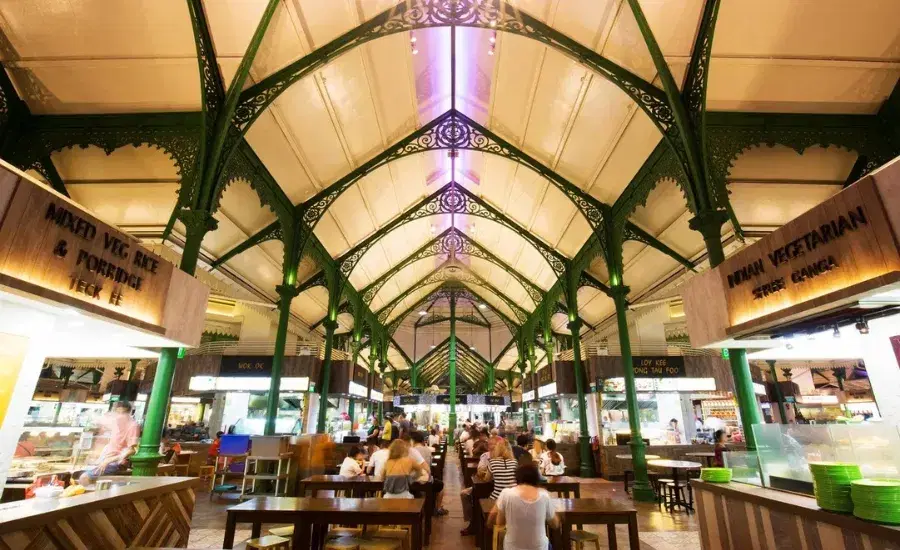
A Victorian cast-iron pavilion surrounded by glass-and-steel towers sounds like it shouldn't work. But at Lau Pa Sat, it does — and it has for over 130 years. The octagonal structure with its clock tower and ornate iron columns sits at street level on Raffles Quay, dwarfed by the office blocks of Shenton Way and Robinson Road. Walk in during a weekday lunch and you'll find a controlled kind of chaos: suited professionals, construction crews, and backpackers all navigating the same maze of 80-plus stalls.
This guide covers everything you need to plan your visit. You'll get the full history of how a 19th-century fish market became a national monument, a shortlist of the best food stalls worth queuing for (with prices), a section on how Satay Street actually works — including which stalls to pick — and practical logistics like MRT routes, timing, and seating strategy. Whether you're a first-time visitor looking for a signature Singapore food experience or a returning traveller who wants to eat smarter this time, this is where to start.
The History Behind Lau Pa Sat — From Fish Market to National Monument
Lau Pa Sat has been feeding Singaporeans since before the country existed as an independent nation. Its history stretches back two centuries and tracks the transformation of the city itself — from colonial trading post to modern financial hub. Understanding the building's past makes eating here feel different from any other hawker centre in Singapore.
Origins — Telok Ayer Market (1824–1894)
The story begins on 4 November 1822, when Sir Stamford Raffles issued an instruction to relocate a fish market from the south bank of the Singapore River to Telok Ayer Bay. By 1824, the first market structure was up and running on the waterfront, serving the traders and settlers of early colonial Singapore. It was rebuilt in 1838 to accommodate the growing town, and locals quickly gave it the Hokkien name Lau Pa Sat — literally "old market" — to distinguish it from the newer Ellenborough Market that opened on a nearby street.
The name stuck. "Lau" comes from the Chinese word for old, and "Pa Sat" is a local adaptation of the Persian word bazaar. For decades, the original timber-and-attap structure served as a wet market where fishmongers, vegetable sellers, and spice traders did business at the water's edge.
The Cast-Iron Rebuild and James MacRitchie's Design (1894)
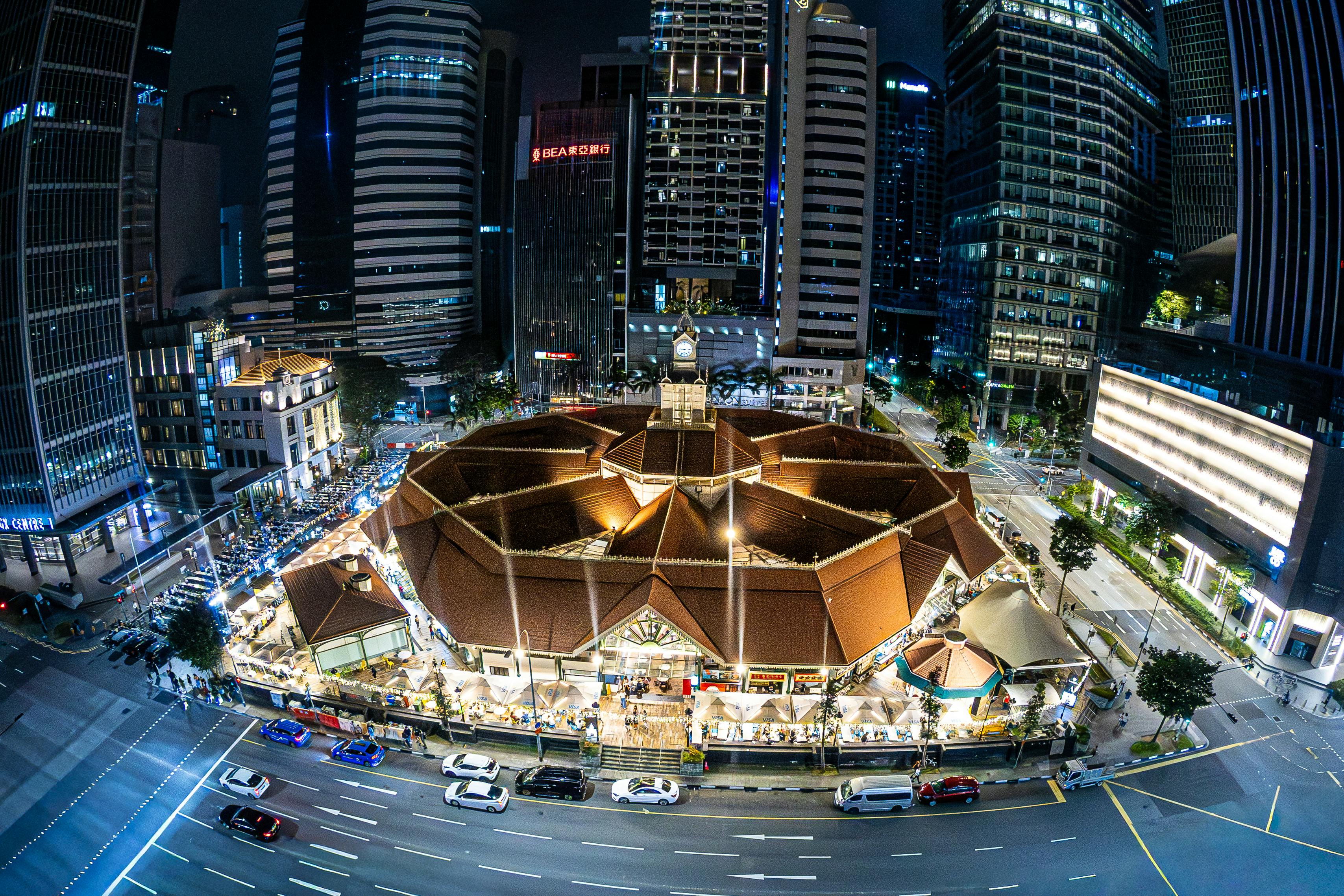
By the 1890s, the old timber market was no longer fit for purpose. In 1894, the colonial government commissioned a complete rebuild at the present location on Raffles Quay. Scottish engineer James MacRitchie — the same person after whom MacRitchie Reservoir is named — designed a striking octagonal pavilion using pre-fabricated cast-iron components shipped from Glasgow.
The result was one of the first cast-iron structures built in Asia and one of the oldest Victorian buildings still standing in Southeast Asia. The octagonal layout, said to follow feng shui principles, channels airflow from eight directions — a practical advantage long before air conditioning existed. A central clock tower, topped with a Swiss chiming clock that still operates today, anchors the entire structure.
From Wet Market to Hawker Centre and National Monument (1972–1989)
By the early 1970s, the Shenton Way corridor had transformed into Singapore's financial district. A wet market no longer made sense in the middle of a banking precinct. In 1972, Telok Ayer Market was converted into a hawker centre — but its architectural value was recognised almost immediately. On 28 June 1973, the building was gazetted as a national monument, making it the only hawker centre in Singapore to hold that status.
In 1986, the building was closed and fully disassembled so that a new MRT line could be tunnelled underneath. Every cast-iron column and beam was catalogued, stored in Jurong, and then painstakingly reassembled once the track-laying was complete. The market reopened in the late 1980s, and in 1989, it was officially renamed Lau Pa Sat — the vernacular name Singaporeans had been using for over a century.
Modern Renovations and Food Folks (2014–Present)
A S$4 million (~US$3 million) renovation in 2013–2014 reconfigured the stall layout, added eight high-volume low-speed ceiling fans for better ventilation, and increased seating capacity. The market reopened on 30 June 2014 with a more spacious, tourist-friendly layout.
In November 2020, a 7,000-square-foot food hall called Food Folks opened within the complex — Singapore's first locally focused F&B and retail hybrid space, bringing newer brands and cafe-style options alongside the traditional hawker stalls. In 2024, Lau Pa Sat celebrated its 130th anniversary with a 10-metre heritage mural by Singaporean artist Yip Yew Chong, adding another reason to visit beyond the food.
Best Food Stalls at Lau Pa Sat — What to Eat
With over 80 stalls, choosing where to eat at Lau Pa Sat can feel overwhelming. The range spans Singaporean hawker classics, Michelin-recognised names, regional Asian dishes, and even Western options. Here's a focused shortlist of the stalls consistently worth your time and appetite — selected after cross-referencing local food guides, Michelin listings, and repeat-visitor recommendations.
Michelin-Recognised Stalls
Three stalls at Lau Pa Sat carry Michelin Bib Gourmand or Michelin-selection recognition, which is unusually high for a single hawker centre.
- Lao Fu Zi Char Kway Teow — Earned its Michelin Bib Gourmand at Old Airport Road Food Centre before expanding to Lau Pa Sat in 2023. The signature char kway teow features wide rice noodles wok-fried with prawns, eggs, bean sprouts, and a smoky wok hei aroma. Prices from S$5 (~US$3.70).
- LiXin Teochew Fishball Noodles — A Michelin Bib Gourmand franchise with outlets across Singapore. Handmade fish balls with springy texture, served with chilli-and-vinegar noodles. Classic bowl from S$6 (~US$4.50); The Folks' Favourite with egg, minced meat, and fried beancurd at S$8.90 (~US$6.60).
- Nasi Lemak Ayam Taliwang — Michelin-recognised for its flavourful coconut rice platters. The signature Ayam Taliwang set (S$8.20/~US$6.10) includes a chicken leg with taliwang sauce, fried peanuts, anchovies, egg, and sambal. Opens 9 am–12 am daily, making it one of the few stalls that serves late.
Hawker Classics Worth Queuing For
These stalls don't have Michelin badges, but they draw steady queues from regulars who work in the surrounding offices.
- Golden Shoe Hokkien Mee — Traditional wet-style Hokkien mee loaded with fresh seafood and a generous spoonful of lard. The rich, prawny broth is the draw. Hokkien Mee from S$7.50 (~US$5.60); Char Kway Teow S$7.50; Oyster Omelette S$9.50 (~US$7).
- Qiu Lian Ban Mian — A multi-outlet chain known for reliable handmade noodles. Signature Ban Mian at S$5.90 (~US$4.40), Tom Yum Ban Mian at S$6.40, or Dry Noodles with fish fillet or pork chop from S$7 (~US$5.20). Open 10 am–8 pm. Unit 16.
- Mr Rice Pao Fan & Fried Rice — One of the few stalls offering pao fan (soupy rice) with options beyond seafood: chicken, luncheon meat, and pork chop versions. Seafood Pao Fan S$9.90 (~US$7.30); Deep Fried Luncheon Meat Pao Fan S$6.50 (~US$4.80).
Desserts and Snacks
Two stalls stand out for post-meal or mid-afternoon stops.
- Munchi Pancakes — Traditional min jiang kueh (Singapore-style peanut pancakes) with a soft, airy texture and generous fillings. Try the classic peanut, coconut, or matcha flavours. Most items under S$3 (~US$2.20).
- Butter & Cream Bakery — Pastries at friendly prices: egg tarts with thick, silky custard, plus "doffins" (donut-muffin hybrids) in flavours like Hokkaido milk and savoury cheese. Good for grab-and-go. Most items S$2–S$5 (~US$1.50–US$3.70).

Prices — What to Budget
Most main dishes at Lau Pa Sat fall between S$5 and S$12 (~US$3.70–US$9). That's slightly above neighbourhood hawker centre prices but standard for a CBD location. Drinks typically cost S$1.50–S$3 (~US$1.10–US$2.20) for local options like lime juice, teh tarik, or sugarcane. A full meal — main dish, drink, and dessert — will usually run S$10–S$18 (~US$7.40–US$13.30) per person.
Quick Budget Guide — Lau Pa Sat
- Budget meal (single dish + drink): S$7–S$10 (~US$5.20–US$7.40)
- Mid-range meal (main + side + drink): S$12–S$18 (~US$9–US$13.30)
- Satay Street dinner (10 sticks + sides + beer): S$20–S$35 (~US$14.80–US$26) per person
- Most stalls accept cashless payments, but carry small notes for the few that don't
Best Quality Experiences for Singapore

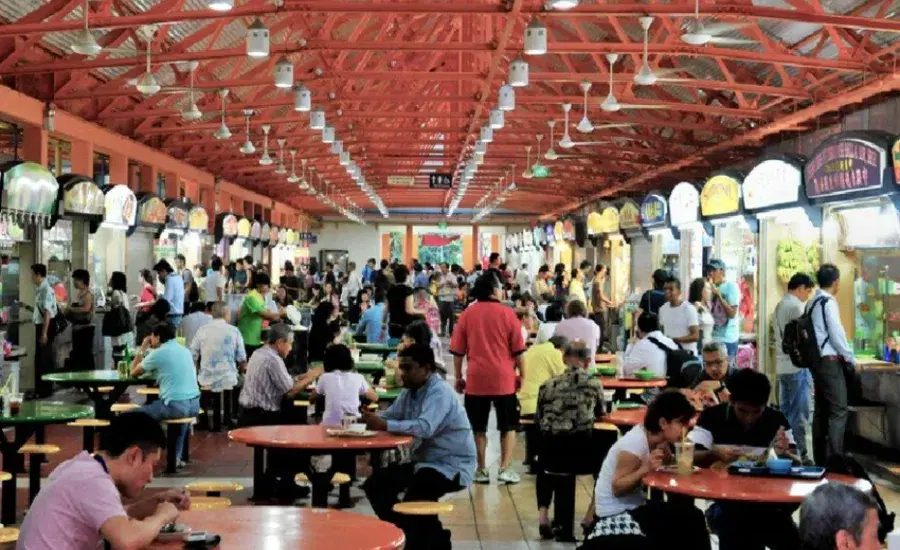
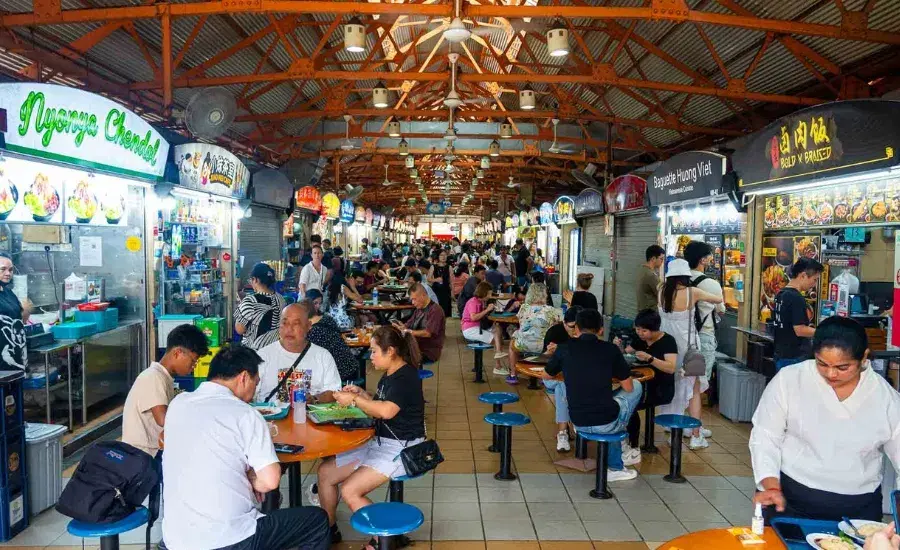
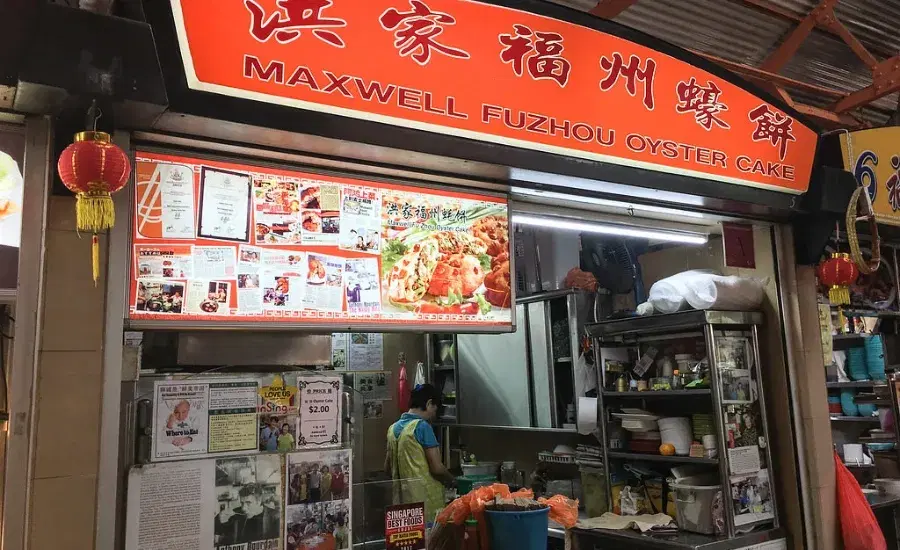
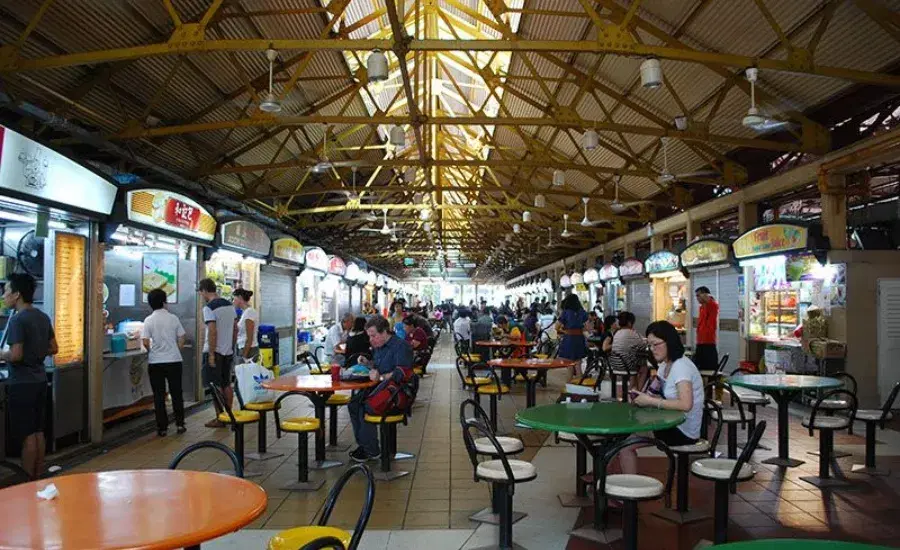



View more Experiences

Satay Street at Lau Pa Sat — How It Works
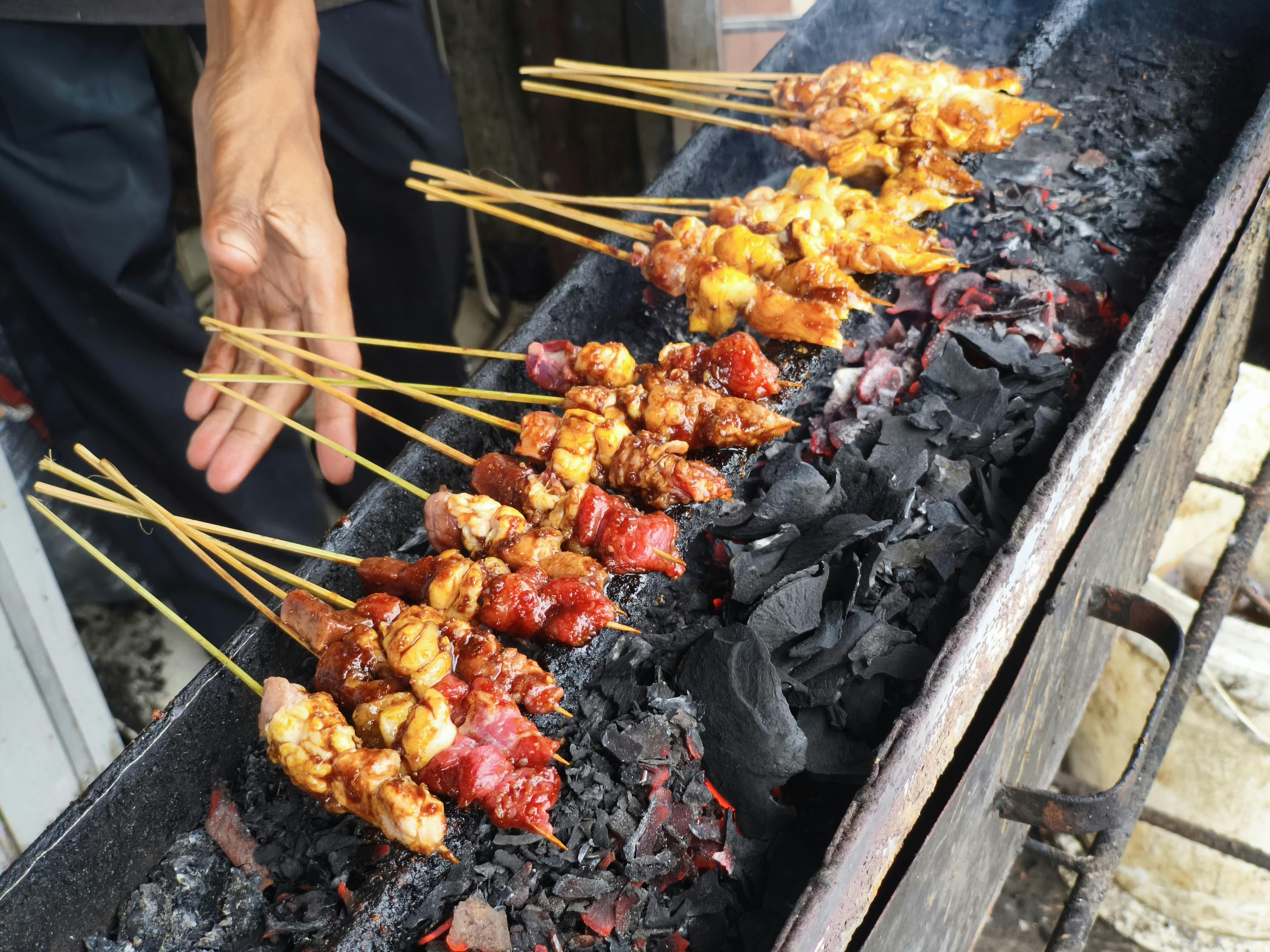
Satay Street is the reason many visitors plan their evening around Lau Pa Sat. Every night, a section of Boon Tat Street on the southwest side of the building closes to traffic and transforms into an open-air dining strip — folding tables, plastic chairs, charcoal grills, and the thick, smoky scent of skewered meat filling the air between office towers. It's Singapore's only dedicated satay street, and the combination of food, skyline backdrop, and street-party energy makes it unlike any other hawker experience in the city.
What Is Satay Street?
Around a dozen satay stalls line the pavement along Boon Tat Street, each operating its own charcoal grill. The setup is simple: rows of communal tables and chairs are arranged on the closed road, and you walk to the stalls to order. Most stalls offer the classic trio of chicken, beef, and lamb satay, with some also serving grilled prawn skewers, stingray, and other seafood. Every order comes with peanut dipping sauce, rice cakes (ketupat), and sliced cucumber and onion on the side.
The atmosphere shifts through the evening. Early on, it's relaxed — office workers winding down, couples finding corner tables. By 8:30–9 pm, it's packed: smoke billows across the street, beer buckets pile up, and the queue at popular stalls stretches several groups deep.
Opening Hours and Best Time to Arrive
Satay Street operates on a fixed evening schedule:
- Weekdays: 7 pm – 3 am
- Weekends and public holidays: 3 pm – 3 am
If you want a table without waiting, arrive before the rush. On weekdays, 7–7:30 pm is your window — the street is set up, stalls are firing, but the post-dinner crowd hasn't landed yet. On weekends, the 3–5 pm window is quieter and works well for families or anyone who prefers daylight. After 9 pm on any night, expect full tables and slower service, but also the best atmosphere.
Which Satay Stalls to Try
Not all satay stalls are equal, and the quality gap between the best and the average is noticeable. Based on consistent local recommendations and repeat-visitor feedback:
- Stalls 7 & 8 — The most popular pair on the street, offering both halal and non-halal options. Known for well-marinated, evenly charred skewers with good meat-to-fat ratio. Expect a queue after 8 pm.
- Stall 3 & 4 — Slightly less crowded than 7 and 8 but consistently praised for tender chicken satay and well-balanced peanut sauce.
- Stall 10 — Worth trying if you want a wider seafood selection beyond standard skewers.
Satay is typically ordered in multiples of 10 sticks. Prices hover around S$0.70–S$0.80 (~US$0.50–US$0.60) per stick, so 10 sticks cost roughly S$7–S$8 (~US$5.20–US$6). Add a Tiger beer (S$7–S$10/~US$5.20–US$7.40) and you're looking at around S$20–S$35 (~US$14.80–US$26) per person for a full Satay Street dinner with drinks.
How to Order and What to Expect
The process is informal. Grab a seat first — this matters, because stalls will ask for your table number when you order. Then walk to your chosen stall, order by the stick count, and give your table number. The food arrives at your table within 10–15 minutes on a normal night, longer during peak hours.
Satay Street — Quick Tips
- Send one person to hold a table while others order — seats fill fast after 8 pm
- Bring wet wipes; skewers are hands-on and napkins are limited
- You can also eat satay at indoor tables inside Lau Pa Sat if the outdoor heat or smoke isn't for you
- Edge tables give you less smoke and better skyline views — aim for the Shenton Way end
Visiting Lau Pa Sat — Practical Tips
Lau Pa Sat is one of the easiest hawker centres to reach in Singapore, but timing your visit well makes the difference between a smooth meal and a 20-minute queue for a seat. Here's what you need to know before you go.
How to Get There by MRT
Four MRT stations are within walking distance, giving you multiple route options depending on where you're coming from:
- Raffles Place MRT (EW14/NS26) — 5-minute walk. The most common approach if you're coming from the East-West or North-South line. Exit toward the CBD and follow the signs.
- Telok Ayer MRT (DT18) — 4-minute walk. A quieter route through side streets, ideal if you're on the Downtown Line.
- Downtown MRT (DT17) — 5-minute walk. Another Downtown Line option, slightly further but useful if you're coming from Marina Bay.
- Shenton Way MRT (TE19) — 4-minute walk. The newest option on the Thomson-East Coast Line.
If you're taking a taxi or Grab, set the drop-off to "Lau Pa Sat" or "18 Raffles Quay." In the evening, ask for "Satay Street, Boon Tat Street" for a closer drop-off to the outdoor dining area.
Best Times to Visit (and When to Avoid)
Lau Pa Sat is technically open 24 hours, but most stalls operate between 9 am and 10 pm. The experience changes sharply depending on when you visit:
- Weekday breakfast/early lunch (9–11:30 am): Quiet. Good for a relaxed meal with no queues. Limited stall selection — not everything is open yet.
- Weekday lunch (12–2 pm): Avoid unless you enjoy crowds. The surrounding office buildings empty into Lau Pa Sat at noon, and queues at popular stalls stretch 15–20 minutes. Tables are hard to find.
- Weekday late afternoon (3–6 pm): A sweet spot. Lunch crowds are gone, Satay Street hasn't started, and most stalls are still operating. Good for unhurried eating and photography.
- Evening / Satay Street (7 pm onwards): The main event. Best for atmosphere and the full Lau Pa Sat experience, but expect busy tables by 8:30 pm.
- Weekends: Quieter than weekday lunches overall, especially before 5 pm. Satay Street starts at 3 pm on weekends, giving you more hours to spread across.
Payment, Seating, and Etiquette
Each stall operates independently — you pay at the stall when you order, not at a central counter. Most stalls accept cashless payments (GrabPay, credit cards), but a few still prefer cash. Carrying S$20–S$30 in small notes is a sensible backup.
Seating is communal and self-service. Take any available seat, note your table number (displayed on the table or nearby pillar), and give that number when ordering. Table sharing with strangers is normal and expected during busy periods — don't wait for an entirely empty table if the place is full.
After eating, return your tray to the designated tray-return points. It's a small gesture that keeps the space usable for everyone and is standard practice at Singapore's hawker centres.
Who Is Lau Pa Sat Best For?
Lau Pa Sat works across traveller types, but the experience varies:
- First-time visitors to Singapore: This is one of the best single-stop introductions to Singapore's hawker food culture. The variety of stalls, the heritage architecture, and Satay Street give you three experiences in one location. Consider pairing your visit with a Singapore food tour if you want guided context.
- Couples: Satay Street after 7 pm has a date-night quality — the outdoor seating, skyline backdrop, and warm lighting work well. The Food Folks perimeter area with fairy lights is another option for a slightly quieter setting.
- Families: Weeknights before 7:30 pm or weekend afternoons are the most comfortable. Keep younger children away from the hot grills on Satay Street. The indoor area is air-conditioned and more manageable with kids.
- Solo travellers and business visitors: Lau Pa Sat is built for solo eating — communal tables, fast service, no awkwardness about dining alone. It's a 5-minute walk from most CBD offices, so weekday lunches are common for business travellers, though queues are the trade-off.
If you want to compare the experience with other well-known hawker centres, Maxwell Food Centre in Chinatown offers a more local, less touristy vibe with its own set of Michelin-recognised stalls (Tian Tian Chicken Rice is the big draw there). Chinatown Complex Food Centre, the largest hawker centre in Singapore with over 200 stalls, is the choice when sheer variety and rock-bottom prices matter most. Lau Pa Sat's advantage is the combination of heritage architecture, Satay Street, and CBD accessibility that neither of the other two can match.
Plan Your Visit to Lau Pa Sat
Lau Pa Sat earns its place on a Singapore itinerary by being more than a hawker centre. The Victorian cast-iron pavilion gives you a piece of 19th-century Singapore. The 80-plus stalls — including three Michelin-recognised names — cover every major cuisine you'd expect from the city. And Satay Street, with its charcoal smoke and skyline views, is the kind of evening experience that's hard to replicate anywhere else.
Time your visit for late afternoon or early evening, and you can cover the indoor stalls and Satay Street in a single trip. Travjoy's options for Singapore have been selected after extensive research and reviewed by local experts — so whether you're building a full itinerary or just figuring out where to eat tonight, it's a good place to start. Explore more of what Singapore has to offer and start planning on Travjoy, or check out the top 20 things to do in Singapore for a broader starting point.
Best Quality Experiences for Singapore



View more Experiences
Plan Your Visit (FAQ's)
.svg&w=1920&q=75)



POWERED BY REAL EXPERTS
Adeline Ee
Local Expert -

Planning Your Singapore trip? TravJoy Recommends the Best for You


