



Iconic Places to Eat in London: A Complete Guide to the City's Storied Restaurants, Pubs and Institutions
7 min read
Key Highlights
- London's oldest restaurant, Rules, has served from the same Covent Garden rooms since 1798 — still doing British game, oysters and puddings.
- The iconic spectrum runs from a £6 ($8) plate of pie and mash to a £90 ($119) afternoon tea at The Ritz — status here isn't about price.
- Some institutions book weeks out; others (Sweetings, most pie-and-mash shops) are lunch-only or walk-in — knowing which is which saves a wasted trip.
- Order the signature: Simpson's roast off the silver trolley, the Savoy Grill's omelette Arnold Bennett, Quo Vadis's smoked eel sandwich.
The most iconic places to eat in London are its living institutions — restaurants, pubs and food halls that have outlasted trends and become part of the city's identity. They run from Rules (1798), London's oldest restaurant, and the grand dining rooms of the Savoy Grill and The Wolseley, to century-old pie-and-mash shops, the Fleet Street taverns, and landmark markets like Borough and Leadenhall. What unites them isn't price or cuisine but story: order the dish each is known for, and book ahead where the room demands it.
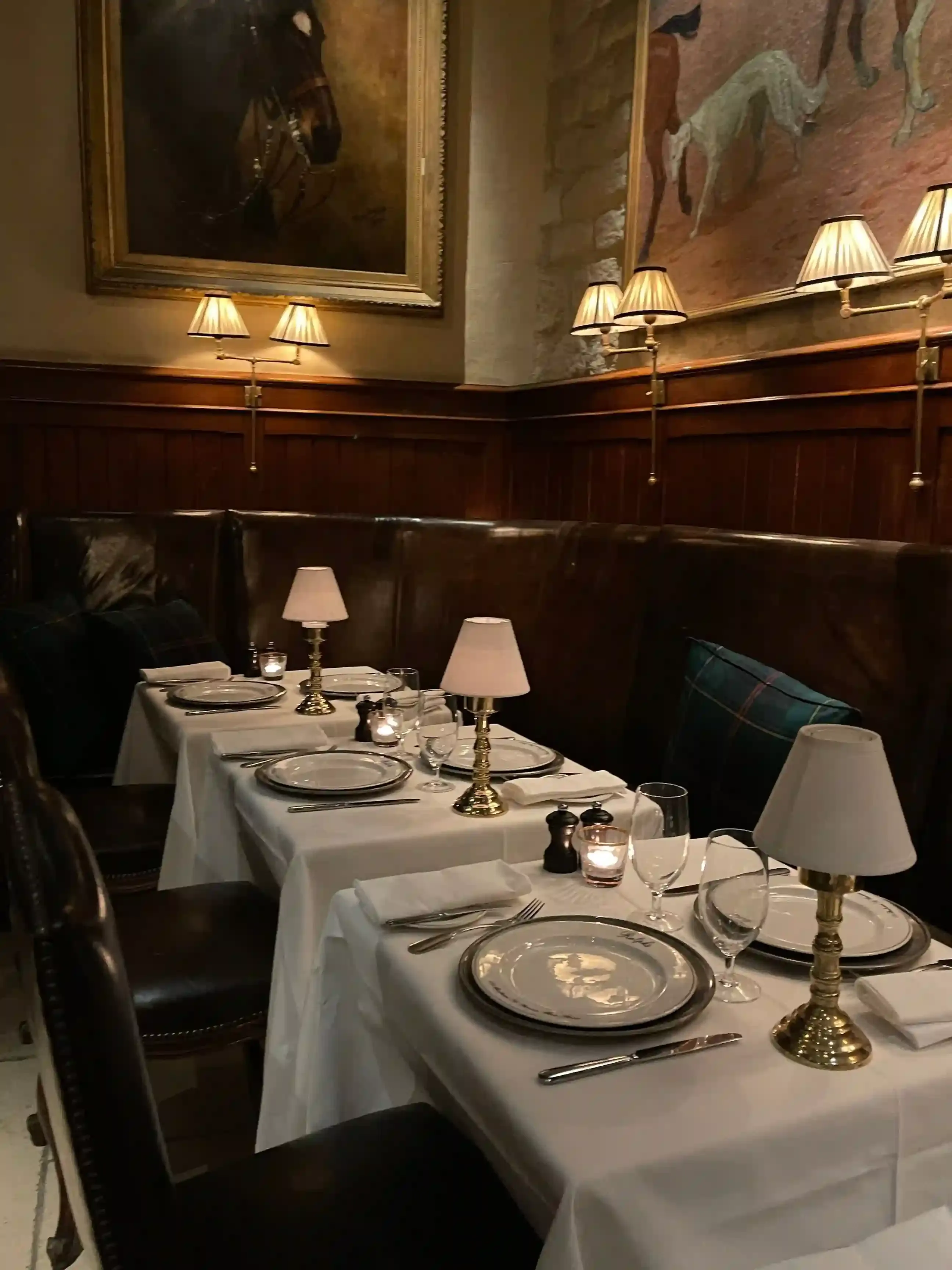
Every few weeks a new London opening claims the city's attention, and most are worth trying once. But the places Londoners return to for a birthday, a deal closed, or a wet Tuesday that needs rescuing tend to be the old ones — the rooms that have fed the city through wars, recessions and changing fashions and barely altered the menu.
These are the iconic places to eat in London: institutions rather than restaurants. This guide covers the full range — the grand West End dining rooms, the Fleet Street taverns, the East End pie-and-mash shops and caffs, the curry houses that rewrote how Britain eats, and the market halls and tea salons that are eating landmarks in their own right. For each, you'll find what makes it matter, the dish to order, and the practical reality of getting a table — because an institution is only worth the trip if you know how to approach it.
What makes a place one of the iconic places to eat in London
A London eating place earns the word "iconic" through endurance, not marketing — a room that has traded for decades or centuries, a menu with dishes it refuses to drop, and a fixed place in the city's cultural memory. Age helps, but it isn't everything: a tiled 1900s caff and a 200-year-old dining room can both be institutions. What they share is that the city has decided to keep them.
The markers of a true institution
- Longevity — decades or centuries of continuous trade, often in the same room.
- A signature that never leaves the menu — the dish people come specifically to eat.
- Listed or original interiors — Grade-II rooms, tiled caffs and panelled halls that can't legally be altered.
- A place in the city's story — the writers, actors and regulars whose names are tied to the tables.
How to approach an icon: the booking reality
The single biggest mistake is treating every institution the same. Some take bookings months out; a handful famously refuse reservations and run lunch on a first-come basis; others hold a few walk-in seats at the bar. Sort this before you go, not on the doorstep.
Booking reality at a glance
- Book weeks ahead: Rules (dinner), the Savoy Grill, Veeraswamy, and afternoon tea at The Ritz or Claridge's.
- Walk-in or lunch-only: Sweetings (lunch, first-come, no dinner), classic caffs and most pie-and-mash shops.
- Bar seats held back: several grand rooms keep counter or bar spots for walk-ins — arrive early.
If you'd rather not vet each room yourself, the London experiences on Travjoy are researched and approved by local experts — a shortcut to the institutions still worth the trip rather than the ones coasting on a name.
The grand dining rooms: London's storied restaurants
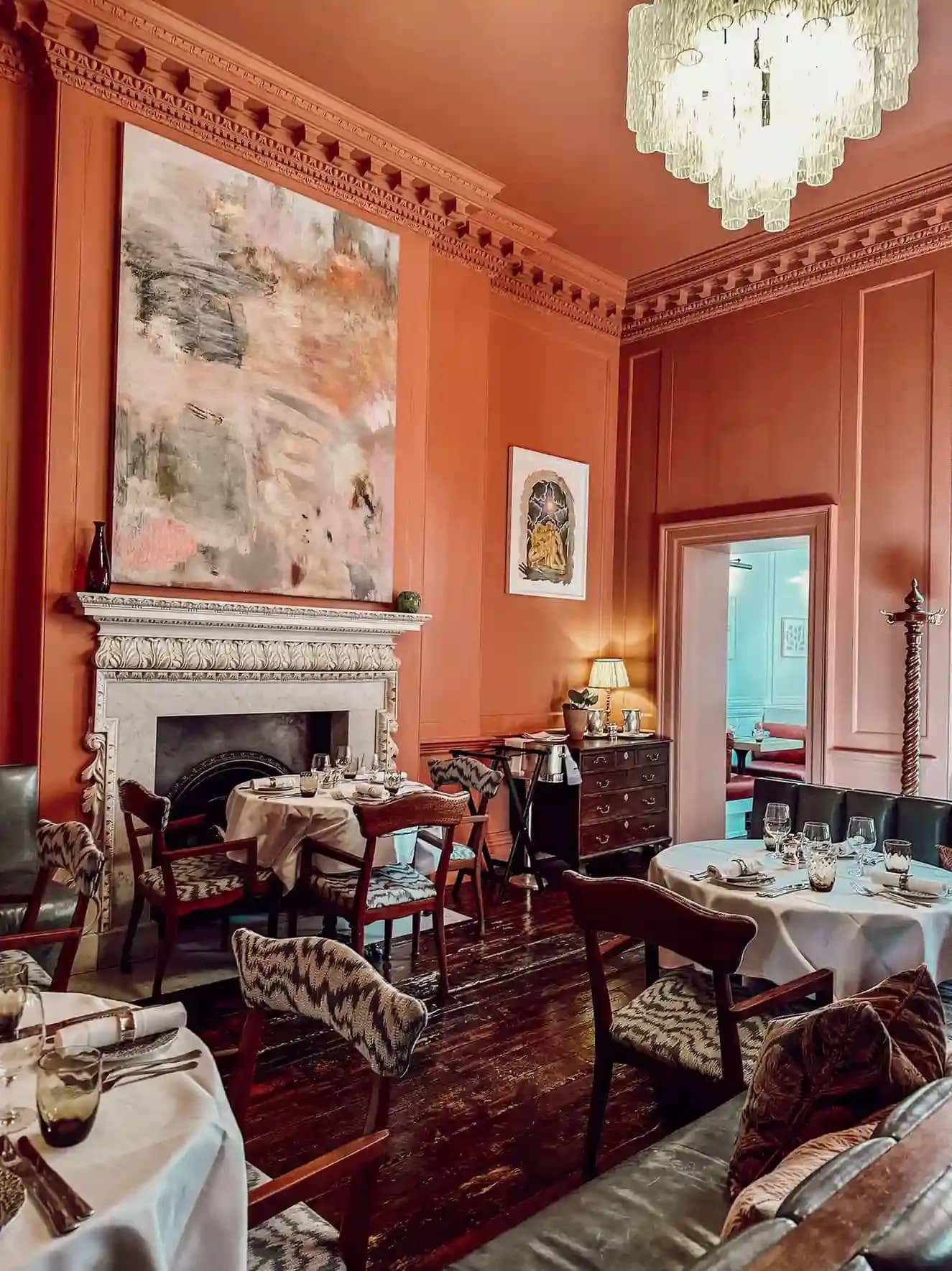
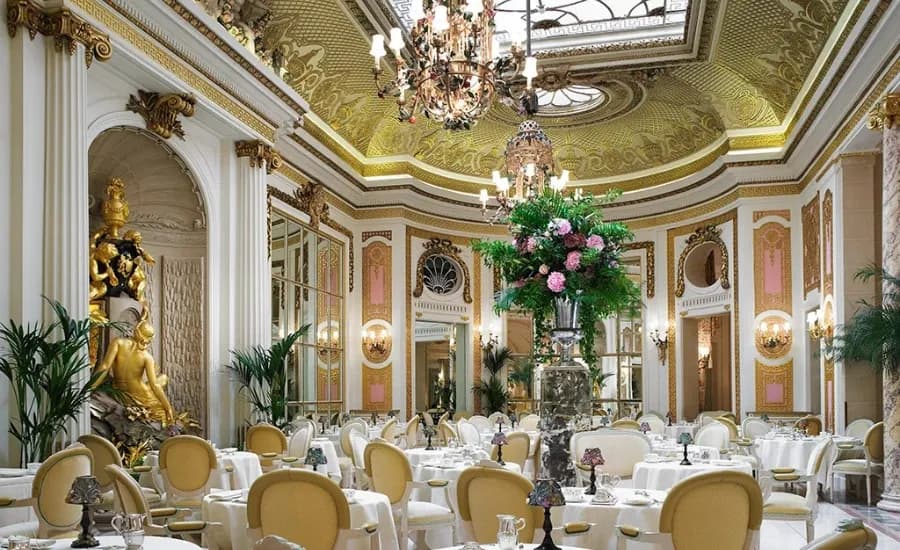
London's grand dining rooms are where its restaurant history runs thickest — panelled, linen-clothed rooms that have fed royalty, writers and dealmakers for a century or more. If you want one classic sit-down meal that feels unmistakably of the city, start here. These are among the most recognisable classic British restaurants in the capital.
Rules, Covent Garden — the oldest of them all
Rules has served from the same Covent Garden address since 1798, which makes it London's oldest restaurant. Under only three families in 200-plus years, it has kept faith with British game, oysters, pies and puddings — much of the game coming from its own estate in the High Pennines. The walls are hung with cartoons and portraits of the writers and actors who made it their canteen. Order the game in season and a steamed pudding to finish.
Wiltons, Simpson's and the seafood-and-roast old guard
A cluster of St James's and Strand rooms carry the oldest traditions of British dining. Each is known for one thing done the same way for generations.
- Wiltons (St James's) traces its origins to a 1742 shellfish stall and remains one of the city's most esteemed seafood rooms — native oysters, Dover sole, potted shrimps. A wartime legend has a rattled owner selling the place mid-air-raid to a diner who told her to put it "on the bill."
- Simpson's-in-the-Strand built its name on roast beef carved tableside from a silver trolley — a tradition said to have begun so as not to disturb chess games in progress. Its trading status has wobbled in recent years, so confirm it's open before planning an evening around it.
- Sweetings, in the City, has held its corner on Queen Victoria Street for over a century: lunch only, no dinner, and — for the full effect — no bookings. Come for West Mersea oysters, Dover sole and a proper spotted dick.
Cost at this tier is more flexible than it looks, and the set lunch is the smart way in:
- À la carte mains: roughly £30–£55 ($40–$73) at the grand rooms.
- Set lunch: often £30–£45 ($40–$59) for two to three courses — the same room, a fraction of the outlay.
- Sweetings: around £25–£45 ($33–$59) a head for oysters and sole at lunch.
The Wolseley, the Savoy Grill and Quo Vadis
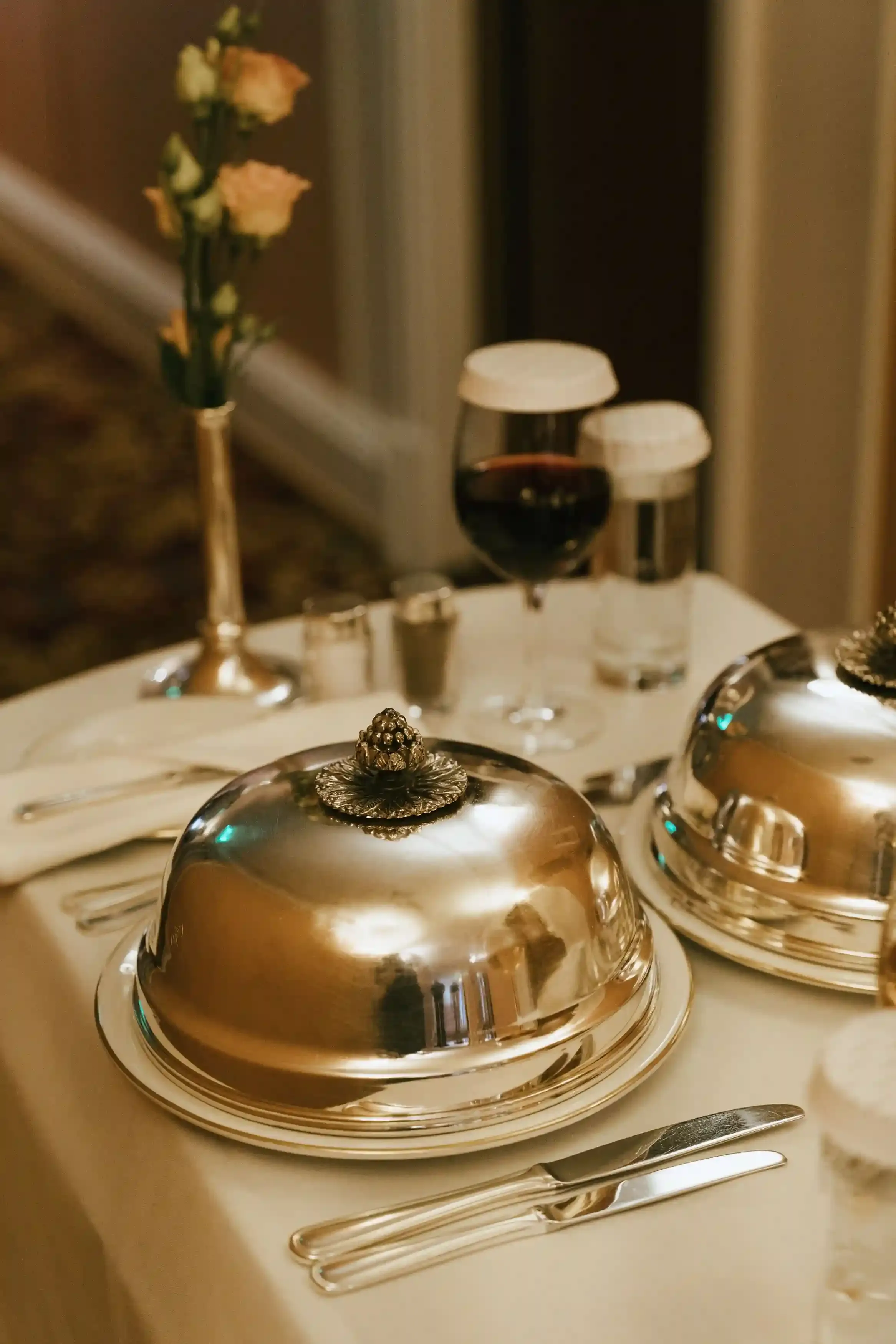
Three West End rooms show how broad "grand" can be, from all-day café grandeur to a Michelin kitchen and a Soho fixture.
- The Wolseley (Piccadilly) is a European grand café in a former car showroom turned bank — go for breakfast under the chandeliers or a between-meals plate when everywhere else has stopped serving.
- The Savoy Grill (Strand) has traded since 1889 and is now run by Gordon Ramsay; order the omelette Arnold Bennett, the dish it has carried for generations. It sits firmly among London's grand fine dining rooms.
- Quo Vadis (Soho) is a 1926 fixture run by the Hart brothers with Jeremy Lee in the kitchen; the smoked eel sandwich is the order.

The people's institutions: pubs, pie and mash, and classic caffs
London's most iconic eating places aren't all white tablecloths. Some of the city's deepest food traditions live in its historic pubs, its pie-and-mash shops and its Formica-tabled caffs — rooms where the recipes, and often the families, have stayed put for a century. This is the working-class half of the story, and it's every bit as much a part of the city as the grand rooms.
The historic taverns
London's oldest pubs are eating places in their own right, and two stand above the rest for sheer history.
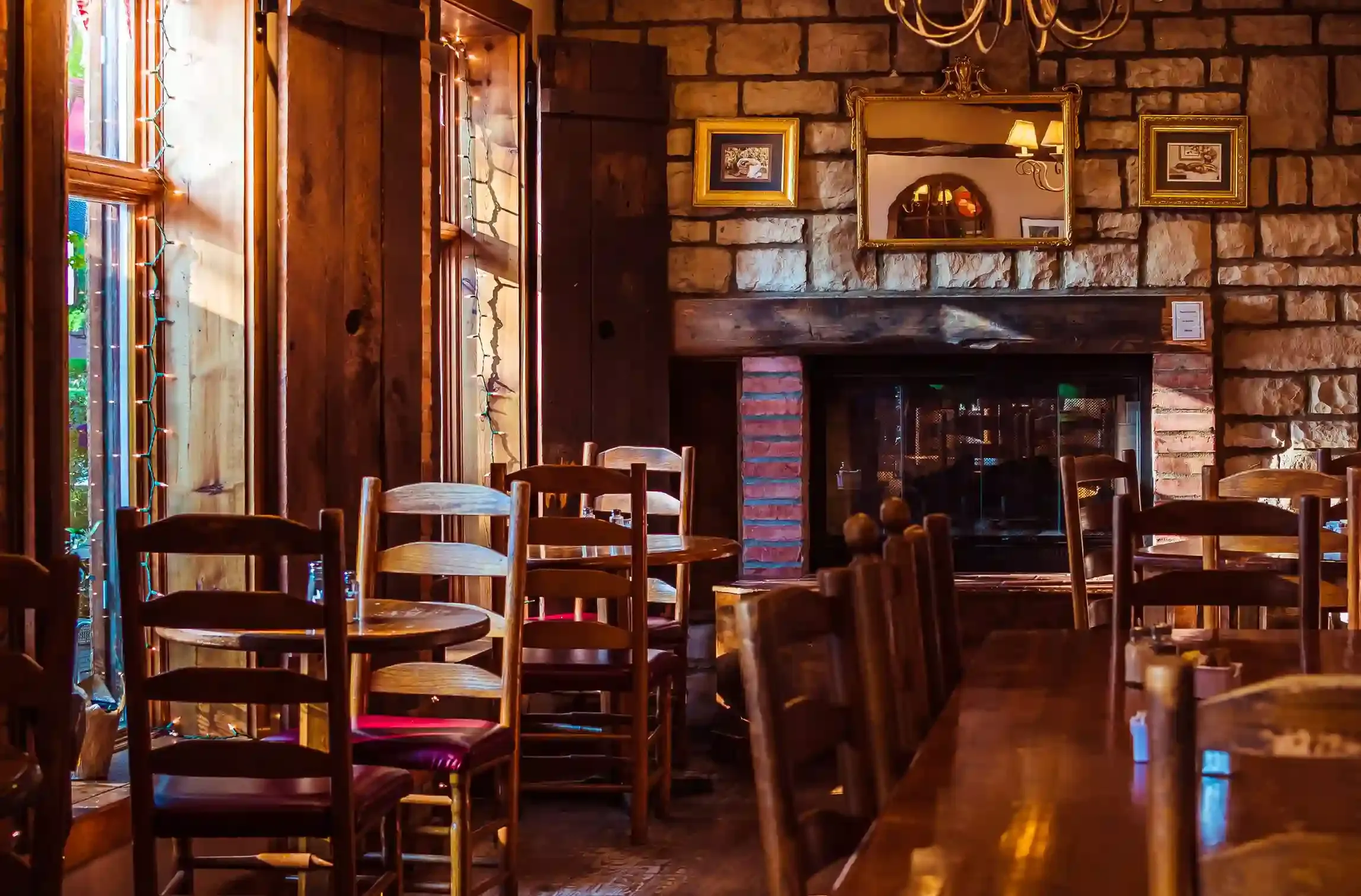
- Ye Olde Cheshire Cheese (Fleet Street) was rebuilt in 1667 after the Great Fire — a warren of dark, low-ceilinged rooms tied to Dr Johnson and Dickens. Come for the fire, the sawdust-and-history atmosphere and a plate of traditional pub food.
- The George Inn (Southwark) is London's last surviving galleried coaching inn, now owned by the National Trust and dating to the 17th century. Eat in the cobbled courtyard on a warm day.
These are two of London's historic pubs worth building an afternoon around. For a drink with as much history, Gordon's Wine Bar off the Strand claims to be London's oldest wine bar (1890) and pours by candlelight in a low brick cellar — one of the city's most atmospheric historic bars.
Pie and mash: the cockney classic
Pie and mash is London's oldest street food turned sit-down ritual: a minced-beef pie, a scoop of mash, and green "liquor" (a parsley sauce), with jellied or stewed eels on the side. M. Manze on Tower Bridge Road, open since 1902, is the oldest surviving shop and the place to try it.
- Pie, mash and liquor: around £5–£8 ($7–$11).
- Add jellied or stewed eels: a few pounds more — the traditional accompaniment.
- Note: several historic shops have closed in recent years, so these rooms are worth catching while they still trade.
The classic caffs
The London "caff" is a disappearing institution, and a couple are protected landmarks in everything but law.
- E. Pellicci (Bethnal Green) is a Grade-II listed, family-run Italian caff open since 1900, famous for its marquetry-panelled interior and a full English served with warmth.
- Regency Café (Westminster) is a 1940s art-deco caff with a black-and-white tiled frontage, a regular film location, and one of the city's best fry-ups.
Both belong on any list of London's local must-eats.
London's global icons: the curry houses and immigrant institutions
Some of the most iconic places to eat in London were founded by the communities that reshaped the city's palate — and they've become landmarks in their own right. London's curry houses, Jewish bakeries and Chinatown rooms are as much a part of its food identity as the roast and the pie.
Veeraswamy and the curry-house heritage
Opened in 1926 above Regent Street, Veeraswamy is London's oldest surviving Indian restaurant and effectively the blueprint for the white-tablecloth curry house. It still holds a Michelin star and books up well ahead. For the more informal side of the same story, Brick Lane remains the spiritual home of the London curry house.
The salt-beef beigel and the East End
On Brick Lane, the 24-hour beigel bakeries have sold the same thing for decades: a hot salt-beef beigel with mustard and a pickle, a survivor of the East End's Jewish community. It costs a few pounds and rarely closes.
- Salt-beef beigel: roughly £5–£7 ($7–$9).
- Open: famously around the clock — a post-theatre or end-of-night institution.
Chinatown's founding rooms
Around Gerrard Street, a handful of the original Cantonese rooms that anchored Chinatown from the 1960s still trade — roast meats hanging in the window, dim sum by day, late-night noodles after the theatres empty. They're the reason the neighbourhood exists, and they still hold their own against the newer arrivals.
The landmark food halls and tea rooms
A few of London's most iconic eating places aren't restaurants at all — they're the market halls and grand tea salons that locals and visitors treat as destinations. Borough and Leadenhall markets, Fortnum & Mason's food hall, and the grand-hotel afternoon teas belong on any list of iconic places to eat in London.
The market halls
London's historic markets are places to eat as much as to shop, and two are landmarks in their own right.
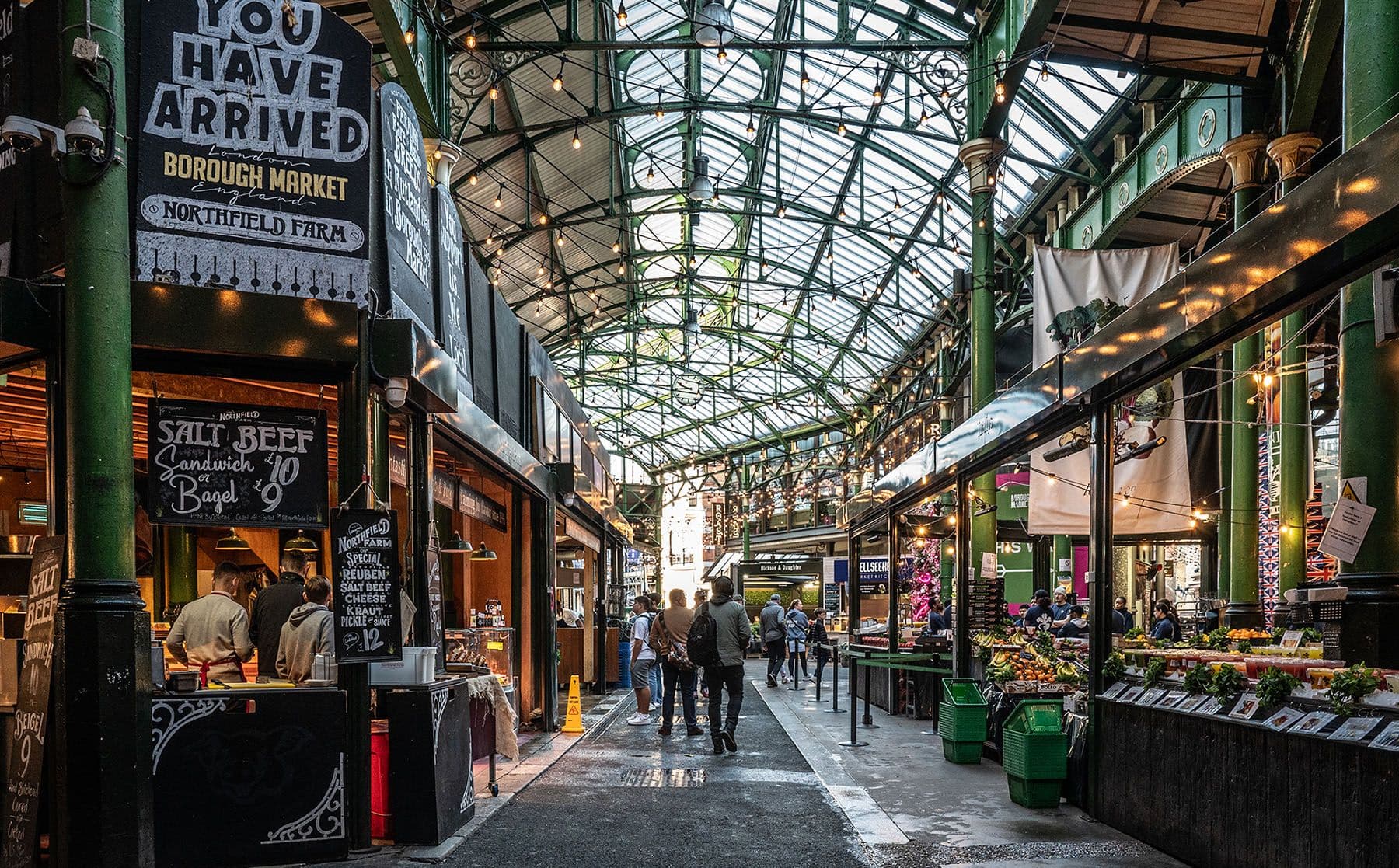
- Borough Market (London Bridge) carries around 1,000 years of trading history — a working market of oysters, cheese and hot plates rather than a food court.
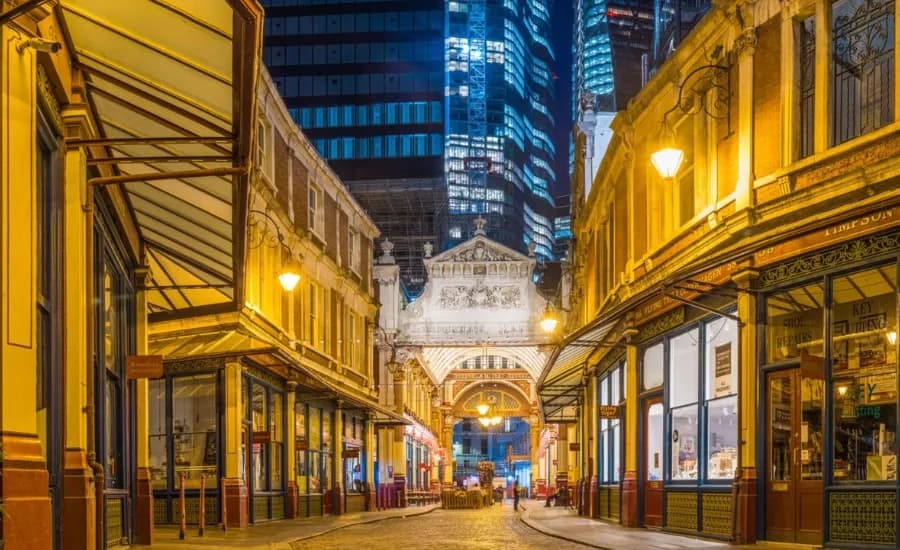
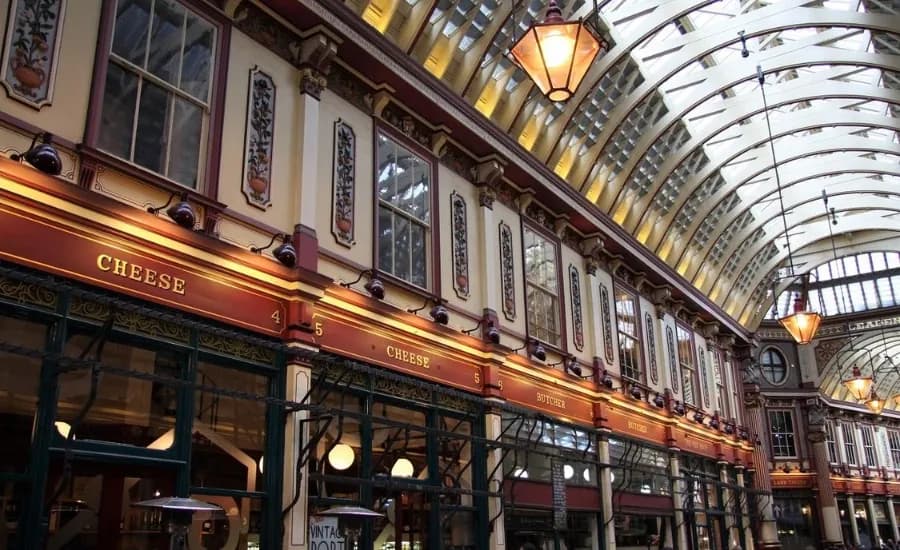
- Leadenhall Market (City) is a Victorian covered market of ornate cream-and-maroon ironwork from 1881, better known to some as a Harry Potter location, with a handful of bars and counters under its glass roof.
The afternoon-tea institutions
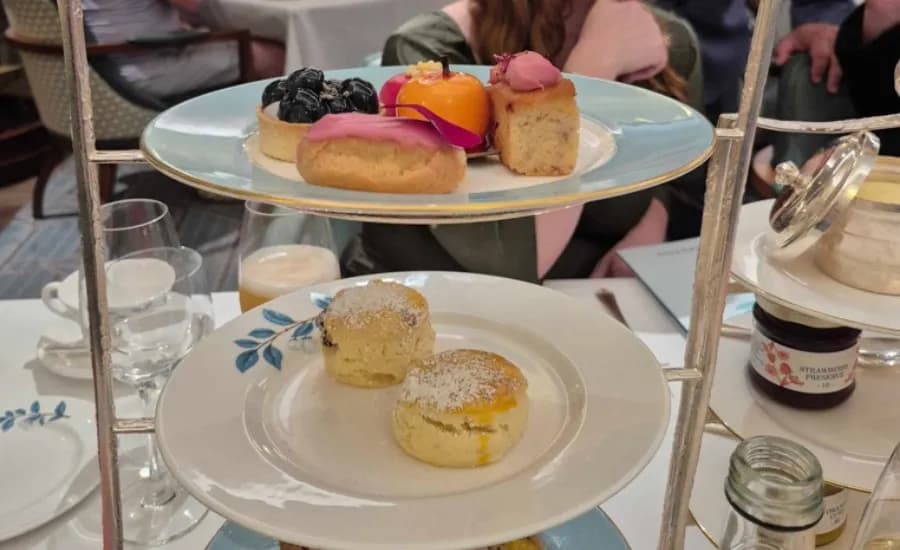
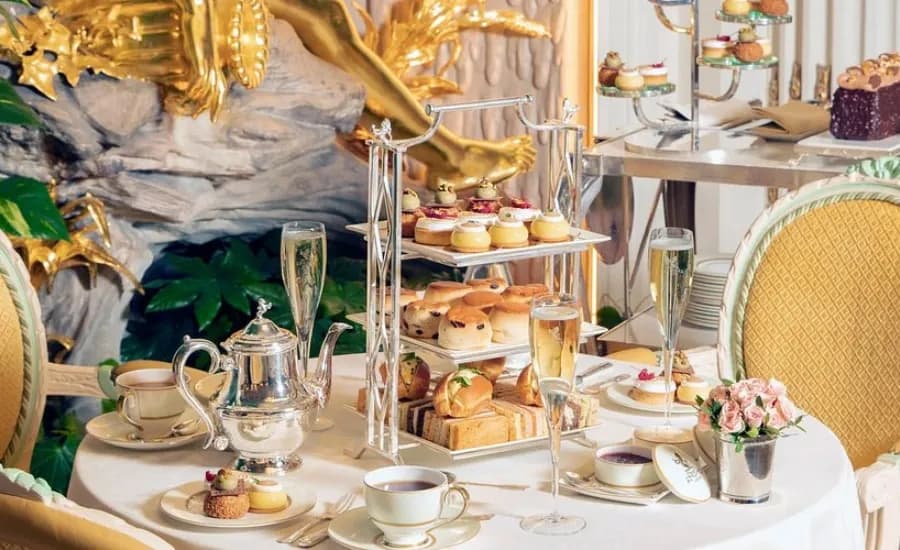
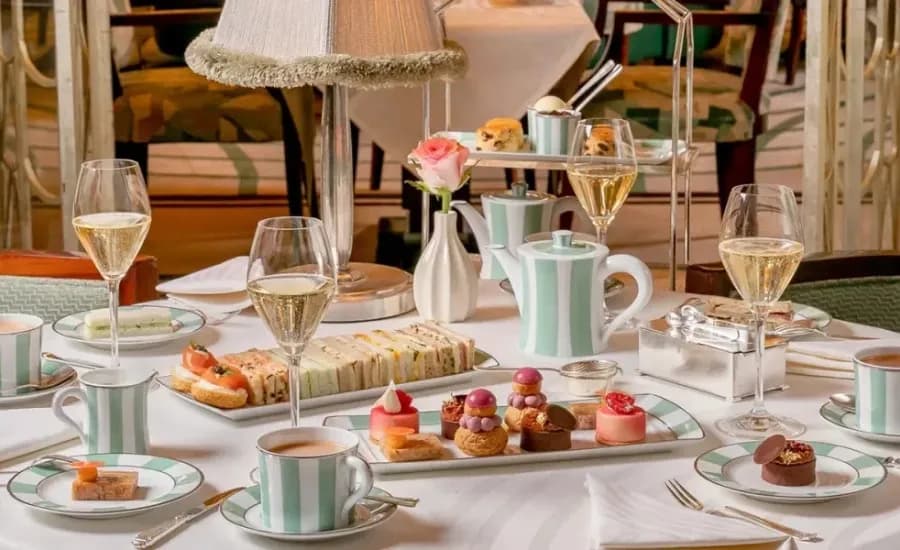
Afternoon tea at a grand London hotel is an iconic meal in itself — a two-to-three-hour sit-down of finger sandwiches, scones with clotted cream and pastries, usually with sparkling wine. These are the rooms to book for it:
- The Ritz (Palm Court) — the most formal; dress code enforced; from about £85–£95 ($112–$125) per person.
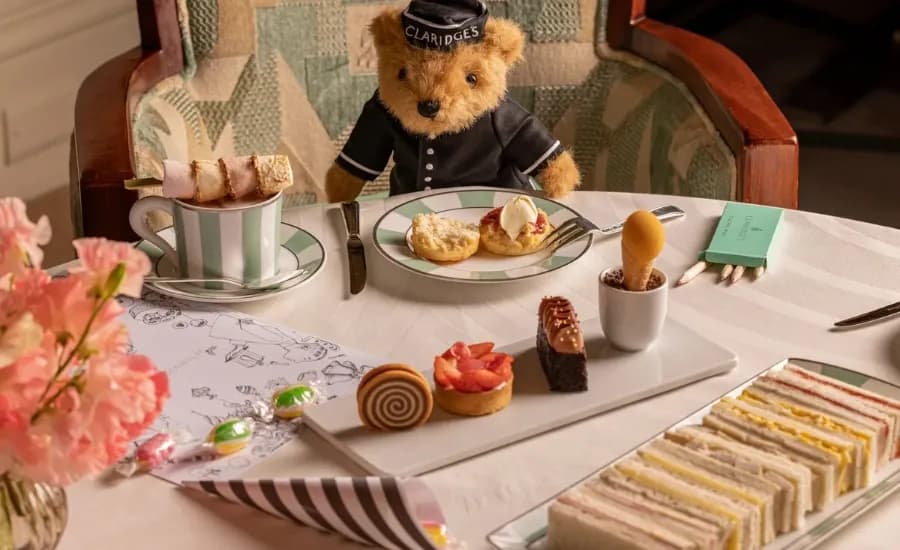
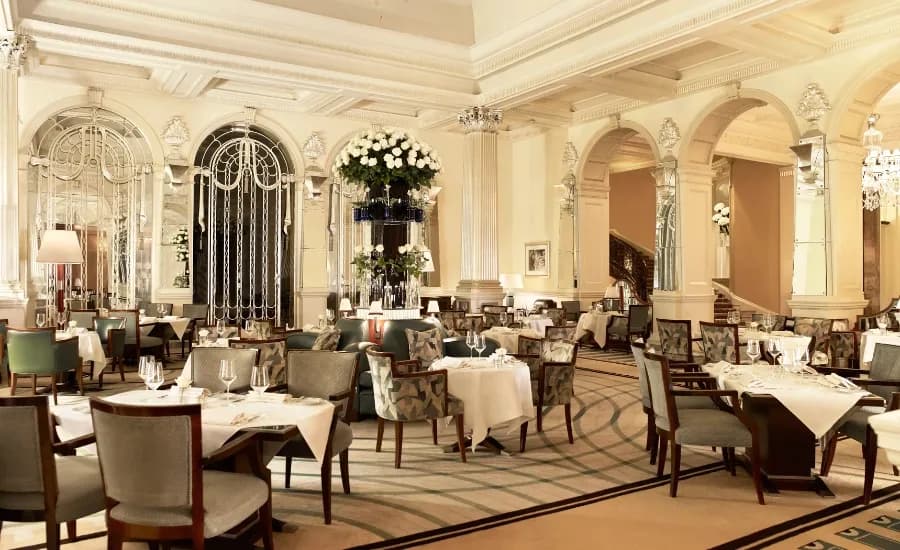
- Claridge's — Art Deco grandeur in Mayfair; around £90–£100 ($119–$132) per person.
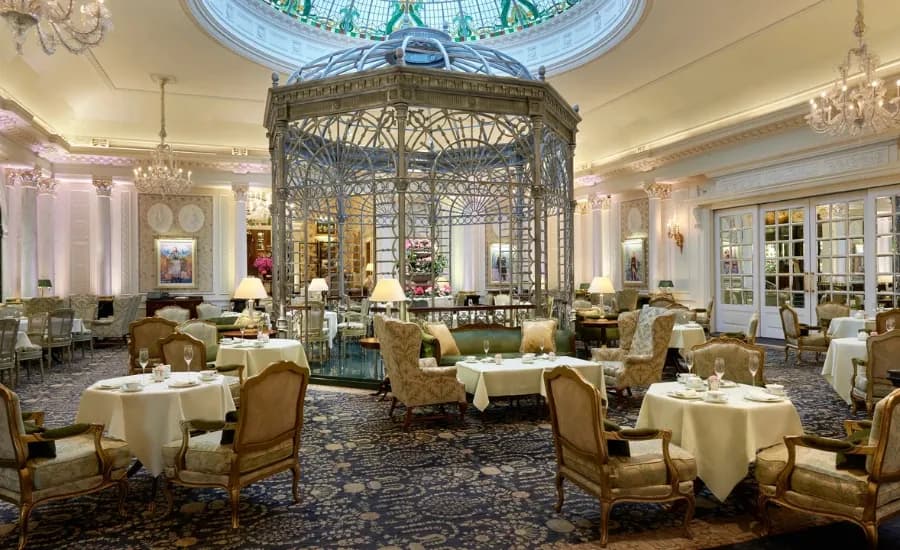
- The Savoy (Thames Foyer) — served under the glass dome; roughly £80–£95 ($106–$125) per person.
- Fortnum & Mason (Diamond Jubilee Tea Salon) — the food-hall institution trading since 1707; around £70–£85 ($92–$112) per person.
Iconic places to eat in London at a glance
| Place | Since | What to order | Price band (per person) | Book ahead? |
|---|---|---|---|---|
| Rules | 1798 | Game in season, steamed pudding | £30–£55 ($40–$73) | Yes |
| Sweetings | 1830s | Oysters, Dover sole, spotted dick | £25–£45 ($33–$59) | No — lunch, walk-in |
| Savoy Grill | 1889 | Omelette Arnold Bennett | £45+ ($59+) | Yes |
| Veeraswamy | 1926 | Classic North Indian curries | £25–£40 ($33–$53) | Yes |
| M. Manze | 1902 | Pie, mash and liquor | £5–£8 ($7–$11) | No |
| The Ritz (tea) | 1906 | Afternoon tea, Palm Court | £85–£95 ($112–$125) | Yes — weeks ahead |
Prices are approximate 2026 guides and vary by menu, season and sitting — confirm current rates before booking.
Dress codes and etiquette
- Jacket often required at The Ritz, the grand hotel dining rooms and some old-guard restaurants — check before you go.
- Smart-casual works at Rules, The Wolseley and Quo Vadis; skip trainers and sportswear at the grandest rooms.
- Caffs, pubs and pie shops — come as you are, and carry a little cash for a few of the oldest.
Eat where London remembers
The iconic places to eat in London aren't a single price bracket or cuisine — they're the rooms the city has decided to keep. Whether that's a £6 ($8) plate of pie and mash, a £30 ($40) set lunch in a 200-year-old dining room, or afternoon tea under the Savoy's glass dome, the trick is the same: order what each place is known for, and sort the booking before you go rather than on the doorstep. Pick two or three across the spectrum — one grand room, one people's institution, one landmark hall — and you'll have eaten the city's history in a weekend. The London experiences on Travjoy are researched and approved by local experts, so you can build an itinerary around the institutions that still deliver. Start planning your London trip on Travjoy.


.svg&w=1920&q=75)