



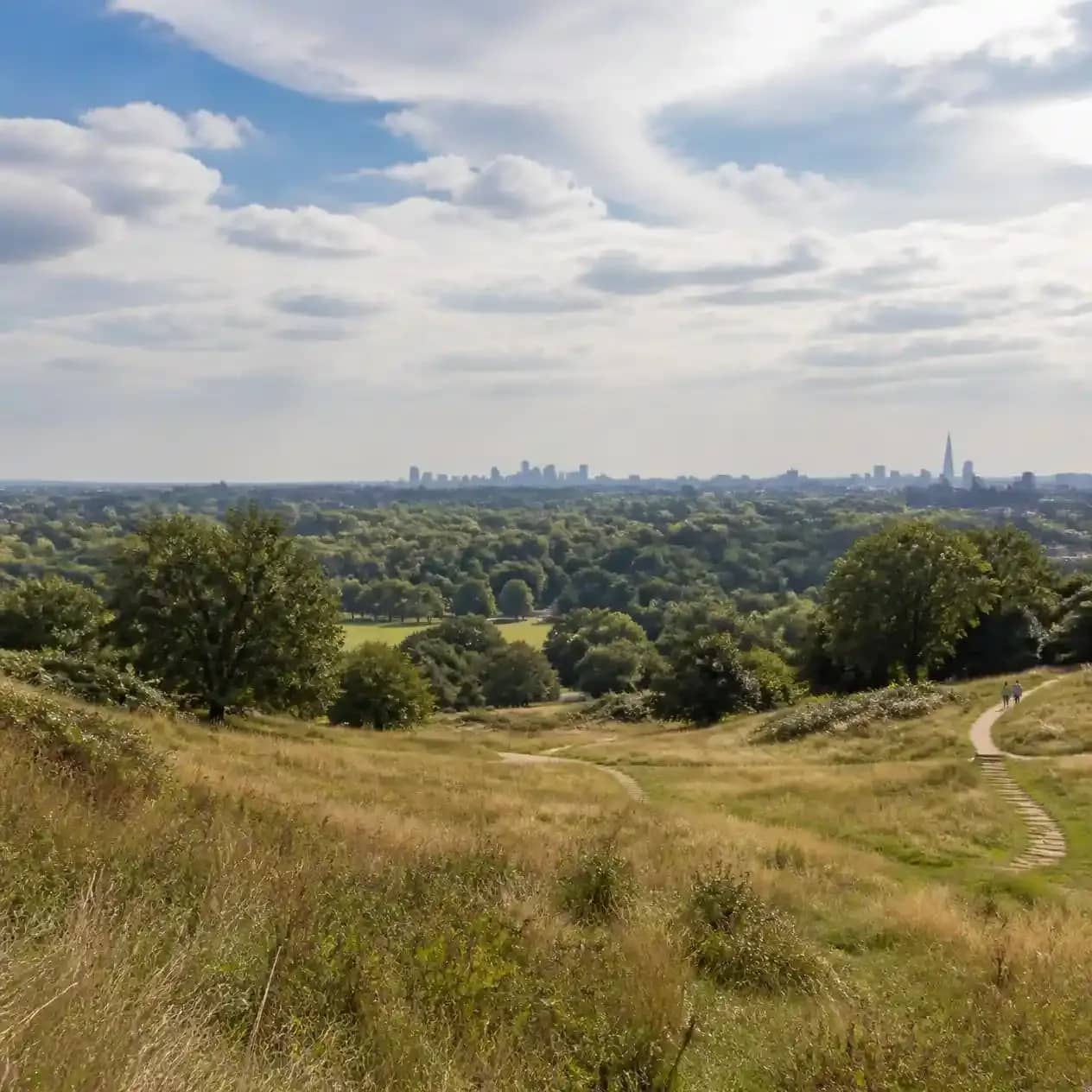
Hampstead Heath: A Complete Guide to London's Ancient Woodland and Wild Swimming Ponds
8 min read
Key Highlights
- 791 acres of ancient parkland on a sandy ridge between Hampstead and Highgate — one of the highest points in London
- Three spring-fed bathing ponds: the Highgate Men's and Kenwood Ladies' ponds swim year-round, the Mixed Pond runs April to October
- Parliament Hill delivers a skyline panorama that is protected by law — no ticket, no queue
- Kenwood House, on the northern edge, is free to enter and holds a Rembrandt self-portrait and a Vermeer
- The Ken Wood ancient woodland is a Site of Special Scientific Interest — some of the oldest surviving woodland in the capital
Hampstead Heath is an 800-acre expanse of ancient woodland, meadow and hilltop in north London, best known for its three spring-fed wild swimming ponds and the protected skyline view from Parliament Hill. The Heath itself is free and open around the clock; swimming is pay-on-entry (around £4.80 for an adult in 2025), with the Men's and Ladies' ponds open every day of the year and the Mixed Pond running from April to October.
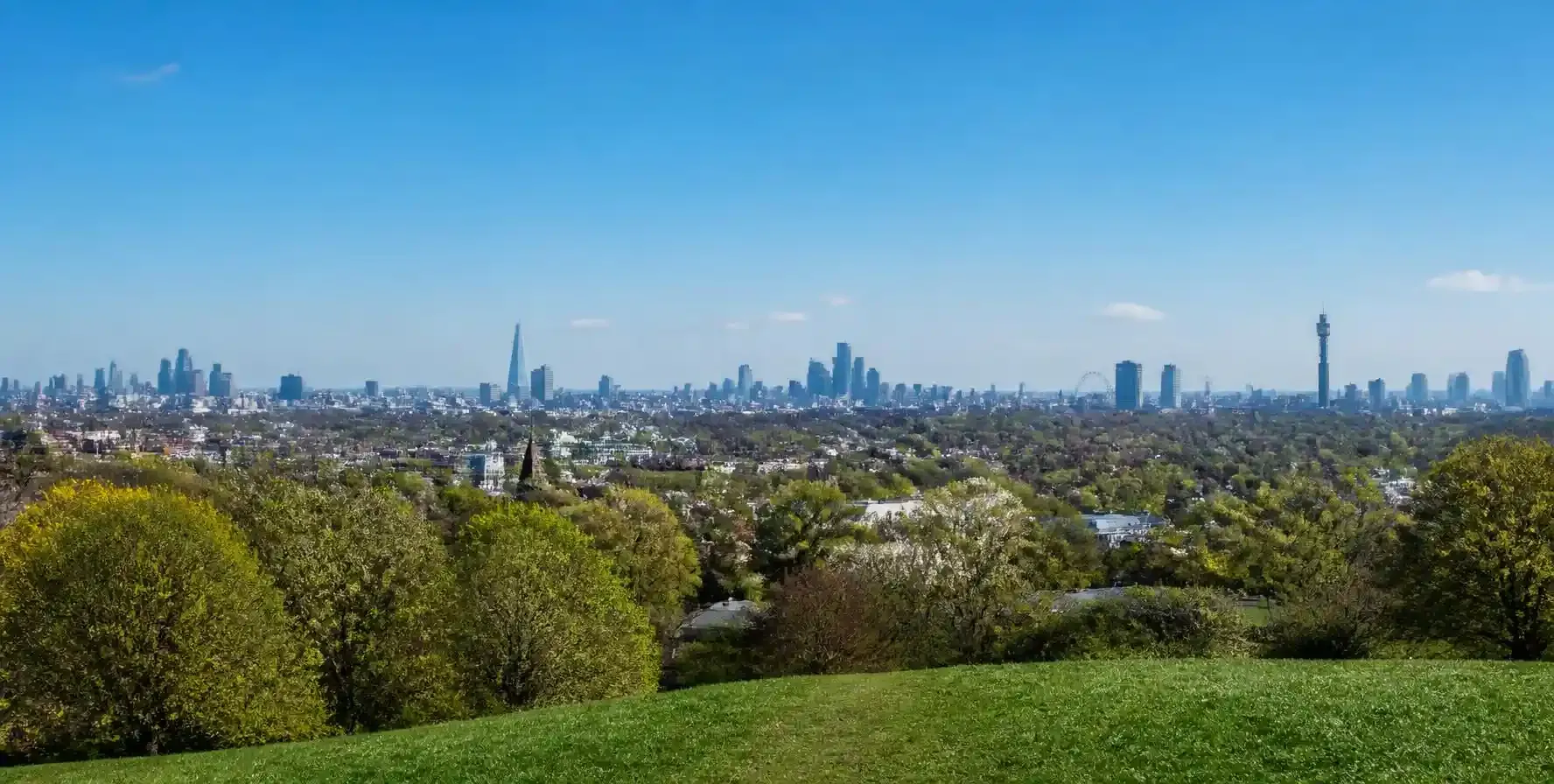
Four miles from Trafalgar Square, the traffic falls away and the ground starts to climb. Reach the top of Parliament Hill and the whole city lays itself out below — the City towers, the Shard, the distant ridges — while behind you the meadow rolls into woodland that has stood here for centuries. This is Hampstead Heath, and it does not behave like a London park.
Most visitors get as far as the southern slopes and the view, then turn back. That is a mistake. Push further in and the Heath becomes proper countryside: bathing ponds fed by underground springs, a Site of Special Scientific Interest woodland, a free stately home with Old Masters on the walls, and quiet corners that even Londoners rarely find.
This guide covers the wild swimming ponds and which one suits you, the ancient woodland and the history under your feet, the view from the top, and how to plan a visit that gets past the obvious. Whether it is your first walk here or your fifth, there is more depth to the Heath than the headline sights suggest.
Why Hampstead Heath Feels Like Countryside in the City
Hampstead Heath feels like countryside because, in most senses that matter, it is. It covers around 791 acres of meadow, grassland and woodland on a sandy ridge that runs between Hampstead and Highgate, sitting on one of the highest points in London. There are no manicured flowerbeds or formal avenues here — the Heath is deliberately left rough, and that wildness is the whole point.
London's largest ancient parkland
Hampstead Heath is the largest ancient parkland in London, managed by the City of London Corporation since 1871. Unlike the royal parks of central London, with their planted borders and clipped lawns, the Heath is a working landscape of hills, ponds and open heath left largely to its own devices.
That scale matters. You can walk for a couple of hours and cross meadow, dense wood, reed-fringed water and open hilltop without retracing your steps. On a weekday morning, whole stretches feel empty. The stalls and experiences worth your time across London are the ones Travjoy has researched and had approved by local experts — but the Heath is the rare place where the plan is simply to wander and let it unfold.
The ancient woodland at its heart
Some of the woodland on Hampstead Heath is genuinely ancient. The Ken Wood block, on the northern side near Kenwood House, is a Site of Special Scientific Interest — a designation reserved for land of real ecological importance — recognised for its old, undisturbed woodland and the wildlife it shelters. Walk its paths and you move under mature oak, beech and hornbeam, with dead wood left to rot down and feed the next generation of trees.
This is not landscaping. It is one of the oldest surviving fragments of woodland in the capital, and it is why the birdsong here can drown out the traffic entirely. For a returning visitor who has already done the ponds and the view, the woodland is the layer worth slowing down for.
A landscape shaped by history
The Heath has been documented for more than a thousand years. The land at "Hemstede" was granted to Westminster Abbey by the Anglo-Saxon king Ethelred the Unready in 986, and by the medieval period it served as both a royal hunting ground and common land where locals grazed livestock. That common status is what saved it from being built over when developers circled in the 19th century.
The history is still legible in the ground:
- The swimming ponds began life as reservoirs, damming the headwaters of the River Fleet to supply drinking water to the growing city.
- A large earthen mound near Parliament Hill is traditionally, and almost certainly wrongly, called Boudicca's grave; it is more likely a Bronze Age burial mound.
- A surviving chalybeate (iron-rich) spring is a reminder that Hampstead was a fashionable spa retreat from the 17th century, when Londoners came uphill for the "healing" waters and the clean air.
None of this is signposted with much fanfare, which is part of the appeal — the Heath wears its history lightly.
The Wild Swimming Ponds — Which One and When
Hampstead Heath has three open-air bathing ponds, all spring-fed and lifeguarded during opening hours, plus a separate lido. The Highgate Men's Pond and Kenwood Ladies' Pond are open every day of the year; the Hampstead Mixed Pond runs from April to October. This is open-water swimming in cold, natural water — the appeal is precisely that it is nothing like a heated pool.
Water temperature swings with the season, from around 2–6°C in deep winter to 18–22°C at the height of summer. The ponds close only in high winds (gusts of 40mph or more) or thunderstorms. Swimmers must be aged 8 or over, and cold-water swimming rewards a gradual approach — acclimatise over repeat visits rather than plunging straight in during the colder months.
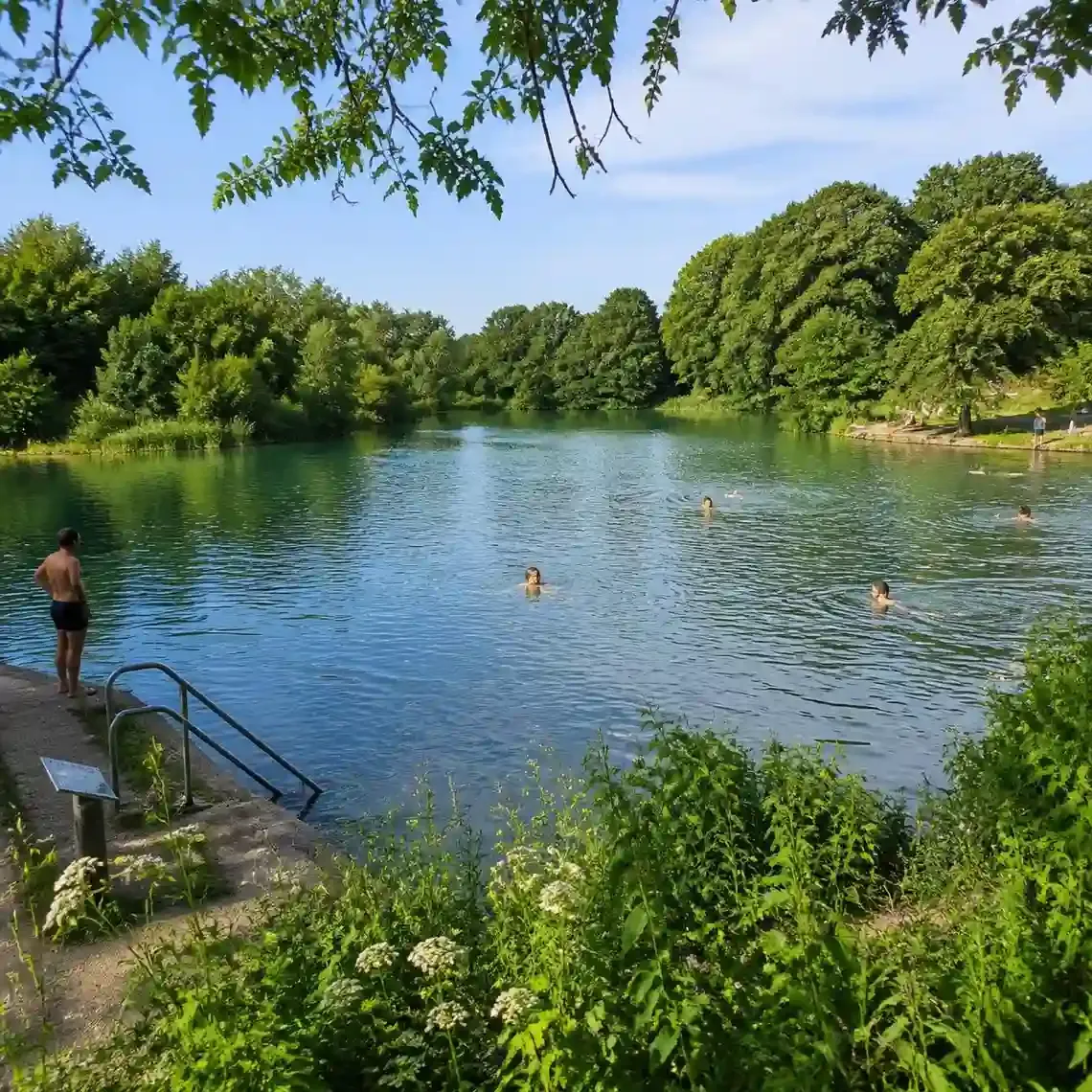
Highgate Men's Pond
The Men's Pond is the largest of the three and the only one with a diving board. Open to men and boys year-round, it sits on the eastern side near Millfield Lane, a short walk from the Gospel Oak entrance, and draws a fiercely loyal crowd of daily swimmers who keep going through the winter.
- Open all year; busiest on warm summer weekends, quietest and coldest in midwinter.
- Home to the celebrated Christmas Day swim, the one occasion when women are also admitted.
- A jetty and lifeguard station, with a slightly more open aspect than the Ladies' Pond.
Kenwood Ladies' Pond
The Ladies' Pond is one of the very few remaining women-only outdoor swimming spaces in Britain, and its seclusion is central to its character. Reached by a discreet path off Millfield Lane and set in its own tree-fringed, enclosed meadow, it is invisible from the surrounding paths — remarkably private for somewhere a few miles from the City.
- Open year-round to women and girls aged 8 and over.
- In continuous use for swimming since at least the early 20th century.
- Calm and quiet even in summer, when the other ponds fill up.
Hampstead Mixed Pond
The Mixed Pond is the most sociable and the easiest to reach, which makes it the natural starting point if you have never swum here. It sits near the southern end of the Heath, close to Parliament Hill and about a ten-minute walk from Hampstead Heath Overground station, and is open to everyone.
- Open April to October only; closed to public swimming the rest of the year.
- The busiest pond on hot days — arrive early or book a summer session ahead.
- The most relaxed atmosphere of the three, with grassy banks for lazing afterwards.
Parliament Hill Lido and the winter sauna
If you want the swim without the cold shock, the Parliament Hill Lido is the alternative. It is a large chlorinated outdoor pool rather than a natural pond, open all year, with a steel-lined basin that warms faster in the sun than the spring-fed ponds ever do. In the colder months, a wood-fired-style sauna operates alongside it — a well-earned reward after a cold session, with evening slots on selected weekdays through the winter season.
Which should you choose? If you want the full wild-swimming experience in natural water, go for the Men's or Ladies' Pond, both open year-round. If it is your first time or you are swimming as a mixed group, the Mixed Pond in summer is the friendliest entry point. If you would rather a warmer, more controlled swim — or you are visiting in winter and want the sauna afterwards — the Lido is the one to head for.
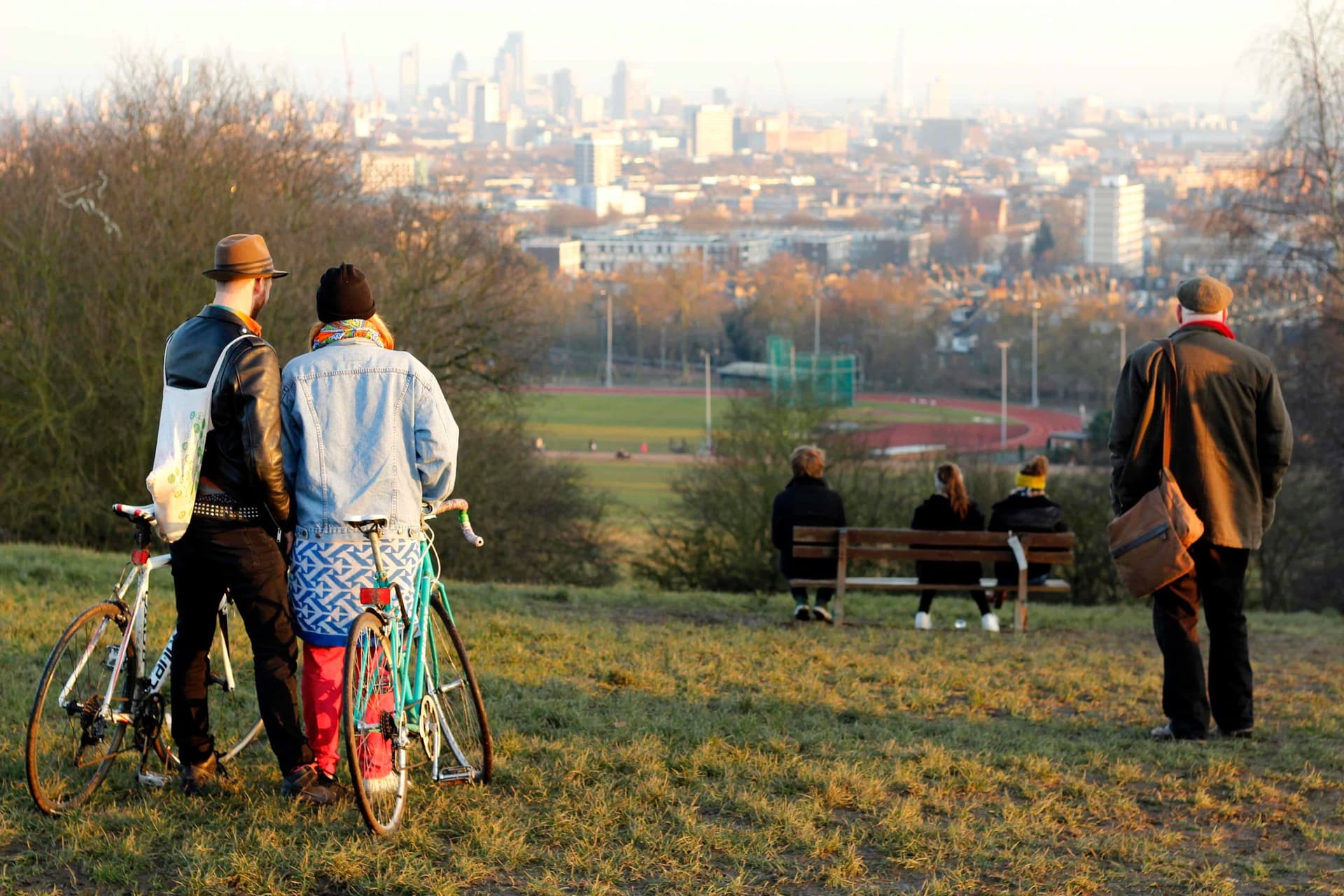


Parliament Hill and the View Over London
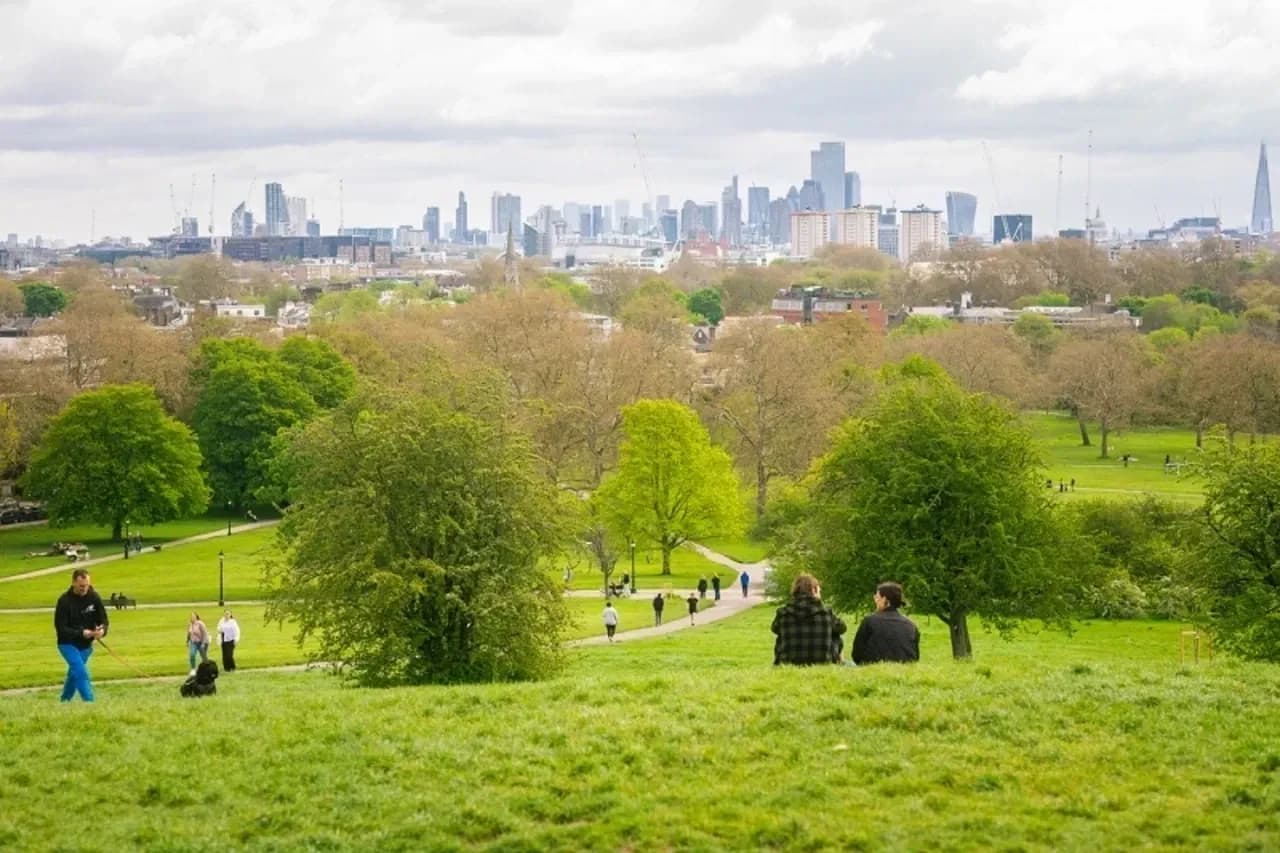
Parliament Hill gives you one of the finest free panoramas of London, and the view from its summit is protected by law — no building is allowed to block the sightline. At roughly 98 metres, it is one of the highest points in the city, and on a clear day the skyline reads left to right from the western ridges across the City clusters and the Shard.
Locals call it Kite Hill for good reason: the exposed summit catches the wind, and on any breezy weekend the sky above it is full of kites. It is where Londoners bring out-of-town visitors for the first "look at that" moment of a trip — and unlike a paid viewing platform, there is no queue and no ticket.
The protected panorama
The sightline from Parliament Hill to the Palace of Westminster is one of a handful of legally protected views across London, which is why the foreground stays green and the skyline stays visible. Near the top you will also find the Stone of Free Speech, a weathered marker linked to political and religious gatherings from the late 18th and early 19th centuries — the Heath's own quiet answer to Speakers' Corner.
When to go up
Time your climb for the light rather than the middle of the day:
- Sunrise — the quietest window, with the city emerging out of the haze and the ponds below just waking up.
- Golden hour before sunset — the most popular time, when the skyline catches the low light; expect company on warm evenings.
- After rain — the clearest air and the sharpest long views, once the cloud lifts.
Beyond the Ponds — Kenwood House, the Pergola and the Quiet Corners
The best of Hampstead Heath beyond the ponds is a free stately home, an Edwardian garden folly, and a quieter western side that most day-trippers never reach. These are the layers that reward a second or third visit, once the view and the swim are behind you.
Kenwood House and its free collection
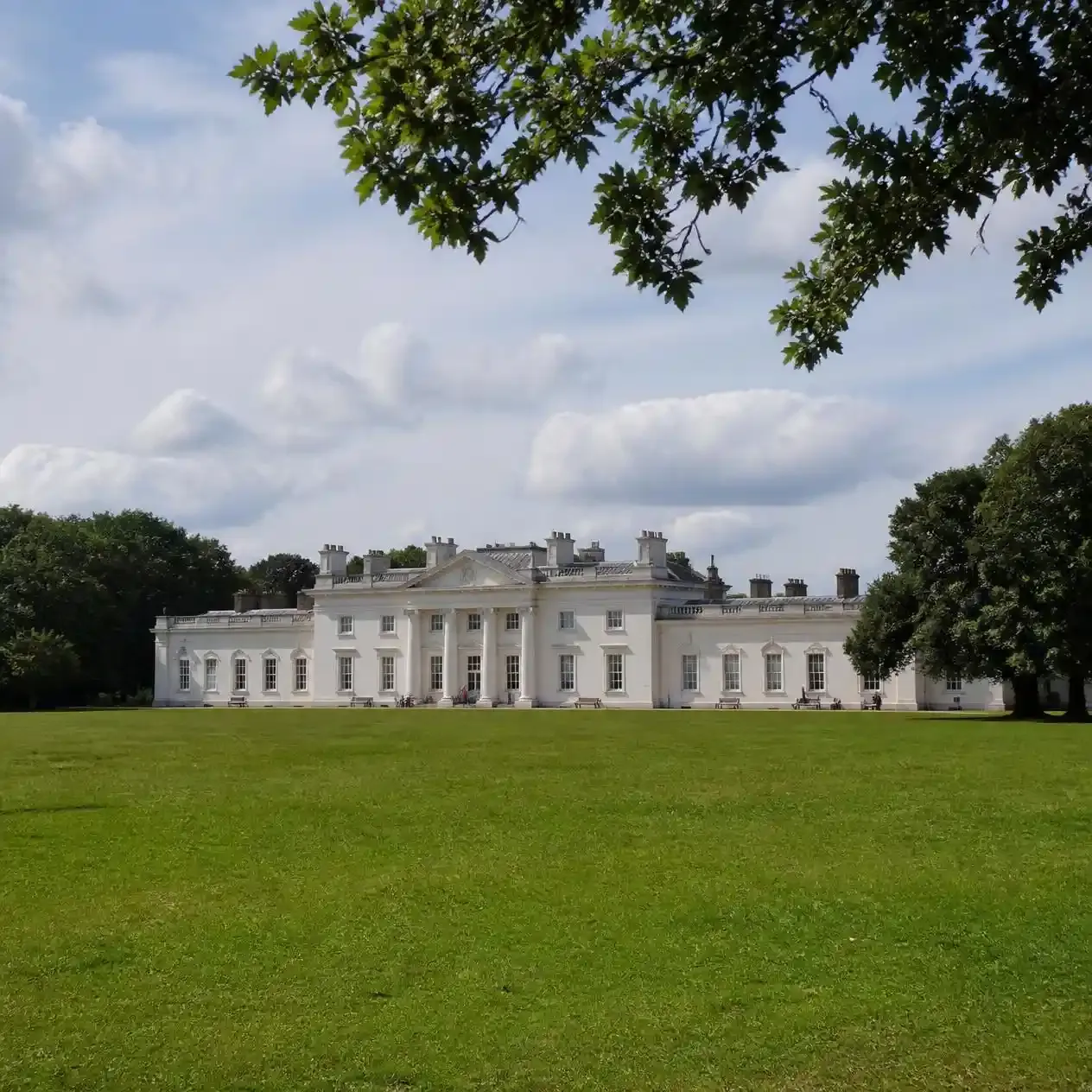
Kenwood House sits on the northern crest of the Heath and is free to enter, with a world-class art collection inside a Robert Adam interior. The neoclassical villa was remodelled by Adam in the 18th century — the Great Library is his masterpiece — and it was given to the nation by Lord Iveagh, opening to the public in 1928.
The collection, known as the Iveagh Bequest, is the reason to go in:
- Rembrandt's Self-Portrait with Two Circles, one of the finest self-portraits he ever painted.
- Vermeer's The Guitar Player — one of only around three dozen Vermeers in the world.
- Major works by Turner, Gainsborough, Reynolds and Van Dyck.
Outside, the 112-acre grounds were shaped by the landscape designer Humphry Repton and are dotted with sculptures by Barbara Hepworth and Henry Moore. There is history in the house too, from its role as a Notting Hill filming location to the story of Dido Belle, who grew up here in the 18th century. Two cafés — the Brew House and the Steward's Room — make it an easy place to pause mid-walk.
The Hill Garden and Pergola
The Hill Garden and Pergola is the Heath's best-kept secret: a raised Edwardian walkway draped in wisteria and climbing roses, on the quieter western edge near Inverforth House. It was built in 1906 as the private entertaining space of the soap magnate Lord Leverhulme, designed by the landscape architect Thomas Mawson, and time has softened it into something between a garden and a ruin.
Weathered stone columns, a reflecting pool and long covered walkways make it one of the most photogenic corners in London, and it stays quiet even when the rest of the Heath is busy. It is at its best in late spring, when the wisteria is out, and in autumn, when the leaves turn. Check for occasional maintenance closures before making a special trip.
Golders Hill Park and the quieter west
Attached to the Heath's north-western side, Golders Hill Park is a gentler, more formal counterpoint to the wild central meadows. It has a small free animal enclosure with deer, flamingos and wallabies, a walled flower garden, and neat lawns — a good detour if you are visiting with children or simply want a change of pace.

Planning Your Visit to Hampstead Heath
The Heath is free, open around the clock, and ringed by stations, so planning is mostly about choosing an entrance and a route. The main open areas never close, though the ponds, Kenwood House, Golders Hill Park and the Pergola all keep their own daytime hours.
Getting there and which entrance
Public transport is far easier than driving — parking around the Heath is limited and tightly controlled. Pick your station by what you want to see first:
- Gospel Oak (Overground) — closest to the Men's Pond and the eastern ponds chain.
- Hampstead Heath (Overground) — best for the Mixed Pond and Parliament Hill.
- Hampstead (Northern line) — for the village, the Pergola and the western Heath.
- Golders Green (Northern line) — nearest to Golders Hill Park and Kenwood's northern side.
If you must drive, aim for the small car park at the Kenwood House entrance rather than the residential streets around the village.
A half day or a full day
How long you need depends on whether you are swimming:
- Half a day — Enter at Hampstead Heath station, walk up Parliament Hill for the view, then loop down to the Mixed Pond or the Men's/Ladies' Pond for a swim. Two to three hours, easily done before lunch.
- A full day — Add the northern half: walk through the Ken Wood woodland to Kenwood House and its collection, break for the Brew House café, then finish at the Hill Garden and Pergola on the way out. Bring or buy lunch, as the interior of the Heath has few food options.
Season by season
The Heath rewards a visit in any season, but each has its own character. Spring brings the wisteria at the Pergola and warming pond water; high summer is the swimming season, when the Mixed Pond opens and the banks fill; autumn turns the woodland gold and thins the crowds; winter belongs to the year-round ponds, the Lido and the sauna, plus the sharpest long views from Parliament Hill on cold, clear days.
Hampstead Heath at a glance
- Entry to the Heath: free; open 24 hours.
- Swimming (2025 rates): around £4.80 adult, £2.90 concession, £1.40 junior (8–15); six-month season ticket about £77.50, annual about £150.50. Pay or tap on entry; card accepted.
- Ponds open: Men's and Ladies' year-round; Mixed Pond April–October. Bookable summer sessions (roughly late May to early September) sell out fast; drop-in the rest of the year.
- Kenwood House: free; open daily, roughly 10am–5pm.
- Pergola: opens around 8:30am; Golders Hill Park from about 7:30am.
- Note: prices, hours and session dates change seasonally — verify current details before you travel.
Pond etiquette is simple and worth knowing: keep the changing areas quiet and phone-free, follow the lifeguards, and never swim outside opening hours or in a closed pond. Cold water is exhilarating but unforgiving, so know your limits and build up gradually. When you want to eat well nearby, the historic Spaniards Inn and the pubs of Hampstead village — The Wells, The Flask — are the classic post-walk stops. For more to fold into your trip, browse Travjoy's nature and parks experiences in London, all researched and approved by local experts.
Plan your visit to the Heath
Hampstead Heath is the closest London gets to countryside without leaving the city: ancient woodland and spring-fed swimming ponds, a protected skyline view, and a free house full of Old Masters, all within a few miles of the centre. Come for the swim and the view, but leave time for the woodland and the quiet western corners — that is where the Heath stops feeling like a park and starts feeling like an escape. Whether you have half a day or a full one, first visit or fifth, there is always another layer to find. Start planning your trip to London on Travjoy, and pair the Heath with the manicured calm of Hyde Park for the full range of the city's green spaces.

.svg&w=1920&q=75)