



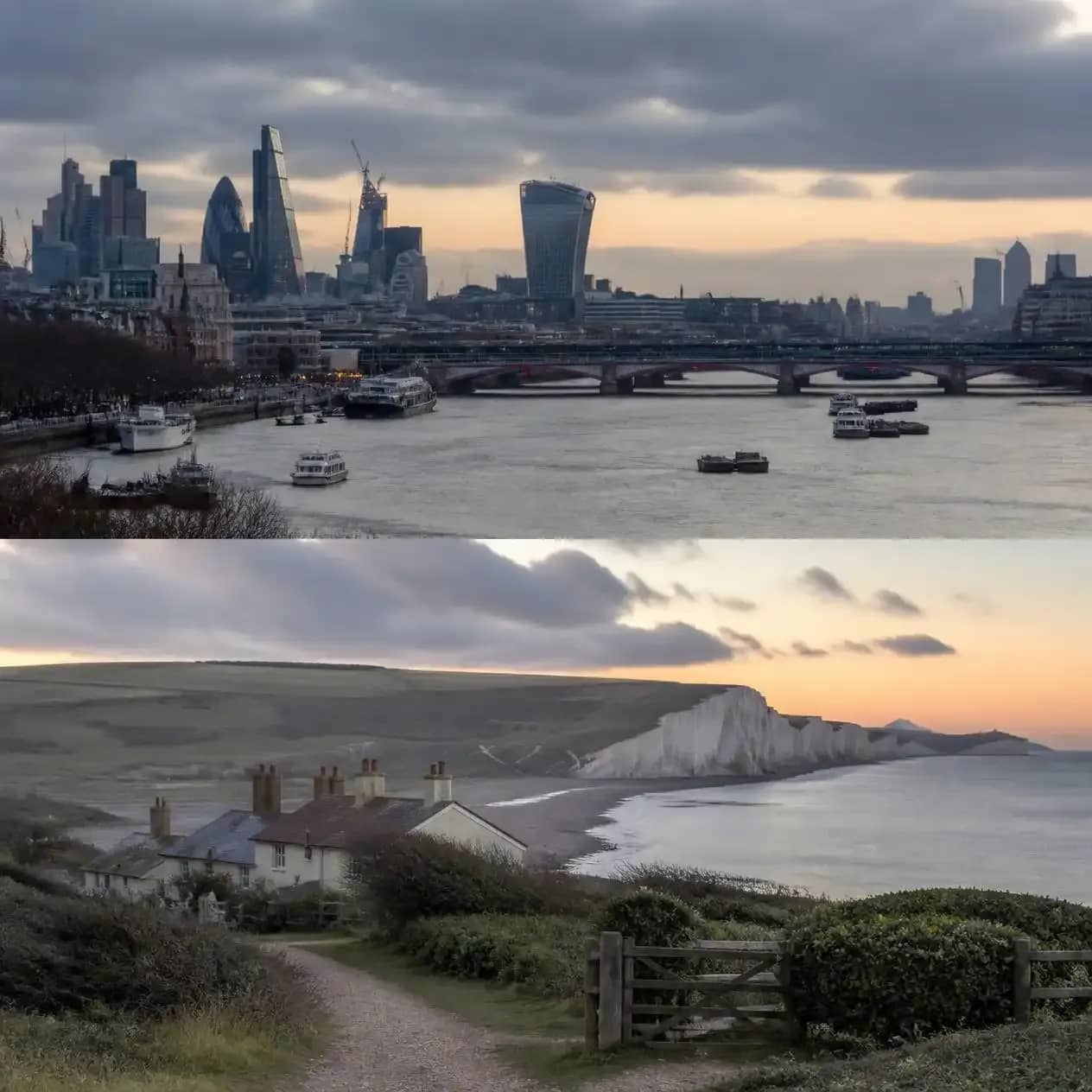
East Sussex from London: A Complete Guide to Chalk Cliffs, 1066 Battlefields and Victorian Seaside
6 min read
Key Highlights
- East Sussex sits about 90 minutes from central London by direct train, with no changes to Eastbourne, Brighton or Battle.
- One county holds three distinct days out: the Seven Sisters and Beachy Head chalk cliffs, the 1066 battlefield at Battle Abbey, and Victorian seaside resorts.
- Beachy Head is Britain's highest chalk sea cliff at 162 metres, best seen on the Seaford-to-Eastbourne coastal walk.
- 2026 adds two reasons to visit: the 60th-anniversary Battle of Hastings re-enactment (10-11 October) and the Bayeux Tapestry's loan to the British Museum.
- Doable in a day if you pick one theme; a two-day trip lets you pair the cliffs with the coast and the battlefield.
An East Sussex day trip from London reaches the Sussex coast in about 90 minutes by direct train, putting the Seven Sisters chalk cliffs, the 1066 battlefield at Battle Abbey, and Victorian seaside towns like Eastbourne and Brighton within a single county. The three combine comfortably by rail, though the cliffs and the history each reward a full half-day, so a two-day trip lets you slow down rather than sprint between them.
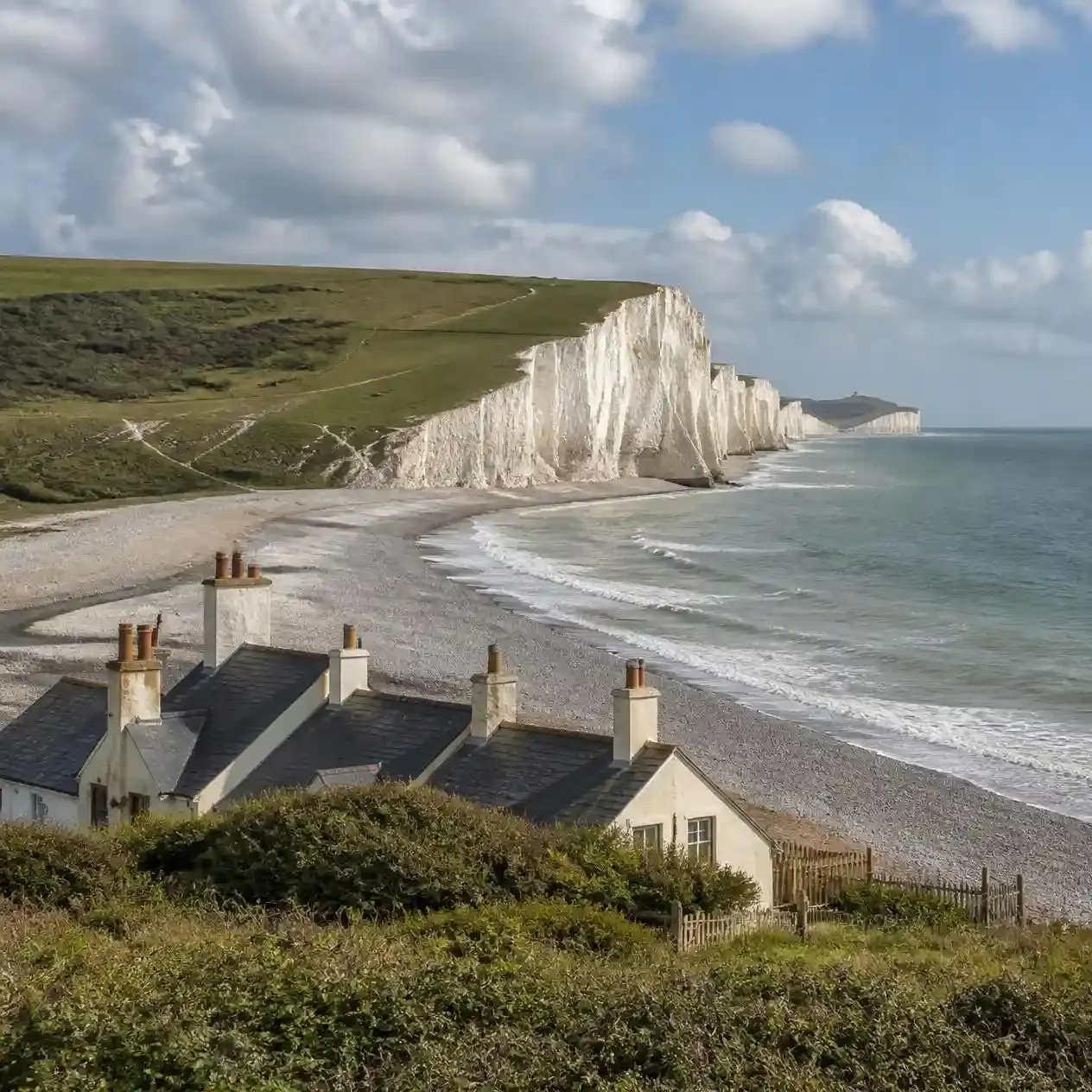
Stand on the marked spot at Battle Abbey and you are where England changed hands in 1066 — the high altar of the abbey William the Conqueror raised is said to sit exactly where King Harold fell. Head twenty minutes south and the land runs out in a wall of white chalk, the Seven Sisters dropping a hundred-odd metres into the English Channel. Follow the coast west and you reach seafronts of iron piers, painted domes and a Regency palace. East Sussex packs three very different days into one small county.
Most guides pick one of these and stop there. This one threads all three, because the appeal of an East Sussex day trip from London is exactly that range — cliffs, battlefield and seaside within a 90-minute train ride. Below you'll find the direct routes from London, where to base yourself, which theme suits a single day, and how to build a two-day trip that does the county justice rather than rushing through it.
Planning your East Sussex day trip from London
An East Sussex day trip from London works best when you choose a theme and a base town rather than trying to see everything at once. Direct trains from London reach the main hubs — Eastbourne, Brighton and Battle — in roughly 60 to 95 minutes, and the coast towns link to each other by a short onward hop, so you rarely need a car.
The county sits on the South Coast, immediately below London, with the South Downs rising behind the shoreline. East Sussex is one of the closest genuine coast-and-countryside escapes to the capital, which is why it appears on so many lists of day excursions from London.
Direct trains from London
- London Victoria to Eastbourne: about 1 hour 25 minutes direct on Southern; the gateway to the Seven Sisters and Beachy Head. Advance single fares start around £11 (about $15).
- London Charing Cross or Cannon Street to Battle: about 1 hour 25 minutes on Southeastern's Hastings line; Battle station is a 10-minute walk from the abbey.
- London Victoria to Brighton: about 1 hour direct; the fastest route to Regency architecture and the seafront.
- Coast hops: Eastbourne to Hastings runs about 30-35 minutes; Brighton to Hastings about 1 hour 20 minutes along the scenic coastal line.
Fares and times vary by service and how far ahead you book, so confirm on the day before you travel.
One day or two?
If you have a single day, commit to one theme. The cliffs alone fill a day of walking; Battle and its battlefield make a focused history day; Brighton rewards a full day of piers, palace and Lanes. If you have two days, the natural pairing is a cliffs-and-coast day out of Eastbourne followed by a history day at Battle, or a Brighton day bookended by a morning on the Downs.
Which base town suits you
- Eastbourne — closest to the Seven Sisters and Beachy Head, with a traditional seafront and a Victorian pier.
- Brighton — the liveliest base, with the Royal Pavilion, the Lanes and the best onward rail links.
- Battle or Hastings — the pick if 1066 history is your priority, with the Old Town and the battlefield close by.
The chalk cliffs: Seven Sisters, Beachy Head and Birling Gap
The Seven Sisters are a run of eight chalk peaks — erosion has added one to the original seven — stretching along the coast between Seaford and Eastbourne inside the South Downs National Park. This is the headline landscape of any East Sussex day trip from London built around the outdoors, and the classic way to see it is on foot along the clifftop.
Walking the Seven Sisters
The full clifftop walk runs roughly 13 miles between Seaford and Eastbourne and takes most people 4 to 7 hours. Most walkers start at Seaford and head east, which gives the better views and reaches the cliffs sooner. For a shorter outing, the loop from the Exceat visitor centre down to Cuckmere Haven beach and back delivers the postcard view without the full-day commitment.
- Full walk: Seaford to Eastbourne, about 13 miles, 4-7 hours, with proper footwear needed for chalk and grass underfoot.
- Short version: Exceat to Cuckmere Haven and back, about an hour, mostly level.
- Getting to the trailheads: buses 12, 12X and 13X link Eastbourne and Seaford stations with Exceat and Birling Gap.
Beachy Head and Birling Gap
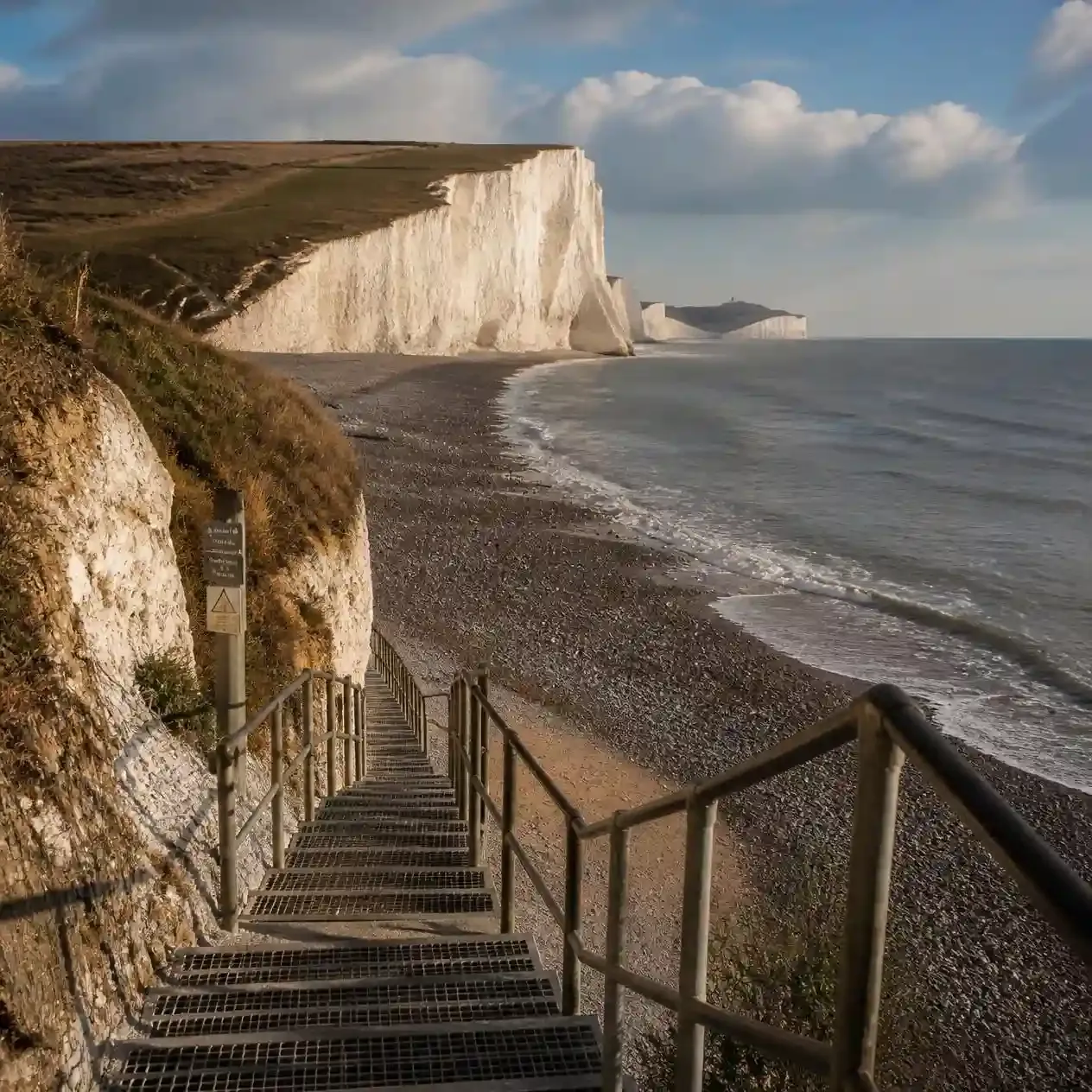
Beachy Head is the highest chalk sea cliff in Britain at 162 metres, marking the eastern end of the walk above Eastbourne. Its red-and-white striped lighthouse sits at the base of the cliff, and on a clear day the views run along the coast in both directions. Birling Gap, run by the National Trust, sits between the two: a set of metal steps drops to a shingle-and-chalk beach with rock pools at low tide, and there is a café and shop at the top for a break mid-walk.
The cliffs are also a genuine wildlife spot, with chalk-grassland wildflowers in summer and seabirds along the faces. If open coast and downland walking is what draws you, it sits alongside Travjoy's wider outdoor and coastal experiences for the region.
On the cliffs — a few practical notes
- Stay well back from the edge; the chalk undercuts and erodes, losing an average of around 0.4-0.7 metres a year.
- There is no shelter on the tops, so bring layers and wind protection even in summer.
- Best light is early morning or late afternoon; the cliffs face south and glare at midday.


1066 country: Battle Abbey and the battlefield
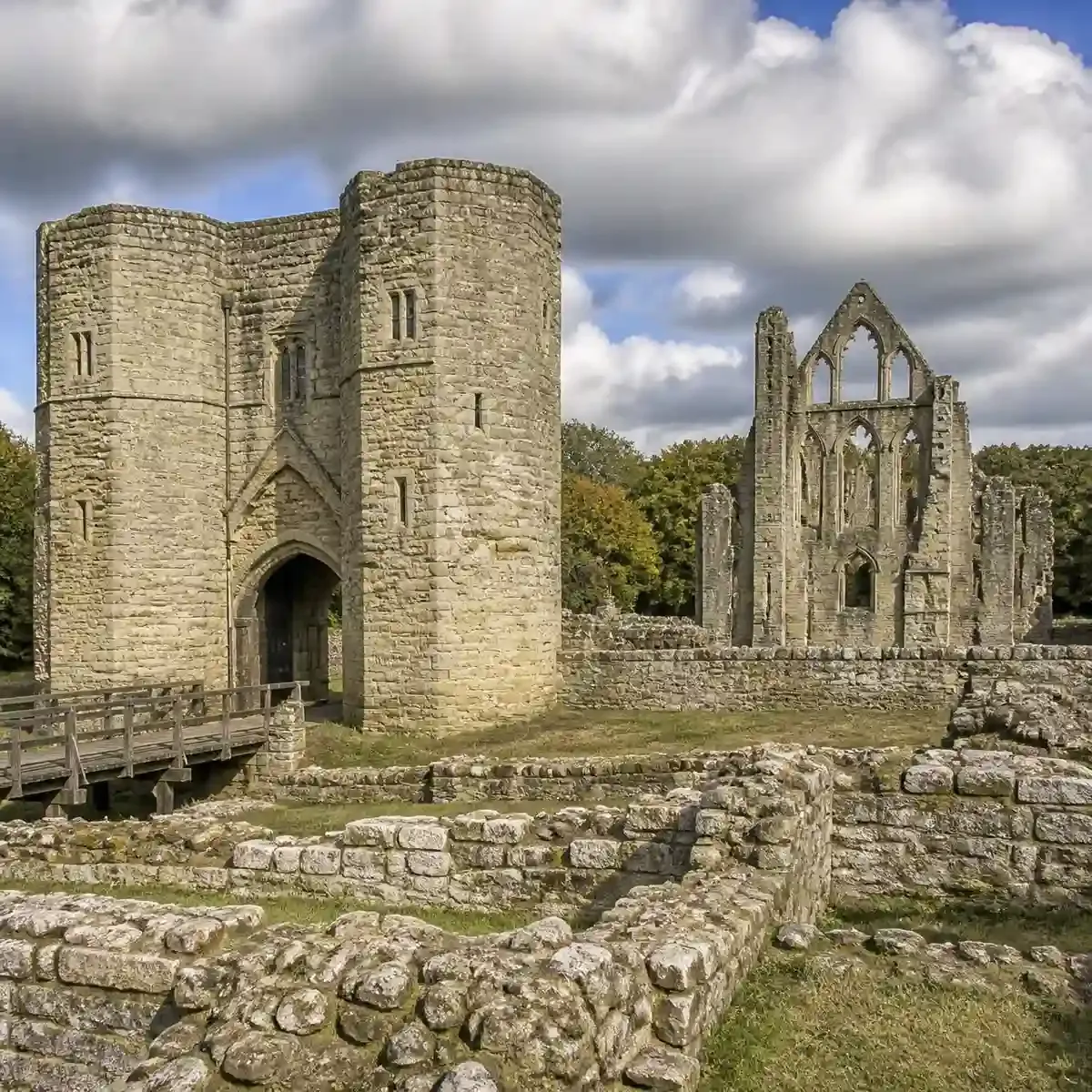
Battle Abbey stands on the exact site of the Battle of Hastings, fought in October 1066 — the single day that ended Anglo-Saxon England and brought the Normans to power. William the Conqueror founded the abbey after his victory, and tradition holds that its high altar was set where King Harold died. For anyone whose East Sussex day trip from London leans towards history, this is the anchor.
What you see at Battle Abbey
The site pairs the ruined abbey with the battlefield itself. An audio-guided trail loops across the sloping ground where the Norman cavalry advanced against Harold's shield wall, dotted with wooden figures that mark the action, and you can climb the gatehouse for rooftop views over the town of Battle. A visitor centre sets out the story with interactive displays before you walk the field, and there is a café and a children's play area near the gatehouse.
Costs, timing and two 2026 highlights
- Admission: adult entry is around £15-£16 (about $20-$22); booking online in advance saves 15%, and arriving by train, bus or bike earns a further 20% off at the gate.
- Time needed: allow 2-3 hours for the visitor centre, abbey ruins and battlefield trail.
- Getting there: Battle station, on the direct London-Hastings line, is a 10-minute walk away.
Two events make 2026 a strong year for the 1066 story. The one-and-only Battle of Hastings re-enactment returns to the abbey on 10-11 October 2026 for its 60th edition, with more than 500 reenactors on the original ground. And from 10 September 2026 the Bayeux Tapestry goes on display at the British Museum in London — its first showing in Britain — which pairs naturally with a visit to the field it depicts. Battle sits within the same history and heritage experiences as the nearby medieval town of Rye, another 1066-country stop worth pairing with the battlefield.
Victorian seaside charm: Eastbourne, Hastings and Brighton
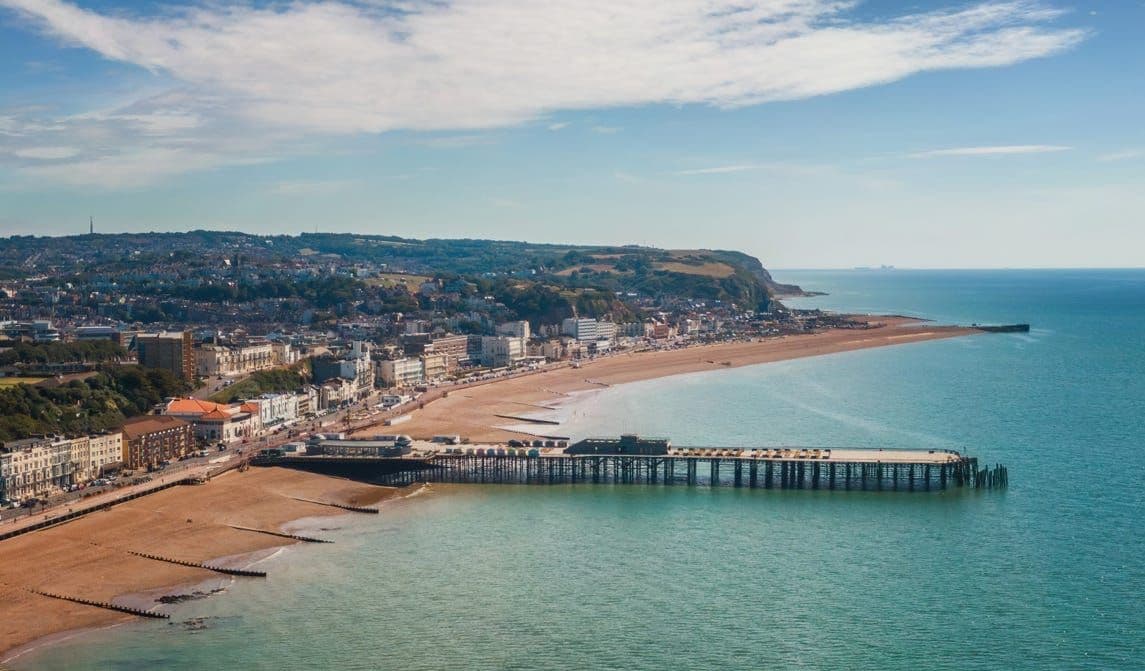
East Sussex's coast is where the Victorians built their seaside — iron piers, promenades and pleasure palaces that still define the towns today. Three resorts anchor it, each with a different character, and all reachable on the same coastal rail line.
Eastbourne — the traditional resort
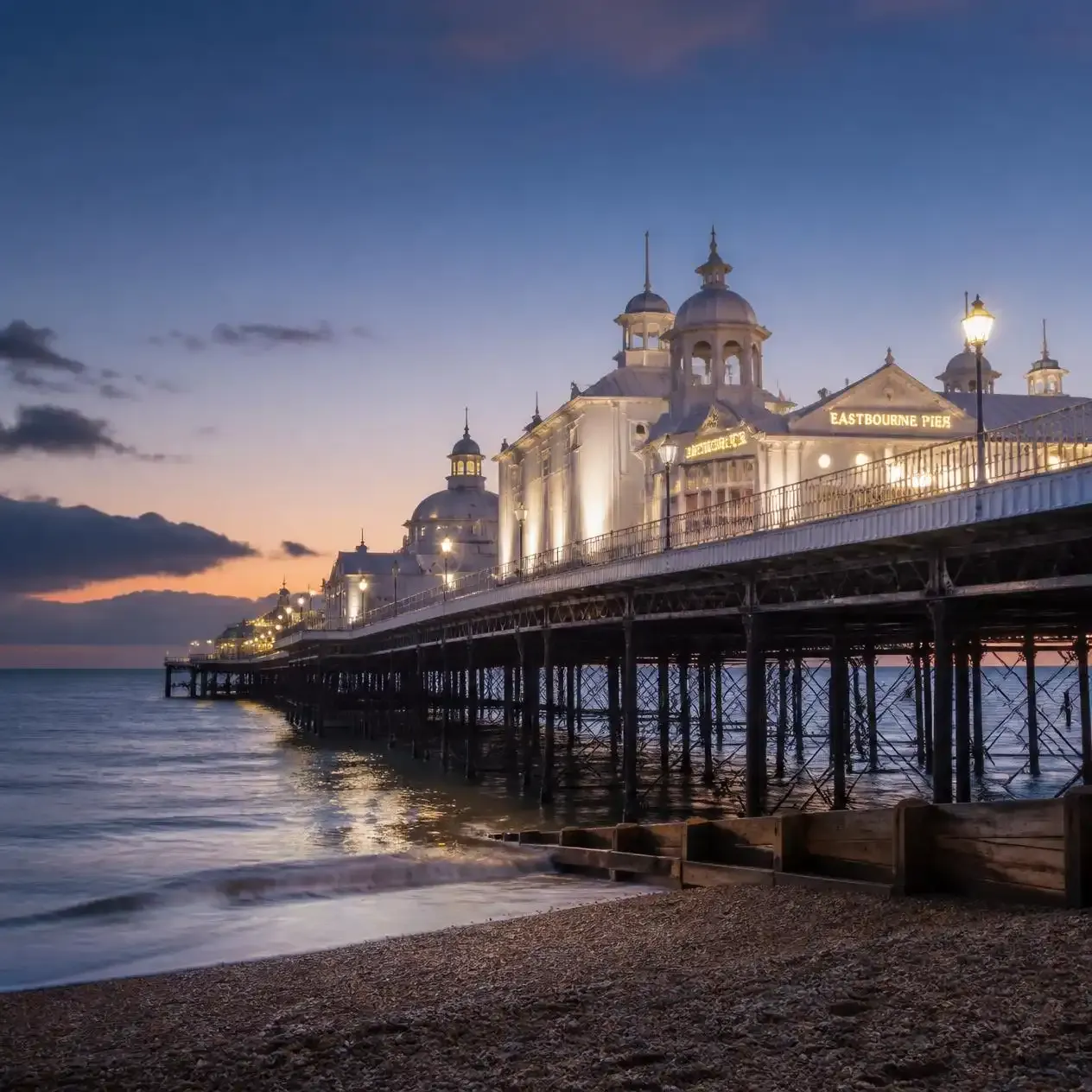
Eastbourne is the most classically Victorian of the three. Its pier opened in 1870, designed by the pier engineer Eugenius Birch and built on stilts that sit in cups on the seabed so the structure flexes in rough weather. Midway along, the Victorian Tea Rooms serve afternoon tea over the water, and the seafront behind runs to grand 19th-century hotels and the Carpet Gardens. It is the natural base for the cliffs, a few minutes west.
Hastings — the working Old Town
Hastings mixes seaside with a genuinely old fishing quarter. The Old Town's narrow lanes sit below two cliff railways, and the beach is backed by the Stade — the tall black timber net huts, unique to Hastings, where fishermen have stored their gear for centuries. It is the least polished of the three and the better for it, with antiques shops, a rebuilt pier and easy links inland to Lewes and Battle.
Brighton — Regency grandeur and the Lanes
Brighton is the liveliest stop and the one with the standout building: the Royal Pavilion, George IV's seaside pleasure palace, built in stages between 1787 and 1823 with an Indian-inspired exterior and Chinese-influenced interiors. Adult admission runs around £19-£20 (about $26-$27), with a small online discount and a 2-for-1 offer if you arrive by train. Beyond it lie the Palace Pier, the boutique-lined Lanes and the 1872-built aquarium, the oldest still operating in the world.
- Eastbourne: best for the pier, the promenade and immediate cliff access.
- Hastings: best for Old Town character and 1066-country history.
- Brighton: best for the Royal Pavilion, shopping and a livelier evening.
Threading it into one trip: routes, timing and what to book ahead
The smartest way to plan an East Sussex day trip from London is to match the theme to the time you have, then let the direct routes do the work. Here is how the three days compare at a glance.
| Theme | Base town | From London | Time needed |
|---|---|---|---|
| Chalk cliffs | Eastbourne / Seaford | ~1h 25m to Eastbourne (Victoria) | Full day walking |
| 1066 history | Battle | ~1h 25m to Battle (Charing Cross) | Half to full day |
| Victorian seaside | Brighton | ~1h to Brighton (Victoria) | Full day |
A sample two-day trip
With two days, base yourself in Eastbourne or Brighton and split the county by landscape and history:
- Day one: the Seven Sisters and Beachy Head from Eastbourne, finishing on the pier at dusk.
- Day two: the train inland to Battle for the abbey and battlefield, then on to Hastings Old Town or back via Brighton for the Royal Pavilion.
Best time to go and what to reserve
Spring through early autumn is the window for the cliffs and the coast — the Downs walks are exposed, and the seaside towns are at their best from May to September. Battle Abbey and the Royal Pavilion stay open year-round. A few things reward booking ahead:
- Advance rail singles are cheaper than walk-up fares and can be reserved up to 12 weeks out, with a reserved seat.
- Battle Abbey tickets are 15% lower booked online, and the October re-enactment sells out, so reserve early.
- Guided Seven Sisters and South Downs day tours from London handle the transfers to the trailheads, which is the awkward part on public transport; the options on Travjoy are researched and approved by local experts, so you can pick a well-run route with confidence.
Plan your East Sussex escape
East Sussex rewards travellers who treat it as more than a single sight. In one small county you can walk Britain's highest chalk cliffs, stand on the ground where 1066 was decided, and take afternoon tea on a 150-year-old pier — all within about 90 minutes of London. Pick one theme for a day out, or give the county two days and let the cliffs, the battlefield and the seaside each have their own morning. Whichever you choose, the routes are direct and the payoff is a proper change of pace from the city. Start planning your East Sussex escape and wider London itinerary on Travjoy.


.svg&w=1920&q=75)