



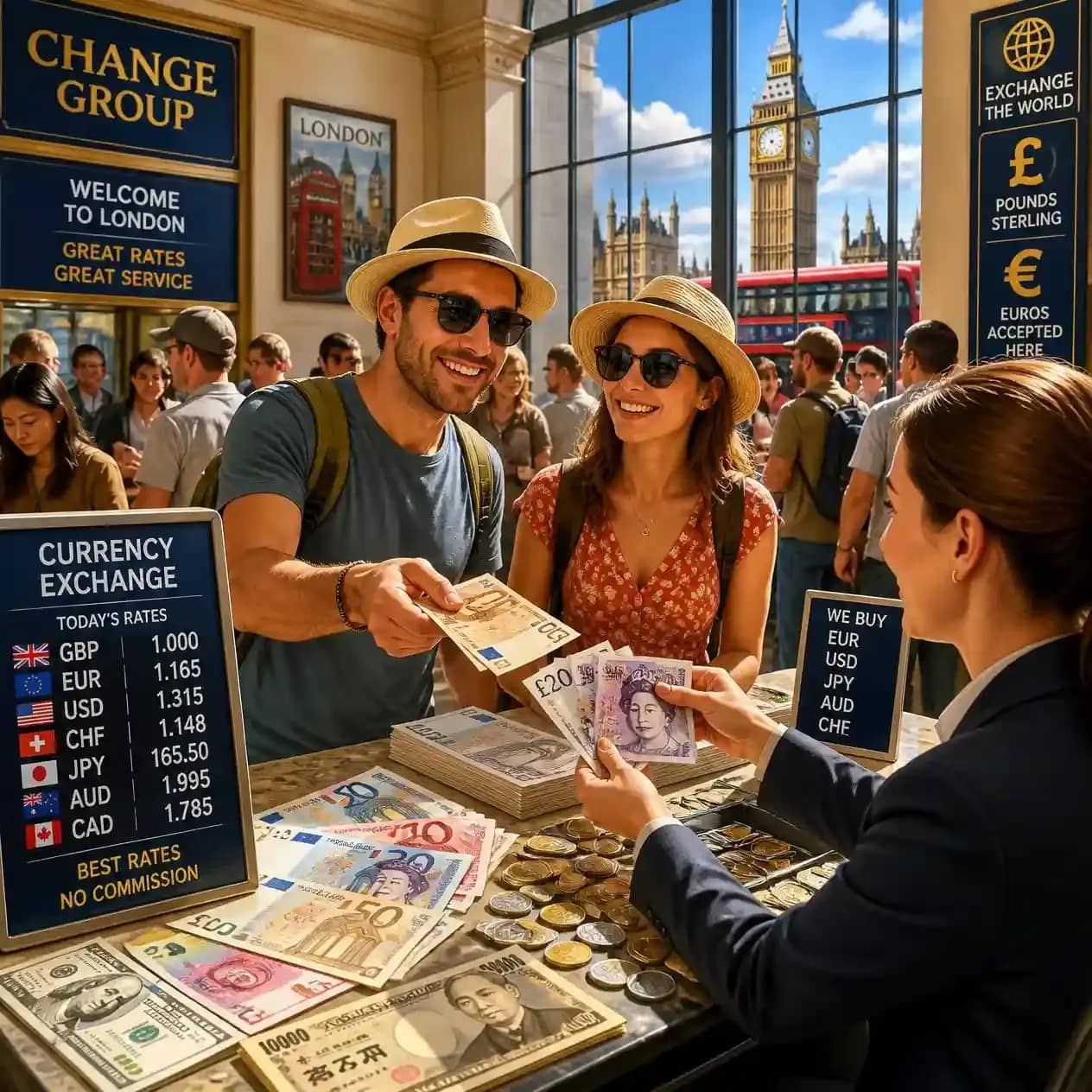
Currency in London: Foreign Exchange and Payments — A Complete Guide for Discerning Travellers
9 min read
Key Highlights
- London runs on the pound sterling (GBP, £). Euros and other foreign notes are effectively useless — you'll pay in pounds everywhere from black cabs to Bond Street.
- The city is card-first. Contactless and mobile wallets work almost everywhere, but keep £50–£100 in cash for the odd market stall, small independent, or a card terminal that's down.
- Skip the airport bureaux de change. Order pounds before you fly or withdraw from a bank ATM on arrival, and always ask to be charged in GBP rather than your home currency.
- Since 2021 you can no longer reclaim VAT at the airport on goods you carry home. The only tax-free route now is direct-export shipping, offered by the major department stores.
- A 12.5% discretionary service charge on a restaurant bill is the tip — you're not expected to add anything on top.
The official currency in London is the pound sterling (GBP, symbol £), and it's the only currency you'll use in practice. London is one of the most card-friendly cities in the world: contactless, Apple Pay, and Google Pay are accepted almost everywhere, foreign transactions convert at your card's rate, and cash has slipped into a supporting role. Carry a little for backup, exchange the rest well, and understand the VAT and tipping rules before you spend.
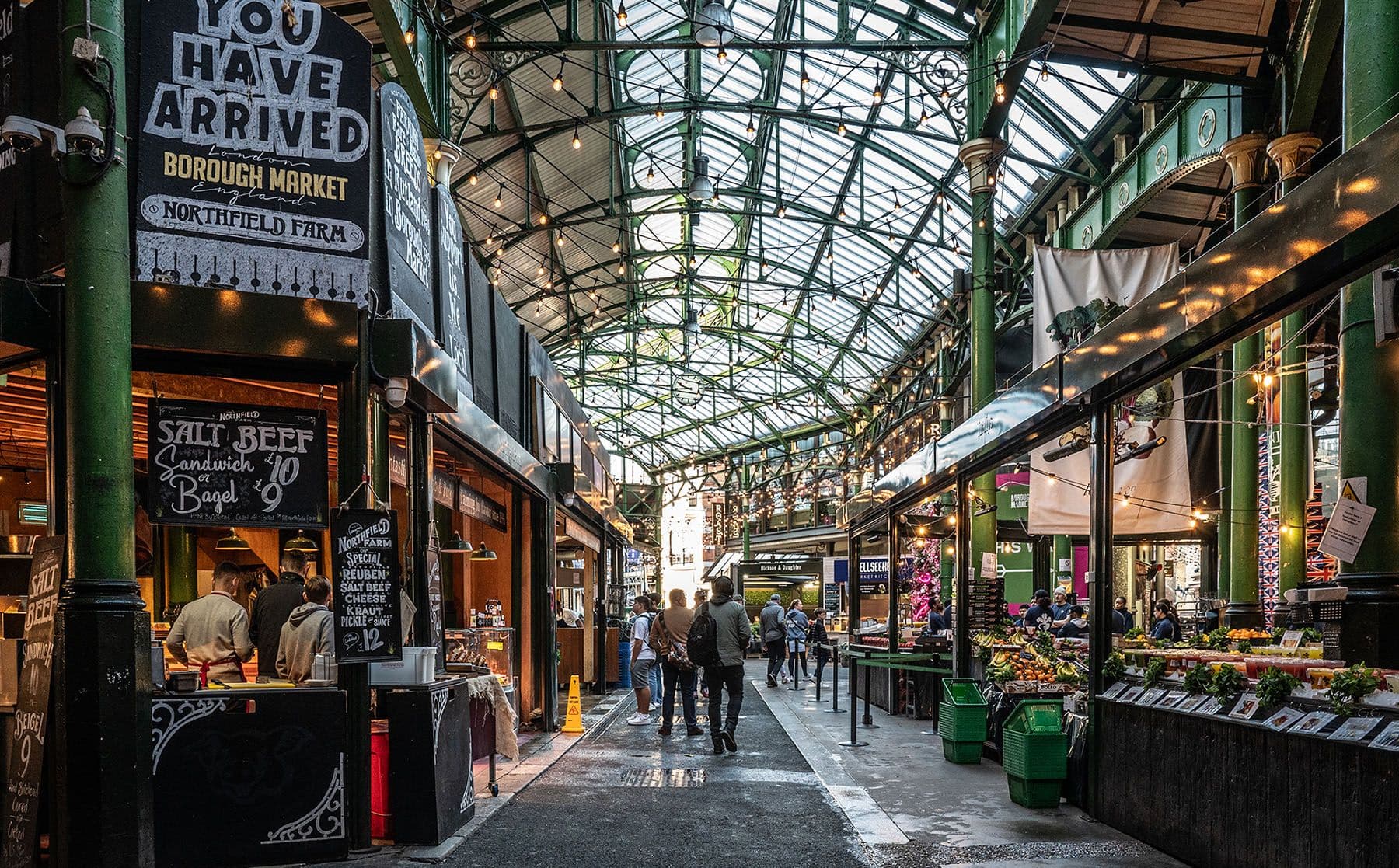
You tap your card at a cashless Pret near the station, walk ten minutes to Borough Market, and the cheese stall you've had your eye on takes cash only. That small collision — a city that is overwhelmingly card-first, punctuated by moments where only notes will do — is the whole story of money in London, and it catches even seasoned visitors off guard.
This guide covers the practical decisions about currency in London that actually affect your trip: which notes and coins you'll see, how to get the best rate on your pounds, when to reach for cash versus card, how contactless and American Express behave here, what tipping really requires, and the one question that trips up affluent shoppers — whether you can still get the VAT back. It's written for someone who wants to move through the city without friction, not to shave a few coins off a coffee.
The Pound Sterling: What London Uses (and What It Won't Take)
The currency in London is the pound sterling, divided into 100 pence. That's the beginning and end of the currency question — there's no second local currency to learn and no dual pricing to decode. The pound is stable, universally accepted across the city, and the price on the shelf is the price you pay, because 20% VAT is already baked into displayed prices rather than added at the till.
Notes and coins you'll actually handle
Bank of England notes now come in durable polymer rather than paper. You'll see four denominations, plus eight coins, though contactless has made the smallest coins increasingly rare in daily use:
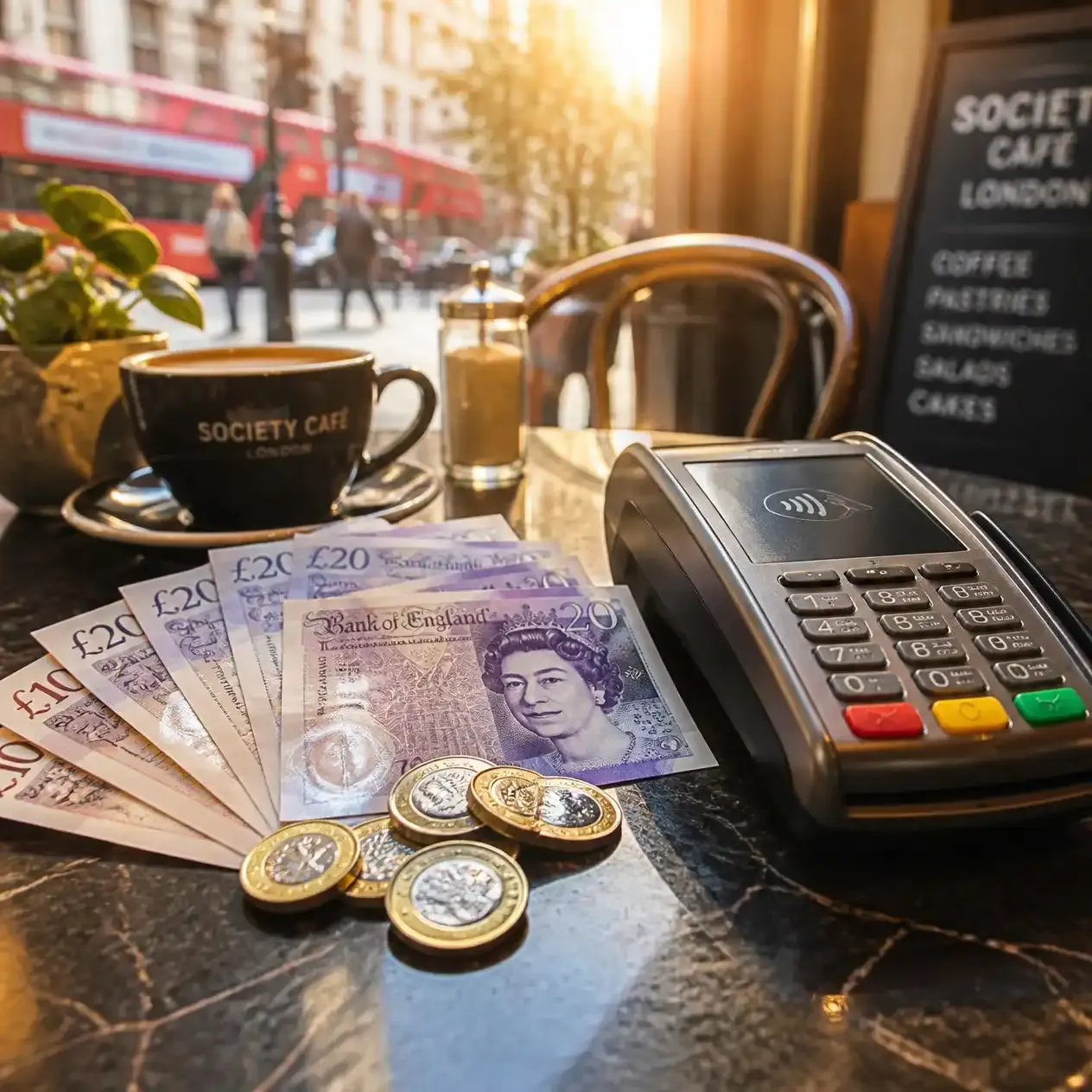
- Banknotes: £5, £10, £20, and £50
- Coins: 1p, 2p, 5p, 10p, 20p, 50p, £1, and £2
A practical note on £50s: they're legal and widely accepted, but a small independent café or market stall may be reluctant to break one early in the day. If you're carrying cash, £10 and £20 notes are the most useful to have on hand.
Euros won't help you — and neither will the wrong pounds
Do not bring euros expecting to spend them. A handful of tourist-facing shops near the big attractions might accept them, but at a rate so poor it defeats the purpose. Convert to sterling and pay in pounds.
There's a subtler trap for anyone arriving via Scotland or Northern Ireland: Scottish and Northern Irish banknotes are sterling and hold the same value, but they're issued by different banks and a London shop is legally within its rights to refuse them. They usually don't, but to avoid an awkward moment, spend or swap them before you reach London rather than relying on them here.
The £100 contactless ceiling
Contactless card payments in the UK are capped at £100 per transaction. Below that you simply tap; above it you'll insert the card and enter your PIN, or authorise through a mobile wallet, which isn't bound by the £100 limit. It's worth knowing before you reach for your card at a restaurant or in a department store, so a declined tap doesn't read as a card problem when it's just the ceiling.
Cash vs Card in London: Where Each Actually Wins
London is a card-first city, and for most of your spending you'll never touch cash. Contactless is the default for transport, chains, restaurants, and the majority of shops — several café and sandwich chains and some bars and hotels have gone entirely cashless. The realistic strategy is to lead with card and carry a modest cash cushion of £50–£100, topped up as you go.
Where card is all you need
For the bulk of a London trip, a single contactless card or phone covers everything:
- Public transport — the Underground, buses, and most rail services take contactless and mobile payments directly
- Restaurants, cafés, and bars, including cashless venues that won't take notes at all
- Department stores, boutiques, and mainstream shops
- Museums, galleries, theatres, and attraction tickets
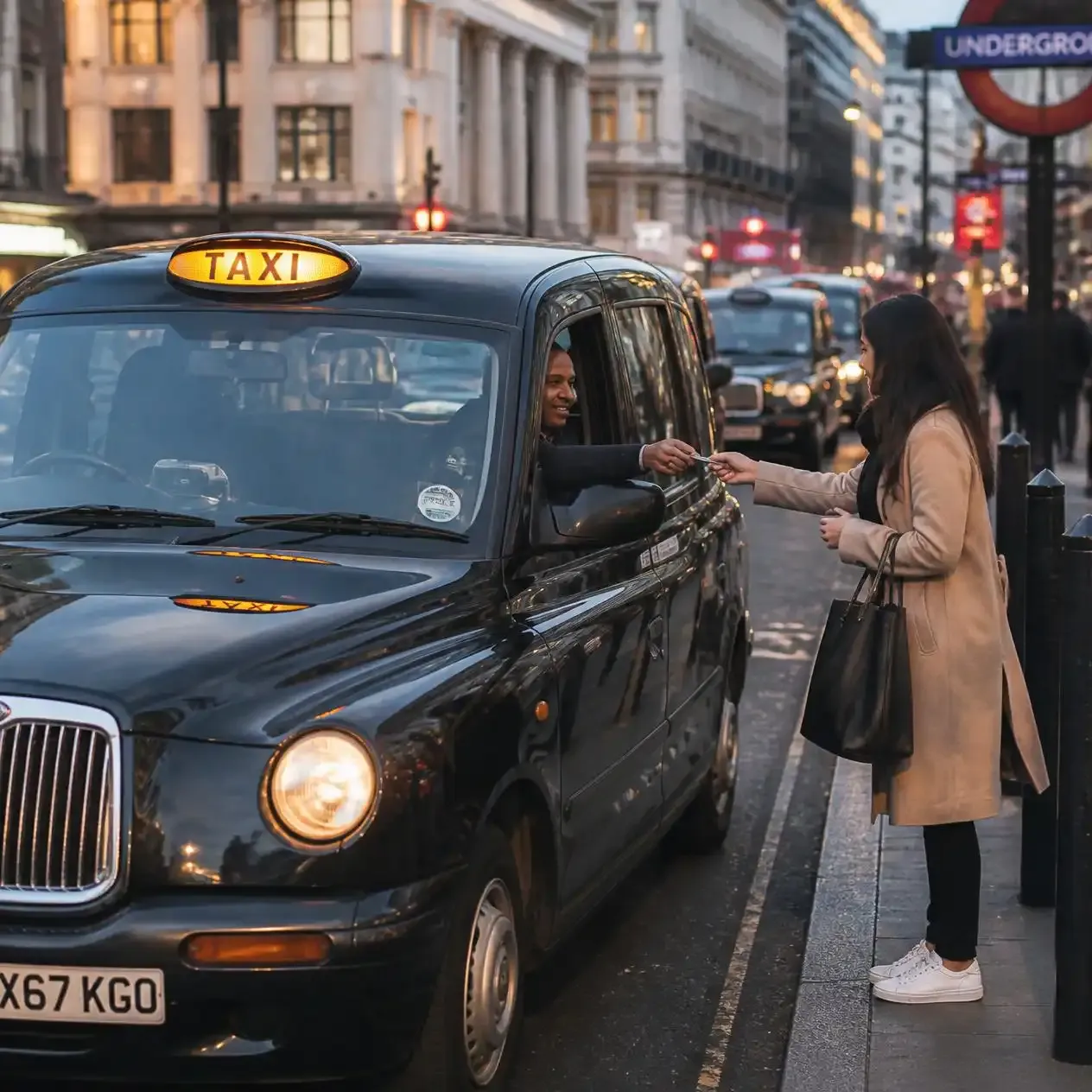
- Black cabs and ride-hailing, both of which take cards as standard
Where cash still earns its place
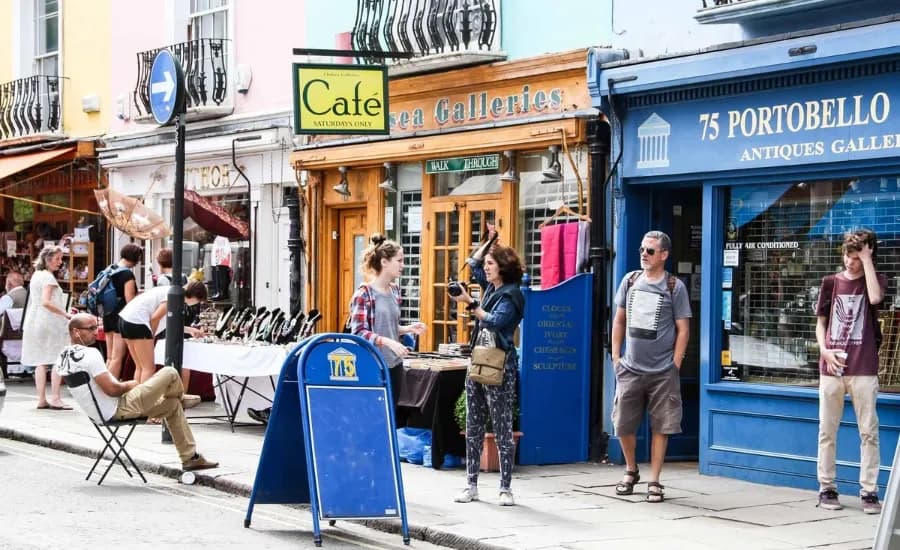
Cash hasn't vanished; it's just become situational. Keep some for the moments card can't cover cleanly. Many stalls at Borough Market and the antiques and vintage traders along Portobello Road Market do take cards now, but a few independent sellers are still cash-only or prefer it, and a small note settles things faster. Beyond the markets, cash is useful for tipping a porter or housekeeper, a tiny independent shop, a pub with a card machine that's playing up, and simply as a backup if your card is ever declined or frozen for a fraud check.

How much cash to carry
For most visitors, £50 to £100 in cash at any one time is plenty — enough for tips, a market lunch, and the occasional cash-only moment, without carrying more than you'd want to lose. That backup cushion is the only part of your currency in London you need in physical form. Top it up from a bank ATM as needed rather than withdrawing a large float on day one. If your itinerary leans heavily on markets, independent traders, or pubs, sit at the upper end; if you're mostly dining out and shopping the department stores, you'll rarely break into it.
Foreign Exchange: Getting the Best Rate on Your Pounds
Getting the best rate when you exchange currency in London is mostly about avoiding the worst-value options rather than chasing a perfect one. The single biggest saving is simply not exchanging money at an airport — airport counters and hotel-lobby bureaux operate on captive demand and price accordingly. A little planning removes most of the cost.
Order ahead or withdraw on arrival
Two sensible ways to get sterling without overpaying:
- Order pounds before you fly — arranging currency in advance through your home bank or a reputable provider, for home delivery or airport collection, usually beats walking up to an exchange counter cold.
- Withdraw from a bank ATM on arrival — a machine attached to a major UK bank typically gives a fair rate. If you land without sterling, take out a small amount at the airport to cover the ride into town, then withdraw the rest from a bank ATM in the city.
Be wary of stand-alone ATMs in convenience stores, some pubs, and tourist areas. These are often privately operated and may charge a withdrawal fee — they must display it on screen and give you the chance to cancel before you're charged, so read the prompt before confirming.
The "how many pounds after all charges" test
If you do exchange cash in the city, don't compare headline rates alone. A "0% commission" sign can still hide a poor rate, and a good rate can be eroded by a fee. Ask the one question that cuts through it: how many pounds will I actually receive in total, after everything is deducted? Compare that figure across a couple of providers and the best value becomes obvious.
Always choose to be charged in pounds
This is the quiet fee that catches careful travellers. When you pay by card or use an ATM, a London terminal may offer to charge you in your home currency instead of pounds — a process called dynamic currency conversion. It sounds convenient, but it hands the exchange rate to the merchant or ATM operator, who typically marks it up well above what your own card would apply. Always choose to be charged in GBP, the local currency, and let your card handle the conversion. You may still pay your card's own foreign transaction fee, but you'll avoid the inflated on-the-spot rate stacked on top.
Multi-currency travel cards
For card spending and ATM withdrawals, a multi-currency travel card is often the most transparent option, converting close to the mid-market rate with clearly stated fees rather than a hidden spread. The practical playbook for most visitors: exchange a small amount of cash for backup, and use a well-chosen card for nearly everything else. When you're planning what to actually do with your pounds once you're here, the experiences on Travjoy are researched and approved by local experts, so you can book with confidence rather than second-guessing every choice on the ground.



Cards, Contactless and Digital Wallets: How London Pays
London's payment infrastructure is built for tap-and-go, and digital wallets have made handling currency in London almost invisible day to day. A contactless bank card or a phone wallet will carry you through almost the entire trip, including public transport, where you tap the same card you use for coffee. Understanding a few specifics — Amex acceptance, transport caps, and the fees your home card applies — turns "it usually works" into genuine confidence.
Contactless, Apple Pay and Google Pay
Contactless is the everyday default, and mobile wallets are accepted just as widely. Apple Pay, Google Pay, and Samsung Pay work across the city and, usefully, sidestep the £100 contactless ceiling because they authenticate through your phone. They also add a security layer, since your actual card number isn't shared with the merchant. Load your cards into a wallet before you arrive and you'll rarely need the physical card at all.
Transport: contactless versus Oyster
On Transport for London, you have two clean options, and for most visitors contactless is the simpler one:
- Contactless or mobile wallet — tap a bank card or phone directly at the reader. Fares are the same as pay-as-you-go Oyster, and daily and Monday-to-Sunday weekly capping is applied automatically, so you're never charged more than the relevant cap once you hit it.
- Oyster card — a reusable transport card you top up with credit. Still useful if you'd rather not tap a foreign bank card repeatedly, but it doesn't do anything contactless can't, and it can't be used off the transport network.
One caution for overseas visitors: some foreign-issued cards may treat each transport tap as a small foreign transaction, so a fee-free travel card or a phone wallet linked to one is the tidiest choice.
American Express: fine at the top, patchy at the bottom
If Amex is your main card, bring a Visa or Mastercard as backup. American Express is reliably accepted at department stores, hotels, larger restaurants, and the big chains, but smaller independents, market stalls, and some cafés and pubs decline it because of higher processing costs. It's rarely a problem in central London and the premium end of the city; it's the small, characterful places where you'll want the second card. Whatever card you use, the golden rule holds — when a terminal asks, choose to pay in pounds, not your home currency.
What your home card actually charges
Because you're spending in pounds on a card denominated in another currency, your own bank sets the conversion and may add a foreign transaction fee — often in the region of 2.5–3% depending on the card. Here's how the common payment methods compare for an overseas visitor in London:
| Payment method | Best for | Typical cost to you | Watch out for |
|---|---|---|---|
| Contactless / mobile wallet (home credit or debit card) | Everyday spending, transport, dining | Your card's foreign transaction fee, roughly 2.5–3% on some cards, 0% on fee-free cards | Dynamic currency conversion — always choose GBP |
| Multi-currency travel card | Card spending and ATM withdrawals with transparent costs | Close to mid-market rate with a small, clearly stated fee | Top up before you travel; know your fee-free ATM limit |
| Cash from a bank ATM | Backup, tips, markets, small independents | Your bank's overseas withdrawal fee, if any | Private, non-bank ATMs that add their own charge |
| Airport / hotel bureau de change | Last resort only | Poorest rates of the lot | Captive-market pricing; avoid where possible |
The VAT Question: Tax-Free Shopping and the "Shop and Ship" Route
This is the question that catches out affluent visitors, and it's rarely answered clearly. The short version: you cannot walk out of a London shop with goods in your bag and reclaim the VAT at the airport. That scheme ended in 2021. There is still a tax-free route, but it works differently now, and it's worth understanding before a big purchase.
VAT is already in the price
Value Added Tax of 20% is included in the displayed price on most goods, so the ticket price is what you pay at the till — there's no separate sales tax added afterwards. For everyday spending that simply means the shelf price is the real price, which makes budgeting refreshingly honest.
Why you can't reclaim it at the airport anymore
The UK withdrew the VAT Retail Export Scheme at the start of 2021. Before then, overseas visitors could buy goods, get a form stamped at customs, and reclaim the 20% VAT on departure. Those refund desks no longer process tourist claims for purchases carried home in your luggage. If a shop or a third party implies you can get VAT back at the gate on a bag you're taking with you, treat it with scepticism — for goods leaving in your suitcase, the effective refund is zero.
The one tax-free route that remains: direct-export shipping
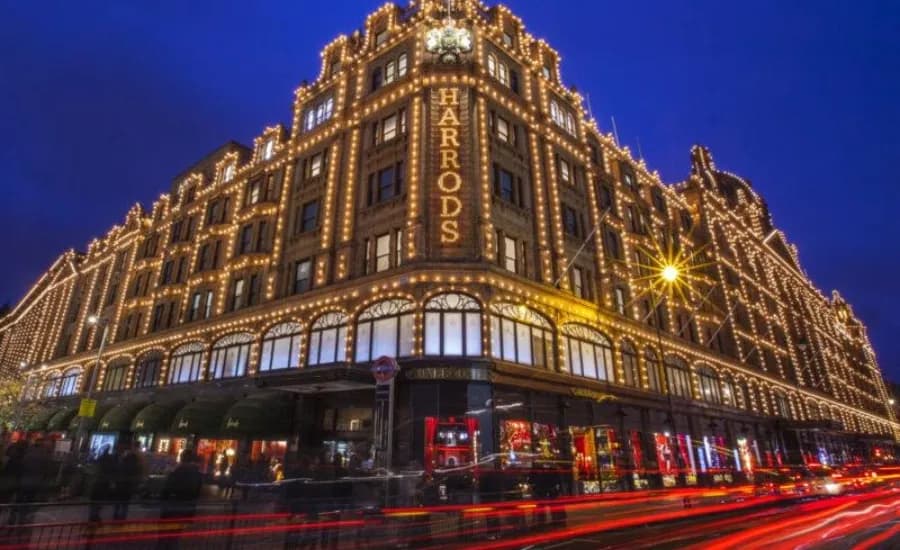
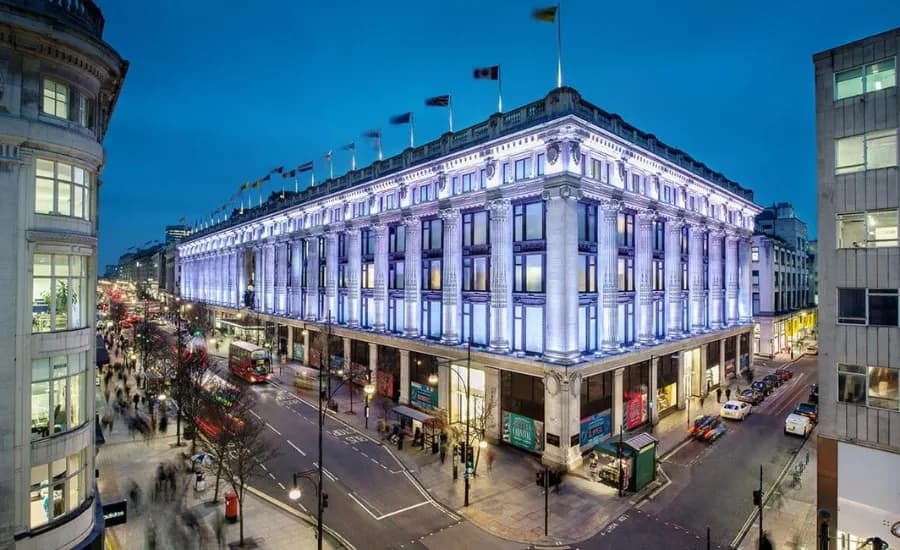
You can still buy tax-free in London if the retailer ships the goods directly to your home address overseas rather than letting you carry them out. This "shop and ship" or direct-export service removes the 20% VAT at the point of sale, and it's offered mainly by the major department stores and luxury houses — think Harrods, Selfridges, Liberty, Harvey Nichols, and Fortnum & Mason. It suits high-value pieces such as designer fashion, jewellery, and watches. To use it:
- Tell the sales assistant you want the direct-export or tax-free shipping service before you pay
- Show your passport to prove non-UK residency and give your exact overseas address
- Pay the price minus VAT, plus the store's international shipping and handling
- Leave the goods with the store — you can't take them to your hotel — and track the parcel to your home country
Two things to weigh. First, you pay shipping and may owe import duties or taxes when the parcel lands at home, so the saving isn't always as large as the 20% headline — always ask the store to total the shipped price against the walk-out price before deciding. Second, some retailers set a minimum spend, and not every brand or item qualifies. For serious purchases it's well worth the conversation; for a single scarf it rarely is. If you're planning a shopping-led trip, it's worth browsing the luxury shopping options and the wider shopping experiences across the city so you know where the direct-export desks are before you go.

Tipping, Service Charges and a Premium Daily-Spend Framework
Tipping in London is discretionary, not obligatory, because hospitality staff are paid a proper wage rather than relying on gratuities to make up their income. The etiquette is simpler than in the US — the main skill is reading your bill so you don't tip twice.
The 12.5% service charge, and not double-tipping
Most mid-to-upper-tier restaurants add a "discretionary service charge," usually 12.5%, directly to the bill. If it's there, that is the tip — you don't add anything on top, and adding 15–20% more is neither expected nor necessary. If there's no service charge, 10–15% for good service is customary. Because the charge is discretionary, you can politely ask for it to be removed if the service truly fell short, and that isn't considered rude. If you'd like the money to reach your server directly, a cash tip handed over is the surest way.
Tipping at a glance
- Restaurants: 12.5% service charge is usually already on the bill — that's the tip. No charge? Leave 10–15%.
- Pubs and bars (order at the bar): no tip expected; offer to buy the bartender a drink if you like.
- Black cabs and minicabs: round up or add around 10% for a longer or well-handled journey.
- Hotels: £1–£2 per bag for porters; housekeeping at your discretion on departure.
- Guides, spas, hairdressers: around £5–£10 for a tour guide, roughly 10% for a treatment or cut — all optional.
- Cafés and takeaways: not expected; round up or drop change in the jar if you wish.
A premium daily-spend framework
London rewards a generous budget, and framing your spend by the day makes planning easier. These bands cover food, local transport, attractions, and incidentals, and exclude accommodation. As a rough guide, £1 is around US$1.30–1.35 in 2026, though the rate moves, so treat the dollar figures as ballpark:
- Comfortable: roughly £120–£180 a day (about US$160–240) — good sit-down meals, contactless-capped transport, paid attractions, the occasional taxi.
- Premium: roughly £250–£400 a day (about US$330–540) — notable restaurants, the odd private car or guided experience, afternoon tea, and unhurried shopping.
- Luxury: £500+ a day (about US$675+) — tasting menus, chauffeured transfers, private guiding, and serious retail.
The value in setting a band isn't restraint — it's knowing in advance what a day of the trip you actually want will cost, so nothing about the money side gives you pause once you're here.
Plan Your Trip with Confidence
Handling currency in London comes down to a few clear habits. Pay in pounds and lead with a contactless card or phone, keeping £50–£100 in cash for markets, tips, and the occasional card-machine hiccup. Get your sterling from a bank ATM or an advance order rather than an airport counter, and always choose to be charged in GBP when a terminal offers your home currency. And if you're planning a significant purchase, remember that the only tax-free route now is direct-export shipping through the big stores — worth it for the watch, rarely for the scarf.
Handled well, currency in London becomes the least of your concerns, and the financial side of your trip fades into the background, which is exactly where it should be. To start shaping the rest of your visit — where to eat, what to book, and how to spend your days — explore everything on offer for London on Travjoy, with experiences researched and approved by local experts so your planning is as effortless as tapping a card.


.svg&w=1920&q=75)