



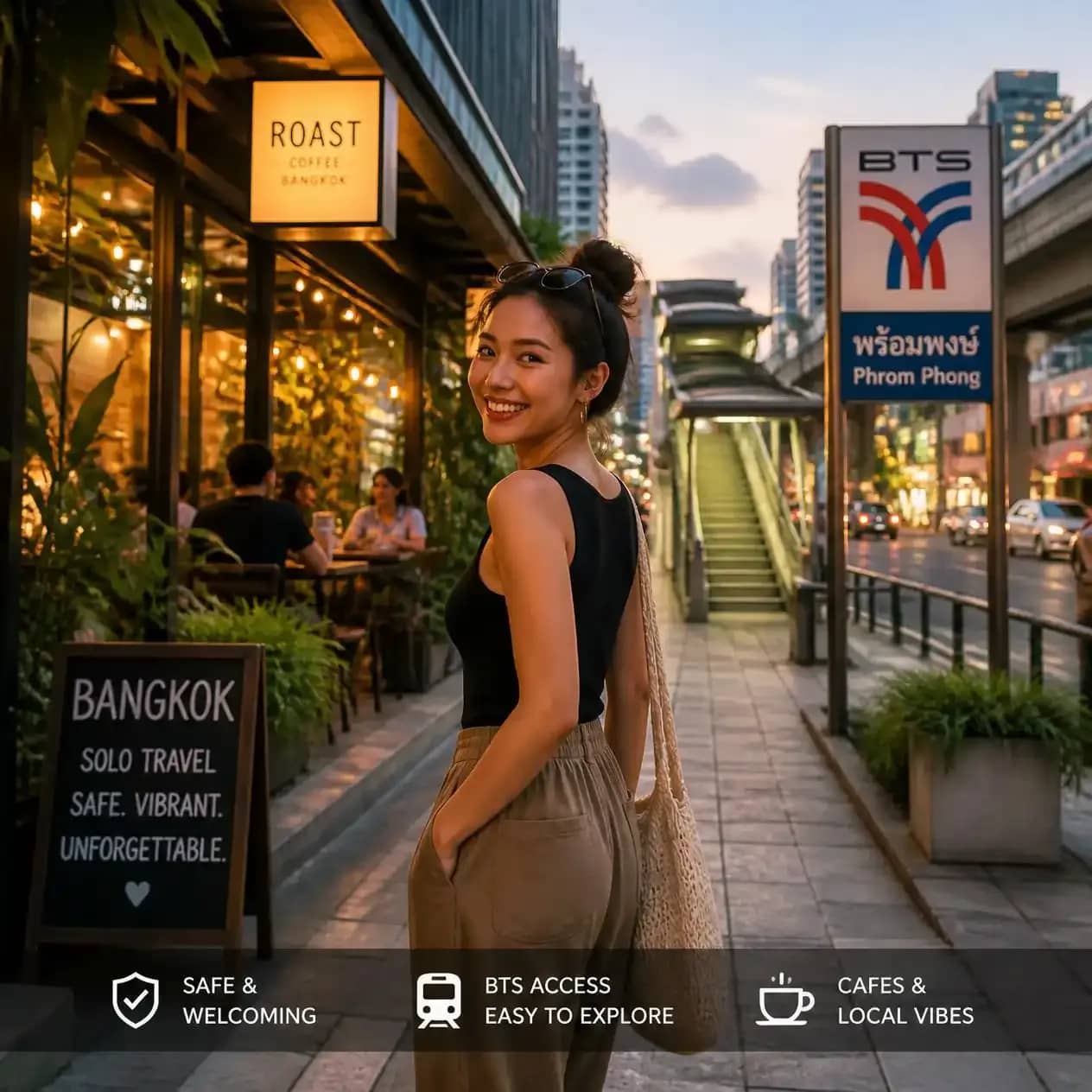
Bangkok for Solo Female Travellers: A Complete Guide to the Safest and Most Rewarding Areas to Stay
12 min read
Key Highlights
- Asok and Phrom Phong are the strongest all-round bases in Bangkok for solo female travellers — lit pavements, two rail lines, and hotel lobbies staffed around the clock.
- The variable that matters most is not the district but the last 400 metres: how far your hotel sits from a station exit, and whether that stretch has a pavement and streetlights.
- Riverside suits a slower, more private trip; Ari rewards a second or third visit; the Old City buys you temple mornings at the cost of rail access.
- Expect ฿2,500–7,000 (US$70–200) a night for a well-reviewed four-star in the connected core in 2026, and ฿5,000–12,000 (US$140–340) on the river.
- Thailand placed eighth worldwide in a 2025 insurer study of solo female travel safety — the realistic risks here are scams and traffic, not violence.
The best areas in Bangkok for solo female travellers are Asok and Phrom Phong for connectivity, the riverside for calm and privacy, Silom and Sathorn for dining within walking distance, and Ari for a quieter, more residential stay on a repeat visit. Whichever you choose, the single most useful rule is to book within a five-minute, well-lit walk of a BTS or MRT exit — that one decision does more for your evenings than the hotel's star rating.
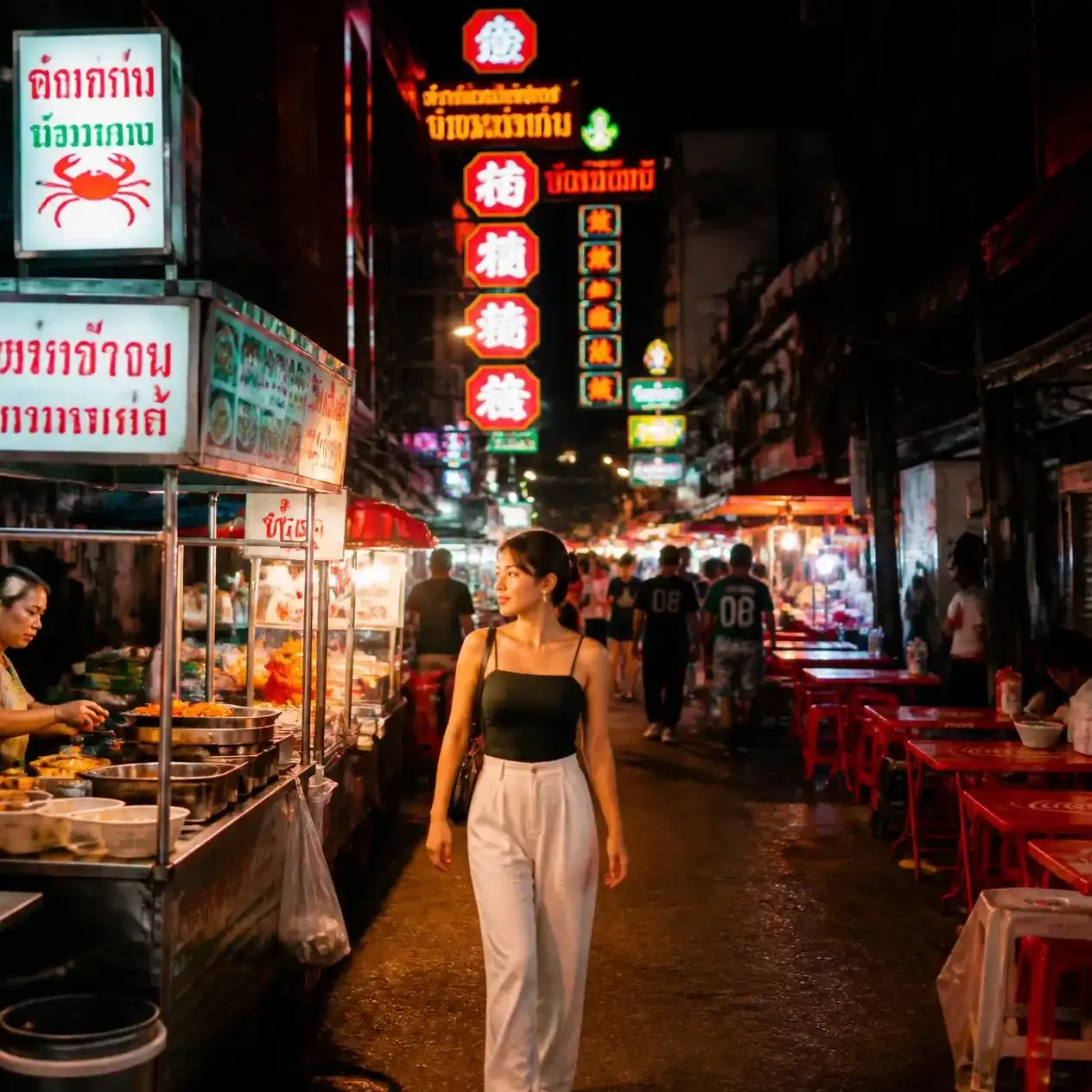
Thailand was ranked the eighth safest country in the world for solo female travel in a 2025 study by the insurer Everly Life, which weighed homicide rates, night-time safety and societal attitudes to violence against women. That is a reassuring headline. It also tells you nothing about whether the soi outside your hotel has a pavement.
Bangkok is a city of extreme micro-variation. Two hotels 600 metres apart can offer completely different evenings — one where you step out of the lobby into a lit parade of restaurants and a station entrance, another where you pick your way along a broken kerb past parked motorbikes with no footpath at all. Guides tend to answer at the level of the district. The decision that actually shapes your trip happens at the level of the street.
This guide compares the six areas worth considering in Bangkok for solo female travellers — on rail access, evening character, what sits on the doorstep, and what a night costs in 2026. It names who each area suits and who should skip it, sets out the sois to leave out of your search entirely, and gives you the short list of questions to put to a hotel before you book.
Is Bangkok a Good Base for Solo Female Travellers?
Yes. Bangkok for solo female travellers is one of the more comfortable large Asian cities to move around alone, and the reasons are structural rather than anecdotal. Street harassment is uncommon, Thai social norms lean non-confrontational, and eating alone carries no stigma whatsoever. Where the city asks something of you is in navigation and pavement quality, not in personal security.
What the data actually says
Bangkok records lower rates of violent crime and street harassment than most major Western capitals, and it sits behind only Singapore among Southeast Asian cities on the standard safety indices. The 2025 Everly Life ranking placed Thailand eighth globally for solo female travel, alongside countries most travellers would not think twice about.
The more useful figure is the shape of the risk rather than its size. Reported problems affecting women here cluster overwhelmingly in three categories:
- Scams — the "the Grand Palace is closed today" approach outside major temples, tuk-tuk drivers who convert a ฿50 ride into a gem-shop tour, and taxi meters that mysteriously fail
- Petty theft — bag-snatching from motorbikes on quiet stretches, and phones lifted in crowded night-market lanes
- Traffic — Bangkok's genuine daily hazard, particularly crossing wide roads and walking where pavements give out
Violence against solo women travellers registers well below any of these. That matters because it changes what you should optimise for when choosing a base: lighting, footfall and rail access, rather than gated compounds or security theatre.
What changes by area — and what doesn't
Three things vary meaningfully between Bangkok neighbourhoods, and everything else is noise.
- The last 400 metres. How far your hotel sits from a station exit, and whether that walk has pavement, streetlights and open shopfronts. This is the single biggest determinant of how your evenings feel.
- Street life after 9pm. Some areas empty out at dusk; others stay busy until one in the morning. Busy is better, up to a point — the exception is the drinking strips, where footfall stops being reassuring.
- What sits on the doorstep. Whether stepping out of the lobby at 8pm gives you thirty restaurants or a six-lane road.
What does not vary much is baseline safety. There is no district in central Bangkok where a woman walking a main road at 10pm is taking a meaningful risk. The differences are about ease, comfort and how much of your day you lose to traffic.
Worth it if — and not ideal if
Bangkok for solo female travellers works well if you want a city where dining alone at a counter, a chef's table or a street stall is entirely unremarkable; if you like being able to reach a spa, a market and a rooftop within twenty minutes of your room; if you are comfortable using a ride-hailing app rather than hailing off the street; or if you are on a second or third visit and want to base yourself somewhere residential rather than somewhere convenient.
It is less ideal if you want to walk everywhere — the heat and the pavement gaps make that unrealistic for much of the year; if you find dense, loud cities draining and have only two or three nights; or if you want a compact historic centre you can cover on foot, which is what Chiang Mai and Luang Prabang offer and Bangkok does not.
Reality check: optimise for the walk, not the wall
- Hotels here compete on pools and lobbies; almost none advertise the quality of the approach road, which is the thing you will actually use twice a day.
- Because the real risks are scams and traffic rather than intrusion, a hotel behind a gate on an unlit lane is a worse choice than an unremarkable four-star sixty seconds from a BTS exit.
- Drop the exact address into Street View before booking. Two minutes there tells you more than fifty reviews.
The Six Best Areas in Bangkok for Solo Female Travellers, Compared
Six areas are worth putting on a shortlist. The table below compares them on the things that decide the question — rail access, what a night costs in 2026, how the streets feel after dark, and who each one actually suits.
| Area | Nearest rail | Four-star nightly rate (2026) | Evening character | Best for |
|---|---|---|---|---|
| Asok and Phrom Phong | BTS Asok, MRT Sukhumvit, BTS Phrom Phong | ฿2,500–5,500 (US$70–155) | Busy and lit until midnight; malls, cafés and clinics on every block | A first Bangkok trip, or anyone prioritising ease of movement |
| Thonglor and Ekkamai | BTS Thong Lo, BTS Ekkamai | ฿3,000–6,500 (US$85–185) | Restaurant-led and grown-up; quiet once you turn off the main soi | Longer stays, repeat visitors, anyone here for the food |
| Siam and Pratunam | BTS Siam, BTS Chit Lom, BTS Ratchathewi | ฿2,800–6,000 (US$80–170) | Heavy footfall until the malls close at 10pm, then noticeably thinner | Short stays, shopping-led trips, tight interchange access |
| Silom and Sathorn | BTS Sala Daeng, MRT Silom, BTS Chong Nonsi | ฿2,500–7,000 (US$70–200) | Corporate by day, restaurant-and-rooftop by night, patchy at weekends | Dining and rooftop bars within walking distance; river pier access |
| Riverside and Thonburi | BTS Saphan Taksin, Gold Line, hotel boat shuttles | ฿5,000–12,000 (US$140–340) | Contained and quiet; the evening happens inside the property | A slower, more private trip; temple access by boat |
| Ari | BTS Ari | ฿1,800–4,000 (US$50–115) | Residential and calm; cafés close early, restaurants run later | Second and third visits, longer stays, working remotely |
Rate bands reflect a well-reviewed four-star property with a pool, booked a few weeks out for travel in 2026. They exclude the December–February peak, when the connected core typically runs 20–30% higher, and they exclude the grande-dame riverside hotels, which start closer to ฿19,000 (US$540) a night.
Two areas sit deliberately outside the table. The Old City and Rattanakosin is covered separately below because it trades rail access for temple proximity, which is a different kind of decision. Khao San Road and Banglamphu are not recommended as a base for this reader — the reasons are in the section on sois to keep out of your search.
Reality check: you are paying for the station, not the postcode
- Rate bands here track BTS proximity far more closely than they track neighbourhood prestige.
- A four-star two stops beyond Phrom Phong — Thong Lo or Ekkamai, still on the same line — frequently costs 25–35% less than the equivalent property at Asok, for a journey difference of four minutes.
- The saving disappears the moment the hotel sits deep up a long soi, because you will spend it on Grab rides. Measure the walk before you measure the price.
Sukhumvit, Siam and Silom: The Connected Core
These three areas are the practical heart of Bangkok for solo female travellers, and they share one defining quality — you can reach almost anywhere in the city from them without a car, and you can get home late without planning around it. If your priority is moving freely and independently, base yourself here. The differences between them are about what your evenings look like, not about whether the logistics work.
Asok and Phrom Phong: the default answer, for good reason
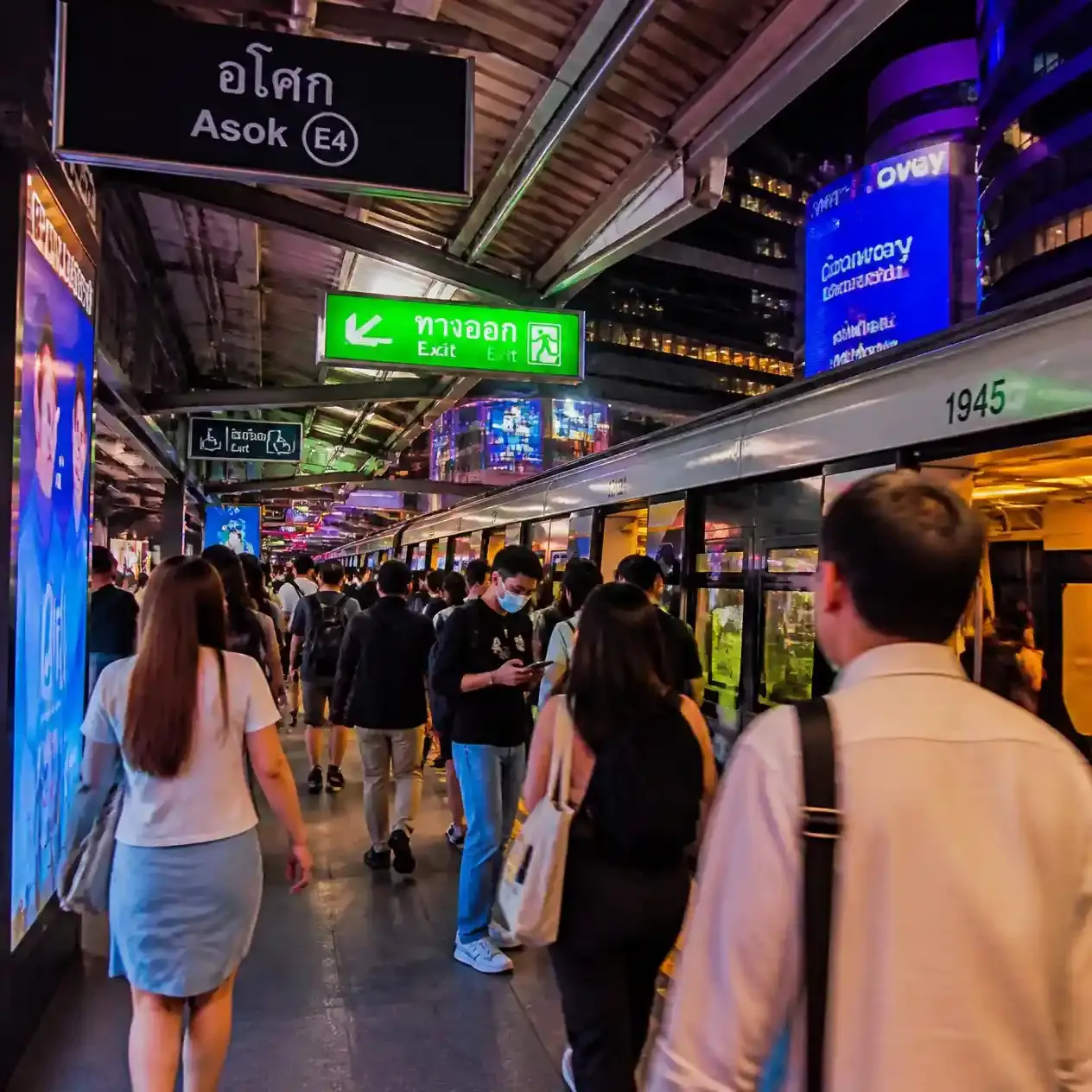
This stretch of Sukhumvit is the most practical base in the city, and the one most solo travellers should default to. Asok is where the BTS Sukhumvit Line meets the MRT Blue Line, which means two independent rail networks from one station and a genuine alternative if either is disrupted. Pavements are wide and continuous, the main road stays lit and busy well past midnight, and there are 24-hour pharmacies, convenience stores and international hospitals within a few hundred metres.
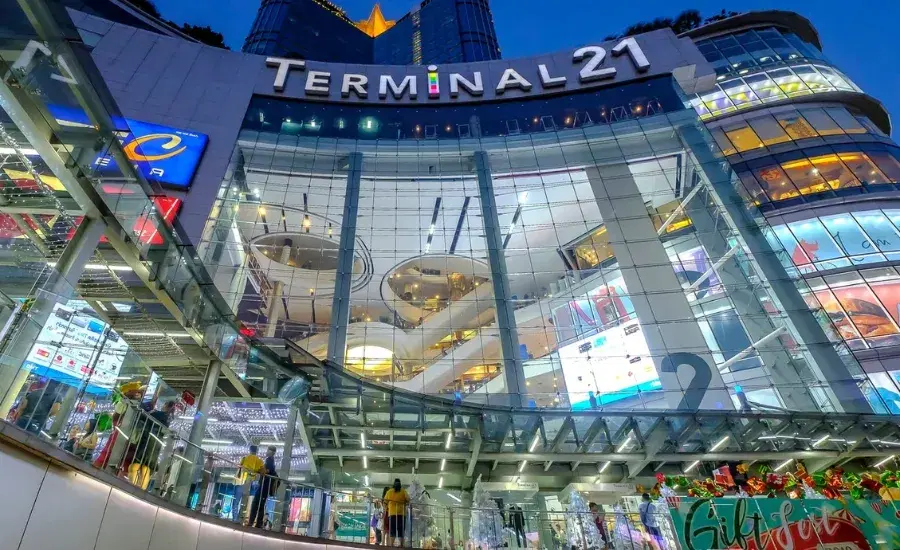
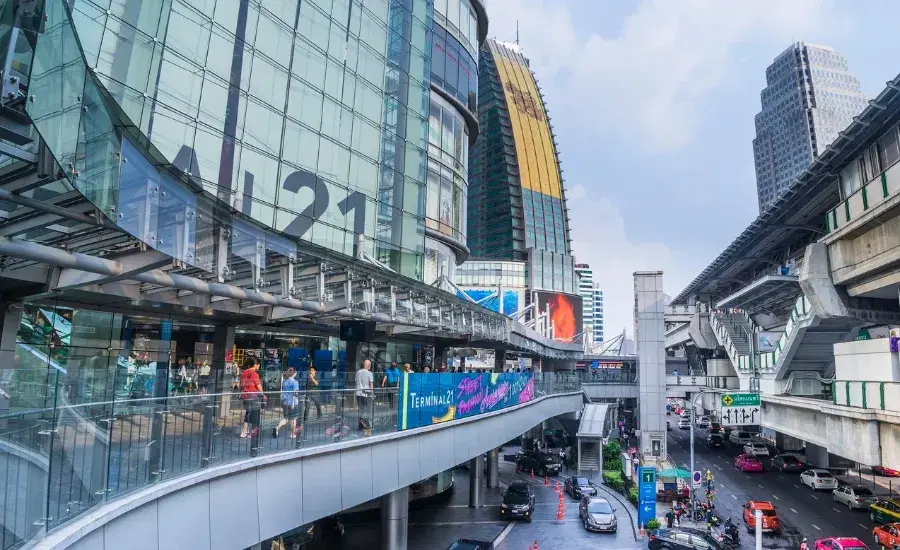
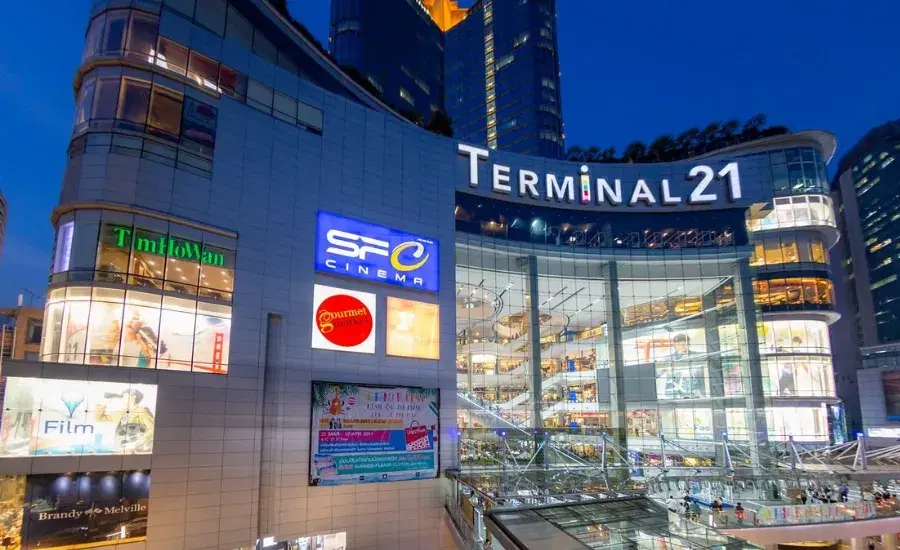
Terminal 21 sits directly above the Asok interchange, which is more useful than it sounds — a mall with a food floor attached to your station means you can eat well alone at 9pm without leaving covered, populated space. Phrom Phong, two stops on, is quieter and more residential, with the Japanese community concentrated around Sois 24 to 39 and a denser run of small restaurants.
The trade-off is character. This is the part of Bangkok that looks most like anywhere else — glass towers, chain coffee, air-conditioned walkways. On a first trip that is a fair price for the convenience. On a fourth, it can feel like you have not really arrived.
Thonglor and Ekkamai: where the food is
Thonglor is Sukhumvit Soi 55 and Ekkamai is Soi 63, and together they hold the highest concentration of serious restaurants in the city outside the hotel dining rooms. This is the base to choose if the trip is about eating — omakase counters, natural-wine bars, Isaan kitchens and coffee roasters, most of them entirely comfortable seating one.
Two practical notes. Both sois run a long way north from the BTS station, and the northern reaches are residential and quiet after 10pm — a hotel at the top of Thonglor means a Grab ride home rather than a walk. And the sois themselves are wide and fast-moving; crossing them on foot after dark takes more care than the equivalent in Asok.
Siam and Pratunam: central, but a daytime area
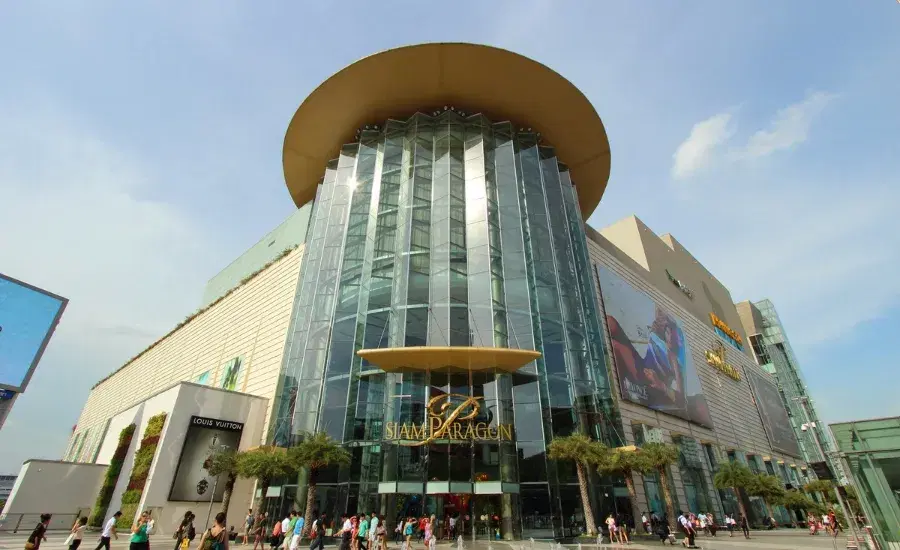
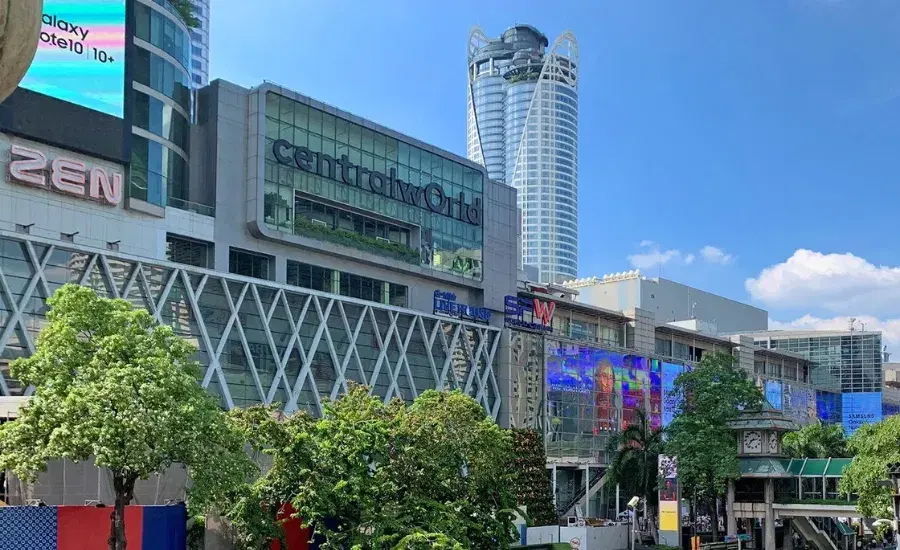
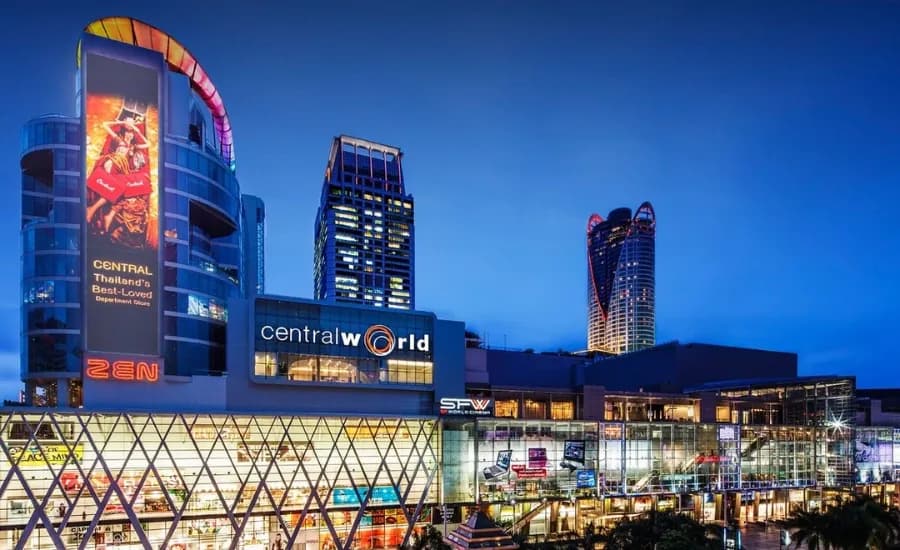
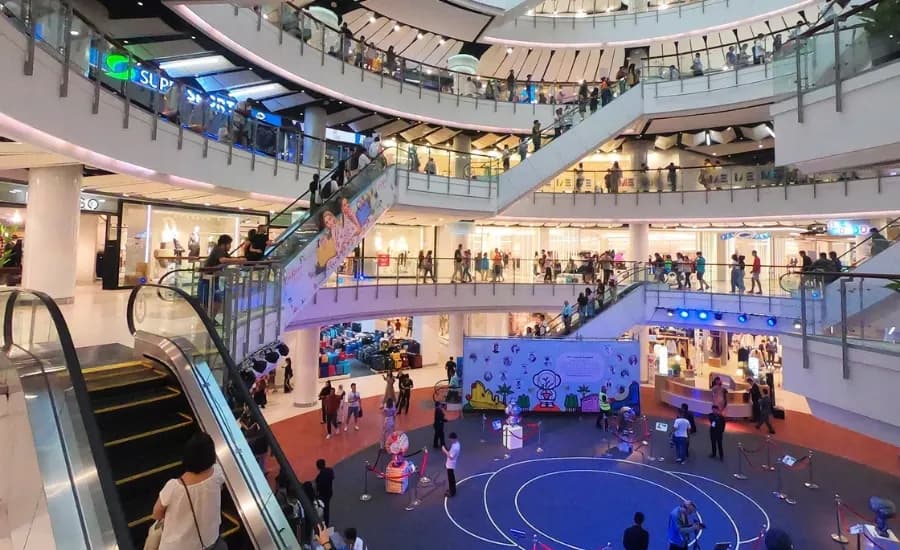
Siam is the interchange at the middle of the BTS network, which makes it the fastest place in Bangkok to get anywhere from. During the day the area around Siam Paragon and CentralWorld carries enormous footfall and feels entirely easy to move through alone.
The character changes at night. Once the malls close around 10pm, the pedestrian bridges and plazas empty quickly, and the area does not have the residential density that keeps Sukhumvit populated late. For a two- or three-night stay built around shopping and central access, that hardly matters. For a week, you will want somewhere with a life of its own after dark.
Silom and Sathorn: dinner within walking distance
Silom and Sathorn work best if you want to walk to dinner rather than book a car to it. The concentration of restaurants and rooftop bars around Sala Daeng and Chong Nonsi is high, the BTS and MRT both serve the area, and Saphan Taksin at the western end puts you on the Chao Phraya boat network — which is often the most pleasant way to reach the temples.
Sathorn is the quieter and more polished half; Silom is denser and mixes offices with night markets. The one thing to watch is the immediate Patpong blocks, which are loud and touristy after dark without being unsafe. Book a hotel two or three sois either side and you get the location without the noise.





Riverside, Ari and the Old City: Slower Bases in Bangkok for Solo Female Travellers
These three areas trade some convenience for atmosphere, and each trades a different amount. The riverside gives up spontaneity and gains privacy. Ari gives up proximity to the sights and gains a neighbourhood. The Old City gives up rail access altogether and gains temple mornings. All three are sound choices in Bangkok for solo female travellers — they simply ask you to plan a little more.
Riverside and Thonburi: the private option
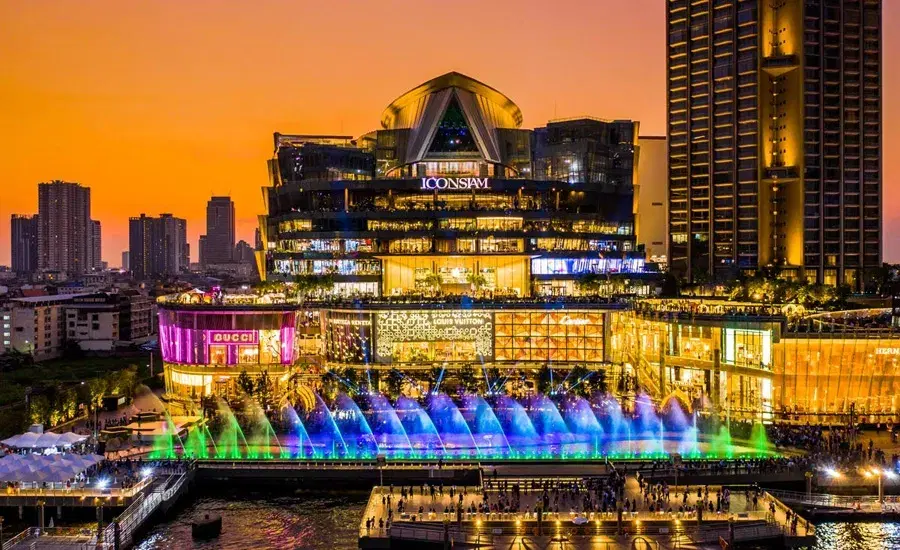
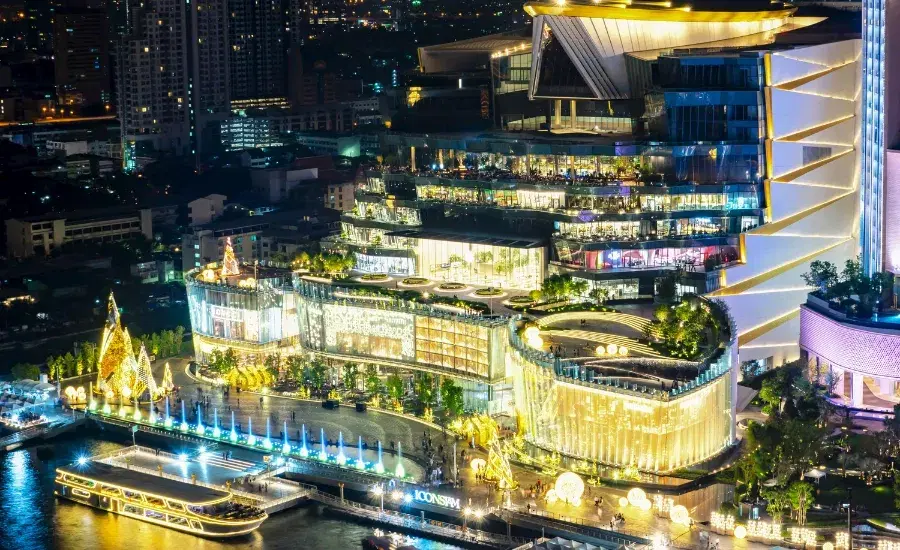
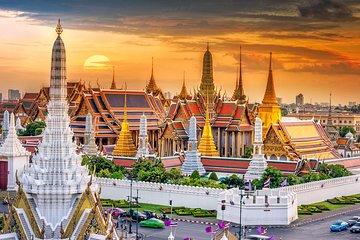
The stretch of the Chao Phraya between Saphan Taksin and the Old City holds most of Bangkok's landmark hotels, and staying here produces a noticeably different trip. Properties sit on their own grounds with private piers, run free shuttle boats to the BTS at Saphan Taksin and to ICONSIAM, and put the Grand Palace, Wat Pho and Wat Arun within a short boat ride rather than a traffic-dependent drive.
For a solo traveller the appeal is specific: the boat replaces the street. You go from lobby to pier to pier to temple without ever negotiating a road crossing or a taxi fare. Evenings tend to happen inside the property — a riverfront table, a bar with the water in front of it — which suits some people entirely and leaves others feeling sealed off.
The costs are two. Rates are the highest in the city, and spontaneity drops: heading out for dinner elsewhere means a shuttle to Saphan Taksin and a BTS ride, which is fine at 7pm and less appealing at 11.
Ari: the second-visit answer
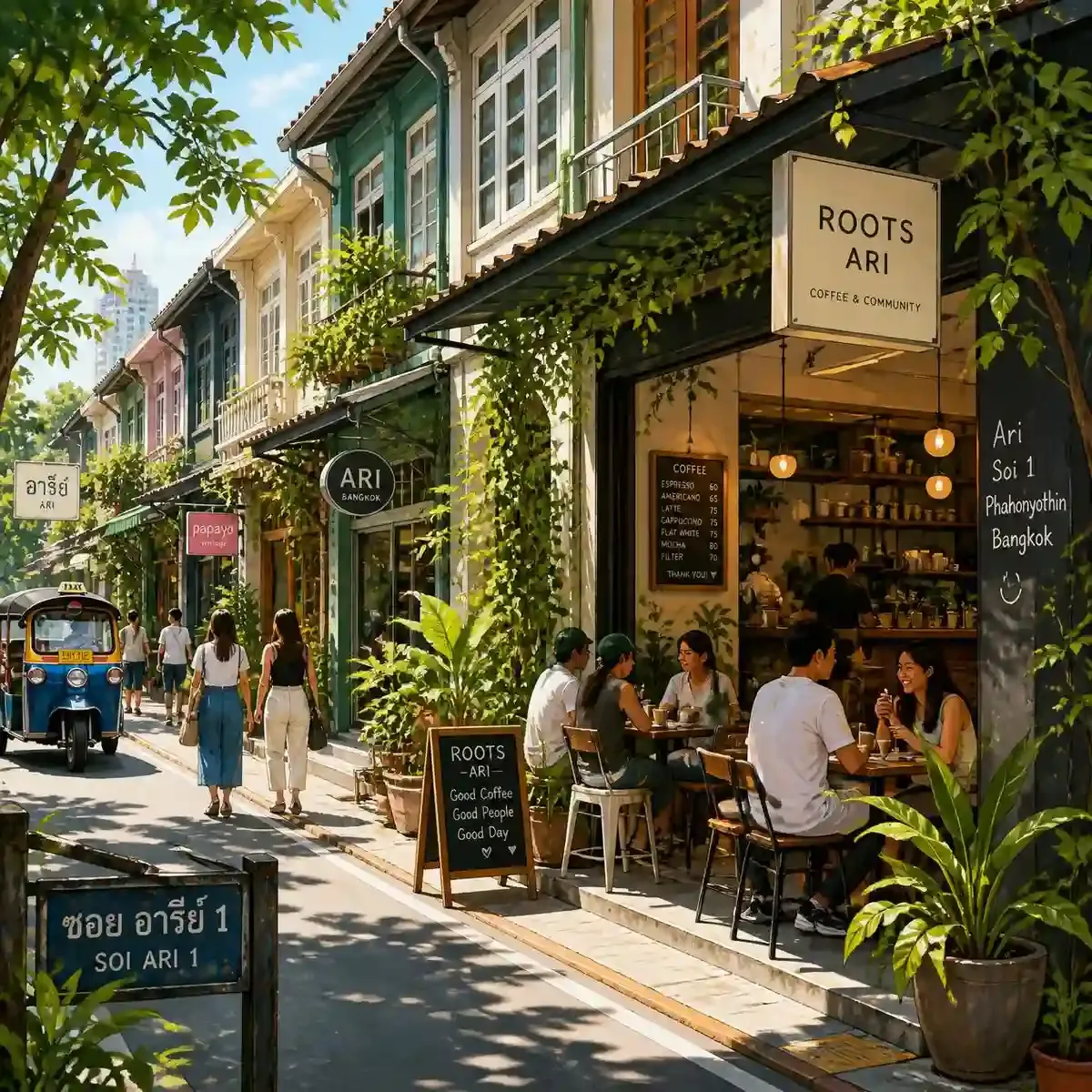
Ari is fifteen minutes north of Siam on the BTS and belongs to a different Bangkok — low-rise, leafy, residential, with actual pavements and a dense run of independent cafés and small restaurants along Soi Ari and its numbered side lanes. It is where a lot of Bangkok's design and media people live, and it feels lived-in rather than visited.
It suits a specific traveller. If you have already covered the Grand Palace and the floating markets, if you are staying two weeks rather than four nights, or if you are working part of the trip and want somewhere to settle into a routine, Ari is the strongest choice on this list. Rates run lower than anywhere else in the table, and the neighbourhood is calm and easy to move around alone at night.
If it is your first visit and you want the headline sights on your doorstep, it is the wrong base. Ari is a twenty-five to forty-minute journey from the Old City depending on traffic, and you will spend real time in transit.

The Old City and Rattanakosin: temple mornings, transit gap
Staying in Rattanakosin buys you one thing that no other area can: being at the Grand Palace or Wat Pho when the gates open, before the coach groups arrive, and walking home for lunch. On a heritage-led trip that is a real advantage, and the small hotels in restored shophouses around the Old City are among the more characterful places to stay in Bangkok.
The limitation is structural. The MRT Blue Line reaches Chinatown at Wat Mangkon and Sam Yot, but it does not serve Rattanakosin proper — from most Old City hotels you are looking at fifteen to twenty-five minutes on foot to a station, or a Grab ride, for every trip you make. In daylight that is a mild inconvenience. Returning at 11pm it changes the calculus, and you should assume a car rather than a walk.
Reality check: the charm and the transit gap are the same fact
- Rattanakosin has no BTS or MRT because it is a protected heritage zone with building height limits — the quiet, low-rise streets and the missing station are the same planning decision.
- The Chao Phraya express boat partly compensates during the day, running roughly 6am to 7pm, but it stops well before you will want to come home from dinner.
- If you want the temple mornings without the evening problem, split the trip: two nights in the Old City, then move to the connected core.
Which Area Should You Choose?
The right base in Bangkok for solo female travellers depends on how long you are staying, what the trip is for, and whether you have been to Bangkok before. Work through the situations below and take the first one that describes you.
- If this is your first Bangkok trip and you want the easiest possible logistics — choose Asok or Phrom Phong. Two rail lines, continuous pavements, everything open late.
- If you have two or three nights and a list of sights — choose Siam. The interchange saves you fifteen minutes on every journey, which compounds fast on a short stay.
- If the trip is mostly about eating — choose Thonglor or Ekkamai, and book near the bottom of the soi so you can walk home from dinner.
- If you want privacy, space and a slower pace — choose the riverside. Best if you are happy for the property itself to be part of the holiday.
- If you have been before and want to live somewhere rather than stay somewhere — choose Ari. Also the right answer if you are working remotely for part of the trip.
- If you are here for temples and heritage above all — choose the Old City for the first two nights, then move. Do not book a week there unless you are comfortable using Grab every evening.
- If you want dinner and a rooftop within walking distance — choose Sathorn, or Silom two or three sois clear of Patpong.
Where a base leaves you slightly out of position, the fix is usually to book the experience rather than improvise the transport. Every option on Travjoy has been researched and approved by local experts, so a temple morning, a river cruise or a cooking class arrives with the pick-up already arranged — which matters more when you are travelling alone and would otherwise be sorting a car at 7am. You can see the full set of top experiences for solo travellers in Bangkok before you decide where to stay, since the two decisions inform each other.
The sois to keep out of your hotel search
A short exclusion list will save you a bad week. None of these areas is dangerous — the issue is noise, drunk tourists and the specific discomfort of walking past a wall of touts every time you come home.
- Sukhumvit Soi 4 (Nana) and Soi Cowboy (between Sois 21 and 23) — red-light strips. Both sit close to excellent transport, which is why hotels there advertise the station and not the street.
- The immediate Patpong blocks — the night market is fine to visit and the bars behind it are the reason to stay elsewhere on the same street.
- Khao San Road and the surrounding lanes — worth an evening for the spectacle. As a base it means no rail access, sound until 2am, and an accommodation stock built for a different kind of trip.
- Anywhere more than about 700 metres up a soi with no through traffic — regardless of district. This is the category that produces unlit walks.
Reality check: proximity to a red-light strip is a marketing decision
- Nana and Asok are one BTS stop apart, so a Soi 4 hotel can accurately describe itself as "central Sukhumvit, minutes from the interchange" without mentioning what is downstairs.
- Filter by street address rather than by district name, and check the map pin against Sois 3–5 and 21–23 specifically.
- The same rooms on Sois 8, 11, 24 or 31 cost about the same and put you a five-minute walk from the same station.
Booking and Moving Around: What to Get Right Before You Arrive
Three things are worth settling before you land, and each one removes a common source of friction for solo female travellers in Bangkok: which questions you put to the hotel, how you will get home late, and how you get in from the airport. Each takes a few minutes and removes most of the friction from travelling alone here.
What to ask a hotel before booking
The pre-booking checklist
- Is reception staffed 24 hours? Smaller boutique properties often are not, which matters if a flight lands at 1am.
- Is lift access card-controlled by floor? Standard in most four-stars and up; absent in many converted shophouses.
- Is there a ladies-only floor? A handful of Bangkok hotels offer them. Not essential, but useful to know it exists.
- How far is the nearest BTS or MRT exit, in metres — and is the route lit? Ask for the specific exit number, not the station name.
- Can the hotel arrange an airport transfer? Worth doing for a night arrival even where the rail link is running.
- Check the approach on Street View. Look for a pavement, working streetlights and shopfronts that stay open into the evening.
Trains, cars and getting home late
Bangkok's rail network is clean, air-conditioned, monitored and used heavily by women at all hours — it is the default way to move around, and there is no reason to avoid it at night. The practical figures for 2026:
- BTS Skytrain — runs roughly 05:15 to midnight, with the last trains from central stations around midnight reaching terminal stops by about 00:45. Fares run about ฿17–62 (US$0.50–1.80).
- MRT — similar hours and distance-based fares. The Blue Line covers Chinatown and Hua Lamphong, which the BTS does not.
- Rabbit Card — ฿200 (US$6), of which ฿100 is a non-refundable card fee and ฿100 is stored value. Since Thailand's 2025 anti-money-laundering rules, foreign visitors must show a passport to buy one.
- Contactless — MRT Blue and Purple Line gates now accept Visa and Mastercard contactless directly, so a travel card in your phone wallet works without buying a token.
- Grab — the sensible default after the trains stop. The fare is fixed before you accept, the driver's name and plate appear in the app, and the trip can be shared to a contact. Central journeys typically run ฿100–250 (US$3–7).
Street taxis are fine in daylight if the meter goes on, though the app removes the negotiation entirely. Avoid tuk-tuks for point-to-point transport after dark — they are an experience rather than a way of getting somewhere, and they are where most of the gem-shop scams begin.
Arriving from the airport
From Suvarnabhumi, the Airport Rail Link reaches Phaya Thai in about 26 minutes for around ฿45 (US$1.30), connecting to the BTS. It runs until roughly midnight. For a later arrival, or any arrival with luggage, a pre-booked car or a Grab to central Sukhumvit runs about ฿400–700 (US$11–20) plus expressway tolls of ฿25–75, and takes 45 to 70 minutes depending on traffic.
Book the transfer in advance for a night landing. The arrivals hall at Suvarnabhumi has an official public taxi queue that works perfectly well, but the touts who approach you before it do not, and declining them repeatedly at 2am after a long flight is a poor way to start. For everything else — SIM cards, tipping, temple dress codes, emergency numbers — the Bangkok key information guide covers the practical detail, and the Bangkok hotel selection guide goes deeper on individual properties by area and price tier.
Choosing Your Bangkok Base
Three decisions carry the trip. Pick the area that matches what you are here for — the connected core for ease, the river for privacy, Ari for a stay with a rhythm to it. Then check the last 400 metres on Street View before you confirm, because that walk shapes your evenings more than anything in the listing. Then decide how you are getting home late, and book the airport transfer if you land after 11pm.
Get those right and Bangkok for solo female travellers is one of the easier great cities to be alone in — a place where a counter seat at dinner is normal, the trains are safe at 11pm, and nobody looks twice at a woman travelling on her own terms. Start planning your solo trip on Travjoy's Bangkok page, where every experience has been researched and approved by local experts.

.svg&w=1920&q=75)