


Bali: Neka Art Museum
Operating Hours:Monday - Sunday: 09:00 - 17:00
The Vibe:Bali's art history, pavilion by pavilion 🎨
Founded in 1982 by collector Suteja Neka, this hilltop museum on Jalan Raya Sanggingan is arguably the best single introduction to Balinese painting, spanning classical wayang styles to contemporary Indonesian works.
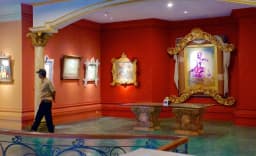
Cool stone pavilions open onto garden courtyards where birdsong replaces traffic noise. Intricate brushwork fills room after room — from gold-leaf temple scenes to vivid modern abstracts.
- • Recommended by Lonely Planet as a top Ubud cultural attraction
- • Houses the largest collection of Arie Smit works and a significant Affandi pavilion
- • Visitors praise the peaceful, uncrowded atmosphere and detailed exhibit labels
Persona Fit
- 🎨 Art Lovers: Seven pavilions covering every major school of Balinese painting — an unmissable deep dive.
- 🎓 Culture Enthusiasts: Well-labelled exhibits with QR audio codes trace art history from the 17th century to today.
- 💕 Couples: A quiet, shaded escape from Ubud's bustle with garden seating and a café.
- 📸 Photographers: Traditional Balinese architecture, sculpture gardens, and pond reflections offer strong compositions.
Highlights
- Balinese Painting Hall — A multi-room survey of wayang, Ubud, and Batuan painting styles from the 17th century onward.
- Arie Smit Pavilion — Works by the Dutch mentor of the Young Artists movement and vibrant paintings by his protégés.
- Lempad Pavilion — Masterpieces by I Gusti Nyoman Lempad, many originally curated by Walter Spies in the 1930s.
- Affandi Pavilion — Powerful works by Indonesia's most internationally acclaimed modern painter.
- Keris Collection — Over 300 traditional Balinese and Javanese daggers displayed in a dedicated 2007 pavilion — Hidden Gem.
- Photography Archive Centre — Black-and-white photographs of Bali from the 1930s and 1940s — Hidden Gem.
Aura Salsa Dila
Our Bali Local Expert
Table of Contents
Things To Do Nearby
Campuhan Ridge Walk — Starts just below the museum; a scenic 2 km ridge walk with valley views, best at dawn.
Blanco Renaissance Museum — A 10-minute walk south along Jalan Raya Campuhan, showcasing the flamboyant art of Antonio Blanco.
Puri Lukisan Museum — Ubud's oldest art museum on the main street, complementing the Neka with additional Balinese works.
Campuhan Ridge Walk — Starts just below the museum; a scenic 2 km ridge walk with valley views, best at dawn.
Blanco Renaissance Museum — A 10-minute walk south along Jalan Raya Campuhan, showcasing the flamboyant art of Antonio Blanco.
Puri Lukisan Museum — Ubud's oldest art museum on the main street, complementing the Neka with additional Balinese works.
TJ's Guide - Neka Art Museum
Know Before You Go
Insider Tips
Best Time: Arrive at opening (9:00 AM) to explore the pavilions in near-solitude before tour groups arrive.
Hack: Download the QR audio guide on your phone before visiting — the Wi-Fi inside can be patchy.
Hidden Gem: The bookshop near the exit stocks quality art books on Balinese painting not easily found elsewhere.
Hack: Combine with the Campuhan Ridge Walk — the museum sits right at the ridge's starting point.
Best Time: Arrive at opening (9:00 AM) to explore the pavilions in near-solitude before tour groups arrive.
Hack: Download the QR audio guide on your phone before visiting — the Wi-Fi inside can be patchy.
Hidden Gem: The bookshop near the exit stocks quality art books on Balinese painting not easily found elsewhere.
Hack: Combine with the Campuhan Ridge Walk — the museum sits right at the ridge's starting point.
Know Your Facts
- Located on Jalan Raya Sanggingan, a 5-minute drive or 15-minute walk north from central Ubud.
- Signposted on the left side heading north; parking is available in front of the museum.
- Grab/Gojek drop-offs work well here; the museum is on the main road with easy access.
- First-time tip: Start at the Balinese Painting Hall and work chronologically through the pavilions.
Once You Reach
Internal Navigation
Layout: Seven distinct pavilions spread across a terraced hillside garden — follow the suggested route from the ticket counter.
Pavilion Flow: Balinese Painting Hall → Arie Smit → Lempad → East-West Annex → Affandi → Contemporary → Keris.
Signage: Each room has English-language panels and selected works feature QR codes for audio commentary.
Wheelchair/Stroller: Not fully accessible — multiple steps connect pavilions with no alternative ramps.
Food & Coffee Shops
Museum Café: A quiet spot for iced tea or Balinese coffee after your tour.
Bridges Bali: A well-regarded restaurant within walking distance along Jalan Raya Campuhan, offering lunch with valley views.
Museum Café: A quiet spot for iced tea or Balinese coffee after your tour.
Bridges Bali: A well-regarded restaurant within walking distance along Jalan Raya Campuhan, offering lunch with valley views.
Photography Tips
Photography is permitted in most galleries; check individual room signs for any restrictions.
Best light for garden and sculpture shots is early morning (9:00–10:00 AM) when the sun is low and warm.
The pond near the entrance reflects surrounding Balinese architecture — strong for symmetrical compositions.
Photography is permitted in most galleries; check individual room signs for any restrictions.
Best light for garden and sculpture shots is early morning (9:00–10:00 AM) when the sun is low and warm.
The pond near the entrance reflects surrounding Balinese architecture — strong for symmetrical compositions.
Explore Deeper
The Neka charts how Balinese art evolved from temple-decoration traditions into a globally recognised painting movement, shaped profoundly by encounters with European artists in the early 20th century.
The classical wayang (puppet) style dates to at least the 17th century and was originally painted on cloth for temple ceremonies.
European artists Walter Spies and Rudolf Bonnet arrived in the 1920s–30s, encouraging Balinese painters to explore secular subjects and perspective — sparking the Ubud and Batuan schools.
Arie Smit mentored a generation of Young Artists in the 1960s, fostering a naive, colour-rich style that is now widely collected.
The Keris Collection includes heirloom daggers donated by Balinese royal families, each with spiritual significance and centuries of provenance.
The classical wayang (puppet) style dates to at least the 17th century and was originally painted on cloth for temple ceremonies.
European artists Walter Spies and Rudolf Bonnet arrived in the 1920s–30s, encouraging Balinese painters to explore secular subjects and perspective — sparking the Ubud and Batuan schools.
Arie Smit mentored a generation of Young Artists in the 1960s, fostering a naive, colour-rich style that is now widely collected.
The Keris Collection includes heirloom daggers donated by Balinese royal families, each with spiritual significance and centuries of provenance.
Did You Know?
Family Legacy — Founder Suteja Neka's father, I Wayan Neka, carved a three-metre garuda statue for the 1964 New York World Fair's Indonesia Pavilion.
Oldest Lempad Works — Several paintings by I Gusti Nyoman Lempad on display were selected by Walter Spies himself in the 1930s, making them among the earliest curated Balinese artworks.
Pandemic Reinvention — During 2019–2021, the museum undertook a major renovation, redesigning layouts and separating permanent from temporary exhibition spaces.