


London: Temple Church
Operating Hours:Monday - Friday: 10:00 - 16:00 (subject to legal term and services). Saturday - Sunday: Services only, occasional public access
The Vibe:Knights Templar secrets in the legal quarter.
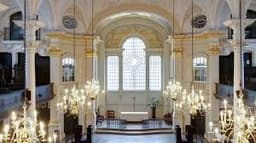
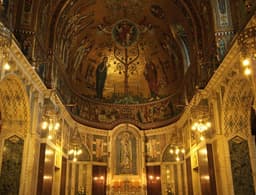
Built by the Knights Templar in 1185, this medieval round church sits tucked between the Inner and Middle Temple legal chambers off Fleet Street. Its circular nave was modelled on the Church of the Holy Sepulchre in Jerusalem.
Stone effigies of armoured knights lie on the cold floor; the low chancel rises beyond the round nave. Outside, barristers in dark suits hurry across the courtyards; Temple Gardens stretch beyond the walls.
- • One of only four medieval round churches in England, modelled on Jerusalem's Holy Sepulchre
- • Built by the Knights Templar in 1185 as their London headquarters
- • Features prominently in Dan Brown's The Da Vinci Code
- • Houses nine stone effigies of medieval knights, the finest in Britain
Persona Fit
- 👨👩👧 Families: Knight effigies and Templar history engage older children
- 💕 Couples: Hidden alley approach and atmospheric interior make for a memorable stop
- 👵 Seniors: Step-free through main nave; compact visit manageable
- 📸 Photographers: Round nave with knight effigies is one of London's best interior compositions
Highlights
- The Round Church — 12th-century circular nave built in imitation of the Holy Sepulchre
- Nine knight effigies — reclining stone figures of Templars on the round nave floor
- The Chancel — 13th-century choir and sanctuary added when Templars outgrew the round
- Templar cross motifs — original medieval symbols in stone and stained glass
- Temple courtyards — Inner and Middle Temple legal chambers surrounding the church
- Private Temple Gardens — occasional public openings, rarely crowded — Hidden Gem
1 Curated Booking Option
Starts From
(Per Person)

Sarah Riches
Our London Local Expert
Table of Contents
Things To Do Nearby
Royal Courts of Justice — ornate Victorian Gothic court building two minutes away
Twinings Tea Shop — oldest business in London still on original premises (1706)
Fleet Street — former newspaper district with historic pubs and chambers
Somerset House — neoclassical cultural venue with outdoor ice rink in winter
Royal Courts of Justice — ornate Victorian Gothic court building two minutes away
Twinings Tea Shop — oldest business in London still on original premises (1706)
Fleet Street — former newspaper district with historic pubs and chambers
Somerset House — neoclassical cultural venue with outdoor ice rink in winter
TJ's Guide - Temple Church
Know Before You Go
Insider Tips
Best Time: Weekday mornings when barristers hurry through the Temple, giving authentic atmosphere
Hack: Access via Inner Temple Lane from Fleet Street is the most atmospheric route in
Hidden Gem: Attend Sunday Evensong (free) for one of London's finest choir traditions
Allow time to wander the courtyards — the buildings around are as interesting as the church
Check legal-term schedules — the church closes more often during long vacations
Best Time: Weekday mornings when barristers hurry through the Temple, giving authentic atmosphere
Hack: Access via Inner Temple Lane from Fleet Street is the most atmospheric route in
Hidden Gem: Attend Sunday Evensong (free) for one of London's finest choir traditions
Allow time to wander the courtyards — the buildings around are as interesting as the church
Check legal-term schedules — the church closes more often during long vacations
Know Your Facts
- Closest Tube: Temple (Circle, District) or Chancery Lane (Central), both five minutes' walk
- Main access via Inner Temple Lane or Middle Temple Lane off Fleet Street
- Gates may be locked after hours; security at the gatehouse directs visitors
- First-time tip: The church sits inside the Temples legal quarter — don't confuse the Inner Temple gate with the church entrance
Once You Reach
Internal Navigation
Two-part layout: Circular Round nave (older, with effigies) then rectangular Chancel (13th-century addition)
Venue map: Available at the entrance desk with suggested viewing order
Signage: Minimal — a small church that doesn't require directional markers
Accessibility: Step-free to main nave; some areas have shallow thresholds
Efficient route: Round nave first with knight effigies, then Chancel, then small side chapel
Food & Coffee Shops
Ye Olde Cheshire Cheese: Historic pub on Fleet Street, a Dickensian favourite
Twinings Tea Shop: Light tea service at London's oldest continuous tea shop
Paul (Fleet Street): French café for quick coffee and pastries
Ye Olde Cheshire Cheese: Historic pub on Fleet Street, a Dickensian favourite
Twinings Tea Shop: Light tea service at London's oldest continuous tea shop
Paul (Fleet Street): French café for quick coffee and pastries
Photography Tips
Photography is permitted; tripods require prior permission
Round nave knight effigies work best with wide-angle lens and low-angle composition
Late-afternoon light through round nave windows gives a warm stone glow
Exterior courtyards particularly photogenic in mist or after rain
Photography is permitted; tripods require prior permission
Round nave knight effigies work best with wide-angle lens and low-angle composition
Late-afternoon light through round nave windows gives a warm stone glow
Exterior courtyards particularly photogenic in mist or after rain
Explore Deeper
The Knights Templar — a medieval order of warrior monks protecting pilgrims to the Holy Land — built Temple Church in 1185 as their London base. The round nave was a Templar signature, modelled on the Church of the Holy Sepulchre in Jerusalem where Christ was buried.
The Templars were dissolved in 1312 by papal edict; their English property passed to the Knights Hospitaller, then to legal scholars in the 14th century
The nine knight effigies in the round nave date from the 13th century; most have been identified with specific Templar donors and earls
Henry III intended to be buried at Temple Church but later chose Westminster Abbey; an effigy he commissioned remains
The church suffered heavy damage in the 1941 Blitz, losing its original Victorian restoration; the current interior is a partial post-war rebuild
The Templars were dissolved in 1312 by papal edict; their English property passed to the Knights Hospitaller, then to legal scholars in the 14th century
The nine knight effigies in the round nave date from the 13th century; most have been identified with specific Templar donors and earls
Henry III intended to be buried at Temple Church but later chose Westminster Abbey; an effigy he commissioned remains
The church suffered heavy damage in the 1941 Blitz, losing its original Victorian restoration; the current interior is a partial post-war rebuild
Did You Know?
Magna Carta negotiations — Talks between King John and rebellious barons took place at the Temple in 1214-15
Templar symbolism — Two knights on one horse, the Templar seal, adorns doors throughout the complex
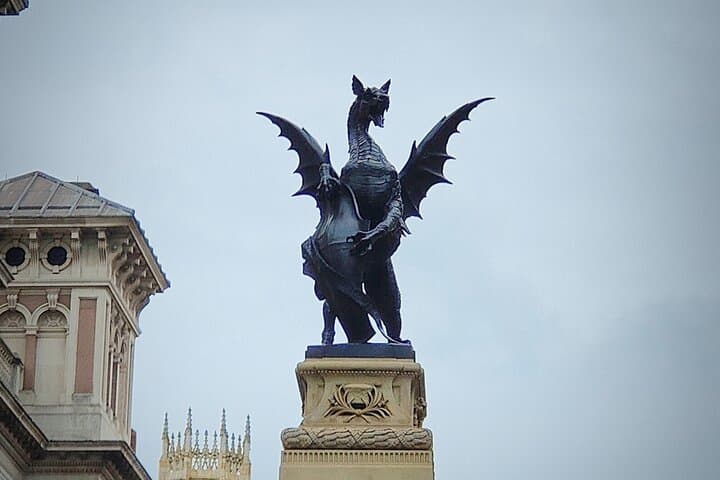
Temple Bar — The London gate just outside marks the City's boundary, where monarchs traditionally ask permission to enter
Legal tradition — Temple Church serves as chapel for both Inner and Middle Temples, which oversee barrister training