



Trendy Places to Eat in London: A Neighbourhood Guide to the City's Of-the-Moment Dining Scene
7 min read
Key Highlights
- London's scene turns over fast — this guide maps it by neighbourhood so you know where to eat now, not from a list that dates in a month.
- Soho and Mayfair hold the design-led rooms; Shoreditch and the East End own late-night, music-led small plates.
- King's Cross, Notting Hill and Brixton are where the neighbourhood newcomers and natural-wine bars are landing.
- The buzziest tables are hard to book — the last section covers walk-in strategy and the food halls where you never need a reservation.
- Written for the returning visitor who already knows the icons and wants where the city actually eats today.
The best trendy places to eat in London cluster in five neighbourhoods right now: Soho and Mayfair for design-led dining rooms, Shoreditch and the wider East End for late-night small plates, and King's Cross, Notting Hill and Brixton for the natural-wine bars and neighbourhood newcomers. What ties them together is a shift away from formal tasting menus toward sharing plates, low-intervention wine, and rooms built as much for the look as the food.
London's dining scene moves quickly. A room that had a three-week waiting list last spring can be quiet by autumn, and the street everyone talked about two years ago has usually handed the spotlight to somewhere a postcode over. For a visitor — especially one who already knows Borough Market and the grand-hotel tearooms — the useful question is not "what are the ten best restaurants" but "where is the energy right now, and which neighbourhood suits the night I want."
That is what this guide answers. Rather than a list of names that will read as dated within weeks, it maps the trendy places to eat in London by area and by the kind of evening each one delivers. You will get the character of each neighbourhood, the current dining waves worth understanding, and — because the hottest tables are the hardest to get — a practical section on how to actually eat well when everyone else wants the same seat.
How to read London's dining scene right now
Before choosing a neighbourhood, it helps to understand the waves shaping the city's tables. London's current scene is defined less by cuisine and more by format and feel, which is why the same few ideas keep surfacing from Soho to Peckham. Learn the patterns and you can spot a good room from its description alone.
Small plates and low-intervention wine
The dominant format is the sharing menu paired with a short, natural-leaning wine list. Instead of a starter-main-dessert structure, you order six or seven plates for the table and a bottle of something low-intervention — often from Georgia, the Jura, or an English vineyard. The look is usually pared back: an open counter, a handful of tables, a chalkboard that changes daily. If a place describes itself as a "wine bar with a kitchen," this is what it means.
New-wave Spanish, and the pintxos revival
A strong current runs through Basque and Spanish cooking — plancha-grilled prawns, tinned fish done properly, tortilla, and cañas of cold beer served in rooms that often keep the bones of whatever was there before. Some of the most talked-about openings have taken over old chip shops and cafés and left the tiling intact, which gives a San Sebastián-backstreet feel no refit could buy.
The supper-club-to-restaurant pipeline
Several of the city's most in-demand rooms started as supper clubs or residencies before taking a permanent lease. It is worth knowing because these places tend to open small — 30 to 40 covers — with a devoted following already in place, which is precisely why they are hard to book. When you read that a restaurant "grew out of a supper club," read it as "book well ahead."
Design-led rooms and the handroll counter
The other visible wave is the room built to be looked at: bold interiors, a soundtrack programmed as carefully as the menu, and counters where the theatre of the cooking is the point. Japanese handroll bars are a clear example — a run of seats at a counter, a set sequence of temaki, and a design language borrowed from Tokyo. These rooms photograph well, fill early, and reward booking the first or last sitting.
Soho and Mayfair: the West End's of-the-moment tables
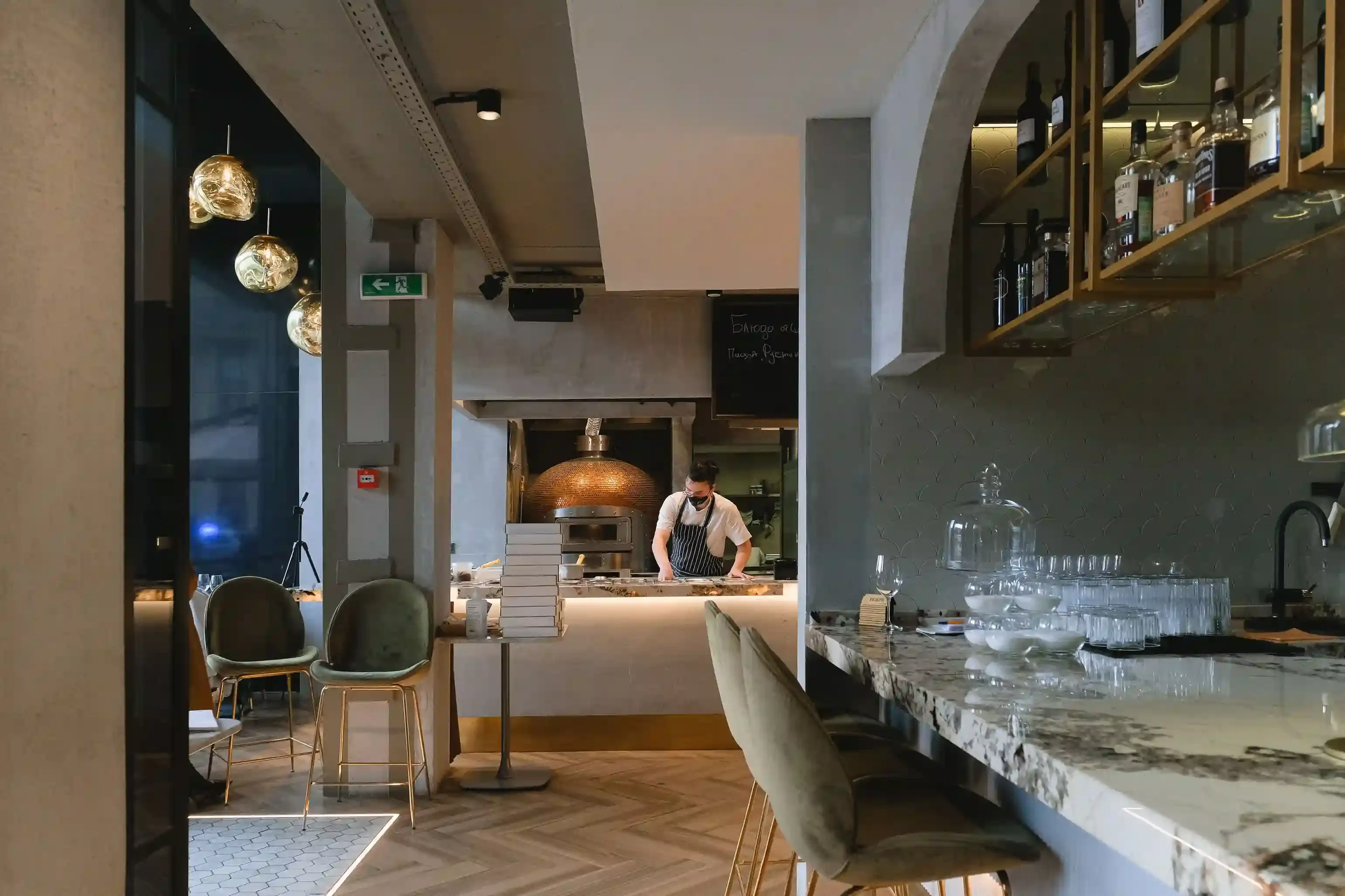
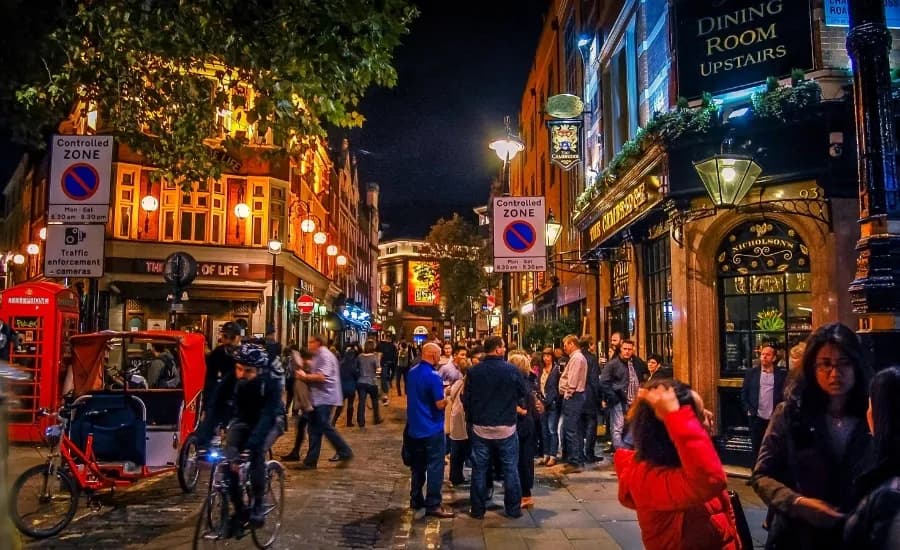
For design-led dining and a scene that runs late, Soho remains the West End's centre of gravity. The grid of streets between Wardour and Berwick packs in more openings per square metre than anywhere in the city, and the neighbourhood has a habit of turning a buzzy pub-and-grill combination into the hardest reservation in town. This is the area for a lively, well-dressed dinner that turns into cocktails without leaving the postcode.
What Soho does best
Soho's strength is range within a few minutes' walk: a plate-glass handroll counter, a wood-panelled British grill, a late-night Italian, and a basement wine bar can sit on the same block. It suits a night where you want options — a first drink one place, dinner another, a nightcap a third.
- Best for: a buzzy dinner that becomes a night out
- Look for: British grills, handroll counters, natural-wine basements
- Booking note: the hyped rooms release tables weeks ahead and fill within hours
Mayfair's design statements
North and west, Mayfair carries the more polished end of the trend — sleek Japanese rooms, glossy members'-club-adjacent dining, and interiors built for an entrance. It is also where the design-statement teahouses sit; a table under the pink-and-gold ceiling at Sketch is as much about the room as the pastries, which is exactly why it stays on the shortlist for a stylish afternoon. Mayfair rewards you when you want the elevated, dressed-up version of the scene.
Shoreditch and the East End: late-night, music-led, small plates
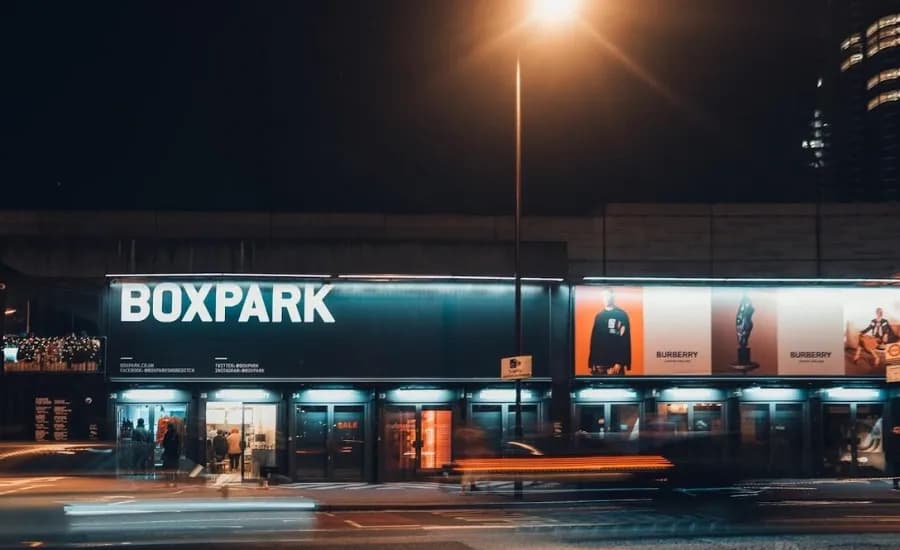
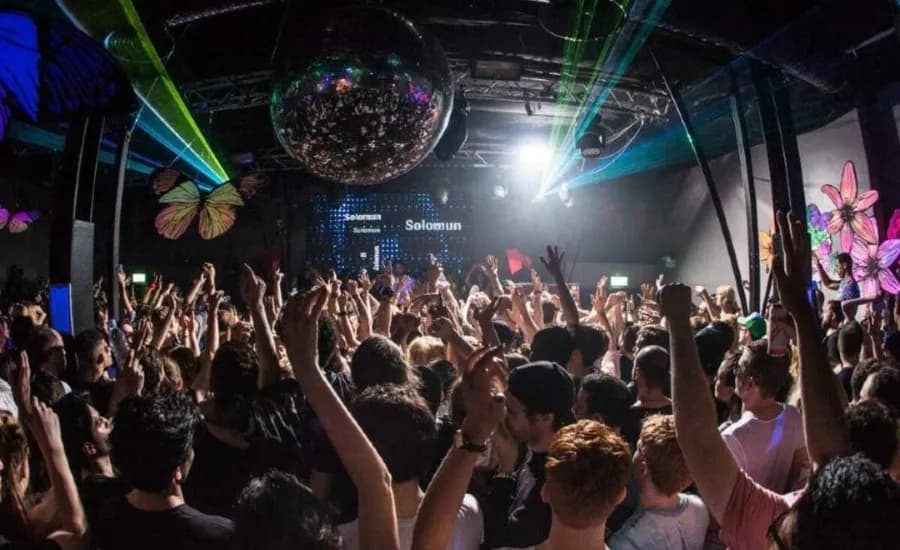
If Soho is the polished centre, Shoreditch is where the scene runs loosest and latest. The East End is the natural home of the small-plates-and-natural-wine wave, of music-led rooms that treat the playlist as seriously as the menu, and of the supper-club graduates now holding permanent leases. Expect exposed brick, an open kitchen, and a crowd that came to stay for the evening.
The Shoreditch small-plates belt
Around Redchurch Street and Calvert Avenue, the format is consistent: a compact room, a daily menu of six-to-ten plates, and a wine list that leans low-intervention. These are the rooms that define the trendy places to eat in London today — informal, produce-led, and priced for a proper evening rather than a special occasion.
Hackney and the market-day crowd
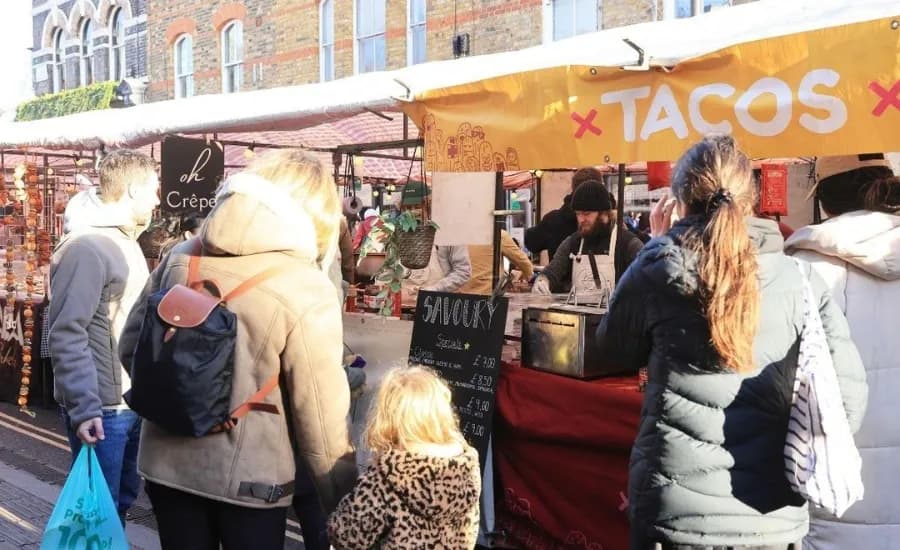
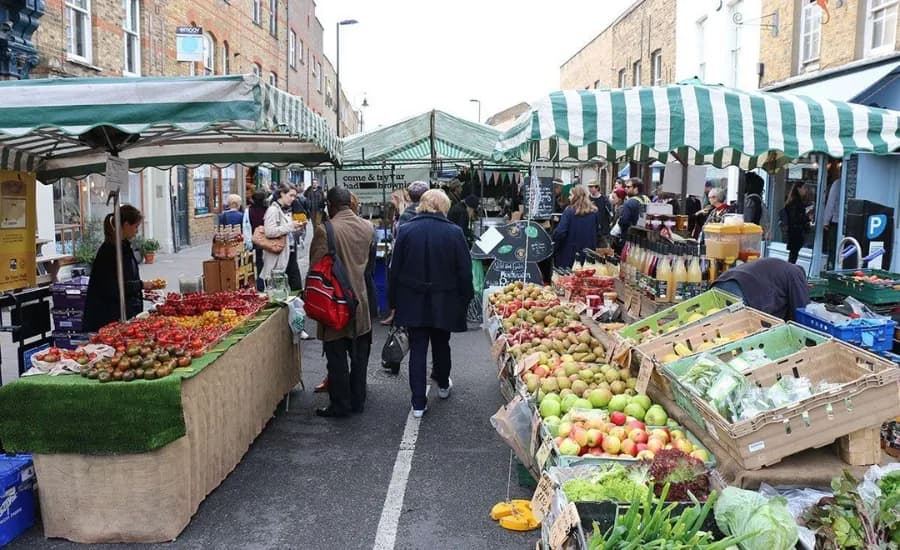
Push east into Hackney and the scene organises itself around the weekend. Broadway Market on a Saturday is the clearest snapshot of how the neighbourhood eats — stalls and cafés spilling onto the pavement, then a run of bistros and wine bars that fill the moment the market winds down. It is the best area in the city for a long, unhurried Saturday built around food.
- Best for: a late, informal dinner or a full market-day Saturday
- Look for: small-plates rooms, natural-wine bars, market-day bistros
- Booking note: weekends book out; weeknights are far easier

King's Cross and Notting Hill: the neighbourhood newcomers
Two very different neighbourhoods are drawing the current wave of openings for the same reason: both give a good room space to breathe. King's Cross has been rebuilt around a canal and a set of converted rail buildings, while Notting Hill trades on townhouse rooms and a slower, more residential pace. Both are where you go now for a newcomer that feels like a discovery rather than a scrum.
King's Cross and Coal Drops Yard
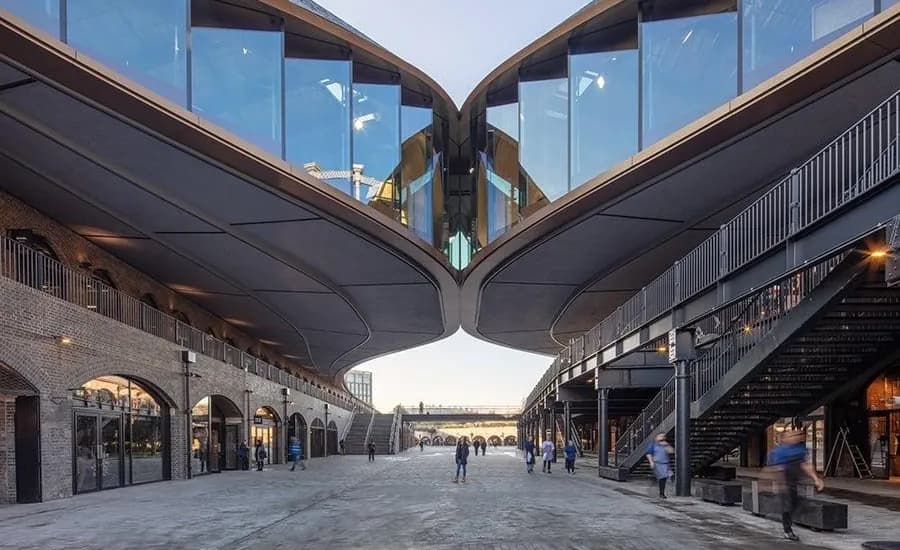
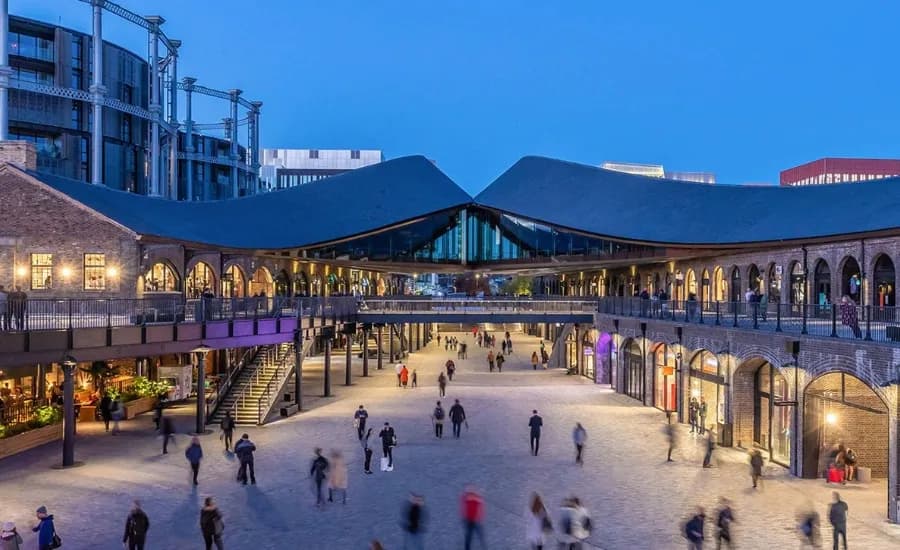
King's Cross went from a place you passed through to one of the city's better eating districts in under a decade. The heart of it is Coal Drops Yard, a pair of Victorian coal warehouses reworked into a run of restaurants and terraces along the canal. It is one of the few areas where you can walk in without a plan and still eat well, because the density of good rooms means a walk-up is usually possible somewhere.
- Best for: a canal-side dinner or a walk-up when you have not booked
- Look for: converted-warehouse rooms, waterside terraces, all-day dining
- Booking note: easier for a walk-up than Soho or Shoreditch, but book the marquee names
Notting Hill's wine-bar wave
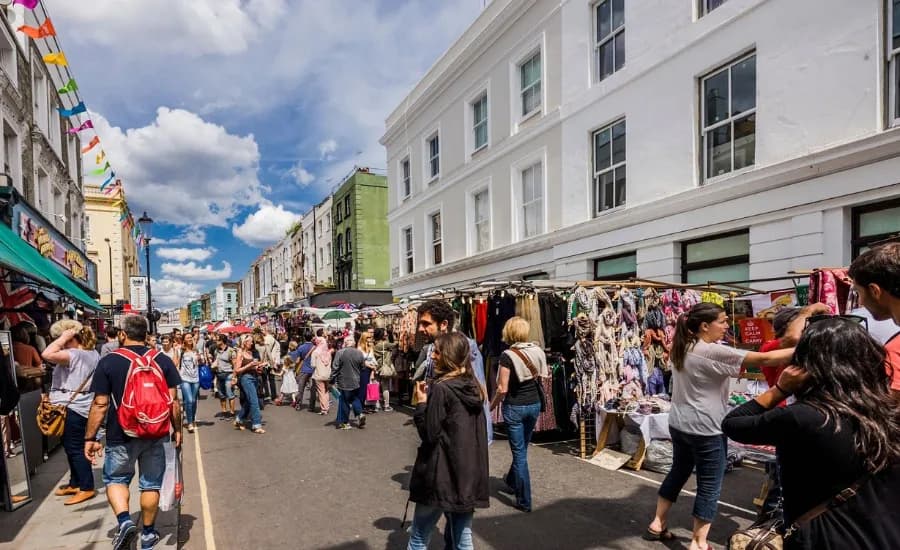
West London's contribution to the current scene is the neighbourhood wine bar — small, low-key rooms pouring low-intervention bottles alongside a short plate menu, often with a vinyl soundtrack and a street-facing terrace. Notting Hill has quietly become one of the best areas for this, and it suits an earlier, more grown-up evening than the East End. This is the neighbourhood for a relaxed dinner that centres on what is in the glass.

Brixton, Camden and beyond the centre
Some of the most interesting eating now sits well outside the West End, in neighbourhoods with their own long-standing food cultures. These areas reward the returning visitor who has done central London and wants to see how the city actually eats day to day.
Brixton and the market rooms
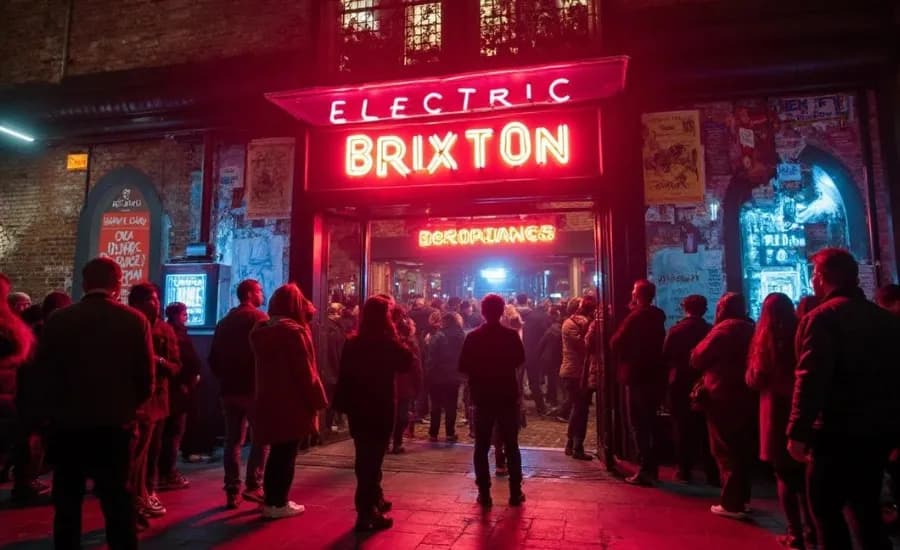
Brixton is one of the clearest examples of a food scene built from the ground up around a market. The covered arcades of Brixton Village and Market Row hold a run of small, independent kitchens — Caribbean, West African, Colombian, Thai — and the supper-club-to-restaurant pipeline has put down roots here too. It is the neighbourhood for a truly diverse evening where you can eat across three continents within a few metres.
Camden and the canal north
Camden's food has grown up alongside its music heritage. Beyond the market stalls, the streets around the canal have filled with proper sit-down rooms, and the area still delivers the informal, come-as-you-are energy that first made it a draw. It suits a younger, louder night, ideally built around live music.
How to actually eat well in a hyped scene
The catch with the buzziest tables is that everyone wants them. Knowing how the booking game works is the difference between eating where you planned and eating wherever had space. Here is how Londoners handle it.
The booking reality
The most in-demand rooms release tables on a rolling window — often 7, 14, or 30 days ahead — and the best slots go within hours of release. Many of the small-plates and natural-wine rooms hold back a portion of their seats for walk-ins, sometimes signalled by a light in the window or a note on their page. If you have not booked, the walk-in play is to arrive early — a 5.30pm or 6pm sitting is far easier than 8pm — or to eat at the counter, which is often kept for walk-ups.
Walk-in strategy that works
- Target the first sitting (5.30–6.30pm) or the last (from 9.30pm) — the 8pm peak is the hardest.
- Ask for the counter or bar seats; these are frequently held back from online booking.
- Go on a weeknight — Tuesday and Wednesday are markedly easier than Thursday to Saturday.
- Keep a food hall as your no-reservation fallback, so a failed walk-in still ends in a good dinner.
Food halls: the walk-in fallback
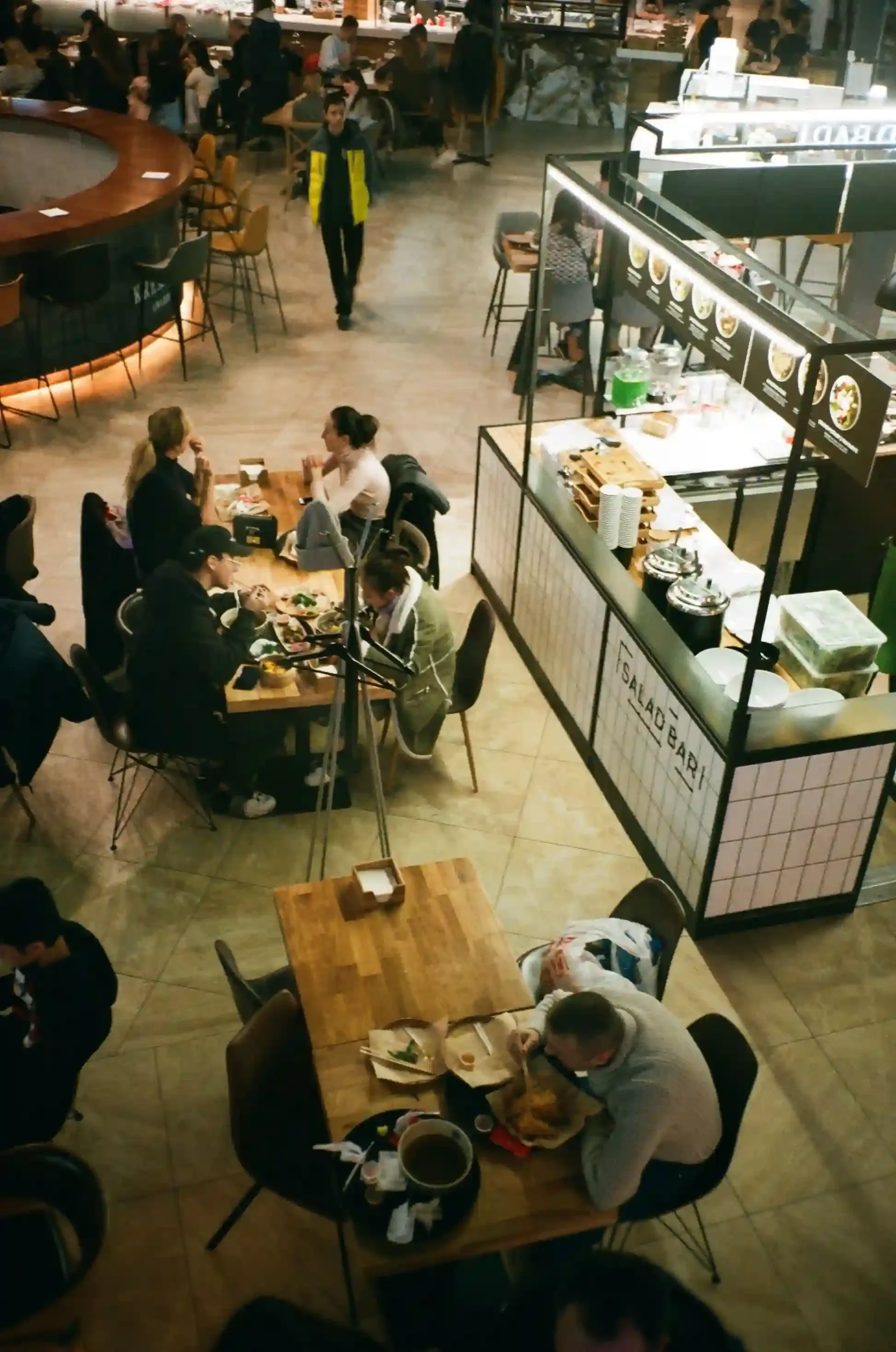
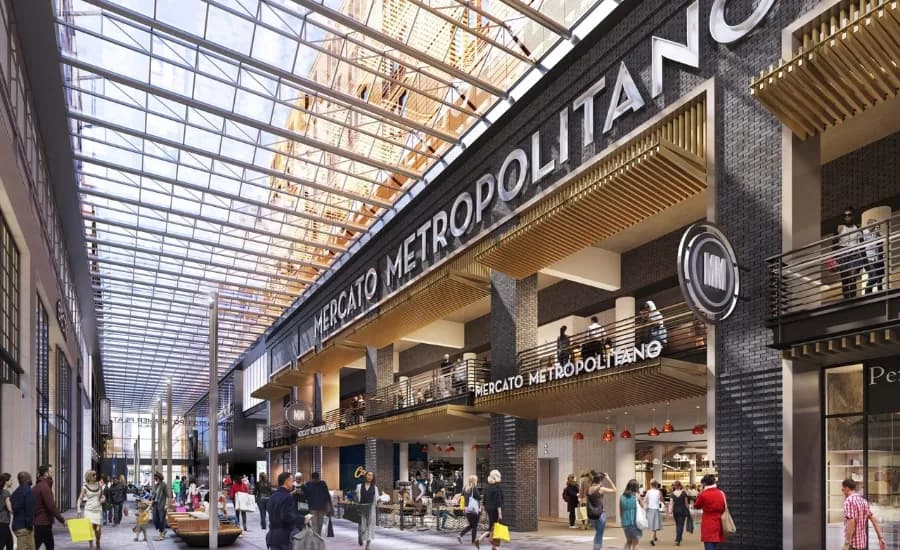
When you do not want to gamble on a booking, London's food halls are the reliable answer — no reservation, a spread of independent kitchens under one roof, and a table you can usually find. Mercato Metropolitano near Elephant & Castle is one of the largest, gathering dozens of traders into a warehouse-scale space, and it captures the current scene without a single booking made. It is also an easy way to graze several of the city's food waves in one sitting.
A neighbourhood-at-a-glance comparison
If you are deciding where to base an evening, this is the shorthand. A typical two-to-three plate dinner with a glass of wine at the trendier rooms runs roughly £35–£70 (about $45–$90) per person, before the marquee names; food halls come in lower. Prices are indicative for 2026 and worth confirming when you book.
| Neighbourhood | The scene | Best for | Booking difficulty |
|---|---|---|---|
| Soho & Mayfair | Design-led rooms, handroll counters, late-night grills | A buzzy dinner that turns into a night out | High |
| Shoreditch & Hackney | Small plates, natural wine, music-led rooms | A late, informal, produce-led evening | High at weekends |
| King's Cross | Converted-warehouse rooms, canal-side terraces | A walk-up when you have not booked | Moderate |
| Notting Hill | Neighbourhood wine bars, townhouse rooms | A relaxed, wine-led dinner | Moderate |
| Brixton & Camden | Market kitchens, diverse independents, live-music energy | A varied, come-as-you-are night | Low to moderate |
Whichever way you lean, it is worth remembering that the options presented on Travjoy have been researched and approved by local experts, so you can book a table or an experience with confidence rather than working through a hundred conflicting lists. You can browse the city's London food and drink experiences in one place and build the evening around them.
Plan your table
The trendy places to eat in London are not a fixed list — they are a moving map, and the trick is knowing which neighbourhood matches the evening you want. Soho and Mayfair for a design-led night out, Shoreditch and Hackney for late small plates, King's Cross and Notting Hill for the newcomers, Brixton and Camden for something more varied and local. Learn the current waves, book the marquee rooms ahead, and keep a food hall in your back pocket for the nights you do not. Ready to build the evening around it? Start planning your trip on Travjoy's London page.


.svg&w=1920&q=75)