



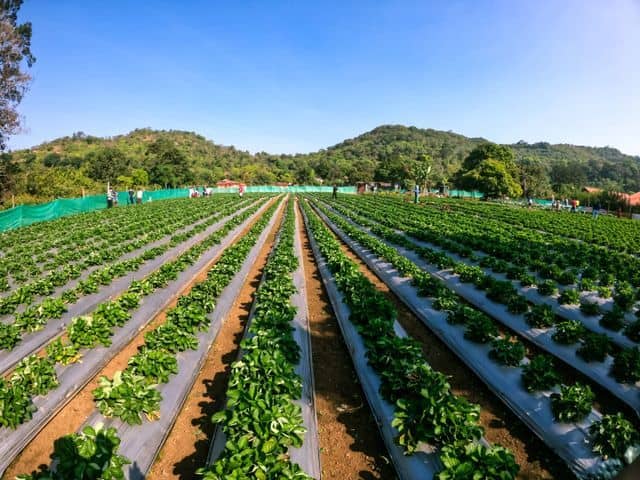
Spice Plantations in Goa: A Complete Guide for Discerning Travellers — Which Farm, What to Expect and How to Plan It
8 min read
Key Highlights
- Goa's spice farms sit inland around Ponda, about 45 minutes to an hour from Panjim and 1–1.5 hours from the North Goa beaches.
- A standard visit pairs a welcome drink and a guided plantation walk with a Goan buffet lunch and a feni tasting, at roughly ₹400–800 (US$4–8.50) per person in 2026.
- Sahakari is the most polished and the busiest, Savoi is the oldest and quietest, and Tanshikar in Netravali is the farm to choose for an overnight stay.
- October to March is the most comfortable season; the monsoon brings the greenest plantations and slippery paths.
A spice plantation in Goa makes a relaxed half-day trip into the forested hinterland around Ponda, where a guide walks you through pepper vines, nutmeg, cardamom and vanilla before a Goan buffet lunch. In 2026, expect to pay roughly ₹400–800 (US$4–8.50) per person, with lunch included at most farms; choose Sahakari or Tropical for convenience, Savoi for heritage, and Tanshikar if you want to stay the night.
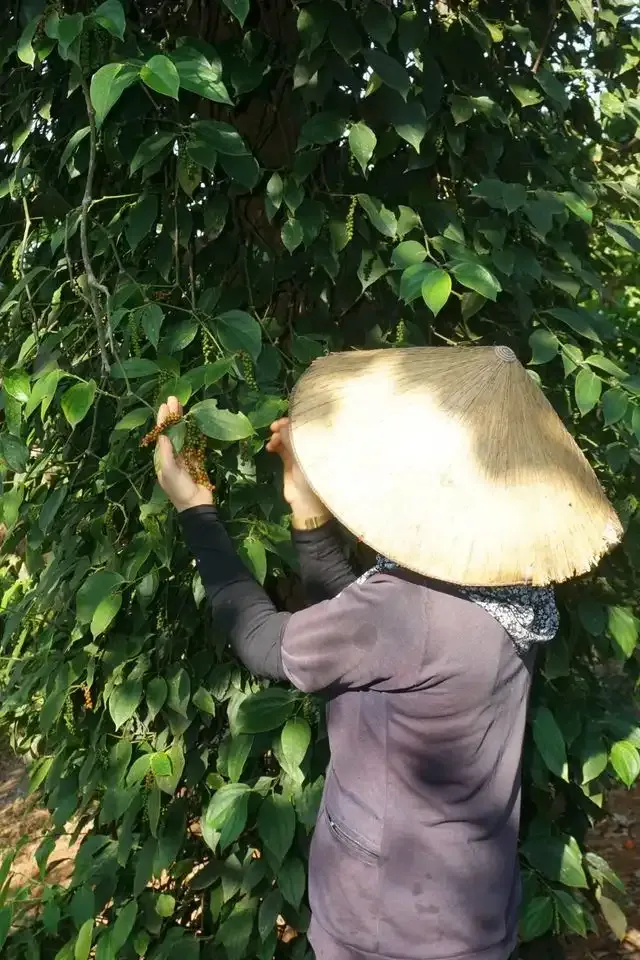
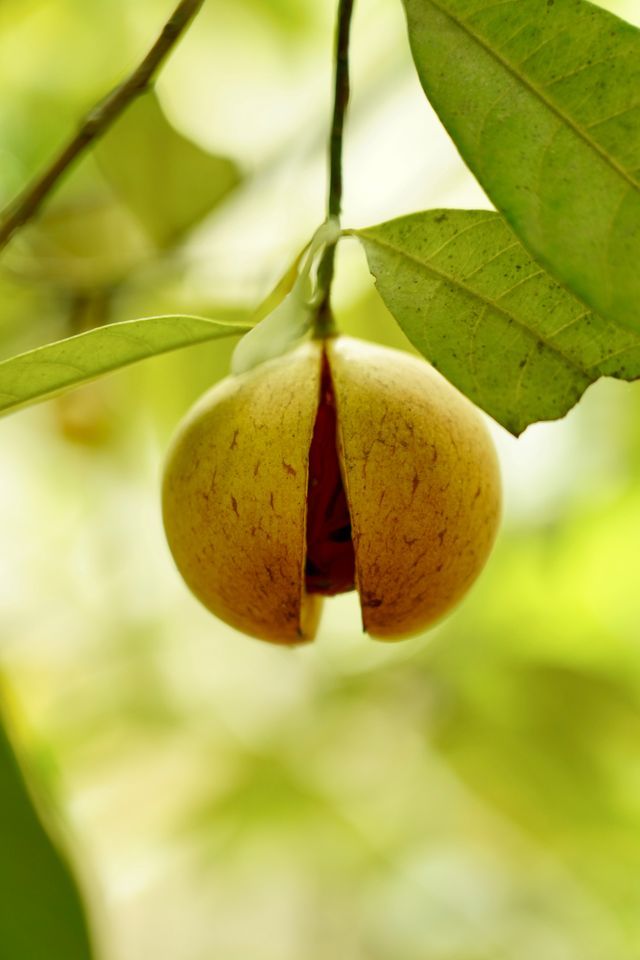
The visit starts before you have walked a step. At most farms you are met at the gate with a marigold garland, a glass of coconut water or herbal tea and a handful of cashews, and sometimes a shot of feni. Then the shade closes in: areca palms with pepper vines twisted round their trunks, nutmeg trees with fruit splitting open to show red mace, and the smell of crushed cinnamon leaf when the guide hands you one.
This is Goa's interior, a long way in mood from the beach clubs of Anjuna and Vagator. The farms grew out of kulagar, the Goan practice of growing spices, fruit and areca nut together in shaded, irrigated groves. Many families have farmed the same land for generations.
This guide compares the five farms worth your time, sets out what each costs in 2026 and what is included, and explains how to pair a farm with the temples around Ponda. It also covers whether to stay overnight in the Western Ghats instead of driving back to the coast. If you visited one of the big farms on an earlier trip, the quieter estates offer a different experience.
Is a Spice Plantation in Goa Worth It?
Yes, for most travellers. A spice plantation in Goa is worth a half-day if you want a slower, food-led look at the state's interior and its farming culture, and the lunch is often the best Goan home-style cooking of the trip. It is less rewarding if you expect a wild jungle trek or if you have already done the classic farm tour at Sahakari.
Worth it if…
- You are interested in food and want to see where pepper, nutmeg, vanilla and cardamom come from before you taste them in a xacuti or a vindalho.
- You are travelling with children or older relatives and want an easy, shaded outing with a sit-down lunch.
- You are combining it with the Ponda temples or Old Goa to build a full day inland.
- You want a night in the Western Ghats forest, which Tanshikar's cottages make possible.
Not ideal if…
- You want privacy and quiet but can only visit a big farm at midday in peak season, when coach groups arrive together.
- You are looking for serious hiking. The walks are gentle and run on paths of about 30–90 minutes.
- You have only two or three days in Goa and are based in the far north. The round trip takes up most of a day.
What a visit actually involves
- Welcome: garland, welcome drink and cashews on arrival
- Guided walk: about 45–90 minutes through the plantation, with touching, smelling and tasting along the way
- Lunch: a Goan buffet, usually served from about 12:30 pm
- Tasting: cashew feni at most farms, plus a spice shop at the exit
- Total time on site: about 2.5–4 hours
The Best Spice Plantation in Goa: Five Farms Compared
The best spice plantation in Goa depends on what you want from the day. Sahakari and Tropical are the easiest to reach and the most organised. Savoi is the oldest estate and the most peaceful. Pascoal suits families, and Tanshikar is the only one worth building an overnight stay around.
| Farm | Area | Setting | Tour with lunch (2026, per adult) | Best for |
|---|---|---|---|---|
| Sahakari Spice Farm | Curti, Ponda | Large, organised, lively | ₹400–500 (US$4–5.50) | Short trips, families, food lovers |
| Tropical Spice Plantation | Keri, Ponda | Lakeside, forest-like, Ayurvedic focus | ₹500–600 (US$5.50–6.50) | Photographers, nature lovers |
| Savoi Plantation | Savoi Verem, north of Ponda | Old family estate, quiet | ₹500–700 (US$5.50–7.50) | Repeat visitors, couples, heritage interest |
| Pascoal Spice Village | Khandepar, Ponda | Riverside, village-style | ₹400 adult, ₹200 child (US$4 / US$2) | Families with young children |
| Tanshikar Spice Farm | Netravali, Sanguem | Western Ghats forest farm with cottages | ₹600 (US$6.50); ₹1,550 (US$16.50) with jeep safari and trek | Overnight stays, South Goa guests, active travellers |
Sahakari and Tropical: the polished Ponda pair
Sahakari, about 2 km outside Ponda town, is the best-known farm and the most efficient operation. The People's Archive of Rural India describes a tour that is hands-on rather than lecture-style, with its own small distillery and a buffet served on areca-leaf plates. The trade-off is volume: in peak season the farm can see several hundred visitors a day.
Tropical Spice Plantation in Keri, a few kilometres further on, sits around a small lake and feels more like a forest walk. Its guides lean towards the medicinal and Ayurvedic uses of each plant, and some packages add a short boat ride on the water.
Savoi: the heritage estate
Savoi Plantation, about 15 km north of Ponda, has been in the Shetye family for close to two centuries and is farmed organically across roughly 40 hectares. It receives far fewer coach groups than the Ponda farms, and lunch is a Saraswat-style meal served in earthen pots. Facilities are simpler, which is part of its appeal but worth knowing if you are travelling with older relatives.
Pascoal and Tanshikar: the family farm and the forest stay
Pascoal Spice Village, established in 1982 on the banks of the river at Khandepar, is set out like a small village with open lawns and a restaurant, which makes it relaxed with young children. Tanshikar is a different proposition: a 40-acre working organic farm deep in Netravali, run by Chinmay and Gauri Tanshikar from a family house about 250 years old. The Goan's profile of the farm notes that it produces more than a tonne of nutmeg a year, and it offers 15 cottages and tree houses for overnight guests.
What You'll See, Taste and Learn on a Goa Spice Farm Tour
On a Goa spice farm tour you see how spices grow in a mixed, shaded grove rather than in rows, taste them fresh from the plant, and finish with a Goan lunch cooked with the farm's own produce. The guided walk is the part to take slowly; the lunch is the part most people remember.
On the walk: pepper, nutmeg and vanilla
Guides show you black pepper vines trained up areca palms, vanilla orchids that have to be pollinated by hand, cardamom growing low to the ground and the bark of the cinnamon tree. Nutmeg is the one to look out for: the fruit splits to show a seed wrapped in bright red mace, two spices from one fruit. Most walks also take in cashew, jackfruit, pineapple and kokum, the sour fruit behind Goa's pink sol kadhi.
This mixed planting is the kulagar system. Taller trees shade the spice plants, and channels fed by springs keep the soil moist through the dry season. Goa Tourism's overview of the state's plantations lists the farms that open to visitors and the crops grown across them.
The lunch
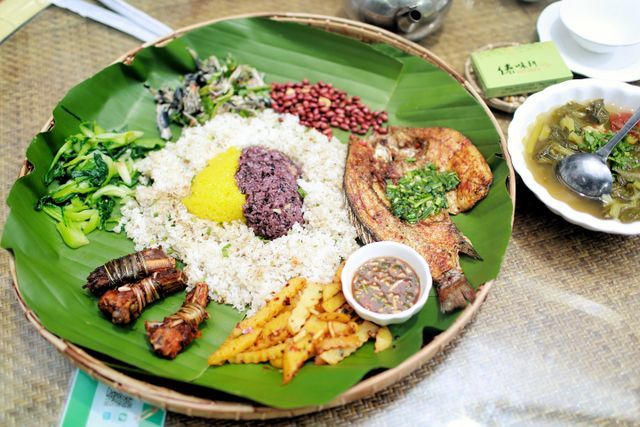
Lunch is a buffet of Goan home cooking: fish curry and rice, a chicken xacuti, seasonal vegetables, and often kingfish or prawns. Savoi's meal follows Goa's Saraswat tradition, while Sahakari and Tropical serve a broader Goan spread. Vegetarian dishes are always available.
Feni and urak
Cashew feni, the state's GI-tagged spirit, is poured at the welcome or after lunch at most farms. Some farms distil it on site. The first distillation of cashew juice gives urak, a lighter seasonal drink from the spring cashew harvest, and a second distillation gives feni.
Insider reality check
- The large farms run tours in batches, so arriving around 10 am usually means a smaller group on the walk and an earlier, calmer lunch.
- The farm shops are not the place to compare prices, but they are the place to buy vanilla pods, nutmeg and pepper picked on the estate you have just walked.







Goa Spice Farm Tour Costs and What's Included
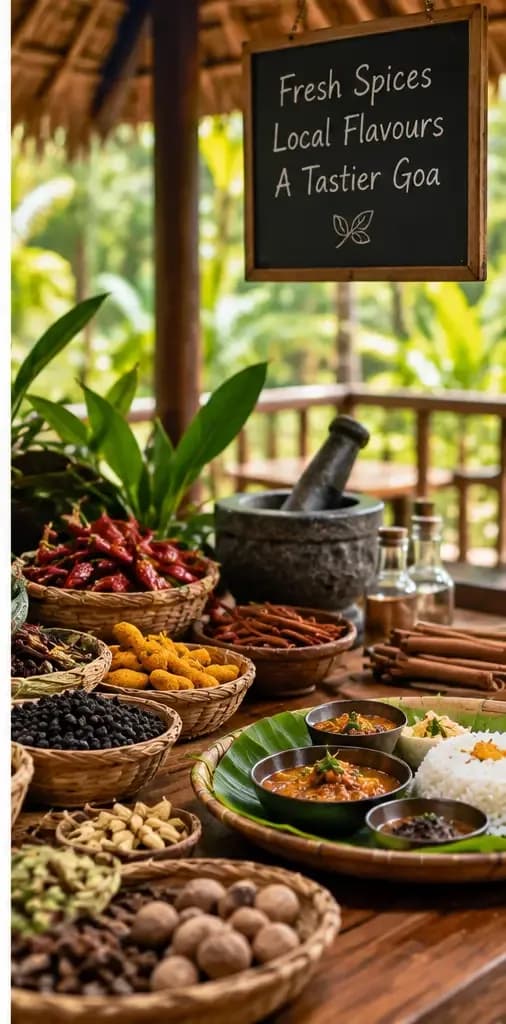
Most Goa spice farm tours cost ₹400–800 (US$4–8.50) per adult in 2026, and that price usually covers the welcome drink, the guided walk and the buffet lunch. Transport is the larger cost: a private car and driver from the beach areas for the day typically adds more than the farm entry itself.
Price bands by farm (2026)
- Sahakari Spice Farm: about ₹400–500 (US$4–5.50) with lunch
- Tropical Spice Plantation: about ₹500–600 (US$5.50–6.50) with lunch
- Savoi Plantation: about ₹500–700 (US$5.50–7.50) with lunch
- Pascoal Spice Village: about ₹400 (US$4) per adult and ₹200 (US$2) per child
- Tanshikar Spice Farm: ₹600 (US$6.50) for the tour with lunch; its day packages run to ₹1,550 (US$16.50) with a jeep safari and waterfall trek
Published rates vary by a few hundred rupees between sources and seasons, so confirm the current price when you book. Children under five are often free.
What's included and what's extra
- Usually included: welcome drink, cashews, guided walk, buffet lunch, a small feni tasting
- Usually extra: bottles of feni, spices and oils from the farm shop, boat rides, adventure activities, tips for the guide
- Not included: transfers from your hotel, unless you book a guided tour that bundles them
Getting there: private driver or guided tour
The farms are 30–40 km from Panjim and further from the North Goa beaches, on roads without signage in English. A private car with a driver for the day is the most comfortable choice: you set your own timing, and the driver will know which farm entrance is which. A guided day tour suits you if you want transfers, the farm and a temple or Old Goa stop handled in one booking.
From Panjim, allow about 45 minutes to an hour to Ponda. From Calangute or Candolim, allow about 1–1.5 hours each way. Tanshikar is roughly 50 km from Margao and 32 km from Palolem, which makes it far easier from a South Goa base.
The elephant question
Some Goa spice farms have offered elephant rides and "elephant baths" for years. Mongabay India reported in detail on welfare concerns around Goa's captive tourism elephants, and a 2016 Supreme Court interim order suspended their commercial use in the state. What each farm offers now varies, and the plantation visit is complete without it. We recommend you decline any elephant activity.
Insider reality check
- Some tours bundle a spice farm with Dudhsagar Falls in a single day. The falls involve a long jeep transfer and are only accessible in certain months, so check the season and plan for 10 hours or more.
Planning Your Visit: Season, Timing and a Ponda Day Plan
The best time to visit a spice plantation in Goa is October to March, when the air is dry and the walks are comfortable. Plan to arrive between 10 am and noon so you finish the walk before lunch, and give the rest of the day to Ponda's temples or Old Goa.
When to go
- October to March: dry, comfortable, and the busiest season at the large farms
- April to May: hot and humid in the afternoons, but this is cashew and urak season
- June to September: monsoon; the plantations are at their greenest and streams run full, but paths are slippery and heavy rain can shorten the walk
- Daily hours: roughly 9 am to 4:30 pm at most farms; arrive by about 12:30 pm if you want lunch
A Ponda day that works
Ponda is Goa's temple country, and pairing a spice farm with two or three temples makes a full day inland. Start at the Shri Mangeshi Temple in Priol, then the Shri Shantadurga Temple at Kavlem, both a short drive from the farms. Have a long lunch at the plantation, then either head back to the coast or continue to the churches of Old Goa, about half an hour away.
Dress for the temples as well as the walk: shoulders and knees covered, and shoes that slip off easily. Inside the farms, closed shoes and insect repellent are useful in every season. For more ideas on what to pair with the day, see our guide to things to see and do in Goa.
Staying overnight at Tanshikar
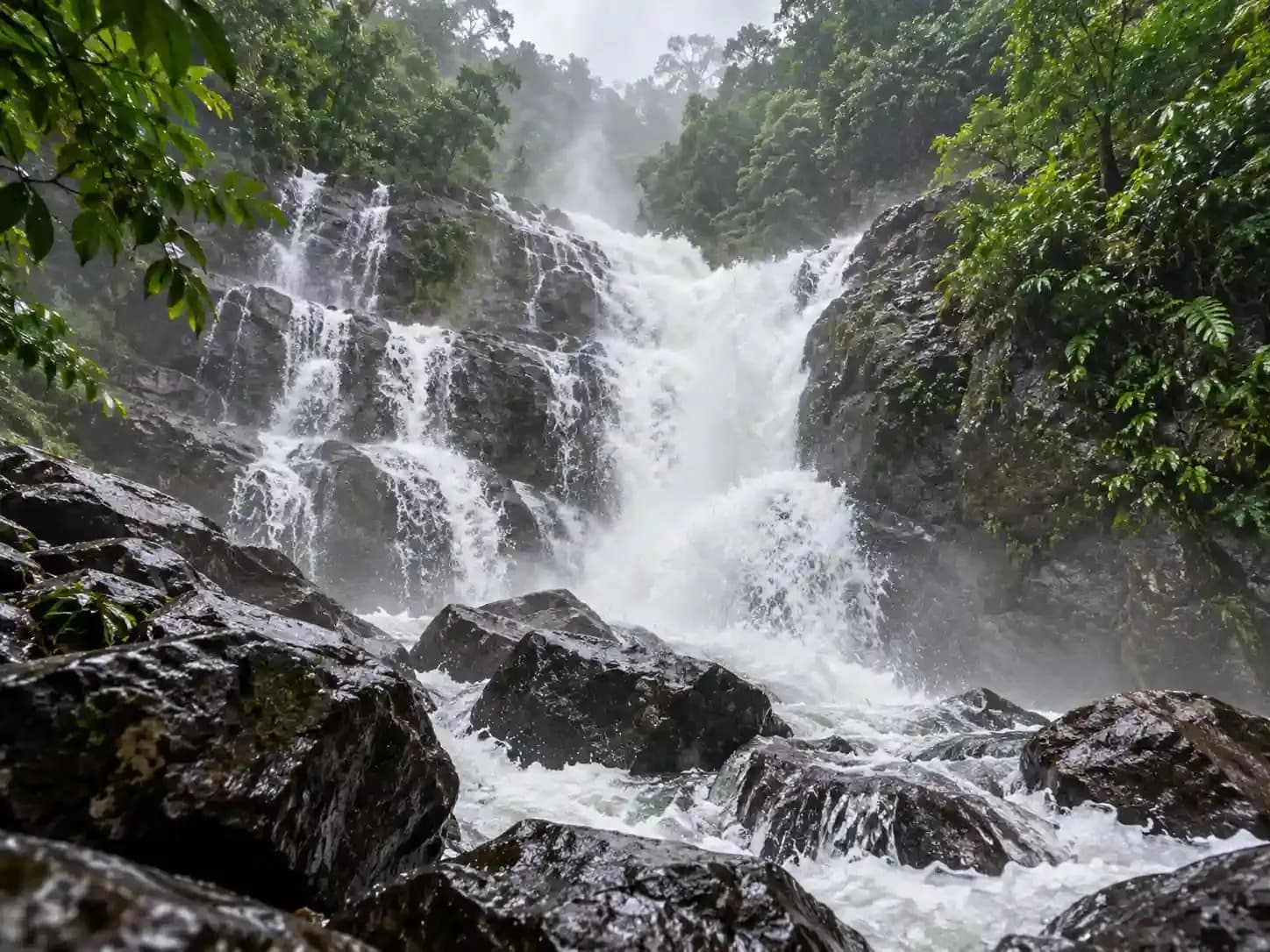
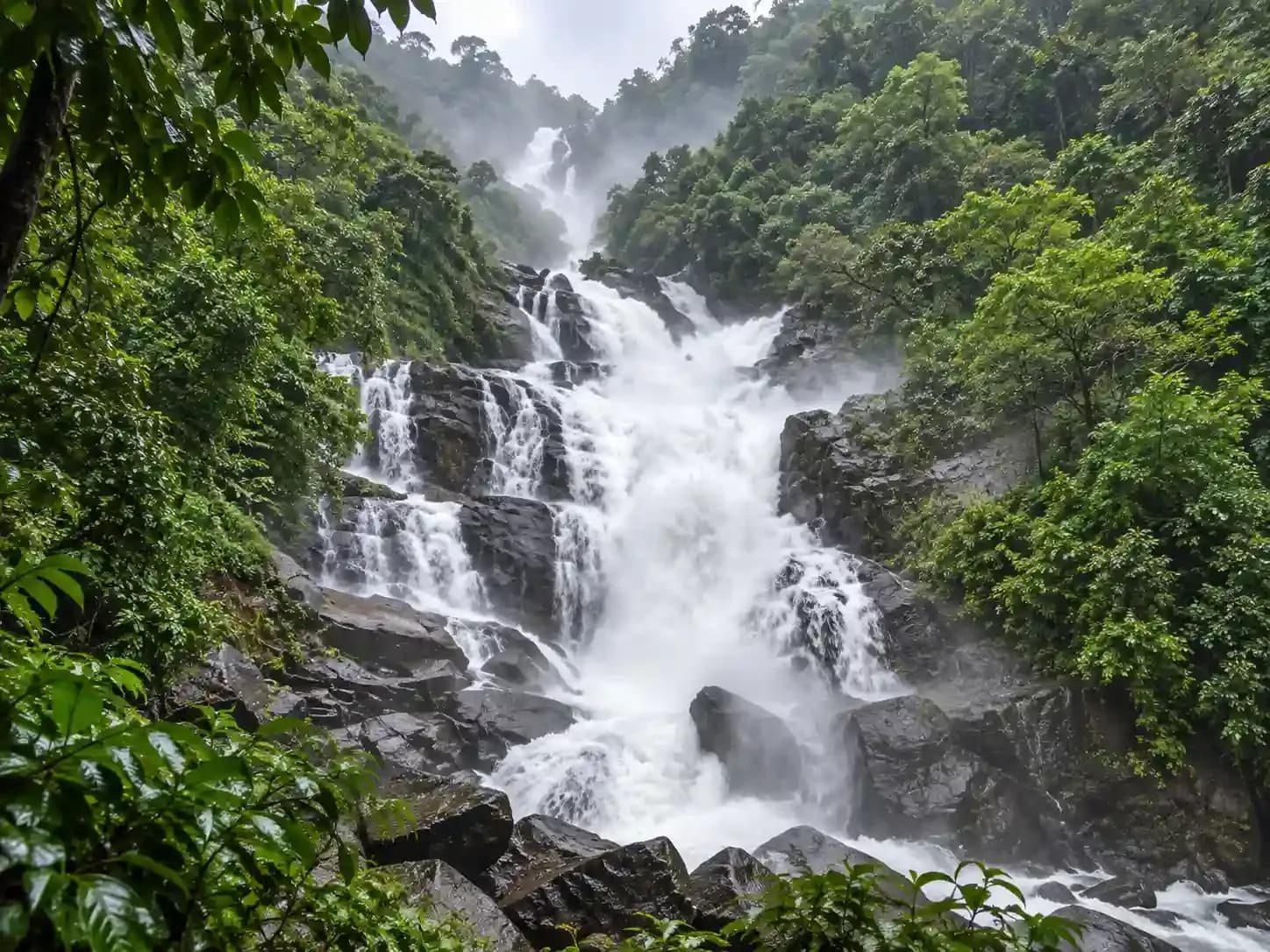
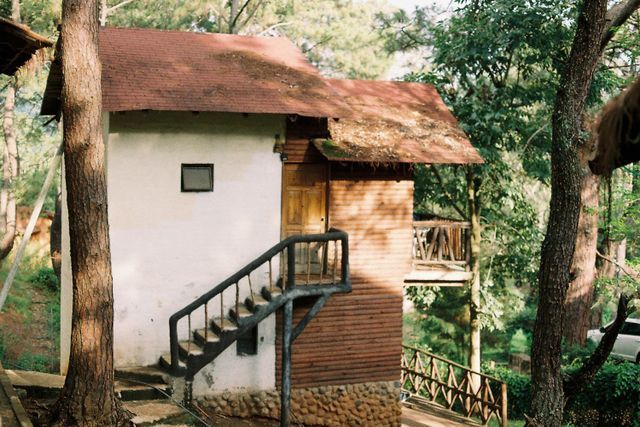
Tanshikar is the one farm that rewards an overnight stay. Its 15 cottages and tree houses sit in the Western Ghats forest, and stay packages add a jeep safari through the wildlife sanctuary, a waterfall or hill trek and a night trail. Longer stays add a cycle ride through Netravali's villages and a visit to ancient rock carvings, and Bubble Lake, where gas bubbles rise through the water, is nearby.
Facilities are rustic and comfortable rather than luxurious. Choose it for the forest, the dawn birdsong and the cooking, not for a pool and spa.
Insider reality check
- Mobile signal is patchy in Netravali, so arrange your onward transfer before you arrive.
- Temple dress codes are enforced at Mangeshi and Shantadurga, so carry a light shawl or sarong in the car.
Which Spice Plantation in Goa Should You Choose?
Choose the spice plantation in Goa that fits your base, your time and the kind of day you want. Each farm suits a different traveller.
By time and base
- If you are short on time, choose Sahakari. It is closest to Ponda, the most organised, and easy to combine with the Mangeshi Temple in a half-day.
- If you are staying in South Goa or want a night in the forest, choose Tanshikar, and book a stay package instead of a day trip.
By travel style
- If you are a repeat visitor or want quiet, choose Savoi. The oldest estate sees fewer groups, and the Saraswat lunch is unlike the buffets at the bigger farms.
- If you are travelling with young children, choose Pascoal. It has open lawns, a riverside setting and child pricing.
- If you love photography and nature, choose Tropical, for its lakeside setting and forest feel.
The spice farm tours and Goa day trips on Travjoy are hand-picked after extensive research and approved by local experts, so you can book transfers and the farm visit with confidence. You can also browse our top picks for Goa to build the rest of the trip, or see where to eat well afterwards in our guide to eating, shopping and nightlife in Goa.
Planning Your Spice Farm Day in Goa
A spice plantation in Goa is the easiest way to see the green interior behind the beaches, and lunch is often a highlight of the trip. For a quick, polished visit, Sahakari or Tropical near Ponda work well. Savoi suits a quieter, older estate, and Tanshikar is the choice if you want a night in the Western Ghats.
Plan for the dry season, arrive mid-morning, and give the afternoon to Ponda's temples or Old Goa. When you are ready to put the rest of the trip together, start planning your Goa trip on Travjoy.








.svg&w=1920&q=75)