



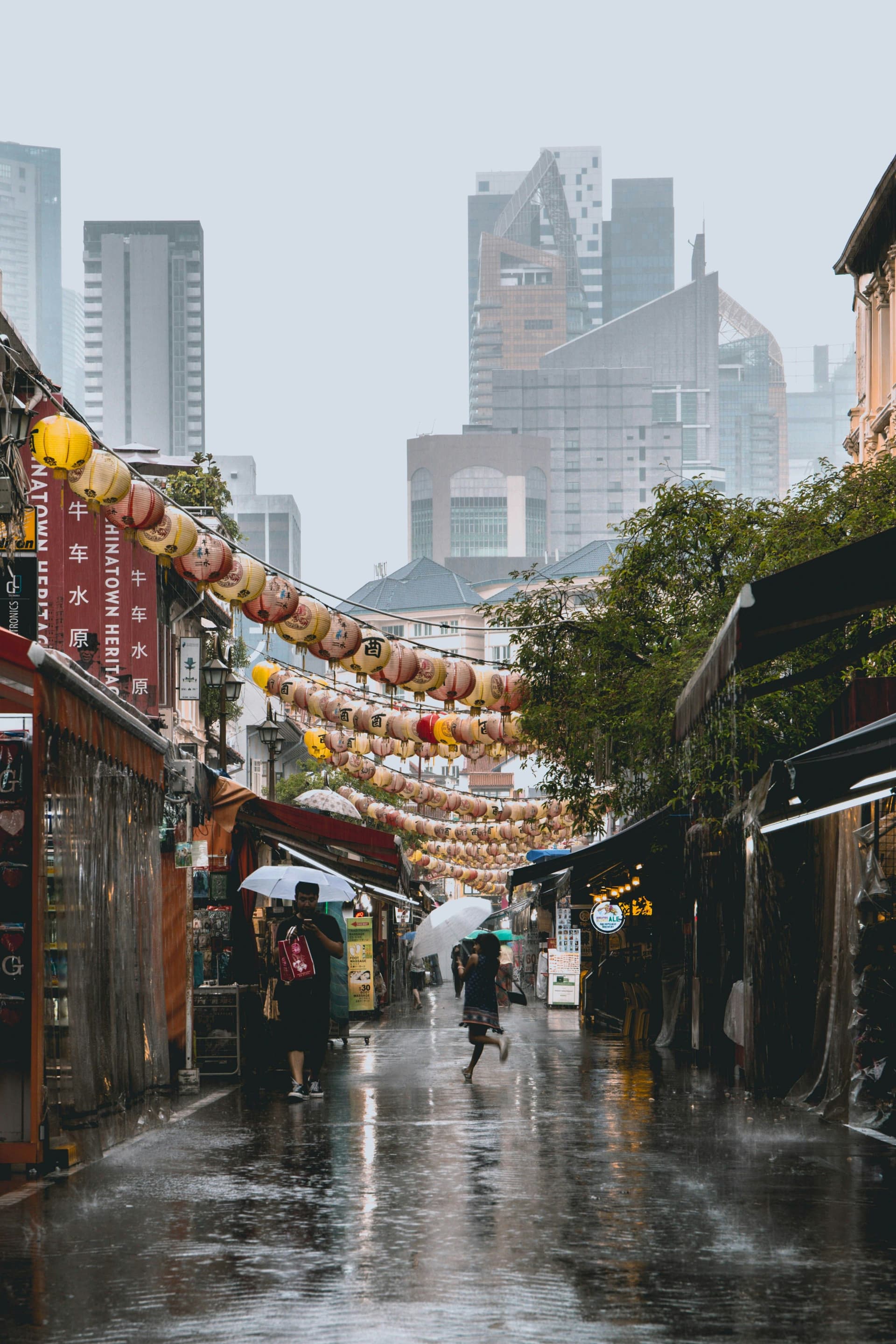
Singapore Weather & Rainy Season: What Travelers Need to Know
14 min read

Author
SHARE BLOG
TABLE OF CONTENTS
- Singapore has two monsoon seasons: the Northeast Monsoon (November to early March) is the wetter one; the Southwest Monsoon (June to September) brings shorter squalls and occasional haze.
- February to April is the driest and most reliably sunny stretch — the practical best time to visit for most travelers.
- Rain in Singapore is usually short and heavy, not all-day drizzle. Most downpours last 30–90 minutes, then clear.
- December and January are the wettest months — expect rain on most days, with some lasting into the evening.
- Haze from Sumatra forest fires is a real risk from June to October and can affect outdoor plans for days at a time.
- Singapore's average temperature sits between 23°C and 34°C (73–93°F) all year — packing light and bringing an umbrella covers most weather situations.
Quick Answer: Singapore's rainy season peaks between November and January, driven by the Northeast Monsoon. Rain falls year-round, but it typically arrives as short, heavy afternoon showers rather than full-day downpours. The driest months are February through April, making this the easiest window for outdoor sightseeing. That said, Singapore is a well-functioning city in the rain — covered walkways, connected malls, and indoor attractions make wet-weather days very workable.

Understanding Singapore's Climate: No Dry Season in the Traditional Sense
Singapore sits almost exactly on the equator, which means it doesn't experience the kind of distinct wet and dry seasons you'd find in Thailand or Bali. The temperature stays warm all year — typically between 23°C and 34°C (73–93°F) — and rain can fall in any month.
What does change through the year is the type and frequency of rain, governed by two monsoon systems that alternate across the calendar. Understanding which monsoon is active — and what that means on the ground — is more useful for trip planning than simply asking "is it the wet season?"
Humidity stays high throughout the year, averaging around 84% daily. Buildings, the MRT, and most shopping areas are air-conditioned, which provides regular relief, but outdoor time in Singapore will feel warm and close regardless of the month.
The Two Monsoon Seasons Explained
Northeast Monsoon: November to Early March (The Wetter Season)
The Northeast Monsoon is the wetter of the two monsoon periods, and its peak — from late November through January — brings the highest rainfall totals of the year. December is typically Singapore's wettest month, with rainfall ranging from around 200mm up to over 300mm in some years. Rain during this period tends to last longer than at other times of year, sometimes continuing through the afternoon and into the evening.
January and February are still influenced by the Northeast Monsoon but conditions begin to ease. By February, rain frequency drops noticeably, and the month generally records the fewest rainy days of any month — around 9 to 13 days on average. Wind picks up slightly during January to March, which can make outdoor conditions feel more manageable than the still, heavy air of the hot season.
Northeast Monsoon at a Glance
- Active: November to early March
- Wettest months: December and January
- Rain type: Widespread, prolonged — can last several hours
- Temperature: Slightly cooler, 23–31°C (73–88°F)
- Best for: Indoor attractions, museums, hawker centres, covered shopping
- Watch out for: Heavier flooding in low-lying areas during peak December rains
Southwest Monsoon: June to September (Squalls and Haze)
The Southwest Monsoon brings a different kind of rain. Rather than prolonged downpours, this season produces Sumatra squalls — fast-moving thunderstorms that typically arrive in the pre-dawn hours or early morning, accompanied by sharp wind gusts. They pass quickly, and afternoons often clear to sunshine. June and July are actually among the drier months by total rainfall, which surprises many travelers who assume "monsoon" means constant rain.
The bigger risk during the Southwest Monsoon is haze. Smoke from land-clearing fires on the island of Sumatra drifts east across the Strait of Malacca and settles over Singapore. In bad years — 2015 and 2019 were among the worst — visibility drops, the air smells of smoke, and the Pollutant Standards Index (PSI) climbs into unhealthy territory for days at a time. This typically occurs between June and October, with September and October being the most common peak months.
If you have asthma or respiratory conditions, check Singapore's National Environment Agency (NEA) PSI readings before planning outdoor activities during this window.
Southwest Monsoon at a Glance
- Active: June to September
- Rain type: Short, sharp squalls — usually early morning. Afternoons often sunny.
- Temperature: Hot, 25–34°C (77–93°F); May to July is the hottest stretch
- Haze risk: June to October — check NEA PSI levels daily
- Best for: Beach and outdoor activities (mornings), night safari, evening dining
- Watch out for: Haze days — have indoor backup plans ready
Month-by-Month Weather Breakdown


January
Peak Northeast Monsoon. Expect frequent rain, grey skies, and occasional all-day showers. Temperatures are marginally cooler than the rest of the year — lows around 23°C. January is better suited to indoor itineraries: the National Museum of Singapore, the Asian Civilisations Museum, or hawker centre-hopping through the rain.
February
The monsoon starts to ease and February often records the fewest rainy days of the year. Chinese New Year typically falls in January or February, bringing festive atmosphere to Chinatown. Warm and manageable — one of the better months to visit for outdoor sightseeing.
March to April
The first inter-monsoon period. Temperatures begin climbing — March to May is the hottest stretch of the year, with highs occasionally reaching 34–35°C (93–95°F). Rain falls as afternoon thunderstorms rather than monsoon downpours. April is warm, humid, and still manageable for outdoor activity if you avoid midday heat. The Singapore Botanic Gardens look their best in the early morning light during this period.
May
The transition month. Getting hotter and slightly more humid. Afternoon thunderstorms become a daily pattern. Mornings are still comfortable for outdoor plans if you start early — Bukit Timah Nature Reserve is best done by 8am before the heat builds.
June to July
Southwest Monsoon is active but these are actually among the drier months by total rainfall. The signature Sumatra squall arrives overnight or early morning and clears before 9am most days. Afternoons can be very hot — up to 35°C (95°F). School holiday season in Singapore, so expect higher hotel prices and more crowded attractions. The Great Singapore Sale runs through Orchard Road during June.
August
Similar to July — hot and humid, with some increase in afternoon rain. Singapore's National Day on 9 August brings parades and celebrations, which draw large crowds. A good month to balance outdoor mornings with indoor afternoons at places like the ArtScience Museum or the S.E.A. Aquarium.
September to October
The second inter-monsoon period. Haze risk is highest in September and October — check PSI levels before planning outdoor excursions. When haze is absent, these can be pleasant months. October sits between the two monsoons, often producing more sunny days than September. The F1 Singapore Grand Prix typically runs in September and significantly drives up hotel prices.
November
The Northeast Monsoon returns. Rainfall increases steadily through the month. November is when you start needing to build rain contingencies into every outdoor plan. Good time for Night Safari Singapore, which operates regardless of earlier-day rain and is a genuinely different experience in cooler monsoon-season air.
December
The wettest month of the year. Rainfall can exceed 300mm and rain can persist through evenings. That said, Singapore doesn't shut down — the city is set up to function in the rain, and Christmas light displays along Orchard Road run through the month regardless of weather. Budget more time for transit and build in indoor attraction time throughout each day.
What Singapore Rain Actually Looks Like Day-to-Day
The most useful thing to understand about Singapore's rain is its pattern, not just its frequency. Unlike monsoon rains in some other tropical countries, Singapore's rain is rarely an all-day grey wash. The typical sequence looks like this:
- Morning is often clear and sunny, especially during the SW Monsoon months
- Humidity builds through late morning into early afternoon
- A heavy downpour arrives — sometimes with thunder — around 2pm to 4pm
- The rain clears within 30 to 90 minutes, often leaving the city cooler and freshened
- Evenings are typically dry, making dinner and night activities reliable
The exception is the peak Northeast Monsoon (December–January), where rain can start earlier in the day and last longer. Even then, most days have windows of dry weather if you're flexible with your schedule.
Singapore is also well-designed for rain. A network of covered walkways links the MRT to major malls, hotels, and attractions across the city centre. Getting from Bayfront MRT to Gardens by the Bay, Marina Bay Sands, and the Shoppes without stepping into rain is entirely possible. Clarke Quay has its own umbrella-style canopy structure. Orchard Road's malls connect internally for long stretches.
The Best Time to Visit Singapore for Good Weather
February to April is the clearest window for a Singapore trip focused on outdoor activity and sightseeing. February has the fewest rainy days. March and April are warmer and slightly more humid, but rain falls as manageable afternoon thunderstorms rather than extended monsoon rain. You get full daylight hours, reliable mornings, and the city at a pace that's comfortable for walking neighbourhoods like Kampong Glam, Tiong Bahru, and the Civic District.
If your trip falls in another part of the year, here's how to think about it:
- December–January: Wettest months — plan for indoor-heavy days and accept that outdoor plans may shift. Festive season, higher hotel prices.
- June–July: Drier than expected but very hot. Good for indoor-outdoor split days. School holidays mean crowds and higher costs.
- September–October: Watch haze levels closely. On clear days, October can be excellent. September carries F1 Grand Prix pricing.
- November: Transitional — rain picking up but not yet at peak. Can be a sweet spot if you don't mind occasional heavy showers.
For travelers who want to explore Singapore at its broadest — hitting the top experiences across the city — February through April gives you the most reliable weather window to do so without constantly adjusting plans.
Best Time to Visit: Quick Reference
- Best overall: February to April — fewest rain days, manageable heat
- Best for festive atmosphere: December (Christmas), January/February (Chinese New Year)
- Best for outdoor mornings: June to August — squalls clear early, afternoons are hot but dry
- Best for deals: July to August — between peak seasons, hotel prices ease
- Most challenging: December to January — highest rainfall, some plans disrupted
- Haze risk months: June to October — check NEA PSI before outdoor plans
What to Pack for Singapore's Rainy Season
Packing for Singapore is less about seasons and more about handling the constant combination of heat and occasional rain. These are the items that actually make a difference:
- Compact foldable umbrella: The single most useful item. Singapore's rain arrives with little warning and umbrellas are sold everywhere, but having one in your bag avoids the scramble.
- Quick-dry clothing: Lightweight fabrics dry within hours of getting caught in a shower. Natural fabrics like linen work well in the heat. Avoid heavy cotton, which stays damp and uncomfortable.
- Light layer for indoors: Singapore's air conditioning is aggressive. A thin scarf or light jacket for restaurants, the MRT, and malls is more useful than any rain gear.
- Waterproof sandals or walking shoes: Leather shoes won't appreciate getting soaked daily. Waterproof sneakers or sandals with good grip handle wet pavements and puddles.
- Sunscreen (high SPF): Singapore's UV index is high year-round. Even overcast days carry significant UV exposure. SPF 50 is the practical starting point.
- A reusable water bottle: Staying hydrated matters in the heat and humidity. Singapore's tap water is safe to drink and refill stations are common.
One thing you don't need: a heavy raincoat. A waterproof jacket that breathes is useful for extended outdoor activity, but a full heavy raincoat will make you far more uncomfortable from heat than any rain would.
Rain-Proof Activities When the Weather Closes In
If a heavier rain day throws your outdoor plans, Singapore has enough indoor depth to fill a full day without feeling like a consolation prize.
The ArtScience Museum at Marina Bay Sands covers multiple exhibitions across rotating art, science, and technology themes — plan two to three hours. The Peranakan Museum in the Civic District is one of the most distinctive cultural museums in Southeast Asia, focusing on the Straits Chinese heritage unique to Singapore, Malaysia, and Indonesia. The Gardens by the Bay conservatories — the Flower Dome and Cloud Forest — are cooled indoor environments that stay fully open in any weather.
Hawker centres are another strong rain-day option. Singapore's covered hawker food culture means eating well in the rain is straightforward, whether you're at Lau Pa Sat, Tiong Bahru Market, or Newton Food Centre.
For families, Universal Studios Singapore on Sentosa has a strong indoor-to-outdoor ratio — indoor rides and shows can fill several hours even when outdoor zones are wet.
Understanding Singapore's Haze: What It Means for Travelers
Haze is a separate weather concern from rain and one that catches many travelers off guard. It's not fog or cloud — it's smoke pollution from land-clearing fires in Sumatra and Kalimantan that drifts into Singapore, typically between June and October.
On mild haze days, the sky looks yellowish-grey and visibility drops to a few kilometres. On bad days, outdoor air quality enters "unhealthy" or "very unhealthy" territory on Singapore's PSI scale (above 101 is unhealthy; above 201 is very unhealthy). In 2015, readings briefly exceeded 300 during a severe haze event.
Practical steps if haze is forecast during your trip:
- Check the NEA's 24-hour PSI on their website or the myENV app each morning
- If PSI exceeds 100, shift outdoor plans to morning when readings are typically lower
- If PSI exceeds 150, prioritise indoor plans entirely — N95 masks are recommended if you must be outside for extended periods
- Haze conditions typically improve with rainfall or a wind shift, so conditions can change within 24–48 hours
Conclusion
Singapore's weather rewards travelers who understand it rather than fear it. The Northeast Monsoon from November to March brings the heaviest rains, but those rains usually arrive in heavy, short bursts — not days of grey. The Southwest Monsoon from June to September produces early morning squalls that clear quickly, though haze is a real risk from Sumatra fires. February through April is the clearest and most practical window for outdoor-heavy itineraries.
Whatever month you visit, Singapore's covered infrastructure, world-class indoor attractions, and hawker culture mean a rain day is rarely wasted. The city functions well in the rain — the planning challenge is knowing what type of rain to expect and building enough flexibility to work with it.
Whether you're planning your first visit or returning to explore more deeply, Travjoy's curated list of Singapore's top experiences covers the best of what the city offers across every season — each option researched and vetted so you spend less time second-guessing and more time exploring.

.svg&w=1920&q=75)