



Singapore Tourist SIM Card: Best eSIM & Data Plans 2026
19 min read

Author
SHARE BLOG
TABLE OF CONTENTS
- Local tourist SIMs from Singtel, StarHub, and M1 start at SGD $12 (~USD $9) and include 100GB of data — more than enough for a typical week in Singapore.
- Buy a physical SIM in the city, not at Changi Airport — the same card can cost SGD $30–40 more at airport counters.
- eSIMs must be purchased online before you fly — no eSIM vending or activation is available at Changi Airport.
- Most eSIM plans are data-only — keep your home SIM active for receiving OTPs and bank authentication codes.
- The Singtel hi!Tourist EZ-Link 2-in-1 SIM bundles mobile data with an MRT/bus transit card — a smart pick if you're using public transport daily.
Singapore's mobile network is one of the most reliable in Asia, with 4G coverage that holds steady underground in MRT tunnels, inside multi-storey malls, and across every major tourist area. That part is easy. The harder part is choosing the right Singapore tourist SIM card before you land — because the options are more varied than they look, the pricing gap between Changi Airport and city stores is significant, and eSIMs work very differently from physical cards. This guide cuts through the noise: local carrier plans, third-party eSIM providers, pricing in SGD and USD, and a clear breakdown of which option suits your trip length and travel style.
Quick Answer
- For most tourists, a local physical SIM from M1, StarHub, or Singtel bought at a city-centre store offers the best value — 100GB of data with calls and SMS from SGD $12 (~USD $9), valid for 15–30 days. If you want to skip the store visit entirely, a third-party eSIM from Airalo or Nomad gives you instant online activation from USD $4–20 depending on data size and duration. Either way, skip the airport counter — prices there are 30–50% higher for the same plans.

Do You Actually Need a Local SIM Card in Singapore?
Singapore has strong public WiFi infrastructure under the Wireless@SG scheme, and most hotels offer reliable in-room internet. For a 24-hour transit or a single-day visit, you may not need a local SIM at all. But for anything longer — or if you rely on Grab for getting around, need Google Maps for walking between neighbourhoods, or plan a day trip to Batam — a local data plan makes your time noticeably smoother.
Worth it if:
- You're staying three or more days and using apps like Grab, Google Maps, or food delivery daily.
- You want to make local calls without routing through WhatsApp or another internet-based app.
- You're doing day trips to nearby islands or neighbouring Malaysia, where some Singapore SIM plans include roaming data.
- You're working remotely and need a consistent hotspot independent of hotel WiFi.
Not ideal if:
- You're transiting through Changi Airport for under 12 hours and plan to stay in the terminal.
- Your device doesn't support eSIM and you'd rather avoid the admin of buying a physical card at a store.
- Your home mobile plan already includes affordable international roaming in Singapore — worth checking before you pay for a separate SIM.
Wireless@SG, the national public WiFi network, is available at MRT stations, community centres, and many malls. It's genuinely useful for light browsing but requires registration with a foreign number for OTP verification. It won't work reliably for Grab, which needs a persistent data connection, or for real-time navigation while you're walking.
eSIM vs Physical SIM — Which Is Right for Your Singapore Trip?
The choice between an eSIM and a physical SIM comes down to three things: when you want to get connected, whether you need a local phone number, and how your device handles dual SIM. Neither is universally better — each suits a different type of traveller.
What Is an eSIM and How Does It Work?
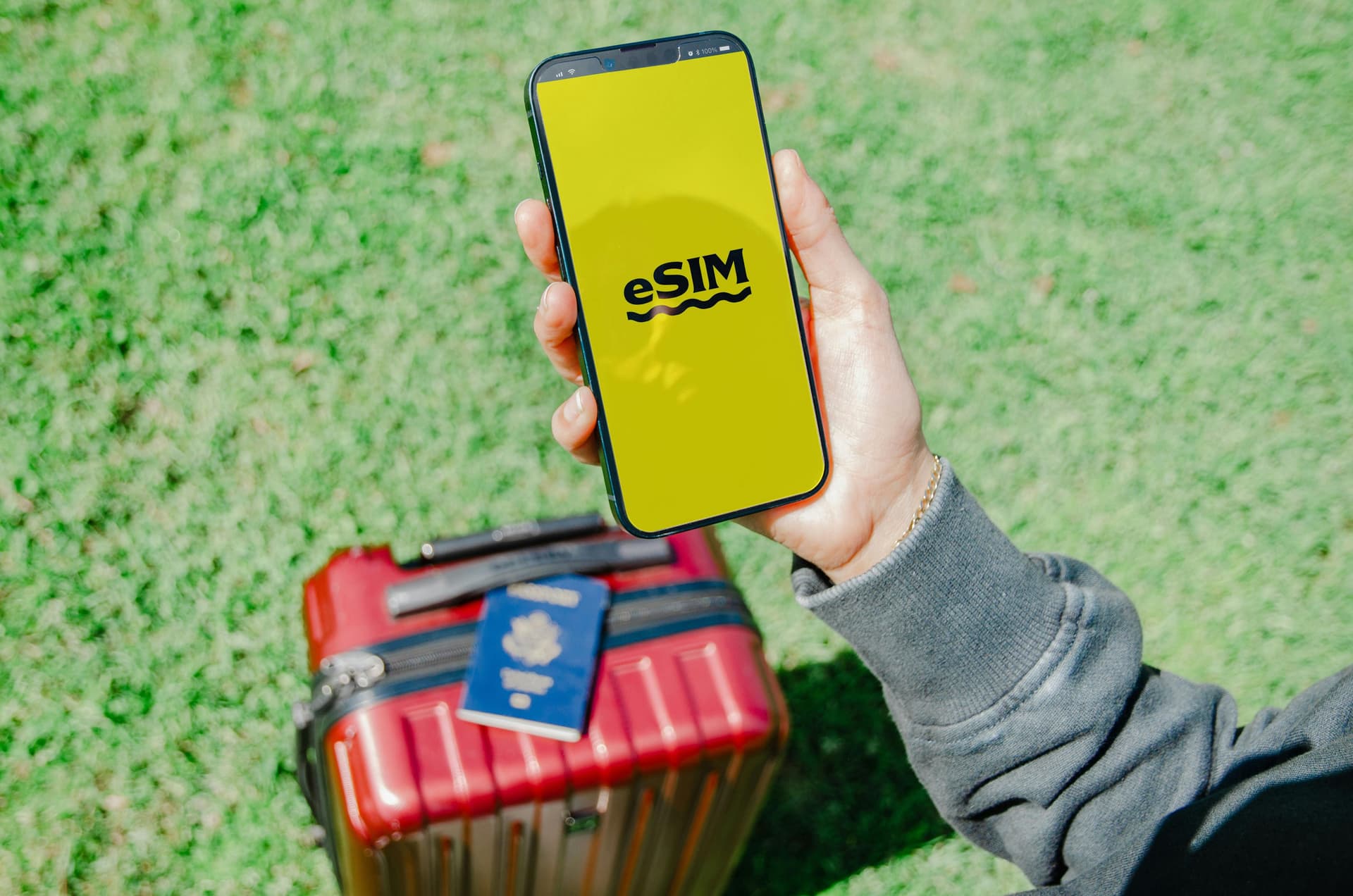
An eSIM is a digital SIM embedded inside your phone — no physical chip to slot in or swap out. You buy a data plan online, receive a QR code by email, scan it in your phone settings, and you're connected the moment your phone picks up a local network in Singapore. The whole setup takes under five minutes and can be done from home before you travel. Your existing home SIM stays active in the phone simultaneously, so you don't miss calls or OTPs on your regular number.
Not all devices support eSIM. Compatible models include iPhone XS and newer, Google Pixel 3 and newer, and Samsung Galaxy S20 and newer. Older phones, budget Android handsets, and some market-specific models (particularly those sold in China) may not have eSIM hardware. Check your phone settings — on iOS, go to Settings → General → About and look for "Available SIM"; on Android, check Settings → Connections → SIM Card Manager.
eSIM vs Physical SIM: Key Differences
| Feature | eSIM | Physical SIM |
|---|---|---|
| Setup | Online QR code scan — before you fly | In-person at airport or city store |
| Voice calls & SMS | Data-only (most providers) | Included with most local tourist SIMs |
| Price range | USD $4–20 (1GB to unlimited) | SGD $12–30 / ~USD $9–22 (city stores) |
| Passport required? | Online form only (varies by provider) | Yes — in-store passport registration mandatory |
| Available at Changi Airport? | No — online purchase only | Yes — Terminals 1, 2, 3 & 4 |
| Device compatibility | Newer flagships only (post-2018) | Works on all unlocked phones |
| Best for | Pre-trip planners, multi-country travellers | Travellers who need calls, or older devices |
Insider Reality Check: No eSIMs at Changi Airport
- As of 2026, Singapore's local telecom operators — Singtel, StarHub, and M1 — do not offer eSIM activation for tourists at Changi Airport. The airport counters sell physical prepaid SIM cards only. If you want an eSIM, buy it online before your trip. Trying to set one up on the plane with no WiFi is also not possible — you need a working internet connection to scan the QR code and complete installation.
Best Local Operator Tourist SIMs in Singapore (Physical SIM)
Singapore has three main telecom operators for tourists: Singtel, StarHub, and M1. All three offer tourist-specific prepaid plans with generous data allowances. As of 2026 pricing, the entry-level plans sit at SGD $12 (~USD $9) and give you 100GB of data — far more than most visitors will use in two weeks. The main differences are in 5G availability, whether roaming is included, and a few useful extras like the EZ-Link transit integration.
Singtel hi!Tourist — Best for 5G and the EZ-Link Combo
Singtel has the broadest 5G coverage in Singapore and was the first carrier to complete a nationwide 5G rollout. If you're in Marina Bay, Orchard Road, or any of the major tourist corridors, you'll likely be on 5G with Singtel. Tourist SIM pricing in 2026:
- SGD $12 (~USD $9) — 100GB data, 4G, 14-day validity, calls and SMS included
- SGD $30 (~USD $22) — 100GB data, 5G-capable, 28-day validity, unlimited local calls and SMS
- SGD $18 (~USD $13) — hi!Tourist EZ-Link 2-in-1: 100GB 4G data + active EZ-Link transit card for MRT and bus, 28-day validity
- SGD $50 (~USD $37) — Unlimited data, 5G, 28-day validity (airport price: SGD $70 / ~USD $51)
The EZ-Link 2-in-1 card is particularly useful if you're planning to use the MRT regularly. Instead of buying a separate transit card, this SIM acts as both your data plan and your tap-in card for buses and trains.
StarHub Travel Prepaid — Best for Multi-Country Roaming
StarHub's tourist SIM plans are 4G only as of 2026 but come with some of the widest roaming coverage — the higher-tier Traveler++ plan covers over 80 destinations. For a Singapore-only stay on a shorter trip, the base plan is hard to beat on value:
- SGD $12 (~USD $9) — 100GB data, 4G, 10-day validity, 1,000 local call minutes, 100 SMS, 1GB roaming data
- SGD $12 (~USD $9) — 100GB data, 4G, 30-day validity, 3,000 call minutes, 5,000 SMS
- SGD $32 (~USD $24) — 100GB data, 4G, 12-day validity (airport plan — higher price for convenience)
StarHub does not currently offer tourist eSIMs — physical SIM only. Plans must be picked up in-store or at the airport.
M1 Tourist SIM — Best Value for 30-Day Stays
M1 offers the most flexibility for longer stays, with a SGD $14 (~USD $10) plan that covers 30 days and includes regional roaming across five countries. It's also one of the few local carriers to offer an eSIM option for tourists in select plans. M1 tourist SIM pricing in 2026:
- SGD $12 (~USD $9) — 100GB data, 5G-capable, 15-day validity, 500 local call minutes, 100 SMS
- SGD $14 (~USD $10) — 100GB data, 30-day validity, 3GB roaming in Malaysia, Indonesia, Hong Kong, Macau, and Taiwan
- SGD $30 (~USD $22) — 150GB data, 30-day validity, 3,000 local call minutes, 50 international calling minutes
- SGD $49 (~USD $36) — 252GB data (3GB/day), 84-day validity, 5,000 call minutes
Carrier Comparison Table
| Carrier | Best Plan | Price (City Store) | Data | Validity | 5G? | Calls & SMS | Best For |
|---|---|---|---|---|---|---|---|
| Singtel | hi!Tourist 5G | SGD $30 / ~USD $22 | 100GB | 28 days | ✓ | Unlimited local | Best coverage, MRT travellers (EZ-Link combo) |
| StarHub | Travel Prepaid | SGD $12 / ~USD $9 | 100GB | 10–30 days | ✗ (4G only) | 1,000 mins + SMS | Short stays, best budget value |
| M1 | Prepaid Tourist ($14) | SGD $14 / ~USD $10 | 100GB + 3GB roaming | 30 days | ✓ (select plans) | Calls + SMS included | 30-day stays, multi-country roaming |
Insider Reality Check: The Airport Pricing Trap
- The same Singtel 100GB tourist SIM that costs SGD $30 in a city-centre store costs SGD $70 at Changi Airport — a SGD $40 difference for identical service. StarHub's 12-day airport plan is SGD $32, versus SGD $12 for the same data allowance in the city. Unless you land at an unusual hour and have no other option, it's worth the short MRT ride to a carrier store. Official stores are inside Bugis Junction, VivoCity, and most major shopping malls along Orchard Road.
Best eSIM Providers for Singapore Tourists
Third-party eSIM providers source data from Singapore's local networks (primarily Singtel and StarHub) and resell it at competitive rates through their own apps. Most plans are data-only — no local phone number, no SMS. For the majority of travellers, that's not a problem: Grab, WhatsApp, Google Maps, and most booking apps run on data alone. You'll want to keep your home SIM active if you need to receive OTPs from your bank or airline.
Airalo — Best for Multi-Country Asia Trips
Airalo is the most widely used eSIM marketplace globally and offers both Singapore-specific and regional Asia plans. For a Singapore-only trip, plans start at around USD $4–5 for 1GB (7 days) and go up to USD $18–20 for 10GB (30 days). The Asia regional plan covers 14 countries including Malaysia, Thailand, Indonesia, and Japan — useful if Singapore is one stop on a longer itinerary. Plans are data-only. Top-ups are available in-app.
Saily — Best for Budget Travellers Who Want Built-In Security
Saily consistently ranks highly for Singapore eSIM value in 2026. What sets it apart is an integrated security suite that includes an ad blocker, web protection, and virtual location — features you won't find on most data-only eSIMs. Pricing runs from approximately USD $3–4 for 1GB (7 days) to USD $15–18 for larger plans. Coverage connects to Singtel's network, which means solid performance in MRT stations and high-density tourist areas. Straightforward app, quick QR activation, and reliable speed in central Singapore.
Nomad — Best App Experience and Top-Up Flexibility
Nomad is worth considering if you want granular control over your data usage. Plans for Singapore range from a free 1GB starter (3 days) to unlimited data (30 days), with eight plan options in between — more flexibility than most providers. The cheapest paid plan starts at USD $4 for 1GB over 7 days. Topping up is quick through the Nomad app without buying a whole new plan. The app interface is clean and shows real-time data consumption — useful for longer stays where you want to pace usage.
Holafly — Best for Heavy Data Users
Holafly offers unlimited data eSIM plans for Singapore with no hard data cap. Pricing starts at approximately USD $19–27 for a 5-day to 10-day unlimited plan, scaling to USD $40–55 for 30 days. If you're streaming, video-calling daily, or working as a remote employee with heavy upload requirements, the flat-rate unlimited option removes the mental overhead of tracking data. That said, Holafly's unlimited plans — like almost all unlimited eSIMs — do apply speed throttling after a fair-use daily threshold. Check the specific limit before purchasing if sustained high-speed throughput matters.
eSIM Provider Comparison
| Provider | Plan Range | Price (USD) | Data | Voice/SMS? | Best For |
|---|---|---|---|---|---|
| Airalo | 1GB–10GB | ~$4–20 | Fixed | No | Multi-country Asia trips |
| Saily | 1GB–10GB+ | ~$3–18 | Fixed | No | Budget travellers, security-conscious users |
| Nomad | 1GB–Unlimited | ~$4–35 | Fixed + top-up | No | Flexible usage, app-first travellers |
| Holafly | Unlimited (5–30 days) | ~$19–55 | Unlimited (fair use) | No | Heavy users, remote workers, streamers |
Insider Reality Check: "Unlimited" Doesn't Always Mean Full Speed
- "Unlimited" eSIM plans from most third-party providers apply a daily high-speed cap — typically 500MB to 1GB per day at 4G/5G speeds. After you hit that threshold, speeds drop to 512kbps or lower for the remainder of the day. For WhatsApp, browsing, and Google Maps, that throttled speed is usually workable. For streaming HD video or video conferencing, it isn't. Always check the fair-use daily data limit in the plan's terms before purchasing, not just the headline "unlimited" label.

How Much Data Do You Actually Need in Singapore?
Singapore is compact — you'll rarely spend more than 40 minutes travelling between any two points — but it's an app-heavy city. Grab is the default transport option for many visitors, Google Maps gets a constant workout navigating between neighbourhoods, and cashless payment through apps is standard. Data consumption adds up faster than in destinations where you walk more and use your phone less.
Data Use by Activity
- Google Maps navigation: ~10–30MB per hour of active use
- Grab ride-hailing: ~5–10MB per ride booking
- Social media browsing (Instagram, TikTok): ~150–300MB per hour
- WhatsApp voice/video calls: ~30–60MB per 10-minute call
- Streaming music (Spotify): ~50–150MB per hour depending on quality
- Streaming video (YouTube/Netflix): ~250–500MB per 30 minutes at standard quality
- Working remotely (email, Slack, light uploads): ~200–500MB per working day
Recommended Data by Trip Length
| Trip Length | Light User (maps + messaging) | Standard User (social + Grab) | Heavy User (streaming + remote work) |
|---|---|---|---|
| 1–3 days | 1–2GB | 2–3GB | 5GB+ |
| 4–7 days | 3–5GB | 5–8GB | 10–15GB+ |
| 2–4 weeks | 10–20GB | 20–40GB | Unlimited or 50GB+ |
If you're unsure, size up rather than down. The 100GB local carrier plans cover virtually any usage pattern for stays under 30 days, and the price difference between a 3GB eSIM and a 10GB eSIM is often only USD $3–5. The stress of running out of data mid-trip isn't worth saving a few dollars.
Insider Reality Check: Wireless@SG Is Not a Substitute
- Singapore's public Wireless@SG WiFi requires SMS verification to register — which means you need a working local number or an incoming SMS service to sign up. If you arrive with no SIM, you can't access it without borrowing someone's phone. Even once registered, the network is intermittent in MRT carriages and unavailable on buses. Don't factor it into your connectivity plan as a fallback; treat it as a bonus if you happen to be parked at an MRT station or hawker centre with good signal.
Where to Buy a SIM Card in Singapore
You have three windows for buying your Singapore SIM: online before you fly (eSIM only), at Changi Airport on arrival, or at a carrier store in the city. Each suits a different type of traveller, and the price differences between them are large enough to factor into your decision.
Online Before You Fly (eSIM)
The most convenient option if your phone supports eSIM. Buy from Airalo, Saily, Nomad, or Holafly, receive a QR code, and install it before you board. Set the eSIM as your primary data line but don't activate it until you land — most plans count validity from the moment the eSIM connects to a local network, not from purchase. You'll land with data live and Grab ready to go before you clear immigration.
Changi Airport — Available 24 Hours, But Expensive
Changi Airport has Singtel, StarHub, and M1 counters across all four terminals, with staff available around the clock. The convenience is real — you can have a working SIM within 10 minutes of landing. The trade-off is price: airport plans are SGD $30–40 more expensive than the equivalent plan from a city store. If you arrive late at night and need data immediately, the airport counter is the right call. If you land during the day and can manage with the airport's complimentary WiFi for an hour, head to the city instead.
City Stores — Best Prices, Easy to Find
All three main carriers have retail stores spread across Singapore's major shopping hubs. You'll need your passport — SIM registration is legally required for all plans, physical and eSIM alike. Bring it, and the process takes around 10 minutes. Useful store locations for tourists:
- Bugis Junction — Singtel, StarHub, and M1 stores all present; central and MRT-accessible
- VivoCity — good option if you're coming from Sentosa; Harbourfront MRT connects directly
- Orchard Road — multiple stores inside malls along the strip; Takashimaya and ION both have carrier counters
- Sim Lim Square — Singapore's tech shopping hub; multiple mobile plan counters, often with promotional pricing
You can also pick up physical SIMs from 7-Eleven and Cheers convenience stores, though stock and plan options are more limited than at official carrier stores.
Which Singapore SIM Should You Choose?
The right choice comes down to your trip length, data habits, and whether you need a local phone number. Here's a direct breakdown by traveller type.
Budget travellers and short-stay visitors (under 10 days): StarHub or M1's SGD $12 (~USD $9) tourist SIM from a city store. Both give you 100GB of 4G data with local calls and SMS — more data than you'll realistically use, at a price that's hard to beat. Pick it up from a store near your hotel on the first day.
Families with children: The Singtel hi!Tourist EZ-Link 2-in-1 at SGD $18 (~USD $13) is the practical pick. It handles your data connection and doubles as a tap-in card for MRT trains and buses — one card fewer to juggle when you're managing children through stations and gates. The MRT connects to major family attractions like Universal Studios Singapore and the Singapore Zoo precinct.
Remote workers and digital nomads: Holafly's unlimited eSIM (from ~USD $19 for 5 days) or M1's SGD $49 252GB plan for longer stays. Both remove the anxiety of data tracking during work hours. If you're also managing video calls and large file uploads, a local physical SIM from M1 or Singtel gives you a more stable and consistently fast connection than most third-party eSIMs.
Transit visitors (under 48 hours): A 1–3GB eSIM from Saily or Nomad for USD $3–8 covers everything you need for a brief stop. There's no point buying a 100GB card with 30-day validity for a two-night layover.
Multi-country Asia travellers: If Singapore is one stop among several, Airalo's Asia regional eSIM gives you a single plan covering up to 14 countries including Malaysia, Thailand, Indonesia, and Japan. Alternatively, M1's SGD $14 tourist SIM includes 3GB of roaming data for neighbouring countries — useful if you're adding a day trip to Malaysia or Batam.
If you'd rather skip the research and go straight to what's worth doing in Singapore, Travjoy's Singapore experiences are curated after extensive on-ground research and vetted by local experts — so once you're connected, you're not starting from scratch on what to do.
How to Activate Your Singapore SIM or eSIM
Physical SIM activation is handled in-store — the staff register your passport, insert the card, and confirm it's live before you leave. For eSIMs, the process is self-serve:
- iPhone: Settings → Cellular → Add eSIM → Use QR Code → scan the QR from your provider's email
- Android (Samsung): Settings → Connections → SIM Card Manager → Add Mobile Plan → scan QR code
- Android (Google Pixel): Settings → Network & Internet → SIMs → Add a SIM → scan QR code
Complete the installation at home with WiFi before you travel. Once installed, label the eSIM clearly (e.g. "Singapore Data") to avoid accidentally routing traffic through your home SIM. Set the eSIM as your default data line in cellular settings, and disable data roaming on your home SIM to prevent unexpected charges.
One important note: an eSIM can only be installed on one device. If you delete it or switch phones, you'll need to buy a new plan. Don't remove the eSIM profile until your trip is fully over.
Practical Tips Before You Land
- Check your phone is unlocked before buying any SIM plan — carrier-locked phones from some markets block third-party SIM activation.
- Keep your home SIM active in the secondary slot for OTPs, bank authentication, and incoming calls you can't miss.
- Set data roaming to off on your home SIM as soon as you activate your local plan — roaming charges can accumulate in the background even if you're not actively using the home network.
- Download offline maps before you land as a backup — Singapore's MRT map and key walking routes on Google Maps or Maps.me use no data once cached.
- Save your provider's customer support contact before you fly — troubleshooting a SIM issue is harder if you can't get online to find the helpline.
Staying connected in Singapore is genuinely straightforward once you pick the right plan for your trip. The local carrier SIMs are excellent value — SGD $12 for 100GB of data undercuts what most European or American tourists are used to paying at home — and the eSIM market has matured enough that activation is reliable and quick. Buy ahead if you're going eSIM, skip the airport counter if you're going physical, and the rest takes care of itself. Browse Singapore's top experiences and start planning what you'll actually do once you land.

.svg&w=1920&q=75)