



Singapore Itinerary for Families with Toddlers (3–5 Days)
20 min read

Author
SHARE BLOG
TABLE OF CONTENTS
- Singapore is one of Asia's most stroller-friendly cities — lifts at every MRT station, wide footpaths, and air-conditioned malls within walking distance of almost every major attraction.
- Plan outdoor activities before 10am or after 5pm; midday heat (32–34°C) is the enemy of toddler patience, so keep that window for indoor, air-conditioned attractions.
- Toddlers under 0.9m ride the MRT for free; Grab taxis accept strollers in the boot and cost S$10–20 for most city trips — sometimes worth it over a crowded train.
- The Mandai Wildlife Corridor (Singapore Zoo + River Wonders) is the single best full-day outing for under-threes: animals roam open habitats, paths are wide and shaded, and children under 3 enter free.
- Pre-book timed entries for the Night Safari, Gardens by the Bay conservatories, and the ArtScience Museum — queuing in 30°C heat with a toddler is entirely avoidable.
A Singapore itinerary for families with toddlers works best when days are structured around nap windows and the city's heat cycle: outdoors before 10am, indoor attractions through midday, and gentle evening outings. Singapore's MRT is fully stroller-accessible, attractions like Gardens by the Bay, River Wonders, and the ArtScience Museum are toddler-appropriate without being overwhelming, and Sentosa's water play areas exhaust even the most energetic two-year-olds in the best possible way.
Most "Singapore with kids" guides are written for school-age children. A toddler operates on different terms — naps at noon, meltdown risk by 3pm, and a strong interest in pigeons and puddles over famous skylines. This itinerary is built around that reality. It covers 3 to 5 days and is written specifically for children aged 12 months to around 3.5 years. Every day is structured to work with your child's rhythms rather than around must-tick sights, because well-rested toddlers actually enjoy travel — and so do the adults with them.
Why Singapore Works So Well for Toddlers
Singapore handles the logistics of travel with small children better than almost anywhere else in Asia. The infrastructure removes most of the friction that makes other destinations hard with a toddler, which means your energy goes on keeping your child happy — not fighting the environment.
The city is built for strollers
Every MRT station has at least one lift to the platform. Priority queues for families with strollers are marked at both stations and bus interchanges. Pavements are wide and smooth across the main tourist areas — Marina Bay, Orchard Road, Sentosa — though the conservation zones of Chinatown and Little India have some narrow stretches where a compact stroller handles better than a three-wheeler. If you're travelling with a standard city stroller rather than a lightweight umbrella model, it will manage in most places. For a toddler who still naps in the stroller, that's important: a napping child in a stroller you can roll between attractions is worth more than a child you've had to wake up to fold and carry.
Heat is the main challenge — plan around it
Singapore sits just 1° north of the equator. Temperature year-round is 28–34°C with high humidity. For adults, this is manageable. For toddlers, direct midday sun accelerates fatigue and frustration faster than almost anything else. The practical solution is simple and it works: outdoor time before 10am and after 5pm, air-conditioned attractions for the middle of the day. Gardens by the Bay's cooled conservatories, the ArtScience Museum, River Wonders, and the Singapore Zoo's indoor sections all provide effective midday shelters. Malls are everywhere and reliably cold — treat them as strategic rest stops rather than shopping destinations.
What this itinerary covers
This guide is written for toddlers aged roughly 12 months to 3.5 years. Children this age can't do the high thrill rides at Universal Studios, don't stay engaged in long museum galleries, and can't walk 8km a day. What they love: animals, water, open space to run, simple interactive exhibits, and food they recognise. Every day in this itinerary is shaped around those preferences, with no more than two main activities per day and a built-in midday recovery window.
How to Structure Your Days — The Toddler Framework
The single most useful thing you can do before planning any individual day is decide on your approach to nap management. Everything else flows from that. Singapore's attractions are good enough that you can build a great trip around almost any nap schedule — the key is choosing in advance rather than improvising.
The nap window principle
If your toddler still takes a midday nap (most do up to around age 2.5), use that window deliberately. The best option: return to your hotel for a proper nap in a cot or bed. Children who nap on-the-go in a stroller typically sleep lighter and shorter, which means the afternoon is harder. A hotel nap of 1–1.5 hours between roughly 12:30 and 2pm turns the rest of the day from an exercise in damage control into something genuinely fun. Build your morning around being back at the hotel by noon or shortly after. Then head out again by 3pm for the afternoon activity.
The heat cycle framework
A reliable daily structure for Singapore family travel with toddlers:
- 7–9am: Outdoor activity (zoo, park, beach, gardens) — cooler air, fewer crowds, more alert toddler
- 10am–12pm: Indoor air-conditioned attraction (museum, aquarium, conservatory)
- 12–3pm: Hotel return, lunch, nap
- 3–5:30pm: Second activity — indoor or shaded outdoor
- 6–8pm: Dinner + gentle evening outing (Supertree light show, riverside walk, hawker centre)
Getting around — MRT, Grab, or both
The MRT is clean, air-conditioned, and very cheap — and it connects to most major attractions. For a toddler under 0.9m, travel is free. Avoid weekday peak hours (7:30–9am and 5:30–7pm) when trains are crowded enough to make stroller manoeuvring genuinely difficult. Outside those windows, the MRT is easy. For taxis and ride-hail: download Grab before you travel. A typical city trip costs S$10–20 and the car boot takes a folded stroller without issue. When you're carrying a sleeping toddler, a heavy bag, and it's 31°C, a S$15 Grab is one of the better decisions you can make. Many families use a mix: MRT for simple point-to-point journeys in off-peak hours, Grab when tired or when the route requires multiple changes.
Stroller on the MRT — what to know
- All MRT stations have at least one barrier-free lift — use the Priority Use signs to find them
- At fare gates, use the wide priority gate and ask staff if it's not open — they will open it
- On buses, strollers board through the rear doors; a stroller restraint system in the middle of the bus keeps it secure
- Avoid escalators with a stroller — always use the lift, even if it means a longer walk
- Children under 0.9m travel free; children 0.9–1.2m and under 7 years old need a Child Concession Card for discounted fares
Day 1 — Gardens by the Bay and Marina Bay
Start your first morning at Gardens by the Bay — one of the most toddler-compatible mornings you can plan in Singapore. The outdoor gardens open from 5am, the Children's Garden has free water play, and the air-conditioned Cloud Forest conservatory covers the warming midday hours. This Gardens by the Bay morning anchors the itinerary because it transitions naturally from outdoor to indoor without requiring a change of location.
Morning: Far East Organization Children's Garden and Supertree Grove
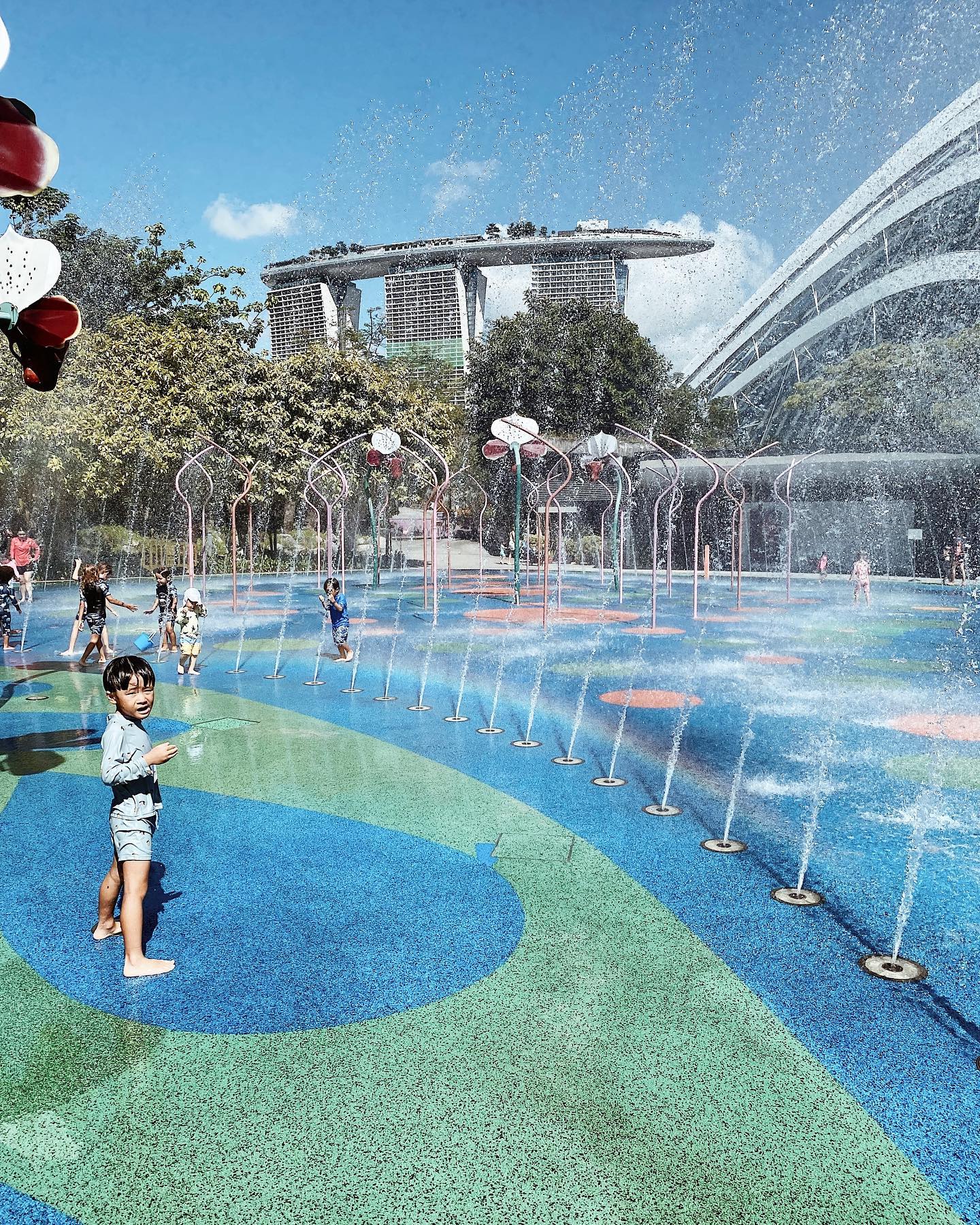
Arrive at Gardens by the Bay between 8–9am. The outdoor grounds are free and the Supertrees are at their most photogenic in the soft morning light. Walk through Supertree Grove and let your toddler run on the lawn — at this hour there is space and the light is gentle. The Children's Garden (open Thursday to Sunday and Public Holidays, 9am–7pm; also open Tuesday–Sunday during school holiday periods) has a free water play zone with fish-shaped fountains set at toddler height. Pack a spare set of clothes and a small towel: your child will get wet.
- Children's Garden hours: Thursday–Sunday and Public Holidays, 9am–7pm (water play closes 6:30pm); Tuesday–Sunday during school holidays
- Entry: Free for all ages
- Note: From March 2026 the entrance has moved — use the new entrance near the Sun Pavilion
- Facilities: Changing rooms, toilets, and a café on site
Midday: Cloud Forest conservatory and lunch at Satay by the Bay
By 10–10:30am, move to the Cloud Forest — a cooled conservatory housing a 35m indoor waterfall and lush mountain vegetation. It is stroller-friendly on the main level, though the upper walkways require carrying your child. Toddlers respond well to the waterfall and the misty air: the temperature drop from outside is immediate and welcome. The Flower Dome next door covers another hour comfortably. After the domes, head to Satay by the Bay, the large open-air hawker centre a short walk away. Satay, chicken rice, laksa, and cold drinks — straightforward food that most toddlers can eat without fuss.
- Two conservatories ticket (2025/2026): From S$28 adult / S$16 child (ages 3–12); children under 3 enter free
- Conservatory hours: 9am–9pm daily (last entry 8:30pm)
- Satay by the Bay hours: 11am–11pm daily
Afternoon: ArtScience Museum FutureWorld
After the hotel nap, take the MRT or a short Grab to Marina Bay Sands and the ArtScience Museum. The permanent FutureWorld exhibition by teamLab is the reason to bring a toddler here: interactive digital installations where light responds to touch, fish swim away from small hands on the floor, and children can draw sea creatures that appear on screen. It is dim, air-conditioned, and designed so that even non-verbal toddlers interact meaningfully with the space. Allow 1–1.5 hours.
Evening: Spectra light show (free)
Spectra is a free nightly light and water show at the Marina Bay Sands waterfront, running at around 8pm and 9pm. It lasts roughly 15 minutes and is visible from the event plaza. For a toddler, coloured lights over water at night is genuinely captivating. It's also free, short, and requires no queuing — a good end to the day before heading back to the hotel.

Day 2 — The Mandai Wildlife Corridor
Mandai is the single best full day out for families with toddlers in Singapore. The Mandai Wildlife Corridor for toddlers means the Singapore Zoo in the morning and River Wonders in the early afternoon — two parks within walking distance of each other, with children under 3 entering both for free. By 3pm, most toddlers are done; that's enough.
Singapore Zoo — early morning is the right call
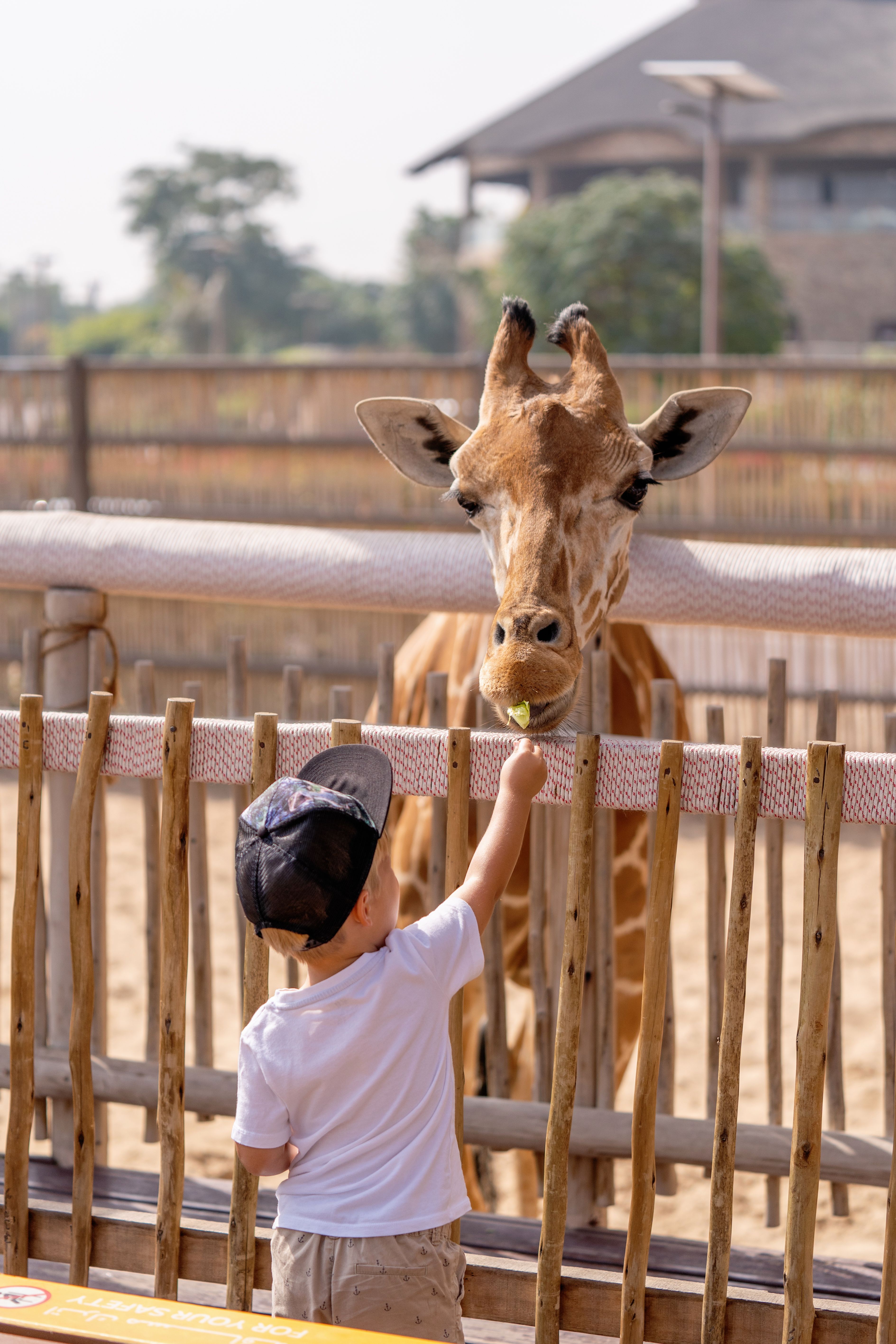
The Zoo opens at 8:30am. Arrive at opening: the animals are active, the air is cooler, and the paths are clear. The free tram that loops the 28-hectare park is a practical way to cover ground with a tired or restless toddler — let them ride while you pick which sections to stop at. KidzWorld, the children's area, has a petting zoo (rabbits, goats, horses) and a wet play zone: pack the swimsuit and the spare clothes again. Animal feeding sessions (giraffes, elephants, white rhinos) happen at scheduled times through the morning — check the day's programme at the entrance.
- Hours: Daily 8:30am–6pm (last entry 5pm)
- Tickets (2025/2026): Adult from S$46; children under 3 free; stroller rental S$15 at entrance, wagons S$18
- Getting there: Take MRT to Khatib station, then the Mandai Khatib shuttle bus (runs from 8am)
River Wonders — shaded, mostly indoors, toddler-ideal
River Wonders is a short walk from the Zoo and is unusually well-suited to toddlers because most of the main walk-through galleries are covered or fully air-conditioned. The giant freshwater aquarium with manatees and giant stingrays is slow-paced and visually absorbing; the giant panda exhibit (home to Kai Kai and Jia Jia) consistently holds toddler attention for longer than you'd expect. The Amazon River Quest boat ride has a height minimum of 1.06m — most toddlers under 3 won't qualify, but the surrounding area has enough to see without it.
- Hours: Daily 10am–7pm
- Tickets: Children under 3 free with a ticketed adult
- Combo tip: Book a 2-park Zoo + River Wonders combo online to save up to S$7 versus buying separately at the gate
Practical notes for Mandai
Bring a stroller even if your toddler sometimes resists it — the distances between exhibits are long enough that a tired 2-year-old will need it by midday. Insect repellent is worth applying before you enter, especially in the Zoo's forested sections. Both parks have multiple dining options including A&W and KFC near the entrances. The Mandai Khatib shuttle runs back to the MRT from late afternoon, or take a Grab if you're leaving with a sleeping child.
Day 3 — Sentosa for Families
Sentosa is Singapore's resort island and offers the highest concentration of family-friendly paid attractions. For toddlers, the best of it is free or low-cost: beaches, water play, and open space. Paid attractions like Universal Studios are mostly designed for children 3 and up. Plan Sentosa as a beach and water morning with one paid activity in the afternoon.
Morning: Palawan Beach and toddler water play
Palawan Beach has shaded spots, calm shallow water close to the shore, and an easy walk from the Sentosa beach station. Arrive before 9:30am for the best light and lowest crowd levels. Bring your own shade if you have a portable beach shelter, as sun umbrellas are not always available for hire. The beach is not for swimming in the open ocean sense — the water is calm and the depth gradual, which is exactly right for a toddler who wants to splash at the edge. Sand play alone can absorb an hour here without any agenda.
Afternoon: Adventure Cove Waterpark
Adventure Cove Waterpark has a dedicated toddler zone with gentle water features and a lazy river that young children can float on with a parent. The high slides and thrill rides are for older kids and adults. For a toddler, 2–3 hours here is the right amount: arrive after your hotel nap at around 3pm, enjoy the toddler pool and lazy river, and leave before dinner.
- Hours: Daily 10am–6pm
- Tickets (2025/2026): Adult from S$43; child (ages 4–12) from S$38; children under 4 free with a ticketed adult
- Tip: Pre-book online — walk-up queues at the entrance are longer
Skyline Luge — age check
The Skyline Luge Sentosa is fun for older toddlers but has a minimum age requirement: riders must be at least 3 years old to ride solo in a parent-and-child cart, and some configurations require a minimum height. If your child is under 3, skip it and bank the time at the beach. If they are 3 or just over, check the current requirements directly with the attraction before booking.
Day 4 — Jewel Changi and East Singapore
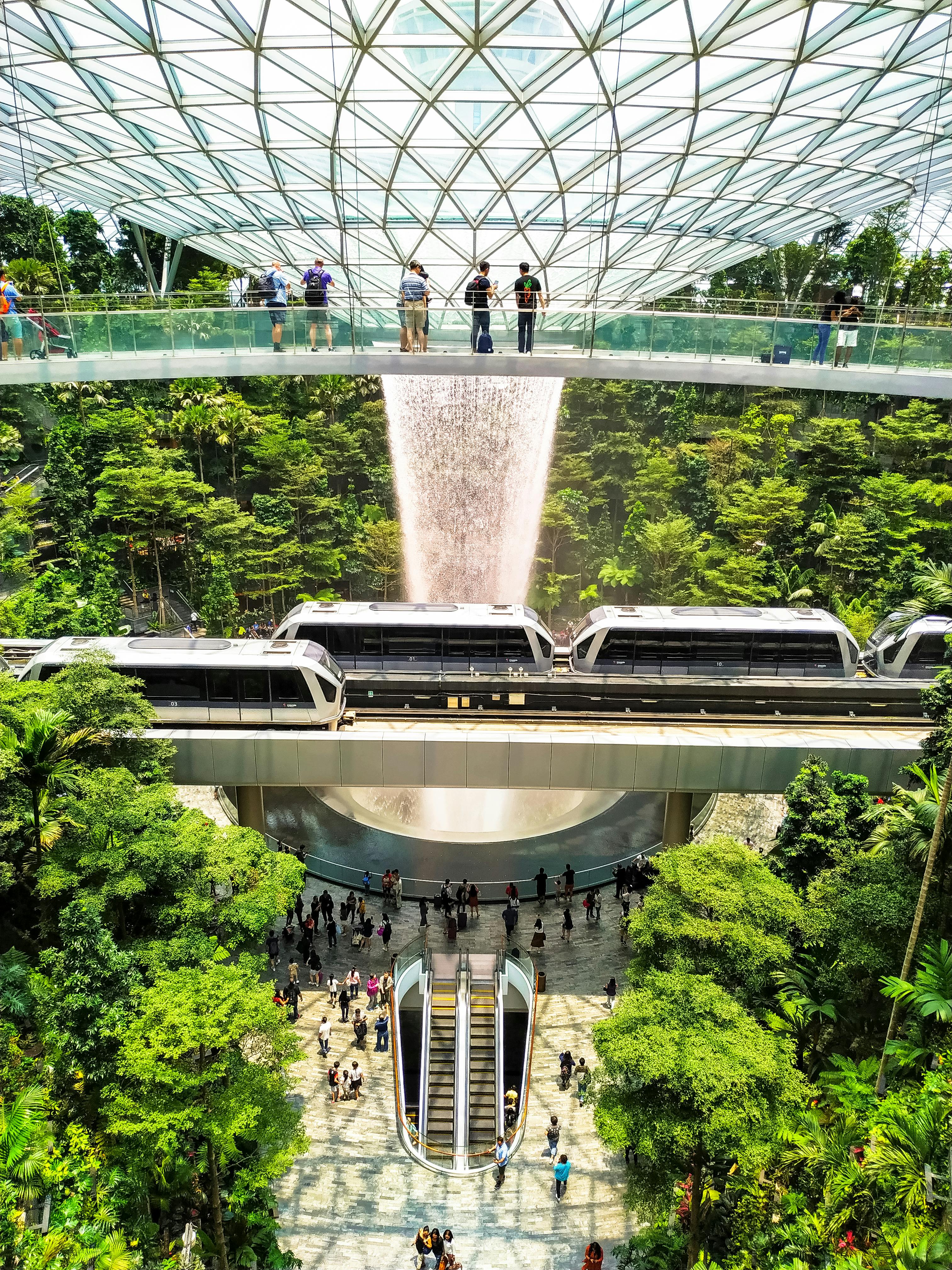
Jewel Changi Airport is a deliberate entry in this itinerary, not a transit afterthought. For toddlers, it is one of the most manageable and genuinely engaging half-days in Singapore: entirely air-conditioned, stroller-friendly throughout, and anchored by the Rain Vortex — the world's largest indoor waterfall — which holds the attention of under-threes with a reliability that surprises most parents.
Morning: Jewel Changi Airport
The Jewel Changi Airport Rain Vortex falls seven storeys through the centre of the building. The viewing areas around it are stroller-accessible and there is enough space to sit and watch without feeling crowded. The Canopy Park on the top level has paid attractions including bouncing nets and walking trails, but the free areas — the greenery, the water feature walkways, the food options — are enough for a toddler morning. Have breakfast at one of the food outlets overlooking the vortex, then let your child walk and explore the indoor garden levels. Allow 2 hours.
Afternoon: Science Centre Singapore
The Science Centre Singapore has a dedicated KidsStop section designed for children aged 18 months to 8 years — soft play, sensory activities, water tables, and hands-on experiments that work for toddlers who are not yet old enough for the main galleries. It is entirely indoors and air-conditioned, with changing facilities and a café. Book KidsStop in advance as capacity is limited and it sells out, especially on weekends.
- Science Centre hours: Tuesday–Sunday, 10am–5pm (closed Mondays unless public holiday)
- KidsStop tickets: From S$16 per child; accompanying adults free
Evening: East Coast Park
If energy allows, East Coast Park is a 15-minute Grab from the Science Centre. The park has wide cycling paths (bike rentals available), playground equipment, and the East Coast Lagoon Food Village — a hawker centre on the water where you can eat satay and fresh seafood while the evening breeze comes in off the strait. It is flat, stroller-friendly, and calm in the late afternoon. Not a must-do, but a good decompression if your toddler needs space to run before bed.
Day 5 (Optional) — Slower Pace and Neighbourhood Picks
If you have a fifth day, use it for the places that reward a slower pace. By day five, your toddler has a rhythm in the city and you know which venues they respond to — lean into that rather than adding a new major attraction.
Jacob Ballas Children's Garden, Singapore Botanic Gardens
The Singapore Botanic Gardens' Jacob Ballas Children's Garden is the most specifically toddler-designed outdoor space in Singapore and entry is free. The garden has water features at toddler height, a suspension bridge scaled to small children, a small farm area, and wide shaded paths through a forest setting. It opens at 8am on Tuesday through Sunday. Arrive early, pack a picnic, and plan to stay 2–3 hours. There is no paid admission for any part of the Children's Garden — it is entirely free.
Bird Paradise
Bird Paradise (Mandai Wildlife Reserve) replaced the old Jurong Bird Park in 2023 and is more stroller-friendly than its predecessor. The walk-in aviaries are open-air but heavily shaded, and the bird density is immediately engaging for toddlers — macaws, flamingos, and large toucans at close range. The tram service included in admission covers the park's main circuit. Children under 3 enter free. It works well as a half-day if you started the morning at the Botanic Gardens.
Chinatown for dinner
Chinatown's food streets are well-lit, lively in the early evening, and have enough hawker food to satisfy any palate. The Maxwell Food Centre is close by and is one of the city's best-known hawker centres — Tian Tian chicken rice, char kway teow, and fresh fruit juice are all straightforward for toddlers to try. Some of the temple-side streets are narrow with uneven paving — a lightweight stroller rather than a frame-heavy model handles this better.
Practical Planning for Toddler Travel in Singapore
The logistics of a Singapore family trip with toddlers are where most parents spend their pre-trip energy — rightly so. These are the details that determine whether the trip runs smoothly or not.
Feeding toddlers at hawker centres
Singapore's hawker centres are some of the most toddler-friendly eating environments in Asia: the food is fast, portions are flexible, high chairs are available at most permanent centres, and the price of failure is low (S$3–6 per dish). The most useful foods for picky toddler eaters are:
- Kaya toast — soft, sweet, familiar; available at most hawker breakfast stalls
- Plain white rice with egg — request this at any Zi Char stall; reliable and unfussy
- Noodles in broth — mee pok (flat noodle soup), fishball noodles, or wonton noodle soup are mild and easy to eat
- Roti prata — the plain version is a flatbread that most toddlers eat without any objection
- Fresh coconut water — available at most centres, hydrating, and a hit with small children
Avoid chilli-heavy dishes (laksa, mee rebus, most Indian curries) for toddlers who haven't been exposed to chilli before — the heat is real. Most stall vendors are used to families and will leave chilli out on request.
Diaper changing and family rooms
Singapore malls uniformly have well-equipped family rooms with changing tables, private nursing areas, and toddler toilets. Major attractions (Singapore Zoo, Gardens by the Bay, Jewel Changi) all have dedicated facilities. MRT stations in newer areas have baby care rooms; older stations have standard toilet facilities with changing ledges. The least reliable changing facilities are in Chinatown and Little India's older shophouse streets — plan accordingly if you're heading into those areas.
What to pack for Singapore with a toddler
- Lightweight, compact stroller — umbrella-fold models work best on the MRT and in narrow conservation areas
- Stroller rain cover — afternoon thunderstorms are common; they arrive fast and pass quickly
- SPF 50 sunscreen — apply before leaving the hotel every morning
- DEET insect repellent — dengue is present in Singapore; apply at outdoor wildlife venues
- Two full changes of clothes per day — water play and hawker centre meals account for most of this
- EZ-Link card or contactless bank card — load S$30–50 for MRT travel; SimplyGo allows contactless payment directly
- Portable fan or cooling towel — for outdoor moments between air-conditioned venues
- Familiar snacks from home — useful for bridging the gap if a meal goes sideways
Reality check: Singapore's heat with a toddler
- Direct sun between 11am and 4pm is harsh — even shaded outdoor areas feel warm
- Toddlers overheat faster than adults; watch for flushed cheeks, reduced energy, and irritability as early signs
- Air-conditioning in Singapore is aggressive indoors — carry a light layer for the conservatories and museums
- Hydration is easy: cold water and coconut water are available everywhere; build in drink stops every 45–60 minutes outdoors
Conclusion
Singapore earns its reputation as one of the easiest cities in Asia to travel with small children. The infrastructure is genuinely built for it — stroller-accessible transport, air-conditioned attractions for the hottest hours, and a concentration of toddler-specific experiences (Mandai, the Children's Garden, the ArtScience Museum's FutureWorld) that hold attention without requiring long walks or waiting. The key to enjoying the city with a toddler is the same regardless of destination: fewer activities per day, respect for the nap window, and outdoor time at the right hours. Do that, and Singapore delivers.
The Travjoy team have curated the top 20 Singapore experiences across categories, vetted after extensive research and reviewed by local experts — so you're choosing from a shortlist rather than starting from scratch. Start planning your Singapore family trip with toddlers on Travjoy Singapore and build the trip around what your family actually needs.

.svg&w=1920&q=75)