



Singapore Heritage Trails: Exploring Peranakan Culture in the City
10 min read
Pratima Alvares
Author
Leisure Travel Expert
SHARE BLOG
TABLE OF CONTENTS
- Key Takeaways
- What Is Peranakan Culture — and Why Does It Matter in Singapore?
- The Peranakan Museum — Singapore's Most Comprehensive Collection
- Katong and Joo Chiat — Walking Singapore's First Heritage Town
Key Takeaways
- Singapore's Peranakan heritage is best experienced across four precincts: the Peranakan Museum on Armenian Street, Katong-Joo Chiat in the east, Emerald Hill near Orchard Road, and Blair Plain south of Chinatown.
- Katong-Joo Chiat, declared Singapore's first Heritage Town in 2011, has the country's best-preserved Peranakan shophouses — particularly the 1920s facades along Koon Seng Road.
- The Peranakan Museum reopened in February 2023 after a four-year renovation, with nine galleries, 800+ artefacts, and three themed floors covering Origins, Home, and Style.
- Nyonya cuisine extends far beyond laksa — kueh, ayam buah keluak, babi pongteh, and Nonya popiah are all part of the Peranakan food trail worth mapping out.
Singapore Peranakan culture — a fusion of Chinese, Malay, and Southeast Asian traditions shaped over centuries of intermarriage and trade — is best explored across four heritage precincts. Start at the Peranakan Museum (39 Armenian Street; SGD 12/~USD 9 for international visitors, free for Singaporeans and PRs), then head east to Katong-Joo Chiat for pastel shophouses and Nyonya food stalls, with optional stops at Emerald Hill's conservation area and The Intan private museum in Joo Chiat (by appointment only).
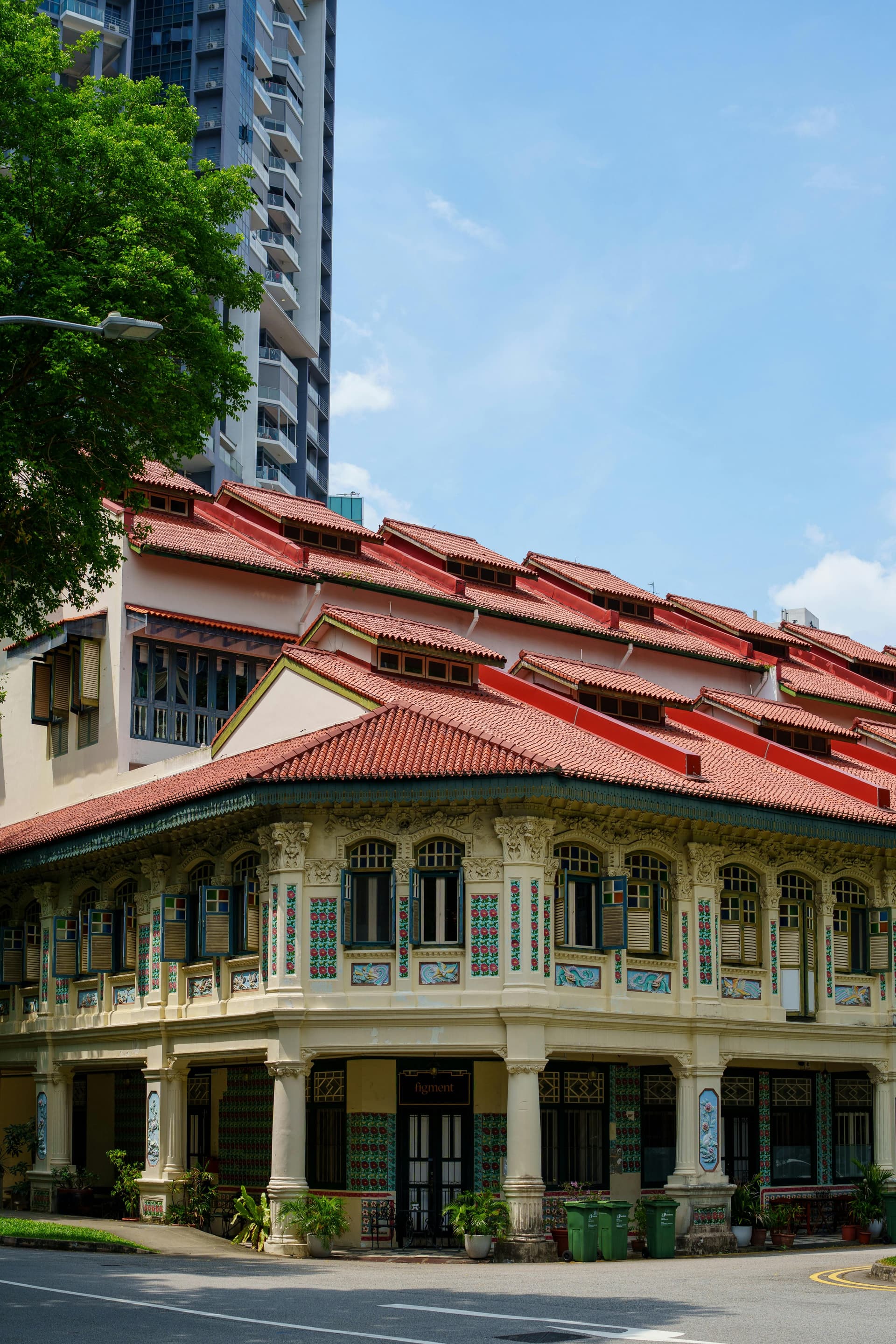
Most visitors to Singapore photograph Marina Bay Sands and queue for chilli crab. But on Koon Seng Road in the eastern neighbourhood of Katong, a row of hand-painted ceramic tiles from the 1920s tells a different story — one of Chinese traders who married into Malay families and built a culture that belongs to neither tradition alone. The Peranakans, also called Straits Chinese, left their mark on Singapore's architecture, cuisine, fashion, and social customs. That mark is still visible today if you know where to look.
The challenge is that Peranakan heritage in Singapore is scattered across several neighbourhoods, each with different visiting logistics. Most travel guides cover only one precinct at a time — typically Katong or the Peranakan Museum — and leave out the connecting details that make a full-day heritage trail possible.
This guide maps out four Peranakan precincts, connects them with practical MRT directions, and includes the food stops, museum details, and architectural features worth slowing down for. Whether you have half a day or a full weekend, you will walk away with a clearer picture of one of Southeast Asia's most distinctive living cultures.
What Is Peranakan Culture — and Why Does It Matter in Singapore?
Peranakan culture is a hybrid identity born from centuries of Chinese migration into the Malay Archipelago. The community traces its roots to Chinese traders — mainly from Fujian and Guangdong provinces — who settled in port cities like Malacca, Penang, and Singapore between the 15th and 17th centuries and married local Malay and Indonesian women. The resulting culture blended Chinese ancestral customs with Malay language, cooking techniques, and dress, creating something distinct from either origin.
Baba and Nyonya — the Community's Social Structure
Within Peranakan families, men are called Babas and women are called Nyonyas. The word "Peranakan" itself comes from the Malay term "anak," meaning "child," and refers to someone locally born with mixed heritage. Nyonyas were historically the cultural custodians — responsible for passing down recipes, beadwork techniques, and ceremonial practices to the next generation. Much of what visitors encounter today in museums and heritage houses — the intricate beaded slippers (kasut manek), the layered kueh, the porcelain with phoenix and peony motifs — reflects the Nyonya tradition of domestic artistry.
Peranakan social life also revolved around elaborate rituals. Weddings could span twelve days and involved specific clothing, food, and furniture for each stage. Religious practice drew from Buddhism, Taoism, Confucianism, and sometimes Christianity, producing a layered spiritual identity that mirrored the community's broader cultural blending.
Why Singapore Is the Best Place to Experience Peranakan Heritage Today
Singapore has more concentrated, accessible Peranakan heritage sites than anywhere else in Southeast Asia. The Peranakan Museum on Armenian Street is the only museum in the world dedicated entirely to Peranakan culture. Katong-Joo Chiat was declared Singapore's first Heritage Town in 2011, with government-backed conservation protecting its shophouses and streetscape. And unlike Malacca or Penang, where Peranakan sites are spread across larger areas, Singapore's compact geography means you can visit the museum, walk a heritage trail, eat Nyonya food, and browse a private home museum in a single day — all connected by MRT.
The Peranakan Museum — Singapore's Most Comprehensive Collection
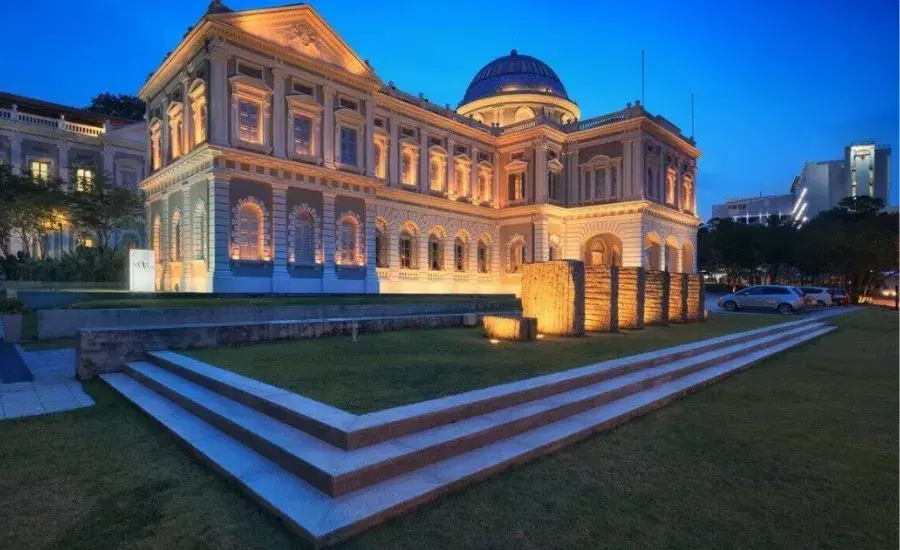
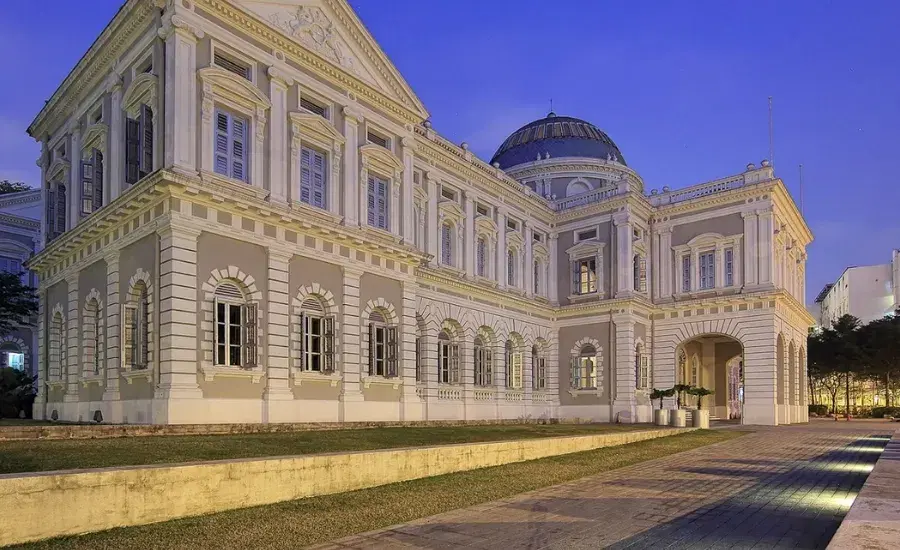
The Peranakan Museum at 39 Armenian Street is the starting point for understanding Peranakan identity in depth. Housed in the former Tao Nan School building — a colonial-era Chinese school — the museum reopened in February 2023 after nearly four years of renovation. It now spans three floors, nine galleries, and over 800 artefacts, many of which were donated by Peranakan families.
What to See Across Three Floors
The museum is organised around three themes. The first floor covers Origins — how trade, migration, and intermarriage created Peranakan communities across Singapore, Malacca, Penang, and wider Southeast Asia. Interactive displays and family photographs trace lineages and explain how the community defined itself across generations.
The second floor focuses on Home, showcasing domestic life through porcelain, furniture, and dining ware. This is where visitors encounter some of the museum's most striking pieces — Nyonya porcelain with floral motifs in turquoise and pink, antique tiffin carriers, and a recreated dining setting with the world's most significant collection of Nonya crockery.
The third floor is dedicated to Style — fashion, beadwork, and personal adornment. Gallery displays resemble a walk-in wardrobe, with traditional sarong kebayas, beaded slippers, and jewellery arranged alongside modern interpretations. An embroidered face mask featuring Peranakan beadwork connects heritage craft to contemporary design.
Visiting Details
- Hours: Daily 10am–7pm; Fridays until 9pm
- Tickets: SGD 12 (~USD 9) for international visitors; SGD 8 for students; free for children under 6; free for Singapore citizens and PRs
- Guided tours: Conducted daily by volunteer docents in English, Mandarin, and Japanese
- Time needed: 2–3 hours for the full nine galleries
- Tip: Weekday mornings before lunchtime are quietest. Friday evenings combine the museum's extended hours with the atmospheric lighting of the surrounding Civic District.
Current and Rotating Exhibitions
Beyond the permanent galleries, the museum runs special exhibitions that deepen specific aspects of Peranakan material culture. Recent shows have included Batik Nyonyas, tracing three generations of batik artistry and entrepreneurship in Indonesia and Singapore. Check the museum's programme page before visiting — the special exhibitions often include artefacts on loan from private collections that are otherwise inaccessible to the public.
Pairing with Nearby Museums
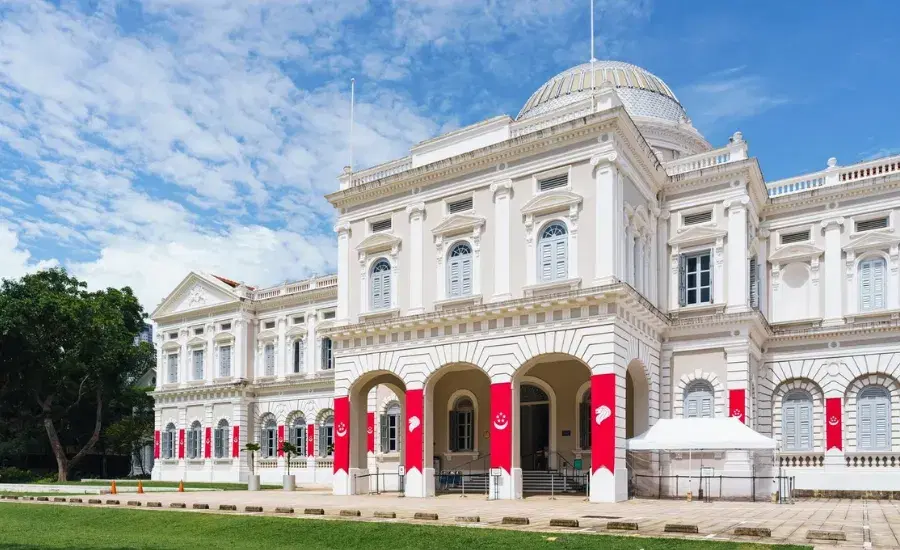
The Peranakan Museum sits in Singapore's Civic District, within walking distance of two other institutions worth combining into a museum morning. The Asian Civilisations Museum on the Singapore River provides broader context on the trade routes and cultural exchanges that shaped Peranakan identity. The National Museum of Singapore covers the island's full history, with galleries on the colonial period and postwar transformation that contextualise the Peranakan story within Singapore's national narrative. All three are reachable within a 10-minute walk of Bras Basah MRT station.
Katong and Joo Chiat — Walking Singapore's First Heritage Town
If the Peranakan Museum explains the culture, Katong-Joo Chiat lets you walk through it. This eastern neighbourhood — once a coastal retreat for wealthy Peranakan families — has Singapore's densest concentration of preserved shophouses, Nyonya food establishments, and living heritage businesses. The area was designated Singapore's first Heritage Town in 2011, and its streetscape rewards slow, on-foot exploration.
Koon Seng Road — What to Look For
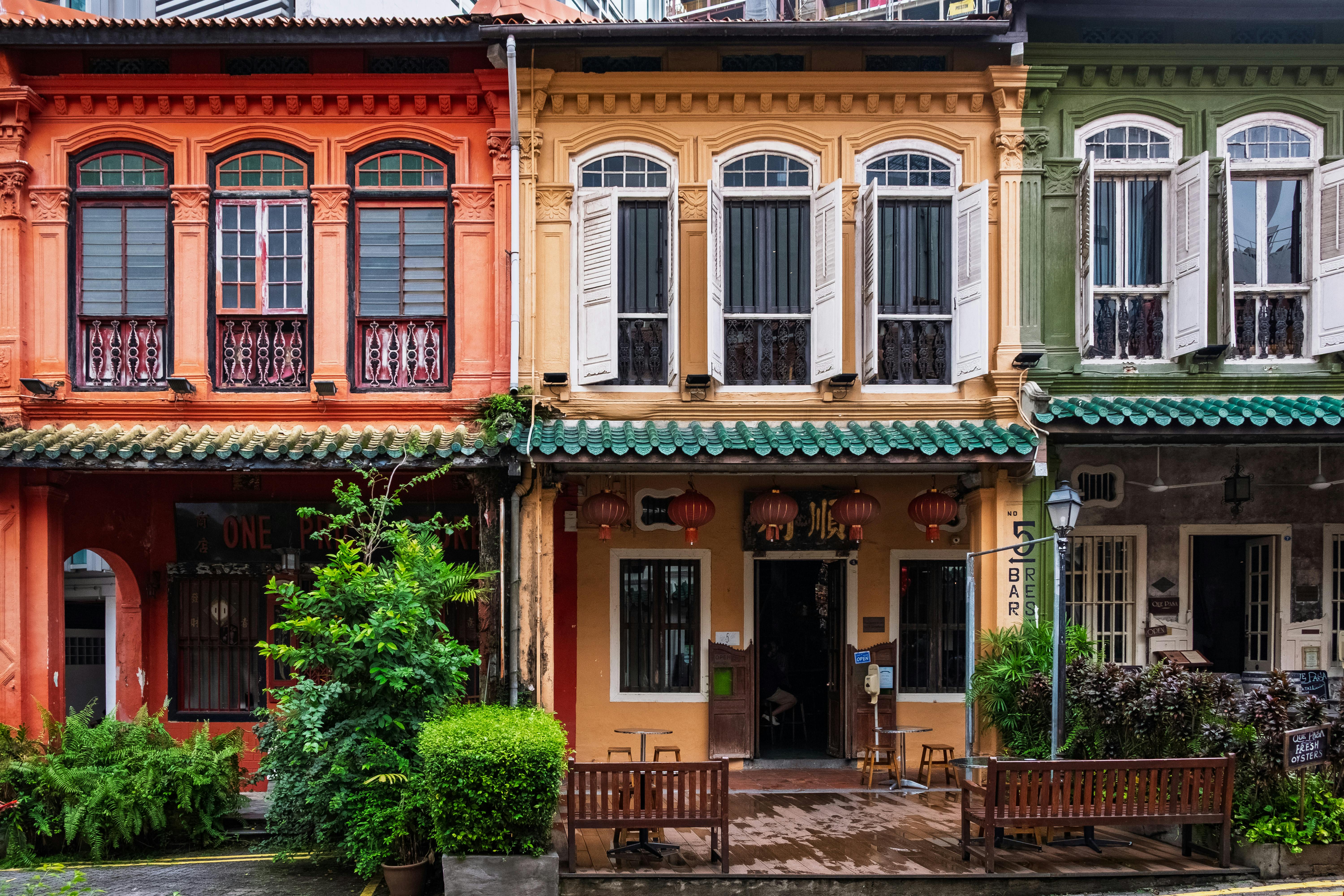
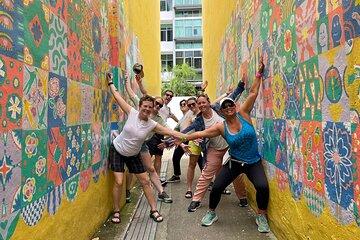
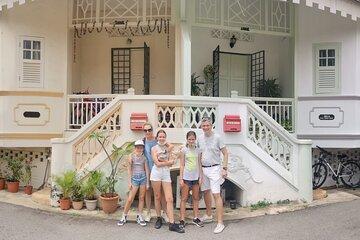
Start at Koon Seng Road, the most photographed Peranakan street in Singapore. The shophouses here were originally built in the 1920s, and their facades have been restored to showcase the defining features of Peranakan residential architecture. Look for colourful ceramic tiles — typically featuring flowers, birds, or Chinese motifs like dragons and deer. The hand-painted designs were status symbols; a well-decorated shophouse signalled prosperity.
Other features to spot include the pintu pagar — half-height swinging wooden doors at the entrance that allow ventilation while maintaining privacy — and the five-foot ways, the covered walkways that connect shophouses along the street. Many houses also display family mottos or auspicious characters carved into the plasterwork above the entrance.
Peranakan Architecture at a Glance
- Ceramic tiles: Hand-painted floral and animal motifs; original tiles from the early 20th century are now collectors' items
- Pintu pagar: Half-height swinging doors for ventilation and privacy — some are gilded with ornate carvings
- Five-foot ways: Covered verandahs linking shophouses, mandated during the colonial era
- Chinese Baroque plasterwork: Fluted columns, arches, and stucco work blending European and Chinese decorative elements
- Narrow frontage, deep interior: Shophouses are typically 4–6 metres wide but extend 30–40 metres back, with internal courtyards for light and air
Kim Choo Kueh Chang — Heritage in Every Bite Since 1945
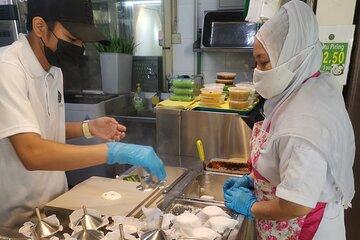
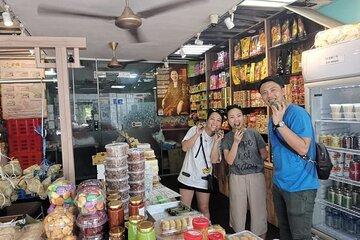
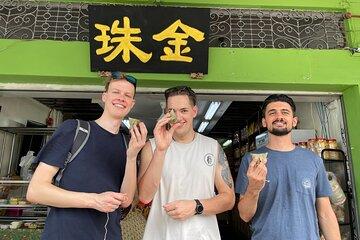
On East Coast Road, Kim Choo Kueh Chang has been making traditional Nyonya rice dumplings since 1945. The shop also sells kueh — colourful steamed cakes layered with coconut milk, pandan, and glutinous rice — alongside batik fabrics and Peranakan accessories. It functions as part bakery, part cultural artefact, and is a reliable first stop for tasting Peranakan flavours outside of a restaurant setting.
The Intan — A Private Home Museum with 5,000+ Artefacts
Tucked into a terrace house on a residential street in Joo Chiat, The Intan is a private Peranakan home museum founded and assembled by collector Alvin Yapp. The collection includes over 5,000 objects — beaded slippers, tiffin carriers, embroidered textiles, and porcelain — displayed not in gallery cases but throughout a functioning home. Visits are by appointment only and include a personal tour by Yapp, typically followed by traditional Peranakan tea and kueh. The Intan has been featured on CNN Travel and National Geographic and won Best Overall Experience in Singapore's inaugural Museum Roundtable Awards.
- Booking: Appointment required — book through The Intan's website
- Format: Guided tour (approximately 1 hour) with tea session; customised options include beading workshops, tile colouring, and full Peranakan dinner experiences
- Location: Joo Chiat, accessible from Paya Lebar MRT (East-West Line, exit A)
A Self-Guided Walking Route Through Katong-Joo Chiat
Alight at Paya Lebar MRT (Exit A) and walk south along Joo Chiat Road. The first stretch passes pre-war shophouses interspersed with trendy cafés and textile shops. Turn right onto Koon Seng Road for the signature Peranakan facades. Continue south to East Coast Road, where Kim Choo Kueh Chang, 328 Katong Laksa, and several Peranakan restaurants cluster within a few blocks. If you are using the Thomson-East Coast Line, Marine Parade MRT brings you even closer to the Katong end of the trail.
The full walk takes 60–90 minutes at a comfortable pace, longer if you stop for food or visit The Intan. Mornings before 10am are best for photography — the light is softer and the streets are quieter before weekend brunch crowds arrive.





Emerald Hill and Blair Plain — Peranakan Heritage Off the Beaten Track
Katong-Joo Chiat draws the most heritage visitors, but two other precincts offer quieter, equally rewarding encounters with Peranakan culture in Singapore. Emerald Hill sits just steps from Orchard Road's shopping malls, while Blair Plain — south of Chinatown — preserves a row of 1890s Peranakan townhouses on Neil Road.
Emerald Hill — Peranakan Shophouses Steps from Orchard Road
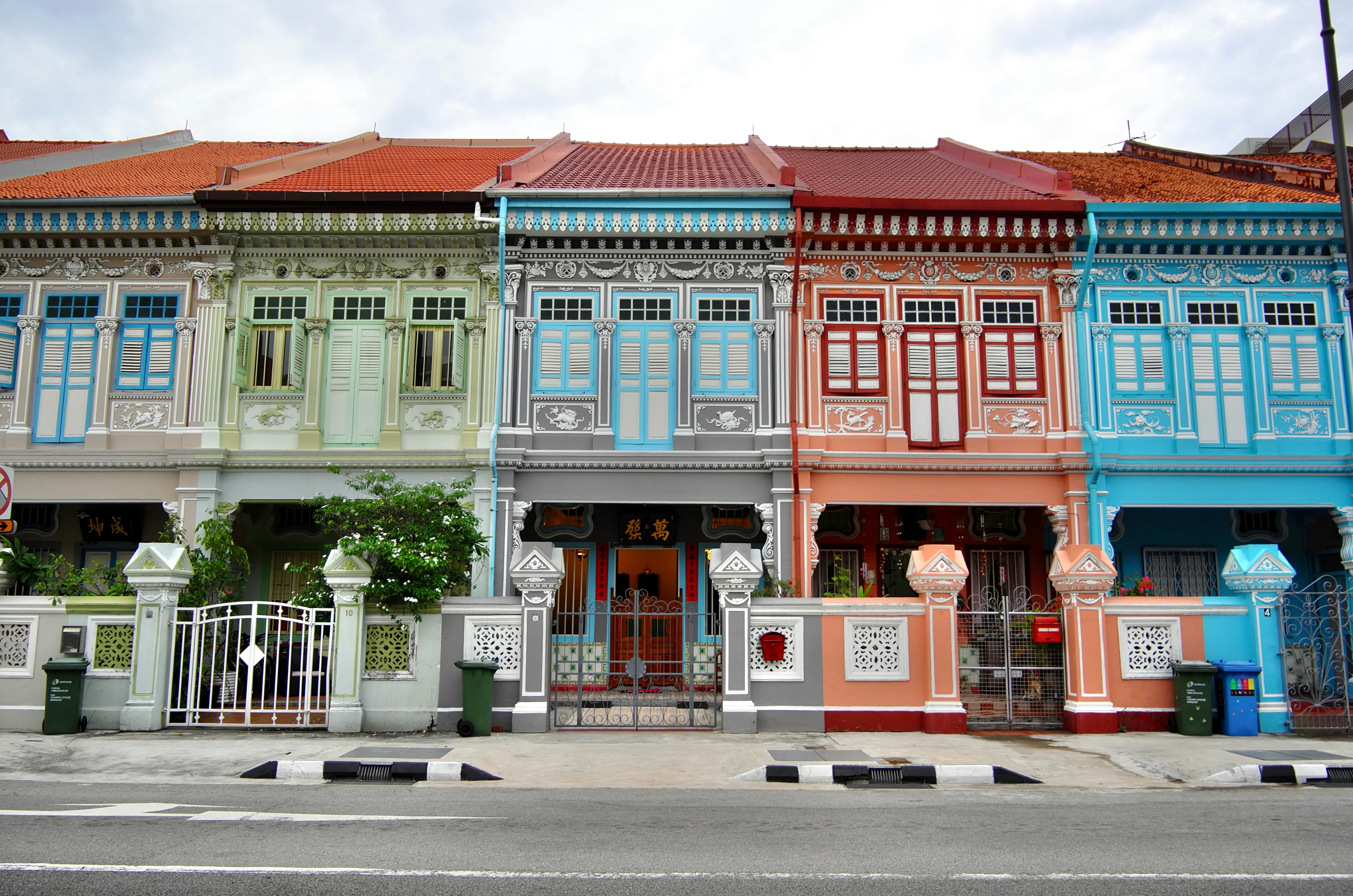
Walk through the entrance at Peranakan Place on Orchard Road and the commercial noise drops away. Emerald Hill Road is a conservation area — designated in 1981, making it one of the earliest heritage protections in Singapore — lined with two- and three-storey shophouses built between 1901 and the 1950s. By the 1930s, a large proportion of these homes belonged to wealthy Peranakan families, and the Chinese Baroque architectural details reflect that era of prosperity.
The shophouses retain their original pintu pagar doors, coloured ceramic wall tiles, and ornate plasterwork with fluted columns and neoclassical arches. Small metal plaques along the road offer bite-sized historical facts about individual buildings. Unlike Koon Seng Road, some ground-floor units here have been converted into bars and restaurants — Alleybar (at No. 2), No. 5 Emerald Hill cocktail bar, and Que Pasa wine bar occupy heritage shophouses, making Emerald Hill a strong option for an evening heritage walk combined with a drink.
A notable landmark is No. 37, the former site of Singapore Chinese Girls' School, founded in 1899 by Dr Lim Boon Keng — a prominent Peranakan social reformer who was among the earliest residents of Emerald Hill. The school has since relocated, but the building remains a significant marker of Peranakan contributions to education.
NUS Baba House on Neil Road
A short MRT ride south, the NUS Baba House at 157 Neil Road is a three-storey Peranakan townhouse built in the 1890s and restored to reflect domestic life during the 1920s — considered the golden era of Peranakan culture in Singapore. Approximately 70% of the furniture belonged to the original Wee family estate, with the remainder acquired from Peranakan families in Singapore and Malacca. The house was donated to the National University of Singapore and opened to the public in 2008.
The first two storeys showcase a Peranakan domestic interior, including lavishly carved antique furniture, ancestral altars, and kitchen implements. The third storey hosts rotating exhibitions with modern artistic interpretations of Peranakan identity. Note that Baba House is currently closed for renovations and is expected to reopen in 2027. In the meantime, the surrounding Blair Plain neighbourhood — with its own row of pre-war shophouses on Everton Road and Neil Road — is still worth exploring on foot for its architecture and five-foot ways.
Architectural Details That Define Peranakan Buildings
Across all four precincts, certain design elements recur. Peranakan shophouses are distinctive for their narrow frontages (typically 4–6 metres) and deep interiors (up to 40 metres), a layout that maximises street-facing real estate while creating internal courtyards for light and ventilation. The facades combine Chinese decorative motifs — dragons, phoenixes, peonies — with European neoclassical elements like Corinthian columns and Palladian arches, producing the style often described as Chinese Baroque.
The ceramic tiles are perhaps the most recognisable feature. Original hand-painted tiles from the early 20th century have become valuable collectors' items — a single antique tile can cost hundreds of dollars. In Chinatown, the Peranakan Tiles Gallery sells salvaged tiles rescued from demolished buildings, offering a tangible connection to vanishing heritage.
Eating Your Way Through Peranakan Heritage — A Nyonya Food Guide
Peranakan cuisine is where Chinese ingredients meet Malay spice pastes and coconut milk, producing dishes that are richer and more complex than either tradition alone. A food trail through Singapore's Peranakan precincts is as much a heritage experience as visiting a museum — every dish reflects the same cultural blending visible in the architecture and craft.
Katong Laksa — Singapore's Iconic Peranakan Dish
Laksa is the dish most visitors associate with Peranakan food, and Katong is the neighbourhood most associated with laksa. The Katong version uses thick rice vermicelli in a spicy, creamy coconut broth with prawns, cockles, and fish cake. The noodles are traditionally cut short enough to eat with a spoon — no chopsticks required.
328 Katong Laksa on East Coast Road is among the best-known purveyors. A bowl costs approximately SGD 6–8 (~USD 4.50–6). Expect queues during lunch on weekends, but the line moves quickly. For a less crowded alternative, several hawker stalls in the nearby Marine Parade area serve comparable versions.
Beyond Laksa — the Full Nyonya Repertoire
Restricting a Peranakan food trail to laksa alone misses the range of Nyonya cooking. These dishes are worth seeking out:
- Ayam buah keluak: Chicken braised with black nuts from the kepayang tree — the nuts have a dark, earthy, almost truffle-like flavour. Considered one of the most distinctive Peranakan dishes and a reliable test of a kitchen's heritage credentials.
- Babi pongteh: Pork belly slow-braised with fermented soybean paste (tauchu), garlic, and dark soy. Comfort food at its most concentrated.
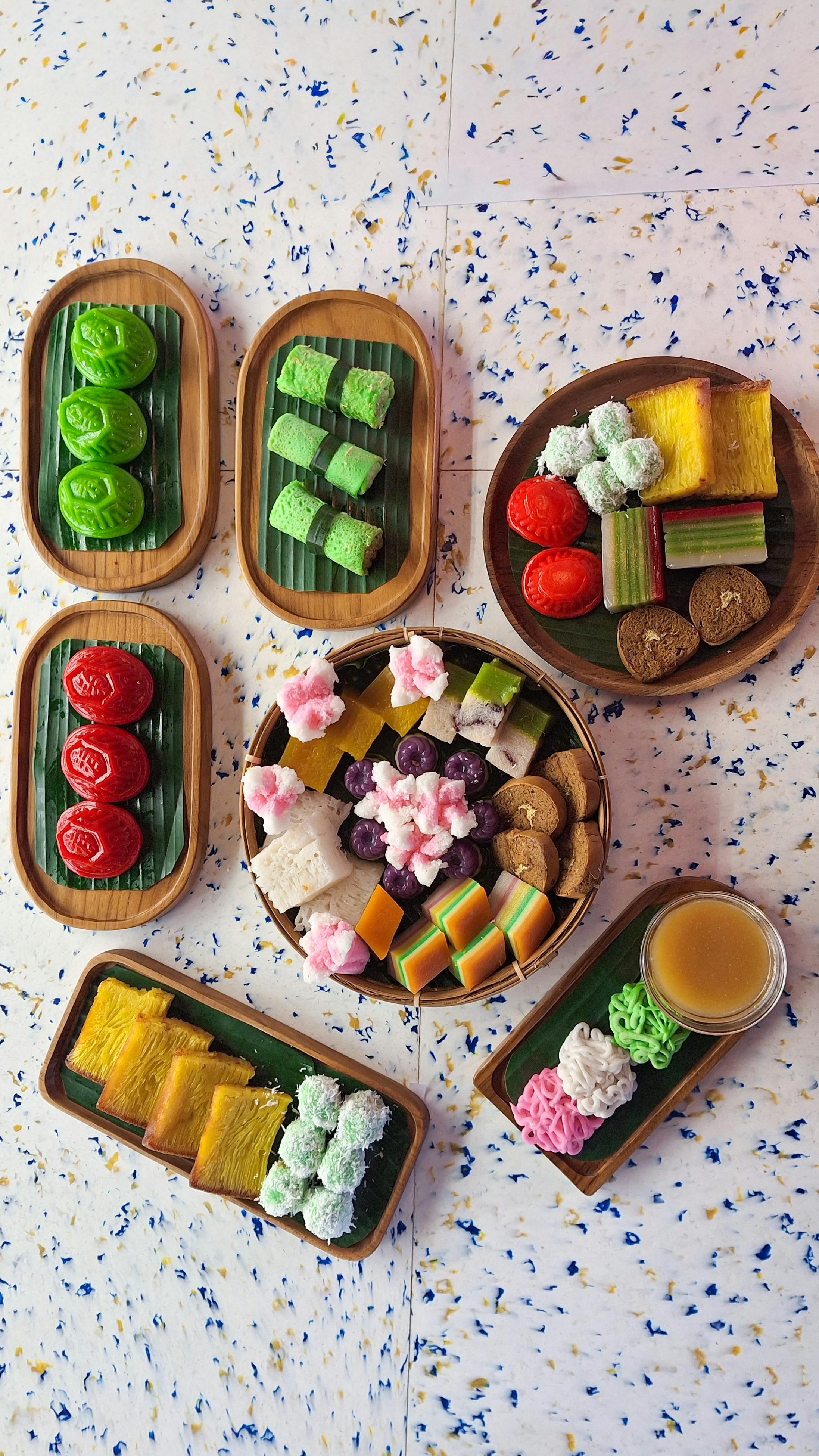
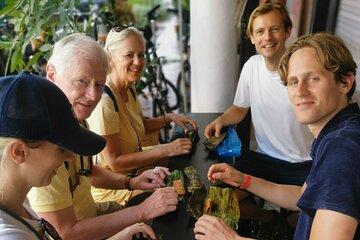
- Kueh: Steamed and baked cakes in layers of coconut milk, pandan, and glutinous rice. Varieties include ondeh-ondeh (pandan balls filled with melted palm sugar), kueh salat (blue pea and coconut rice), and ang ku kueh (red tortoise-shaped cakes with peanut or mung bean filling).
- Nonya popiah: Fresh spring rolls filled with jicama, prawn, egg, and a sweet-savoury sauce — lighter and more fragrant than fried versions.
- Otak-otak: Spiced fish paste grilled in banana leaves, smoky and slightly sweet.
Where to Find Sit-Down Peranakan Dining
For a full Nyonya meal rather than hawker-style snacking, three restaurants stand out. Candlenut, in the Dempsey Hill precinct, holds a Michelin star and reinterprets Peranakan recipes with modern technique — expect refined versions of buah keluak and itek sio (duck braised in tamarind). True Blue Cuisine on Armenian Street (near the Peranakan Museum) serves classic, home-style Nyonya dishes in a shophouse decorated with antique Peranakan porcelain. Violet Oon Singapore, with locations at National Gallery and ION Orchard, offers accessible Peranakan fare in elegant settings.
Prices for a sit-down Peranakan meal at these restaurants typically range from SGD 40–80 (~USD 30–60) per person, depending on the number of dishes ordered. All three are Travjoy-approved options that reflect the care and local expertise behind Peranakan culinary traditions — the kind of restaurant where booking ahead saves you a wasted trip.
Practical Tips for Planning Your Peranakan Heritage Trail
Connecting Singapore's four Peranakan precincts is simple once you know the MRT links. Here is how to structure a full-day or half-day Peranakan heritage trail in Singapore, with the transit connections and timing to make it work.
How to Connect the Precincts by MRT
- Peranakan Museum / Civic District: Bras Basah MRT (Circle Line) or City Hall MRT (East-West / North-South Lines). Walk 5 minutes to 39 Armenian Street.
- Katong-Joo Chiat: Paya Lebar MRT (East-West / Circle Lines, Exit A) for the Joo Chiat Road end. Marine Parade MRT (Thomson-East Coast Line) for the Katong / East Coast Road end. The two stations are roughly 15 minutes apart on foot.
- Emerald Hill: Somerset MRT (North-South Line). Walk 3 minutes to the Peranakan Place entrance on Orchard Road.
- Blair Plain / NUS Baba House: Outram Park MRT (East-West / North-East / Thomson-East Coast Lines). Walk 10 minutes south to Neil Road.
Suggested Day Plan
Start at the Peranakan Museum when it opens at 10am — allow 2–2.5 hours. Take the East-West Line from City Hall to Paya Lebar (15 minutes) for lunch at 328 Katong Laksa and a walk through Joo Chiat and Koon Seng Road. If you have booked The Intan, schedule your visit for early afternoon. End the day at Emerald Hill (Somerset MRT) for an evening walk and a drink at one of the heritage bars. Budget SGD 30–50 (~USD 22–37) for the day excluding meals, covering museum entry and MRT fares.
Best Time to Walk the Trails
Singapore's equatorial climate means heat and humidity are constants. Walk the outdoor precincts (Katong, Emerald Hill) in the morning before 10am or after 4pm when the sun is lower. Midday hours are best spent inside the Peranakan Museum or over a long Nyonya lunch. Carry water. An umbrella handles both rain showers and sun — afternoon downpours are common and usually last 30–60 minutes.
Combining Peranakan Heritage with Nearby Attractions
The Peranakan precincts connect naturally to other heritage neighbourhoods. From Katong, East Coast Park is a 10-minute walk — useful if you want to cool off after a heritage walk. From Emerald Hill, the rest of Orchard Road is right there for shopping. From the Civic District, Kampong Glam is a 15-minute walk east, offering a parallel heritage experience focused on Malay and Arab culture — including the Sultan Mosque and Haji Lane's street art. And the Peranakan Museum's Armenian Street location is a 5-minute walk from Fort Canning Park, which adds a colonial-era and World War II history layer to your day.
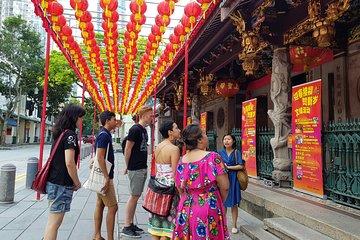
For visitors who prefer structured heritage tours in Singapore, guided walking tours of the Katong-Joo Chiat precinct run multiple days per week and typically include costume fitting, food tastings, and a visit to a private Peranakan mansion. These tours last approximately 2 hours and start from around SGD 50–80 (~USD 37–60) per person.
Plan Your Singapore Heritage Trail
Peranakan culture is one of Singapore's most distinctive heritage stories — a centuries-old blend of Chinese and Malay traditions visible in the ceramic tiles on a Koon Seng Road shophouse, the layered spices of a bowl of laksa, and the beaded slippers behind glass at the Peranakan Museum. Unlike many heritage narratives that exist mainly in museums, this one is still alive in working kitchens, family businesses, and residential neighbourhoods.
Four precincts, each reachable by MRT, give you four different angles on the same culture. The museum provides depth, Katong-Joo Chiat provides atmosphere, Emerald Hill provides architectural detail, and the food trail ties it all together. A full day covers the essentials; a return visit lets you go deeper — perhaps with a booked session at The Intan or a Michelin-starred Nyonya dinner at Candlenut.
Start planning your Singapore heritage trip on Travjoy, where the activities, tours, and experiences have been researched and approved by local experts — so you spend your time exploring Peranakan shophouses instead of second-guessing your itinerary.



.svg&w=1920&q=75)