



Singapore Heritage Shophouses: Neighbourhoods to Explore
19 min read

Author
SHARE BLOG
TABLE OF CONTENTS
- Singapore has over 6,500 conserved shophouses spread across more than 10 historic districts — each with a distinct ethnic character and architectural style
- Shophouses follow six recognised styles, from the spare Early style (1840s) to ornate Late/Baroque to streamlined Art Deco — knowing the difference changes how you see each neighbourhood
- Chinatown is the largest heritage precinct with four sub-districts; Joo Chiat is Singapore's only designated heritage town
- Most neighbourhoods are MRT-accessible and walkable in 1–2 hours each — a half-day covers Chinatown, a full day adds Kampong Glam and Tiong Bahru
- Early mornings (before 10am) are the best time to walk — soft light, cooler air, and streets that belong to you
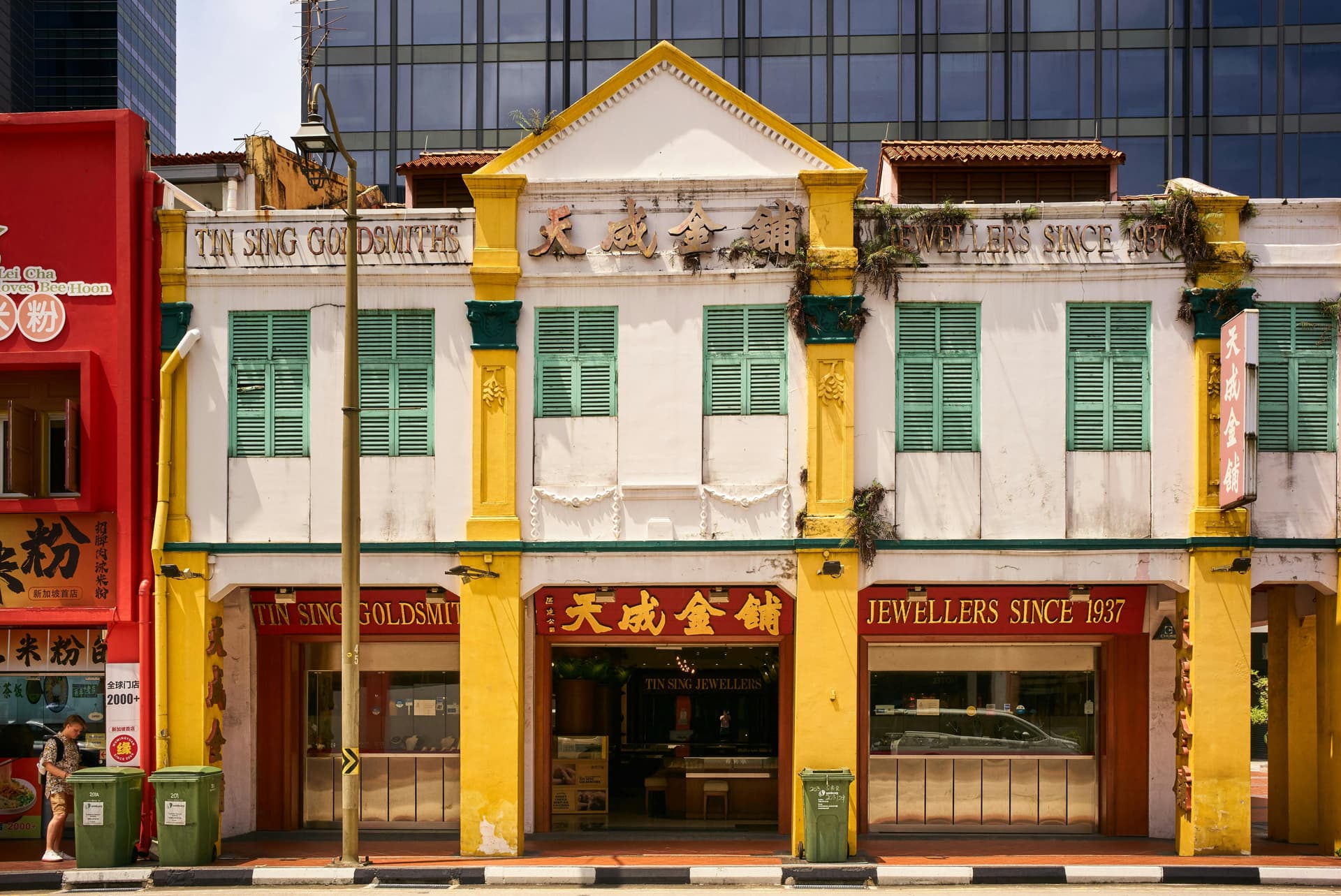
Singapore's heritage shophouse neighbourhoods are one of the few places in Asia where you can walk past a building and read four centuries of history in a single facade — Malay timber fretwork, Chinese porcelain mosaics, Portuguese shutters, and a covered walkway mandated by Stamford Raffles in 1822, all fused into one narrow structure. These weren't designed to be museums. They were homes, warehouses, clan halls, and medicine shops — and in many cases, they still are, just with different tenants.
Most visitors spend half a day in Chinatown and move on. That's a reasonable start, but it misses Joo Chiat's candy-pink Peranakan rows, Ann Siang Hill's cocktail bars in original interiors, Tiong Bahru's Art Deco curves, and the wild eclectic facades of Petain Road in Little India. Each neighbourhood carries a different cultural signature, a different era of construction, and a different texture underfoot on the five-foot way.
This guide covers every major shophouse neighbourhood worth your time — what makes each one distinct, which architectural details to look for, and how to plan your days across them without doubling back or burning out in the heat.
What Is a Singapore Shophouse — and Why Does It Matter
A shophouse is exactly what it sounds like: a narrow, two- or three-storey building where commerce happened on the ground floor and the family lived above. What made Singapore's version distinctive was the mandatory five-foot way — a covered pedestrian walkway running continuously along the ground floor, sheltering pedestrians from equatorial rain and heat. Stamford Raffles specified it in his 1822 town plan, and it became the defining element of the Singapore streetscape.
The Five-Foot Way and What It Tells You
The five-foot way is more than a walkway. It's a social corridor. In the shophouse era, it was where street vendors set up, where families sat in the evenings, and where neighbours from different ethnic groups shared the same strip of shade. Today, many have been absorbed into restaurant seating or boutique frontages — but the covered rhythm of the space remains. When you walk a shophouse street, you're walking a design that's been continuous for 200 years.
Look down as you walk: traditional five-foot way floors are finished in cement terrazzo, clay tiles, granite slabs, or mosaic — not the ceramic tiles you'd see in modern buildings. The material often matches the decorative tiles on the shophouse facade above it, which tells you the building is well-conserved.
Six Architectural Styles — A Traveller's Decoder
The Urban Redevelopment Authority classifies Singapore's shophouses into six styles, built between roughly 1840 and 1960. You don't need to memorise them all, but knowing a few helps you see the differences between neighbourhoods rather than experiencing them as the same blur of old buildings.
- Early Style (1840s–1900): Spare and functional — two storeys, timber jalousie windows, clay-tiled roof. Found on Telok Ayer Street and parts of Chinatown
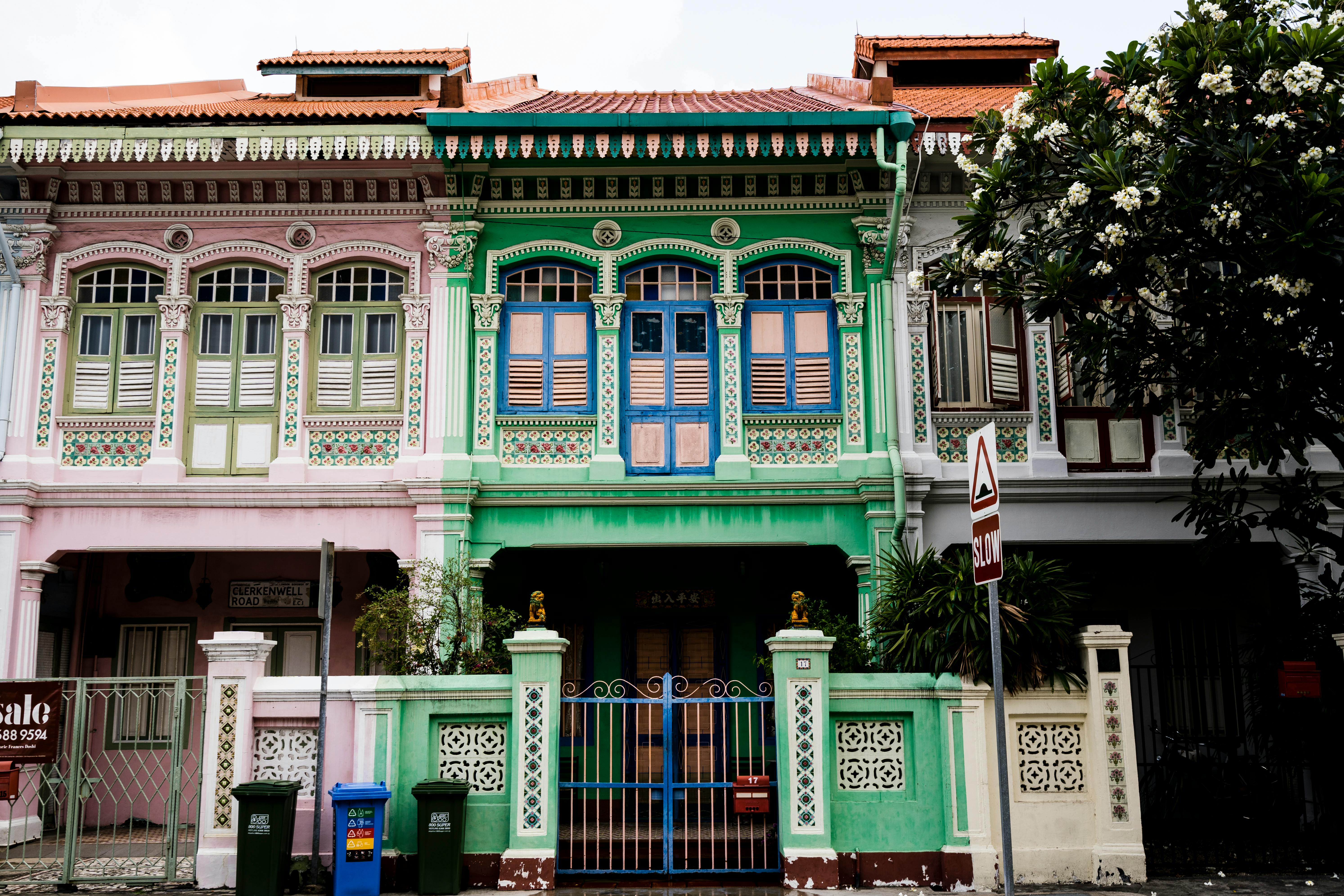
- Late Style / Chinese Baroque (1900–1940): The most ornate — bold colours, Peranakan ceramic tiles, jian nian mosaics, decorative plasterwork, floral motifs. This is what you see on Koon Seng Road in Joo Chiat
- Art Deco Style (1930s–1960): Streamlined and symmetrical — geometric motifs, arched keystones, sunburst details, terrazzo floors. Tiong Bahru is the best surviving example in Singapore
- Modern Style (1950s–1960): Post-war and functional — concrete walls, flat roofs, steel windows, thin ventilation fins. Less decorative, but historically significant
The First and Second Transitional styles sit between these periods, blending elements as architectural fashions shifted. If you see a shophouse with glass panels in the timber shutters and a taller than usual ground floor, you're probably looking at a transitional building.
How URA Conservation Changed the City
Singapore's relationship with its shophouses wasn't always preservationist. Through the 1970s and early 1980s, urban redevelopment swept away large numbers of pre-war buildings in the name of economic progress. The shift came gradually — state-owned shophouses on Murray Street were restored in the late 1970s, Emerald Hill Road was pedestrianised in 1981, and the URA's Conservation Master Plan launched in 1986 changed the trajectory permanently.
Today, over 6,500 shophouses across more than 10 conservation districts are protected. The URA's conservation guidelines prioritise facade retention — interiors can be adapted for modern use, but the external character of each building must be maintained. That's why you can walk into a shophouse that looks like it belongs to 1910 and find a Japanese restaurant or a co-working space inside. The shell stays; the life inside changes.
Chinatown — Singapore's Largest Heritage Shophouse Precinct
Chinatown is the starting point for most visitors, and rightly so — it's the largest and most architecturally diverse heritage shophouse precinct in Singapore, covering four distinct sub-districts. Each has a different street character, a different density of conservation, and a different mix of what's inside the shophouses today.
The Four Sub-Districts: What's Different in Each
- Telok Ayer: The oldest settlement, where Hokkien immigrants first landed. Some of Singapore's earliest shophouses — simple, spare, Early Style — sit along Telok Ayer Street alongside clan temples and heritage shrines. The Thian Hock Keng Temple (built 1839) is the anchor
- Kreta Ayer: The cultural heart of Chinatown — Pagoda Street, Mosque Street, and Trengganu Street are here. Late Style shophouses dominate, with decorated facades and ground floors now occupied by souvenir shops, tea houses, and local food stalls
- Bukit Pasoh: Quieter and more residential in feel. Keong Saik Road and Neil Road are the main draws — where early-morning coffee shops share blocks with boutique bars that open from 6pm. The Baba House at 157 Neil Road, painted electric blue and decorated with jian nian phoenixes, is one of Singapore's finest conserved Peranakan shophouses
- Tanjong Pagar: The fringe of the precinct, where shophouses give way to commercial buildings. Worth walking for Ann Siang Hill, which rises steeply from Club Street and rewards the climb with some of Chinatown's most refined streetscapes
Key Streets to Walk in Chinatown
Don't just do Pagoda Street — that's the tourist circuit. The better walking is on the quieter blocks. Start on Ann Siang Hill and Club Street, where a row of Late Style shophouses now houses wine bars and independent restaurants behind their original facades. Walk down to Keong Saik Road for Art Deco details — the former Dong Ya building (now Potato Head) at the junction of Keong Saik and Teck Lim Road is a textbook example of Tropical Deco, with its rounded corners and horizontal banding. Then loop through Erskine Road for Early Style specimens — shorter, plainer, and easier to miss if you're not looking.
Practical Visit Information
- MRT: Chinatown (NE4/DT19) — exits A or C depending on which sub-district you're heading to
- Best time: 8–10am for quiet streets and morning kopitiam culture; avoid Saturday afternoons in school holiday periods
- What's inside now: Clan associations, traditional Chinese medicine halls, clog-makers, tea houses, contemporary restaurants, boutique bars, and a few family residences that have never changed use
- Walking time: 2–3 hours to cover all four sub-districts at a comfortable pace
Kampong Glam — The Arab Quarter's Shophouse Streetscape
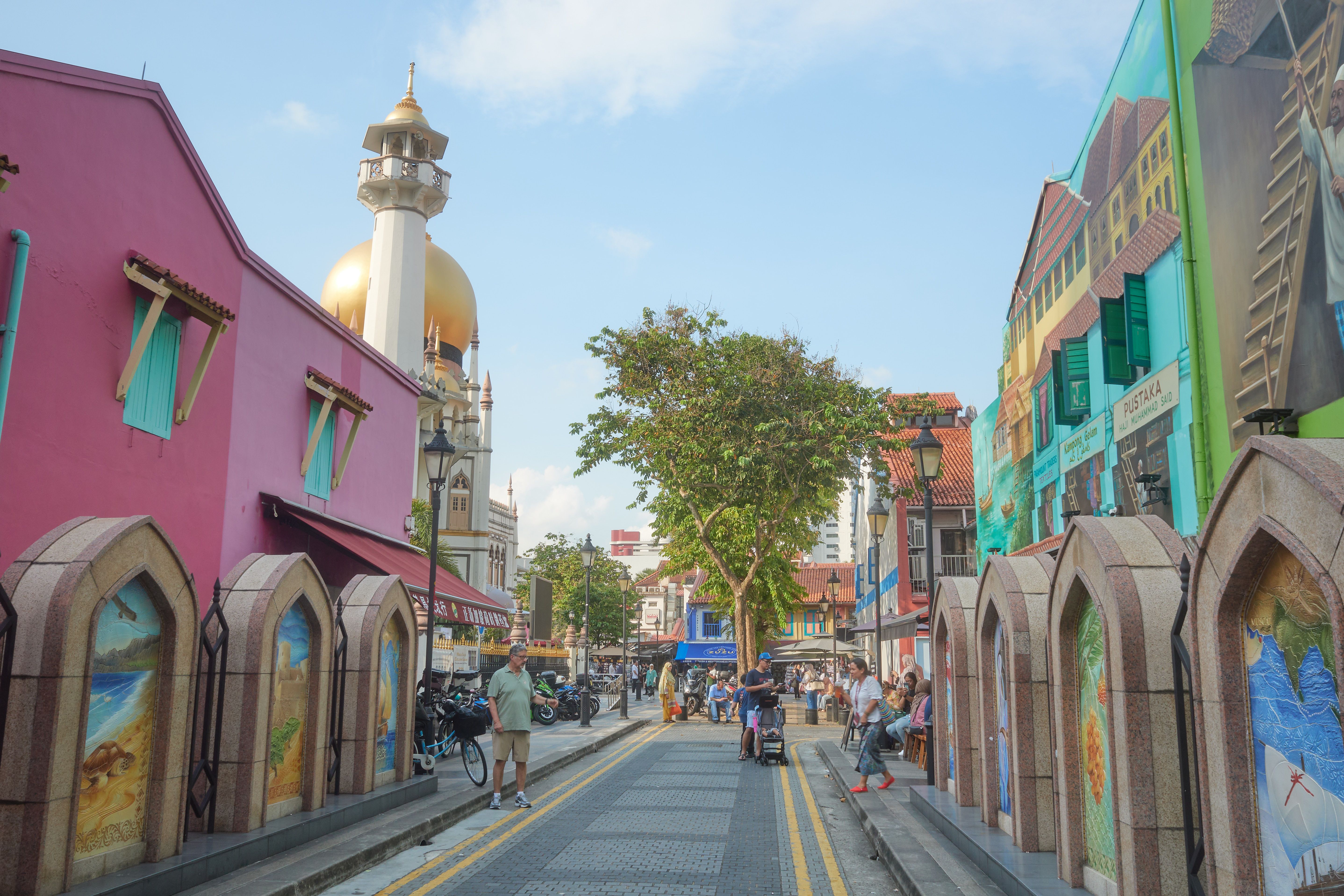
Kampong Glam carries a different cultural register entirely. Where Chinatown's shophouses reflect Chinese immigrant life, Kampong Glam's built environment grew from Malay royal settlement and Arab and Bugis trading communities. The shophouses here tend toward Late Style with a distinct colour sensibility — softer pastels, blue and white combinations — and the streets are narrower and less trafficked than Chinatown's main drags.
Haji Lane and Arab Street
Haji Lane is one of Singapore's most recognisable shophouse streets — and also one of its most photographed. The narrow lane is lined with Late Style shophouses, their facades in muted blues, pinks, and yellows, with street art murals covering the gaps between buildings. Independent boutiques, vintage clothing stores, and cafés occupy the ground floors. It's compact enough to walk in 20 minutes, but most people linger longer. Haji Lane and Kampong Glam is best visited in the late morning before the lunch crowd arrives.
Arab Street runs parallel and has a different mood — textile merchants, perfume sellers, and rattan shops still operate here alongside newer tenants. The five-foot ways are wider, the buildings slightly taller. Bussorah Street, which leads directly to Sultan Mosque, is the most composed stretch: pavement cafés on both sides, the mosque's gold dome at the end of the lane.
Sultan Mosque as the Architectural Anchor
The Sultan Mosque at Bussorah Street dominates the neighbourhood visually. Built in 1928 and designed by Denis Santry in an Arabesque style, it has a distinctive detail worth looking for: the base of the main dome is ringed by a black band made from hundreds of glass bottles, donated by the local community during construction. The mosque sits inside the historic Kampong Glam district, which the URA treats as a Residential Historic District — conservation here is especially protective of the original streetscape.
How Kampong Glam Differs from Chinatown
The ethnic character is the obvious difference, but the architectural texture is distinct too. Kampong Glam's shophouses tend to be less densely decorated than Chinatown's Late Style specimens — there's more whitewash, more restrained use of tile, and a quieter palette overall. The streets are also more residential in feel, with fewer souvenir shops and more working businesses. If Chinatown can feel performative on a busy afternoon, Kampong Glam still has the rhythm of a functioning neighbourhood.

Joo Chiat and Katong — Peranakan Shophouses at Their Most Vivid
Joo Chiat holds a distinction no other Singapore neighbourhood can claim: it was designated Singapore's first heritage town in 2011, recognised for the integrity of its Peranakan streetscape and the community still actively living within it. The shophouses here are Late Style at their most expressive — the Chinese Baroque aesthetic pushed to its colourful limit, influenced by the Peranakan community's fusion of Chinese, Malay, and European tastes.
Koon Seng Road — Singapore's Most-Photographed Shophouse Street
Koon Seng Road is the Instagram reference point for Singapore shophouses, and the real thing lives up to the images. The rows of two-storey terrace houses are finished in mint green, coral, butter yellow, and cerulean — each facade decorated with ceramic Peranakan floral tiles, geometric mosaic work, and Chinese couplets. The pintu pagar — swinging half-doors — are still on many of the ground floor entrances, a feature that originally provided ventilation and privacy simultaneously.
This street was built largely in the late 1920s and 1930s, when the Peranakan community in Singapore was at its most prosperous and architecturally ambitious. Rococo detailing — layers of ornament in a "wedding cake" style — appears on several facades. The morning light hits the eastern-facing side between 8 and 10am, which is when the colours are most vivid and the street is quiet enough to walk slowly.
Katong's East Coast Road Food Culture
Joo Chiat and Katong blur into each other along East Coast Road, where the shophouses now house Peranakan restaurants, Nyonya laksa stalls, and traditional kueh makers. This is where the culinary heritage is most concentrated. The shophouses along this stretch tend to be slightly later in construction than Koon Seng Road — some have been adapted more heavily internally, but the facades remain largely original. Look for Rumah Bebe on East Coast Road: its cerulean blue exterior and bright Peranakan tiles are visible from across the road.
Why Joo Chiat Earned Its Heritage Town Status
The designation wasn't just about architecture. Joo Chiat was recognised for the continuity of its community — Peranakan families, traditional trades, and cultural practices that have persisted despite Singapore's urban transformation around it. The neighbourhood has also received UNESCO Asia Pacific Heritage Awards recognition for conservation excellence. What this means for your visit: this is the neighbourhood where the heritage feels lived-in rather than staged.
- MRT: Dakota (CC8) or Paya Lebar (EW8/CC9) — then a 10–15 minute walk or short bus ride
- Walking time: 1.5–2 hours for Koon Seng Road, Joo Chiat Road, and East Coast Road
- Best time: Early morning for Koon Seng Road photos; lunchtime if you want to eat at the Peranakan restaurants on East Coast Road
- Crowd level: Noticeably less crowded than Chinatown — more locals than tourists on weekday mornings
Tiong Bahru — Art Deco and the Neighbourhood That Aged Well
Tiong Bahru is the outlier in Singapore's heritage neighbourhoods. It's not an ethnic enclave in the traditional sense, and its shophouses aren't ornate. What it has instead is architectural coherence: a 1930s public housing estate built in the Art Deco style, where the curved facades, sunburst motifs, and spiral staircases have survived almost intact. The Tiong Bahru shophouse streetscape is one of the best-preserved examples of pre-war public housing in Southeast Asia.
Origins: 1930s Public Housing With Architectural Ambition
The Singapore Improvement Trust built Tiong Bahru from 1936 onward as a model public housing estate — a deliberate improvement on the overcrowded Chinatown tenements of the era. The architects applied Art Deco principles: clean horizontal lines, rounded corners, symmetrical windows, geometric balustrades, and an absence of applied ornamentation. The buildings are low-rise by Singapore standards — two and three storeys — and set back from the street in a way that creates a spatial generosity unusual in the city.
What the Art Deco Details Look Like in Person
The Tiong Bahru shophouses and residential blocks differ visually from what you'll see in Chinatown or Joo Chiat. Instead of tiles and plasterwork, look for:
- Porthole windows on stairwells — a direct Art Deco reference to ocean liner design
- Curved corner facades on corner units, giving the block a ship-like silhouette
- Marble-chip terrazzo floors in five-foot ways, in the pale grey and cream palette of the period
- Flat or shallow-pitched roofs replacing the clay-tiled pitched roofs of earlier styles
Inside the Shophouses Today
Tiong Bahru's ground-floor shophouses have attracted an unusual cluster of independent businesses — independent bookshops, specialty coffee roasters, florists, and small-plate restaurants. Tong Heng on Yong Siak Street, a decades-old pastry shop famous for its diamond-shaped egg tarts, occupies its original shophouse unit. Books Actually, now relocated, was for years the neighbourhood's cultural anchor. The mix feels organic rather than developed — Tiong Bahru became a creative neighbourhood because the buildings attracted people who valued character, not because anyone planned it that way.
- MRT: Tiong Bahru (EW17)
- Walking time: 1–1.5 hours for the estate and market area
- Don't miss: The Tiong Bahru wet market on the ground floor of the curved block at the centre of the estate — open from 6am, winding down by mid-morning
Tiong Bahru vs. the Other Neighbourhoods: A Quick Read
- Best for: Travellers who want architecture without ethnic-quarter tourism; coffee shop explorers; people staying nearby who want a morning walk
- Not ideal if: You're specifically looking for Peranakan tiles or Chinese Baroque ornamentation — you won't find it here
- Unique selling point: The only neighbourhood where the shophouses were purpose-built as public housing and have aged into a creative district entirely on their own terms
Little India, Emerald Hill, and the Neighbourhoods Worth the Detour
Beyond the four main precincts, several smaller conservation areas offer a different quality of experience — less structured, often less busy, and in some cases more architecturally surprising.
Little India — Eclectic Style at Full Volume
The shophouses of Little India belong to what the URA calls the Singapore Eclectic style — a category specific to this neighbourhood. The facades layer Chinese decorative motifs, Spanish glazed tiles, Malay timber eaves, and Romanesque pilasters in combinations you won't find anywhere else in Singapore. Petain Road has some of the most extreme examples: kaleidoscopic animal and floral mosaics cover almost every surface, in palettes that run from deep burgundy to turquoise.
The House of Tan Teng Niah on Kerbau Road is the single most vivid shophouse in Singapore — a Chinese villa painted in eleven colours, built in 1900, and now the last surviving Chinese villa in Little India. It's not on every tourist map, which means you can usually photograph it without competition.
Emerald Hill — Peranakan Quiet, Five Minutes from Orchard Road
Emerald Hill Road sits one block off Orchard Road, behind the shopping malls, and almost nobody walking Orchard turns in to find it. The street was pedestrianised in 1981 — one of the earliest URA conservation moves — and the 30 or so Peranakan shophouses along it represent some of the finest Late Style conservation in Singapore. The palette is quieter than Joo Chiat — more pastel green and cream than candy pink — and the atmosphere is genuinely peaceful, even on a busy Saturday.
Emerald Hill works best as a 30-minute detour rather than a destination in itself. Walk in from Peranakan Place at the Orchard Road end, move slowly up the hill, and come back the same way. The architectural quality rewards close attention: look at the louvred windows, the cast-iron grilles on upper floors, and the tiled pillars on the five-foot ways.
Blair Plain and Tanjong Pagar Fringe — The Low-Crowd Option
Blair Plain, tucked between Tanjong Pagar and Chinatown, offers two-storey shophouses in pastel tones along quiet streets with almost no tourist foot traffic. There are independent art galleries and small cafés inside several of the restored units. If you've done Chinatown and want 20 minutes of genuine quiet before your next stop, Blair Plain delivers it without requiring a detour.
How to Plan Your Singapore Shophouse Walk
The neighbourhoods are spread across Singapore's central and eastern areas, but the main heritage precincts are clustered enough to combine on a single day without being rushed. Here's how to approach it depending on your time and interests.
Half-Day Route: Chinatown Core (3–4 Hours)
Start at Chinatown MRT (exit A) by 8am. Walk Pagoda Street while the market stalls are setting up, then move to Mosque Street for Late Style facades. Cut through to Keong Saik Road for the Tropical Deco details, then up to Ann Siang Hill for the quieter, more refined streetscape. Descend to Club Street for coffee, then walk the five-foot way along South Bridge Road back toward the MRT. This covers Kreta Ayer, Bukit Pasoh, and the fringe of Tanjong Pagar without backtracking.
Full-Day Route: Three Precincts (6–7 Hours)
- Morning (8–11am): Chinatown as above, ending at Chinatown MRT
- Mid-morning (11am–1pm): MRT to Bugis (EW12/DT14), walk to Kampong Glam — Haji Lane, Arab Street, Sultan Mosque, Bussorah Street
- Afternoon (2–4pm): MRT to Tiong Bahru (EW17) — estate walk, wet market area, Yong Siak Street for coffee
- Optional evening add-on: MRT to Little Rochor or Farrer Park, walk Petain Road and Little India for the eclectic facades before dinner
East Coast Day: Joo Chiat and Katong
Save Joo Chiat and Katong for a separate half-day, ideally combined with East Coast Park if you're visiting with family or want to follow the heritage walk with time by the water. Take the MRT to Dakota or Paya Lebar, walk to Koon Seng Road for the morning light, move along Joo Chiat Road, and finish on East Coast Road for a Peranakan lunch.
Guided vs. Self-Guided — When It's Worth It
A self-guided walk covers the visual architecture well. A guided heritage tour adds the social history — the clan politics, the role of women in Peranakan households, the economics of the five-foot way economy, and why certain buildings face different directions. If you're spending more than two days in Singapore and have any interest in urban history, a guided walk of one or two precincts repays the investment. For a broader overview of Singapore's must-see experiences, see Travjoy's top Singapore picks.
Practical Notes for Every Neighbourhood
- Best time to visit: 8–10am — cooler, quieter, better light for photography. Avoid 12–3pm in all outdoor precincts
- What to wear: Comfortable walking shoes with grip — five-foot way floors can be slippery after rain; modest clothing if visiting mosques or temples en route
- Photography: All exteriors are freely photographable; interiors require permission from owners or businesses
- Eating: Every neighbourhood has hawker centres or kopitiam within the conservation precincts — eating inside a shophouse is part of the experience, not a tourist detour
- URA Conservation Portal: The URA's free online map shows every conserved building district by district — useful for pre-trip planning
Conclusion
No two Singapore heritage shophouse neighbourhoods feel the same. Chinatown is the grandest — four sub-districts, the widest range of styles, the deepest historical layering. Joo Chiat is the most vivid — Peranakan tiles pushed to their decorative limit, in a community that still feels genuinely inhabited. Kampong Glam is the most atmospheric — narrow lanes, a gold-domed mosque at the end of every view, a cultural register entirely its own. Tiong Bahru is the most liveable — Art Deco bones that have aged into something quietly elegant.
You don't need to cover all of them in one trip. But each one rewards more time than most itineraries give it. Pick one or two precincts, go early, walk slowly, and look at the details that most people stride past. The five-foot way, the jian nian tiles, the porthole windows — they're there for anyone who takes the time.
Start planning your Singapore heritage walk on Travjoy's Singapore guide.

.svg&w=1920&q=75)