


Oyster Card, Travelcard or Contactless: The Complete 2026 Guide to Paying Your Way Across London's Tube, Buses, Trams, DLR and Overground
9 min read
Key Highlights
- One tap — contactless, Oyster or a loaded Travelcard — covers the Tube, buses, trams, DLR, London Overground and the Elizabeth line.
- Daily and weekly fare caps do the maths for you: £8.90 (≈ $11) a day and £44.70 (≈ $57) Monday to Sunday in Zones 1–2, frozen until March 2027.
- A new Oyster card now carries a £10 (≈ $13) non-refundable fee — worth paying only in a handful of specific cases.
- The 7-Day Travelcard can start on any day of the week, which is exactly where the Monday–Sunday weekly cap falls short.
- Two habits protect your fares: tap in and out on every rail journey, and never switch between your phone and your physical card mid-trip.
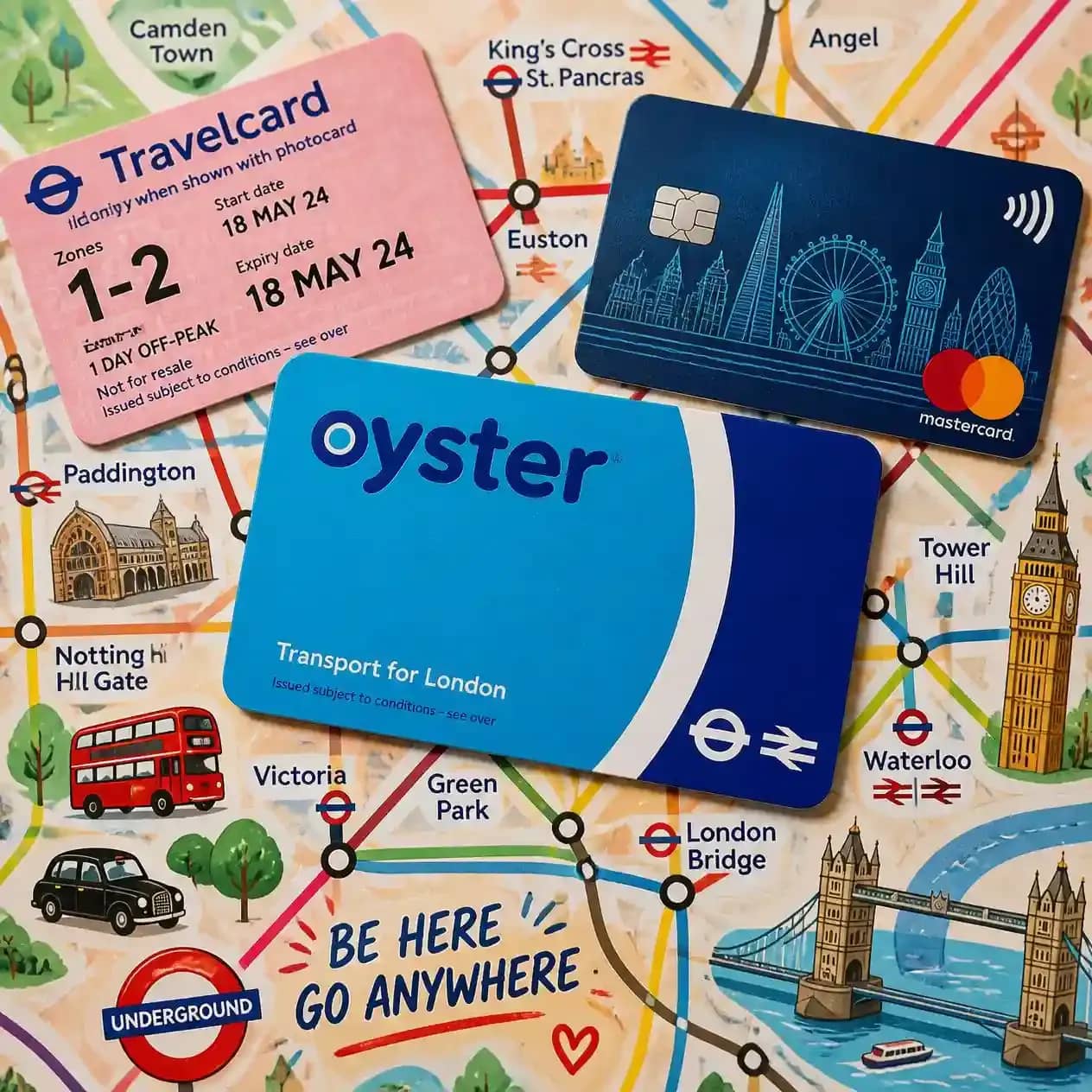
For most visitors, a contactless bank card or phone wallet is the best way to pay across London's Tube, buses, trams, DLR and London Overground — the fares are identical to an Oyster card in London, the same £8.90 (≈ $11) Zone 1–2 daily cap applies, and there is no £10 (≈ $13) card fee. Oyster still earns its place for Railcard holders, children aged 11–15 using the Young Visitor discount, and travellers whose bank charges a fee on every tap; a 7-Day Travelcard wins when your stay does not line up with a Monday start.
Stand at the Heathrow gateline after a long-haul arrival and you face a small but surprisingly consequential decision. The machine beside you will sell you an Oyster card for a £10 (≈ $13) fee before you have loaded a penny of credit. The card already in your wallet would open the same gate for nothing. And somewhere in the terminal, a poster is advertising a Travelcard with a price that looks suspiciously like a whole week of travel. Choose well and paying for London's transport disappears into the background of your trip; choose poorly and you have bought a card you never needed or a pass you never use up. This guide settles the Oyster card London question properly for 2026: which of the four payment options fits which traveller, what everything costs after the 1 March 2026 fare changes, how the caps actually work across the Tube, buses, trams, DLR and Overground, and the tap-in habits that keep your fares exactly where they should be.
Do You Actually Need an Oyster Card in London in 2026?
Most visitors no longer need an Oyster card. Contactless payment — a bank card, or a phone or watch wallet — is accepted at every gate and reader across the TfL network, charges exactly the same pay-as-you-go fares as Oyster, and applies the same daily and weekly caps automatically. If your card is already contactless-enabled and your bank does not charge foreign transaction fees, you can land, tap and travel without buying anything at all.
The case for Oyster is now specific rather than general. It rests on discounts and card economics that contactless cannot replicate.
Oyster is worth it if…
- You hold a National Railcard. A Railcard loaded onto an Oyster card takes a third off off-peak pay-as-you-go fares and off-peak daily caps. The discount cannot be applied to a contactless card — this is the single strongest reason Oyster survives.
- You are travelling with children aged 11–15. The Young Visitor discount gives them half-price fares for up to 14 days, and it is added to an Oyster card at a station — not to contactless.
- Your bank charges per-transaction foreign fees. TfL bills each day's travel as a card transaction; a per-tap or per-transaction fee of 1–3% adds up across a week. Pre-loading an Oyster card converts that into one exchange event.
- You want a 7-Day Travelcard starting mid-week. Travelcards load onto Oyster and run for any seven consecutive days, where contactless weekly capping only runs Monday to Sunday.
Not needed if…
- You carry a fee-free contactless card or phone wallet. Same fares, same caps, nothing to buy, top up or refund.
- Your stay is short and central. Over two or three days in Zones 1–2, the daily cap does all the work and the £10 (≈ $13) card fee is pure overhead.
- You are a returning visitor paying by phone at home already. London's readers behave like any other terminal — your existing wallet is the whole system.
The fee, not a deposit
The £10 (≈ $13) charge on a new Oyster card has been a non-refundable fee, not a returnable deposit, since September 2022. You cannot claim it back when you leave. Any pay-as-you-go credit on the card, however, never expires — a detail that quietly favours the repeat visitor, who can keep the card and the balance for the next trip.
Your Four Options: Contactless, Oyster, Visitor Oyster and the Travelcard
London has four sensible ways to pay for public transport in 2026, and every one of them works across the Tube, buses, trams, DLR, London Overground and the Elizabeth line. The differences are in what they cost up front, where you get them, and which discounts they unlock.
Contactless card or mobile wallet
Your own debit or credit card, or the same card loaded into Apple Pay, Google Pay or a watch. Tap the yellow reader at the gate; the fare calculates itself and the caps apply automatically. There is nothing to buy and nothing to top up, and phone wallets sidestep the contactless spending ceiling that applies to physical cards because they authenticate on the device.
Standard Oyster card
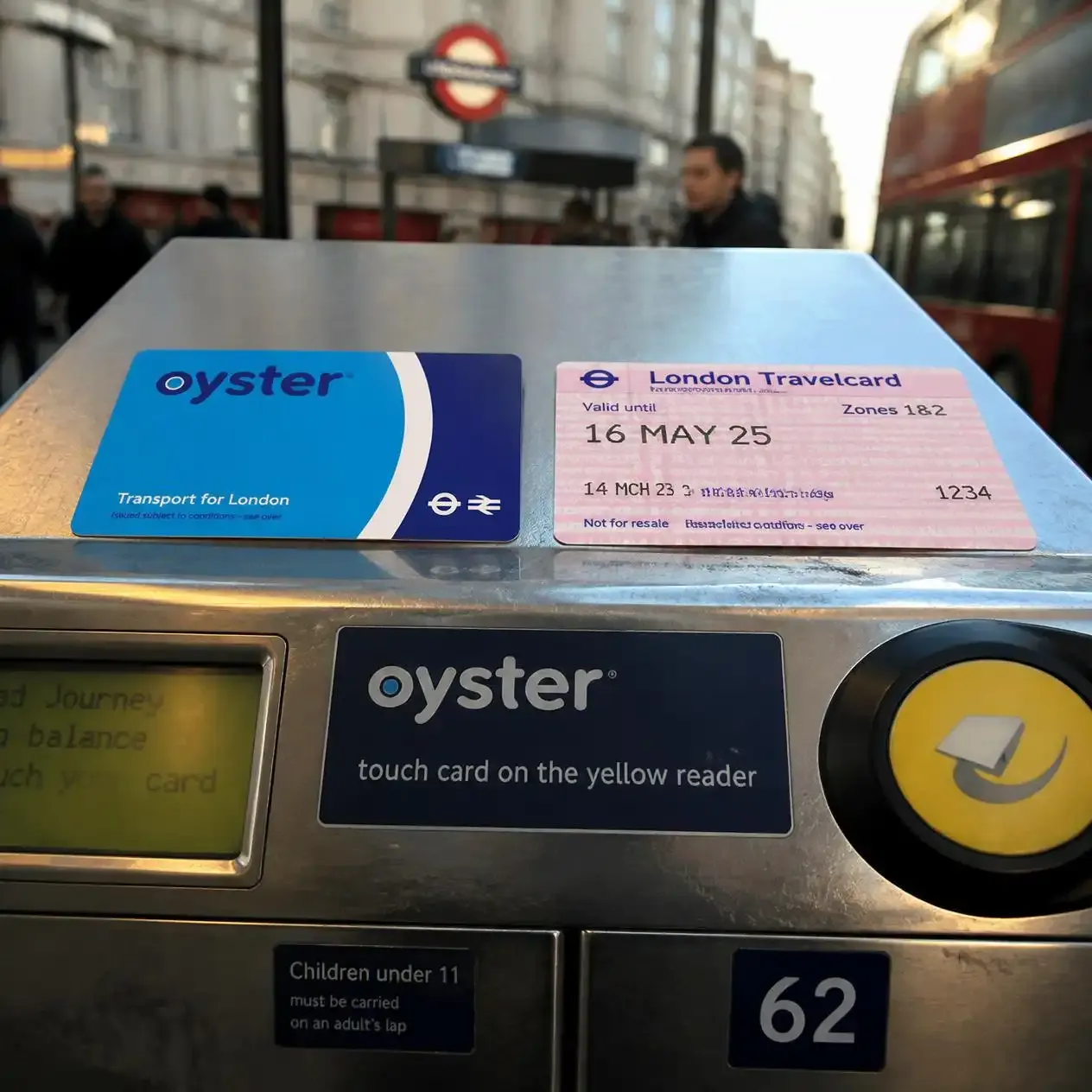
The blue pre-pay smartcard, bought at any Tube station ticket machine, Oyster Ticket Stop or visitor centre:
- Card fee: £10 (≈ $13), non-refundable
- How it works: load pay-as-you-go credit, tap as you would contactless; identical fares and caps
- Extras: accepts Railcard discounts, the Young Visitor discount for 11–15s, and loaded Travelcards; credit never expires and refunds up to £10 (≈ $13) are available at ticket machines
Visitor Oyster card
Functionally the same card, sold pre-loaded and posted to you before you travel — it cannot be bought in central London. It carries its own activation fee and comes with a booklet of rotating discounts at shops, restaurants and attractions. The one structural limitation: a Travelcard cannot be loaded onto a Visitor Oyster, so if the 7-Day Travelcard is part of your plan, buy a standard card instead. For travellers who like arriving with everything in hand, it remains a tidy option; for everyone else, the standard card at the airport station does the same job.
Travelcard
A season ticket rather than pay-as-you-go: unlimited travel in your chosen zones for a fixed period, loaded onto an Oyster card or issued as a paper ticket:
- 7-Day Travelcard, Zones 1–2: £44.70 (≈ $57) — the same price as the Monday–Sunday weekly cap, but it can start on any day you choose
- Day Travelcard: from around £15.20 (≈ $19) — consistently more expensive than the pay-as-you-go daily cap, and rarely the right buy
- Bus coverage: every Travelcard covers buses across all of London, regardless of the rail zones it was bought for
One device, the whole trip
The capping system tracks a single card or device. Tap in with your phone and out with the physical version of the same card, and TfL treats them as two different customers — you can be charged two incomplete-journey fares and neither tap counts towards your cap. Pick one method on day one and stay with it for the whole stay. Keep the other card well away from the reader as you tap, too: readers charge the first card they detect.
Where One Tap Takes You: Tube, Buses, Trams, DLR and London Overground
A single payment method covers effectively the whole city. Contactless, Oyster and loaded Travelcards are all valid on the Tube, every red bus, the trams, the DLR, the London Overground, the Elizabeth line and most National Rail services within the fare zones — one card, one set of caps, no separate tickets between modes.
The Tube and the Elizabeth line
The Underground is the backbone: a Zone 1 pay-as-you-go single costs around £3.00–£3.10 (≈ $3.80–$4) in 2026 depending on the time of day, against far higher paper single prices — the clearest argument for never buying paper tickets at all. The Elizabeth line behaves as a normal TfL service inside London: same fares, same caps, same tap-in rules, with the useful bonus of full mobile signal and air conditioning on its newest trains.
Buses and trams
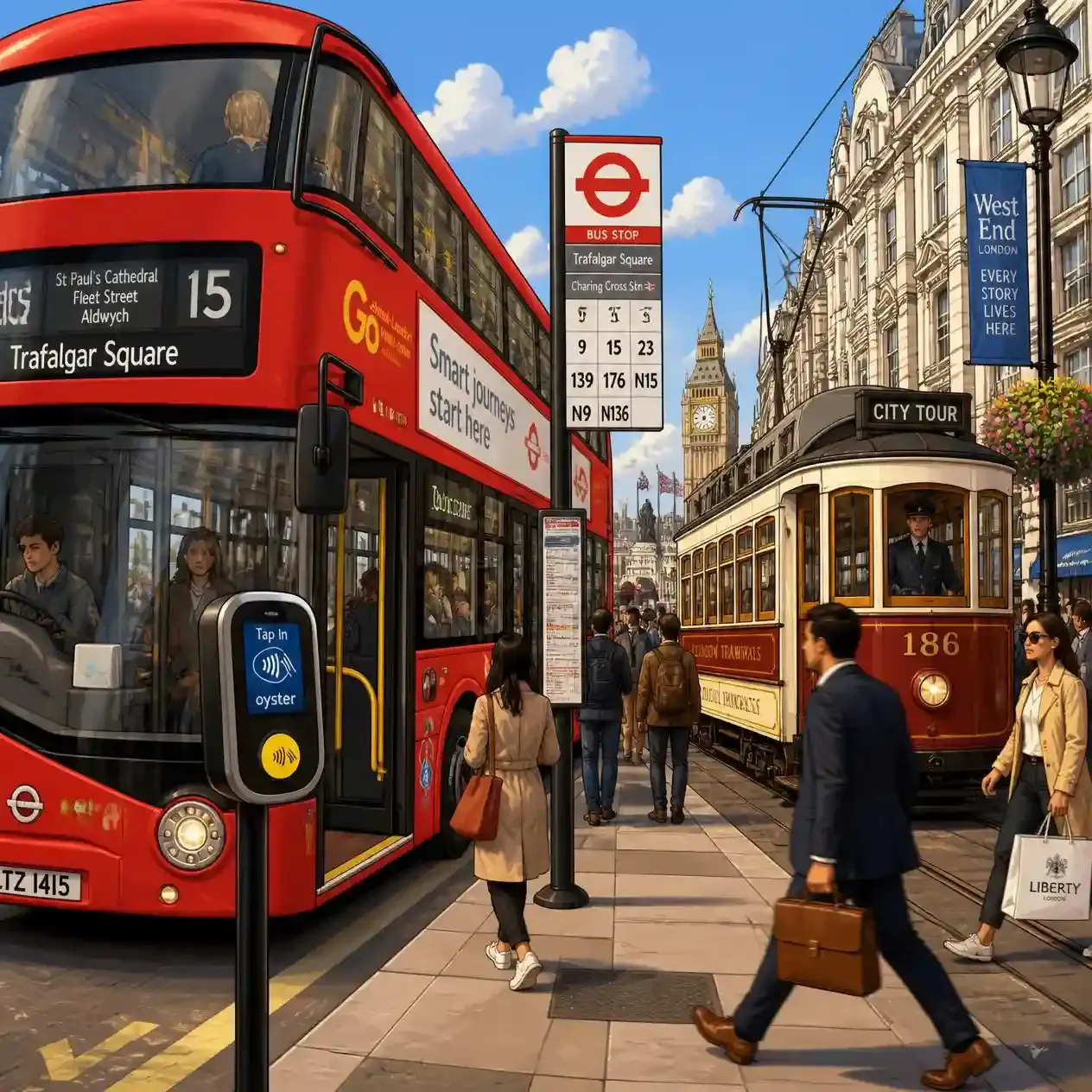
Buses are cashless and charge a flat £1.75 (≈ $2.20) however far you ride, with the Hopper fare giving unlimited bus and tram changes within an hour of your first tap. London's trams run through the south of the city around Croydon and Wimbledon and sit on the same flat fare. Bus and tram travel has its own gentle ceiling — a £5.25 (≈ $6.70) daily cap — so a day spent entirely above ground costs less than one that touches the rails.
DLR and London Overground
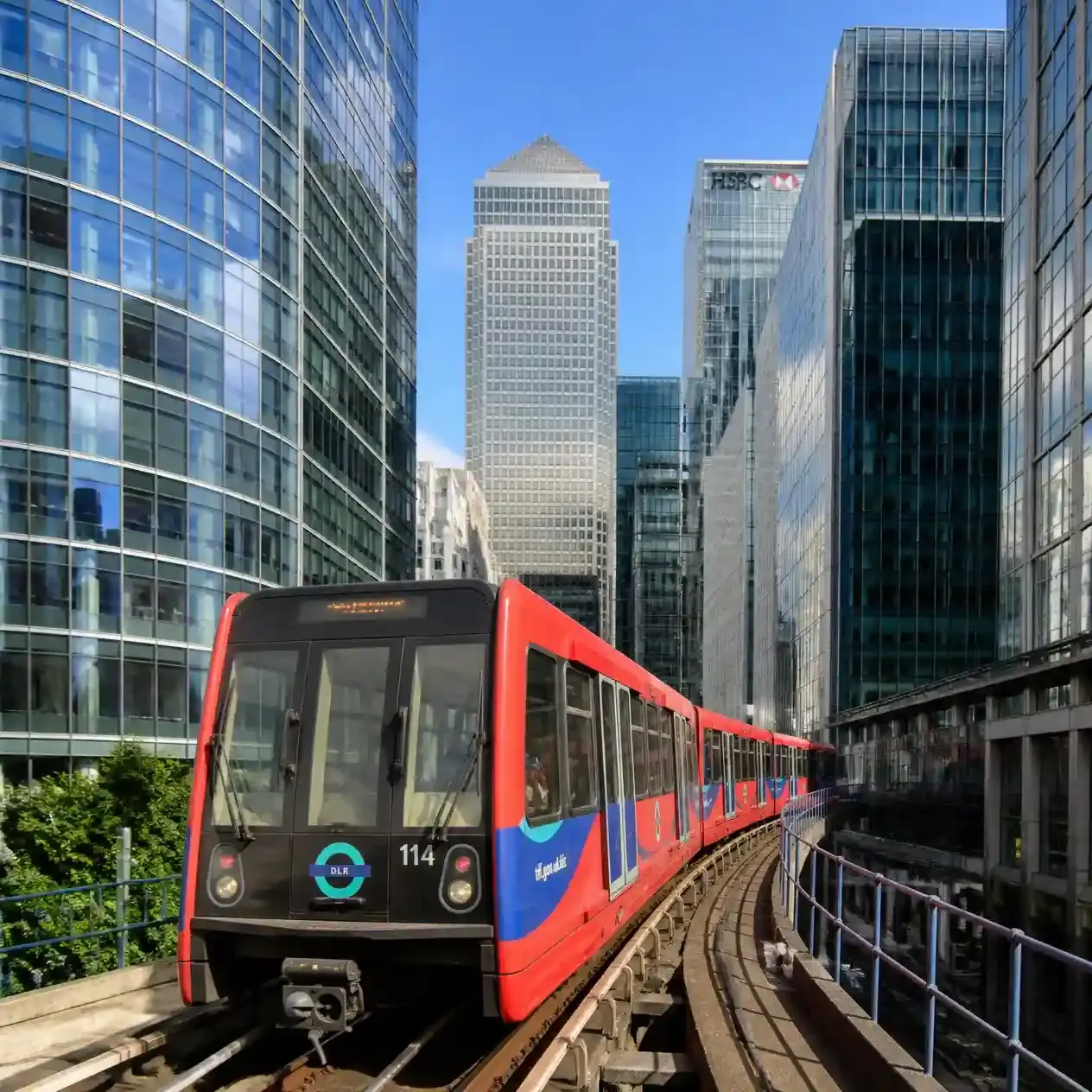
The driverless DLR threads through Docklands and Greenwich with front-window views that make it an attraction in its own right, and the Overground's named lines loop through the neighbourhoods the Tube map thins out on — Hackney, Peckham, Hampstead. Both charge standard rail fares within the zones and count towards the same caps. On both, as on all rail, you tap in and tap out; buses and trams are tap-in only.
What sits outside the system
- Uber Boat by Thames Clippers: river buses take contactless and Oyster but charge their own fares outside the caps; Travelcard holders get a discount on board.
- IFS Cloud Cable Car: tap to pay, but the fare sits outside the caps.
- Heathrow Express and Gatwick services: separately priced — covered in the airport section below.
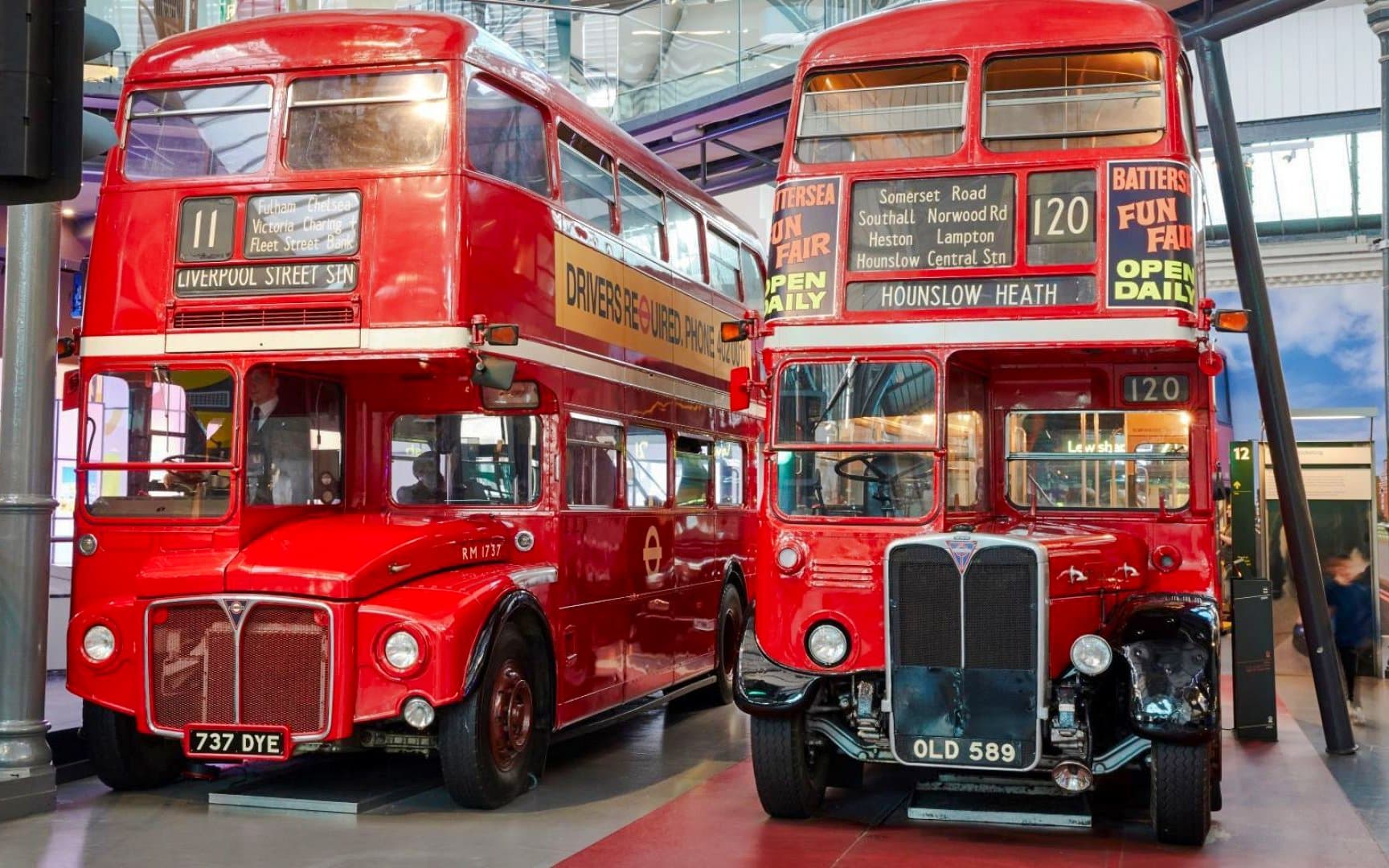
Two stops reward a payment-themed detour. The London Transport Museum tells the story of the network you are tapping through, from horse-drawn omnibuses to the Oyster reader itself, and it sits on the corner of Covent Garden — an easy pairing for an afternoon that starts and ends at the same gateline. If you touch a pink Oyster reader at certain interchange stations when your route avoids Zone 1, the system charges the lower non-central fare — a small habit that repeat visitors quietly benefit from on cross-town journeys.





Oyster vs Travelcard vs Contactless: The Real Cost Comparison for 2026
On price alone, contactless and Oyster are identical — same singles, same caps — so the comparison is really about upfront cost, flexibility and discounts. Travelcards only pull ahead in one specific pattern: heavy daily travel across a week that does not start on a Monday. Here is how the three stack up on 2026 fares.
| Option | Upfront cost | Zones 1–2 price (2026) | Best for |
|---|---|---|---|
| Contactless card / phone wallet | None | Capped at £8.90 (≈ $11) daily, £44.70 (≈ $57) Mon–Sun | Most visitors, any trip length |
| Standard Oyster card | £10 (≈ $13) fee, non-refundable | Same fares and caps as contactless | Railcard holders, families with 11–15s, fee-charging foreign cards |
| Visitor Oyster card | Activation fee + pre-loaded credit, posted before travel | Same fares and caps; no Travelcard loading | Travellers who want everything arranged before departure |
| 7-Day Travelcard | £44.70 (≈ $57) Zones 1–2 (plus card fee if loading onto a new Oyster) | Unlimited travel, any start day | Week-long stays arriving mid-week with daily travel |
How the caps work by zone
Caps are the quiet brilliance of London's system: keep tapping and the charging stops once you hit the ceiling for the zones you have travelled in. The 2026 caps are frozen until March 2027:
- Zones 1–2: £8.90 (≈ $11) daily · £44.70 (≈ $57) weekly
- Zones 1–4: £64.20 (≈ $82) weekly — the band that covers Kew, Wimbledon and Wembley
- Zones 1–6: £81.60 (≈ $104) weekly — the full map, Heathrow included
- Bus and tram only: £5.25 (≈ $6.70) daily, £24.70 (≈ $31) weekly, on the flat £1.75 (≈ $2.20) fare
- The cap day runs 04:30 to 04:29 the following morning, so a night out after midnight still counts against the previous day's cap
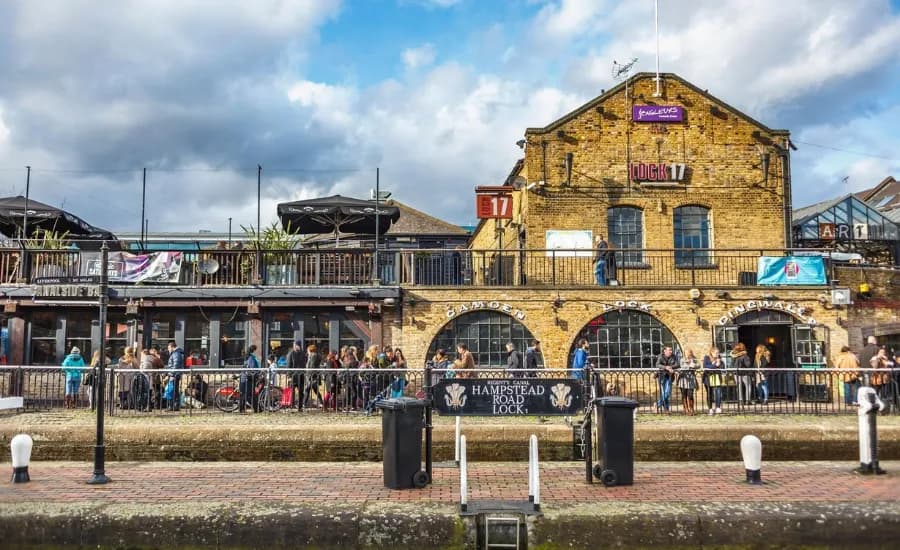
The Day Travelcard, by contrast, costs more than the equivalent daily cap in every zone combination — it exists for legacy reasons, not value. If a machine offers you one, tap instead. Almost all of the places worth crossing town for sit inside Zones 1–2 anyway: Camden Market at the top of the Northern line and Greenwich Park at the end of the DLR both fall within the £8.90 (≈ $11) daily ceiling, riverside views included.
The Travelcard-plus-credit combination
Oyster allows a manoeuvre neither contactless nor Visitor Oyster can perform: a Travelcard and pay-as-you-go credit living on the same card. Load a Zones 1–2 Travelcard for the week, keep £10–£15 (≈ $13–$19) of credit alongside it, and when you ride out to Zone 6, the system charges only the extension beyond your Travelcard zones. One card, no separate extension tickets, no mental arithmetic at the gate.
The mid-week arrival trap
Weekly capping runs Monday to Sunday only — it is not a rolling seven days. Land on a Wednesday for a week and your cap resets on Sunday night, splitting your stay into two part-weeks that each cap daily but never weekly. That is precisely when the 7-Day Travelcard earns its keep: it costs the same £44.70 (≈ $57) in Zones 1–2 but runs Wednesday to Tuesday if that is when your trip runs. Travelling most days? Buy the Travelcard. Travelling every second day? Daily caps still win.
Which Should You Choose? Matched to Your Trip
The right answer follows the shape of your stay more than the length of it. Match your profile and the decision makes itself.
- Choose contactless if you are staying two to five days, your card or phone wallet carries no foreign transaction fees, and your travel is mostly Zones 1–2. This is the default for the majority of visitors — nothing to buy, caps applied automatically.
- Choose a standard Oyster card if you hold a Railcard (a third off off-peak fares and off-peak caps), your bank charges per-transaction fees, or you want the Travelcard-plus-credit combination for zone-hopping weeks.
- Choose the 7-Day Travelcard if you arrive mid-week for seven days or more and expect to travel daily — it beats two broken part-weeks of capping at the same headline price.
- Travelling as a family? Under-11s ride free with a fare-paying adult — up to four children per adult — and 11–15s get half-price fares for up to 14 days once the Young Visitor discount is added to their Oyster card at any Tube or Overground station. The children need cards; you may not.
- A repeat visitor with an old Oyster in a drawer? Bring it. The credit never expires, the £10 (≈ $13) fee is already spent, and the card works exactly as it did on your last trip.
Once the payment question is settled, the better use of your planning energy is deciding where all those taps should take you — the experiences on London's top 20 list have been researched and approved by local experts, which spares you cross-referencing a dozen sources to work out what deserves a place on a short itinerary.
Airports play by different rules
Caps and Travelcards do not blanket the airport routes. The Heathrow Express and Gatwick rail services are priced separately and never count towards TfL caps, and since March 2026 the Elizabeth line from central London to Heathrow costs £15.50 (≈ $20) — quick, but no longer the quiet bargain it once was. The Piccadilly line remains the capped, standard-fare route to Heathrow at around £5.90 (≈ $7.50) off-peak. Landing late or travelling heavy, a pre-booked transfer removes the gateline question altogether on day one.
Using It Well: Tap Rules, Top-Ups and the Mistakes That Cost Money
The system is forgiving once you know its three or four firm rules. Break them and the penalty is not a fine but a maximum fare — quietly deducted, easily avoided.
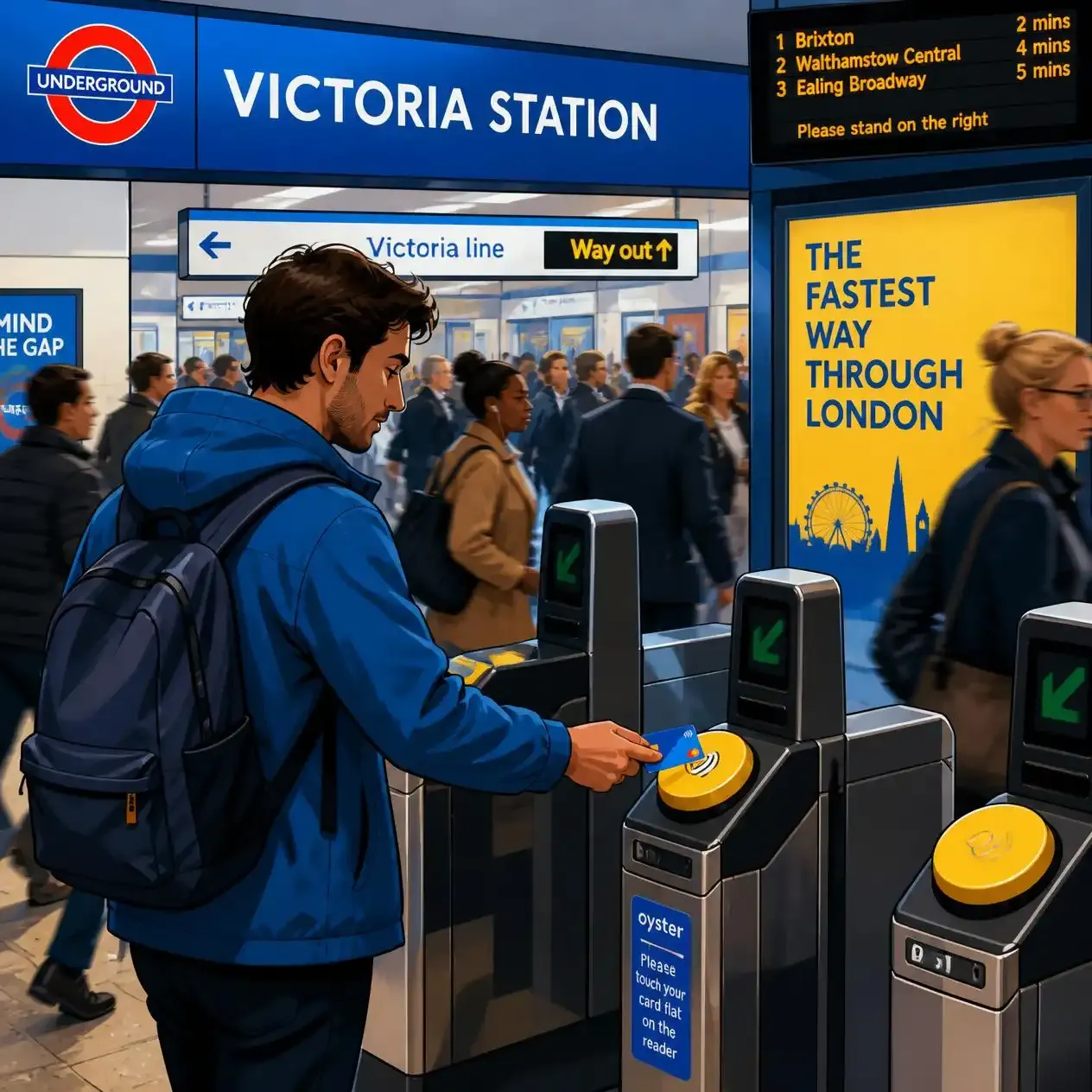
Tap in and tap out — on rail, every time
On the Tube, Elizabeth line, DLR, Overground and National Rail, touch the yellow reader at the start and end of every journey, even where a gate stands open. Miss a tap and the system cannot price the trip, so it charges an incomplete-journey maximum — typically £8 (≈ $10) or more. Buses and trams are the exception: tap in only. If a reader misbehaves or a gate was left open, an online TfL account lets you claim the correction, and refunds for honest incomplete journeys are routinely approved within days.
Top-ups, apps and refunds
- The TfL Oyster and contactless app tops up Oyster credit, shows journey history for both payment types, and warns you before a loaded Travelcard expires.
- Auto top-up on a registered Oyster card draws from your bank when credit runs low — useful on longer stays.
- Refunds: ticket machines return up to £10 (≈ $13) of unused Oyster credit on the spot; larger balances go through your online account. Or leave the credit where it is — it will be waiting on your next visit.
- One card per person on all rail services; only buses allow one card to pay for more than one passenger.
Timing your taps
Peak pricing is decided by when you touch in, not when you arrive: weekday touch-ins between 06:30 and 09:30, and again between 16:00 and 19:00, price at peak. Touch in at 09:31 and the whole journey rides off-peak. Weekends and public holidays are always off-peak — one more reason the leisure traveller has the better side of London's fare structure.
The five-second fare audit
Before you leave a station, glance at the reader's display as you tap out — it shows the fare charged and your remaining credit. Catching a wrong charge in the moment, at the station where it happened, is a two-minute conversation with staff; discovering it on a statement at home is an email thread. Frequent travellers make this glance a habit without breaking stride.
Settle It Before You Land
The 2026 answer is short: tap the contactless card or phone you already carry, let the £8.90 (≈ $11) daily and £44.70 (≈ $57) weekly caps protect the total, and reserve the Oyster card for London trips that involve a Railcard, children aged 11–15 or a bank that charges by the tap. Add the 7-Day Travelcard only when a mid-week arrival breaks the Monday–Sunday cap in half. Choose once, stay with one device, tap out on every rail journey — and the paying part of getting around London fades entirely into the background. For everything worth tapping towards once you are through the gates, start planning your trip with the experiences across Travjoy's London collection.







.svg&w=1920&q=75)