



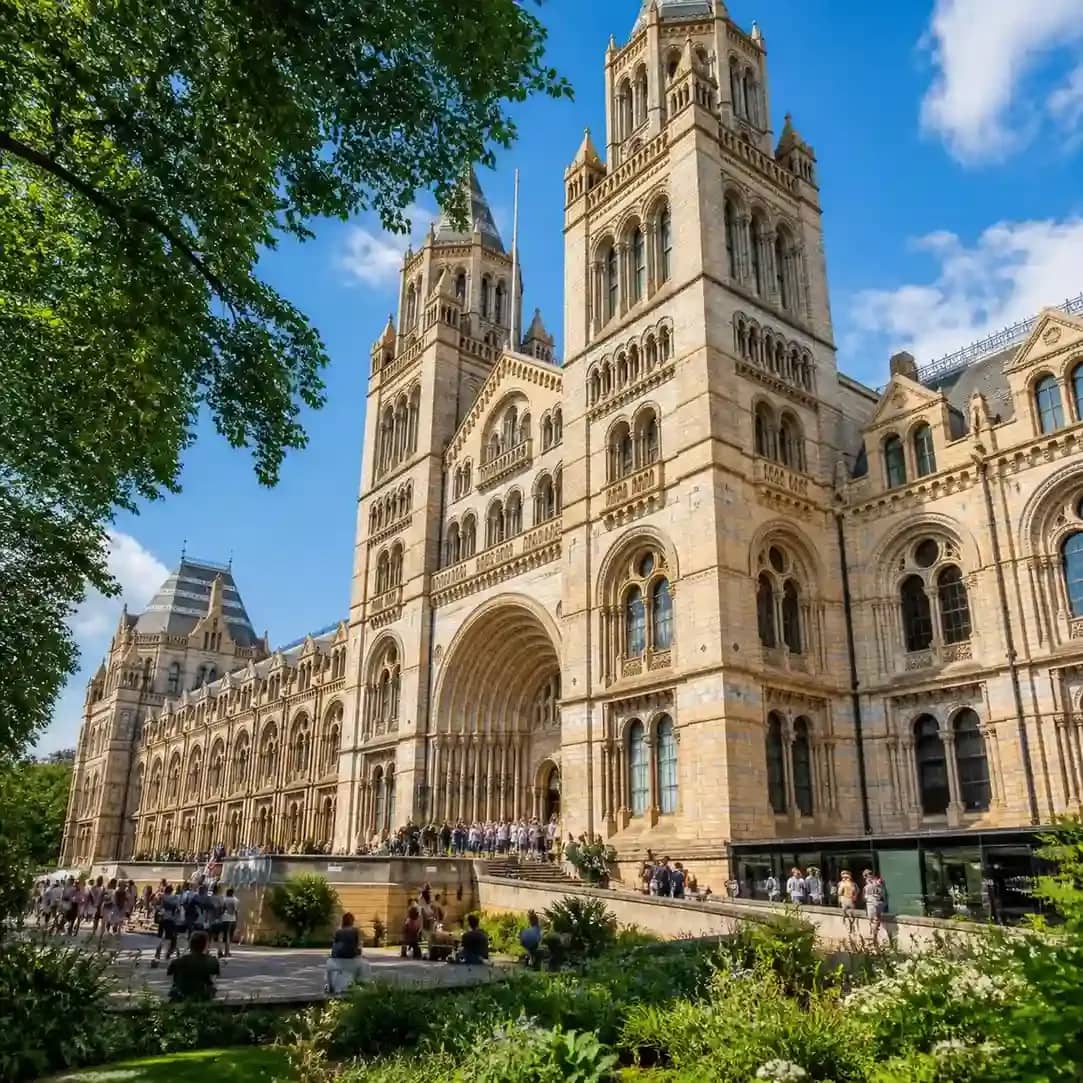
Natural History Museum London: Tickets, 2026 Exhibitions and the Facts Worth Knowing — A Complete Guide for Discerning Travellers
8 min read
Key Highlights
- General admission to the Natural History Museum is free every day — the permanent galleries, the gardens and the Waterhouse building itself cost nothing to enter.
- Three ticketed exhibitions run in 2026: Jurassic Oceans (£15–17.50 / US$20–24), Wildlife Photographer of the Year until 12 July, and Our Story with David Attenborough, extended to August (£20–25 / US$27–34).
- A paid exhibition ticket doubles as your museum entry — book that slot and you have solved both queues at once.
- The museum opens daily 10:00–17:50 (last entry 17:30); the Exhibition Road entrance is the quieter, step-free way in.
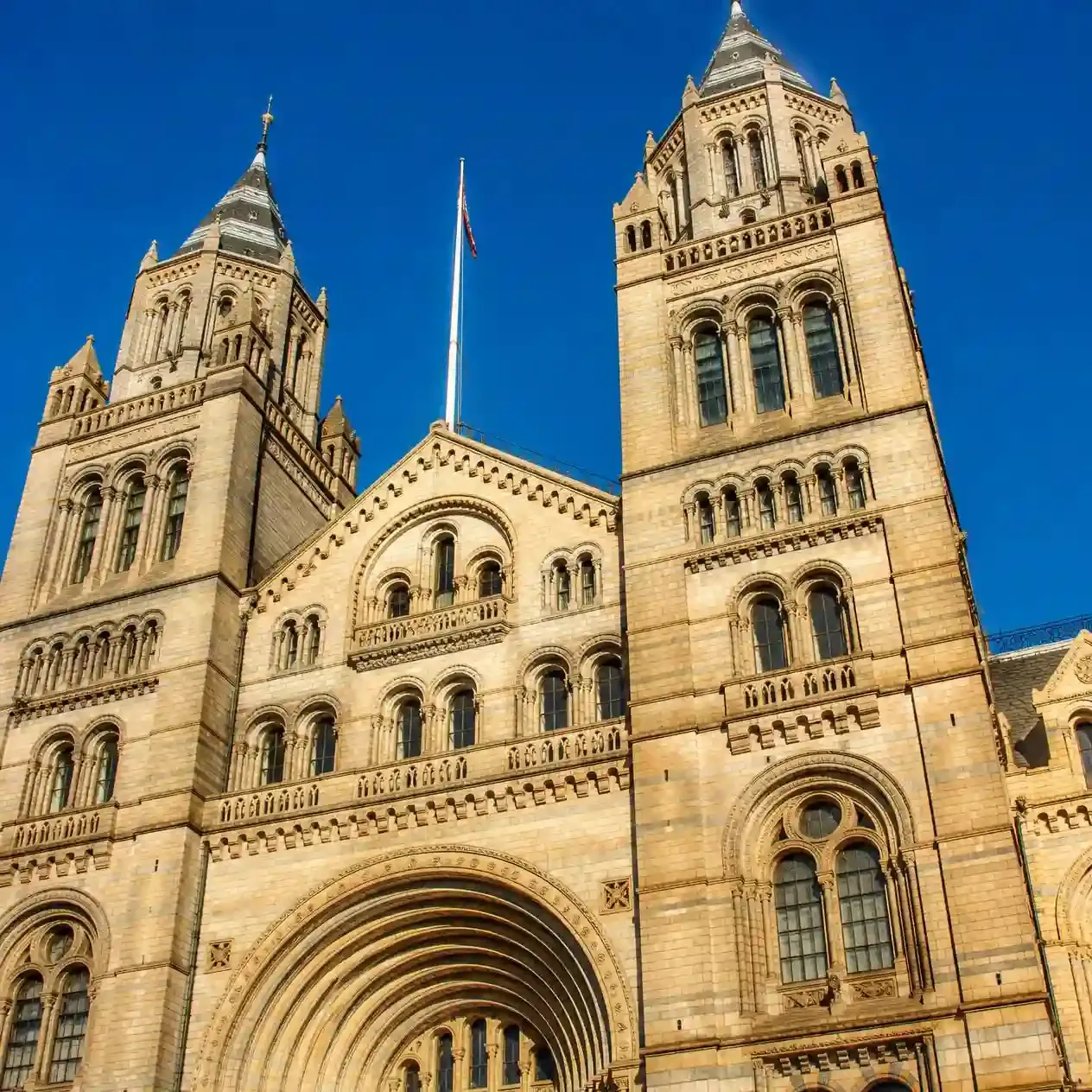
- The building is a statement in itself: Alfred Waterhouse's terracotta "cathedral to nature", open since 18 April 1881, with a Darwinian argument carved into its walls.
Natural History Museum London tickets work on a two-layer system in 2026: general admission to the permanent galleries is free every day, with a free timed slot recommended at busy periods, while three temporary exhibitions charge separately — Jurassic Oceans at £15–17.50 (US$20–24), Wildlife Photographer of the Year at £15.50–18 (US$21–24) until 12 July 2026, and Our Story with David Attenborough at £20–25 (US$27–34), extended to August 2026. Every paid exhibition ticket includes entry to the rest of the museum afterwards.
Few London institutions confuse visitors quite like this one. The Natural History Museum is free, yet its website sells tickets; walk-up entry exists, yet the Cromwell Road queue can run past half an hour; and the year's most talked-about experience — David Attenborough narrating a 360-degree journey through his life's work — costs more than entry to many fully ticketed attractions. If you are trying to work out what Natural History Museum London tickets actually cost and which ones deserve your money, the answer depends on what kind of visit you want.
This guide untangles the 2026 ticket structure — the free layer, the three paid exhibitions, the tour tiers — and pairs it with the visit logistics that decide whether your day flows or stalls: hours, entrances, timing and the galleries worth prioritising. It also goes deeper than the ticket desk, into the facts behind Waterhouse's terracotta landmark that reward a slower look, whether it is your first visit or your fourth.
Do You Need Tickets for the Natural History Museum?
No ticket is required for general admission — the permanent galleries, Hintze Hall, the dinosaurs and the five-acre gardens are free to every visitor, every day. What the museum recommends is a free timed slot booked at nhm.ac.uk during busy periods, and what it charges for is a separate layer of temporary exhibitions, tours and events.
How the free layer works
Free admission here is less a saving than a planning advantage. Because entry costs nothing, you can structure a South Kensington day loosely — an hour among the dinosaurs before lunch, a return pass through the mineral galleries later — without feeling you must extract value from a ticket price. Richard Owen, the museum's founder, insisted in the 1880s that his "cathedral to nature" be open to all without charge, and that principle still shapes how the building is used.
The timed-slot question is the one that catches people out. On a quiet midweek morning outside school holidays, you can usually walk straight in. On weekends, UK half-terms and through the summer, the walk-up queue at Cromwell Road can stretch to 30–45 minutes — while pre-booked visitors filter through in a fraction of that. The booking takes two minutes and costs nothing.
Worth paying for the ticketed layer if…
- You have seen the permanent galleries before and want this year's reason to return — the 2026 exhibitions are the freshest layer of the museum.
- You are travelling with children who are deep in a dinosaur phase: Jurassic Oceans is built precisely for them, down to a piece of 200-million-year-old fossilised dung you can touch.
- You want depth and context rather than a wander — the guided and semi-private tours put a specialist in front of the collection's most significant specimens.
You can keep it free if…
- This is one stop in a packed London itinerary and two hours of highlights — Hintze Hall, Dinosaurs, Earth Hall, Treasures — is the realistic plan.
- You are pairing the museum with the Victoria and Albert Museum next door and want to spread the day across both without committing to timed exhibition slots.
Natural History Museum London Tickets in 2026 — Every Option Compared
Five options cover almost every visit in 2026: free general admission, three ticketed exhibitions, and the guided-tour tier. Prices below are 2026 rates, with peak pricing applying to weekends and school holidays; children's exhibition tickets run roughly half the adult rate.
| Option | Duration | Price (2026) | Best for |
|---|---|---|---|
| General admission — Natural History Museum permanent galleries | 2–4 hours | Free (timed slot recommended at peak times) | Every visitor — the core museum |
| Jurassic Oceans: Monsters of the Deep | About 1 hour | £15 off-peak / £17.50 peak (US$20–24); child £7.50–8.75 (US$10–12) | Families and anyone drawn to marine giants |
| Wildlife Photographer of the Year (until 12 July 2026) | About 1 hour | £15.50 off-peak / £18 peak (US$21–24) | Photography and nature lovers — its final week |
| Our Story with David Attenborough (extended to August 2026) | About 50 minutes | £20 off-peak / up to £25 peak (US$27–34) | Returning visitors wanting something new; Attenborough admirers |
| Guided and semi-private tours | 1.5–2 hours | Varies by tour and group size; semi-private tours cap at 8 guests | Depth-seekers who want the stories behind the specimens |
The 2026 exhibitions in brief
- Jurassic Oceans: Monsters of the Deep — opened 22 May 2026. Pliosaurs, ichthyosaurs and mosasaurs from ancient seas, with hands-on fossil moments pitched at a wide age range.
- Wildlife Photographer of the Year — the top 100 images from the world's largest nature-photography competition, consistently the museum's strongest temporary show. It closes on 12 July 2026, so this is the final window.
- Our Story with David Attenborough — a 360-degree immersive experience narrated by Attenborough, extended to August 2026 by demand. At £20–25 it is the priciest ticket in the building, and the one most worth planning around.
Tours, audio guides and membership
Beyond exhibitions, the museum runs expert-led guided tours of its most significant specimens — Sophie the stegosaurus, the dodo, Darwin's On the Origin of Species — in standard groups of up to 25 or as semi-private tours capped at eight guests, the closest thing to a private audience with the collection. A reserved-entry ticket with a multilingual audio guide suits independent visitors who want commentary without a group. Membership is the quiet power move for anyone in London more than once a year: members skip the queues and enter every paid exhibition free.
A paid exhibition ticket doubles as your museum entry, so there is no need to book a separate free slot. On a peak-season day, booking Jurassic Oceans for 10:30 gets you past the general-admission queue and into the quietest hour of the exhibition in one move.
Planning Your Visit — Hours, Entrances and Timing
The Natural History Museum opens daily from 10:00 to 17:50, with last entry at 17:30. Two hours covers the highlights; families and anyone pausing in the mineral galleries or the Darwin Centre should allow three to four. The museum sits on Cromwell Road in South Kensington, five minutes from South Kensington Underground station (Circle, District and Piccadilly lines), which connects to the museum quarter by a pedestrian tunnel — useful on a wet London day.
The three entrances — and which to use
- Cromwell Road — the main Waterhouse entrance, opening straight into Hintze Hall. The grandest arrival and the longest queue.
- Exhibition Road — the quieter side entrance, step-free and pushchair-friendly, closest to the Earth Hall escalator through the globe.
- Queen's Gate — the west entrance, the natural start for the quieter galleries and the museum's less-trodden trail past the spirit collection.
When to go
Crowds peak between 11:00 and 15:00, on weekends, and through UK school holidays — half-terms in February, Easter, late May and late October, plus the six-week summer break from late July. The quietest months are January, February, October and November; the quietest hours are the first after opening and the last two before close. If your dates fall in peak season, the timed slot is the difference between walking in and standing on Cromwell Road.
The Exhibition Road entrance rarely carries more than a fraction of the Cromwell Road queue, even in August. You give up the Hintze Hall arrival, but you can walk back to the hall in three minutes — with forty of them saved.


Facts About the Natural History Museum That Change How You See It
The building is the museum's largest exhibit, and knowing its story turns a walk between galleries into part of the visit. Opened on 18 April 1881, it was designed by Alfred Waterhouse as a Romanesque "cathedral to nature" — a phrase coined at the time and never bettered — after the original architect, Francis Fowke, died unexpectedly a year into the project.
A cathedral built from terracotta
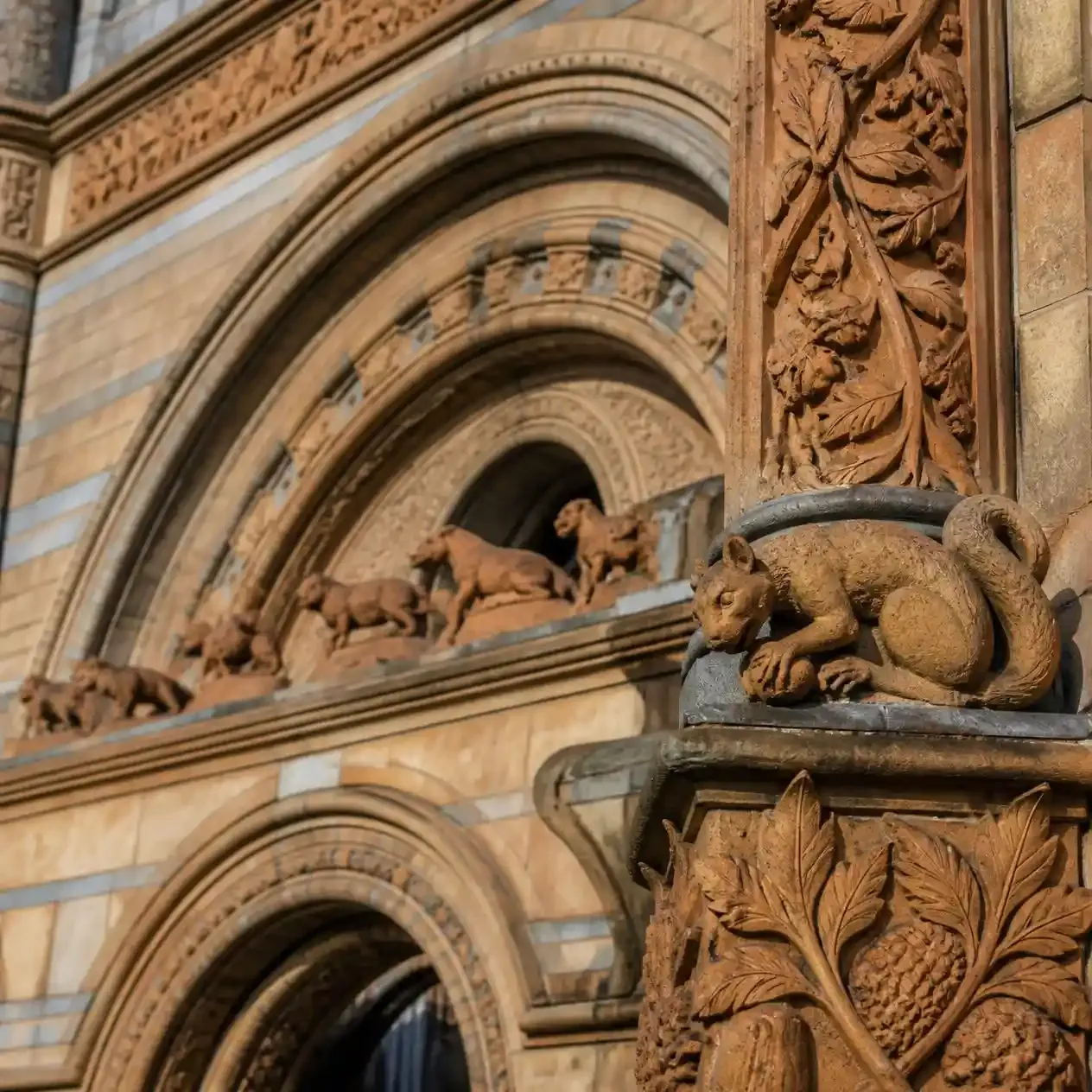
Waterhouse clad the entire building — inside and out — in terracotta, chosen because it resisted the soot of Victorian London better than stone. The result, according to Historic England's listing, is one of Britain's most striking examples of Romanesque architecture: rounded arches, vaulted ceilings and a central hall that rises like a nave, with a statue of Charles Darwin seated where a cathedral would place its altar.
The carvings that argue about Darwin
Look closely at the animals carved across the facade and columns and you will find a Victorian scientific dispute set in clay. Richard Owen — the naturalist who coined the word "dinosaur" — rejected Darwin's idea that living species descended from extinct ones, and had the building reflect his view: extinct creatures decorate the east wing, living species the west, kept deliberately apart. Waterhouse, to his credit, slipped in a few quiet anomalies. Every one of the hundreds of sculptures was sketched by the architect himself and checked by the museum's scientists for accuracy.
From a doctor's cabinet to 80 million specimens
The collection began with Sir Hans Sloane, a physician whose 71,000-item cabinet of curiosities was bought by Parliament in 1753 and seeded the British Museum. The natural history collections outgrew Bloomsbury, moved to South Kensington in 1881, gained legal independence in 1963 and only took the name Natural History Museum in 1992. Today the institution holds around 80 million specimens — so many that the eight-storey cocoon of the Darwin Centre, opened in 2009, exists largely to store them.
Hope, Dippy and the ceiling most visitors miss
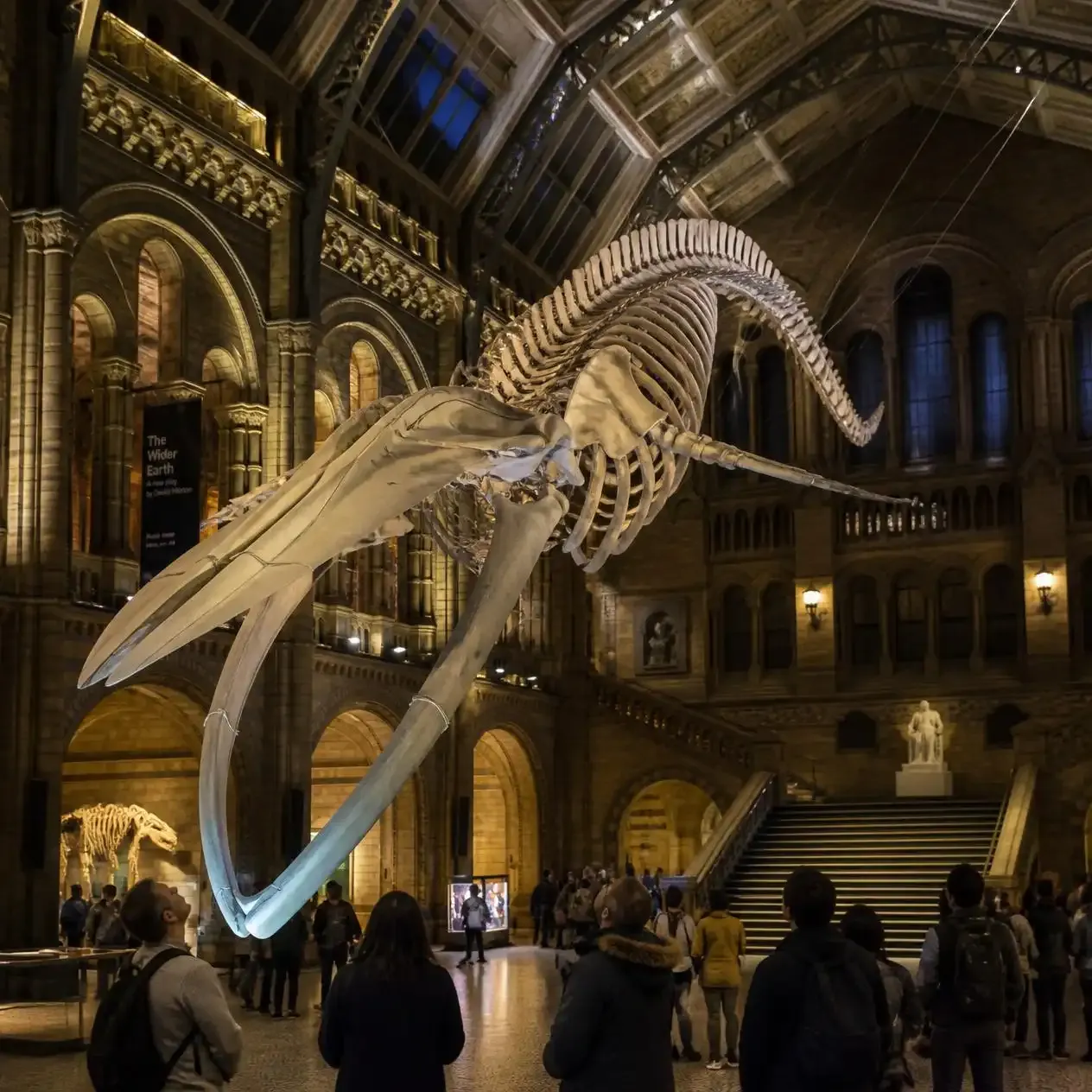
The 25-metre blue whale skeleton diving through Hintze Hall is called Hope, and she replaced Dippy the diplodocus in 2017 as a deliberate change of message — from prehistoric spectacle to living biodiversity. Above her, the hall's ceiling carries 162 hand-painted botanical panels, including an opium poppy, that most visitors never look up to see. Outside, the Urban Nature Project completed in late 2024 turned five acres of grounds into gardens tracing the history of life on Earth, watched over by Fern, a full-size bronze diplodocus.
What to See Inside — and the Second-Visit Layer
The museum divides into colour-coded zones, and the honest advice is to pick a handful of rooms rather than attempt all of them. The first-visit core: Hintze Hall, the Dinosaurs gallery, Earth Hall with its escalator through a sculpted globe, and the Treasures gallery — a single room holding a first edition of On the Origin of Species and Alfred Russel Wallace's butterflies.
Hintze Hall — and the view from the balcony
Stand beneath Hope first, then climb to the first-floor balcony for the side-on view of the whale mid-dive against Waterhouse's arches — the better photograph and the quieter vantage, and one many visitors skip entirely. The giant sequoia slice on the second floor, more than 1,300 years old when felled, rewards the extra flight of stairs.
Dinosaurs, Earth Hall and the galleries with pull
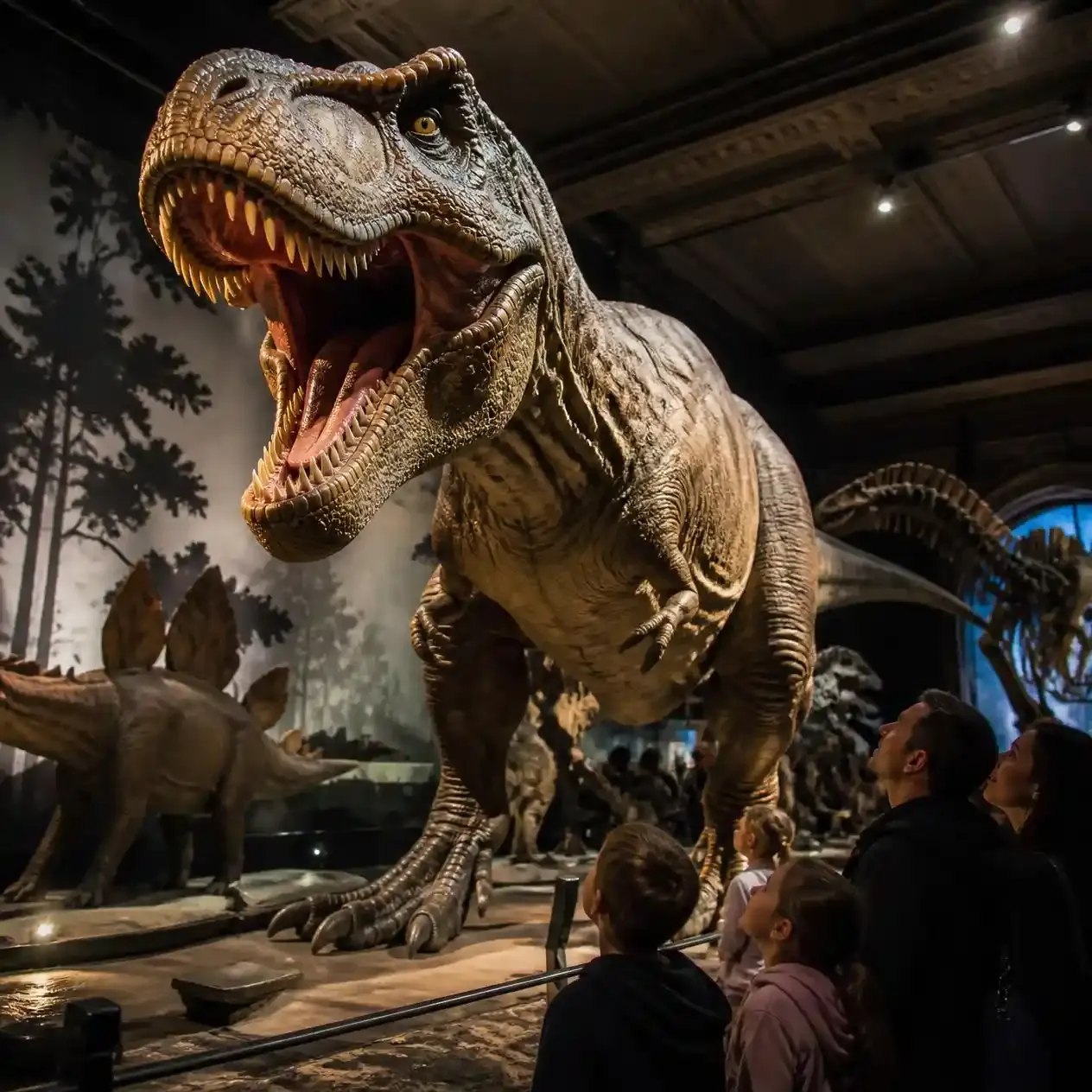
The Dinosaurs gallery holds the animatronic T. rex and, with it, the museum's densest crowds — it runs its own internal queue at busy times. The Earth galleries, inherited from the Geological Museum absorbed in the 1980s, cover volcanoes, earthquakes and a mineral vault whose Victorian oak cabinets are a period piece in themselves, as Visit London's guide notes alongside the museum's headline draws.
The Dinosaurs gallery queue is the one that swallows family visits. Go straight there at 10:00 before the hall fills, or leave it until after 15:00 — the animatronic T. rex is identical at both hours, but the wait is not.
The second-visit layer
If you have done the headline rooms before, enter at Queen's Gate and follow the quieter western route: the spirit collection's preserved specimens in jars, the Images of Nature gallery of botanical art and CT scans, and the British fossils that rarely draw a crowd. Pair the visit with the gardens, then cross into Kensington Gardens or Hyde Park — the green continuation of a South Kensington day, with the Royal Albert Hall on the way.
Which Natural History Museum Ticket Should You Choose?
The right choice among Natural History Museum London tickets follows directly from who is visiting and how much time you have.
- If you are visiting with children, book Jurassic Oceans for 10:30 — it serves as your entry ticket, lands in the quietest hour, and puts the dinosaur material front and centre. Add the free Dinosaurs gallery straight afterwards, before the midday build-up. More family options sit on Travjoy's London for kids page.
- If you are a returning visitor, Our Story with David Attenborough is the reason to come back in 2026 — 50 minutes of immersive storytelling you cannot see anywhere else, extended to August by demand.
- If photography or wild places are your interest, Wildlife Photographer of the Year is the pick, but only until 12 July 2026 — after that, the next edition opens in the autumn.
- If you want depth over breadth, take the semi-private tour: eight guests, two hours, and the stories behind Sophie the stegosaurus and Darwin's own books.
- If you are short on time, keep it free: timed slot, Exhibition Road entrance, two hours across Hintze Hall, Dinosaurs, Earth Hall and Treasures.
Every museum, tour and experience on Travjoy's London museums collection has been researched and approved by local experts, so whichever version of the day you choose, you are choosing from options that have already been vetted.
There is no large-luggage storage at the museum — suitcases are not allowed inside and cannot be left on site. If you are visiting on a check-out day, leave bags at your hotel or a station left-luggage office first; the cloakroom takes coats and small bags only.
Conclusion
The Natural History Museum runs on a simple structure once you see it: the permanent collection is free and world-class, the 2026 exhibitions are the paid layer worth weighing, and a paid ticket doubles as your entry past the queue. Book the timed slot in peak season, come in through Exhibition Road, and give the building itself — Waterhouse's terracotta argument about nature — the attention it was designed to reward. Whether that means an Attenborough slot, a semi-private tour or two free hours among the dinosaurs, plan the rest of your London days the same way: start with Travjoy's London collection and build from there.





.svg&w=1920&q=75)