



London Tourist SIM Card: Best eSIM & Data Plans for 2026 — A Complete Guide
8 min read
Key Highlights
- A travel eSIM is the quickest route to getting online — buy before you fly, scan a QR code, and land connected. UK plans start around £4 ($5).
- Physical pay-as-you-go SIMs from Three, giffgaff and Smarty give the most data per pound: £10–£15 ($14–$20) buys 30–100GB on a 30-day bundle.
- Buy online or on a high street, not from an airport arrivals kiosk — the coverage is identical but the counter price is not.
- Most travel eSIMs are data-only with no UK number, so keep your home SIM switched on for SMS one-time passcodes.
- Since Brexit a UK SIM no longer roams across the EU by default — check the plan if your trip continues to Paris, Amsterdam or Dublin.
The best London tourist SIM card in 2026 is either a data-only travel eSIM (from providers such as Airalo, Saily or Holafly, starting around £4/$5 for a short trip) or a pay-as-you-go physical SIM from a UK network or reseller such as Three, giffgaff or Smarty (£10–£15/$14–$20 for 30–100GB over 30 days). Choose an eSIM if your phone supports one and you only need data; choose a physical PAYG SIM if you want a UK number for calls and texts. Both work the moment you activate them and both avoid home-carrier roaming fees.
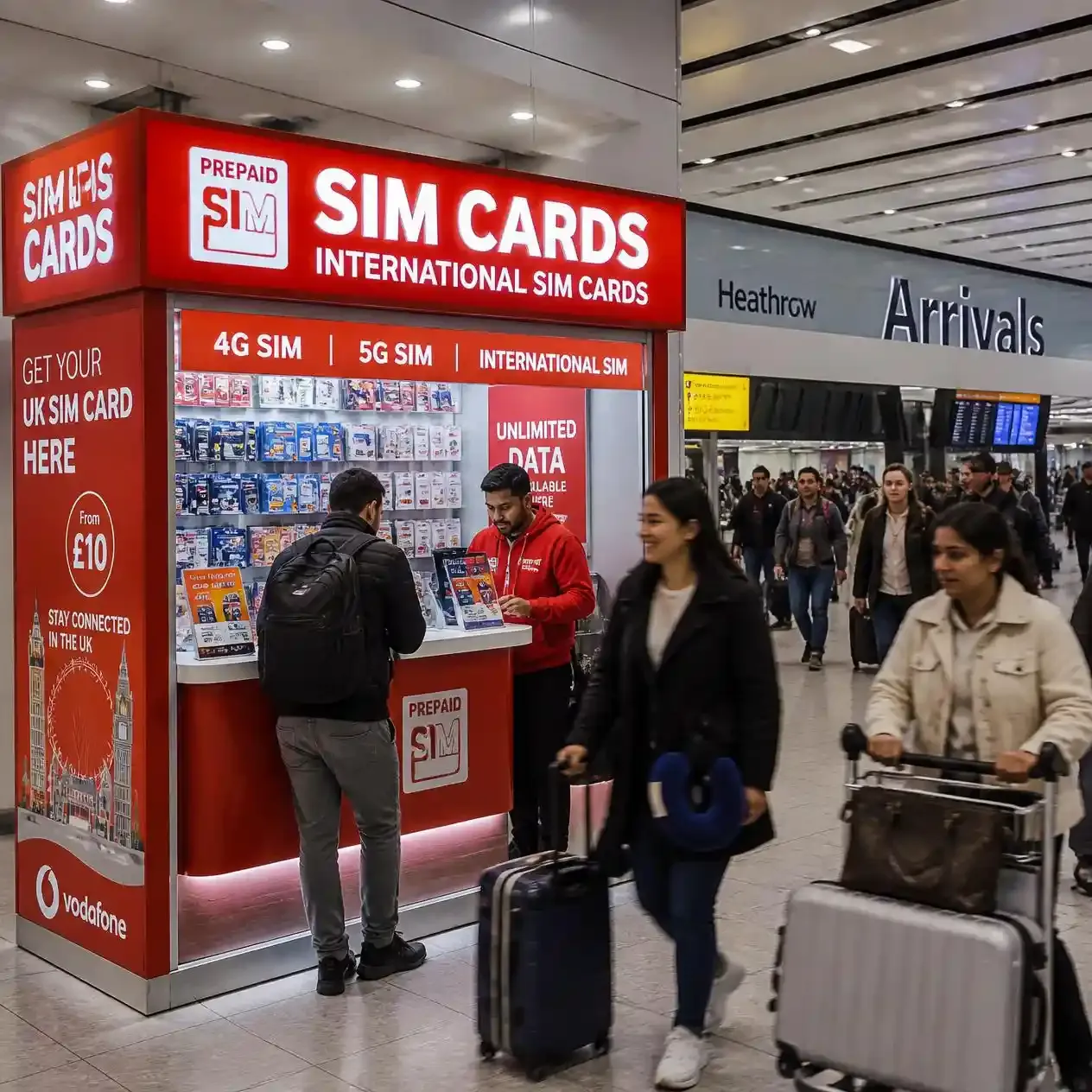
You have just cleared the border at Heathrow, and the first thing you see in arrivals is a SIM vending machine promising instant data. Tap through it and you will pay a premium for exactly the same network coverage you could arrange in two minutes on your phone. The difference between a well-planned connection and an airport-counter impulse buy is often £10–£20 ($14–$27) — money better spent on your first proper meal in the city.
Staying online in London is less about survival and more about pace. Contactless is the default on the Tube and buses, restaurant tables get booked through apps, and half the pleasure of the city is following a side street on a map without stopping to hunt for signal. This guide walks through your real options for a London tourist SIM card — eSIM, physical SIM, and roaming — with 2026 prices, the right network for your trip, and where the value actually sits.
Do You Need a UK SIM or eSIM for London?
For most visitors staying more than a day or two, yes — a local SIM or eSIM is worth it, because it is almost always better value and more reliable than home-carrier roaming. The exception is a very short stop or a home plan that already includes free UK data. The decision comes down to how long you are here, how heavily you lean on your phone, and whether your device supports an eSIM.
Worth it if…
- You are staying three or more days and will use maps, transport apps, and contactless throughout the day.
- Your home network charges for roaming, or caps it at slow speeds once you cross a fair-use limit.
- You are moving between neighbourhoods and want a live connection while navigating — say, working out the walk from the Tower of London across to Borough Market for lunch.
- You are continuing on to Europe and want a single plan that covers the onward leg.
Not ideal if…
- You are on a sub-24-hour layover and can lean on hotel and airport WiFi.
- Your home plan already bundles free UK roaming at full speed (a growing number of North American and Gulf plans now do).
- Your phone is older or locked to its home network and cannot take an eSIM or a swapped physical SIM.
Reality check: check your phone is unlocked first
- A UK SIM or eSIM only works on an unlocked handset. Many phones bought on a home-carrier contract are locked.
- On iPhone, confirm under Settings > General > About > Carrier Lock. On Android, check with your home provider before you fly.
- Sort this at home — an unlock request can take a day or two to process, which is no use standing in an arrivals hall.

eSIM vs Physical SIM vs Roaming: Your Three Real Options
There are three ways to get your phone working in London, and the right one depends mostly on your device and how much you value convenience over a local number. An eSIM is a digital profile you install by QR code; a physical SIM is the plastic card you slot in; roaming is your existing home plan used abroad. Here is how they compare.
Travel eSIM — fastest, data-only
An eSIM is the path of least resistance if your phone supports one (broadly, iPhone XS and newer, Samsung Galaxy S20 and newer, Google Pixel 6 and newer). You buy a plan online from a provider such as Airalo, Saily, Holafly or Nomad, receive a QR code, and activate it in your phone's settings — you can be connected before you have collected your bags. The trade-off: most travel eSIMs are data-only, so they give you no UK phone number for calls or SMS.
Physical PAYG SIM — best data value, gives you a number
A pay-as-you-go physical SIM from a UK network (EE, Vodafone, O2, Three) or a reseller (giffgaff, Smarty, Lebara, Voxi) gives you the most gigabytes per pound and a real UK number for calls and texts. You will need an unlocked phone with a SIM tray and a couple of minutes to register the card. Resellers run on the big four networks, so coverage is the same while the price is often lower.
Roaming — simplest, only worth it if it's free
Using your home plan abroad means zero setup, but it is only sensible if your carrier includes the UK at no extra cost and at full speed. Pay-per-use roaming outside a bundle can be expensive and slow, and it rarely makes sense for a stay of more than a day.
| Option | Setup | UK number? | EU/onward coverage | Price range (2026) | Best for |
|---|---|---|---|---|---|
| Travel eSIM (Airalo, Saily, Holafly, Nomad) | Buy online, scan QR, activate in minutes | No (data-only) | Some brands offer UK+EU regional plans | £4–£30 ($5–$40) | Short city breaks, eSIM phones, minimal fuss |
| Physical PAYG SIM (Three, giffgaff, Smarty) | Buy online or in store, insert, register | Yes | Some plans include limited EU roaming | £10–£20 ($14–$27) for 30–100GB | Longer stays, heavy data, wanting a number |
| Home-plan roaming | None | Keeps home number | Depends on home plan | Free to costly, varies | Very short stops, plans with free UK data |
What a London Tourist SIM Card Costs in 2026
Prices in 2026 are competitive, and the honest headline is that you rarely need to spend more than £20 ($27) to stay comfortably connected for a two-week trip. The gap between options is smaller than the marketing suggests — the real variable is where you buy and how much data you commit to up front. All figures below are 2026 prices; £1 is roughly $1.35.
Travel eSIM pricing
- Entry data plans start around £4 ($5) for 1GB over a few days — fine for a weekend of light use.
- Mid-range plans run roughly £8–£18 ($11–$24) for 10–50GB, valid up to 30 days.
- Unlimited-data eSIMs (Holafly and similar) sit around £19.90–£30 ($27–$40) for 30 days, usually with a daily hotspot cap.
- Bundled eSIM deals with UK calls exist too — for example, 100GB with unlimited UK calls for about £15 ($20).
Physical PAYG SIM pricing
- Three's 30-day plan: about £15 ($20) for 100GB with unlimited UK calls and texts, plus a limited EU roaming allowance.
- giffgaff (on O2): a £12 ($16) "goodybag" gives 30GB with unlimited calls and texts, valid 28 days; SIMs post free to a UK address.
- Smarty (on Vodafone): around £10 ($14) for 30GB with unlimited calls and texts — online only.
- Lebara (on Vodafone): about £15 ($20) for 50GB plus international minutes, useful if you call home a lot.
Reality check: skip the airport kiosk
- Arrivals-hall vending machines and airport kiosks resell the same network coverage at a markup — often £15 ($20) or more for a small allowance.
- Ordering an eSIM online, or buying a physical SIM from a supermarket or high-street store (Tesco, Sainsbury's, or a branded EE/Three/O2 shop), costs less for more data.
- If you want to land connected, an eSIM bought before you fly beats any airport counter on both price and time.








Which SIM or eSIM Should You Choose?
The right London tourist SIM card depends on how long you are staying, how much data you use, and whether your trip stops at London or continues across Europe. Match yourself to one of the profiles below and the decision becomes simple.
Short city break (2–5 days)
Choose a data-only travel eSIM. For a few days of maps, messaging and browsing you will use 5–10GB, and an eSIM plan in that range costs roughly £5–£10 ($7–$14). You skip the airport entirely and arrive online. Providers running on EE (such as Airalo's UK plan) give you the widest coverage; those on O2, Vodafone or Three are just as solid across central London.
Families and heavier users
Choose a physical PAYG SIM with a large allowance, or one eSIM per phone. A Three or giffgaff bundle at £12–£15 ($16–$20) for 30–100GB covers a data-hungry week of shared navigation, photo uploads and the occasional stream on a long train ride. If several devices need connecting, a physical SIM with hotspot allowance in one phone can tether the rest.
Long stays and remote workers
Choose an unlimited-data plan. Smarty, Three or giffgaff offer genuine unlimited physical SIMs at £20–£30 ($27–$40) for 30 days, and unlimited eSIMs from Holafly sit in a similar band. Check the fair-use wording — most "unlimited" plans allow very heavy use before any slowdown, but a few throttle hard (see the reality check below).
Continuing to Europe
Choose a regional eSIM or a UK SIM that explicitly bundles EU roaming. Because a UK plan no longer includes EU data automatically, a traveller flying into London and on to Paris or Dublin is better served by a UK+EU eSIM from Saily or a similar brand, or a Three/Vodafone SIM with a stated EU allowance. The options presented on Travjoy are researched and approved by local experts, so if you are pairing connectivity with a wider trip you can plan the rest with the same confidence.
Ultra-short transit (under 24 hours)
Skip a local plan. Airport and hotel WiFi, plus any free roaming your home carrier offers, will see you through a single connection or a brief stopover without the cost of a new SIM.
Reality check: "unlimited" is not always unlimited
- Genuine unlimited plans from Three, Smarty and giffgaff allow heavy consumption before any fair-use throttling — fine for streaming and hotspotting.
- Some low-cost "unlimited" resellers (Lyca, Lebara) drop to around 128kbps after roughly 20GB, which makes video calls and map loading painful.
- Read the fair-use line before you buy, especially if you plan to tether a laptop or stream on long train journeys.
How Much Data Do You Actually Need?
Most visitors overbuy. For a typical London trip built around navigation, messaging and social media, 10–20GB is plenty for a week — you rarely need an unlimited plan unless you stream heavily or tether other devices. Sizing your data to the trip is the easiest way to avoid paying for gigabytes you will never touch.
Light use — 5–10GB
- Google or Apple Maps for getting around, WhatsApp and email, occasional browsing and social posts.
- Enough for a long weekend or a lightly connected week.
- Lean on free WiFi in cafés, museums and hotels to stretch it further.
Medium use — 20–30GB
- Constant navigation, steady social media, photo and video uploads, some music streaming.
- The sweet spot for most one-to-two-week trips, and the allowance most £10–£15 ($14–$20) bundles offer.
Heavy use — unlimited
- Video streaming on the move, video calls, hotspotting a laptop for work, or connecting several devices.
- Worth the step up to a genuine unlimited plan; otherwise a large 100GB bundle will comfortably cover it.
One London-specific note: your phone does more quiet work here than you might expect. Contactless travel on the Tube, live departure boards, restaurant bookings and last-minute tickets for the sights around Covent Garden or a weekend wander through Camden Market all lean on a live connection. It adds up faster than pure sightseeing suggests.
Buying, Activating and Avoiding the Traps
Buying a London tourist SIM card takes minutes once you know where to go and what to sidestep. The two golden rules: order an eSIM before you fly if your phone supports one, and if you want a physical SIM, buy it online or on a high street rather than at the airport.
Where to buy
- eSIM: online from Airalo, Saily, Holafly, Nomad or a UK network's own eSIM. Buy 1–2 days before departure, receive a QR code, and activate on landing over airport WiFi.
- Physical SIM: supermarkets (Tesco, Sainsbury's), branded network stores (EE, Three, O2, Vodafone) on any high street, or convenience shops showing a giffgaff or Lebara logo. giffgaff will also post a free SIM to a UK hotel address if you order a few days ahead.
- Avoid: airport vending machines and kiosks for physical SIMs, where the same coverage costs more.
Activating and registering
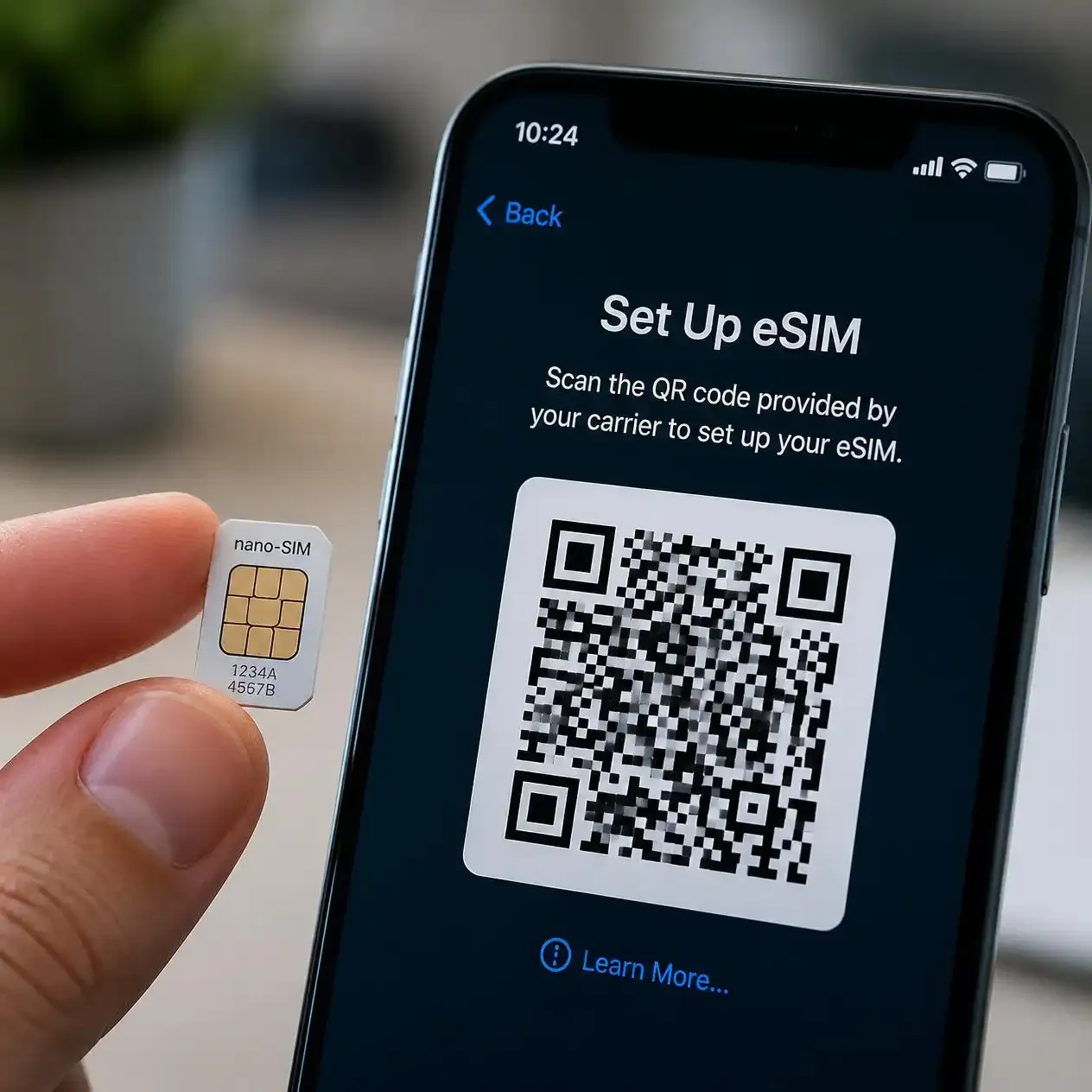
- eSIM: scan the QR code, install the profile, and set it as your data line in settings. Turn data roaming on for that line — it is normal for travel eSIMs.
- Physical SIM: insert the nano-SIM (UK SIMs are standard nano size), then register the plan online or via the provider's app to choose your bundle.
- No ID is generally required for a prepaid SIM, though staff may ask for a passport when topping up larger amounts.
Reality check: data-only eSIMs have no number
- Travel eSIMs give you data but no UK phone number, so you cannot receive SMS one-time passcodes on them.
- Keep your home SIM active (calls and texts on, data off) so bank and app verification codes still reach you.
- If you really need a local number — for restaurant callbacks or app sign-ups — choose a physical PAYG SIM instead.
If your trip continues to Europe
Since the UK left the EU, roaming between the UK and Europe is no longer guaranteed on either side. A standard UK SIM will not necessarily give you free data in France or Spain, and an EU SIM may stop working in Britain after a set period. If your itinerary crosses the Channel, buy a regional UK+EU eSIM or confirm your UK plan's EU allowance before you rely on it. Note too that only some UK plans (Three and Vodafone among them) include Northern Ireland cleanly, and the Republic of Ireland is a separate roaming question.
Getting connected before you go
Sorting your London tourist SIM card before you fly is one of the smallest jobs on a trip plan and one of the most useful. Decide between an eSIM and a physical SIM based on your phone and whether you want a UK number, size your data to how you actually travel rather than the biggest bundle on offer, and buy anywhere except an airport kiosk. Get those three right and you land in the city already online, ready to tap through the Tube and follow the map wherever it leads. When you are set on connectivity, browse our top 20 London experiences or start planning the rest of your trip on Travjoy's London page.







.svg&w=1920&q=75)