



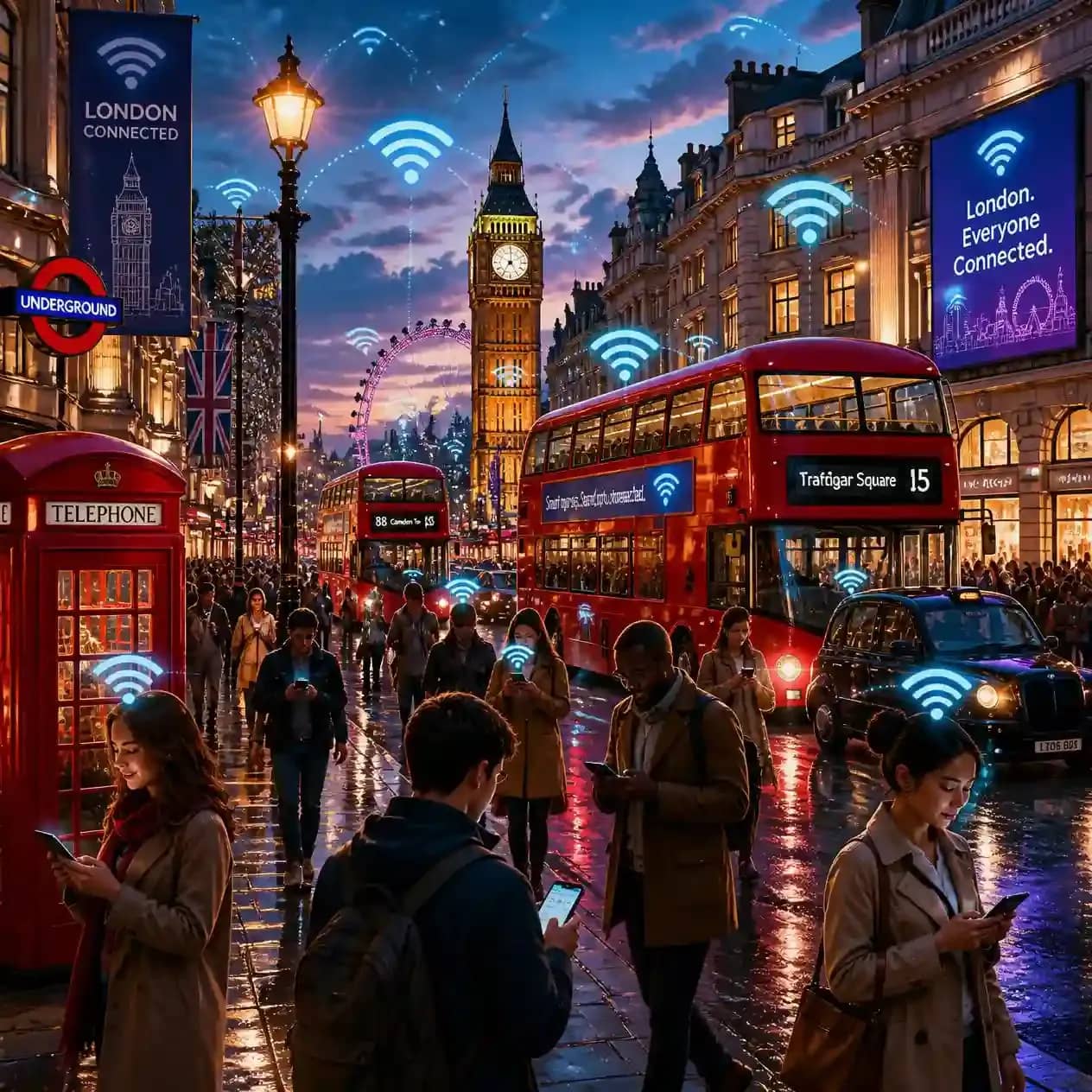
London Internet and WiFi: The 2026/27 Guide to Getting Connected for Discerning Travellers
8 min read
Key Highlights
- For most visitors, a UK eSIM bought before you fly is the easiest way to sort London internet for tourists — plans run roughly £3–£30 (about USD 4–38) and connect the moment you land.
- A physical UK SIM (Three, EE, Vodafone, O2) can be marginally cheaper per gigabyte, but means finding a shop and showing ID; airport kiosks charge 30–50% more than in-city stores.
- The London Underground is being fitted with 4G and 5G — around 60% of subsurface stations and the whole Elizabeth line are live as of mid-2026, with the full network due by year end.
- Free public WiFi is widespread in hotels, cafés and museums, but it is a supplement, not a plan — use a VPN for anything sensitive.
- Roaming is the least predictable option since Brexit; some plans still include the UK, many now charge daily fees or fair-use limits.
The best option for London internet for tourists in 2026/27 is a UK eSIM installed before departure: expect to pay around £8–£20 (roughly USD 10–25) for 10–20GB valid for 30 days, running on a major network such as EE or Vodafone so you also get signal on the newly connected Tube. A physical UK SIM works out slightly cheaper per gigabyte if you are happy to visit a shop, while international roaming only makes sense if your home plan already includes the UK at a fair rate.
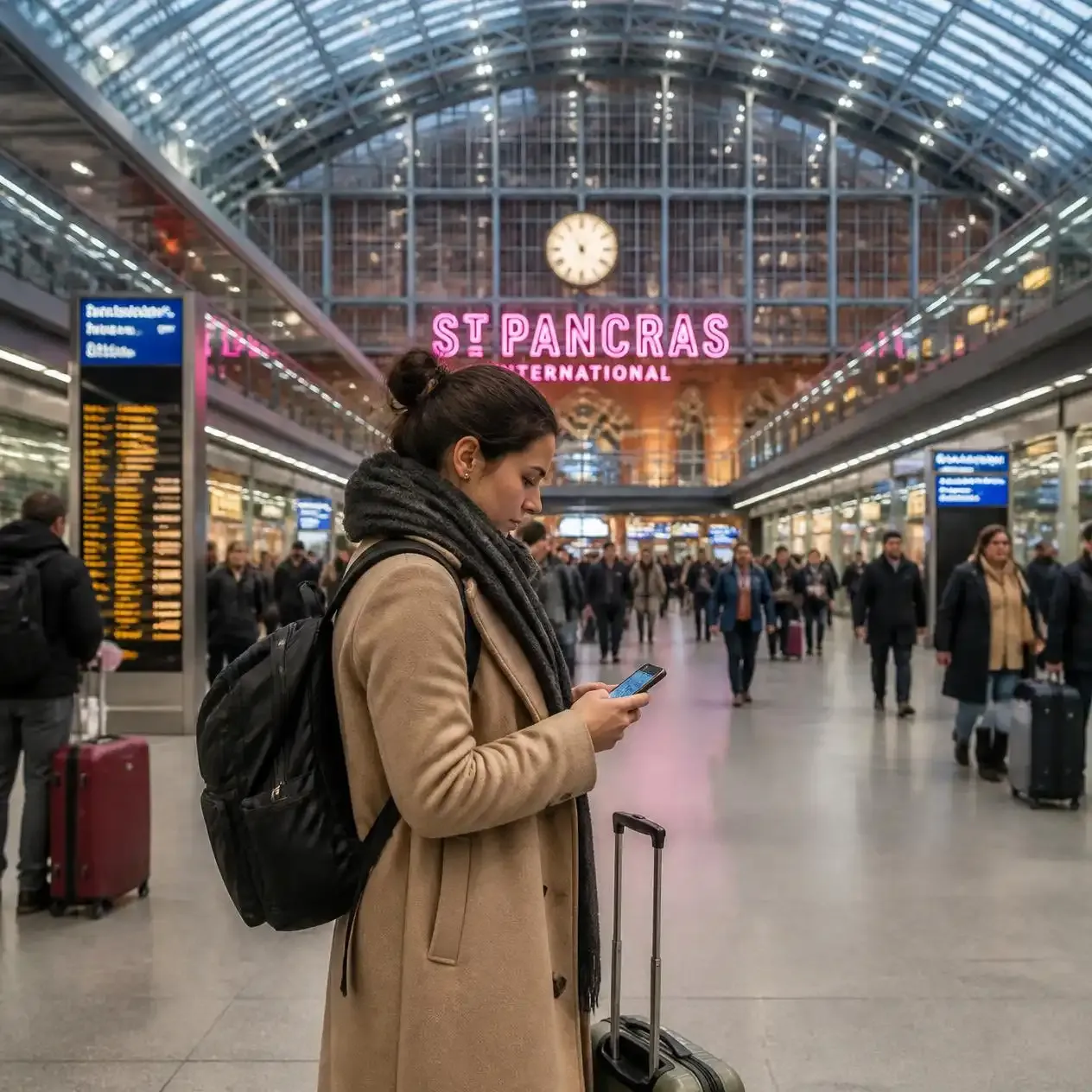
You land at Heathrow at six in the morning, clear the e-gates, and want a car to your hotel in Marylebone before the jet lag sets in. The ride app needs data to confirm the booking, the Tube gateline wants a contactless tap, and the airport WiFi login page is stuck reloading. That scramble — hunting for a SIM kiosk while wheeling a suitcase through Terminal 5 — is entirely avoidable with five minutes of planning before you fly.
London is one of the better-connected cities you will visit, and getting online is rarely difficult once you know the landscape. The question is not whether you can get online in London, but which of five approaches fits how you actually travel: an eSIM, a physical SIM card, international roaming, a pocket WiFi device, or leaning on free public WiFi. Each has a place, and the wrong choice usually means either overpaying or arriving disconnected at the worst moment.
This guide compares all five with real 2026 prices in pounds and US dollars, honest trade-offs, and a recommendation based on your trip length and travel style. It also covers the one thing most connectivity guides skip: how the Underground's new mobile coverage changes which network you should be on.
Do You Actually Need a Local SIM or eSIM for London?
For any stay beyond a single day, yes — a local data plan is worth it. London runs on your phone far more than most capitals: transport, restaurant bookings, timed-entry tickets, and payment itself all assume you are online. You can technically get by on free WiFi alone, but you will feel the gaps the moment you step away from a signal and need directions or a car.
A dedicated data plan is worth it if:
- You are staying two or more days and using maps, ride apps, and restaurant bookings daily.
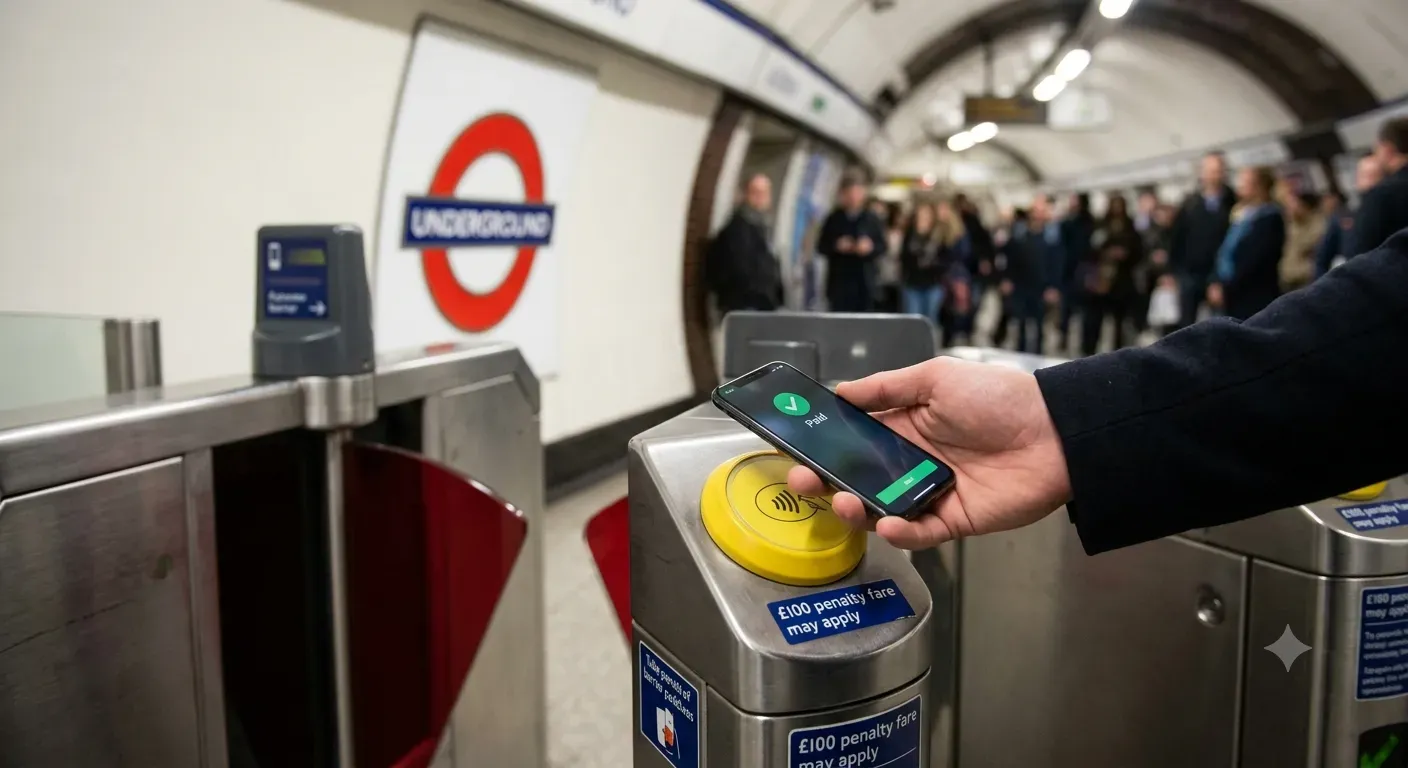
- You rely on contactless or a phone wallet to tap through Tube and bus gatelines, which is how most visitors now pay for transport.
- You want to book timed-entry attractions such as the Tower of London on the move, where walk-up queues in peak season regularly run past an hour.
- You are working remotely and need a reliable hotspot that does not depend on hotel WiFi.
It is less essential if:
- You are transiting for under a day and staying close to your hotel or the airport.
- Your home mobile plan already includes fair-priced UK roaming — worth checking before you pay for anything separate.
- You are travelling with a group and one person's hotspot can reasonably cover everyone for light use.
Reality check: London assumes you are online to pay
- The city is largely cashless in 2026 — most transport and many venues expect a contactless card or phone wallet, and you tap in and out at Tube gatelines rather than buying paper tickets.
- The TfL Go app for live journey planning, and almost every ride and delivery app, need data to work properly.
- Carry one physical contactless card as a backup in case your phone battery dies mid-journey — a flat phone at a gateline is the one failure a data plan cannot fix.
The Five Ways to Get Online in London
There are five realistic routes to London internet for tourists, and the right one depends on your device, your trip length, and how much admin you are willing to do on arrival. In short: an eSIM is the least hassle, a physical SIM is marginally cheaper per gigabyte, roaming is the least predictable, pocket WiFi suits groups, and free public WiFi is a supplement rather than a standalone plan. The table below sets them side by side.
| Option | Setup | Price range (2026) | Best for |
|---|---|---|---|
| UK eSIM | Buy online, install before you fly, activate on landing | £3–£30 / USD 4–38 (1–20GB) | Most visitors; anyone who wants to land connected |
| Physical UK SIM | Buy at a shop or kiosk, show ID, swap the card | £10–£20 / USD 13–25 in-city; more at airports | Longer stays; travellers who want the lowest cost per GB |
| International roaming | Enable in phone settings; nothing to buy | Free to ~£6+/USD 6+ per day, varies by carrier | Short trips where your home plan already includes the UK |
| Pocket WiFi rental | Reserve, collect or receive by post, carry the device | ~£5–£8 / USD 6–10 per day | Families and groups sharing one connection |
| Free public WiFi | Connect at hotels, cafés, museums, shopping centres | Free | Light users; a backup alongside a paid plan |
A quick word on each. An eSIM is a digital SIM you install by scanning a QR code, so there is no card to swap and nothing to collect — you keep your home number active on your physical SIM for calls and texts, and run UK data on the eSIM alongside it. A physical SIM gives you a UK number and often the lowest headline price, at the cost of a shop visit and a card swap. Roaming asks nothing of you except a settings toggle, but its cost is the hardest to predict. Pocket WiFi is a small hotspot device that several people share. And free WiFi is useful in London, but not something to build a trip around.
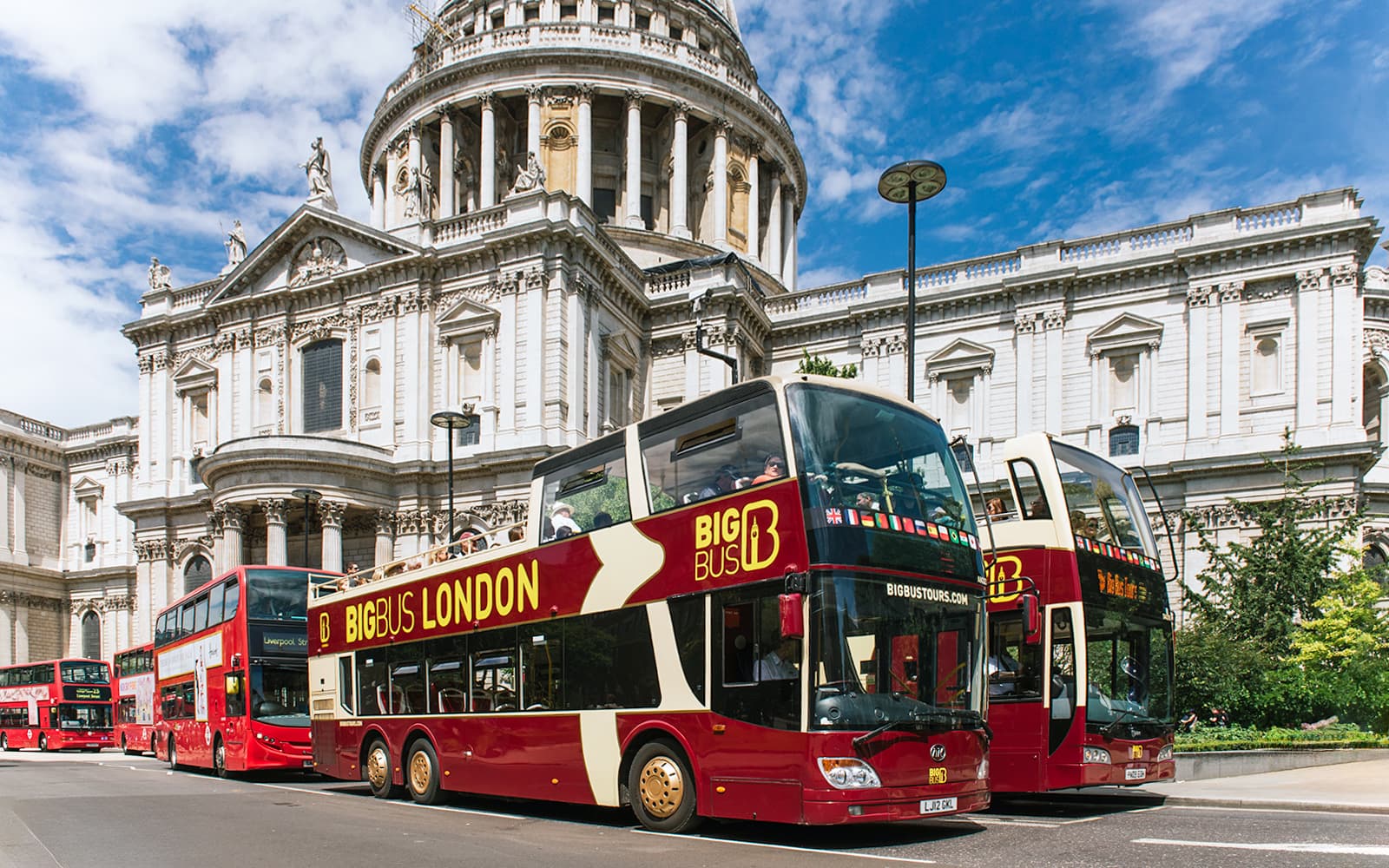
Whichever route you take, the experiences you will want to reach — from a hop-on hop-off sightseeing tour to a table at Borough Market — are far easier to navigate with a live connection in your pocket. On Travjoy, those options are researched and approved by local experts, so you can book the right version with confidence rather than working it out on the pavement.
Which Network Gives You Signal on the Underground?
If Tube coverage matters to you, choose a plan that runs on EE, Vodafone, Three, or O2 — those are the four networks connected to the Underground's new mobile system, and a data plan riding on one of them gets signal automatically at no extra charge. This is the detail most SIM guides miss, and in 2026 it is the single most useful thing to know about London internet for tourists.
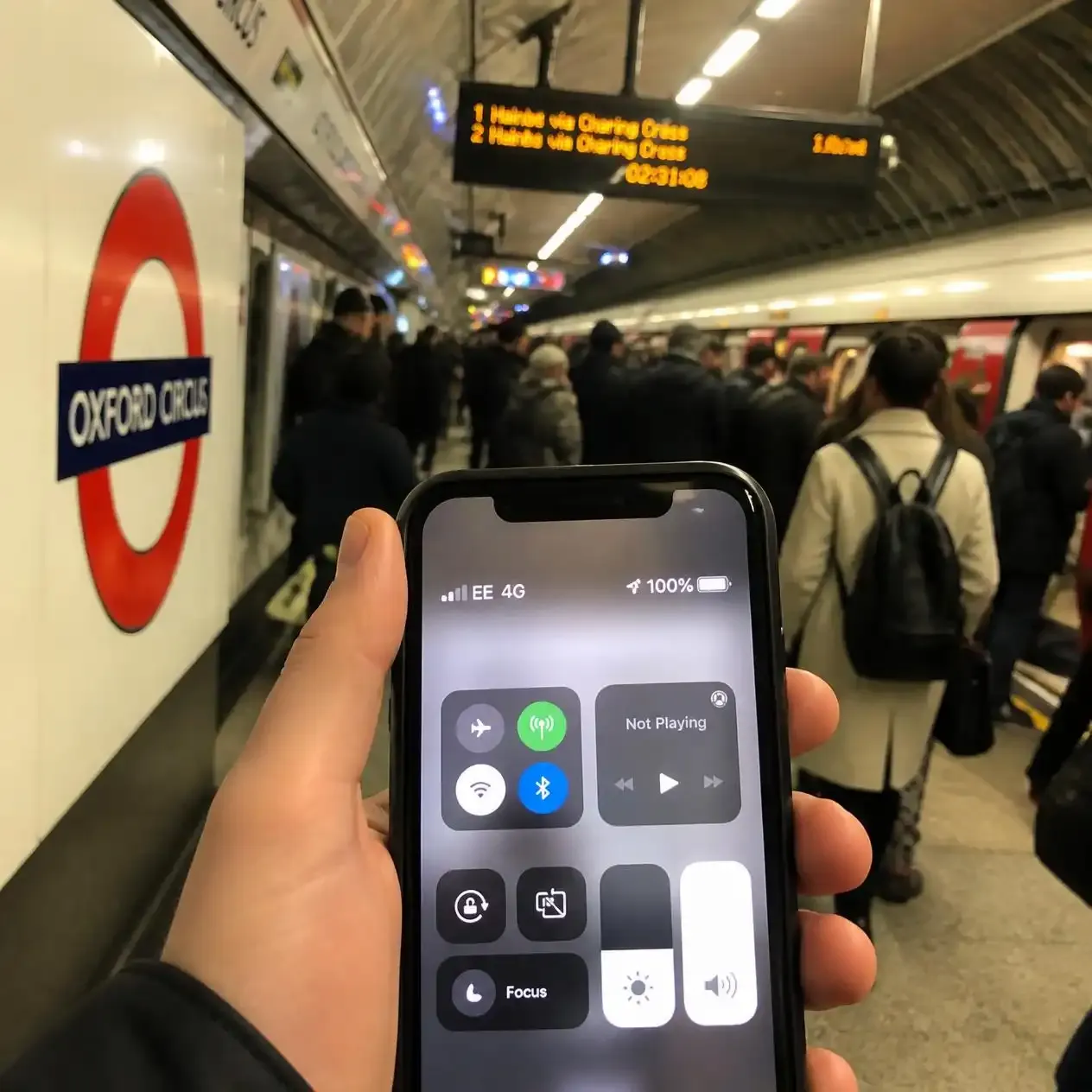
For years the Tube had only patchy WiFi that worked at some stations and never in the tunnels. That is being replaced. Transport for London and its partner Boldyn Networks are fitting the whole Underground with 4G and 5G, and progress has been steady:
- Around 60% of the 121 subsurface stations were live as of mid-2026, including ticket halls, platforms, and a growing number of tunnel sections.
- The entire Elizabeth line has been connected since December 2024.
- The full network — every underground station and tunnel, plus parts of the DLR and Overground — is targeted for completion by the end of 2026.
The practical upshot: your phone connects on its own as long as your eSIM or SIM runs on one of the four UK networks, so you can check a route or reply to a message between stops. An eSIM that uses EE (the network with the widest UK reach) or Vodafone is a safe pick for this. If your coverage is still on an older WiFi-only basis, you will only get signal while standing in certain stations, not while moving — another reason a proper data plan beats relying on station WiFi.







What It Costs in 2026 — eSIM, SIM and Roaming Pricing
Prices for London internet for tourists are low and predictable if you plan ahead, and easy to overpay for if you leave it to the airport. Here is what the three main paid options cost in 2026, in pounds and US dollars. Treat these as current ranges rather than fixed figures — promotions and plan sizes shift, and the exact number depends on how much data you buy.
eSIM pricing
- Small plans: from around £3–£4 (USD 4–5) for 1GB, useful only for a short stopover.
- Mid-range: roughly £8–£15 (USD 10–19) for 10GB valid 30 days — enough for a week of maps, apps, and messaging.
- Larger plans: about £15–£30 (USD 19–38) for 20GB, or unlimited-data plans from around USD 35 for shorter durations.
- Providers commonly used for the UK include Airalo (runs on EE), Saily, Holafly, Ubigi, and Nomad; EE also sells its own visitor plan from £5.
Physical SIM pricing
- A strong in-city deal is a Three UK pay-as-you-go SIM at around £15 (USD 18) for 25GB over 30 days — one of the lowest costs per gigabyte available.
- EE, Vodafone, O2, and budget networks such as Lebara and Giffgaff sell comparable prepaid data SIMs from high-street shops.
- Buy in the city, not at the airport: Heathrow and Gatwick kiosks often charge £15–£25 for a plan you would pay £10 for at a supermarket or network store in town.
- Bring your passport — most retailers ask for ID to register a SIM, and some outlets (including Post Office counters) may ask for a UK address, which tourists cannot provide, so a network's own store is the safer bet.
Reality check: the airport kiosk is the expensive way to buy
- Airport SIM counters can be closed on early-morning or late-night arrivals, and queues at busy terminals routinely run 30–45 minutes.
- An eSIM bought before you fly sidesteps both problems — you land already connected, with no counter to find and no queue to join.
- If you do want a physical SIM, wait until you are in the city and buy it from a network store at the in-town price.
Roaming — and a note on continuing to Europe
Roaming is the least predictable option since the UK left the EU's "roam like at home" arrangement. What you pay now depends entirely on your home carrier:
- Some EU carriers still include the UK at no extra cost; others apply a daily fee or fair-use cap, so check your plan's specific terms before relying on it.
- Carriers from further afield — including several US networks — can charge upwards of USD 6 a day, or bill per megabyte, where a few minutes of maps can cost several dollars and an unmanaged day can trigger a bill shock before the safety cap kicks in.
- An eSIM exists largely to remove this uncertainty: you pay a known price up front and never wonder what the bill will look like at home.
Reality check: if London is one stop on a wider European trip
- Since Brexit, most UK networks charge their own customers a daily fee (commonly around £2–£3) to use their allowance in the EU, so a UK SIM is not automatically a Europe-wide SIM.
- If you are pairing London with Paris, Amsterdam, or Dublin, a multi-country eSIM covering the UK and the EU on one plan is usually cleaner than juggling separate cards.
- Install and label your eSIM profiles before you leave home, on your own WiFi, so switching between them abroad is a single tap.
Free WiFi in London — Where It Actually Helps (and the VPN Rule)
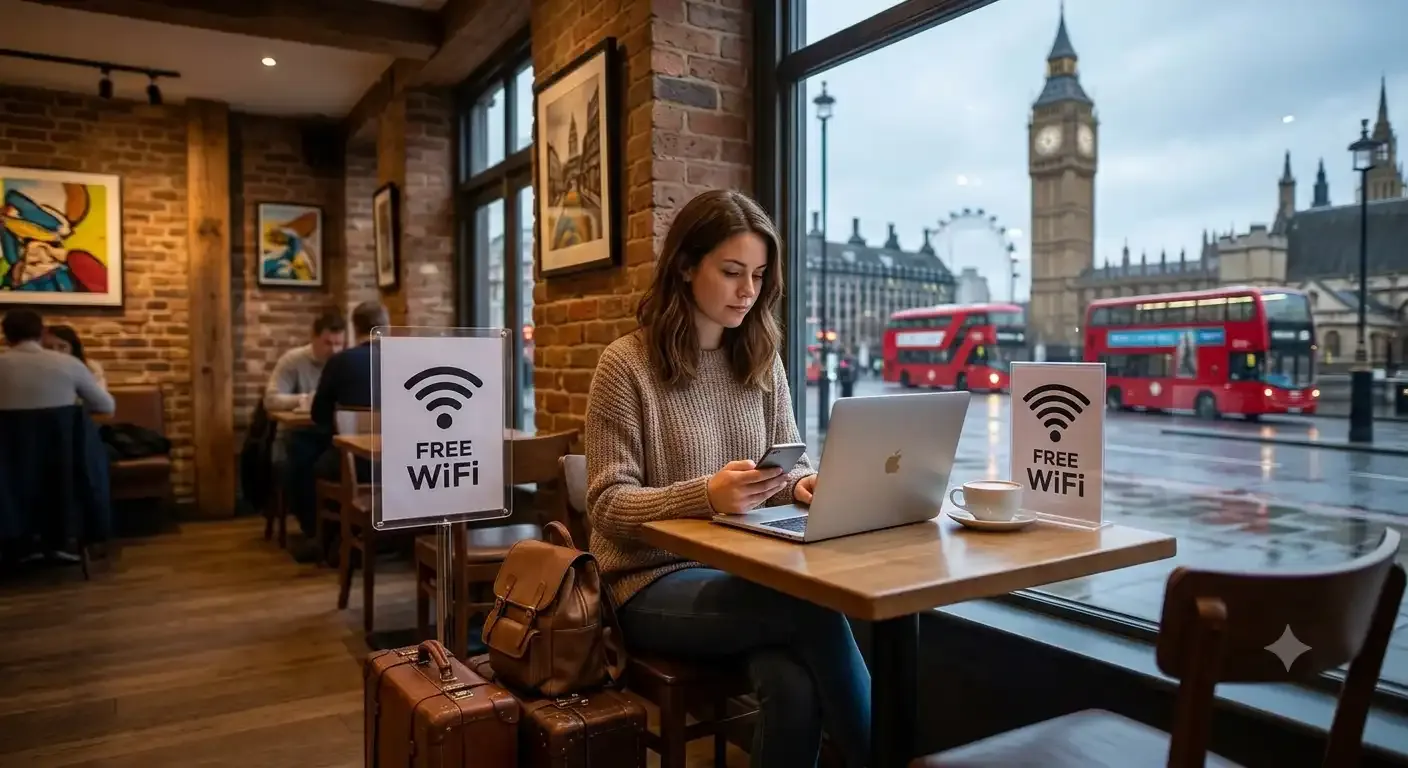
Free WiFi is one piece of the London internet for tourists picture, and in London it is plentiful and worth using — but it works best as a companion to a paid plan rather than a replacement. You will find reliable connections in most of the places you spend time, and a few you should treat with more caution.
Where free WiFi earns its place:
- Hotels — almost all offer in-room WiFi, and it is usually fine for calls, streaming, and planning the next day.
- Cafés and restaurants — chains and independents alike offer free WiFi; you will rarely be far from a network over a coffee.
- Museums and galleries — most major institutions provide free visitor WiFi, handy for exhibition apps and audio guides.
- Shopping centres and department stores — Westfield, Selfridges, and similar venues have open networks, and services such as The Cloud appear across many high-street locations.
The old station-only WiFi on the Underground is being overtaken by the full 4G and 5G rollout, so it matters less than it used to. And a safety note that applies everywhere: on any open, password-free network, avoid banking, entering card details, or logging into sensitive accounts unless you are using a VPN. For everyday browsing, maps, and messaging, public WiFi is fine; for anything involving money or passwords, use your own data or a VPN.
Which Option Should You Choose?
The right choice comes down to how long you are staying and how you travel. Here is a clear recommendation for each type of visitor, so you can decide in a sentence.
- Short city break (1–3 days): Choose a small UK eSIM (around 3–5GB). You land connected, spend a few pounds, and never touch a kiosk. Only skip it if your home plan already includes fair UK roaming.
- Week-long stay: Choose a 10GB eSIM on EE or Vodafone, which covers a week of maps, apps, and messaging and gives you Tube signal. If you would rather have the lowest cost per gigabyte and don't mind a shop visit, a Three physical SIM is the value pick.
- Families and groups: Choose a pocket WiFi device if several people need to share one connection, or fit each phone with its own small eSIM if everyone travels independently during the day.
- Business travellers: Choose an eSIM with a comfortable data buffer (15–20GB) so video calls and hotspotting never leave you rationing data, and keep your home number live on your physical SIM for work calls.
- Continuing into Europe: Choose a multi-country eSIM covering the UK and the EU on a single plan, rather than a UK-only SIM plus daily EU roaming fees.
For most people, one line settles it: buy a UK eSIM on a major network before you fly, size it to your trip, and keep your home SIM active for calls. It is the lowest-friction way to arrive in London ready to move — up The Shard for the view, across to Covent Garden for the evening — without a single connectivity worry.
Getting Connected, Then Getting On With Your Trip
Sorting out London internet for tourists takes about five minutes and one decision. For most visitors, a UK eSIM on EE or Vodafone, installed before you fly and sized to your trip, is the cleanest choice: you land connected, you get signal on the increasingly wired Tube, and your home number stays live for calls. A physical SIM is the value pick for longer stays, and roaming only earns its place when your home plan already covers the UK fairly.
Get the connection right and everything else — navigating, paying, booking on the move — simply works, leaving you free to enjoy the city rather than manage your phone. When you are ready to plan what to actually do once you land, start with the experiences researched and approved by local experts on Travjoy, or browse the top London experiences to build your itinerary with confidence.





.svg&w=1920&q=75)