



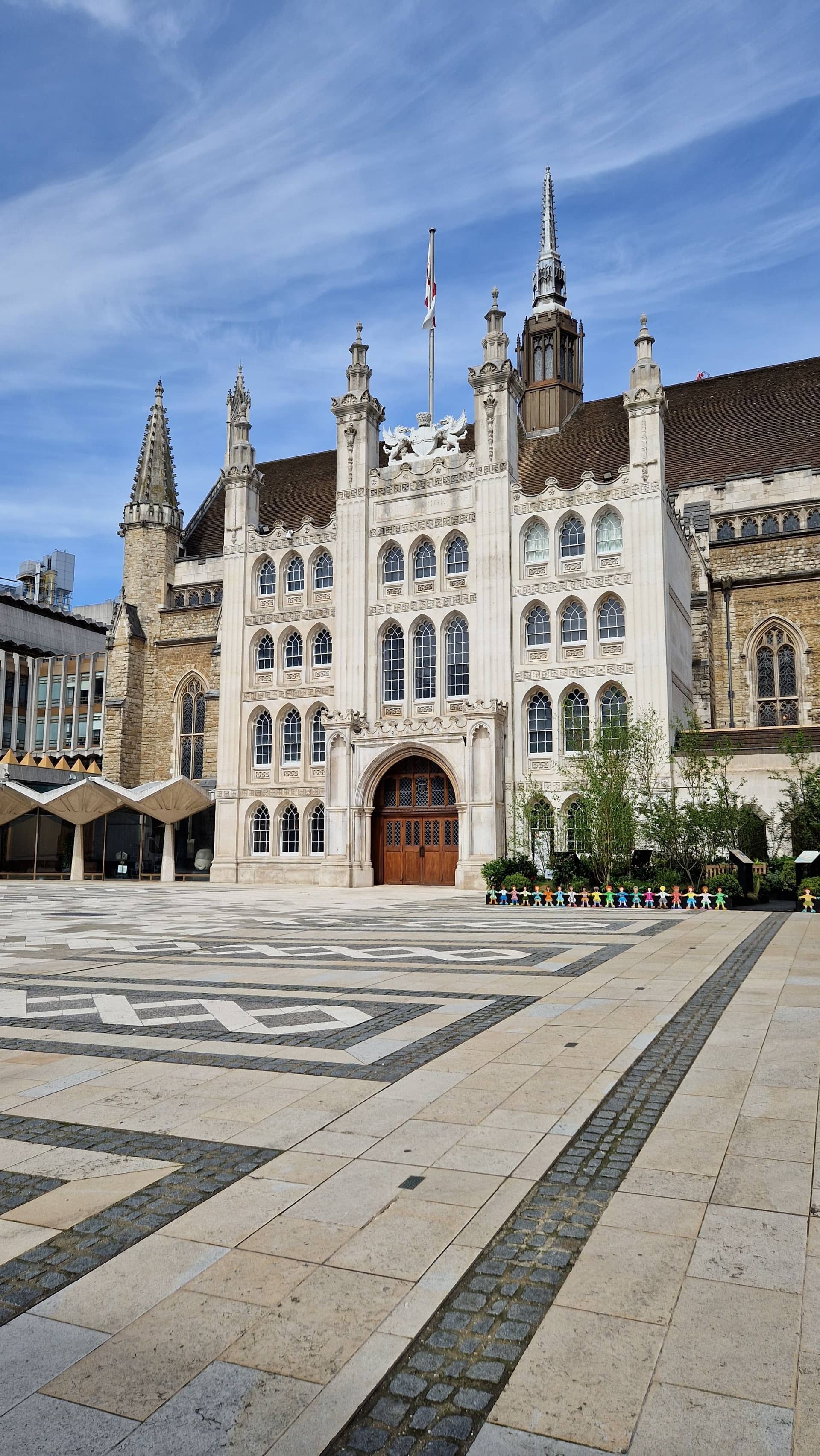
Guildhall London: A Complete Guide to the City's Medieval Heart — Great Hall, Art Gallery and Roman Amphitheatre
7 min read
Key Highlights
- Guildhall is the City of London Corporation's civic seat — a working centre of government for more than 800 years, not a museum piece.
- The medieval Great Hall, built in 1411, is the only secular stone building in the City to survive both the Great Fire of 1666 and the Blitz.
- Entry to the Great Hall, the Guildhall Art Gallery, and London's Roman Amphitheatre is free — the gallery and amphitheatre share one ticket.
- The amphitheatre sits 20 feet below Guildhall Yard, rediscovered in 1988 and opened to the public in 2002.
- A monthly guided tour adds the medieval crypts and the Old Library — the parts you cannot reach on a walk-in visit.
Guildhall London is the historic civic centre of the City of London, set just north of Cheapside in the Square Mile. The complex brings together a medieval Great Hall dating from 1411, the free Guildhall Art Gallery, and the remains of London's only Roman amphitheatre beneath the courtyard. Entry to all three is free, the gallery and amphitheatre run on a single admission ticket, and a monthly guided tour opens up the crypts and Old Library that walk-in visitors do not see.
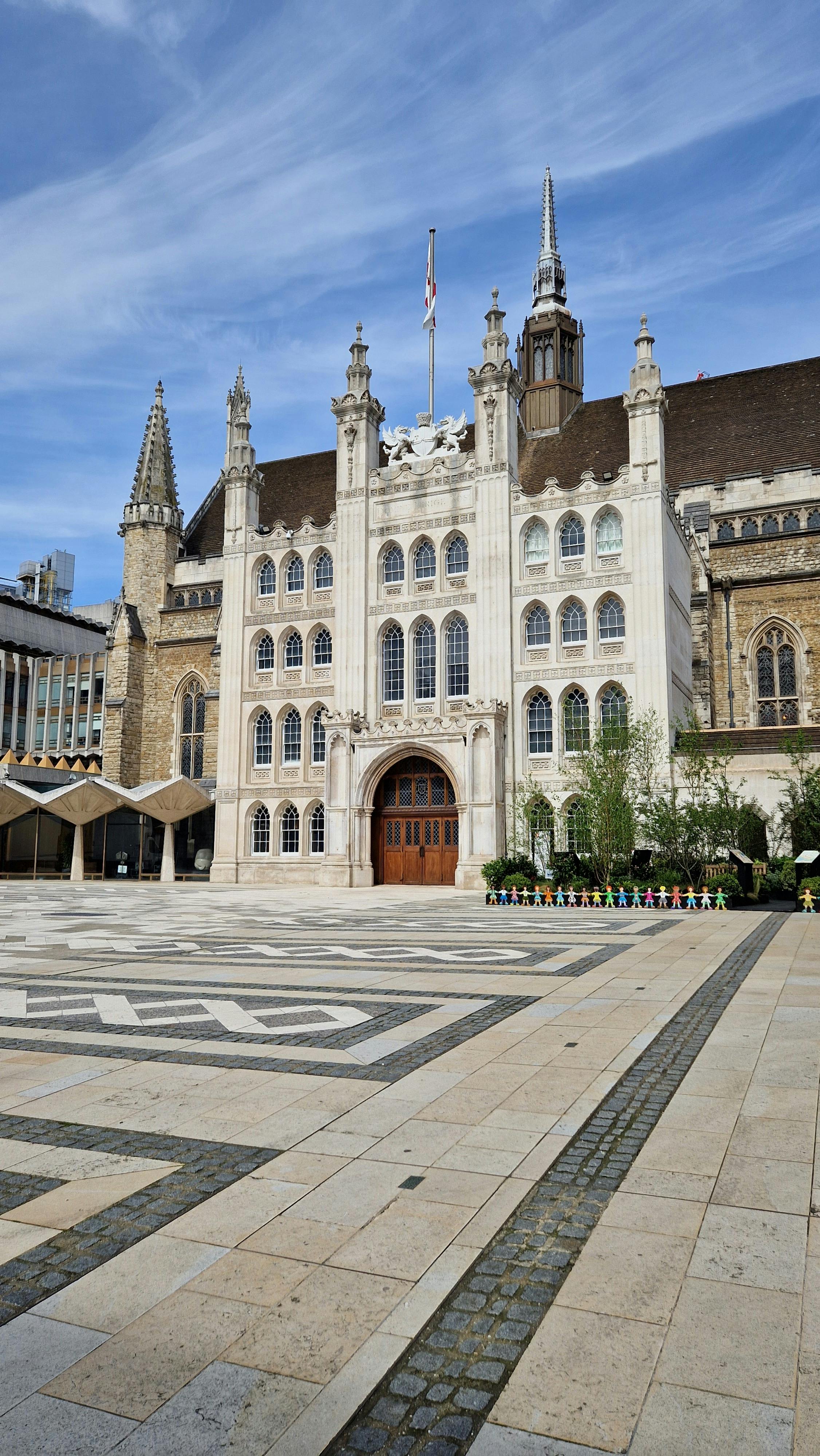
Most people who come to London for the headline sights walk straight past Guildhall without knowing it is there. It sits down a quiet side street off Cheapside, hemmed in by office towers, and it does not announce itself the way the Tower or St Paul's does. That is exactly why it rewards a second look.
This is one of the oldest pieces of working London you can stand inside. The Guildhall London complex has been the seat of the City's government since the Middle Ages, and the Great Hall at its centre has hosted state trials, royal banquets, and the speeches that still shape the calendar of the City today. Below it lie the largest medieval crypts in the capital; below the courtyard, the curved walls of a Roman arena.
This guide pulls the whole complex together in one place: what Guildhall is and why it matters, how to actually get inside the Great Hall, what to see in the art gallery and the amphitheatre, and how to fold it into a half-day around the Square Mile. The options you can book on Travjoy are researched and approved by local experts, so you can plan the visit around what is most worth your time.
What Is Guildhall London?
Guildhall London is the administrative home of the City of London Corporation — the local authority that has governed the Square Mile for well over 800 years. It is not a single building but a complex: the medieval Great Hall, a Victorian-era art gallery rebuilt in 1999, the West Wing library, the surrounding offices, and the open courtyard known as Guildhall Yard.
The name itself is a clue to its age. "Guildhall" is thought to come from the Anglo-Saxon word gild, meaning a payment or tax — this was very likely the place where citizens came to settle their dues. References to a London guildhall appear in a document from 1128, and the west crypt beneath the present hall is believed to date from the late 13th century.
The City of London is a constitutional curiosity, and Guildhall is where that shows. The Square Mile has its own Lord Mayor, its own police force, and its own elected assembly, the Court of Common Council, which still meets here. If you are interested in the art and heritage side of London, this is the building where the City's story actually happens rather than one that simply commemorates it.
The Square Mile in context
Guildhall stands at the centre of what was Roman Londinium, the walled trading city founded around AD 43. The City's boundaries have changed remarkably little since the Romans drew them. Knowing that as you arrive reframes the whole visit: the courtyard you cross was a Roman arena, the hall beside it is medieval, and the towers around it are the modern financial district — roughly two thousand years stacked on one small site.
The Great Hall — 600 Years of City Power
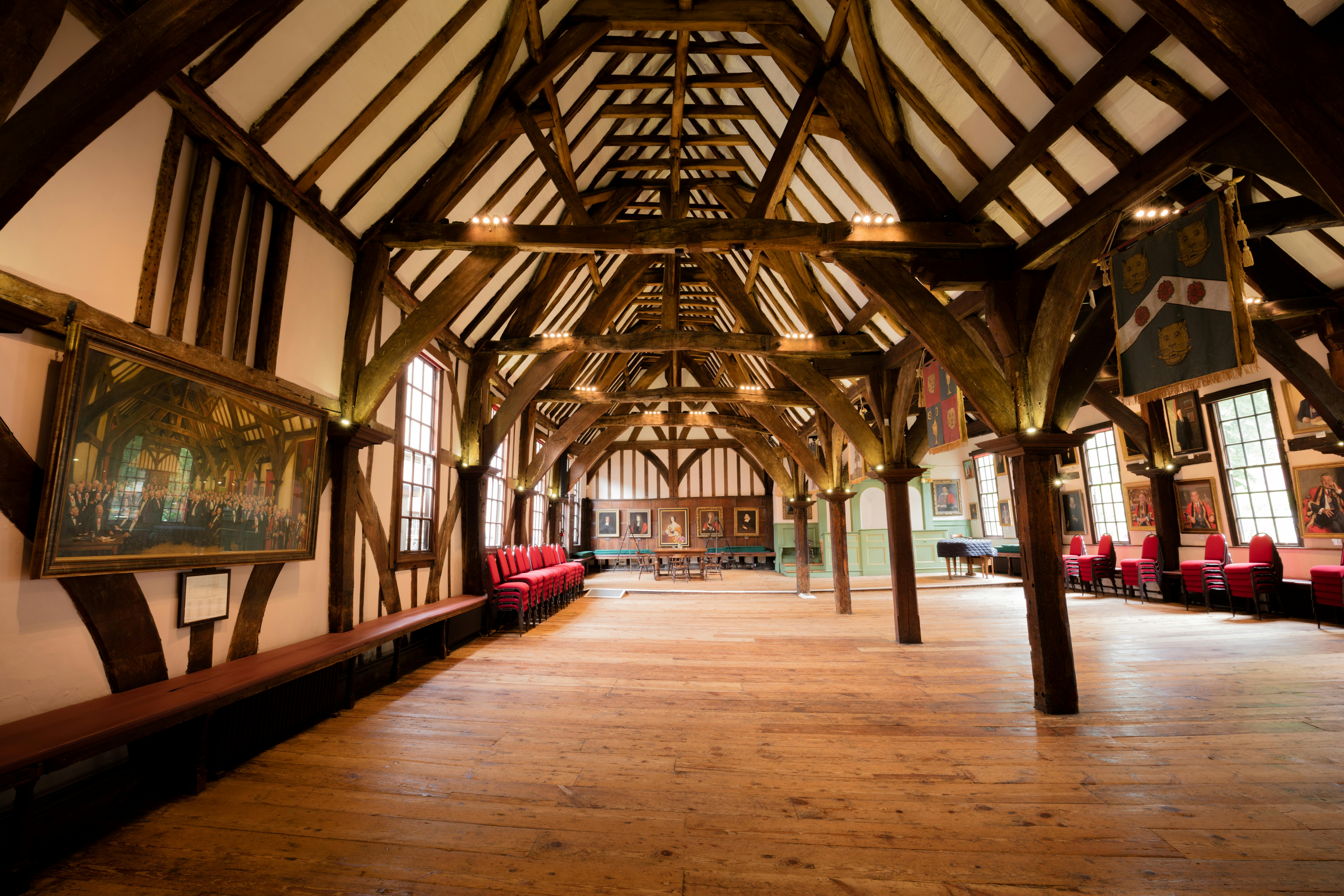
The Great Hall is the heart of Guildhall and its single most impressive room. Built in 1411 by the Lord Mayor Thomas Knoles and completed around 1440, it is the only secular stone structure in the City of London still standing from before the Great Fire of 1666. It survived that fire, and it survived the bombing of the Blitz — the roof has been rebuilt twice, but the medieval walls are original.
The scale is the first thing you notice. The hall runs around 46 metres long with ceilings reaching 27 metres, which made it the third-largest civic hall in medieval England, after Westminster Hall and the Archbishop's Palace at Canterbury. It is one of London's most significant heritage monuments, and it still functions as a ceremonial venue rather than a relic.
What to look for inside
The hall is lined with monuments to national figures, and they are worth slowing down for:
- Gog and Magog — two carved wooden giants, mythical guardians of the City, standing at the west end.
- Memorials to Admiral Lord Nelson, the Duke of Wellington, and Sir Winston Churchill, among Britain's most commemorated figures.
- Stained-glass windows recording the names of London's Lord Mayors across the centuries.
- The shields and banners of the City's livery companies — the historic trade guilds that gave the building its name.
The moments that happened here
This room has been the setting for genuine turning points in English history. The most famous is the 1553 trial of Lady Jane Grey, the "nine-day queen," who was condemned here. Today the hall hosts the Lord Mayor's Banquet each November, where the Prime Minister traditionally gives a major speech on government policy — a tradition that keeps Guildhall at the centre of national life, not just City ceremony.
How to Get Inside the Great Hall
There are two ways to see the Great Hall, and they suit different visitors. A walk-in visit is free and quick; a monthly guided tour costs a small fee and goes much deeper. Choose the walk-in if you want to admire the hall itself; choose the tour if you want the crypts and the Old Library, which are otherwise closed to the public.
The free walk-in
- Cost: Free.
- When: Most days when the hall is not booked for a civic event or a Court of Common Council meeting — these can close it at short notice, so it is worth checking ahead.
- How: Enter through the visitor doors to the side of the Great Hall, where your bags are checked, then walk through to the hall itself.
- Time needed: 20–30 minutes to take in the hall and its monuments.
The monthly guided tour
If you want the full picture, time your visit to the guided tour run by City of London Guides. It is the only way to reach the parts of Guildhall most visitors never see.
- Cost: Around £15 per person.
- Duration: About one hour.
- When: Monthly, on the morning of a Court of Common Council meeting — booking in advance is required through the City of London Guides.
- What it adds: The East and West crypts — the largest medieval crypts in London, the western one dating from the 13th century — plus the Old Library and the wider story of the City's government and livery companies.
If your timing allows, the tour pairs neatly with watching the Court of Common Council sit afterwards — a rare chance to see the City's centuries-old democracy in action rather than read about it.





Guildhall Art Gallery — the City's Art Collection
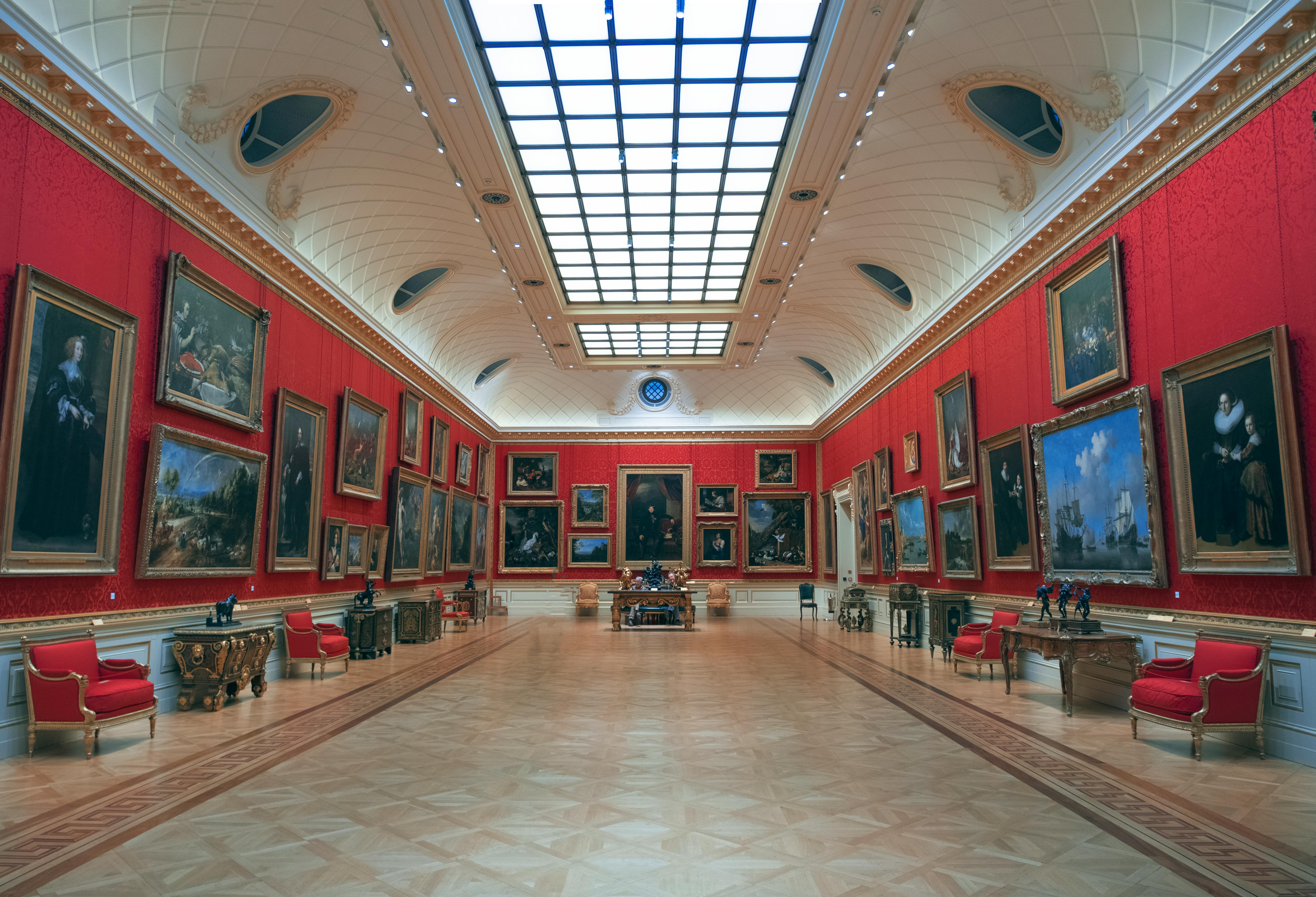
The Guildhall Art Gallery holds the City of London Corporation's own art collection, and entry is free. It is a compact, well-edited gallery rather than a sprawling one, which makes it a rewarding hour even if you are not a dedicated gallery-goer. The collection runs to roughly 4,500 works, including more than 1,300 oil paintings, dating from 1670 to the present day.
The City began collecting in the 17th century, commissioning portraits of the judges who settled property claims after the Great Fire of 1666. Since the Second World War the focus has narrowed to London itself, so much of what hangs here is the city painting its own portrait across four centuries. For the broader picture of the capital's museums and galleries, this is one of the most distinctive small collections in town.
The paintings worth seeking out
The gallery is strongest in Victorian and Pre-Raphaelite work, with a few standout pieces:
- La Ghirlandata by Dante Gabriel Rossetti — one of the gallery's best-known Pre-Raphaelite paintings.
- My Second Sermon by John Everett Millais — a much-loved Victorian favourite.
- The Last Evening by James Tissot — a sharply observed scene of London society.
- The Defeat of the Floating Batteries at Gibraltar by John Singleton Copley — a vast historical canvas that anchors the collection.
The gallery also houses the City of London Heritage Gallery, which rotates rarely seen documents and artefacts held in trust for the nation. Free guided tours run on most days, and the Smartify app lets you read the stories behind the paintings on your own phone as you go.
London's Roman Amphitheatre — 2,000 Years Below the Pavement
Beneath the Guildhall Art Gallery lie the remains of London's only Roman amphitheatre, and seeing them is included in the same free ticket. Historians had long suspected Londinium had an arena, but its location was a mystery until 1988, when archaeologists working on the foundations of the new gallery uncovered its curved stone walls. The site opened to the public in 2002 — the first time crowds had stood there in nearly two thousand years.
What survives is a stretch of the eastern entrance tunnel, the gate, and sections of the arena wall, kept 20 feet below the modern pavement in a controlled environment so the ancient stonework dries slowly without damage. Low lighting and projected figures sketch out the scale of the original arena, where Londoners once gathered for gladiatorial combat, animal fights, and public executions.
Back up at street level, look down: the full circumference of the amphitheatre is traced in a wide ring of dark paving stones across Guildhall Yard. Once you have seen the ruins below, that black circle turns the whole courtyard into a map of the Roman arena you were just standing inside.

Planning Your Visit and the City Walk Around It
Guildhall sits in the heart of the Square Mile, which makes it easy to combine with the City's other landmarks. Give the complex about 90 minutes to two hours if you want the Great Hall, the gallery, and the amphitheatre at an unhurried pace, then build a half-day around it.
Guildhall London at a glance
- Address: Guildhall Yard, Gresham Street, London EC2V 7HH.
- Cost: Free for the Great Hall, Art Gallery, and Roman Amphitheatre; the gallery and amphitheatre share one general admission ticket.
- Gallery and amphitheatre hours: Daily, 10am–5pm (last entry 4:45pm) — booking advised, walk-ins usually possible.
- Nearest tubes: Bank, St Paul's, Moorgate, and Mansion House are all within a short walk; Moorgate and Bank are closest.
- Time needed: 90 minutes to 2 hours for the full complex.
- Best paired with: A City of London heritage walk (see below).
What to combine it with
The strength of a Guildhall London visit is everything within a few minutes' walk. A natural City circuit:
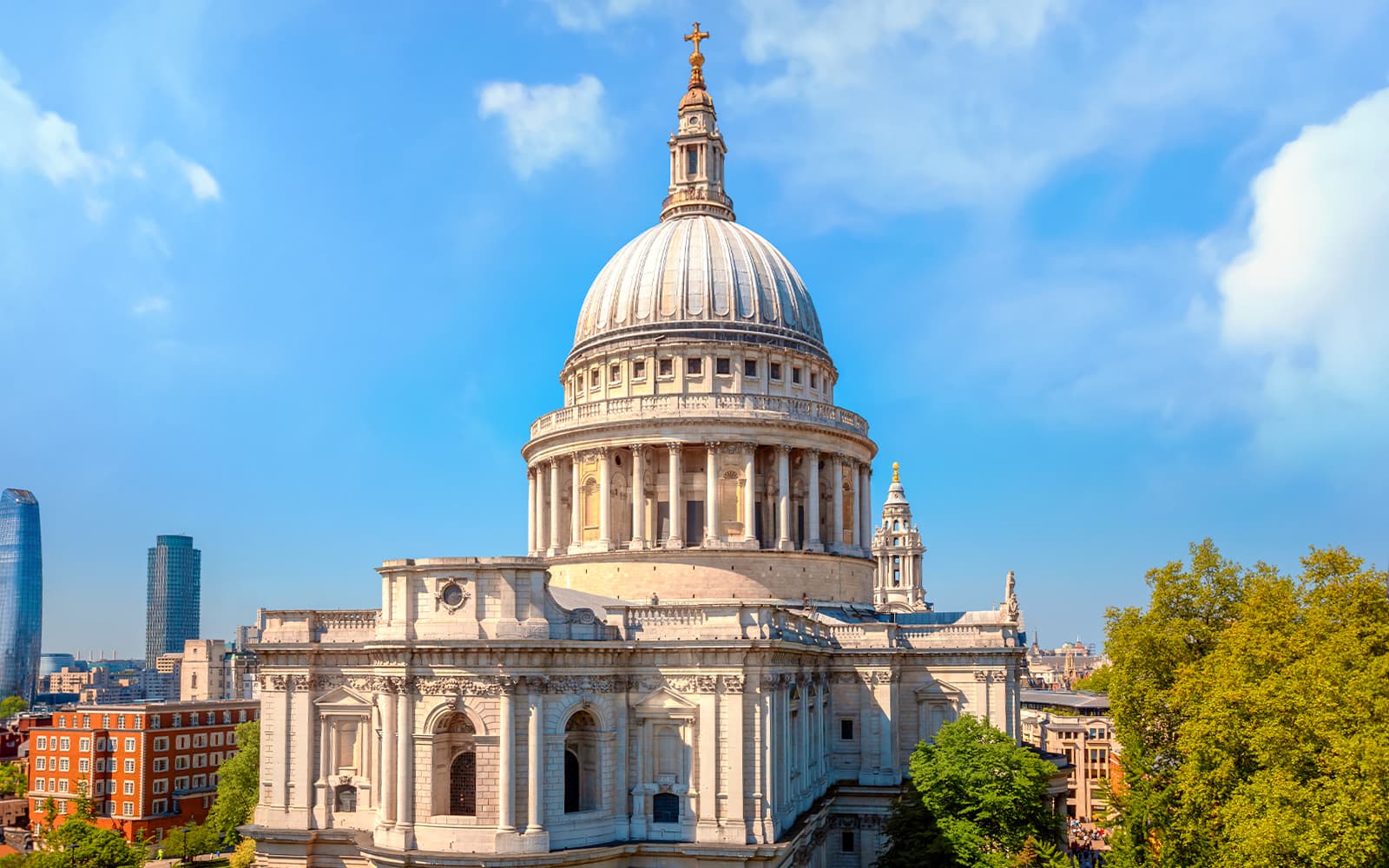
- St Paul's Cathedral — Wren's masterpiece, a five-minute walk south-west, and the natural anchor of any City day.
- St Lawrence Jewry — the official church of the City of London Corporation, designed by Wren, standing right beside Guildhall Yard.
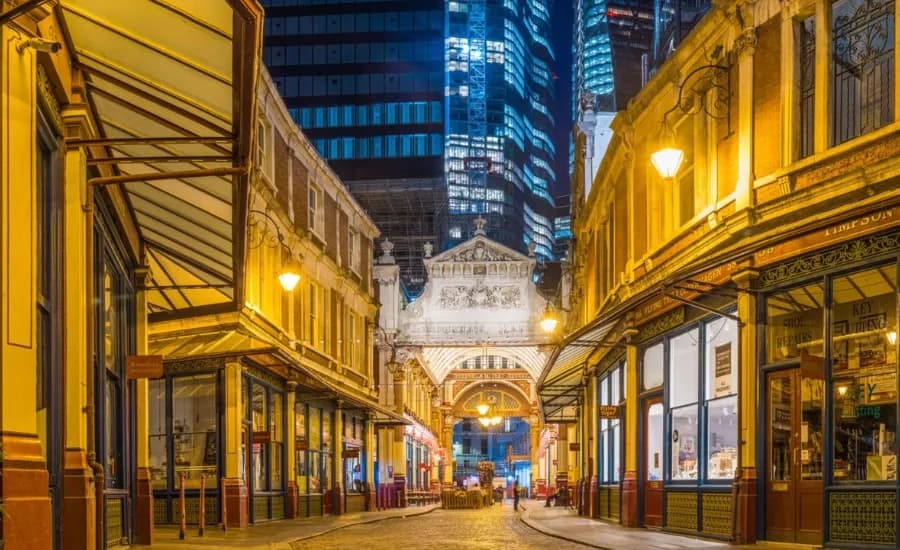
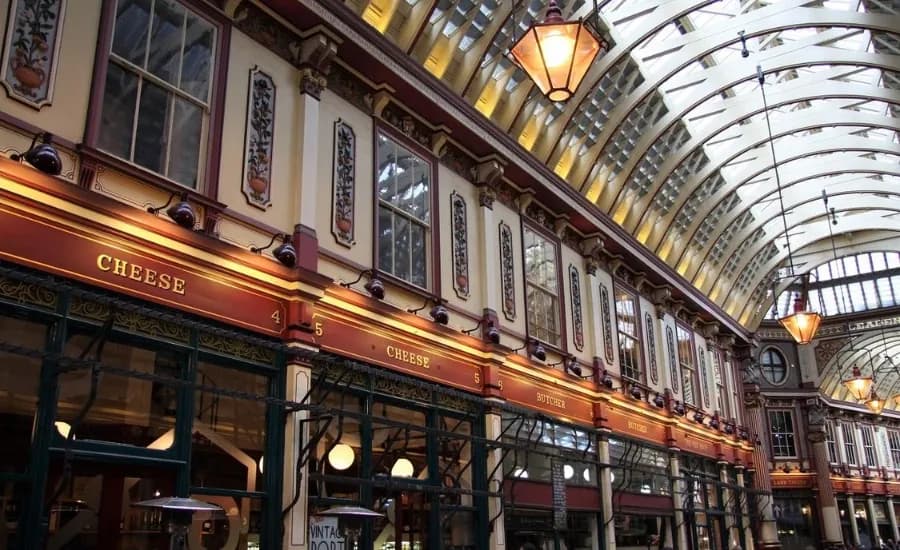
- Leadenhall Market — a covered Victorian market with ornate ironwork, ten minutes east toward the financial core.
- Temple Church — the 12th-century round church built by the Knights Templar, a short way west along the river side of the City.
When to go
The Square Mile empties out at weekends, when the office crowds are gone. That makes Saturday or Sunday the calmest time to see Guildhall and walk the surrounding streets without the weekday rush — though it is worth checking that the Great Hall is open, as civic events can still close it. If you want to see the City working at full tilt, a weekday lunchtime delivers the opposite energy.
Plan Your Visit to Guildhall London
For a single, free, and quietly extraordinary stop, Guildhall London is hard to beat: a medieval hall still in use, a sharp little art collection, and a Roman arena under your feet, all on one site in the oldest corner of the city. Give it a couple of hours, time the guided tour if you want the crypts, and let it anchor a slow walk around the Square Mile.
It is the kind of place that rewards knowing what you are looking at — which is exactly what turns a passing glance into a memorable afternoon. Start planning your City of London days, and the experiences worth booking around them, on Travjoy's London page.

.svg&w=1920&q=75)