



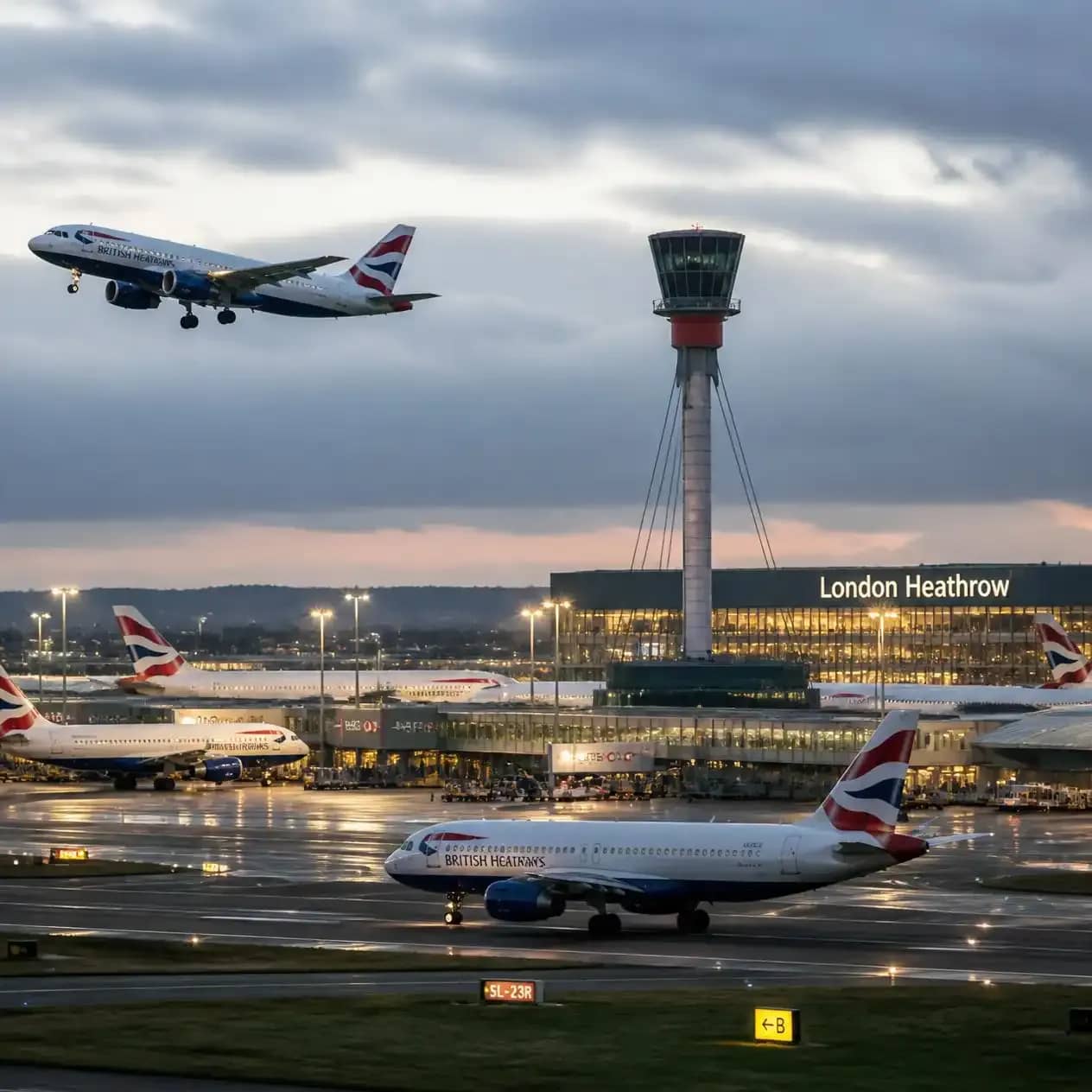
London Airports: A Complete Guide to Flying In and Out for Discerning Travellers
9 min read
Key Highlights
- London has six airports — Heathrow, Gatwick, Stansted, Luton, London City and Southend — together the busiest airport system in the world.
- London City and Heathrow are closest to the centre by travel time; Gatwick is the balanced middle; Stansted, Luton and Southend are the budget-Europe airports further out.
- A UK ETA is mandatory for most visitors since February 2026 — £20 (about $25), applied for before you fly.
- Fastest routes in: Heathrow Express to Paddington in 15 minutes, Gatwick Express to Victoria in 30, the DLR from London City in about 20.
- Contactless and Oyster work on the trains into town from every airport except Southend — just tap and go.
London is served by six London airports: Heathrow and London City are the closest and fastest to the centre, Gatwick is the balanced middle option, and Stansted, Luton and Southend handle most budget European routes from further out. Which one to fly into depends on your airline, where you are staying, and how much a fare saving is worth against a longer journey in. Every airport except Southend lets you tap a contactless card or phone straight onto the train into town.
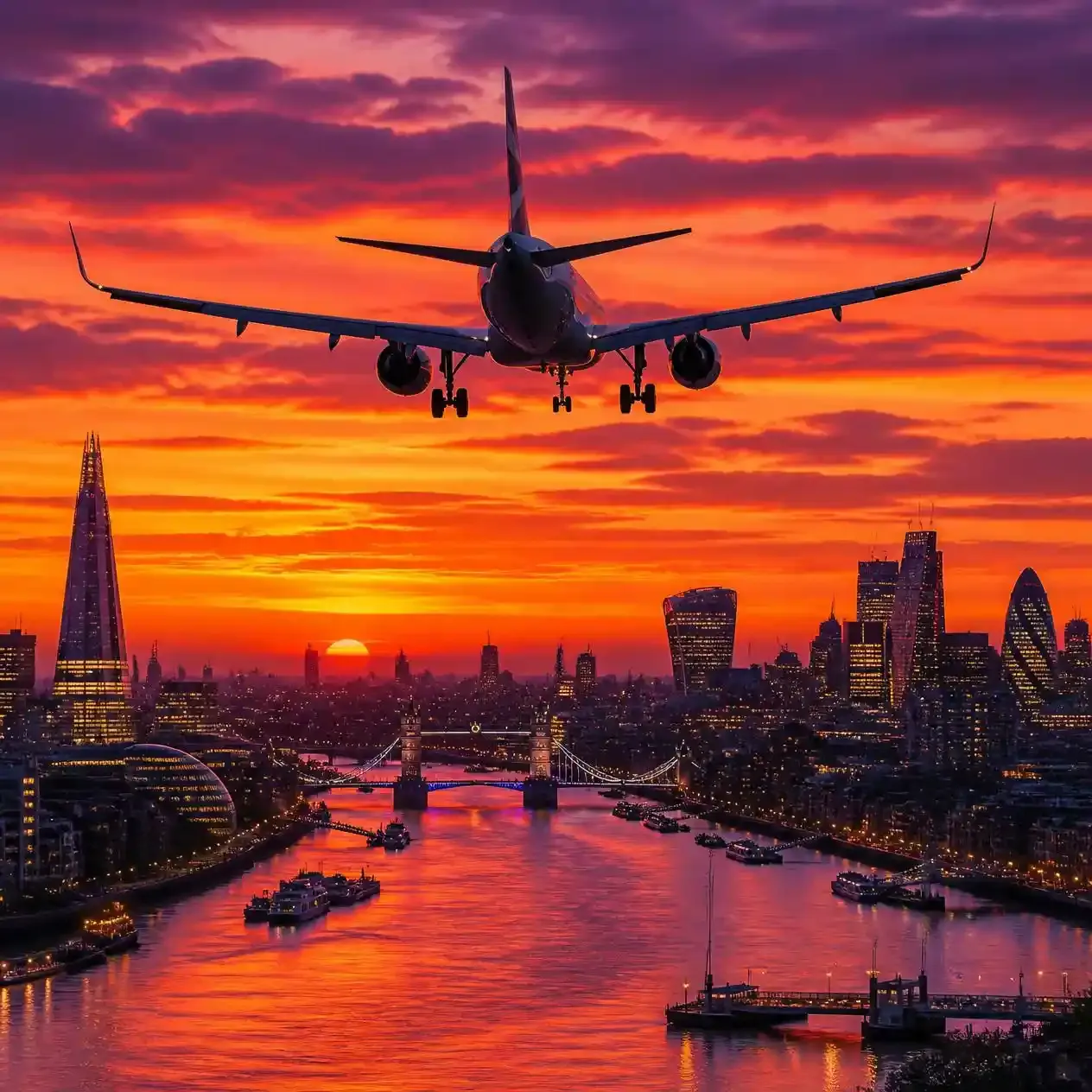
The flight home is the easy part. The decision that shapes your first morning in London is made weeks earlier, when you pick which airport to land at — and most travellers pick on fare alone, then pay for it on arrival with a long, luggage-heavy journey into town.
London's airports are the busiest system of their kind in the world, and they are not interchangeable. A 6am landing at London City puts you in the financial district in 20 minutes. The same landing at Stansted or Luton is an hour of train and connection before you reach a hotel. The gap is real money and real time, and it runs in both directions — arriving and departing.
This guide covers all six airports: which to fly into and why, every route into central London with 2026 fares, and what flying out actually involves now that the border rules, security lanes and drop-off charges have all changed. Read it once and you will plan both ends of the trip with your eyes open.
Which London Airport Should You Fly Into?
Choose Heathrow for the widest choice of long-haul flights and fast, frequent transport into town. Choose London City if you are heading to the City or Canary Wharf and want the shortest journey of all. Gatwick is the sensible middle when its fares beat Heathrow's, and Stansted, Luton or Southend make sense only when a budget-airline fare saving is large enough to justify the longer trip in.
The six London airports split cleanly into three tiers by distance and purpose.
The two closest: Heathrow and London City
Heathrow (LHR) sits about 14 miles west of the centre and handles the deepest international network of any UK airport — every major long-haul carrier flies here. It is the default choice for intercontinental routes and the one with the most frequent transport into town.
London City (LCY) is the closest of all, roughly six miles east in the Docklands. It is built for short-haul European and business travel, with a fast DLR link and almost no walk between plane and train. If your trip centres on the City, Canary Wharf or the ExCeL, nothing else gets you there faster.
The balanced middle: Gatwick
Gatwick (LGW) is about 30 miles south and mixes long-haul carriers (British Airways, Virgin, Emirates) with low-cost airlines. It is the airport to choose when a fare is meaningfully cheaper than Heathrow, or when you are heading to Brighton, Windsor or the south of England rather than straight into the city.
The budget-Europe trio: Stansted, Luton and Southend
Stansted (STN, about 40 miles northeast) is Ryanair's main UK base; Luton (LTN, about 29 miles north) is an easyJet and Wizz Air hub; Southend (SEN, about 40 miles east) is the smallest of the six. All three are worth it only when the flight saving clearly outweighs a slower, pricier journey into town — do that maths before you book, because the cheapest fare is not always the cheapest trip.
| Airport | Distance from centre | Fastest route in | Best for |
|---|---|---|---|
| London City (LCY) | ~6 miles east | DLR, ~20–25 min | The City, Canary Wharf, business trips |
| Heathrow (LHR) | ~14 miles west | Heathrow Express, 15 min | Long-haul, widest airline choice |
| Gatwick (LGW) | ~30 miles south | Gatwick Express, 30 min | Value long-haul, south England |
| Luton (LTN) | ~29 miles north | Train + Luton DART, ~30–40 min | Budget Europe, North London |
| Stansted (STN) | ~40 miles northeast | Stansted Express, ~47 min | Budget Europe, Cambridge |
| Southend (SEN) | ~40 miles east | Greater Anglia rail, ~55 min | Budget Europe, Essex |
Whichever you fly into, it is worth mapping what you actually want to do first. Our top 20 London experiences are researched and approved by local experts, so you can lock in the highlights before you land rather than deciding on the platform with your bags at your feet.
Getting From Each Airport Into Central London
The fastest way from Heathrow to central London is the Heathrow Express — 15 minutes to Paddington — while the Elizabeth line is the best-value fast option and the Piccadilly line the cheapest. From Gatwick it is the Gatwick Express to Victoria in 30 minutes; from London City, the DLR in about 20. For the outer airports, a dedicated express train is almost always quicker than a coach once you factor in luggage.
Here is every route into town, airport by airport, with 2026 fares in pounds and US dollars. Getting from the airport to central London is where the closer London airports earn their premium.
Heathrow to central London
- Heathrow Express: 15 minutes to Paddington, from about £25 ($32) at the gate and cheaper booked ahead. The fastest option.
- Elizabeth line: about 30–40 minutes to Paddington, Bond Street and Liverpool Street, roughly £12.80–15.50 ($16–20). The best balance of speed and value, and step-free with luggage.
- Piccadilly line (Tube): about 50–60 minutes, from £5.50 ($7). The cheapest, but slow and stair-heavy with cases.
Gatwick to central London
- Gatwick Express: 30 minutes to Victoria, from about £24 ($31). Victoria drops you minutes from Westminster and Buckingham Palace.
- Thameslink / Southern: 30–60 minutes to London Bridge, St Pancras and beyond, from about £12–15 ($15–19). Often more useful, and cheaper, if your hotel is not near Victoria.
- Coach: about 90 minutes, from a few pounds. Worth it only with time to spare and light bags.
Stansted, Luton and Southend
- Stansted Express: about 47 minutes to Liverpool Street, from around £20 ($26). Liverpool Street leaves you beside the City and the Tower of London.
- Luton: the Luton DART shuttle to Luton Airport Parkway, then a train to St Pancras — about 30–40 minutes all in, from around £10.60 ($14) booked ahead.
- Southend: Greater Anglia rail to Liverpool Street, about 55 minutes, from around £11.90 ($15).
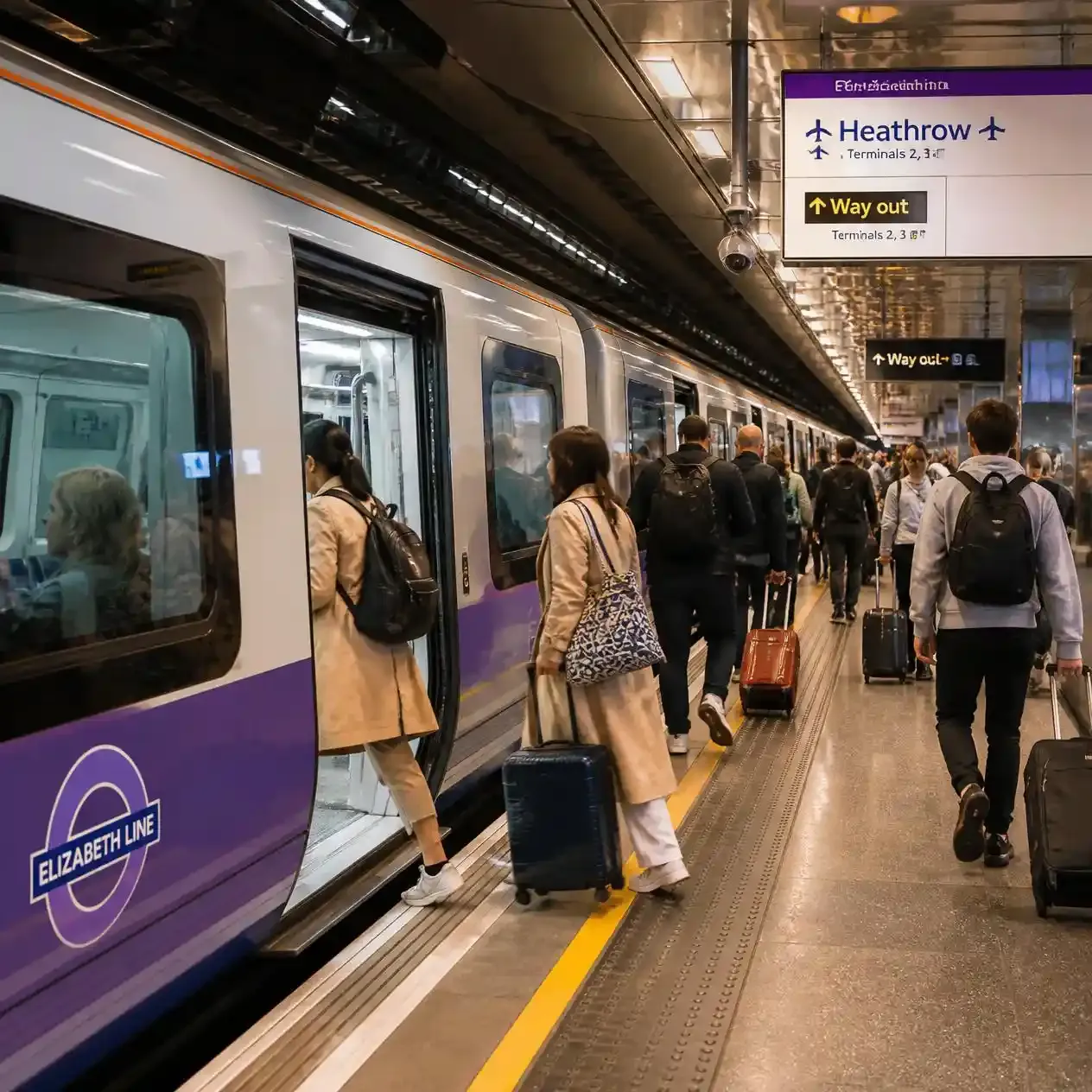
When a private transfer beats the train
A train wins on speed and cost for most solo and couple arrivals. A door-to-door transfer wins when the maths tilts the other way:
- Late-night or pre-dawn arrivals, when trains thin out and connections stretch.
- Families or groups with luggage, where several train fares plus a taxi at the far end approach the price of a single car.
- Cross-airport hops on split itineraries, such as Heathrow to Gatwick with bags.
Travjoy's private airport transfers and car hire are researched and approved by local experts, with the fare fixed before you land — useful when you would rather step off a long-haul flight and straight into a waiting car.
Landing Smoothly: ETA, Border and Payment
Before you fly to any London airport, you now need a UK Electronic Travel Authorisation (ETA) if you do not hold a UK or Irish passport — it is £20 (about $25), applied for through the official app, and usually approved within minutes. At the border, eGates speed most visitors through, and once you are landside you can tap a contactless card straight onto the train without buying a ticket.
The UK ETA — sort it before you book transport
Mandatory since 25 February 2026, the ETA applies to visitors from the US, Canada, Australia, the EU and around 85 visa-exempt countries. British and Irish citizens are exempt. It costs £20 ($25), is valid for two years or until your passport expires, and links to the specific passport you apply with. Apply through the UK ETA app or gov.uk — most decisions arrive in minutes, but allow three working days to be safe. Airlines check it before boarding, so no ETA means no flight.
Security and the border in 2026
Heathrow finished rolling out next-generation CT scanners across all four terminals in January 2026, and Gatwick has them too. In practice that means liquids up to two litres and your electronics can stay in your cabin bag — no more unpacking at the tray. At arrivals, most visitors use the eGates, which clear passport control in a few minutes.
Paying your way into town
Every airport except Southend lets you tap a contactless bank card or phone straight onto the train or Tube, and the same tap caps your daily fare automatically across London's transport. You do not need to buy an Oyster card or a paper ticket for the journey in. Download a maps app before you land and you can go from gate to hotel without queuing at a machine.
Sort before you fly
- UK ETA approved and linked to your passport (£20 / $25).
- Contactless card or phone wallet ready to tap — no ticket needed into town.
- Your terminal confirmed on your booking, especially at Heathrow.
- A transfer booked if you are landing late or travelling with luggage.




Flying Out: How Early to Arrive and the 2026 Rules That Changed
Arrive at your London airport two hours before a short-haul flight and three hours before a long-haul departure — three and a half in the summer and winter peaks. Those are terminal arrival times, not departure times, so add your journey from the centre on top. Airlines close check-in and bag drop well before departure, and missing that cutoff means your bag does not fly.
Flying out of London airports is smoother than it used to be, but the deadlines are strict and the airline sets them, not the airport.
Check-in and bag-drop cutoffs
- British Airways closes long-haul check-in 60 minutes before departure, short-haul 45 minutes.
- Ryanair and easyJet close bag drop exactly 40 minutes before departure — staff will not override it.
- Aim to be through security with at least 60 minutes to spare, whatever the airline.
- Many airlines offer night-before bag drop for early flights — worth using to remove the morning rush entirely.
The security change worth knowing
The old 100ml liquids rule is gone at the airports running CT scanners, which includes all of Heathrow and Gatwick. You can leave liquids up to two litres and your laptop in your bag. It is the single biggest reason security moves faster than it did — as long as you are not still packing to the old rules and holding up the lane.
The Premium Departure: Fast Track, Lounges and Terminals
At Heathrow, your terminal is set by your airline, not your destination, and the four terminals are arranged broadly by alliance. Fast Track security lanes at the major London airports cut the queue for around £13 booked ahead, and come included with most premium-cabin tickets and airline elite status. A lounge turns a two-hour wait into the best part of the departure.
Heathrow's terminals, by alliance
- Terminal 2: Star Alliance — Lufthansa, United, Singapore Airlines, Air Canada and others, plus Aer Lingus.
- Terminal 3: most of oneworld — American, Cathay Pacific, Qantas, Japan Airlines — alongside Virgin Atlantic and Delta.
- Terminal 4: SkyTeam and a mix of long-haul carriers; note the redevelopment works running through 2026.
- Terminal 5: British Airways, almost exclusively.
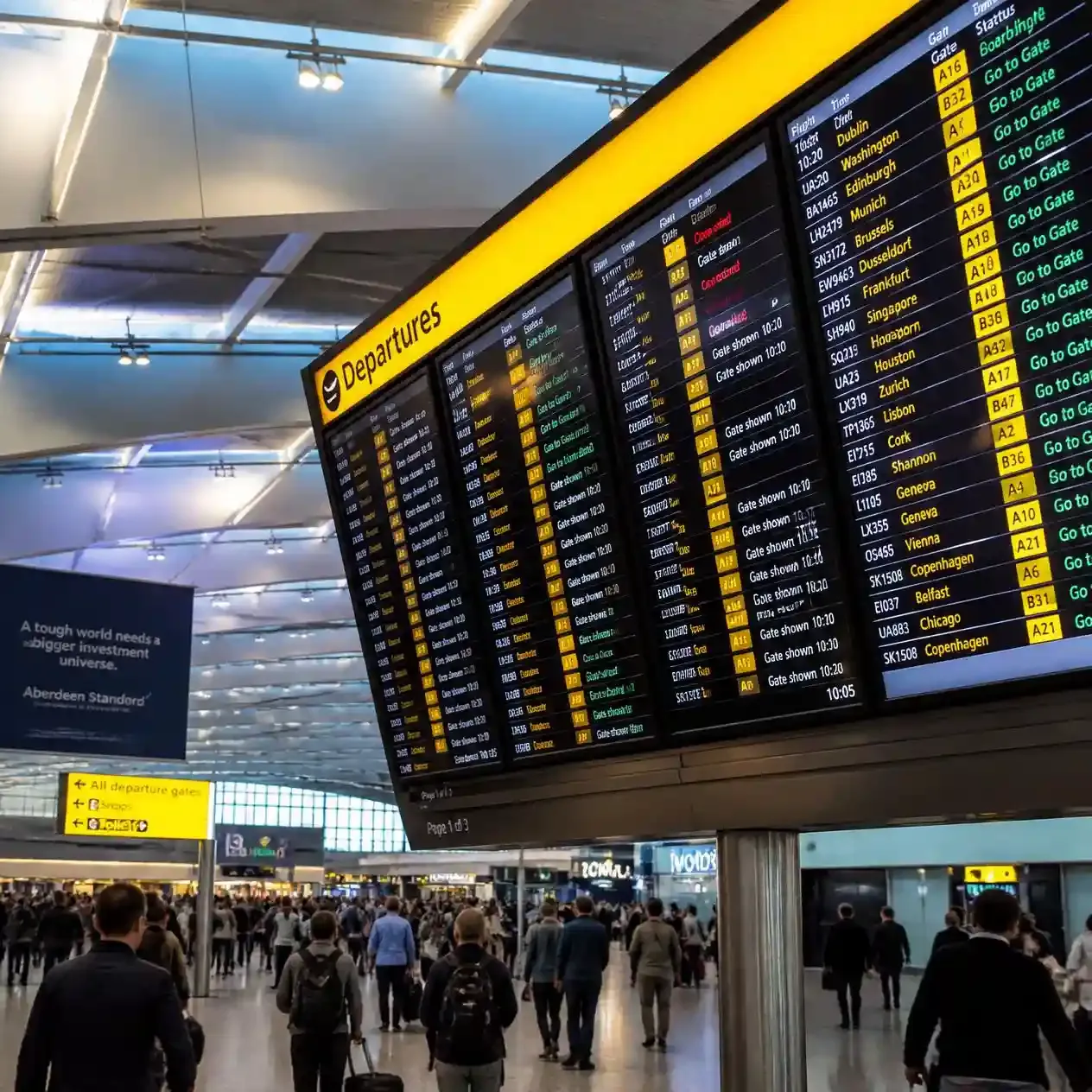
One trap at Terminal 5: it has three buildings, 5A, 5B and 5C, and gates in 5B and 5C are reached only by an internal transit train. Gates show about 45 minutes before departure, so if you are in a lounge when yours appears, leave 15 minutes to get there. Always confirm your terminal on your booking the night before — airlines occasionally change them, even on routes you have flown before.
Fast Track and lounges
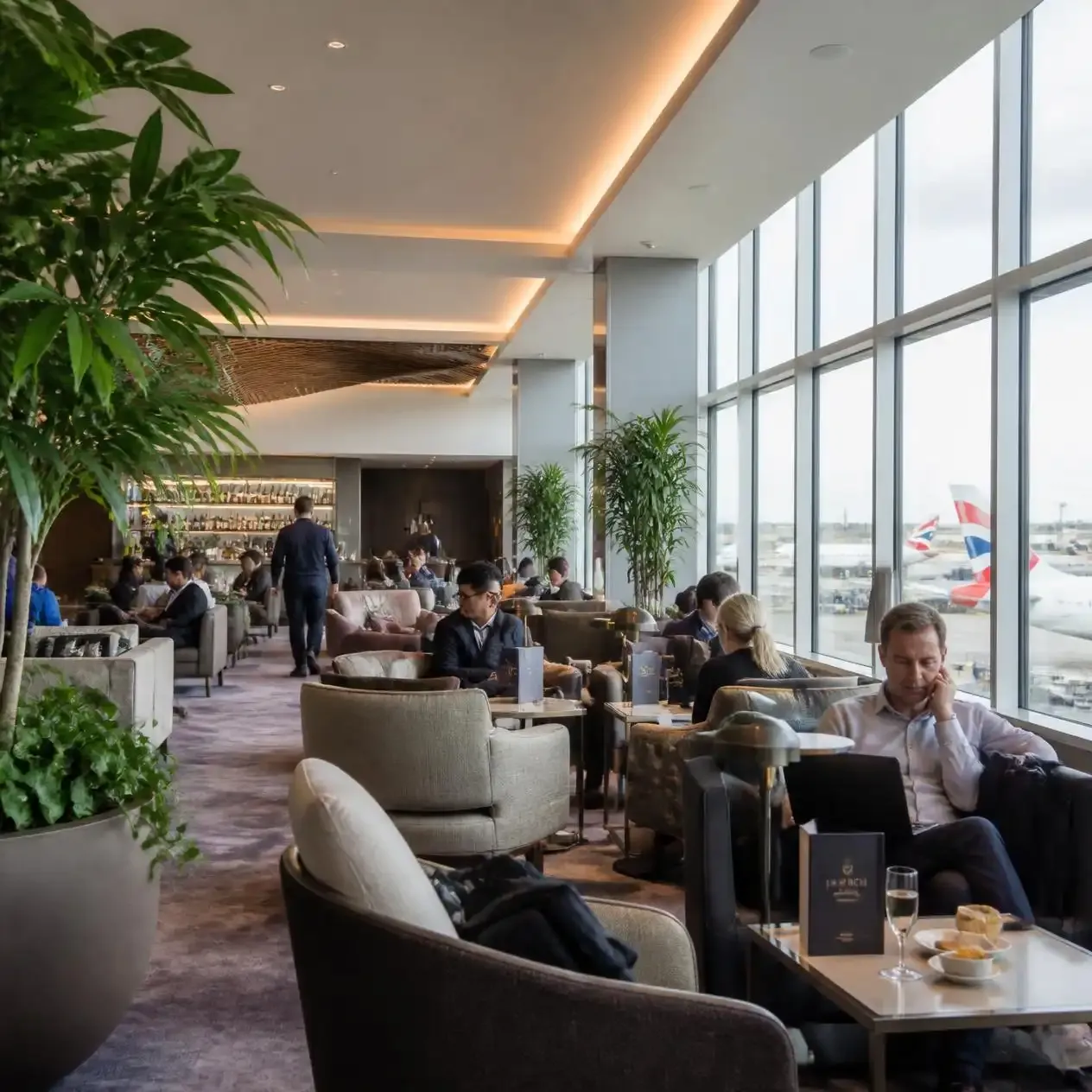
Fast Track security at Heathrow starts from about £12.99 ($17) booked ahead and runs roughly 6am to 9pm. It is included automatically with British Airways Club and First, Virgin Upper Class and Premium, most other premium cabins, and the top alliance tiers. Stansted's Fast Track is cheaper still, from around £6.49 ($8), and earns its cost during the 5–9am morning rush. Lounge access — bought, included with your cabin, or via a travel card — gives you food, quiet and power for the wait, which is worth far more on a delayed departure than a scramble around the concourse.
Getting to the Airport and Other Departure Logistics
Getting to a London airport on departure day takes longer than the map suggests — a rush-hour trip from the centre runs 60–90 minutes to Heathrow and 75–120 to Gatwick or Stansted. Rail is the reliable choice in daytime traffic; a booked car makes sense for early flights, heavy luggage or a group. And if you are being dropped off, budget for Heathrow's forecourt charge.
The drop-off charge and getting there
- Heathrow charges £7 ($9) per vehicle to enter the terminal drop-off zones, with a strict 10-minute limit — pay online by midnight the day after.
- The Elizabeth line links Heathrow to Bond Street, Farringdon and Liverpool Street, and is often the calmest way out with luggage.
- For a fixed price and no forecourt stress on an early flight, a booked transfer earns its place.
Travjoy's London transfers and car hire lock the fare in advance, which takes one variable out of a pre-dawn departure when you would rather not be watching the meter.
Multi-airport itineraries
It is common to fly in to one airport and out of another — a long-haul arrival at Heathrow, a budget hop out of Stansted, say. If you are doing that, plan the cross-London leg as its own journey: the two airports can be two hours apart by public transport with bags, and a direct transfer often saves the most hassle for the smallest planning effort.
Plan Both Ends of the Trip
The airport you choose shapes far more of your London trip than the fare alone suggests. Fly into Heathrow or London City for the fastest, easiest arrival; take Gatwick when its fares win; and use Stansted, Luton or Southend only when the budget-airline saving is large enough to justify the longer road in. Whichever of the London airports you use, sort your UK ETA early, keep a contactless card ready, and give yourself the right buffer flying out.
Get the logistics right and the airport becomes a footnote rather than the story of your first and last day. Start planning your trip to London on Travjoy, where the experiences are researched and approved by local experts — so you spend your time on the city, not the queue.




.svg&w=1920&q=75)