


Currency in Bangkok: A Complete Guide to Cash, Cards, ATMs and Exchange Rates
12 min read
Key Highlights
- The currency in Bangkok is the Thai baht (THB, ฿), trading at roughly ฿33.4 to US$1 in early August 2026. Nothing else is accepted at the till.
- ATM fees moved in 2026. Most Thai banks now charge ฿250 per withdrawal on a foreign Visa card and ฿350 on Mastercard, with AEON machines the outlier at ฿150.
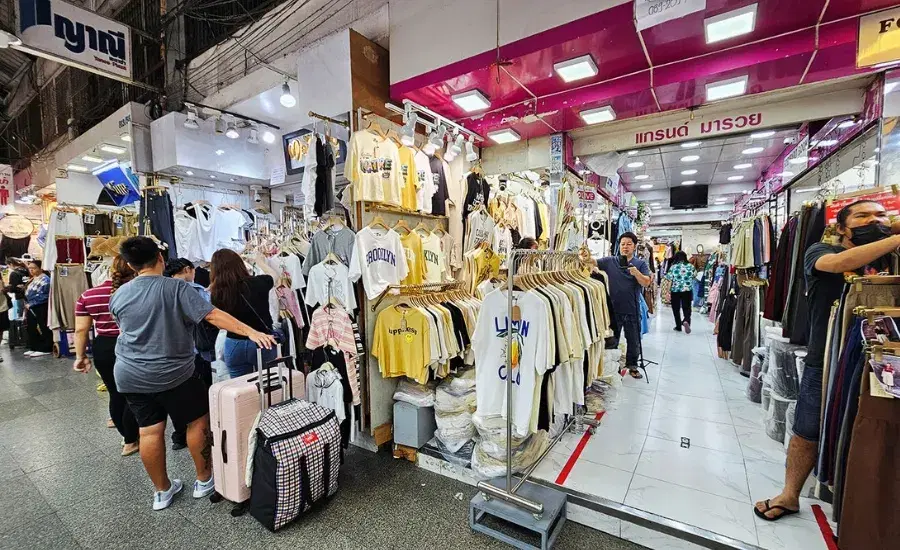
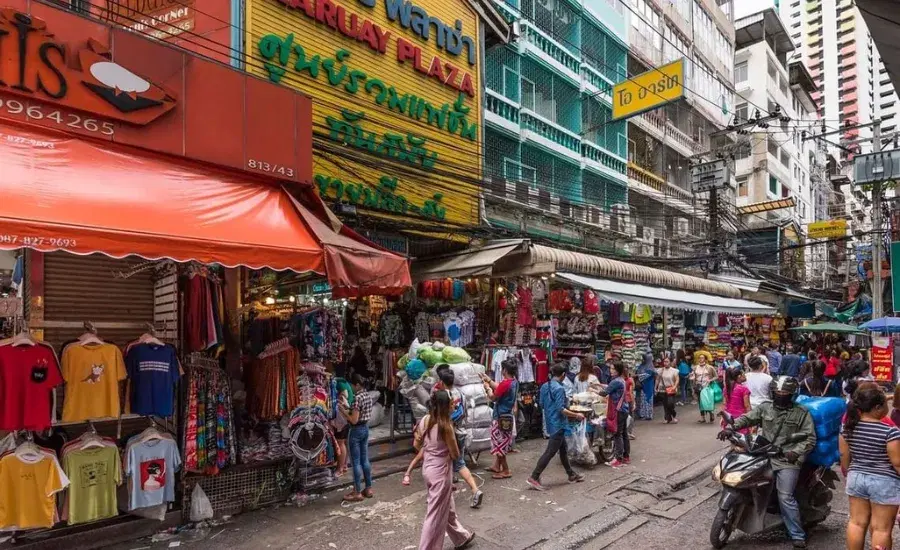
- Cards cover hotels, malls, hospitals and established restaurants. Cash still runs street stalls, temple entry, tuk-tuks, riverboat piers and market lanes.
- The exchange houses clustered on Ratchadamri and Sukhumvit sit within about 0.3% of the mid-market rate. Airport counters and hotel desks run 3–6% wider.
- A 7% VAT refund applies on purchases of ฿2,000 or more per store per day, and the Downtown VAT Refund lets you collect up to ฿12,000 in the city rather than queuing at Suvarnabhumi.
The currency in Bangkok is the Thai baht (THB, symbol ฿), which traded at approximately ฿33.4 to the US dollar in early August 2026. Cards work across hotels, malls, spas and established restaurants, but street food, temple admission, tuk-tuks and market stalls still take cash only, so plan on ฿2,000–3,000 in your wallet each day. Withdrawing from a Bangkok ATM costs ฿250 on a Visa card or ฿350 on Mastercard, and you should always decline the machine's offer to bill you in your home currency.
Bangkok is a city where a ฿60 bowl of boat noodles and a ฿6,000 tasting menu can sit twenty minutes apart, and the payment method changes entirely between them. That gap is the whole reason money here trips people up. The city looks cashless — QR codes are taped to every counter from Yaowarat to Thonglor — but almost all of that infrastructure was built for people with a Thai bank account.
What a visitor actually needs is narrower and easier to get right: one good card, a working float of baht, and a clear sense of which situations refuse plastic. Get those three things settled and the rest of the trip stops involving arithmetic.
This guide to currency in Bangkok covers what the notes and coins look like and where they get you into trouble, a venue-by-venue map of cash versus card, the 2026 ATM fee structure and which card network to reach for, where the sharpest exchange counters are and what the convenient ones cost, how the 7% VAT refund works including the downtown route most guides skip, and what a day in the city realistically costs across three travel styles.
The Thai Baht: Understanding the Currency in Bangkok
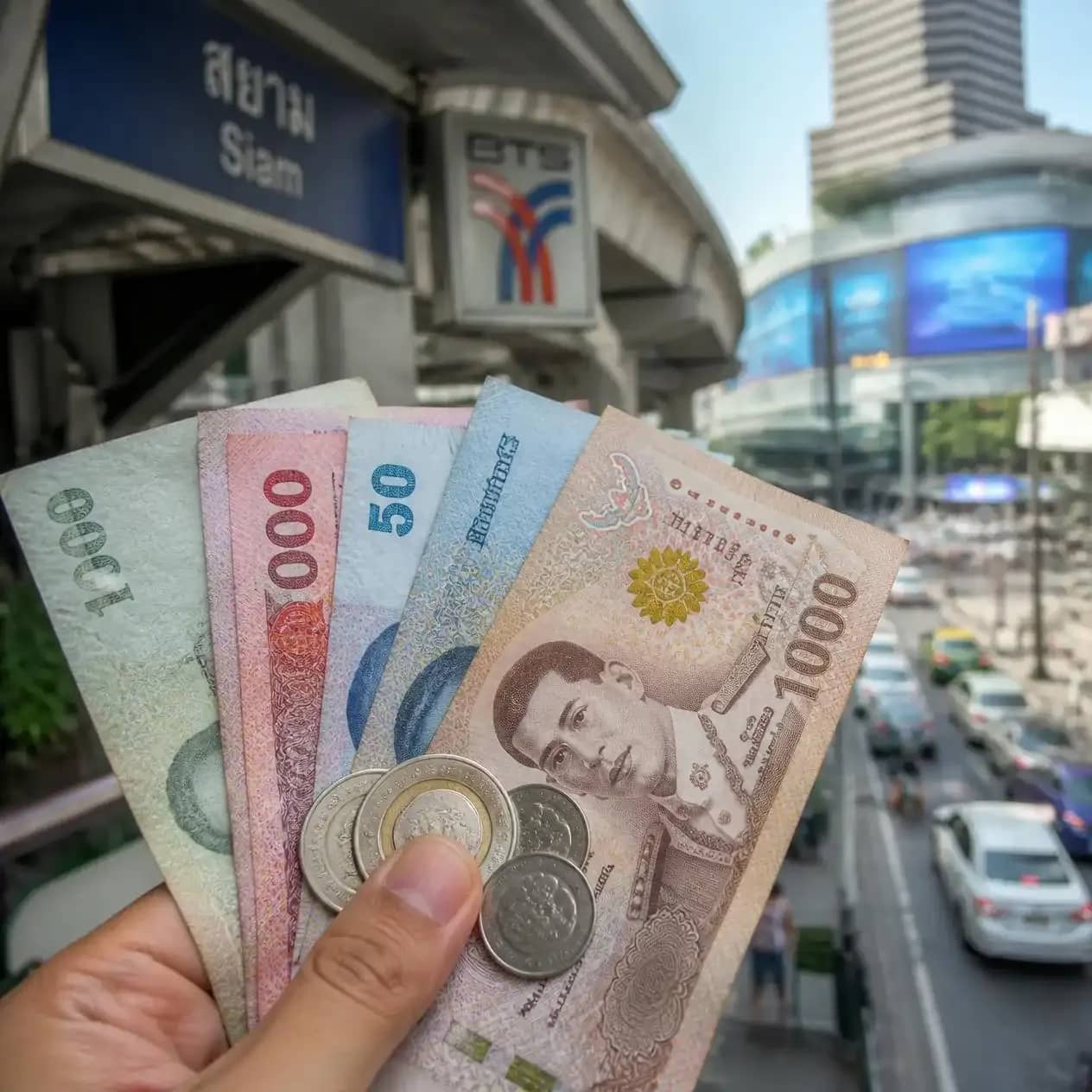
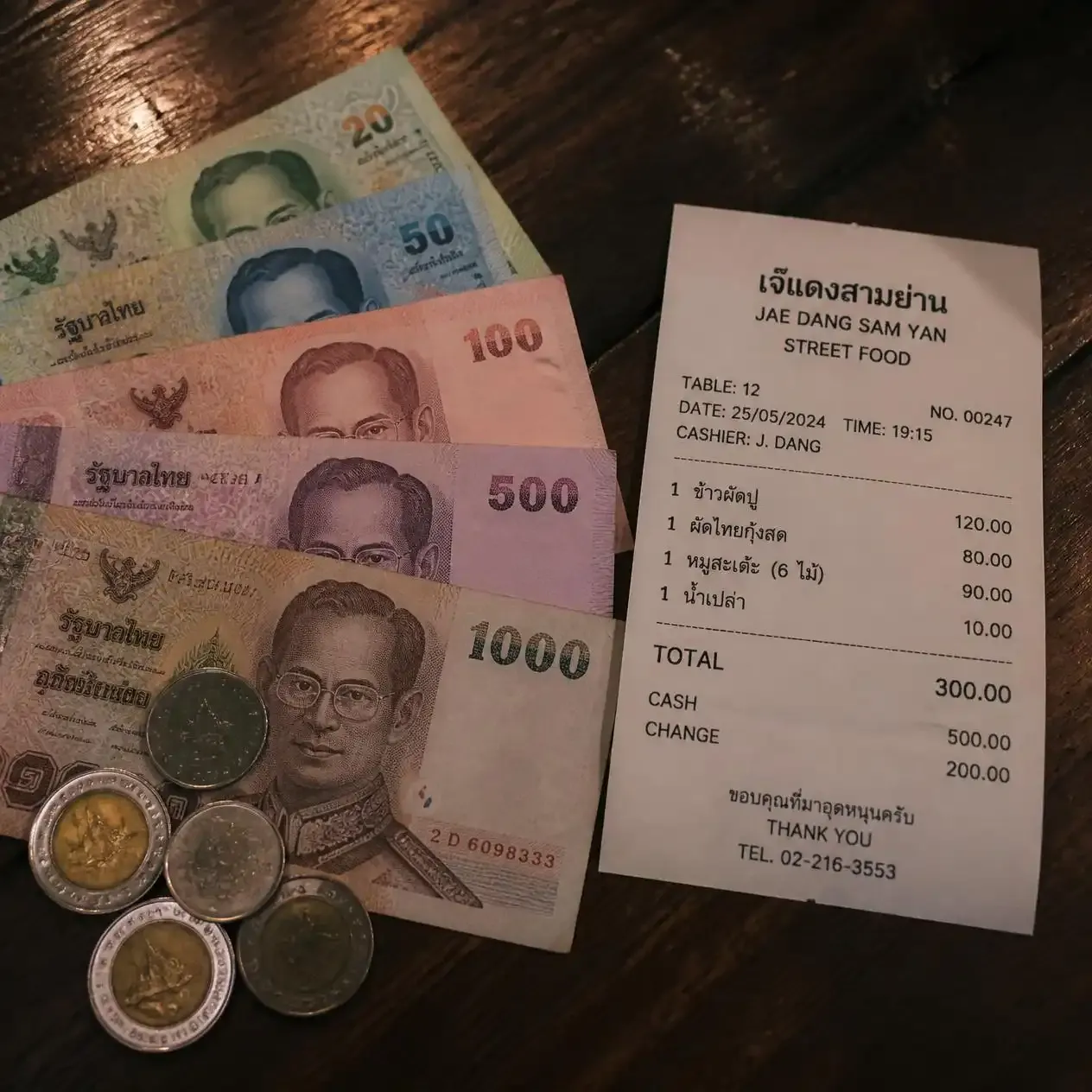
The currency in Bangkok is the Thai baht, which divides into 100 satang, though satang coins have effectively disappeared from daily use outside supermarket pricing. Notes come in ฿20, ฿50, ฿100, ฿500 and ฿1,000; coins in ฿1, ฿2, ฿5 and ฿10. Every note carries the current king on the front and a previous monarch on the reverse, which is why damaging or stepping on Thai currency is treated as a serious offence rather than clumsiness.
Notes, Coins and the ฿1,000 Problem
The single most useful habit when handling currency in Bangkok is breaking large notes early and often. ATMs dispense ฿1,000 notes almost exclusively, and a ฿1,000 note is close to useless at a noodle stall, a motorbike taxi or a market stall where the whole day's float might be ฿3,000.
- Break notes at 7-Eleven, Family Mart or a BTS ticket window — buy something small on your first morning and you will walk out with usable change
- Keep ฿20 and ฿50 notes separate — these are your street food, tuk-tuk, tip and temple donation notes
- Coins matter more than you expect — riverboat piers, some market toilets and roadside vendors work almost entirely in ฿10 coins
- Check note condition when exchanging — torn, heavily marked or taped foreign notes are routinely refused at Bangkok counters, and older US dollar series attract worse rates than current ones
Reading Prices: The ++ Convention
Menus at hotels, rooftop bars and mid-to-upper restaurants often print prices with a double plus — ฿500++ — and the final bill will be noticeably higher. The convention adds a 10% service charge and 7% VAT on top of the listed figure, so ฿500++ settles at roughly ฿589. Street stalls, casual shophouse restaurants and markets quote the price you pay, with nothing added.
This matters more than it sounds. A ฿4,000++ dinner for two lands at about ฿4,712, and the 10% service charge already covers gratuity, which changes how you should think about tipping later in this guide.
Why the Exchange Rate Matters Less Than the Fee Stack
Travellers tend to fixate on the headline rate and ignore what gets layered on top of it. The difference between the best and worst exchange counter in Bangkok is real but modest — 3 to 5% on a typical transaction. The difference between a well-chosen card and a poorly chosen one, compounded across a week of ATM withdrawals and card payments, is usually larger.
The rate itself has drifted through 2026. The baht weakened past ฿33 to the dollar in late June, its softest level since May 2025, and has hovered around ฿33.4 since. For a traveller, a percentage point of rate movement is worth far less attention than three avoidable fee layers, which the ATM section below unpacks in full.
Cash vs Card: Spending the Currency in Bangkok Day to Day
The currency in Bangkok circulates in two parallel systems, split cleanly by venue type rather than by neighbourhood. Anything with a shopfront, a receipt printer and air conditioning takes cards. Anything with a cart, a folding table or a monk takes cash. The table below maps the split across the situations you will actually encounter.
| Where you are spending | Cash | Card | Typical spend | What to know |
|---|---|---|---|---|
| Street food stalls and night markets | Essential | No | ฿50–150 (US$1.50–4.50) | Small notes only. QR codes are for Thai account holders |
| Markets and stall shopping | Essential | Rare | ฿200–3,000 (US$6–90) | A handful of larger vendors at Chatuchak Weekend Market take cards with a surcharge |
| Metered taxis and tuk-tuks | Essential | No | ฿60–400 (US$1.80–12) | Drivers rarely carry change for ฿1,000 |
| Grab and Bolt | Accepted | Yes, in app | ฿80–500 (US$2.40–15) | Register a foreign card before you land; some cards fail on first authorisation |
| BTS, MRT and river ferries | Yes | Contactless at most BTS gates | ฿17–62 (US$0.50–1.90) | Pier ticket windows and orange-flag boats are cash and coin |
| Temples and heritage sites | Essential | Rare | ฿100–500 (US$3–15) | The Grand Palace ticket window takes cards; most smaller temples do not |
| Malls and department stores | Accepted | Yes | Any | Pay by card to keep the tax invoice clean for a VAT refund claim |
| Hotels, fine dining and spas | Accepted | Yes | Any | Amex acceptance is patchier than Visa and Mastercard outside five-star properties |
Where Cash Is Still Non-Negotiable
Five situations in Bangkok will not take a card under any circumstances, and they happen to be five of the best things you will do in the city.
- Street food — the carts and shophouse kitchens along Bangkok's street food circuit deal exclusively in notes and coins, and vendors will often wave away anything above ฿500
- Temple admission and donation — expect ฿500 at the Grand Palace, around ฿300 at Wat Pho and about ฿200 at Wat Arun, plus ฿20 notes for donation boxes and incense
- Tuk-tuks and motorbike taxis — fares are agreed in advance and settled in cash, with no meter and no terminal
- Cross-river ferries and pier tickets — the ฿5 crossings between Tha Tien and Wat Arun run on coins
- Neighbourhood massage shops — an hour of Thai massage at ฿300–500 is a cash transaction almost everywhere outside hotel spas
Where Card Beats Cash
Anywhere the transaction runs above roughly ฿2,000, a card is the better instrument — partly for the fee arithmetic, partly for the paper trail. Hotels, malls, hospitals, department stores and established restaurants all process Visa and Mastercard without friction, and a card payment produces the tax invoice you need for a VAT refund claim.
A quieter advantage: paying by card at a mall keeps your cash reserve intact for the parts of the day that demand it. Travellers who put everything on cash tend to make more ATM withdrawals, and each one carries a flat fee regardless of the amount.
The QR Layer: What Visitors Can and Cannot Use
QR codes now handle a large share of the currency in Bangkok changing hands between locals. PromptPay, Thailand's national QR system, sits behind most of the codes you will see taped to counters. Registering for it requires a Thai bank account and a Thai phone number, so a short-term visitor cannot sign up. That is where most guides stop, and it leaves out the part that actually matters.
The Bank of Thailand has linked PromptPay to a growing list of foreign payment systems, which means visitors from certain countries can scan a Thai merchant QR code with the banking app they already use at home, with the conversion to baht handled automatically.
- Direct cross-border scanning is live for travellers from Singapore, Malaysia, Vietnam, Indonesia, Cambodia, Hong Kong, Japan, Laos and South Korea, and since late October 2025, mainland China via Alipay, WeChat Pay and UnionPay
- Everyone else can route through the Alipay+ network — the Alipay app or the Wise app will scan supported codes, though the exchange rate applied is worse than a Thai bank app would give
- Look for the Alipay+ logo beside the merchant's QR code; without it, a foreign app will not complete the scan
- Practical read — treat QR as a convenience where it works, not as a system to rely on. A card and cash cover everything QR does, and more
Reality Check: The ฿1,000 Note Problem
- ATMs in Bangkok almost always dispense ฿1,000 notes, and a ฿20,000 withdrawal arrives as twenty of them.
- Street vendors, tuk-tuk drivers and market stalls frequently cannot break one, and will send you away rather than lose the sale.
- The fix takes two minutes: buy water and a snack at 7-Eleven with a ฿1,000 note on your first morning. Convenience stores hold enough float to break them without complaint.
- Aim to keep at least ฿500 in ฿20 and ฿50 notes on you at all times. That is your temple, tip, taxi and noodle money.
ATMs in Bangkok: The 2026 Fee Reality
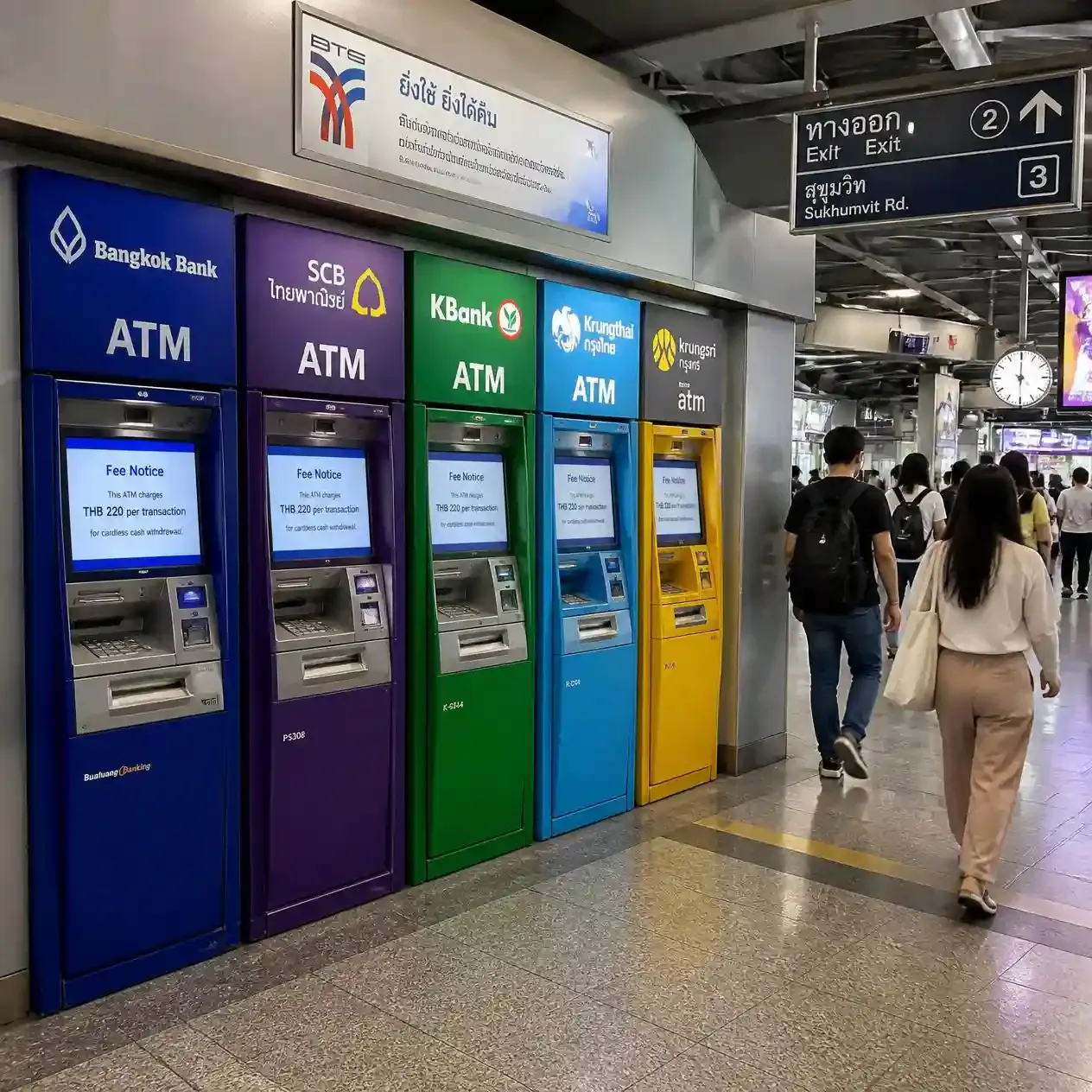
Withdrawing currency in Bangkok from an ATM costs more in 2026 than most published guides suggest. The long-standing ฿220 flat fee that appears across the internet no longer reflects what the machines display. Several major Thai banks now charge ฿250 for a foreign Visa withdrawal and ฿350 for a foreign Mastercard withdrawal, with AEON Bank the notable exception at ฿150. Check the fee shown on screen before you confirm — it varies by bank, network and card type.
The Three Fee Layers
Every ATM withdrawal in Bangkok involves up to three separate charges from three different parties. Most travellers know about one, half-know the second and are entirely blindsided by the third.
- The Thai bank's flat fee — ฿250 (Visa) or ฿350 (Mastercard) at Bangkok Bank, Kasikorn, SCB, Krungthai, Krungsri and TMBThanachart; ฿150 at AEON machines, found inside Big C and Lotus's supermarkets
- Your home bank's charge — typically a 1–3% foreign transaction fee, sometimes with a flat surcharge on top
- Dynamic currency conversion — the most expensive layer and the only fully avoidable one, applying a rate 3–7% worse than Visa or Mastercard would use
Use Visa Rather Than Mastercard
The ฿100 gap between the two networks is a recent development and applies at nearly every Thai bank except AEON. If you are travelling with both a Visa and a Mastercard, the Visa is the ATM card and the Mastercard is the everyday spending card. Across five withdrawals in a two-week trip, the choice is worth ฿500, or roughly US$15, for no effort at all.
Withdrawal Caps and How to Sequence Them
Because the Thai fee is flat rather than proportional, one large withdrawal always costs less per baht than three small ones. Per-transaction caps vary by bank, and your home bank's daily limit applies separately on top.
- Bangkok Bank — commonly ฿20,000 per transaction, occasionally ฿30,000 at tourist-area machines
- Kasikorn — ฿20,000–25,000
- SCB — ฿20,000–30,000
- Krungsri — ฿20,000
- AEON — up to ฿30,000, at the lowest fee of any network
For a week in the city, two withdrawals of ฿20,000 will comfortably cover cash needs at a total Thai-side cost of ฿500 on Visa. The same ฿40,000 pulled in ฿5,000 chunks costs ฿2,000.
Always Decline Dynamic Currency Conversion
When a Bangkok ATM offers to charge you in dollars, pounds, euros or Australian dollars rather than baht, it is offering to apply its own exchange rate. That rate runs 3–7% below the interbank rate, and the spread goes to the machine operator. On a ฿20,000 withdrawal, accepting it costs roughly US$18–42 more than declining.
The rule has no exceptions: choose Thai baht every time, at every machine, on every card. The same prompt appears on card terminals in restaurants and shops, and the same answer applies.
Reality Check: The Bank Counter Alternative
- Thai bank branches will process an over-the-counter withdrawal on a foreign card, and the fee is sometimes lower than the machine outside. Krungsri has charged around ฿200 for an international Visa counter withdrawal.
- You will need your passport, and the branch may decline the transaction depending on the card and the amount.
- This is worth the detour only for a large one-off withdrawal — settling a private guide, a tailor or a serviced apartment deposit — not for routine cash.
- Branch hours are typically 8:30am to 3:30pm on weekdays, with mall branches open later and at weekends.





Where to Exchange Currency in Bangkok
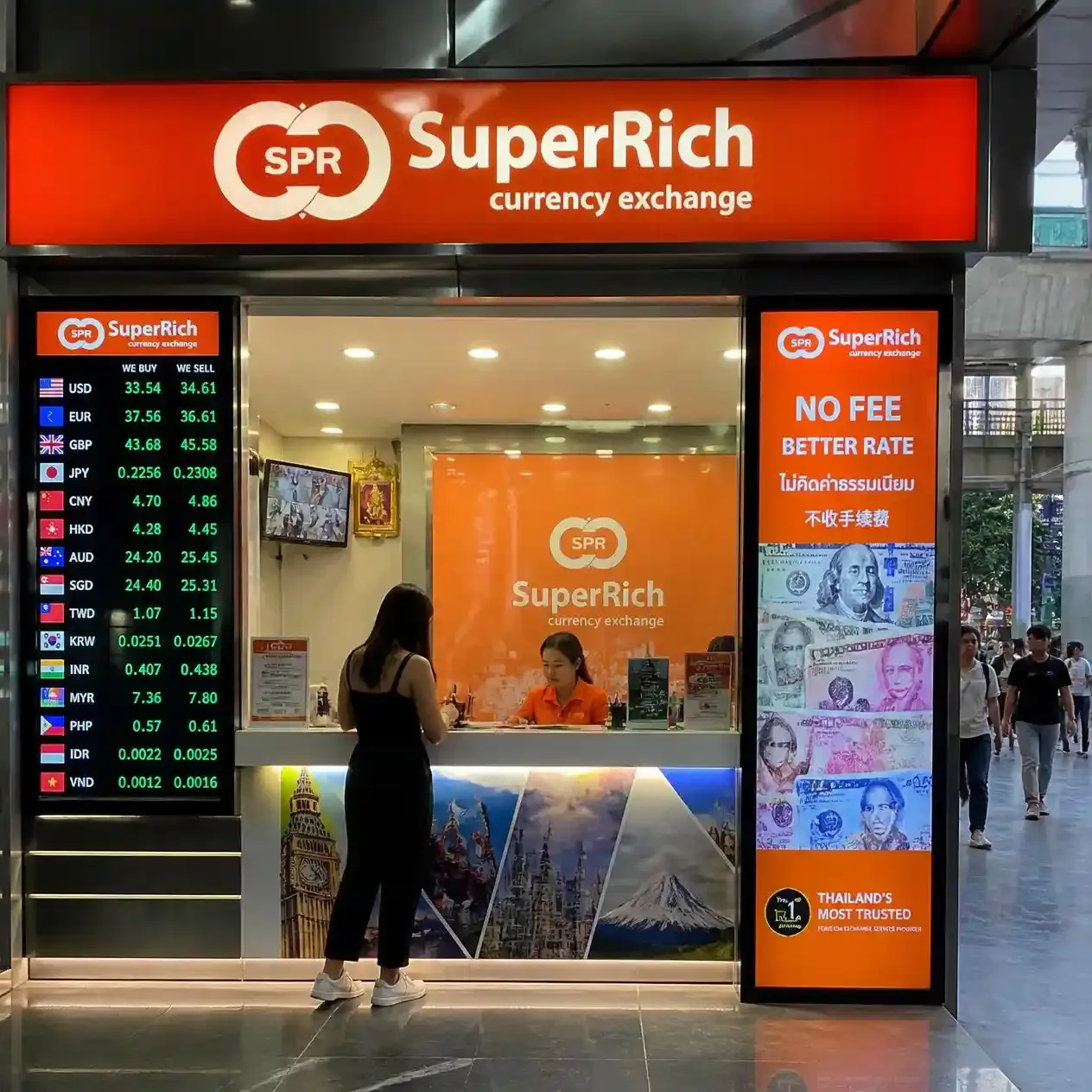
Dedicated exchange houses give you the best rate on currency in Bangkok, beating banks, hotels and airport counters by a wide margin, and the best of them cluster within a few hundred metres of each other. The spread between the sharpest counter in the city and a hotel lobby desk runs 4–6%, which on a US$1,000 exchange is US$40–60. Bring your passport — Thai law requires it for every transaction, with no exceptions.
The Ratchadamri Cluster
The stretch of Ratchadamri Road and its first soi, a short walk from Ratchadamri BTS, holds the three best-known names in Thai currency exchange, all within sight of each other. Competition at close quarters is exactly why the rates here are the sharpest in the city.
- SuperRich 1965 (orange) and SuperRich Thailand (green) — separate companies despite the shared name, both operating head offices on Ratchadamri and roughly 40 branches across the city, with rates typically within 0.1–0.3% of the mid-market rate
- Grand SuperRich (orange signage, Ratchadamri Soi 1) — a third operator on the same street, generally open 9am to 6:30pm weekdays and 9am to 5pm Saturdays
- Branch rates differ — all three publish live rates online, and head offices usually beat their own satellite branches by a small margin
- More than 30 currencies handled at the main counters, including USD, EUR, GBP, AUD, JPY and SGD
Sukhumvit, Silom and Siam Alternatives
If you are based east of the centre, the trip to Ratchadamri rarely pays for itself. Several counters get within a fraction of a percent of the SuperRich rate with far shorter queues.
- Vasu Exchange, Sukhumvit Soi 7/1 — a couple of minutes from Nana BTS, trailing the Ratchadamri rate by roughly 0.1–0.2% and consistently quicker to serve
- Siam Exchange, Phayathai Road — open since 1972, walkable from Siam BTS and the Siam shopping cluster
- Twelve Victory — branches at JJ Mall, Ploenchit BTS and Ekkamai BTS, useful for weekend exchanges when some counters close
- SuperRich branches at BTS and MRT stations — including MRT Sanam Chai for the Old City, convenient rather than optimal, but the gap is small
Airport Counters and Hotel Desks: What the Convenience Costs
Arrival counters at Suvarnabhumi and Don Mueang typically sit 3–5% below the mid-market rate, and hotel lobby desks 4–6% below. That is the price of exchanging at the moment and place of maximum convenience, and for a modest amount it is a reasonable trade.
The sensible approach on arrival is to exchange or withdraw a working amount — ฿3,000–5,000 covers the transfer into town, dinner and the first morning — then handle the bulk at a city counter once you have settled in. If you would rather skip the arrival calculus altogether, a pre-booked private transfer from the airport removes the need for cash at the kerb entirely.
Passport, Note Condition and Practical Rules
- Passport required — a photo or photocopy is not accepted at most counters; bring the physical document
- Crisp notes only — torn, marked, taped or heavily worn foreign notes are refused or discounted
- Larger denominations get better rates — a US$100 note typically exchanges at a better rate than five US$20 notes
- Check the rate board before joining the queue — buy and sell rates are posted separately, and you want the "buy" column for your home currency
- Reconverting leftover baht costs you the spread twice, so exchange in tranches rather than all at once
Claiming Your 7% VAT Refund
Thailand refunds the 7% VAT on goods bought by departing visitors, returning a slice of the currency in Bangkok you have already spent, and the process is more generous than most travellers realise — including a downtown option that removes the airport queue entirely. If you are shopping seriously in Bangkok, the refund on a single significant purchase can cover a very good dinner.

The Thresholds
- ฿2,000 minimum per store, per day (including VAT) at any shop displaying the blue and white "VAT Refund for Tourists" sign
- ฿5,000 minimum total across all your eligible purchases combined
- 60-day window — goods must leave Thailand within 60 days of purchase
- New and unused only — customs will reject opened packaging or worn items
- Air departure only — land borders do not process refunds
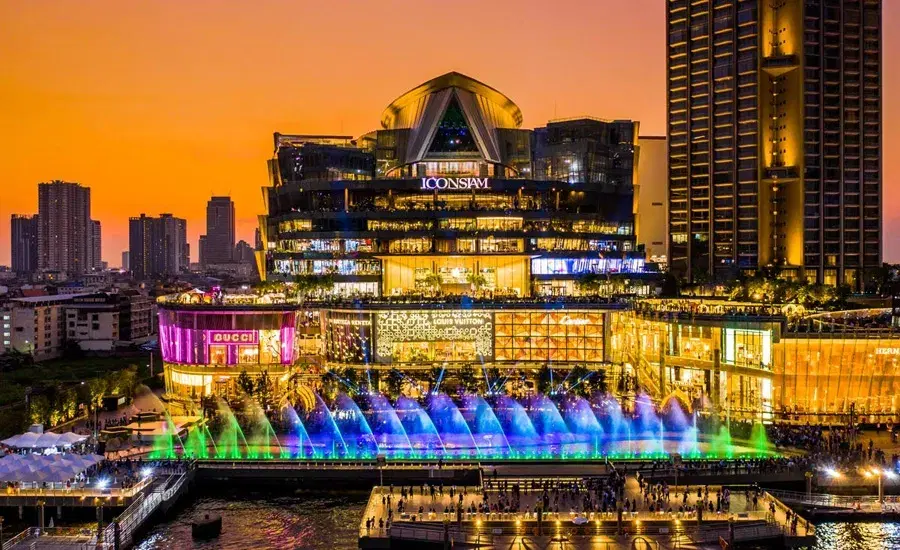
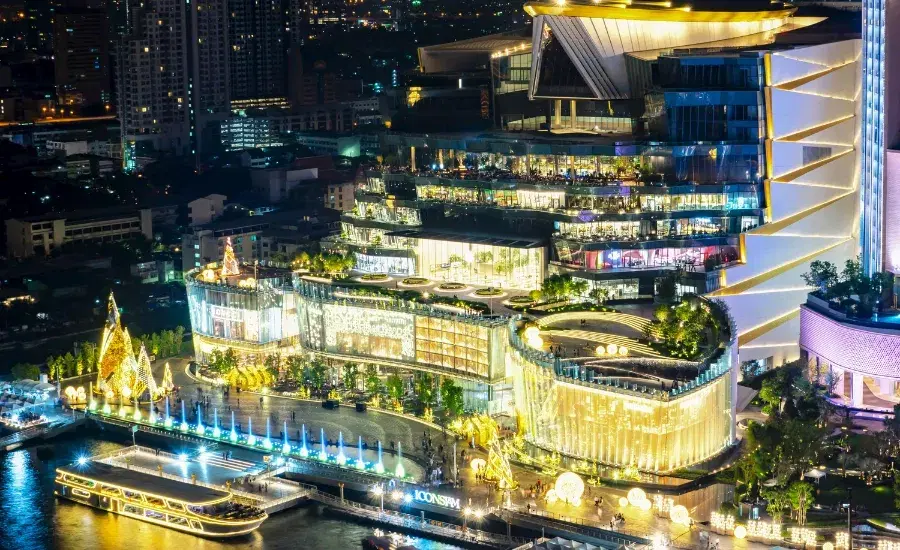
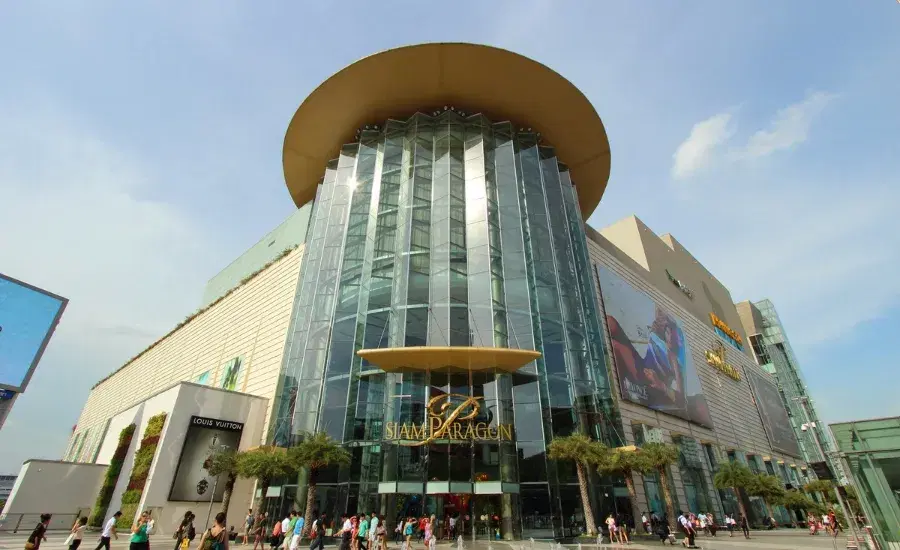
Ask for the P.P.10 form and the original tax invoice at the point of purchase, with your passport in hand. The big malls make this painless: Siam Paragon, ICONSIAM and CentralWorld all run dedicated tourist service desks that consolidate your receipts and complete the paperwork for you. Our Bangkok shopping guide covers which of them is worth your afternoon.
The Downtown VAT Refund Most Guides Miss
Refund transactions up to ฿12,000 can be claimed in the city through authorised downtown VAT refund agents rather than at the airport, which means cash in hand before you fly. The trade-off is a tighter deadline: goods claimed downtown must leave Thailand within 14 days rather than 60.
This suits anyone doing their shopping early in a longer stay, or anyone flying out of Suvarnabhumi in high season, when the refund queue after immigration regularly runs past 30 minutes.
The Airport Process, Step by Step
- Before check-in — take your goods, P.P.10 forms and original tax invoices to the Customs Inspection for VAT Refund counter in the departures hall
- Mandatory inspection applies to electronics valued at ฿20,000 or more and jewellery at ฿5,000 or more; other categories are inspected at the officer's discretion
- Luxury goods — items such as watches, jewellery, handbags or laptops valued at ฿40,000 or more per item must be hand-carried and shown again at the VAT Refund office after immigration
- Claim after immigration — at Suvarnabhumi the refund office sits near gates D1–D4
- Payment methods — cash in Thai baht for refunds up to ฿30,000, or credit card, bank draft or transfer for larger amounts; card refunds take one to two weeks
Reality Check: The 14-Day Downtown Rule
- The downtown refund is the better option for most stays, but the 14-day export deadline is enforced, not nominal.
- If you are in Thailand for three weeks and shop in week one, claim at the airport instead — a downtown claim would expire before you fly.
- Downtown claims are capped at ฿12,000 per refund transaction. Anything above that goes through the airport regardless.
- Keep the goods accessible either way. Packing a claimed item into checked baggage before customs inspection voids the claim.
Tipping, Service Charges and What a Day Costs
Tipping in Thailand is a gesture rather than an obligation, and the amounts are modest by American or European standards. The single most useful thing to know is when the bill has already handled it for you.
When the Service Charge Means You Are Done
Restaurants, hotels and bars that print ++ prices have already added a 10% service charge, which goes to the staff. No further tip is expected, and none is awkward. Casual restaurants, shophouse kitchens and street stalls add nothing and expect nothing — leaving change on a ฿70 noodle bill is neither customary nor necessary.
What to Tip, and to Whom
- Restaurants without a service charge — ฿20–100 (US$0.60–3) for good service
- Metered taxis — round up to the nearest ฿10 or ฿50; a ฿87 fare becomes ฿100
- Grab and Bolt — nothing expected; a small cash note at the end of the ride is appreciated
- Street or shophouse massage — ฿50–100 (US$1.50–3) for an hour
- Hotel spa treatments — around 15% of the treatment cost, unless a service charge already applies
- Hotel porters — ฿50–100 (US$1.50–3) per bag at upscale properties
- Housekeeping — ฿50–100 (US$1.50–3) per day, left daily rather than at checkout
- Private guides — ฿300–500 (US$9–15) per day; drivers ฿100–300 (US$3–9)
- Group tour guides — around ฿100 (US$3) per person
Tips are given in cash, always. Card terminals in Bangkok rarely prompt for gratuity, and a note handed directly to the person who earned it is the local convention.
What a Day in Bangkok Actually Costs
Excluding accommodation and international flights, how much currency in Bangkok you get through each day depends more on how you move around the city than on what you eat. Traffic makes private cars and drivers the biggest single variable.
- Considered — ฿2,000–3,500 per person (US$60–105): street food and shophouse restaurants, BTS and river ferries, one or two paid attractions, a neighbourhood massage
- Comfortable — ฿4,000–7,000 per person (US$120–210): a mix of casual and reserved restaurants, Grab across the city, a rooftop bar, a spa treatment, entry to two or three sites
- Elevated — ฿9,000 and up per person (US$270+): tasting menus and hotel dining, a private car and driver for the day, a licensed guide, premium spa treatments, and shopping
Whatever the tier, the split holds steady: roughly a quarter to a third of daily spend needs to be cash, and the rest can sit on a card. Working out which experiences justify the spend is the harder question, and the shortlist on Bangkok's top experiences has been researched and approved by local experts, so you are choosing between options that have already been vetted rather than sorting through everything the city offers. For the wider practicalities — transport passes, SIM cards, seasons — our practical guide to Bangkok picks up where this one ends.
Reality Check: Keep a Small-Note Float
- Split your cash the moment you withdraw it: large notes in your bag or hotel safe, ฿500–800 in ฿20 and ฿50 notes in your pocket.
- That pocket float covers a day of temple donations, tips, ferry crossings, tuk-tuks and street food without ever needing to break a ฿1,000 note in front of a vendor.
- Top it up at 7-Eleven rather than at a stall — convenience stores hold change and will not mind.
- Coins accumulate quickly and are worth keeping. Riverboat piers and market toilets rarely take notes.
Getting Your Money Set Up Before You Fly
Handling currency in Bangkok well comes down to four decisions made before you land. Travel with a Visa card for ATM withdrawals and a second card as backup. Withdraw in large amounts rather than small ones, and decline dynamic currency conversion every time it is offered. Exchange a working float on arrival and the balance at a Ratchadamri or Sukhumvit counter. Break your ฿1,000 notes on the first morning and keep a small-note float in your pocket for the parts of the city that still run on cash.
Handled this way, currency in Bangkok stops being something you think about, and the only question left is what to do with the days. Start planning your Bangkok trip on Travjoy — every experience on the platform has been researched and approved by local experts, so the shortlist you are choosing from is already filtered by people who know the city.