


Bangkok: Wat Pho (Temple of Reclining Buddha)
Operating Hours:Monday - Sunday: 08:00 - 18:30
The Vibe:Ancient calm amid golden grandeur 🙏
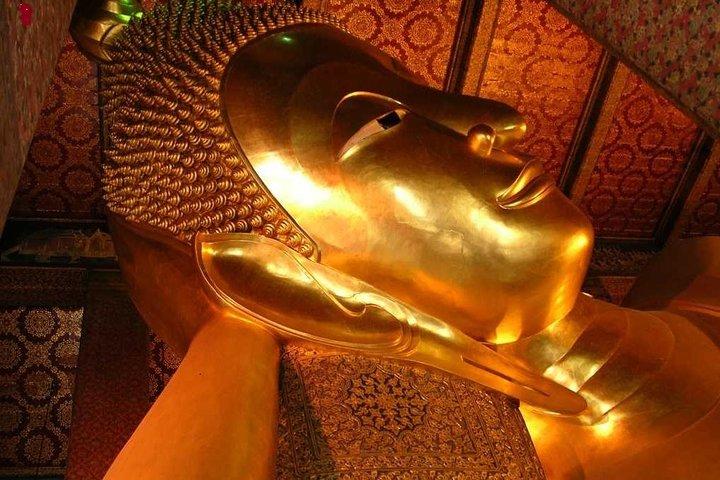
In Bangkok’s historic heart, this temple houses Thailand’s largest reclining Buddha within peaceful courtyards. A cradle of traditional Thai medicine and massage, it offers a reflective escape amid the city’s vibrant energy.
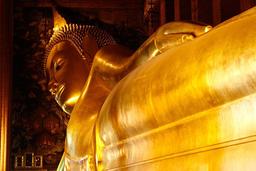
Hushed chants and the soft clang of coins dropping into brass bowls echo through dim halls. The air is fragrant with incense as visitors shuffle past the immense golden Buddha in awe.
- TripAdvisor Travelers’ Choice #1 landmark in Thailand
- Ranked #3 landmark in Asia by TripAdvisor users
- Visitors praise the on-site traditional Thai massage 💆
Persona Fit
- 👨👩👧 Families: Spacious grounds for kids to wander; the giant Buddha fascinates all ages (keep little ones calm in reverent areas)
- 💕 Couples: Quiet corners and serene gardens offer moments of peace together amid cultural exploration
- 👵 Seniors: Many benches and shaded spots to rest; only a few low steps into main halls, otherwise easy to navigate
- 💆 Wellness Seekers: Home of Thai massage – perfect place to relax with an authentic massage after sightseeing
Highlights
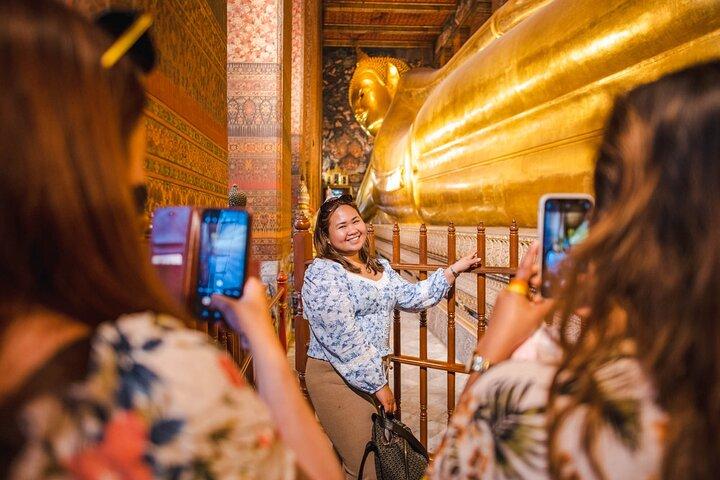
- Marvel at the 46-meter Reclining Buddha — a colossal gilded statue with exquisite mother-of-pearl inlaid feet
- Drop coins in each of the 108 bronze bowls — gentle chimes for blessings and good luck
- Get a traditional Thai massage on-site — authentic relaxation at the temple’s renowned massage school
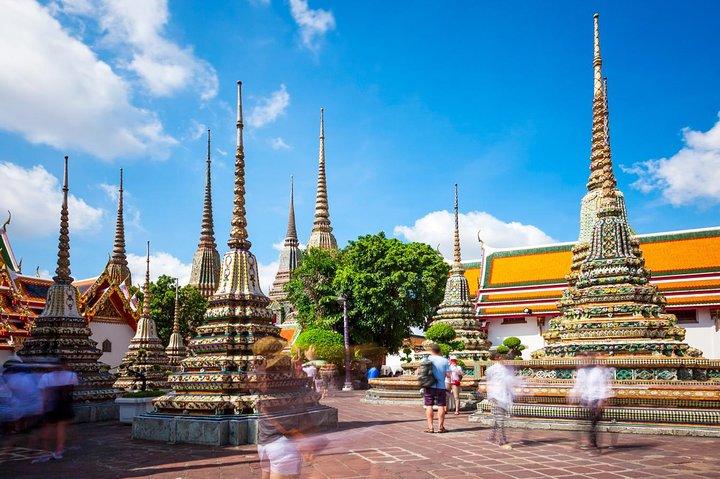
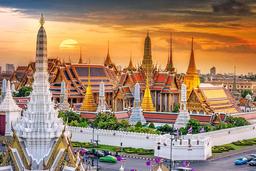
- Admire the four giant chedis — colorful tile-covered stupas honoring the first four Chakri dynasty kings
- Stroll the shaded Buddha gallery — Hidden Gem — 400+ Buddha statues serenely line the cloisters
3 Curated Booking Options
Starts From
(Per Person)

Tom Vater
Our Bangkok Local Expert
Table of Contents
Things To Do Nearby
Grand Palace & Wat Phra Kaew – Bangkok’s grand royal palace complex and the sacred Emerald Buddha temple (a 5-minute walk north)
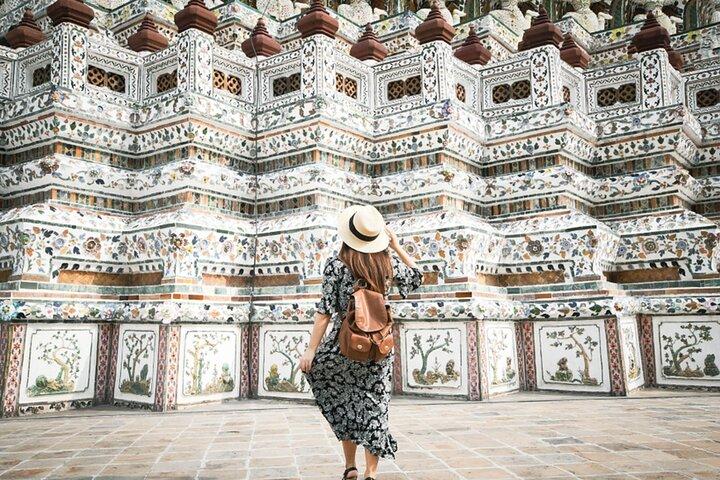
Wat Arun – the iconic Temple of Dawn just across the river (reach via a quick ferry ride from Tha Tien pier next to Wat Pho)
Pak Khlong Talat (Flower Market) – a bustling 24/7 flower market filled with exotic blooms and aromas (10-minute walk south, especially lively pre-dawn and evenings)
Grand Palace & Wat Phra Kaew – Bangkok’s grand royal palace complex and the sacred Emerald Buddha temple (a 5-minute walk north)
Wat Arun – the iconic Temple of Dawn just across the river (reach via a quick ferry ride from Tha Tien pier next to Wat Pho)
Pak Khlong Talat (Flower Market) – a bustling 24/7 flower market filled with exotic blooms and aromas (10-minute walk south, especially lively pre-dawn and evenings)
TJ's Guide - Wat Pho (Temple of Reclining Buddha)
Know Before You Go
Insider Tips
• Go early (8 AM) or later in the afternoon to avoid peak crowds and tour buses.
• Bring small change (like a ฿20 note) to exchange for coins – dropping them in all 108 bowls is a meaningful ritual.
• Dress modestly (knees and shoulders covered). If you forget, Wat Pho provides sarongs at the entrance free of charge (with a refundable deposit).
• Plan a massage towards the end of your visit. Head to the massage school building and sign up – if there’s a wait, you can explore nearby until your turn.
• Don’t rush off after seeing the Reclining Buddha. Wander the back courtyards and satellite chapels – they’re often peaceful and beautifully decorated.
• Go early (8 AM) or later in the afternoon to avoid peak crowds and tour buses.
• Bring small change (like a ฿20 note) to exchange for coins – dropping them in all 108 bowls is a meaningful ritual.
• Dress modestly (knees and shoulders covered). If you forget, Wat Pho provides sarongs at the entrance free of charge (with a refundable deposit).
• Plan a massage towards the end of your visit. Head to the massage school building and sign up – if there’s a wait, you can explore nearby until your turn.
• Don’t rush off after seeing the Reclining Buddha. Wander the back courtyards and satellite chapels – they’re often peaceful and beautifully decorated.
Know Your Facts
- • Easiest route: Take the Chao Phraya Express boat to Tha Tien pier – Wat Pho’s entrance is just across the road from the pier.
- • From Grand Palace: It’s a short 5-minute walk. Exit the Palace and head south along Sanam Chai Road – Wat Pho is right next door.
- • Main entrance is on Chetuphon Road (look for white walls and gated entry). Buy tickets (around 200฿) at the counter – you’ll usually receive a bottle of water with your ticket.
- • Open daily 08:00–18:30 (last entry about 18:00). Aim to arrive at least an hour before closing to fully enjoy the temple grounds.
Once You Reach
Internal Navigation
• Reclining Buddha hall: Enter at the head end of the Buddha and follow the one-way path to the feet (you’ll exit near the feet, where the bowl ritual is).
• Central courtyard: After exiting, you’ll be in the courtyard with four large chedis. Walk around them to appreciate each one’s distinct tile pattern.
• Galleries: The covered galleries along the perimeter house hundreds of Buddha statues. Stroll these corridors for a quieter experience and a look at the impressive Buddha collection.
• Main sanctuary: The Ubosot (main chapel) is in a separate enclosure east of the Reclining Buddha area. Look for an open gate to visit this area – inside is a revered seated Buddha and beautiful murals.
• Exiting: There are multiple gates. The most convenient exit for further sightseeing is the one by Tha Tien pier (south side), perfect if you’re heading to Wat Arun or the market.
Food & Coffee Shops
• Outside the main entrance, you’ll find vendors selling fresh fruit (try pineapple or mango), Thai iced tea, and snacks. Great for a quick bite or drink after your visit.
• For something more substantial, walk to the nearby streets along Maha Rat Road. There are a few local restaurants and cafés overlooking the river and Wat Arun – a lovely spot for lunch or a cold drink with a view.
• Outside the main entrance, you’ll find vendors selling fresh fruit (try pineapple or mango), Thai iced tea, and snacks. Great for a quick bite or drink after your visit.
• For something more substantial, walk to the nearby streets along Maha Rat Road. There are a few local restaurants and cafés overlooking the river and Wat Arun – a lovely spot for lunch or a cold drink with a view.
Photography Tips
• For a full-length photo of the Reclining Buddha, go to the statue’s feet end – you’ll capture more of its length (a wide-angle lens is very helpful here).
• Lighting inside the hall is dim. Increase your ISO or use a fast lens. Flash photography is discouraged out of respect (and it would cause glare on the golden surfaces).
• Outside, the vivid mosaics on the chedis and the rows of Buddha statues make great shots. Early morning offers soft light and fewer people for your photos.
• For a full-length photo of the Reclining Buddha, go to the statue’s feet end – you’ll capture more of its length (a wide-angle lens is very helpful here).
• Lighting inside the hall is dim. Increase your ISO or use a fast lens. Flash photography is discouraged out of respect (and it would cause glare on the golden surfaces).
• Outside, the vivid mosaics on the chedis and the rows of Buddha statues make great shots. Early morning offers soft light and fewer people for your photos.
Explore Deeper
Wat Pho isn’t just about sightseeing – it’s a center of knowledge and tradition. Here are some deeper insights into what makes this temple special:
• First university of Thailand
King Rama III established Wat Pho as a public learning center in the 1830s. He had 1,360 marble slabs inscribed with subjects like traditional medicine, massage, literature, and religion (these inscriptions are now registered in UNESCO’s Memory of the World).
• Buddha collection
Wat Pho holds the largest collection of Buddha images in Thailand (over 1,000). Many of these statues were brought from older temples in Ayutthaya and Sukhothai that were abandoned, preserving them here for posterity.
• Reclining Buddha symbolism
The gigantic reclining Buddha (built in 1832) represents Buddha’s passage into Nirvana (the pose of final enlightenment). The 108 mother-of-pearl designs on the Buddha’s feet are auspicious symbols, and devotees drop coins in 108 bowls to gain merit for each symbol.
• Cradle of Thai massage
Known as the birthplace of traditional Thai massage, Wat Pho’s medical school has taught massage since 1955 (drawing on knowledge from those old inscriptions). Today visitors can experience a massage here, continuing an unbroken chain of healing practice.
• First university of Thailand
King Rama III established Wat Pho as a public learning center in the 1830s. He had 1,360 marble slabs inscribed with subjects like traditional medicine, massage, literature, and religion (these inscriptions are now registered in UNESCO’s Memory of the World).
• Buddha collection
Wat Pho holds the largest collection of Buddha images in Thailand (over 1,000). Many of these statues were brought from older temples in Ayutthaya and Sukhothai that were abandoned, preserving them here for posterity.
• Reclining Buddha symbolism
The gigantic reclining Buddha (built in 1832) represents Buddha’s passage into Nirvana (the pose of final enlightenment). The 108 mother-of-pearl designs on the Buddha’s feet are auspicious symbols, and devotees drop coins in 108 bowls to gain merit for each symbol.
• Cradle of Thai massage
Known as the birthplace of traditional Thai massage, Wat Pho’s medical school has taught massage since 1955 (drawing on knowledge from those old inscriptions). Today visitors can experience a massage here, continuing an unbroken chain of healing practice.
Did You Know?
• Name meaning – “Wat Pho” is short for Wat Photharam, referencing a monastery of the Bodhi tree (tying it to the tree under which Buddha attained enlightenment).
• 95 pagodas – The temple complex contains a total of 95 chedis (stupas), large and small – more than any other temple in Bangkok, each enshrining sacred relics or ashes.
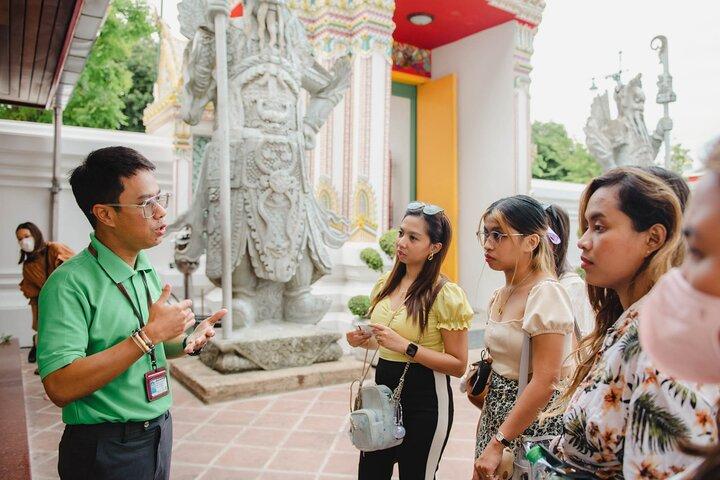
• Giant legends – According to folklore, Wat Pho’s guardian giant once fought with Wat Arun’s giant across the river. Their epic battle flattened the area between them, which is why the nearby pier is called Tha Tien (“flattened pier”) to this day.