



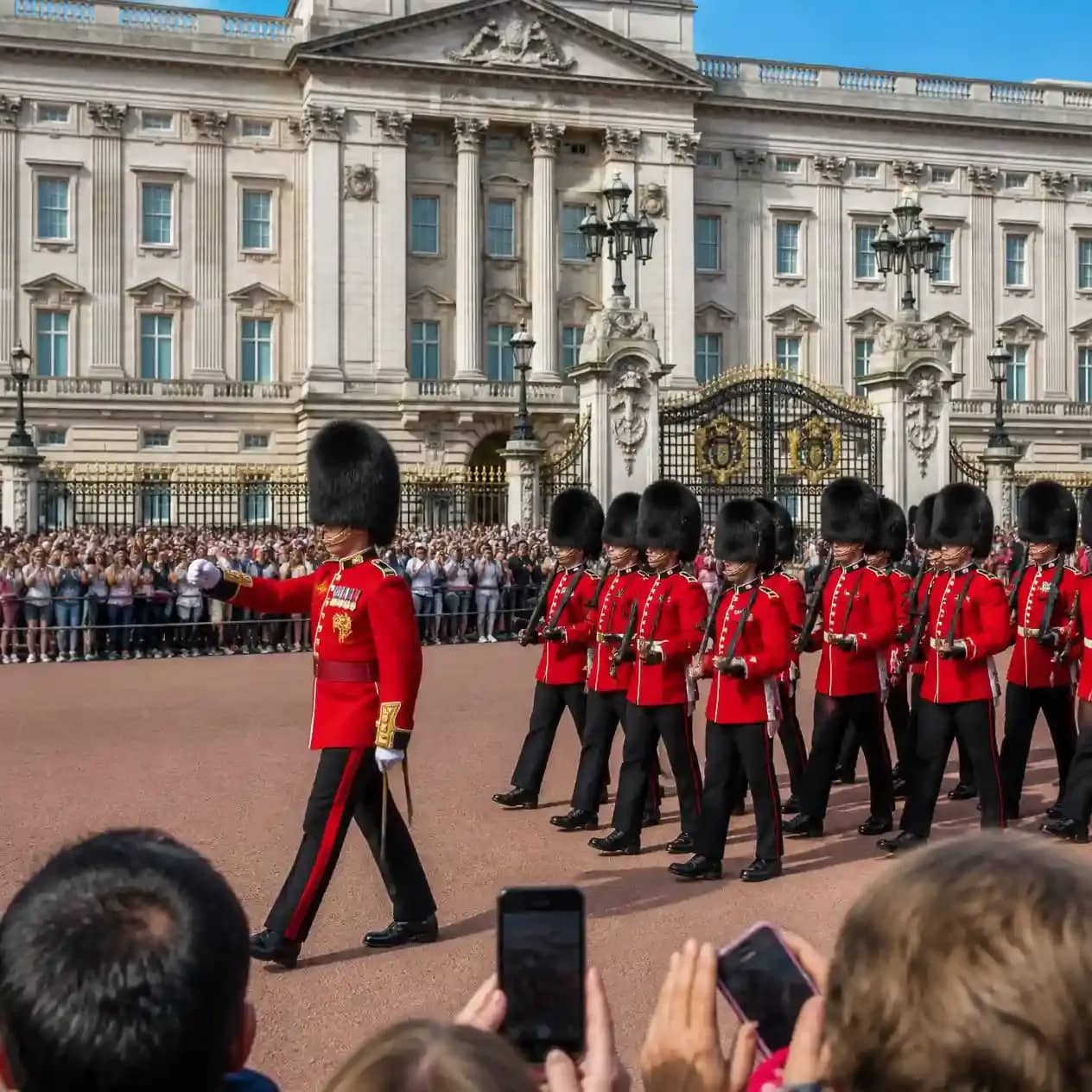
Changing of the Guard at Buckingham Palace: A Complete Guide to Times, Route and the Best Places to Watch
7 min read
Key Highlights
- It is free to watch — no ticket, no booking. You simply arrive and find a spot.
- The ceremony usually runs on Mondays, Wednesdays and Fridays at around 11:00, but the schedule is confirmed only weeks ahead and can change — always check it the night before.
- It plays out across three sites — Buckingham Palace, St James's Palace and Wellington Barracks — so no single spot shows you everything.
- Allow about 45 minutes. The raised steps of the Victoria Memorial give the widest view; the Palace railings put you closest to the drill.
- It is cancelled in heavy rain and not rescheduled, so keep a wet-weather alternative in your back pocket.
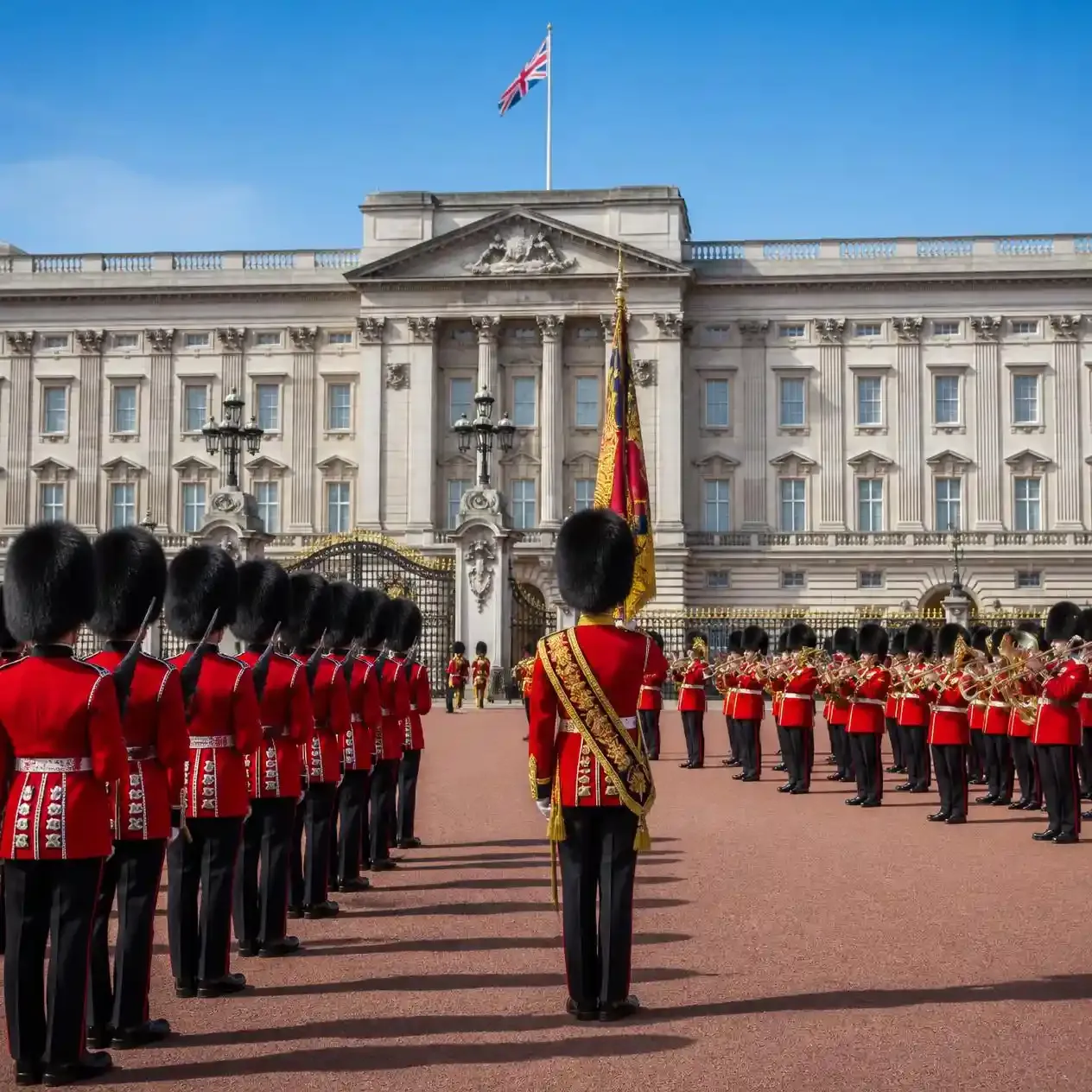
The Changing of the Guard at Buckingham Palace is free to watch and needs no ticket. It usually takes place on Mondays, Wednesdays and Fridays at around 11:00, with the guard movements beginning near 10:43, and the whole event lasts about 45 minutes. The clearest view is from the raised steps of the Victoria Memorial — though the schedule is confirmed only a few weeks ahead and can change at short notice, so always check it the night before you go.
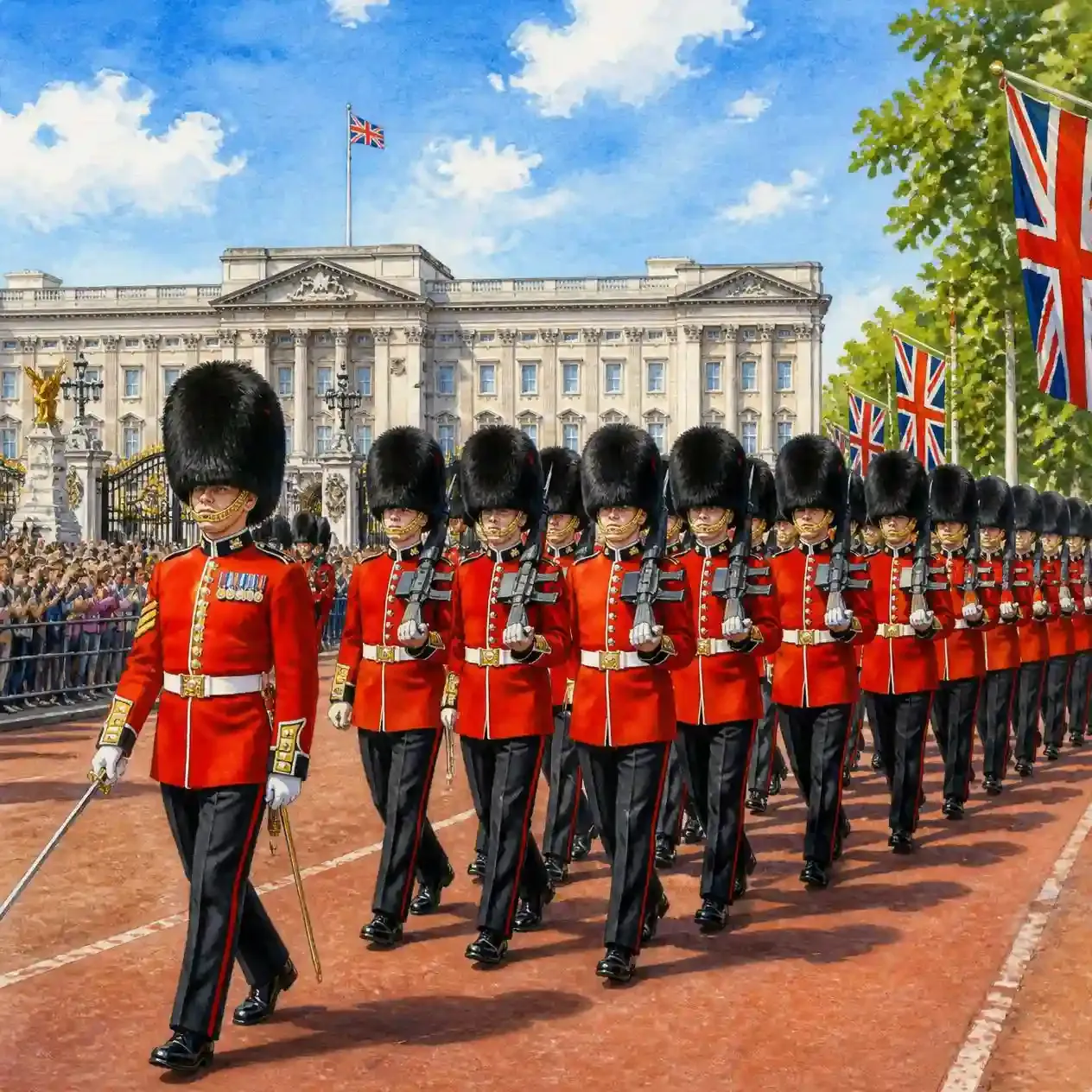
Most people picture the Changing of the Guard at Buckingham Palace as a single scene: soldiers in bearskins wheeling across the forecourt while a band plays. What they don't picture is turning up on a Tuesday to find the gates quiet and the railings empty. The ceremony doesn't run every day, the timings shift, and it can be called off on the morning itself if the weather turns.
That is the difference between a memorable hour and a wasted one. The event earns its place in a London morning — the precision, the music, the sheer theatre of it hold up even on a second or third visit — but only if you arrive on the right day, in the right place, at the right time.
This guide covers the schedule and why it moves, the three-site route the guards actually take, how to tell the five regiments apart, and exactly where to stand depending on what you want to see. It also maps the other ceremonies most visitors miss, and how to fold the whole thing into a wider day around Westminster.
When the Changing of the Guard happens
The ceremony usually takes place on Mondays, Wednesdays and Fridays, with a start time of around 11:00. Outside those days the guard is still changed, but through a quieter inspection rather than the full ceremony, so the day you choose matters more than anything else in this guide.
Days and times
The pattern most weeks is simple, but each element runs to its own clock:
- Full Guard Change: typically Monday, Wednesday and Friday. The forecourt ceremony starts at around 11:00, with guard movements from about 10:43.
- Windsor Castle Guard: usually Tuesday, Thursday and Saturday — worth knowing if you are near Windsor rather than central London on those days.
- Captain's Inspection: on days without a full change, the guard is inspected at 15:00 — a smaller event, but a real one if you happen to be nearby.
- Sunday Parade: a separate pattern, with the Colour trooped into the inspection at around 10:00 — earlier than the weekday ceremony, so check the time before you plan your morning around it.
Frequency also shifts with the season. Busier periods can see the full ceremony run more often, while quieter months lean more heavily on the Monday–Wednesday–Friday rhythm. The one constant is that it is never truly daily, and assuming it is remains the single most common planning mistake.
Why you must check the schedule
The confirmed calendar is published only around six weeks ahead, and it can still change close to the day when troops are needed for operational or ceremonial duties, or when roads are closed for other events. The definitive source is the Household Division's own guard-mounting calendar, and the practical habit worth forming is simple: check it the night before, and again on the morning if the sky looks unsettled.
If you want to line the ceremony up with a wider royal itinerary, it sits a short walk from St James's Park and the wider spread of central London's landmark sights, which makes it easy to slot around whatever else you have booked that day.
What happens if it rains
The ceremony can be cancelled in heavy rain or extreme weather, and the decision is sometimes made as late as 10:45 on the day itself. A few light showers rarely stop it — it takes sustained, heavy rain — but when it is called off, it is not rescheduled for later or moved to another day. Build in a plan B, especially in autumn and winter, and treat a borderline forecast as a reason to have a backup indoors nearby.
How the ceremony works: the three-site route
The Changing of the Guard is a formal handover, not a single set-piece. The Old Guard — the soldiers currently on duty — are relieved by a New Guard that marches in from Wellington Barracks, accompanied by a band, while detachments move between Buckingham Palace and St James's Palace. Understanding that flow is what lets you position yourself well rather than staring at an empty forecourt.
The handover, step by step
The sequence unfolds over roughly an hour, and the movement between sites is often more rewarding to watch than the formal drill itself:
- From about 10:00: soldiers gather at St James's Palace and Wellington Barracks and prepare to move.
- Around 10:43: the St James's Palace detachment of the Old Guard steps off for Buckingham Palace; sentries remain behind at St James's.
- Around 10:45: the New Guard leaves Wellington Barracks with the regimental band playing — one of the liveliest moments to catch, and easier to see up close than the forecourt itself.
- Around 11:00: the forecourt ceremony begins. The New Guard formally takes over from the Old Guard with drill and music, and regimental Colours are carried by both.
- Afterwards: a detachment marches back to St James's Palace to relieve the sentries there, and the forecourt gradually clears.
The march down The Mall
The band and guards travelling between Wellington Barracks, Buckingham Palace and St James's Palace pass along The Mall and Spur Road, which is why those stretches are so good for a march-past view. If you would rather see soldiers in motion — the band playing, boots in step — than the more static forecourt drill, this is where to be. The route also skirts Green Park, whose tube station is the closest to the action and a sensible arrival point.
The regiments and what you're looking at
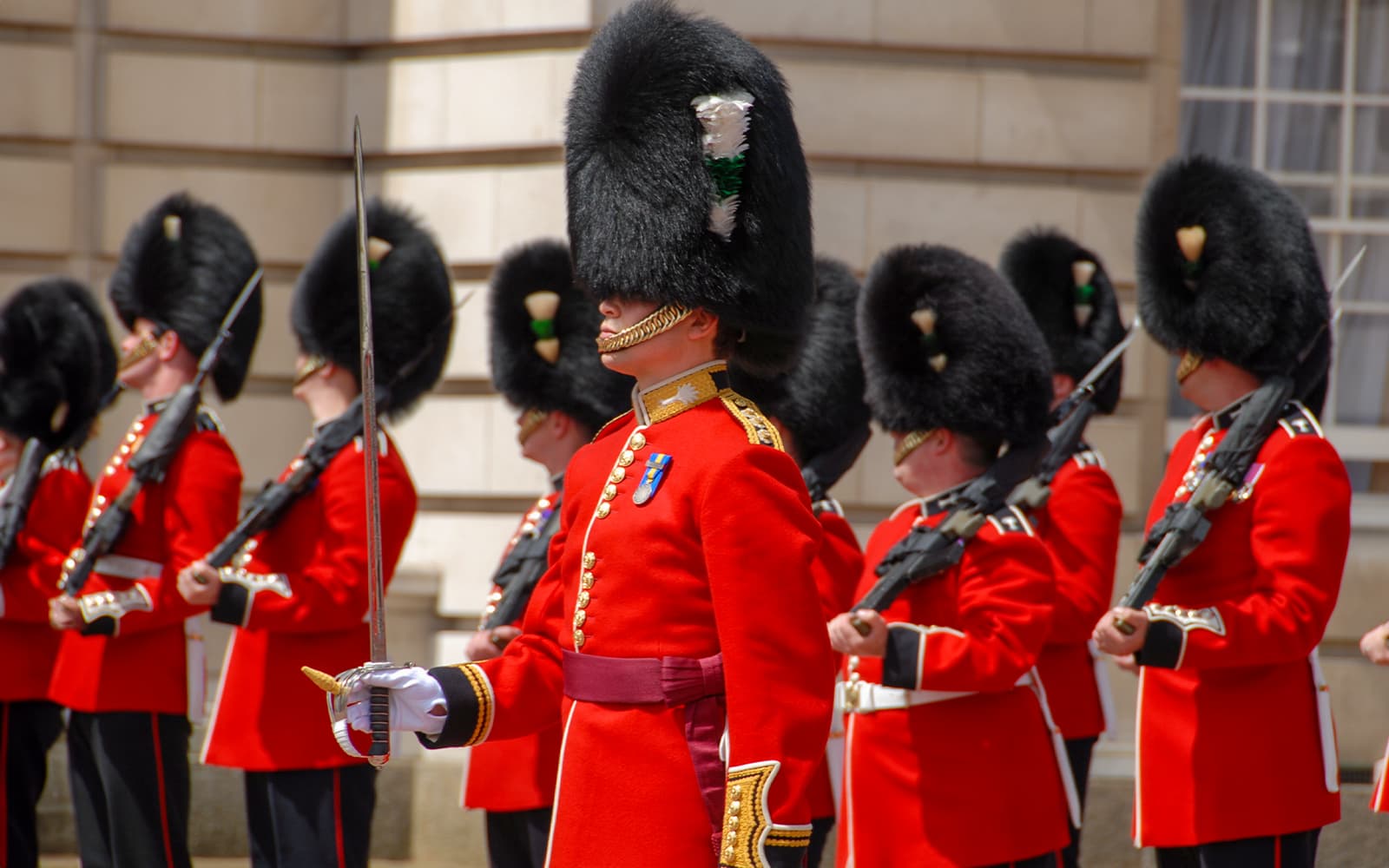
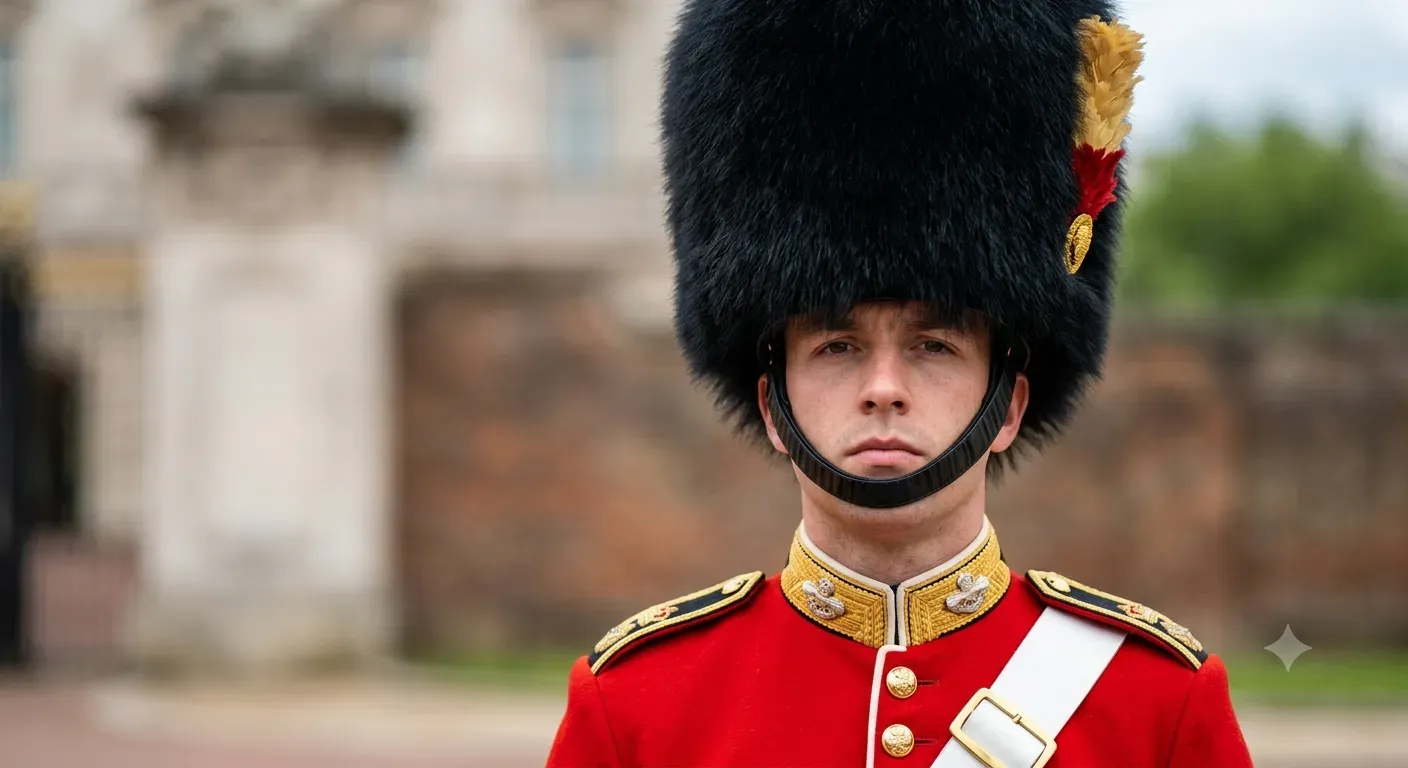
The guard at Buckingham Palace is typically provided by one of the five Foot Guards regiments of the Household Division, and once you know how to read their uniforms, the ceremony becomes far more legible. The differences are small but deliberate — the colour and position of the plume in the bearskin cap, and the spacing of the tunic buttons.
Telling the five regiments apart
Each regiment carries its own signature. Look to the bearskin first, then the buttons:
- Grenadier Guards: white plume on the left; tunic buttons spaced singly.
- Coldstream Guards: red plume on the right; buttons in pairs.
- Scots Guards: no plume; buttons in threes.
- Irish Guards: blue plume on the right; buttons in fours.
- Welsh Guards: white-green-white plume on the left; buttons in fives.
The bearskins and the band
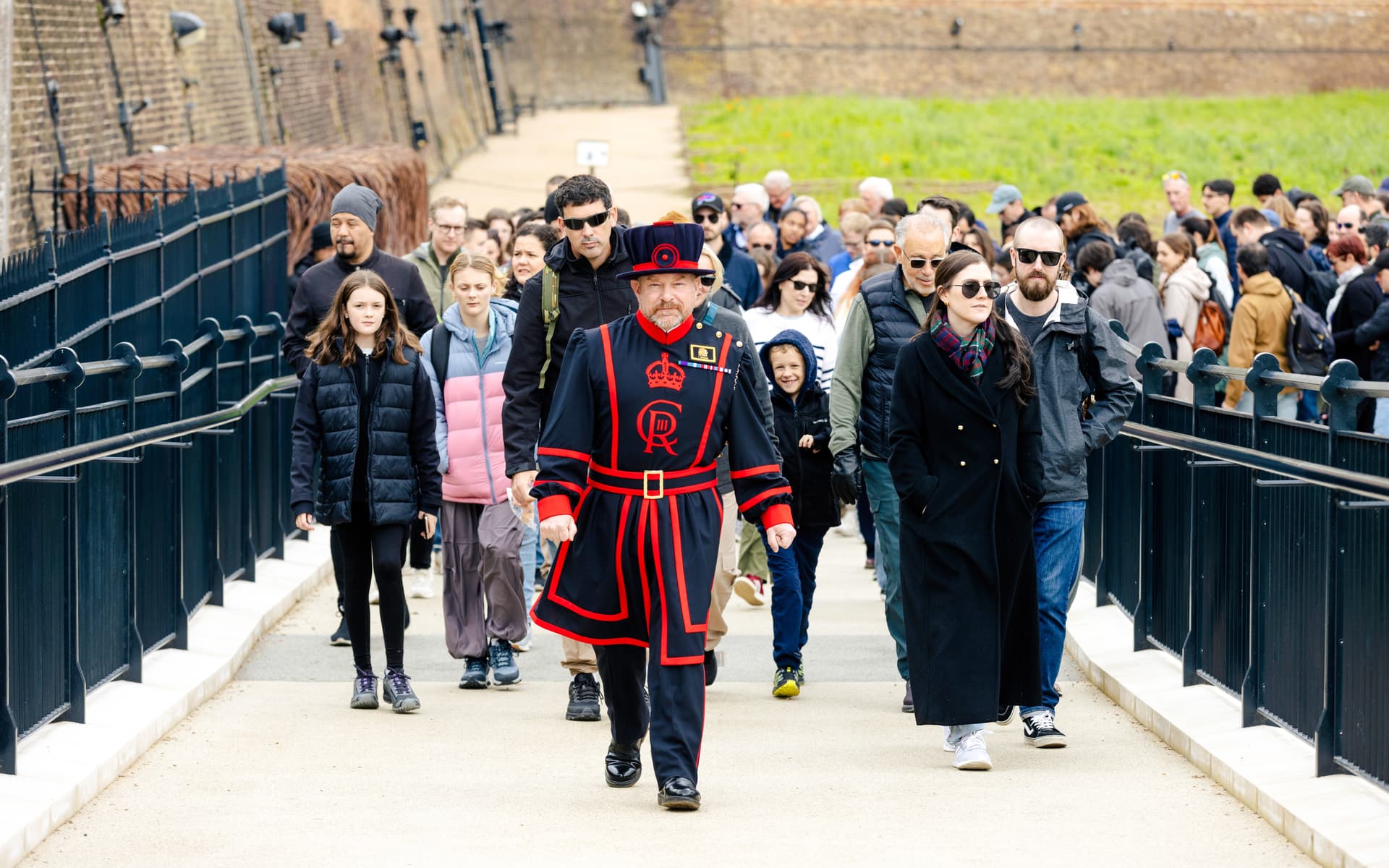
The tall black caps are bearskins, worn with the red tunics that make the ceremony so recognisable. Most full ceremonies include a regimental band or corps of drums playing a mix of military marches, classical pieces and, often, a few crowd-pleasing popular tunes — the programme varies by day. On some dates only a corps of drums or pipes and drums performs, so if the music matters to you, the monthly calendar shows which ensemble is scheduled. The soldiers you are watching are not ceremonial stand-ins; they are serving troops, which is part of what gives the event its weight.




Where to stand: the best places to watch
There is no single spot that shows the whole ceremony, because it spans three sites — so choose your position by what you most want to see. For the widest overview, take the raised steps of the Victoria Memorial; for close-up drill, the Palace railings; for soldiers on the march, The Mall or Spur Road.
The three best vantage points
Each position trades one thing for another. Pick the one that matches your priority:
- Victoria Memorial steps: the elevated view over the forecourt and the surrounding movement. Best for seeing the ceremony as a whole and for photographs that take in the Palace behind.
- Palace railings (north side): the closest you can get to the forecourt drill. You see detail and faces, but your sightline is lower and the crowd here fills earliest.
- The Mall and Spur Road: the march-past. The band and guards pass close by, in motion and in step — often the most atmospheric moment of the morning.
When to arrive
Position dictates timing. For a front-row place at the railings on a busy day, arrive 45 to 60 minutes early — up to 90 minutes in peak summer. For the Victoria Memorial steps, a little less, since the higher ground stays useful even a few rows back. If you only want the march-past along The Mall, you can arrive closer to the start and simply find a gap along the route.
Practical notes worth knowing
- Nearest stations: Green Park, Victoria and St James's Park are all a short walk; Green Park is closest to the forecourt.
- Accessibility: the area is step-free at the railings, with designated wheelchair viewing spaces; British Sign Language–interpreted ceremonies run on selected dates.
- Photography: encouraged. The Victoria Memorial steps and the Palace gates give the strongest shots.
- Belongings: this is a large, tightly packed crowd, and pickpockets are known to work it. Keep bags closed and in front of you.
- Facilities: there are none at the forecourt itself, so sort coffee and toilets in nearby St James's beforehand.
The Changing of the Guard at Buckingham Palace and its companion ceremonies
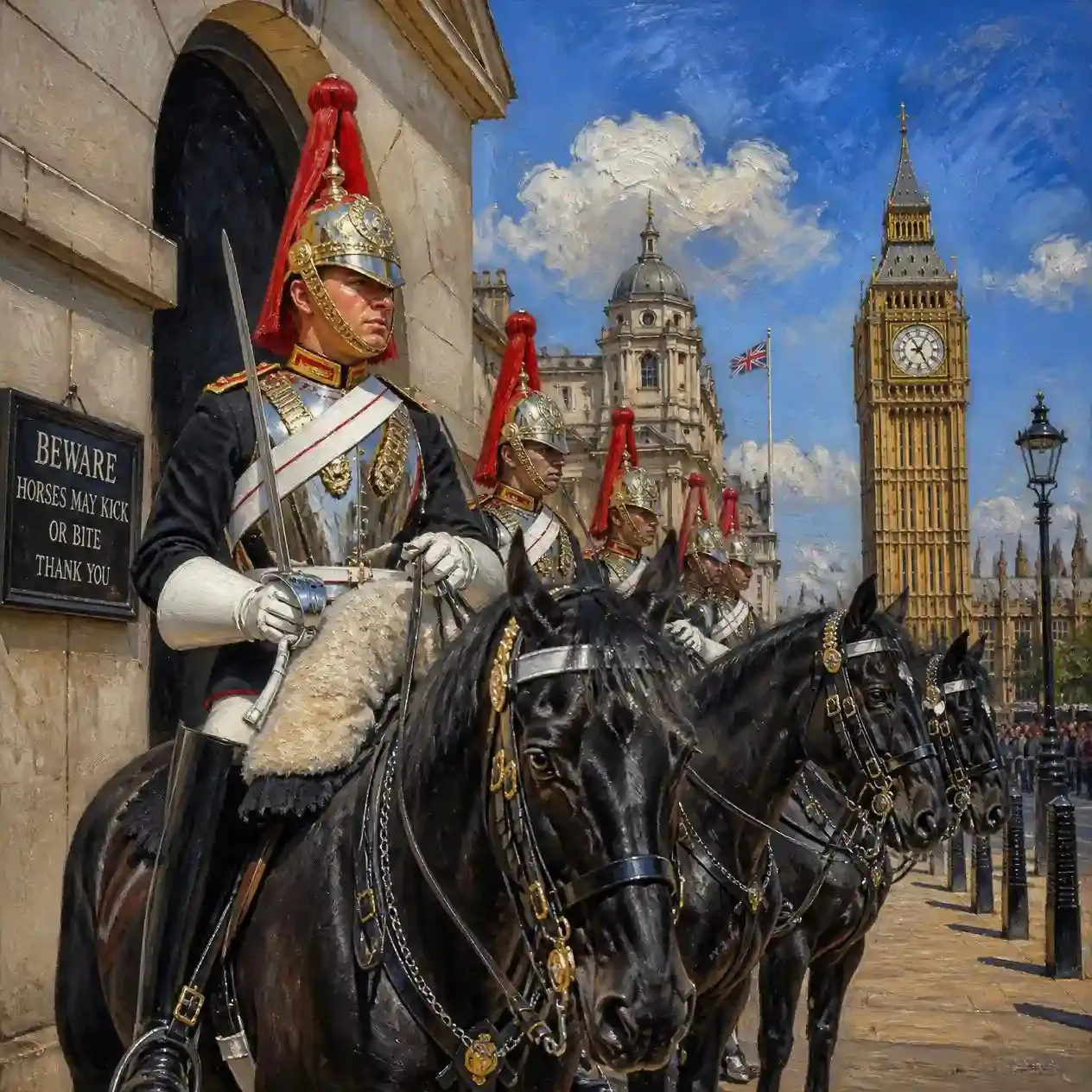
The full Guard Change is the one most visitors mean, but it is part of a wider family of daily ceremonies — and on a day when the main event isn't scheduled, one of the others may still be worth your time. The Household Cavalry at Horse Guards, in particular, offers a mounted spectacle the Palace forecourt does not.
Which ceremony should you watch?
If your dates don't line up with a full change, this is how the alternatives compare:
| Ceremony | What it is | Usual days | Time | Best for |
|---|---|---|---|---|
| Full Guard Change | The complete handover with band and drill in the Palace forecourt | Mon, Wed, Fri | ~11:00 | The classic, full-scale spectacle |
| Captain's Inspection | A smaller inspection of the on-duty guard | Days without a full change | 15:00 | An afternoon alternative if you're nearby |
| Sunday Parade | The Colour trooped into the guard inspection | Sunday | ~10:00 | An earlier, ceremonial Sunday option |
| Horse Guards change | Mounted Household Cavalry handover at Horse Guards | Daily | 11:00 (10:00 Sun) | Horses and cavalry, smaller crowds |
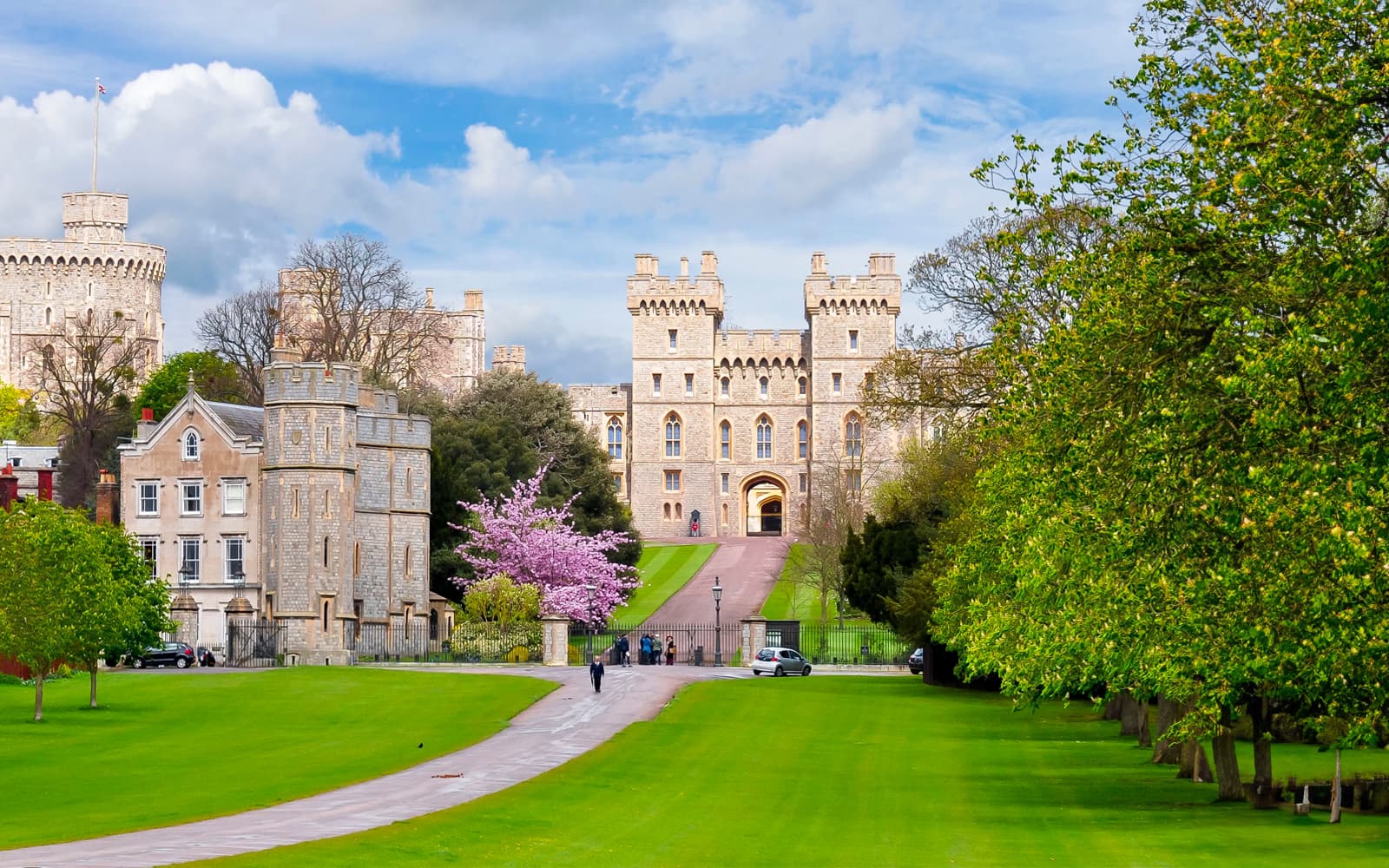
| Windsor Castle Guard | The guard change at the Castle | Tue, Thu, Sat | ~11:00 | Anyone at Windsor on non-Palace days |
Horse Guards and the four o'clock parade
At Horse Guards, on Whitehall, the mounted Household Cavalry change over daily — and because they pass Buckingham Palace on their way there and back, you can catch mounted troops twice in a morning. There is also a lesser-known dismounting ceremony, the four o'clock parade, held at Horse Guards at 16:00 each day, when the mounted guard is relieved. It draws a fraction of the Palace crowd and is one of the more rewarding ceremonies for anyone who has already seen the main event.
Related ceremonies elsewhere in London
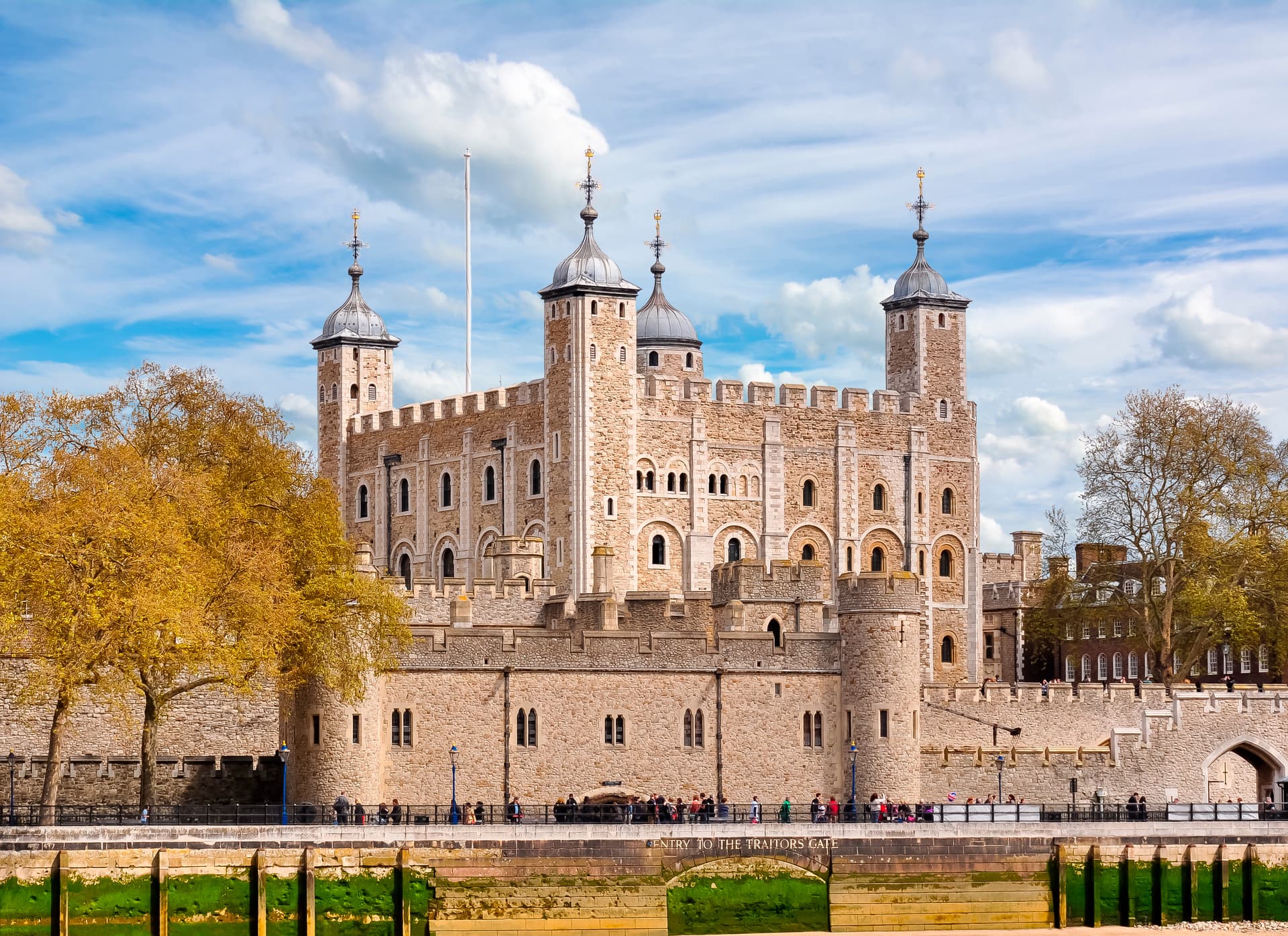
The tradition extends beyond Westminster. At the Tower of London, the nightly Ceremony of the Keys — the centuries-old locking of the gates — is a very different, quieter counterpart that requires advance booking. If your interest is ceremonial London as a whole rather than this one event, it is well worth pairing the two on different days.
Building the Changing of the Guard into your day
Because the ceremony is free, brief and fixed to a morning slot, it works best as the anchor of a wider Westminster day rather than a standalone trip. The surrounding sights are within walking distance, which lets you turn a 45-minute event into a full, well-paced morning and afternoon.
The Westminster walking circuit
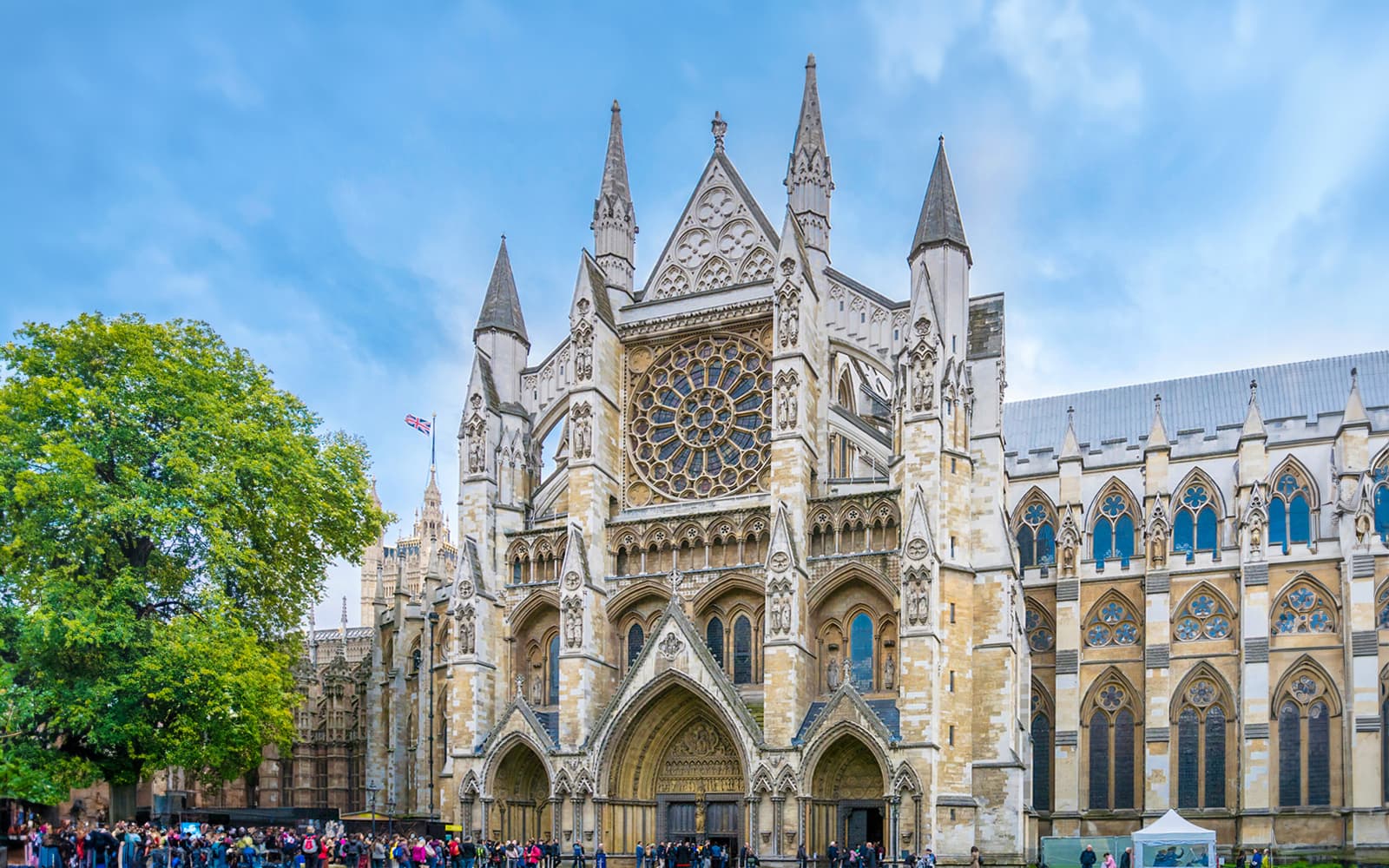
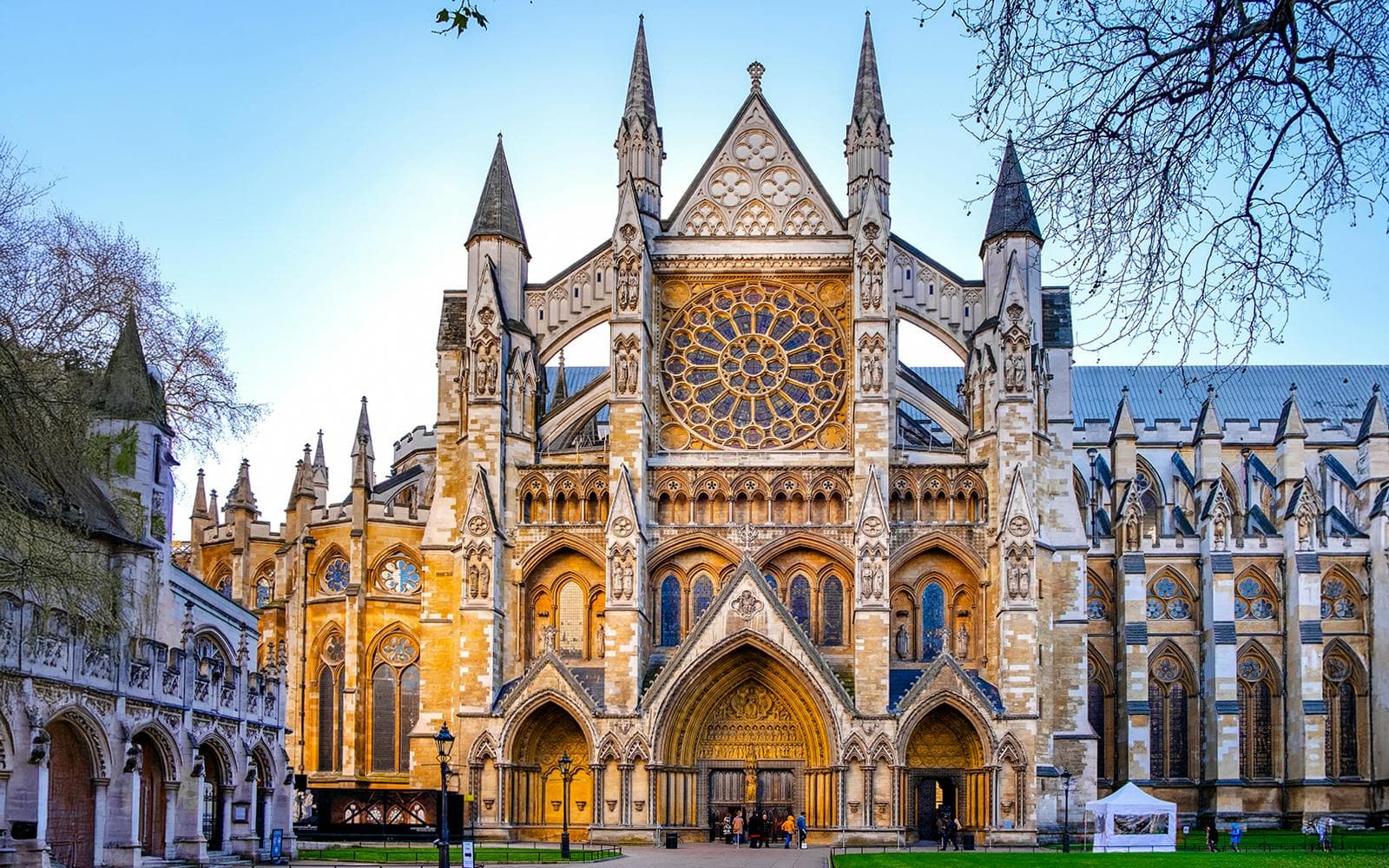
From the Palace, a short walk takes you through some of the most concentrated sightseeing in the city. A natural route runs from the forecourt down through the park to Westminster Abbey, taking in the wider Westminster landmarks along the way. Time it so the ceremony comes first, at 11:00, then move on while the crowds are still dispersing behind you.
Combining it with a guided walk or a palace visit
If you would rather not track the schedule and route yourself, a guided walking tour that is timed around the day's confirmed ceremony takes the guesswork out — a guide positions you for the march-past and explains what is unfolding as it happens. In summer, you can also pair the ceremony with a paid interior visit to the State Rooms; the ticket options for going inside are covered in our full Buckingham Palace guide. Whichever route you take, the walks and experiences on Travjoy are researched and approved by local experts, so you can choose one and plan the rest of your day around it with confidence.
Your wet-weather plan B
Because the ceremony can be called off at short notice, it helps to have an indoor fallback close by. The galleries and grand interiors around Westminster and St James's are all within a few minutes' walk, so a cancelled ceremony can pivot straight into a museum morning without a wasted journey. Keep the option loosely in mind rather than firmly booked, since a borderline forecast often clears in time.
Plan your visit
The Changing of the Guard at Buckingham Palace rewards a little planning and punishes none. Get the day right, arrive with time to spare, and pick your spot by what you want to see — the sweep of it from the Victoria Memorial, the detail at the railings, or the band on the march down The Mall. Check the schedule the night before, keep a wet-weather alternative ready, and remember that the quieter companion ceremonies at Horse Guards and beyond are often the ones seasoned visitors rate most. Do that, and a free 45 minutes becomes one of the more memorable mornings of a London trip. Start planning your days around it, and everything else worth seeing nearby, on Travjoy's London guide.





.svg&w=1920&q=75)