



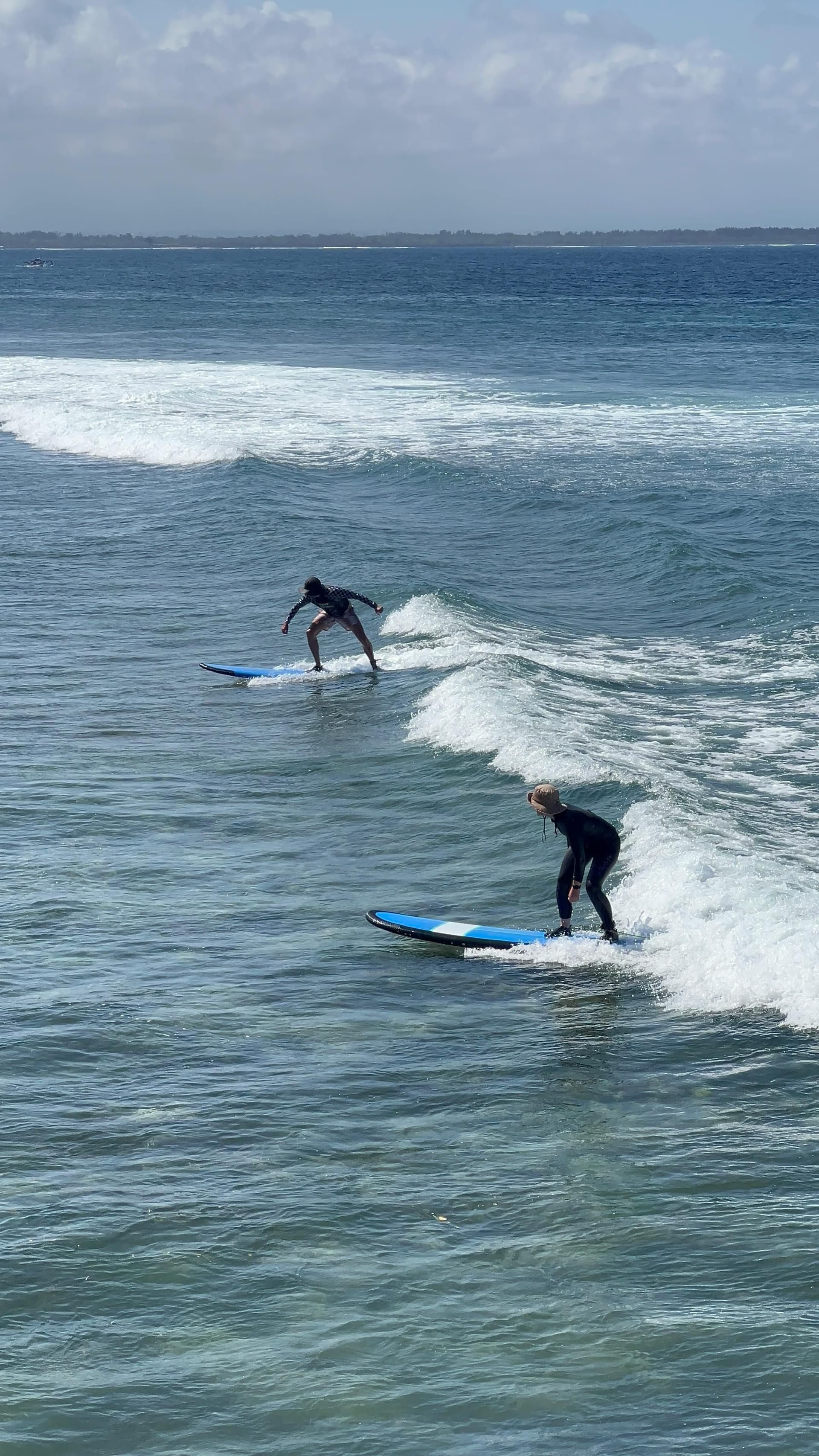
Bali's Best Surfing Beaches: From Beginner to Pro
8 min read

Sandeepa K
Author
Long-term traveller and AI Expert.
SHARE BLOG
TABLE OF CONTENTS
Key Takeaways
- Beginners learn easiest at Kuta Beach, Batu Bolong in Canggu, and Seminyak — sandy bottoms, mellow waves, and surf schools on every corner.
- Intermediates progress on the Bukit reef breaks (Bingin, Balangan, Dreamland) and Canggu's Echo Beach — workable walls with tide windows that matter.
- Advanced surfers chase the Bukit's lefts (Uluwatu, Padang Padang, Impossibles) in dry season, and east-coast rights (Keramas, Sanur) in wet season.
- Group surf lessons in Bali cost IDR 350,000–500,000 (~$22–32); private lessons run IDR 600,000–750,000 (~$38–48) in 2026.
The best surfing beaches in Bali shift by skill level: beginners head to Kuta Beach or Batu Bolong in Canggu for forgiving sandy beach breaks, intermediates step up to Bingin, Balangan, or Echo Beach, and advanced surfers ride Uluwatu and Padang Padang on the Bukit Peninsula. The west coast and Bukit fire from April to October; the east coast (Keramas, Sanur, Serangan) takes over from November to March.
Bali is one of the few places on earth where a first-time surfer and a competing pro can plan the same trip and both go home happy. The Indian Ocean delivers swell year-round, the island has two coasts that switch on and off with the seasons, and surf schools sit on almost every beach in the south. The catch: the wrong beach for your level can mean an hour of paddling for one frustrating wave — or worse, a session over jagged reef you weren't ready for.
This guide breaks down the best surfing beaches in Bali by skill level, with honest notes on crowds, season, and what it actually costs to get in the water. You'll see where to learn, where to progress, and where the famous names (Uluwatu, Padang Padang) live up to their reputation. Lesson prices, board rental rates, and a single comparison table sit alongside the descriptions so you can plan the trip — not just dream about it.
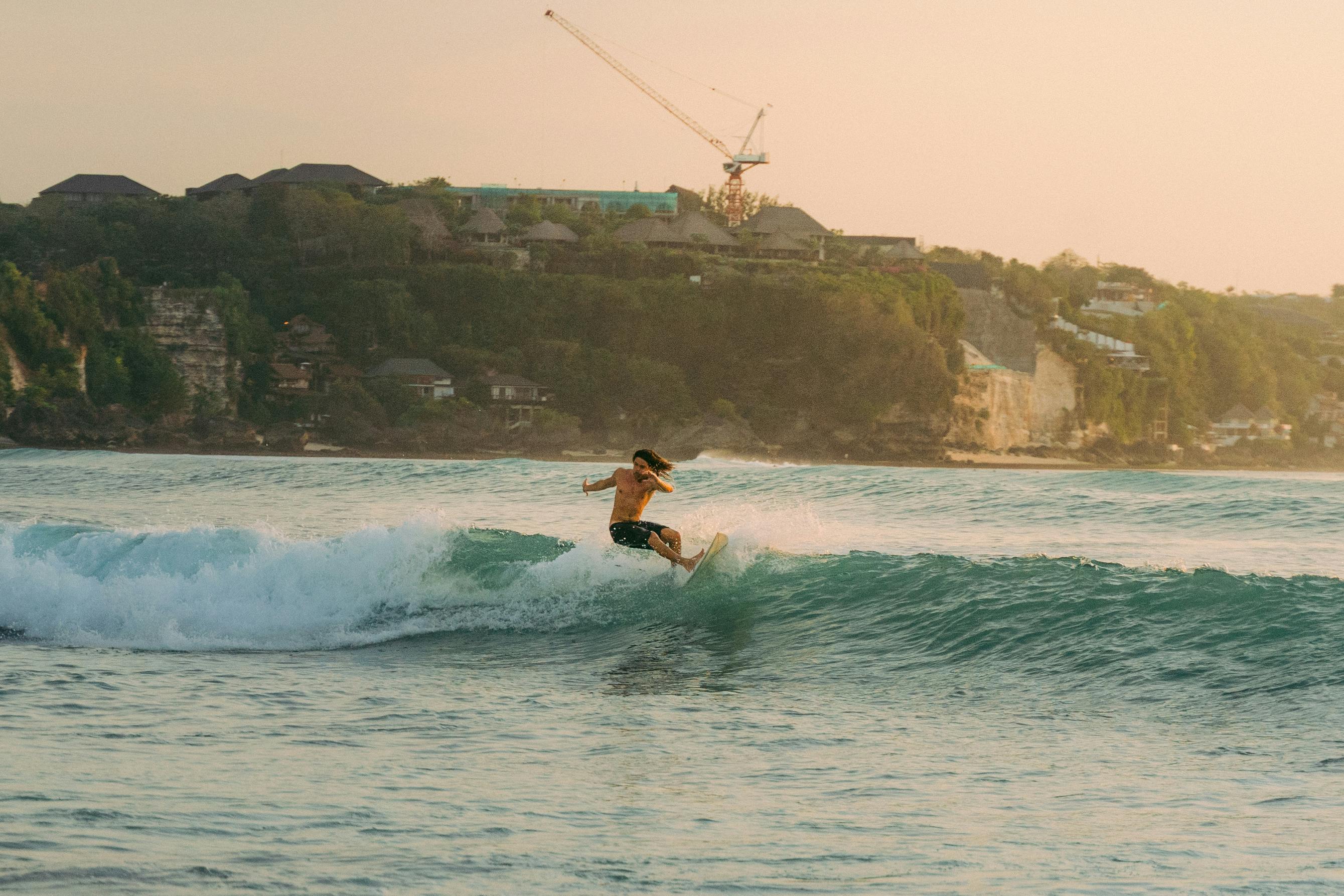
Is Bali Worth a Trip for Surfers?
Bali earns its global surf reputation, but it isn't equally good for everyone. The combination of consistent swell, two coasts working in opposite seasons, and a dense network of surf schools means almost any visitor can find a wave that matches their level. What kills trips here isn't the surf — it's people picking the wrong beach for their skill, or the wrong month for their coast.
Worth it if
- You're a true beginner and want a low-cost place to learn — Bali undercuts most surf destinations on lesson pricing
- You're an intermediate looking to progress on real reef breaks without cold water or wetsuits
- You're an advanced surfer chasing famous lefts (Uluwatu, Padang Padang, Bingin) between April and October
- You want a surf-and-not-surf trip — non-surfing companions have temples, beach clubs, and Ubud to fill the rest of the day
Not ideal if
- You expect uncrowded line-ups at the famous breaks — Bukit dry-season sessions can have 50+ surfers in the water by sunrise
- You're a complete beginner heading straight to Uluwatu (shallow reef, strong currents, and expert-only sections)
- You want consistent west-coast surf in January or February — that's wet-season east-coast territory
- You're planning a quiet luxury holiday and won't accept south Bali's traffic and tourism volume
Reality check: the famous breaks attract famous crowds
- Uluwatu and Batu Bolong fill up by 6:30am during dry season
- Plan for first light, or accept paddling for share-of-set instead of share-of-wave
- Mid-week sessions are noticeably quieter than weekends
The Best Surfing Beaches in Bali at a Glance
Bali's best surfing beaches sort cleanly into three skill brackets across two coasts. The west coast and Bukit Peninsula carry the famous names and work best in dry season (April–October). The east coast comes alive in wet season (November–March), with Keramas, Sanur, and Serangan offering offshore conditions while the west sits onshore. Use the table below to scan beaches against your level, then jump to the section that matches.
| Beach | Region | Wave Type | Best Skill Level | Best Season | Vibe |
|---|---|---|---|---|---|
| Kuta Beach | Southwest Coast | Sandy beach break | Beginner | Apr–Oct (year-round) | Lively, surf-school hub |
| Batu Bolong / Old Man's, Canggu | West Coast | Soft reef break | Beginner / Longboard | Apr–Oct | Hipster cafés, busy line-up |
| Seminyak Beach | Southwest Coast | Sandy beach break | Beginner / Intermediate | Apr–Oct | Quieter than Kuta, beach clubs |
| Jimbaran Beach | Bukit (north end) | Mixed sand and reef | Beginner | Apr–Oct | Calm bay, seafood shacks |
| Medewi | West Bali | Long left point | Adv. Beginner / Intermediate | Apr–Oct (year-round) | Black sand, fishing village |
| Echo Beach | Canggu | Beach break, multiple peaks | Intermediate | Apr–Oct | Trendy cafés, mixed crowd |
| Balangan | Bukit Peninsula | Reef break, mellow line-up | Intermediate | Apr–Oct | Cliff backdrop, quieter |
| Bingin | Bukit Peninsula | Reef break, barrels at low tide | Intermediate / Advanced | Apr–Oct | Cliffside warungs |
| Dreamland | Bukit Peninsula | Sand-covered reef | Intermediate | Apr–Oct | Resort-fringed beach |
| Padang Padang | Bukit Peninsula | Reef left (advanced) + right (intermediate) | Intermediate / Pro | Apr–Oct | Cliff cove, busy |
| Uluwatu | Bukit Peninsula | Long left, multiple sections | Advanced | May–Sept | Iconic, crowded |
| Keramas | East Coast | Powerful right reef | Advanced / Pro | Nov–Mar | Wet-season specialty |
Best Surfing Beaches in Bali for Beginners
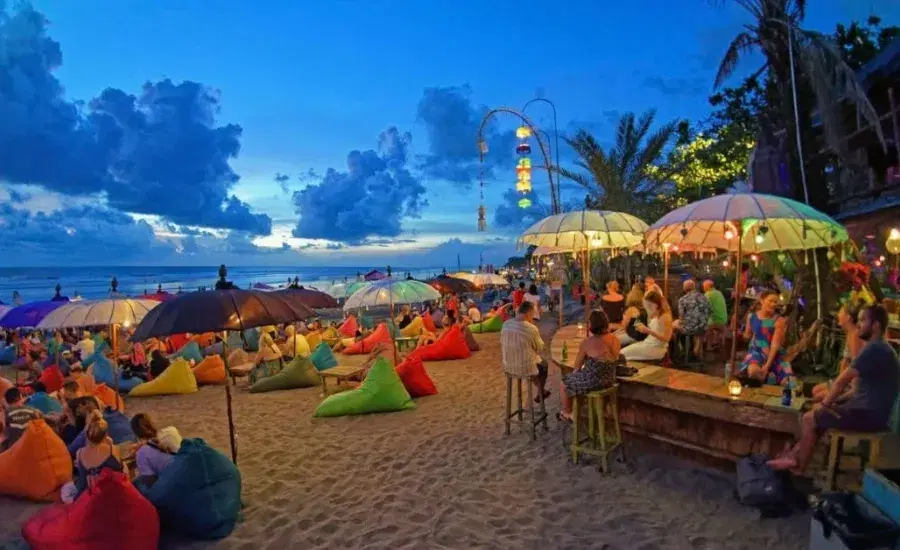
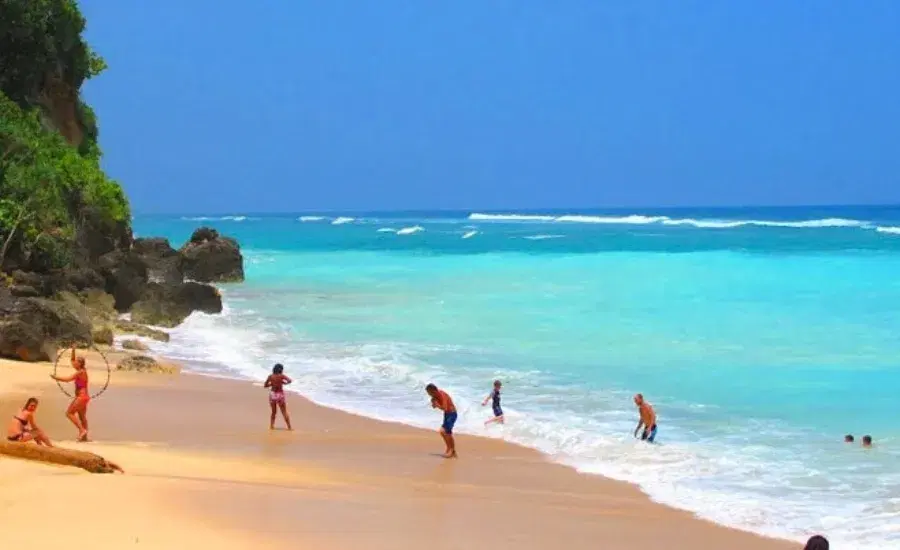
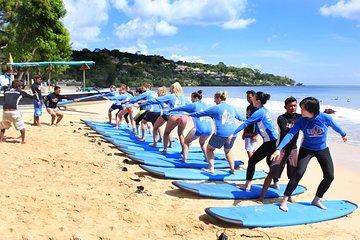
Beginners in Bali should start where there's sand under their board, not reef. Three areas dominate for first-timers: the long stretch from Kuta to Seminyak on the southwest coast, the soft volcanic reef of Batu Bolong in Canggu, and Jimbaran Bay near the airport. Each has surf schools that run lessons from 6am to mid-afternoon and rental boards stacked on the sand.
Kuta Beach — the original learning beach
Kuta Beach stretches for nearly 8 kilometres and has been a learner's beach since the 1930s. The waves break over a sandy bottom, which forgives wipeouts the way reef never will. Schools cluster along the southern end where the beach meets the main strip; you'll see thatched rental stalls every fifty metres.
- Wave type: Sandy beach break, knee- to chest-high for most of dry season
- Best tide: Mid to high
- Crowd level: High year-round, very high in July–August
- Lesson density: The highest in Bali — 30+ schools in the immediate area
The trade-off is volume. Kuta is busy in the water and on the sand, and the bay can get murky after wet-season storms. If you want quieter water with the same forgiving bottom, walk twenty minutes north to Legian.
Canggu — Batu Bolong and Old Man's
Canggu has displaced Kuta as Bali's main learning hub over the past five years. Batu Bolong and the adjacent Old Man's break over a volcanic reef that's covered enough at high tide to feel friendly to beginners. The waves are mellow and forgiving, the line-up is a mix of beginners and longboarders, and the post-surf café scene is the strongest in south Bali.
- Wave type: Soft reef break, longboard-friendly
- Best tide: Mid to high (avoid low tide as a beginner — reef gets exposed)
- Crowd level: Very high — both spots can hold 100+ surfers on a peak morning
- Cost: Surf schools here charge slightly more than Kuta — a Canggu premium
Canggu suits learners who want yoga, vegan cafés, and a longer post-surf scene built around the lesson itself.
Seminyak and Legian Beach
Seminyak Beach sits just north of Legian, sharing the same sandy beach-break setup but with fewer crowds and a more upscale beach-club fringe. Conditions track Kuta's closely, but the swells here are slightly more direct and the rip currents are stronger on bigger days. On calmer days both are excellent for first-timers; on overhead swells, stick with Kuta or wait for a smaller window.
Jimbaran Beach
Five minutes south of the airport, Jimbaran offers a quieter family-friendly stretch with mixed sand-and-reef bottoms. The waves are mellow, the bay is wide, and the seafood shacks along the beach are a draw in themselves. Jimbaran is also the go-to for novice surfers on the biggest swell days — the bay never gets too big, so it stays rideable when Uluwatu is closing out.
Reality check: sandy bottom beats wave size every time
- A 1-foot wave over reef will teach a beginner less in a week than a 2-foot wave over sand will teach in a day
- Falling off a longboard onto sand is a non-event
- Falling onto reef means cuts, infections, and possibly a hospital visit
- Ignore the height of the wave on a beginner's day; look at what's underneath it

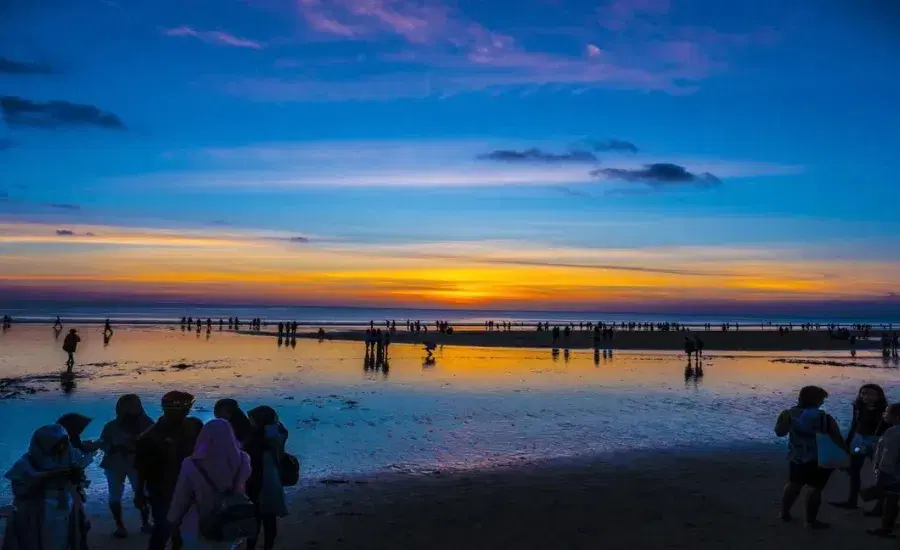
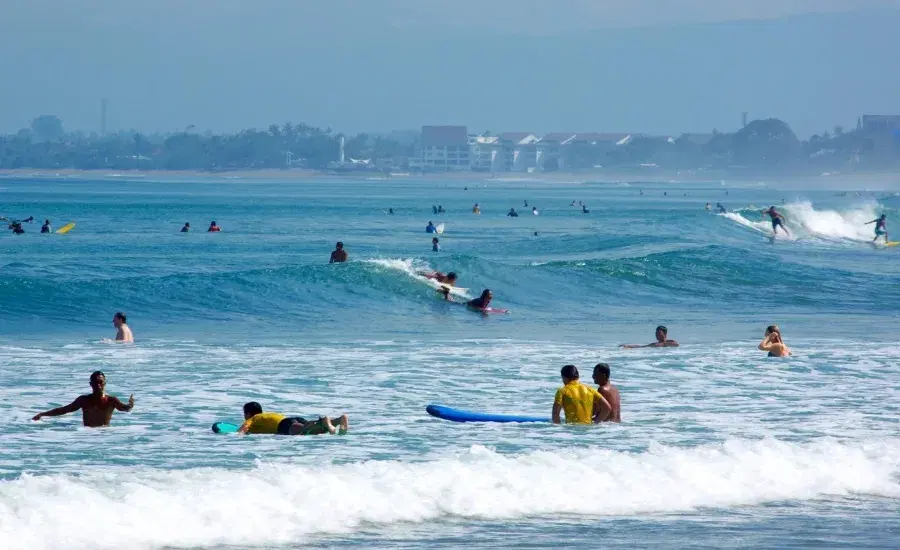


Best Surfing Beaches in Bali for Intermediate Surfers
Intermediate surfers — those who can paddle out unassisted, catch unbroken waves, and turn down the line — graduate to reef breaks. The Bukit Peninsula and Canggu both have a layered set: Echo Beach is the natural step up from Batu Bolong; Balangan, Bingin, and Dreamland sit on the Bukit with mellower line-ups than Uluwatu. The west-coast point break at Medewi is the long-ride training ground for surfers working on style and trim.
Echo Beach, Canggu
Echo Beach sits a few hundred metres north of Batu Bolong and is the most natural progression for surfers leaving the beginner zone. Multiple peaks break across a reef that's still covered enough at high tide to be forgiving. The wave is faster, the wall holds longer, and the crowd is more experienced than at Old Man's. Best at mid to high tide; low tide exposes the reef and isn't intermediate territory yet.
Balangan Beach
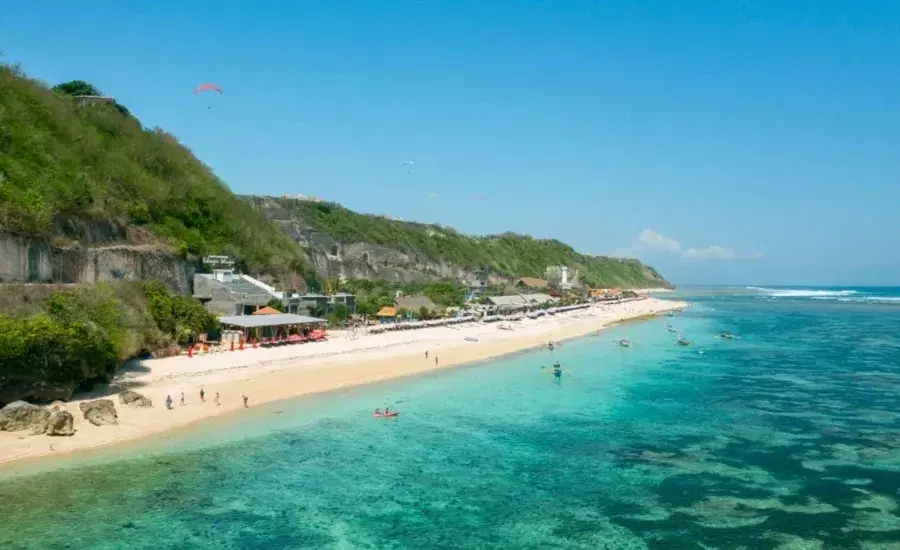
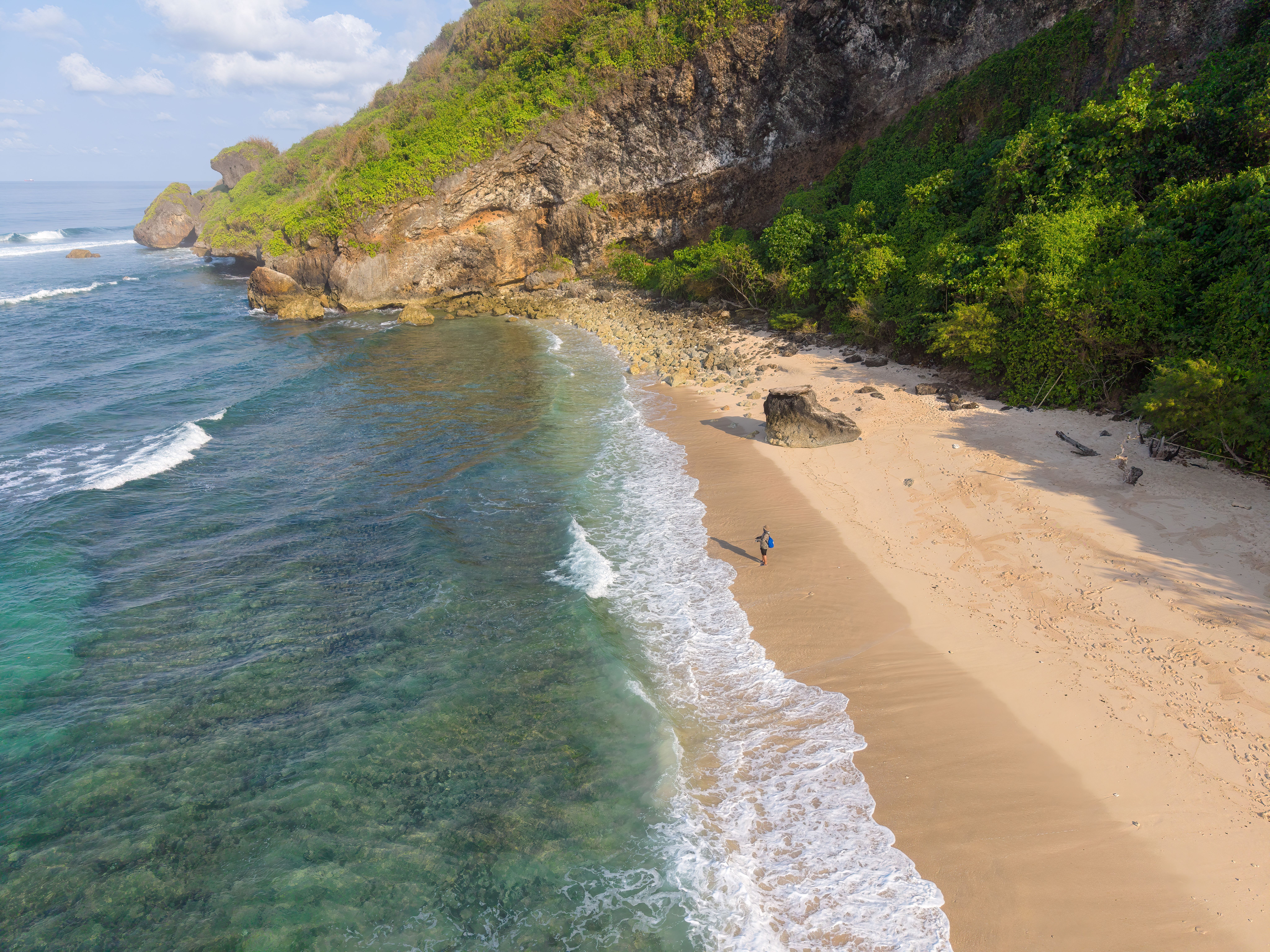
A 30-minute drive south of the airport, Balangan offers a mellow reef break under dramatic cliffs. The line-up is less aggressive than Uluwatu's, the wave is workable but not punishing, and the beach itself is one of Bali's calmer cliff coves. It works best on a small-to-medium swell at mid tide and is a good first taste of Bukit reef surfing.
Bingin Beach
Bingin is the intermediate's reward. The wave is short, fast, and barrels at low tide — but at mid-to-high tide it produces clean, workable left walls that suit anyone who can take off on a steep face. The catch is access: a steep stairway down through warungs and homestays, and a tide window that closes fast. Always check the tide chart, and never paddle out at dead-low unless you're confident on shallow reef.
Medewi — the long-left training ground
Two hours north of Canggu on the west coast, Medewi is Bali's longest left point break — rides of up to one minute on a good day. The wave is mellow, the crowd is small, and the volcanic black-sand beach runs at a slower pace than the south. It's the spot to work on style, foot placement, and trim. Best at 2–6 feet at mid-to-high tide, often working in the early morning before the wind picks up.
Dreamland Beach
Dreamland's reef is covered by sand, which gives it more forgiveness than its Bukit neighbours. It offers both lefts and rights, but the wave is more powerful than it looks from the beach — it lures advanced beginners in and then humbles them. Solid intermediate territory in clean 2–4 ft conditions; less so on bigger days when the rip current picks up.
Reality check: reef breaks reward tide knowledge, not paddling harder
- Bingin at dead-low is a different wave from Bingin at high tide — and at low tide it isn't an intermediate wave at all
- Before paddling out anywhere on the Bukit, check the tide app on your phone
- Spend twenty minutes talking to a local at the warung above the beach; it will save you a session
Best Surfing Beaches in Bali for Advanced and Pro Surfers
Advanced and pro surfers have one peninsula to learn first: the Bukit. Uluwatu, Padang Padang, Impossibles, and Bingin's low-tide left sit within a 10-minute scooter ride of each other. In wet season, the action shifts east to Keramas and Sanur Reef. The famous waves are famously crowded, the reef is jagged, and the rewards are why people fly halfway around the world.
Uluwatu — the legendary left
The wave below the Uluwatu cliffs is the most consistent surf location in Indonesia, with five named sections — The Peak, Racetracks, Outside Corner, Temples, and The Bombie — all breaking left down a long reef. Each works at a different swell size, so Uluwatu is rideable on almost any day in dry season. The downside is the line-up: dozens of surfers compete for sets in peak season, and the take-off zones get territorial.
- Wave type: Long-walling left, multiple linked sections
- Best tide: Mid to high — low-tide take-offs run over very shallow reef
- Best season: May–September
- Crowd level: Extremely high — first-light or evening sessions only for sanity
Padang Padang — the "Balinese Pipeline"
Padang Padang's left is a short, hollow, barrelling wave over shallow reef that hosts the World Surf League's Rip Curl Cup invitational. It's an expert wave. On a good swell it produces some of the most photographed barrels in Indonesia; on a flat day it's just a beach. The same beach also offers a slow right-hand wave that's friendly to intermediates working on bigger take-offs — make sure you know which side you're paddling toward.
Impossibles
Impossibles sits between Padang Padang and Bingin and offers long, fast walls across three connecting sections. On a clean overhead swell, you can link the sections for a 200-metre ride. It's less crowded than Uluwatu because the take-offs are spread out, but the wave is unforgiving — fast sections, shallow reef, and a long paddle back if you miss the channel.
Keramas — wet-season right
On the east coast, Keramas is a powerful right-handed reef break that has hosted World Surf League Championship Tour events. It works from November to March on westerly winds and shines on medium-to-large swells. The wave is fast, hollow, and intolerant of late take-offs — but it's the highest-quality wave in Bali during wet season and is markedly less crowded than the famous Bukit lefts.
Kuta Reef and the Airport Lefts
Easily overlooked because the namesake beach is famous for beginners, Kuta Reef is a high-performance left-hander accessed by traditional outrigger boat from Kuta Beach. The boat ride is part of the appeal. Five world-class outer reefs — Kuta Reef itself, Airport Left, Toro Toro, Tower, and Airport Right — sit along the same stretch and suit intermediate surfers stepping up as much as advanced surfers wanting variety without the Uluwatu crowd.
Reality check: Padang Padang's famous photos are the left — but most surfers there are on the right
- The left breaks in front of the cliff, dredges over very shallow reef, and hosts experts only
- The right peels in front of the beach, works on most tides, and is slow enough to suit progressing intermediates
- Knowing which side you're paddling toward saves a lot of confusion at first light
Surf Seasons, Costs, and Which Beach to Choose
Bali has waves every month of the year, but the coast that fires depends on the season, and the beach you should pick depends on your level and timing. The decision is simpler than the variety suggests: west coast and Bukit from April to October, east coast from November to March, with two shoulder months (April and October) where almost everything works.
When to surf: dry season vs wet season
- Dry season — April to October: West coast and Bukit prime. Uluwatu, Padang Padang, Bingin, Canggu, and Kuta all fire on consistent SE swells with offshore north-easterly winds. June–August is peak — biggest swells, smallest tolerance for crowds.
- Wet season — November to March: East coast turns on. Keramas, Sanur, Serangan, and Nusa Dua benefit from westerly winds blowing offshore. Rain is real but usually morning or evening; surf sessions sit cleanly in the windows between.
- Shoulder months — April, May, October, November: Light winds open up almost every spot in Bali. Smaller crowds. The best balance of season for most travellers.
- Beginner-friendly all year: Kuta, Legian, Seminyak, and parts of Canggu have rideable waves every month.
What surf lessons and rentals cost in Bali (2026)
Bali undercuts most international surf destinations on price. Group lessons run roughly $22–32; private lessons $38–48. Board rentals are cheaper than almost anywhere else in the world. Recent pricing across surf media coverage and on-the-ground rates in Kuta, Canggu, and Uluwatu sits in these ranges:
- Group lesson (2 hours, max 4 students): IDR 350,000–500,000 / ~$22–32 per person
- Semi-private lesson (1 instructor, 2 students): IDR 500,000 / ~$32 per person
- Private lesson (1-on-1, 2 hours): IDR 600,000–750,000 / ~$38–48
- Board rental (soft-top, by the hour): IDR 50,000–80,000 / ~$3–5
- Board rental (daily, hard-top): IDR 100,000–150,000 / ~$6–10
- Multi-day packages (3–5 sessions): Save IDR 150,000–250,000 (~$10–16) vs single-lesson rates
What's typically included: board, rashguard, instructor in the water, and a basic land briefing. What costs extra: photos (IDR 100,000–550,000 / ~$7–35), GoPro rental, and hotel pick-up beyond a 15–20km radius. Prices are as of 2026 and vary by area — Bukit and Canggu schools sit at the top of the range; Kuta sits at the bottom.
Which Bali surf beach should you choose?
- First-time surfers → Start at Kuta Beach (lowest cost, sandy bottom, most schools) or Batu Bolong in Canggu (more atmosphere, slightly higher cost)
- Couples splitting beach time and surf → Base in Seminyak — the beach is calm enough for non-surfers, lessons run every morning, and the dining and beach-club fringe is the strongest in south Bali
- Solo intermediates progressing → Head to the Bukit — Balangan and Bingin from a single base, with Padang Padang's right and Dreamland for variation
- Surf-trip purists chasing famous breaks → Stay near Padang Padang or Uluwatu, and scoot between Uluwatu, Padang, Impossibles, and Bingin in a single morning
- Wet-season visitors (December–February) → Skip the west coast — base in Sanur or near Keramas and ride the east-coast rights at first light
- Families with non-surfing kids → Jimbaran or Pandawa Beach for calmer water, with surf lessons available at Kuta a short drive away
If you'd rather not assemble all of this from scratch, Travjoy's Bali experiences are vetted after extensive on-the-ground research and approved by destination experts — every option has been checked against the practical realities of season, skill level, and cost, so you book knowing what you're actually paying for. Browse our top picks for Bali to see the shortlist.
Reality check: those empty-wave photos are dry-season dawn patrol only
- The famous Bukit breaks are essentially deserted from 5:30am to 7:00am during dry season
- By 8:00am the line-up is busy; by 9:30am it's full
- If you're paying for a private lesson or guided session, schedule it at first light
- Sunset sessions are quieter than mid-day but won't be empty either
Plan Your Bali Surf Trip
Bali's surf scene works because the island gives you choice — sandy beach breaks for your first stand-up, mellow reef walls for your first rail-turn, and expert-only barrels for the day you're ready. The decisions that matter most are skill, season, and coast: get those right and almost any beach in the south will work. Pricing is friendly enough that a five-day surf course costs less than dinner for two in some Western capitals, which makes Bali a reasonable place to learn and an even more reasonable place to come back to once you have.
When you're ready to book lessons, choose accommodation near the right beach for your level, or build a wider itinerary around your surf days, start planning your Bali trip on Travjoy. The best surfing beaches in Bali are well within reach once you know where to point your board — and which month to do it.


.svg&w=1920&q=75)