


Dubai: Dubai Gold Souk
Operating Hours:Monday - Thursday: 09:00 - 21:00. Friday - Sunday: 09:00 - 21:00
The Vibe:Glittering alleys of gold and local color
For hundreds of years, gold has drawn traders to Dubai’s older quarter. Today it remains a world-renowned jewelry hub, blending bustling market vibes with modern luxury.
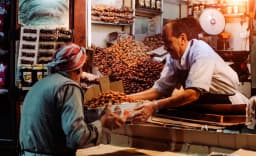
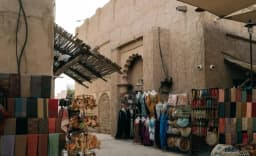
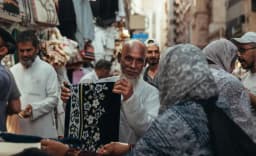
Gleaming gold pieces line the stalls under woven canopies, mingling with aromas of spices and brewing tea. Shopkeepers haggle in a rhythmic hum, while sunlit rays dust the narrow lanes with warm hues.
- One of the world’s largest gold markets
- Operating since the 1940s, it's steeped in history
- Visitors rave about bargain hunting in the glittering stalls
Persona Fit
- 👨👩👧 Families: Plenty of space and colorful stalls for kids to marvel at
- 💕 Couples: Shared treasure-hunting experience in a historic setting
- 👵 Seniors: Wide, flat pathways and frequent seating
- 📸 Photographers: Captivating shots of gleaming gold displays
Highlights
- Gleaming jewelry stalls — dozens of shops packed with necklaces, bracelets and rings
- Traditional atmosphere — winding alleys, wooden archways and a lively market vibe
- Bargaining expected — merchants welcome haggling (cash often gets discounts)
- Gold variety — find pure bullion, custom pieces and ornate local designs
- Early-morning serenity — arriving at opening delivers a tranquil shopping experience — Hidden Gem

Laura Coughlin
Our Dubai Local Expert
Table of Contents
Things To Do Nearby
Dubai Spice Souk — aromatic market of spices, teas and local treats one street over
Dubai Creek Abra — short traditional boat ride across the creek for scenic views
Al Fahidi Historical District — neighboring heritage area with wind-tower houses and museums
Dubai Spice Souk — aromatic market of spices, teas and local treats one street over
Dubai Creek Abra — short traditional boat ride across the creek for scenic views
Al Fahidi Historical District — neighboring heritage area with wind-tower houses and museums
TJ's Guide - Dubai Gold Souk
Know Before You Go
Insider Tips
• Weekday mornings (10AM–noon) are quieter and cooler – plan to arrive then.
• Pay in AED cash for better prices; politely haggle to bring costs down.
• Verify the purity stamp on each piece (UAE hallmarks like 22K/18K) to ensure authenticity.
• Stop for Karak tea at Al Khayma Heritage Teahouse (in the nearby Spice Souk) for an authentic break.
• Weekday mornings (10AM–noon) are quieter and cooler – plan to arrive then.
• Pay in AED cash for better prices; politely haggle to bring costs down.
• Verify the purity stamp on each piece (UAE hallmarks like 22K/18K) to ensure authenticity.
• Stop for Karak tea at Al Khayma Heritage Teahouse (in the nearby Spice Souk) for an authentic break.
Know Your Facts
- • Metro – Al Ras station (Green Line) is a 5-min walk: exit onto Naif Road and head east toward the golden archway.
- • Abra – board at Bur Dubai Old Souk station; disembark at the Deira side near the Gold Souk entrance.
- • Taxi/Car – drop off at Sikkat Al Kheel Road by the main arch. Limited street parking; paid lots at nearby malls are safer.
Once You Reach
Internal Navigation
• Market Layout – Two parallel streets (Al Suq Al Markazi and Al Suq Al Hira) with intersecting alleys; Google Maps or local maps can help, as internal signage is minimal.
• Entrances – Two ornate archways (north end on Naif Road, south end on Sikkat Al Kheel) connect to main roads; remember which arch you use.
• Signage – Limited directional signs inside; navigate by landmark shops and archways instead.
• Accessibility – Mostly level brick floors; narrow paths can be crowded. Not ideal for wide strollers or wheelchair beyond occasional lifts.
Food & Coffee Shops
• Al Khayma Heritage Teahouse – traditional Emirati café near the Spice Souk entrance serving Arabic coffee, dates and snacks.
• Street stalls – find quick bites like shawarma and karak chai along the souk’s periphery.
• Al Khayma Heritage Teahouse – traditional Emirati café near the Spice Souk entrance serving Arabic coffee, dates and snacks.
• Street stalls – find quick bites like shawarma and karak chai along the souk’s periphery.
Photography Tips
• Ask shopkeepers before taking close-up photos of their displays; some prefer privacy.
• The interplay of sunlight with gold is stunning around midday. Avoid harsh flash to reduce glare.
• Ask shopkeepers before taking close-up photos of their displays; some prefer privacy.
• The interplay of sunlight with gold is stunning around midday. Avoid harsh flash to reduce glare.
Explore Deeper
Beyond the gleam, the Gold Souk is a storybook of Dubai’s past and present. Its market traces roots to the 1940s, blending Bedouin trading traditions with today’s luxury culture.
• Origins
It started as a humble row of gold shops in the 1940s and expanded with Dubai’s oil-era boom.
• Craftsmanship
Many vendors are family-run, offering custom hand-crafted jewelry that blends traditional Arab designs with modern trends.
• Cultural role
Gold jewelry here is considered an investment and a customary gift in Emirati weddings and festivals.
• Architecture
Ornate arches, wooden beams and hanging lanterns give the souk an old-world charm amid the modern city.
• Origins
It started as a humble row of gold shops in the 1940s and expanded with Dubai’s oil-era boom.
• Craftsmanship
Many vendors are family-run, offering custom hand-crafted jewelry that blends traditional Arab designs with modern trends.
• Cultural role
Gold jewelry here is considered an investment and a customary gift in Emirati weddings and festivals.
• Architecture
Ornate arches, wooden beams and hanging lanterns give the souk an old-world charm amid the modern city.
Did You Know?
• Tax-free – The UAE imposes no sales tax on gold, making this a global bargain destination.
• Hallmarked – By law, every item is stamped with its purity (e.g. '999' for 24K, '750' for 18K) by the Dubai Gold & Jewellery Group.
• Expansion – In 2022 a new Gold Souk wing opened, adding dozens of shops and a dedicated Silver Souk to the historic market.
• Gold tradition – Gold is such a valued store of wealth here that locals often display their wealth as jewelry rather than bank savings.