



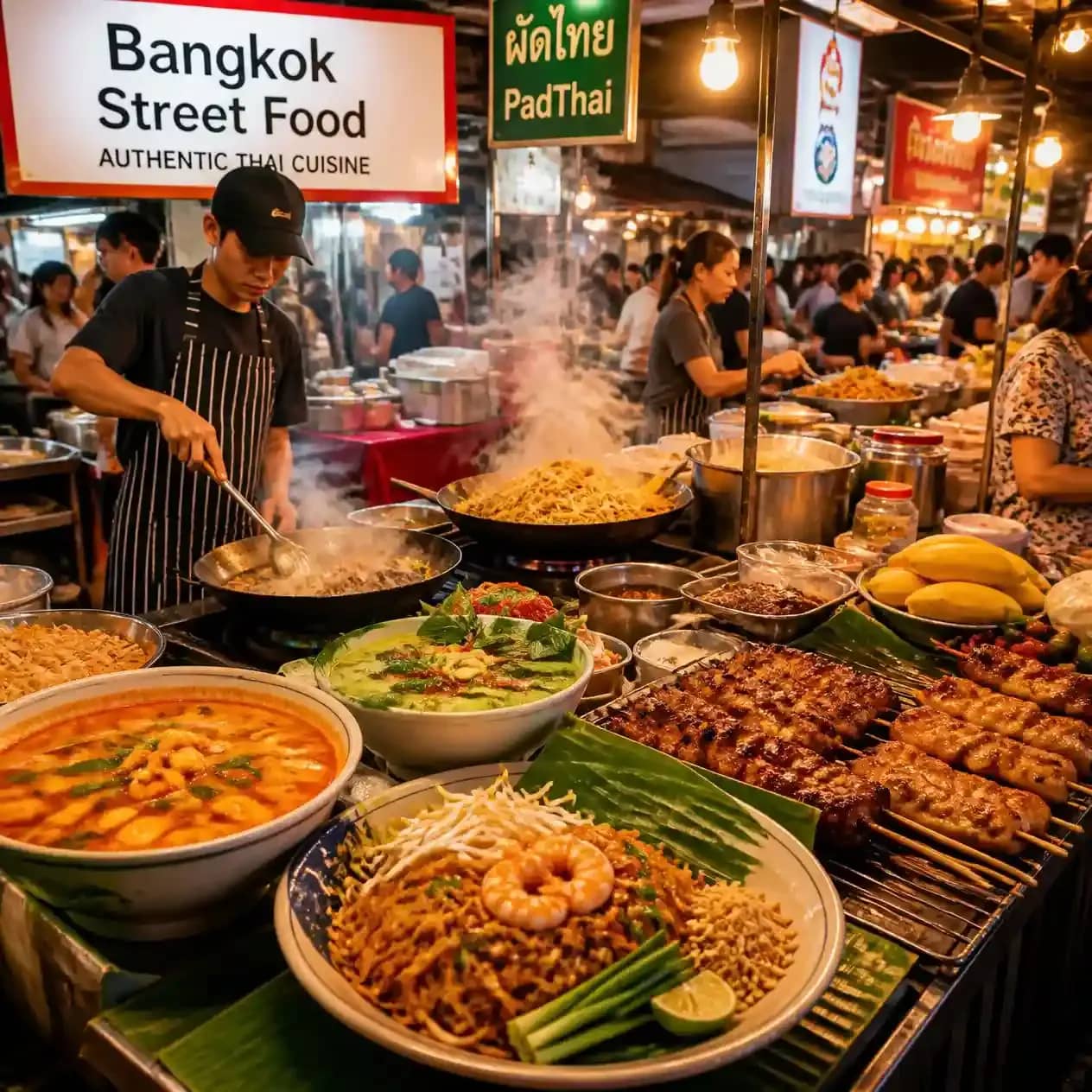
The Best Street Food in Bangkok: A Complete Guide to the City's Six Great Eating Districts
11 min read
Key Highlights
- The best street food in Bangkok sits across six districts, and each runs to a different clock — Yaowarat and Banthat Thong after dark, Wang Lang and Nang Loeng in daylight, Victory Monument and Talat Phlu somewhere in between.
- Reckon on 40–150 THB (about USD 1.15–4.30) a dish in 2026, and 300–600 THB (roughly USD 8.50–17) for a full grazing evening across five or six stalls.
- The 2026 MICHELIN Guide Thailand lists 137 Bib Gourmand addresses nationwide, 44 of them across Bangkok and its surrounding provinces — the tier where pavement stalls sit alongside restaurants.
- One starred street stall and a Bib Gourmand stall are different products: the star means a two- to three-hour queue and roughly 1,500 THB a plate; the Bib means you walk up and sit down.
- Bangkok has re-zoned street vending, capping stall size and mandating pedestrian clearance, so stalls relocate more than any guidebook admits — verify a specific vendor before you build an evening around it.
The best street food in Bangkok is spread across six eating districts rather than concentrated in one. Yaowarat (Chinatown) fires up around 6pm for Thai-Chinese grills, noodles and seafood; Banthat Thong runs from late afternoon to past midnight; Wang Lang and Nang Loeng are daytime markets; Victory Monument serves boat noodles all day; and Talat Phlu is an evening neighbourhood crawl. Expect to pay 40–150 THB (USD 1.15–4.30) a dish and 300–600 THB (USD 8.50–17) for a full evening of grazing in 2026.
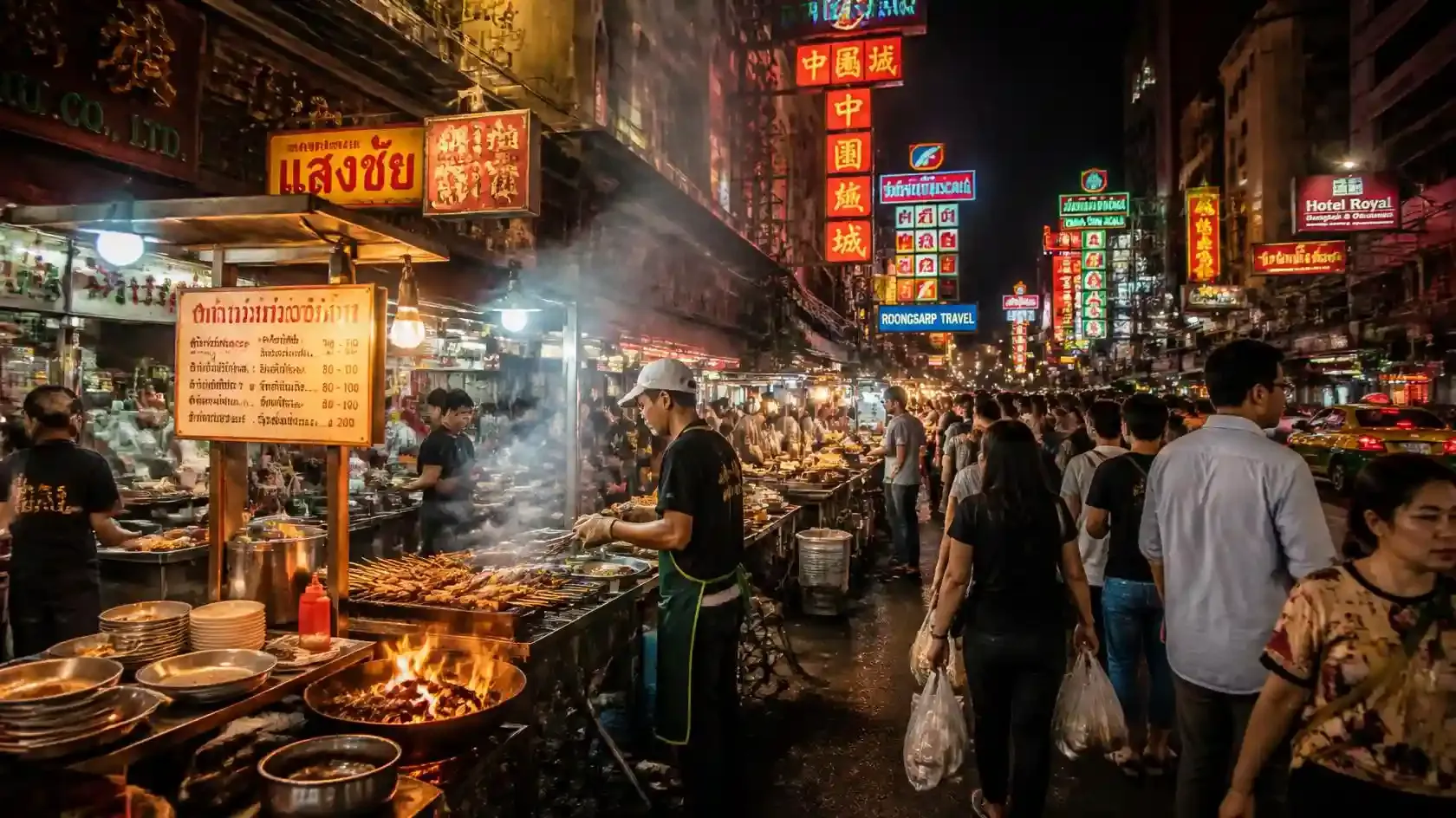
Bangkok eats out. Not occasionally, and not as an event — the city feeds itself from carts, shophouse counters and market stalls as a matter of daily routine, which is why a vendor who has cooked one dish for thirty years can be found on a residential soi with no sign in English. That density is the whole proposition. It is also the problem: the city has thousands of stalls and no obvious front door.
Most guides answer the question of where to find the best street food in Bangkok with a list of dishes. That is useful once you are standing in front of a stall, but it does not help you decide where to stand. This guide takes the other approach. It maps the six districts that reward a dedicated evening, tells you when each one actually operates, sets out what the food costs, and covers the ordering, hygiene and payment mechanics that nobody explains until you are already holding a plate.
Is a Bangkok Street Food Crawl Worth It?
Yes — for most travellers, an evening spent eating street food in Bangkok is the single best-value few hours in the city, and on a second or third visit it is often more memorable than another temple. The food is not a downgrade from restaurant cooking; in Bangkok it is frequently the better version, cooked by specialists with a single-dish repertoire. What it asks of you is a tolerance for plastic stools, uneven pavements and heat.
Worth it if
- You have seen the headline sights and want an evening with texture rather than another ticketed attraction.
- You eat adventurously and are happy to order by pointing at what the table next to you is having.
- You want a sense of how the city actually lives, at close range, without a scripted itinerary.
- You are travelling with someone who enjoys food as the main event of a day.
Not ideal if
- You have mobility limitations — pavements are broken, kerbs are high, and seating is low plastic stools without backs.
- You are visiting in April or May, when late-afternoon heat and humidity make a two-hour walking crawl properly punishing. Go after 8pm instead, or pick an indoor market.
- You manage a serious allergy. Fish sauce, shrimp paste, peanuts and shared woks are present almost everywhere, and stall vocabulary rarely stretches to reliable allergen detail.
- You want a table booked in advance and a menu in English. That is a restaurant evening, and Bangkok does those superbly too.
When a guide earns its fee
A guided walk is worth the money in two specific situations: when you have one free evening and cannot afford to waste it finding your way, and when you want the stalls that have no English signage and no online presence. A good guide orders across four or five vendors in sequence, paces the portions, and explains what is in front of you — which is a different experience from eating the same dishes alone.
If you would rather not sift through hundreds of operators, the Bangkok food tours on Travjoy have been researched and approved by local experts, so you are choosing between options that have already been checked rather than gambling on a listing. Walking it independently is entirely reasonable too — street food stalls in Bangkok are not hard to approach once you know the mechanics, which the later sections cover.
Insider reality check: the star and the Bib are not the same product
- Bangkok has one internationally famous Michelin-starred street stall. The queue runs two to three hours, it is cash only, and a crab omelette starts around 1,500 THB (about USD 43).
- The Bib Gourmand tier is where the value sits: good cooking at a fair price, usually under 400 THB (roughly USD 11.50) a head, and often nearer 100 THB (USD 3).
- Bib Gourmand stalls generally take walk-ins. If your evening depends on eating at a specific starred address, treat it as its own outing, not one stop on a crawl.
The Six Best Street Food Districts in Bangkok, Compared
Pick your district by the time of day you are free and the atmosphere you want, not by which name appears most often online. The best street food in Bangkok is not a single address — Yaowarat is the theatrical night option, Banthat Thong the current wave, Wang Lang and Nang Loeng the daytime markets, Victory Monument the noodle specialist, and Talat Phlu the residential crawl. The table below sets them against each other.
| District | Peak window | What it does best | Per dish (2026) | Best for |
|---|---|---|---|---|
| Yaowarat (Chinatown) | From 18:00, busiest 19:00–22:00 | Thai-Chinese grills, seafood, rolled noodle soup, desserts | 60–250 THB (USD 1.70–7.15) | A first big night out; atmosphere above all |
| Banthat Thong | 16:00 onwards, peak 18:30–21:30, many open past midnight | Noodle hotpots, grilled river prawns, dry sukiyaki, dessert bars | 50–150 THB (USD 1.40–4.30) | Repeat visitors; late eaters; a long crawl |
| Wang Lang | Roughly 09:00–17:00 | Snacks, curries over rice, grilled skewers, Thai sweets | 40–100 THB (USD 1.15–2.85) | Daytime eating; pairing with a river itinerary |
| Victory Monument | All day, liveliest 11:30–20:00 | Boat noodles, papaya salad, grilled pork skewers | 50–90 THB (USD 1.40–2.60) | A focused lunch; anyone short on time |
| Nang Loeng | Morning to early afternoon, winding down by 14:00 | Old-Bangkok curries, roast duck, traditional Thai desserts | 40–120 THB (USD 1.15–3.45) | Seniors; a calmer pace; heritage context |
| Talat Phlu | Late afternoon to about 22:00 | Neighbourhood grills, noodles, Thai-Chinese snacks | 40–120 THB (USD 1.15–3.45) | Third-visit travellers; no tourist scaffolding |
Yaowarat (Chinatown)
Yaowarat is the one to do if you only do one. The road stays quiet through the afternoon, then from around 6pm the grills come out, the neon comes on, and a kilometre of pavement turns into a working kitchen. Come for charcoal-grilled seafood, rolled rice noodle soup, oyster omelettes and Chinese-Thai desserts.
Take the MRT Blue Line to Wat Mangkon and use Exit 3, which puts you in the middle of it rather than at the far end. Wat Traimit sits at the Chinatown gate if you want twenty minutes of context before you eat.
Banthat Thong
Banthat Thong is where Bangkok has been eating most enthusiastically for the past few years — a long strip near Chulalongkorn University that runs from late afternoon well past midnight. It mixes decades-old noodle houses with dessert bars and Bib Gourmand names, so the crawl has more range than Yaowarat.
Walk in from BTS National Stadium (Exit 2) for the northern end, or MRT Sam Yan (Exit 2) for the southern end. Friday and Saturday evenings are the busiest; arrive before 6pm if you want the popular noodle counters without a wait.
Wang Lang
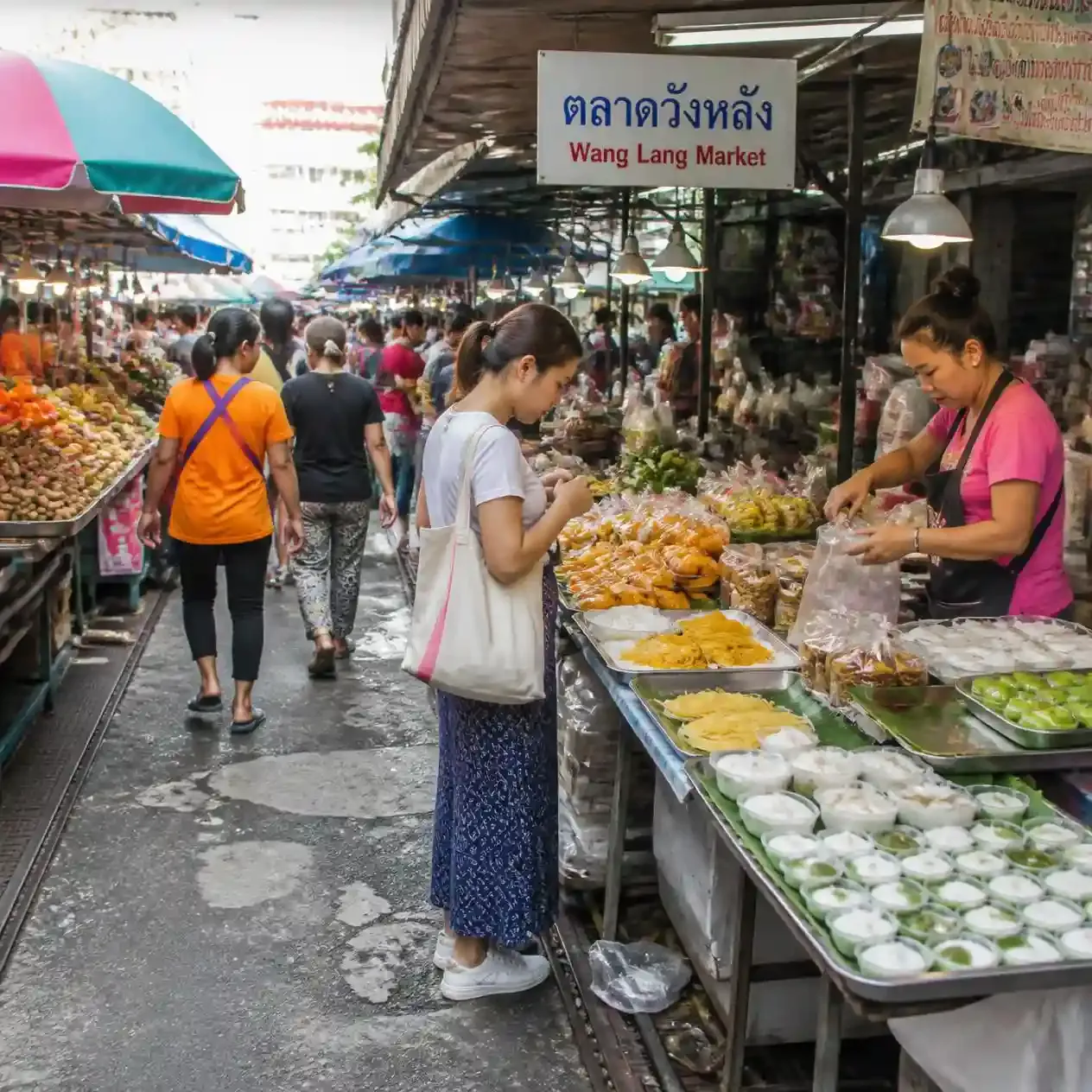
Wang Lang is the daytime answer, on the Thonburi side of the river beside Siriraj Hospital. It feeds hospital staff, students and local families rather than visitors, which shows in the turnover and the pricing. The format is walk-and-graze: curries ladled over rice, skewers, fried snacks, and a strong run of Thai sweets.
The pleasure of Wang Lang is the approach. Cross by river ferry rather than road, and the market becomes the end of a boat journey instead of a taxi ride.
Victory Monument
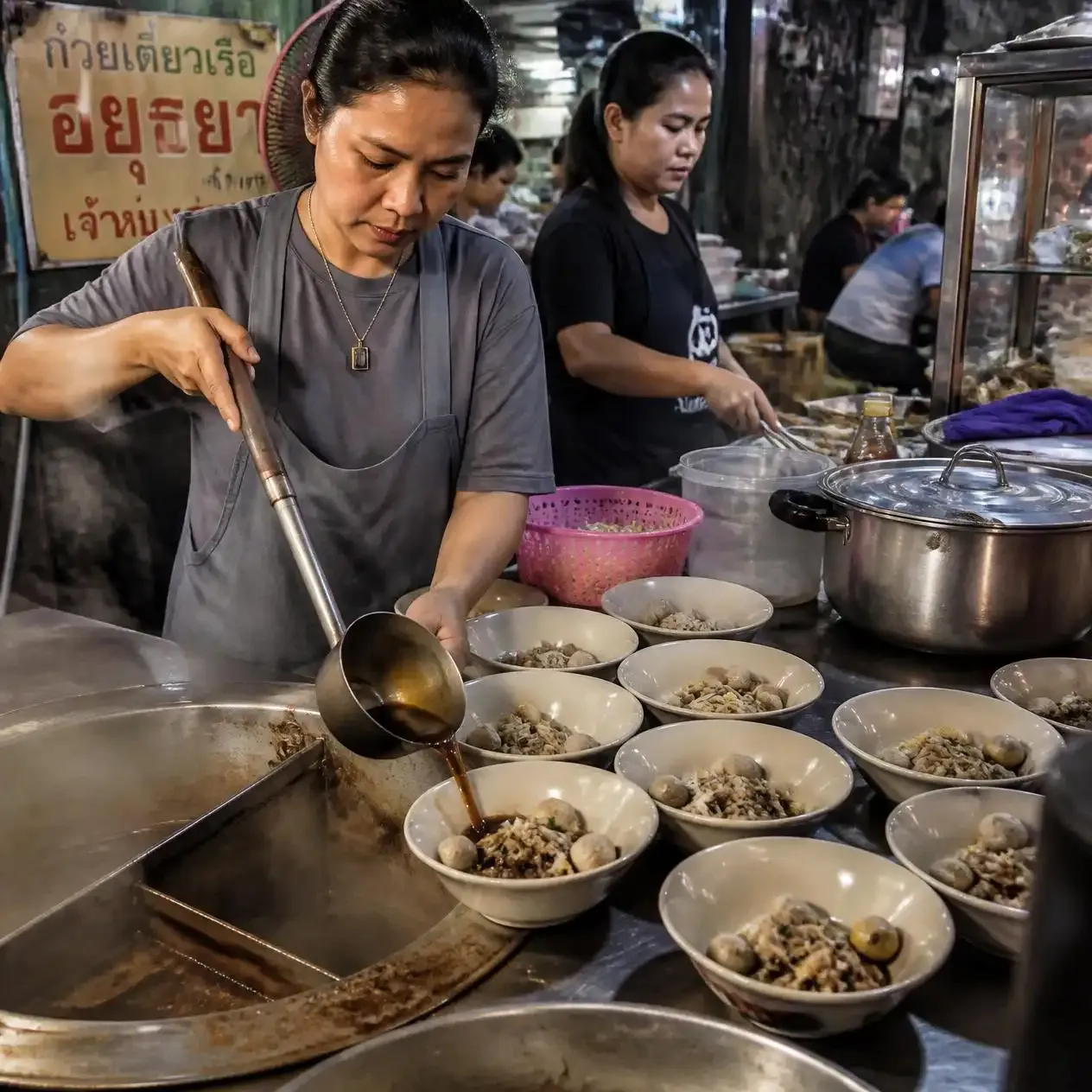
The alleys around Victory Monument are the city's boat noodle headquarters — small bowls of dark, aromatic beef or pork broth designed to be ordered several at a time, at 50–70 THB (roughly USD 1.40–2) each. Stacking empty bowls is part of the ritual. It is the most efficient option on this list if you have ninety minutes rather than an evening.
Nang Loeng
Nang Loeng is one of Bangkok's oldest markets and runs on old-market hours: arrive by mid-morning, and expect stalls to be packing up by early afternoon. The cooking leans traditional — curries, roast duck, and Thai desserts made with fresh coconut. It is covered, level and unhurried, which makes it the easiest of the six for anyone who wants to sit down between dishes.
Talat Phlu
Talat Phlu is a residential Thonburi district with a food street that locals treat as their evening canteen. There is no tourist infrastructure and very little English, which is precisely the appeal on a third visit. Come by BTS to Talat Phlu station and follow the crowd rather than a map.
Insider reality check: the best cooking is usually set back from the road
- On Yaowarat, the carts lining the kerb photograph well, but several of the strongest kitchens are in the shophouses one step back from the pavement, with a couple of tables inside.
- Look for a stall doing three or four things rather than a laminated menu of thirty with photographs — the narrow repertoire is the quality signal.
- Side sois running off the main road are often better than the main road itself, and considerably easier to sit down in.
What a Street Food Evening in Bangkok Costs in 2026
Street food in Bangkok costs between 300 and 600 THB across a full evening (about USD 8.50–17) a person for five or six dishes across several stalls, before drinks. Individual dishes sit in a 40–150 THB band, sit-down Bib Gourmand meals rarely pass 400 THB a head, and a guided walk is the one line item that changes the arithmetic. Figures below are 2026 prices at roughly 35 THB to the US dollar.
What individual dishes cost
- Grilled pork skewers with sticky rice: 15–25 THB each (about USD 0.45–0.70)
- Boat noodles: 50–70 THB a bowl (USD 1.40–2), ordered two or three at a time
- Papaya salad or a rice plate: 50–90 THB (USD 1.40–2.60)
- Pad thai or a wok-fried noodle dish: 60–150 THB (USD 1.70–4.30)
- Grilled river prawns or seafood by weight on Yaowarat: 250–600 THB (USD 7.15–17)
- Mango sticky rice or a coconut dessert: 60–120 THB (USD 1.70–3.45)
- Iced tea, fresh juice or a soft drink: 20–60 THB (USD 0.60–1.70)
What it costs by format
- Independent grazing crawl, five to six dishes: 300–600 THB (USD 8.50–17) a person
- Sit-down Bib Gourmand meal: under 400 THB (USD 11.50) a head, and often nearer 100 THB (USD 3)
- The starred street stall: from around 1,500 THB (USD 43) for the signature crab omelette, cash only
- Guided evening food walk: typically 1,500–3,500 THB (USD 43–100) a person for around three hours, depending on group size and how much is included
Included versus extra
- Guided walks normally include all food and water; alcohol is usually extra, and transport between districts sometimes is too.
- Seating is free at almost every stall, but a few Yaowarat operations charge for a table with service — check before you sit if it matters to you.
- Cash covers everything. Card acceptance at street level is close to non-existent, though QR payment is now common.




Which Street Food District Should You Choose?
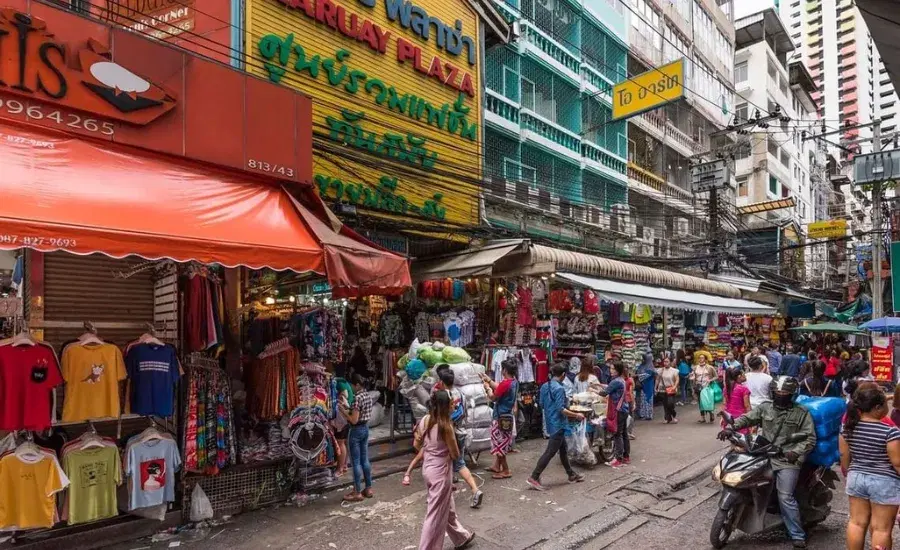
Choose Yaowarat if you want atmosphere and only have one evening; Banthat Thong if you want range and a later finish; Wang Lang or Nang Loeng if your free window is during the day; Victory Monument if you want one focused meal rather than a crawl; and Talat Phlu if you have eaten your way around the obvious districts already. The distinctions below sort the best street food in Bangkok by traveller rather than by dish.
If you are travelling as a couple
Go to Banthat Thong. It has enough seated shophouses to make an evening feel like a meal rather than a march, the dessert bars at the northern end give the night a second act, and it stays open late enough that you are not being moved along at 10pm. Yaowarat works too, but plan on standing and sharing tables.
If you are travelling with children
Wang Lang in the daytime is the easiest by a distance — level ground, covered walkways, short distances between stalls, and grilled skewers and sweets that most children will eat without negotiation. Reaching it by river ferry turns the journey into part of the outing. Avoid Yaowarat at 9pm with a pushchair; the pavement crowd is dense enough to be hard work.
If this is your third or fourth visit
Talat Phlu and Nang Loeng are the districts that will still surprise you. Neither has adapted itself for visitors, both are cooked for the neighbourhood, and the food at Nang Loeng in particular reaches back to an older Bangkok repertoire of curries and coconut desserts that the newer strips do not attempt.
If you are travelling with older parents
Nang Loeng. It is covered, flat, quiet, finishes by early afternoon, and has places to sit throughout. Victory Monument is a reasonable second choice if you want one substantial meal with minimal walking.
If you have one free evening on a business trip
Victory Monument for a fast, excellent, sub-hour dinner, or a guided walk through Yaowarat if you would rather not think about logistics at the end of a working day. Both leave you back at a hotel in Sukhumvit or Silom within half an hour. For a broader sense of what else fits a short trip, the top experiences in Bangkok page is a quicker way to plan than working through the whole city.
How to Eat Well on the Street
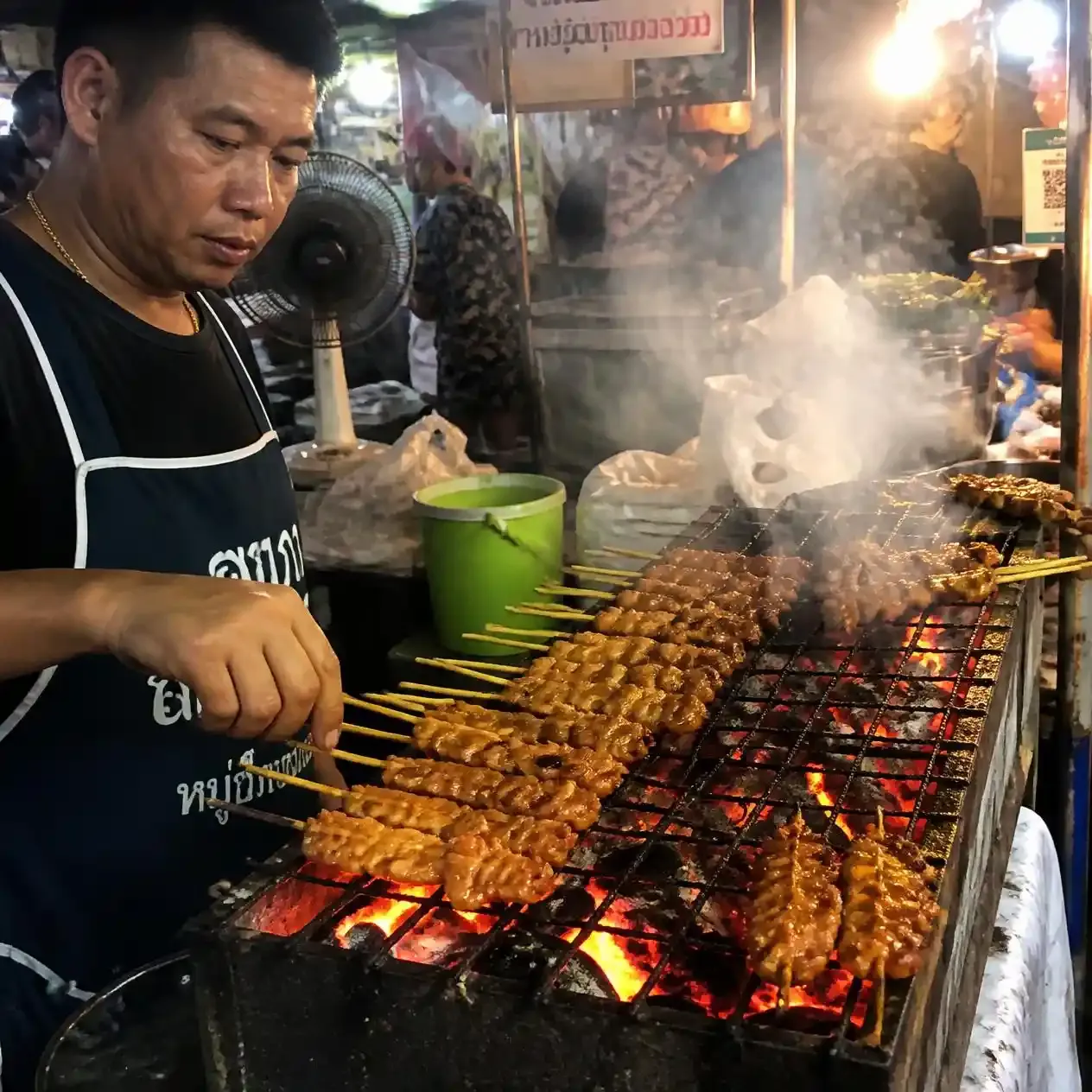
Eating street food in Bangkok well comes down to reading a stall correctly, which matters more than any list of recommended vendors. The three signals that count are turnover, repertoire and whether the food is cooked in front of you. A stall with a queue of local office workers, four items on the board and a wok going continuously is a better bet than any address you arrived with.
Reading a stall
- Turnover first: food that is being cooked and sold constantly has not been sitting.
- Narrow menu second: specialists outperform stalls offering thirty dishes with photographs.
- Look for the Clean Food Good Taste logo. It is a Thai Department of Health certification, run with the tourism authority since 1989, covering premises, food handling, storage and pest control. Plenty of excellent stalls do not display it, but its presence is a useful confirmation.
- Watch the handling: separate utensils for cash and for food, covered ingredients, and a wash point nearby.
Ordering and paying
- Pointing is entirely normal and not considered rude — at what you want, or at what the next table is eating.
- Say mai phet for not spicy or phet nit noi for a little spicy. Thai stall heat is calibrated for Thai palates, and "medium" is not a shared scale.
- Carry 20s, 50s and 100s. Handing over a 1,000 THB note at a 40 THB stall will stall the queue.
- QR payment via the Thai instant-payment system is now widespread, but it generally requires a Thai bank account — plan on cash.
- At sit-down shophouses you order, eat, then pay at the end. At carts you pay as you collect.
Sharing tables and seating
- Sharing a table with strangers is standard at busy stalls. Gesture at the empty stool and wait for a nod.
- Seating often belongs to one specific vendor. If you buy from a cart and sit at a neighbouring stall's tables, buy something there too.
- Tipping is not expected at street level. Rounding up at a seated shophouse is a courtesy, not an obligation.
Insider reality check: it is almost never the wok
- Anything that comes out of boiling broth or a hot wok in front of you has been sterilised by the cooking. That is the safest food on the street.
- The actual risk sits in the raw garnishes served alongside — bean sprouts, shredded cabbage, cucumber slices and lettuce, all of which have been rinsed in water of unknown quality.
- If you have a sensitive stomach, eat the cooked dish and leave the raw basket. Do the same with ice in drinks bought from a cart rather than a shop.
- Fruit cut to order in front of you is fine; fruit sitting pre-cut on ice in the open is the one to skip.
Vegetarian and dietary ordering
Vegetarian eating on the street takes some care, because fish sauce and shrimp paste appear in dishes that look meat-free. The phrase that works is jay, which signals strict vegetarian in the Thai-Chinese sense and is widely understood, particularly around Yaowarat. Stalls displaying yellow-and-red jay flags cook to that standard year-round.
Timing Your Crawl: Hours, Days and Seasons
Street food in Bangkok operates on two separate clocks, and the most common planning error is arriving at a night district in the afternoon or a day market in the evening. Wang Lang and Nang Loeng are morning-to-afternoon operations; Yaowarat, Banthat Thong and Talat Phlu belong to the evening. Victory Monument is the one that spans both.
Getting the hours right
- Nang Loeng: arrive by 10:00, and expect stalls to be closing from about 14:00.
- Wang Lang: roughly 09:00–17:00, best between late morning and mid-afternoon.
- Victory Monument: all day, with the boat noodle alleys busiest around lunch and again from 17:00.
- Yaowarat: stalls set up from about 17:00, in full flow by 19:00, running to late.
- Banthat Thong: from 16:00, peak 18:30–21:30, with a good number open past midnight.
- Talat Phlu: late afternoon until roughly 22:00.
Days to plan around
Individual vendors take their own rest days, and Monday is the most common one across every district — enough stalls close that a Monday crawl can feel thin. Weekend evenings are the busiest at Yaowarat and Banthat Thong, with longer waits at the well-known counters. If you want a night district at its liveliest, aim for Friday or Saturday; if you want to sit down without queueing, go Tuesday to Thursday.
For a covered, all-weather alternative when the timing does not work, the Jodd Fairs night market runs a compact evening food operation with seating, and Or Tor Kor Market is the place to see the quality of Thai produce that supplies the better kitchens.
Seasons worth knowing
- Mango season runs March to June, peaking in April and May — the window when mango sticky rice is worth ordering rather than tolerating.
- The annual Vegetarian Festival, usually falling around late September or October, turns Yaowarat yellow with jay flags for nine days and is the best time of year to eat there without meat.
- April and May are the hottest months. Push evening crawls back to 20:00 and keep them short.
- The rainy months from roughly June to October rarely close stalls, but afternoon downpours are heavy — night districts recover quickly once they pass.
Insider reality check: stalls move, and the rules are why
- Bangkok has been progressively re-zoning street vending. Stall footprints are capped at three square metres, vendors must leave 1.5 to 2 metres of pavement clear for pedestrians, and stalls must sit back from the road edge.
- Roughly ten thousand vendors were moved off the pavements across a recent two-year period, with the city steering trade towards designated zones and hawker-centre style sites.
- Designated areas are reviewed every year or two, and where demand exceeds space, pitches are allocated by lottery.
- The practical effect: a stall named in an article from two years ago may have relocated a street away or gone indoors. Verify anything specific before you plan an evening around it — the districts endure, individual pitches do not.
Planning Your Bangkok Food Trip
Three things decide how well this goes. Pick the district that matches the hours you are actually free, rather than the one with the most coverage online. Read the stall in front of you — turnover, a narrow menu and cooking done in the open are worth more than any recommended address. And carry small notes, because almost none of this runs on cards.
The best street food in Bangkok rewards a little planning and very little money: 300–600 THB and one well-chosen evening will feed you better than most restaurant bookings in the city. Start planning your Bangkok food trip on Travjoy's Bangkok page, where the experiences have been researched and approved by local experts.


.svg&w=1920&q=75)