


Shopping Tours in Bangkok: A Complete Guide to Types, Costs and Which to Book
8 min read
Key Highlights
- Six distinct formats, from a two-hour market navigation walk to a multi-day tailoring circuit, priced between THB 700 and THB 75,000 (USD 20–2,150).
- There is no government gem sale in Thailand. Any tour that ends at a jewellery showroom is a commission run, whatever the driver calls it.
- The ONESIAM Tourist Card carries complimentary personal-shopper service across six malls, which makes several paid luxury shopping tours redundant.
- Thailand refunds 7% VAT on goods but never on the tour itself, with a THB 2,000 per-store minimum and a 60-day departure window.
Shopping tours in Bangkok run from THB 700 to THB 4,000 (USD 20–115) for a guided market day, while a bespoke tailoring commission sits between THB 15,000 and THB 75,000 (USD 430–2,150) depending on cloth and construction. A guide earns its fee at Chatuchak's 15,000 stalls, on the two-hour drive to the floating markets, and inside the tailoring ateliers where fabric quality is difficult to judge by eye. Inside the luxury malls it earns less, because the personal-shopper service there is already free.
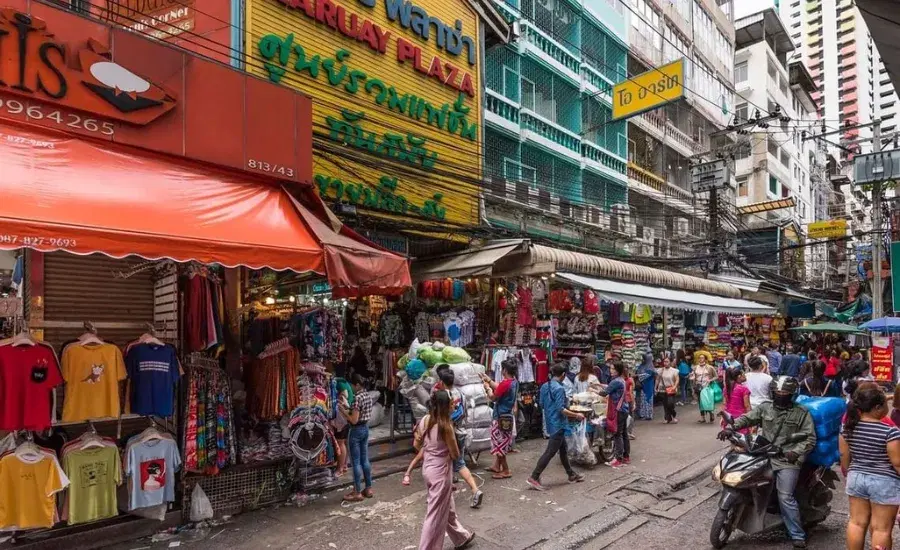
Chatuchak Weekend Market covers roughly 27 acres and holds more than 15,000 stalls across 27 numbered sections. The map at the gate is accurate and close to useless: sections are numbered by administrative logic rather than by what they sell, so the ceramics you wanted sit four sections away from the ceramics you found. Two hundred thousand people pass through on a Saturday.
That is the case for a guide in one sentence. It is also, at the other end of the city, the case against one — nobody needs help finding Hermès in a mall with signage in six languages.
This guide sets out the six formats that actually exist, what each costs in 2026, which traveller each suits, and the practical detail the booking pages leave out: the commission-tour script still working outside the Grand Palace, the free concierge layer inside the malls, and the VAT rules that decide whether you get 7% back or nothing.
Are shopping tours in Bangkok worth it?
A guided shopping tour is worth booking in Bangkok when the obstacle is scale, distance, or expertise — and skippable when it is none of those. Chatuchak, the floating markets, the wholesale districts and the tailoring ateliers all present a real problem a guide solves. The luxury malls do not, because they already run their own concierge service at no charge.
Worth it if
- You are shopping Chatuchak with a target in mind — a guide who knows which sections carry celadon, vintage denim or hill-tribe textiles saves two hours of walking in 34°C heat.
- You want the floating and railway markets in one day. They sit 60 to 80 km southwest of the city and the timing is unforgiving; self-driving this is possible and rarely pleasant.
- You are commissioning tailoring and cannot tell Super 120s from a synthetic blend by touch. This is where a knowledgeable third party pays for itself several times over.
- You are buying in volume from the wholesale districts and need someone who can negotiate quantity pricing in Thai.
- You have one free day and want it structured rather than spent working out the BTS map.
Not ideal if
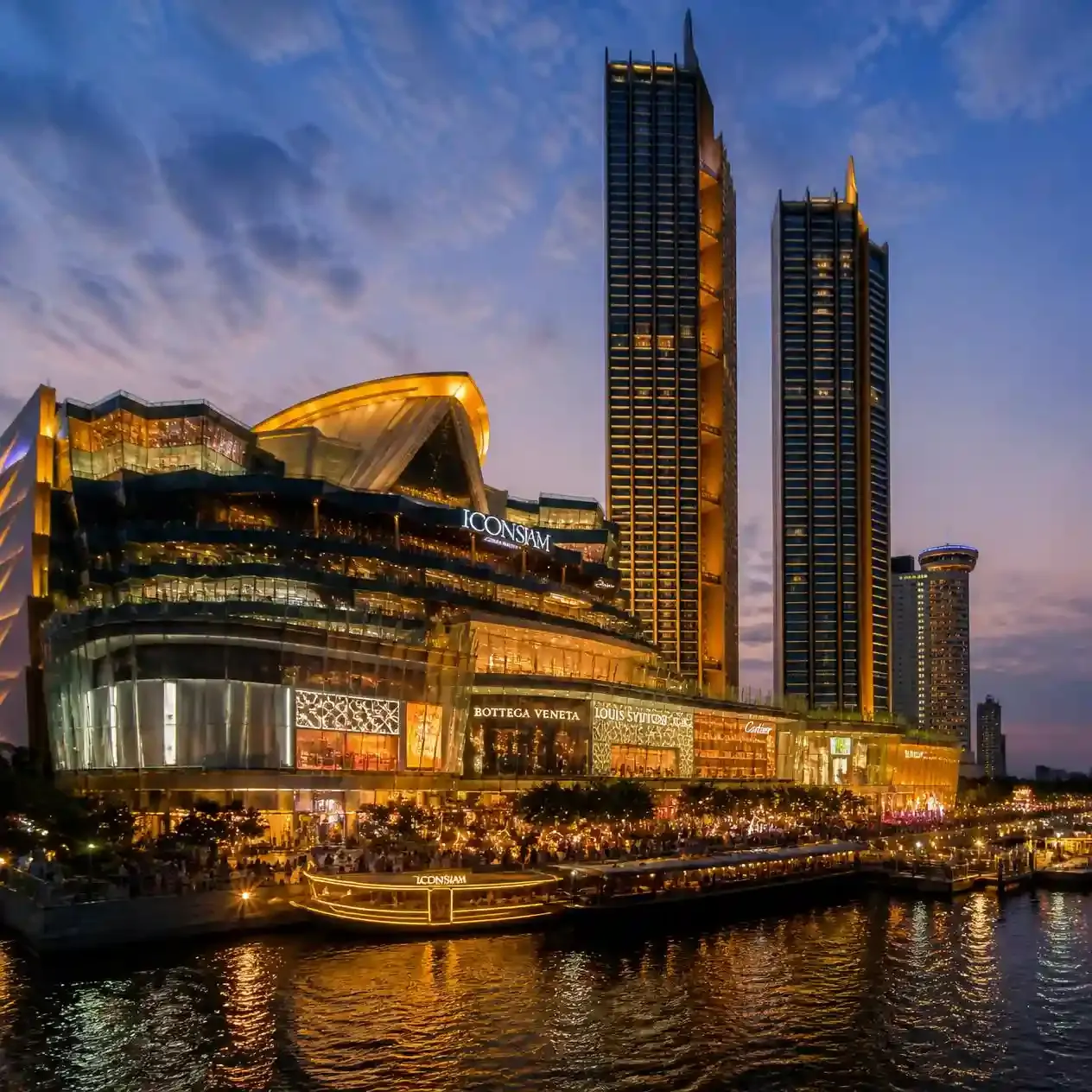
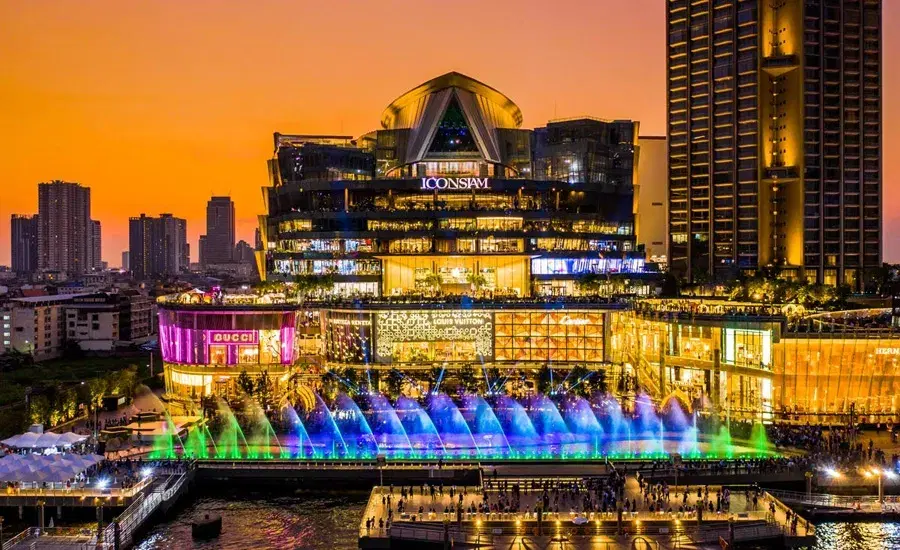
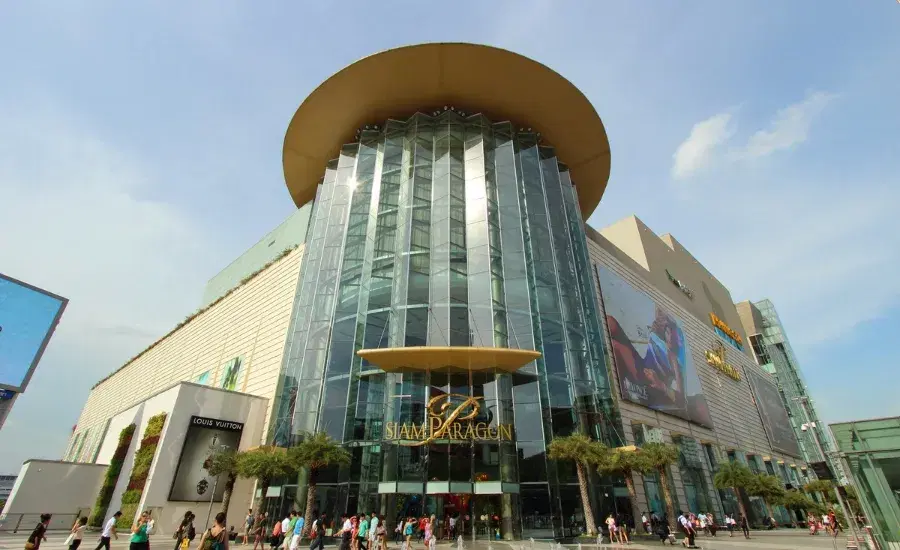
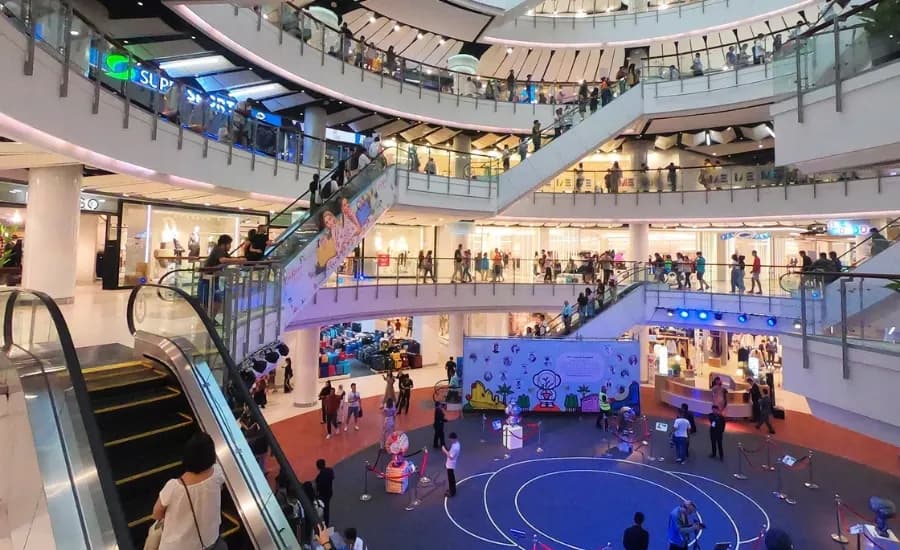
- Your shopping is mall-based. Siam Paragon and ICONSIAM both provide personal shoppers to international customers already.
- You browse slowly and dislike being paced. Group market tours run to a schedule and the schedule wins.
- You are in Bangkok midweek and set on Chatuchak — the main market trades Saturday and Sunday only, so a weekday tour will take you somewhere else entirely.
- You have shopped Bangkok before and know your sections. On a third visit, a guide is a companion rather than a necessity.
Reality check: the commission tour is still running
- There is no government gem sale, no tax-free gem day, and no state-owned jewellery factory. These have never existed. The line is a script.
- The approach usually opens with a stranger near the Grand Palace saying it is closed for a ceremony. It is open daily, 8:30am to 3:30pm.
- A THB 20–40 (USD 0.60–1.15) all-day tuk-tuk offer is not generosity. The driver is paid a flat fee plus commission at each stop, which will include a gem showroom and a tailor.
- Stones bought this way are frequently worthless on resale. If it happens, pay by card so a chargeback is possible, keep receipts, and call the Tourist Police on 1155.
- This is the reason Travjoy's Bangkok operators are researched and approved by local experts before they appear on the platform — the failure mode here is not a disappointing afternoon, it is a five-figure loss.
The six types of shopping tours in Bangkok
Shopping tours in Bangkok fall into six formats, and they are not variations on a theme — they differ in duration, cost and the kind of buyer they suit. Picking the wrong one is the most common planning error, usually because a booking page described a market day trip as a shopping tour.
| Format | Duration | Price range (2026) | Best for |
|---|---|---|---|
| Guided Chatuchak walk | 3–5 hours | THB 1,700–3,300 (USD 50–95) | Buyers with a specific brief — textiles, ceramics, vintage |
| Floating and railway market day trip | 6–10 hours | THB 700–4,000 (USD 20–115) | Photography and spectacle more than actual buying |
| Luxury mall personal stylist | 2–6 hours | Complimentary–THB 5,000 (USD 0–145) | Designer buying at ICONSIAM or Siam Paragon |
| Bespoke tailoring circuit | 3–5 days, 3 fittings | THB 7,900–75,000 (USD 225–2,150) | Anyone commissioning suits, shirts or formalwear |
| Wholesale district walk (Pratunam) | 3–4 hours | THB 1,500–3,000 (USD 43–86) | Volume buyers and anyone sourcing for resale |
| Night market tuk-tuk circuit | 3–4 hours | THB 1,200–2,500 (USD 35–72) | Evening browsing, street food alongside the stalls |
Where the formats overlap — and where they do not
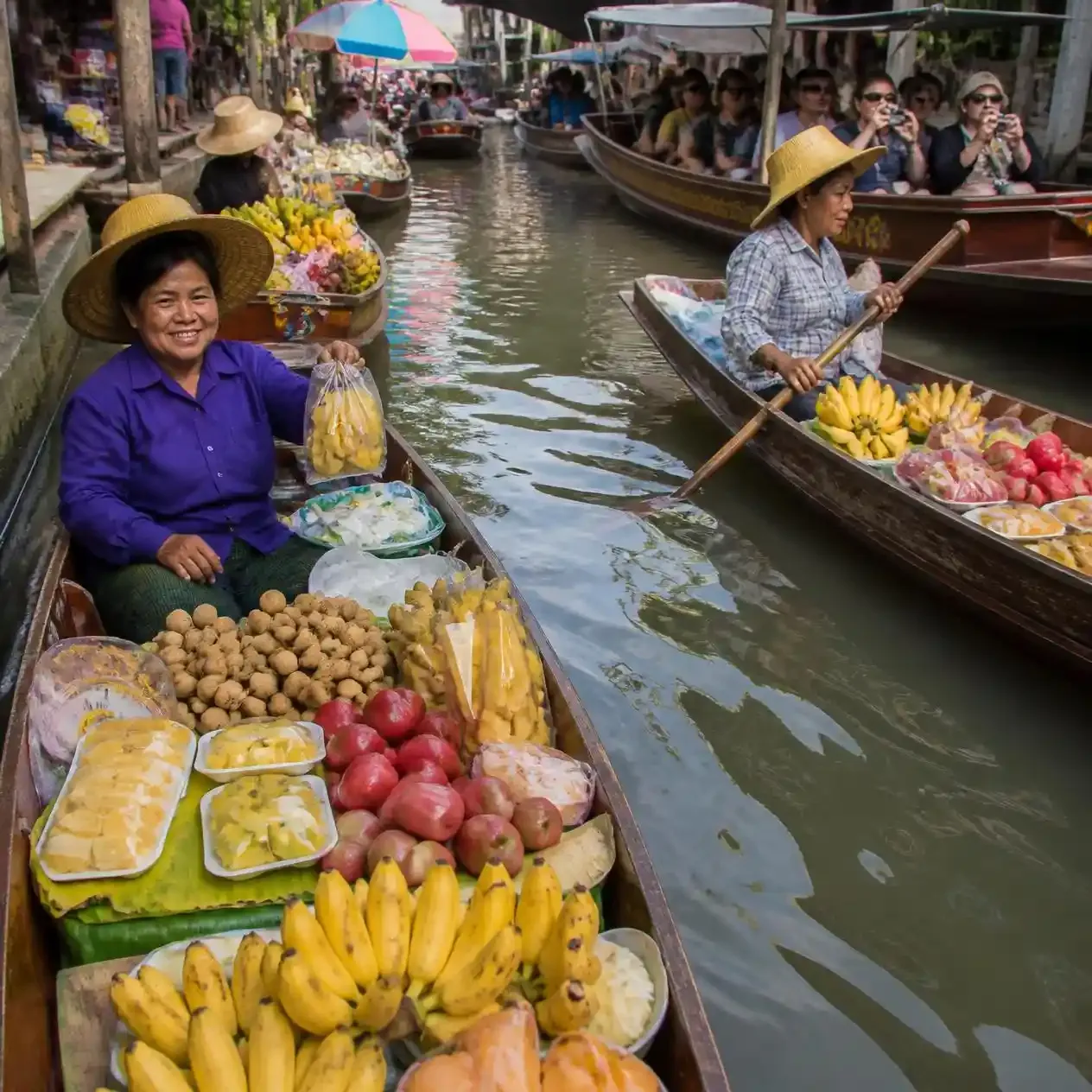
The floating market day trip is the one most often mis-sold. Maeklong is a working fresh-seafood wholesale market, not a souvenir destination, and Damnoen Saduak's canal stalls sell to a captive audience at captive-audience prices. Book it for the spectacle of vendors folding awnings as the train passes, which is worth the early start. Do not book it expecting to fill a suitcase.
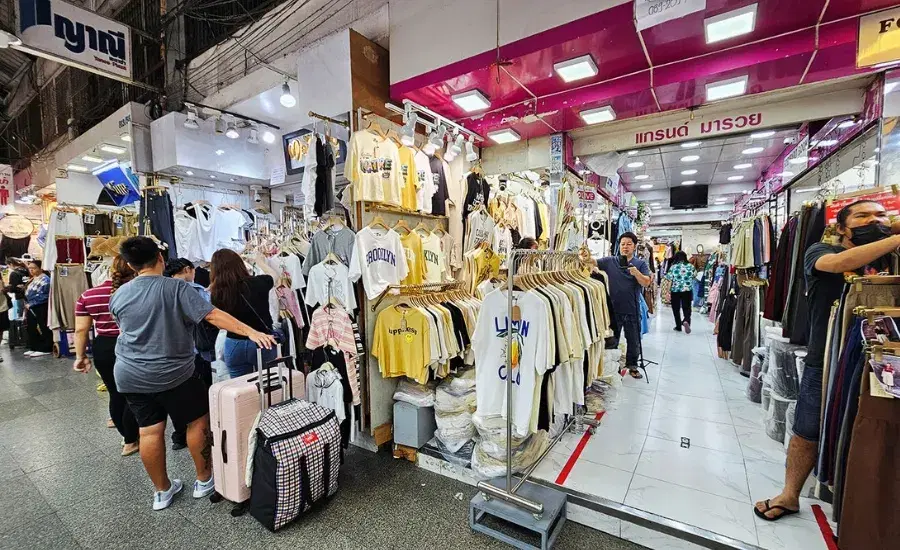
The wholesale walk and the Chatuchak walk sound similar and are not. Pratunam and the surrounding garment blocks trade in bulk, with per-unit pricing that only improves at quantity. Chatuchak is retail with a wholesale window on Friday evenings.
What shopping tours in Bangkok cost in 2026
Priced across 2026, shopping tours in Bangkok start at THB 700–1,200 (USD 20–35) for a join-in group market day and THB 2,500–4,000 (USD 72–115) for the same itinerary privately. Guided market walks in the city sit between THB 1,700 and THB 3,300 (USD 50–95). Tailoring is priced as a commission rather than a tour and belongs in its own bracket entirely.
By format
- Join-in floating and railway market day trip: THB 700–1,200 (USD 20–35). Includes hotel pickup, transport and the paddle-boat transfer. The longtail canal ride is usually extra, around THB 150 (USD 4).
- Private floating and railway market half-day: THB 2,500–4,000 (USD 72–115) for the vehicle, not per person. For two to four people this is the better value of the two.
- Guided Chatuchak or personal-shopper walk: THB 1,700–3,300 (USD 50–95), typically for up to four people as a lump sum rather than per head.
- Luxury mall stylist: complimentary through the mall's own tourist programme, or THB 3,000–5,000 (USD 86–145) through an independent stylist who is not tied to a retail group.
- Bespoke tailoring: entry commissions from THB 7,900–12,000 (USD 225–345); mid-range wool suits THB 15,000–30,000 (USD 430–860); Italian Super 120s with hand finishing THB 30,000–75,000 (USD 860–2,150).
- Night market circuit: THB 1,200–2,500 (USD 35–72), guide and tuk-tuk included, purchases and food extra.
What is included and what is not
- Usually included: hotel pickup within central Bangkok, air-conditioned transport, English-speaking guide, bottled water.
- Usually extra: the paddle-boat ride at Damnoen Saduak, lunch, all purchases, and gratuities.
- Never included: the VAT on the tour itself. Services are not refundable under the tourist scheme — only physical goods qualify.
Reality check: the free personal shopper most tours do not mention
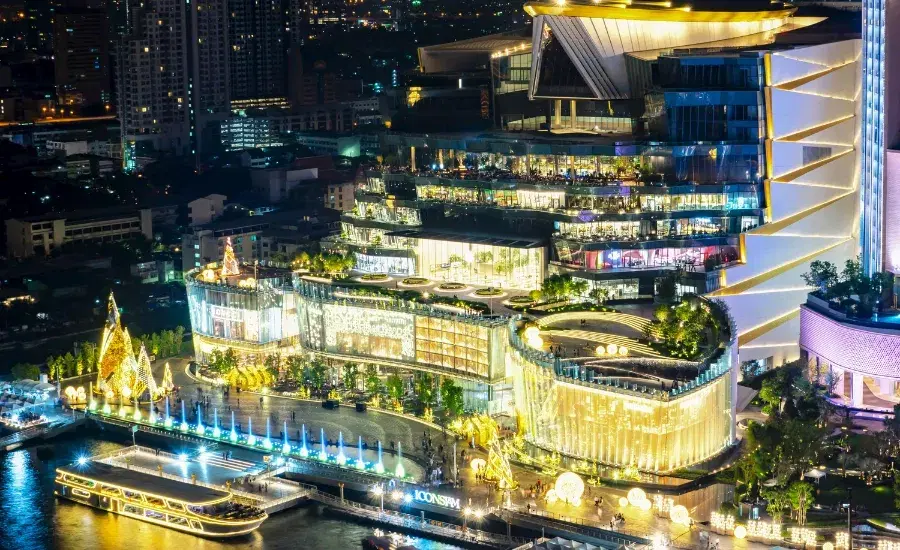
- The ONESIAM Tourist Card is free to overseas visitors and covers Siam Paragon, Siam Center, Siam Discovery, ICONSIAM, Siam Premium Outlets and ICS.
- It includes personal-shopper service, multilingual ambassadors, discounts of around 5% at participating department stores, and a VAT refund handled in the mall rather than at the airport.
- If your shopping is mall-based, this replaces most of what a paid luxury shopping tour provides. Independent stylists are still worth their fee for wardrobe consultation and access to Thai designers — Asava and Poem among them — that international shoppers routinely walk past.



Which shopping tour should you choose?
Match the format to what is actually constraining you: time, expertise, volume, or distance. The six formats solve different problems, and the most expensive option is rarely the right answer.
By traveller
- Returning to Bangkok and already know the malls: take the guided Chatuchak walk with a brief. Name the category — celadon, indigo-dyed cotton, mid-century Thai furniture — and a good guide will route you through sections you have never reached.
- First trip, one free day: the private floating and railway market half-day. It is the strongest single day out, and going private buys you the 7am departure that makes it work.
- Couples with a relaxed pace: the night market circuit. Evening temperatures are 8–10°C lower, the stalls at Jodd Fairs and Rod Fai run late, and food sits alongside the shopping rather than interrupting it.
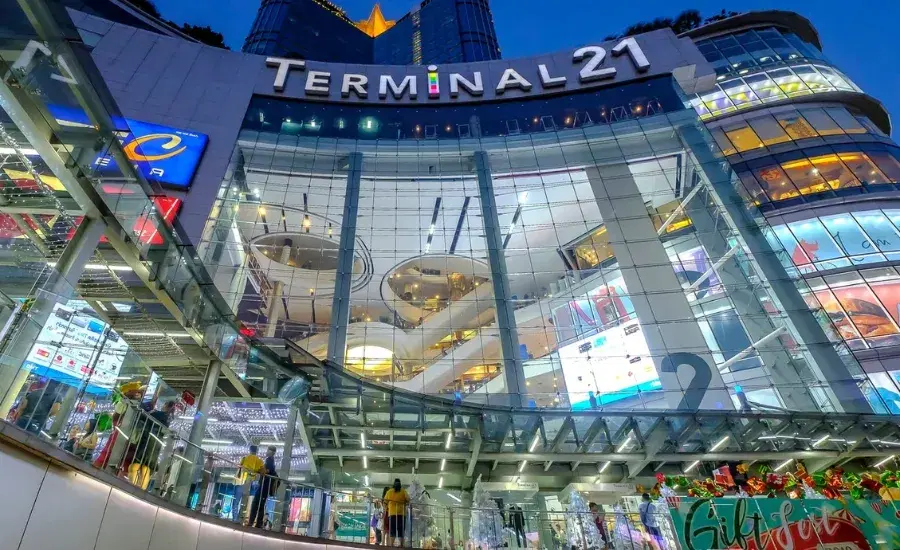
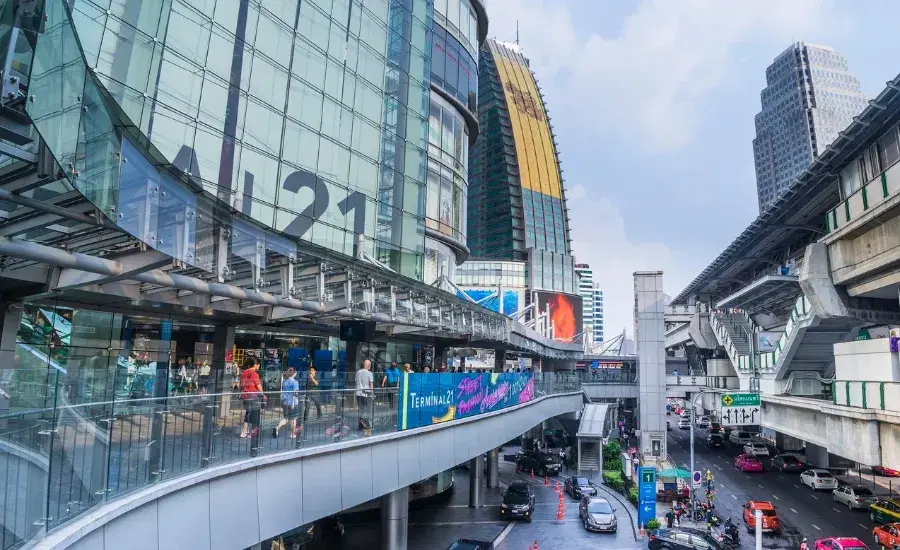
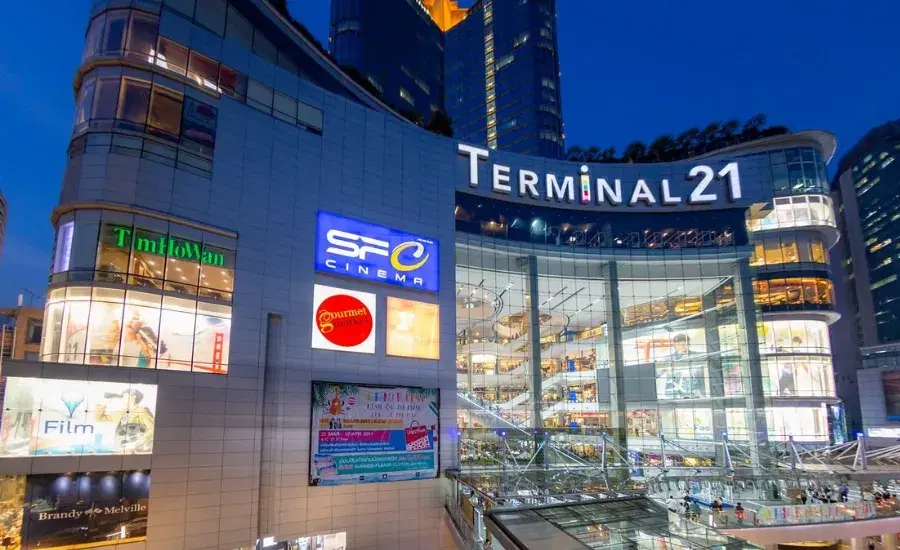
- Travelling with children: skip the market day trip. Choose a mall-based day at Terminal 21, where the floor-by-floor city theming keeps them moving and everything is air-conditioned.
- Commissioning a wardrobe: the tailoring circuit, booked for the start of your trip rather than the end. See below.
- Buying to resell: the wholesale walk with a Thai-speaking guide. Quantity pricing is negotiated, not displayed.
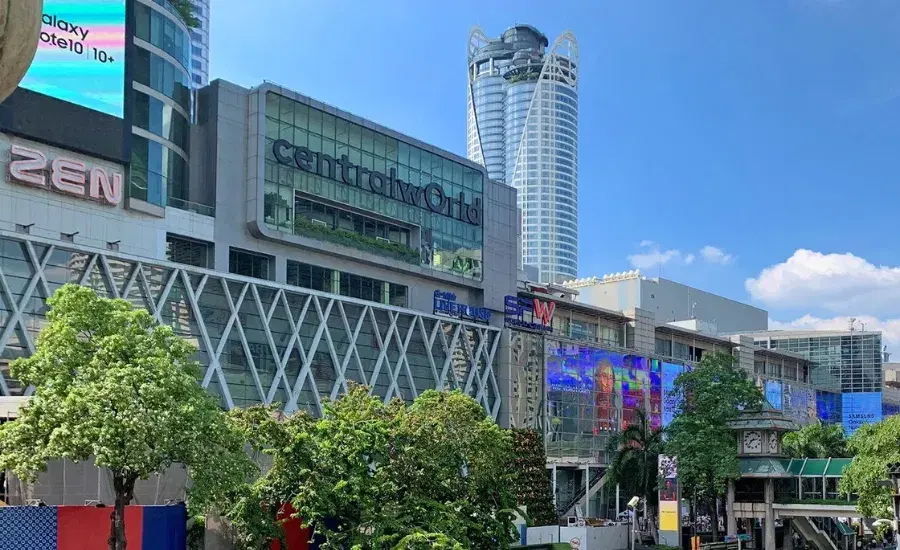
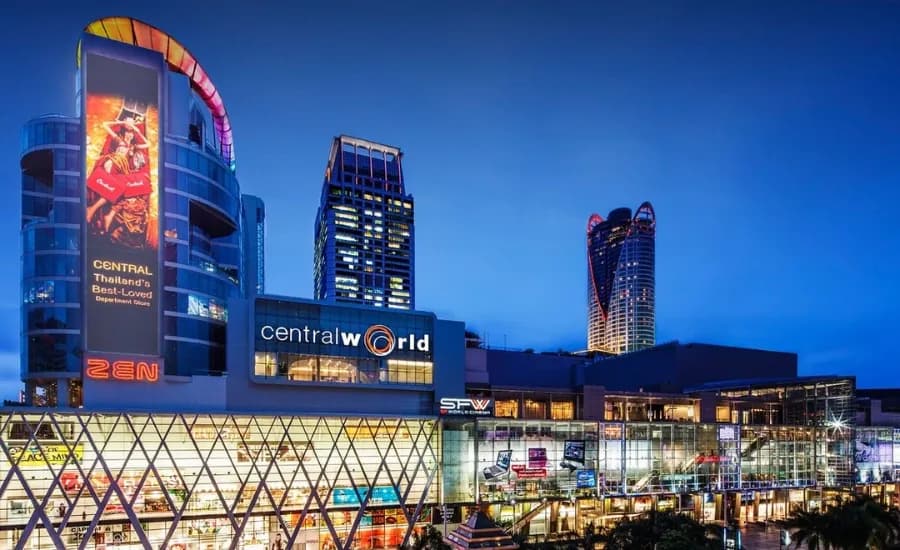
- Long layover only: nothing guided. Take the Airport Rail Link to Phaya Thai and shop CentralWorld or Siam Paragon directly — a tour cannot compress into four hours with transfers.
For a broader view of districts and venues before you commit to a format, the Bangkok shopping guide covers the retail map in more depth than a tour comparison can.
The bespoke tailoring circuit
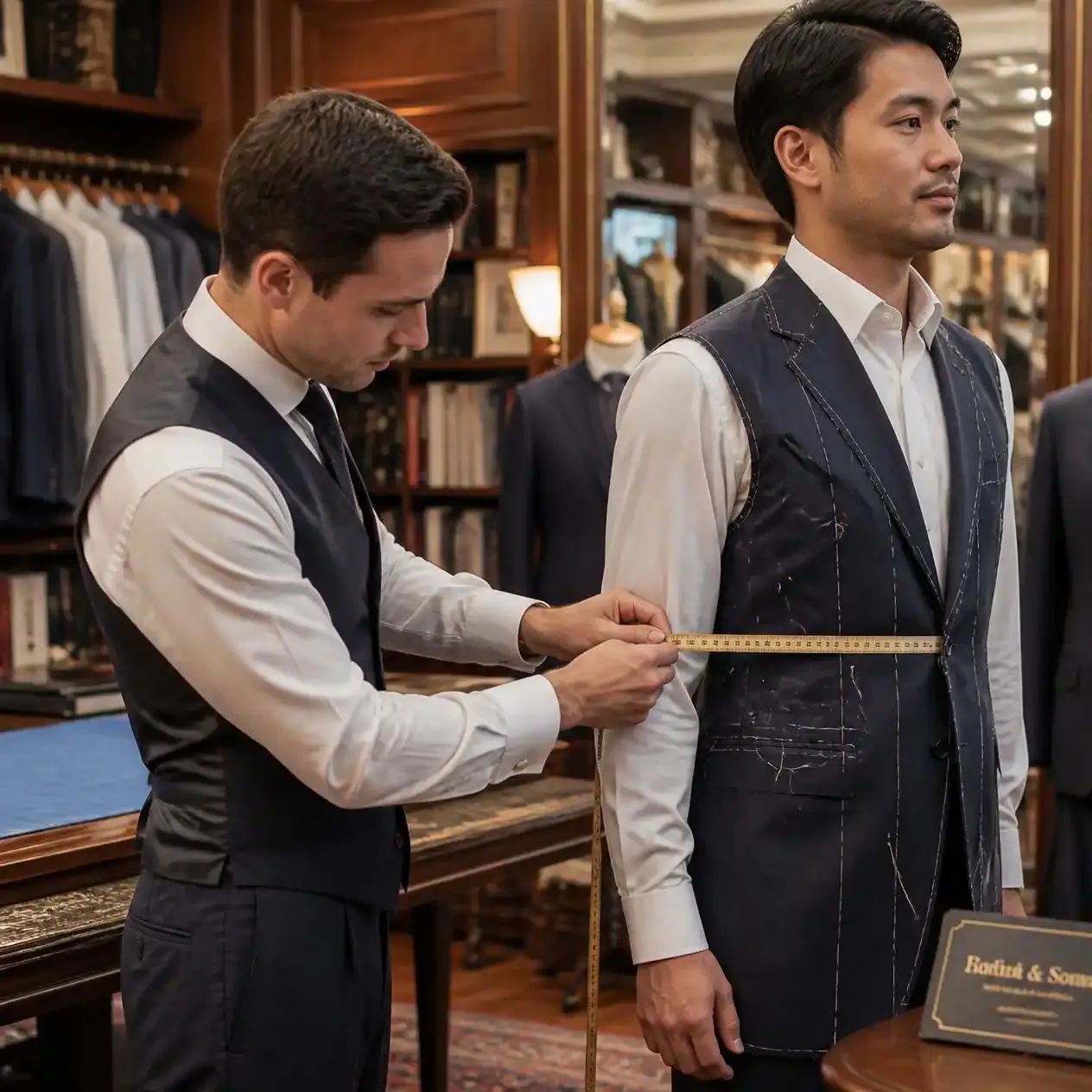
Bangkok tailoring is the format with the widest quality spread and the least reliable public information. A properly constructed suit here costs 50–70% less than the equivalent in London or Milan, but the same street holds ateliers producing genuine bespoke and shops turning out fused, synthetic-lined garments at a similar asking price. The difference is invisible on the rail and obvious after six months of wear.

How long it actually takes
- Standard bespoke: 4–7 days across three fittings. Most ateliers want 3–5 days minimum to do the work properly.
- Express service: 24–48 hours is offered widely. It means fewer fittings and a pattern adjusted rather than cut from scratch.
- Repeat commissions: once measurements are on file, most Sukhumvit ateliers accept remote orders and ship internationally.
The scheduling error people make is booking the first fitting for day three of a five-day trip. Go on day one. It leaves room for a second adjustment, which is the fitting that determines whether the garment hangs correctly.
Price tiers by district
- Sukhumvit ateliers: THB 15,000–30,000 (USD 430–860) for a mid-range wool suit; the densest concentration of established houses.
- Thonglor boutiques: THB 12,000–52,000 (USD 350–1,500), contemporary cuts, longer turnaround of 7–10 days.
- Premium commissions: THB 30,000–75,000 (USD 860–2,150) for Italian Super 120s or British heritage cloth with full hand finishing.
- Old Bangkok and Khao San: THB 6,300–14,000 (USD 180–400). Some long-standing family businesses here do excellent work; the tourist-facing shops do not.
Reality check: what a suspiciously low quote means
- A suit quoted under USD 150 cannot cover quality cloth, canvas construction and multiple fittings. Something is being substituted, usually the interlining.
- Ask directly whether the jacket is full-canvas, half-canvas or fused. A shop doing real bespoke will answer without hesitation.
- Ask to see the cloth's mill label rather than a swatch book photograph.
- Twenty-plus measurements and a pattern cut for you is bespoke. Ten measurements against a block pattern is made-to-measure, which is a legitimate product but should be priced as one.
- Any tailor you were driven to by a tuk-tuk driver you did not book is a commission stop, not a recommendation.
Logistics: VAT refunds, timing and getting purchases home
Three practical layers decide whether a Bangkok shopping trip goes smoothly: the VAT paperwork, which has to start at the till rather than the airport; the trading hours, which vary sharply by venue and day; and shipping, which is cheaper and more reliable than most visitors expect.
Claiming the 7% VAT refund
- Minimum spend: THB 2,000 (USD 57) per store on the same day, and THB 5,000 (USD 143) across all purchases combined.
- At the till: shop only where the "VAT Refund for Tourists" sign is displayed, present your passport, and ask for the P.P.10 form with the original tax invoice. Digital copies are not accepted.
- Deadline: you must leave Thailand within 60 days of purchase, from an international airport. Land and sea borders do not process refunds.
- Customs inspection: required before check-in for goods above THB 20,000 (USD 570). Below that threshold, inspection is no longer needed.
- Payment: cash in baht up to THB 30,000 (USD 860); above that, credit card or transfer, taking one to two weeks.
- Not eligible: services of any kind — tours, hotels, spa treatments, restaurant meals — and anything worn or used before departure.
Timing each venue
- Chatuchak: Saturday and Sunday 9am–6pm for the full market; Friday 6pm–midnight for the wholesale session, which is the calmest window by a distance; the plant section also trades Wednesday and Thursday, 7am–6pm.
- Damnoen Saduak: arrive by 10:30am. The canal trade thins out after 11am, so a 7am departure from Bangkok is the whole game.
- Malls: daily 10am–10pm, with restaurants running later.
- Night markets: from around 5pm, busiest between 7pm and 10pm.
Reality check: cash, heat and shipping
- Damnoen Saduak and Maeklong are effectively cash-only and have no ATMs on site. Carry THB 1,500–3,000 (USD 43–86) per person.
- Chatuchak's air-conditioned relief is MIXT Chatuchak and JJ Mall, both adjacent to the open-air sections. Plan a break into the middle of the visit rather than pushing through.
- Anything larger than hand luggage — furniture, ceramics, lacquerware — should be shipped. Established Chatuchak and antiques dealers arrange sea freight routinely and will crate properly; airline excess baggage costs considerably more.
- Keep receipts for shipped goods separate. Items sent by freight leave the country without you and fall outside the VAT refund scheme.
Plan your Bangkok shopping
The decision is narrower than the booking pages suggest. If scale, distance or fabric expertise is what stands between you and what you want to buy, a guide pays for itself — most obviously at Chatuchak, on the road to the floating markets, and in the tailoring ateliers. If your shopping is mall-based, book the free concierge service instead and spend the difference on the purchase.
Whichever format suits, arrange it before you arrive. The tailoring circuit in particular collapses if you start it late in the trip, and the good market guides are committed weeks ahead in high season. Every operator listed on Travjoy has been researched and approved by local experts, which matters more in this category than most.
Start planning your shopping tours in Bangkok on Travjoy's Bangkok collection.



.svg&w=1920&q=75)