



Non-Touristy Things to Do in London: A Complete Guide to the City's Villages, Museums and Local Markets
7 min read
Key Highlights
- London's residential "villages" — Crouch End, Dulwich, Stoke Newington, Chiswick — are the real off-trail draw, each a 20–40 minute ride from the centre.
- Two of the city's most interesting small museums, the Wellcome Collection and the Horniman, are free to enter.
- Camden and Borough markets are no longer off the trail; Maltby Street, Columbia Road and Brixton Village are where locals actually go.
- Spring to early autumn suits the outdoor spots; museums and Aire Ancient Baths work in any weather.
- Aire Ancient Baths, Secret Cinema and day trips out of the city all need booking ahead.
The most rewarding non-touristy things to do in London sit outside the zone-1 sightseeing core: residential villages such as Crouch End and Dulwich, small museums like the Wellcome Collection and the Horniman, and weekend markets where Londoners actually shop. Build your day around one neighbourhood rather than dashing across the city, and book the paid experiences — thermal baths, immersive cinema, day trips — a week or two ahead.
London is the third most-visited city on the planet, which means "hidden" rarely means undiscovered here — it means harder to reach, or simply where visitors don't think to look. If you have already done Westminster, the Tower and the South Bank, the more rewarding non-touristy things to do in London are a short train ride out: the residential neighbourhoods, the small museums, and the markets that run on a Saturday because locals shop there.
This guide maps that quieter city by type and by area, so you can plan around where you are based rather than criss-crossing zones. It also calls it honestly — which once-quiet spots are now firmly on the trail (Camden, we are looking at you), and where the genuine calm still is.
You will get the practical layer too: how to reach the outer villages, when each spot is at its best, and what to book before you fly. Every experience here is drawn from places Travjoy has researched and had approved by local experts.
What "Non-Touristy" Actually Means in London Now
The best non-touristy things to do in London are not secret addresses — in a city of nine million residents and more than 20 million annual visitors, almost nothing stays undiscovered. What "off the trail" really comes down to here is distance from the sightseeing core and time of day. The simple test: if a place tops every "top 10" list and sits inside zone 1, it is no longer off the trail, whatever the caption says.
The spots that no longer count
Several places still marketed as under-the-radar are now firmly mainstream. They are worth seeing on their own terms — just not as an escape from the crowds.
- Camden Market — busy year-round and firmly on the coach circuit.
- Borough Market — excellent, but packed from mid-morning; a South Bank fixture now.
- Notting Hill and Portobello Road on a Saturday — a scene in themselves rather than a quiet one.
Where the quiet actually is
The genuine calm sits in the residential neighbourhoods beyond zone 1, at small museums on a weekday morning, at markets that run for locals, and in green space beyond the royal parks. Timing matters as much as place: the same street that feels local at 10am on a Tuesday can fill up by Saturday lunch. Plan for early starts and mid-week visits and most of these spots stay yours.
London's Residential Villages — Where the City Still Feels Local
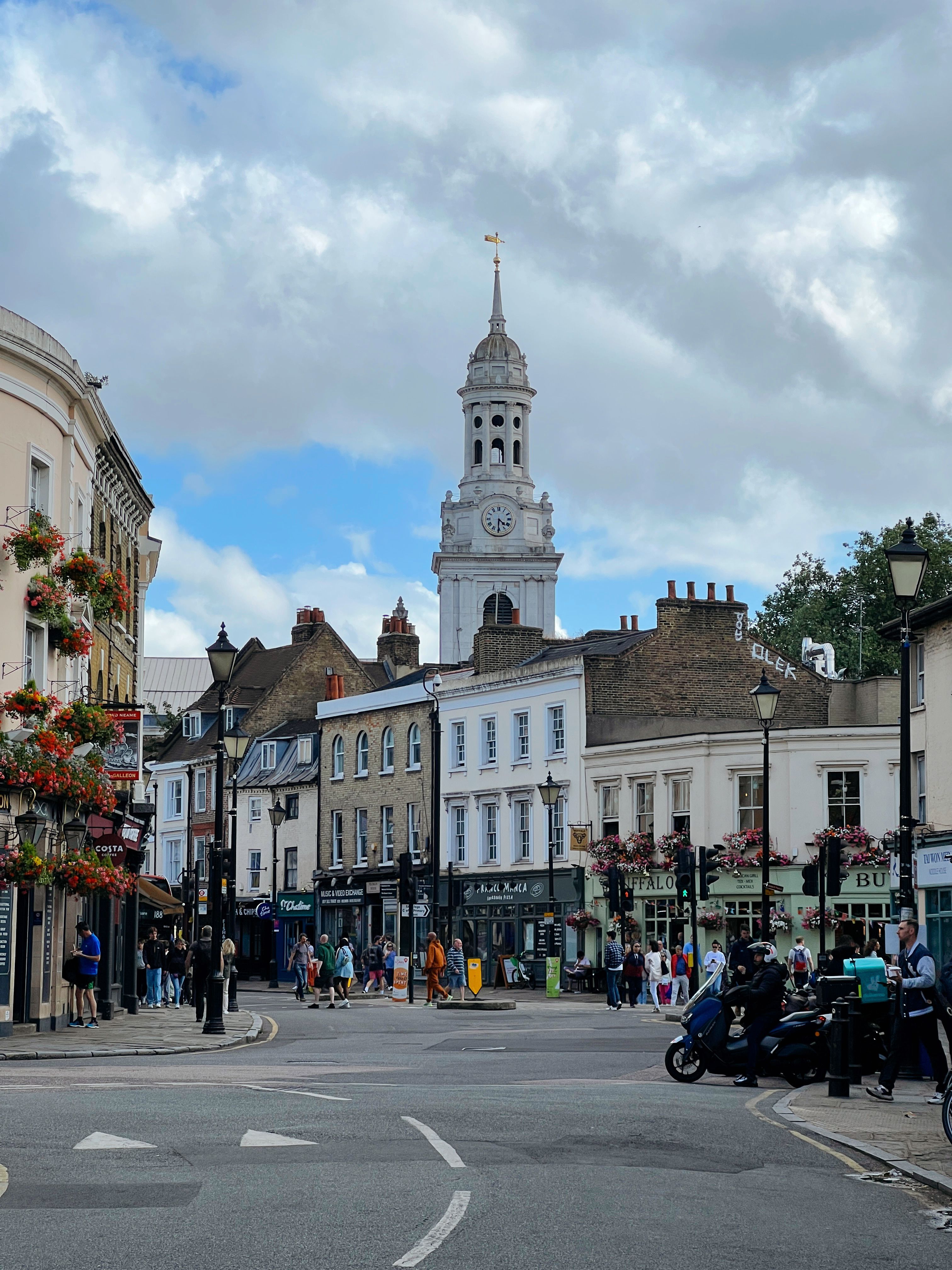
London's most rewarding non-touristy areas are its residential "villages" — pockets that kept their own high streets, greens and independent shops as the city grew around them. Each sits roughly 20–40 minutes from the centre by Overground or rail, and each rewards a slow half-day over a tick-box visit. Pick one that matches where you are based rather than trying to see them all.
North — Crouch End, Muswell Hill and Highgate
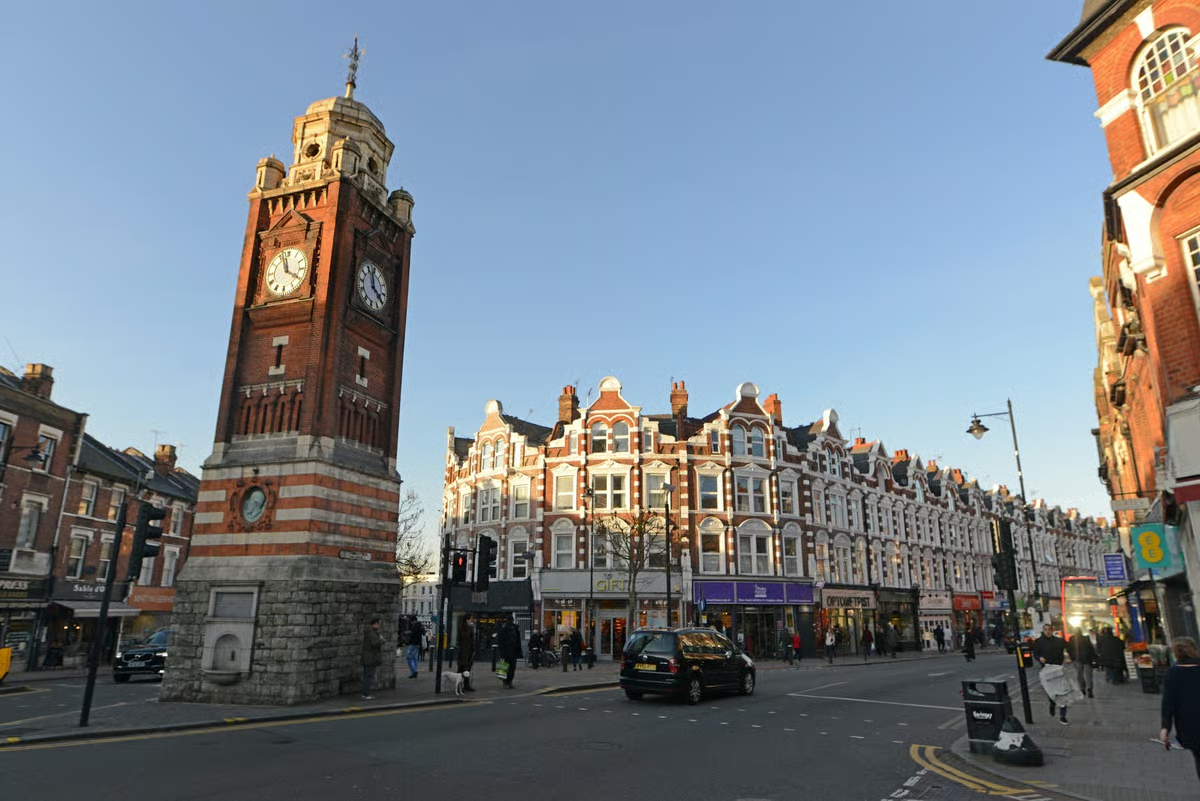
Crouch End has no Underground station, which is precisely why it stayed local: a clock-tower crossroads, independent cafes and bookshops, and Alexandra Palace and its parkland a short walk uphill. Neighbouring Muswell Hill and Highgate add Edwardian shopping parades and the ancient woodland of Highgate Wood.
East and South — Stoke Newington, Dulwich and Blackheath
Stoke Newington centres on Church Street — delis, vintage shops and the wild Victorian graveyard of Abney Park. South of the river, Dulwich, Blackheath and Barnes give you village greens, Georgian terraces and the Dulwich Picture Gallery — England's oldest purpose-built public art gallery, punching well above its size.
West — Chiswick and Richmond
Chiswick and Richmond run along the Thames: Chiswick's riverside pubs and Sunday farmers' market, then Richmond's deer park and riverside terrace further out. For the full set, the village explorations collection groups these neighbourhoods together.
- Getting there: most villages are on the Overground or a short National Rail hop — Crouch End via Finsbury Park; Dulwich via North Dulwich or West Dulwich; Chiswick and Richmond via the District line or South Western Railway.
- Best for: a slow morning of independent shops and cafes, plus one green space or gallery.
- Best time: weekday mornings or early on a Sunday, before the brunch rush.
The Museums Most Visitors Walk Past
London's blockbuster museums pull the crowds, but two of its most interesting collections sit outside the tourist core and are free to enter: the Wellcome Collection near Euston and the Horniman in Forest Hill. Neither needs a ticket for the main galleries, and both reward an unhurried hour or two rather than a rushed loop.
The Wellcome Collection
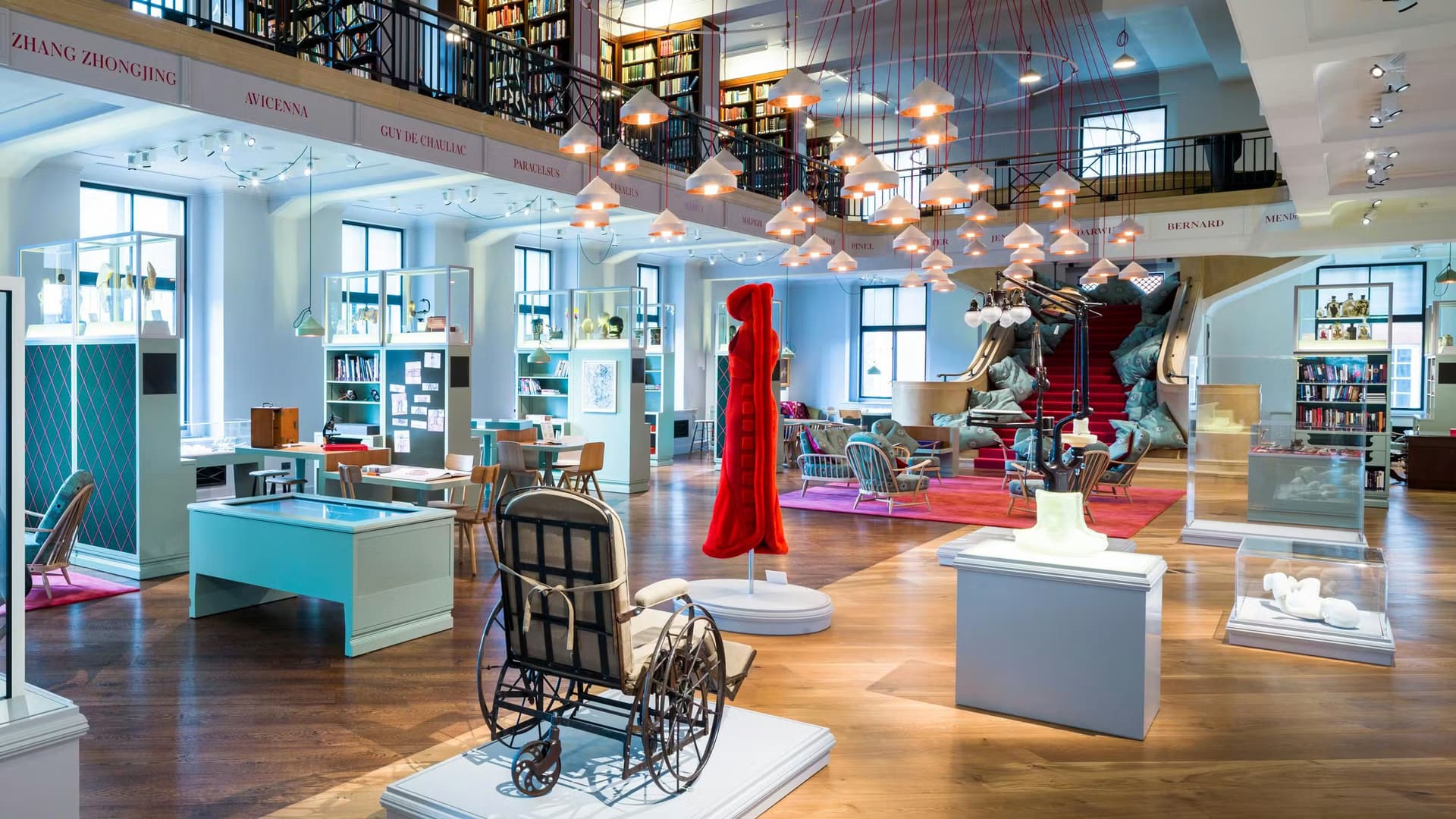
The Wellcome Collection explores medicine, health and the human condition through smartly staged free exhibitions — recent shows have covered subjects from milk to the cult of beauty. It is a five-minute walk from Euston, so it slots easily into a day, with a reading room, bookshop and cafe for when you want to slow down. Weekday afternoons are the calmest window, and because the main galleries carry no ticket you can dip in for half an hour or settle in for two.
Horniman Museum and Gardens
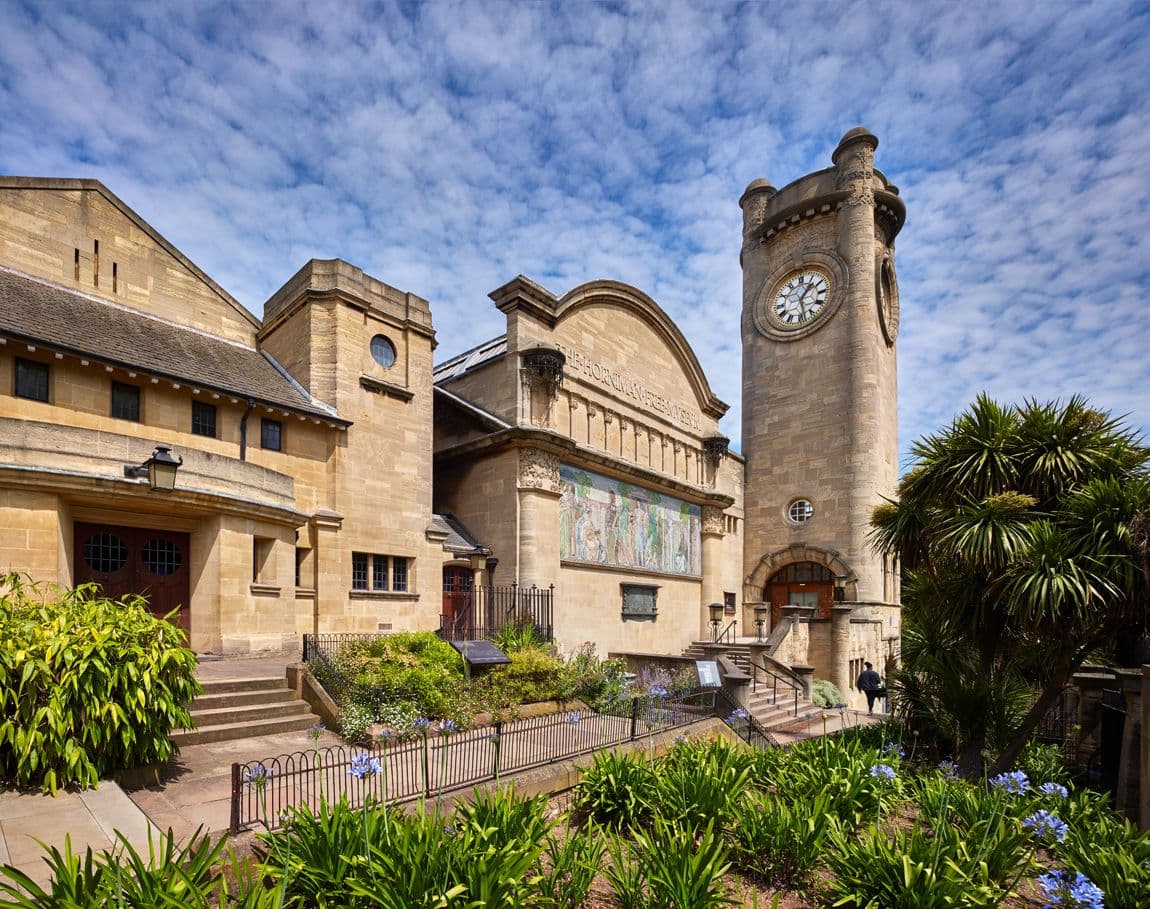
The Horniman Museum and Gardens in Forest Hill is a south-London favourite: anthropology, natural history and one of the country's great musical-instrument collections, plus 16 acres of gardens with a wide view back over the London skyline. The much-loved overstuffed walrus lives in the Natural History Gallery, which is due to reopen in early 2027 after refurbishment; the museum marks its 125th anniversary in 2026. For many locals the gardens are the real draw — a bandstand, a small animal walk and a long view north over the city — and they open earlier than the museum itself, which makes for a quiet early-morning wander before the families arrive.
- Entry: Museum and Gardens free; Aquarium around £6 / US$8 adult and Butterfly House around £9 / US$12 adult (indicative — verify current prices before publishing).
- Getting there: Forest Hill station (Overground, Windrush line), roughly 20 minutes from London Bridge.
- Note: the Natural History Gallery with the walrus is closed for refurbishment until early 2027.

The Markets Londoners Actually Shop At
The best market for an off-the-trail day out is not Camden or Borough — it is the weekend markets that run for residents: Maltby Street for food, Columbia Road for flowers, and Brixton Village for a sit-down meal. Go in the morning; most wind down by mid-afternoon, and the earlier you arrive the more room you have to move.
Maltby Street — Bermondsey's weekend food run
Maltby Street Market runs along the railway arches near London Bridge, a quieter alternative to Borough a short walk away. Independent traders sell everything from grilled-cheese toasties to fresh oysters and confit-duck fries, with St John Bakery nearby for its famous doughnuts. It is at its best mid-morning, when the arches fill with the smell of coffee and cooking and you can graze from one end to the other before the lunch queues build.
Columbia Road Flower Market — Sunday only
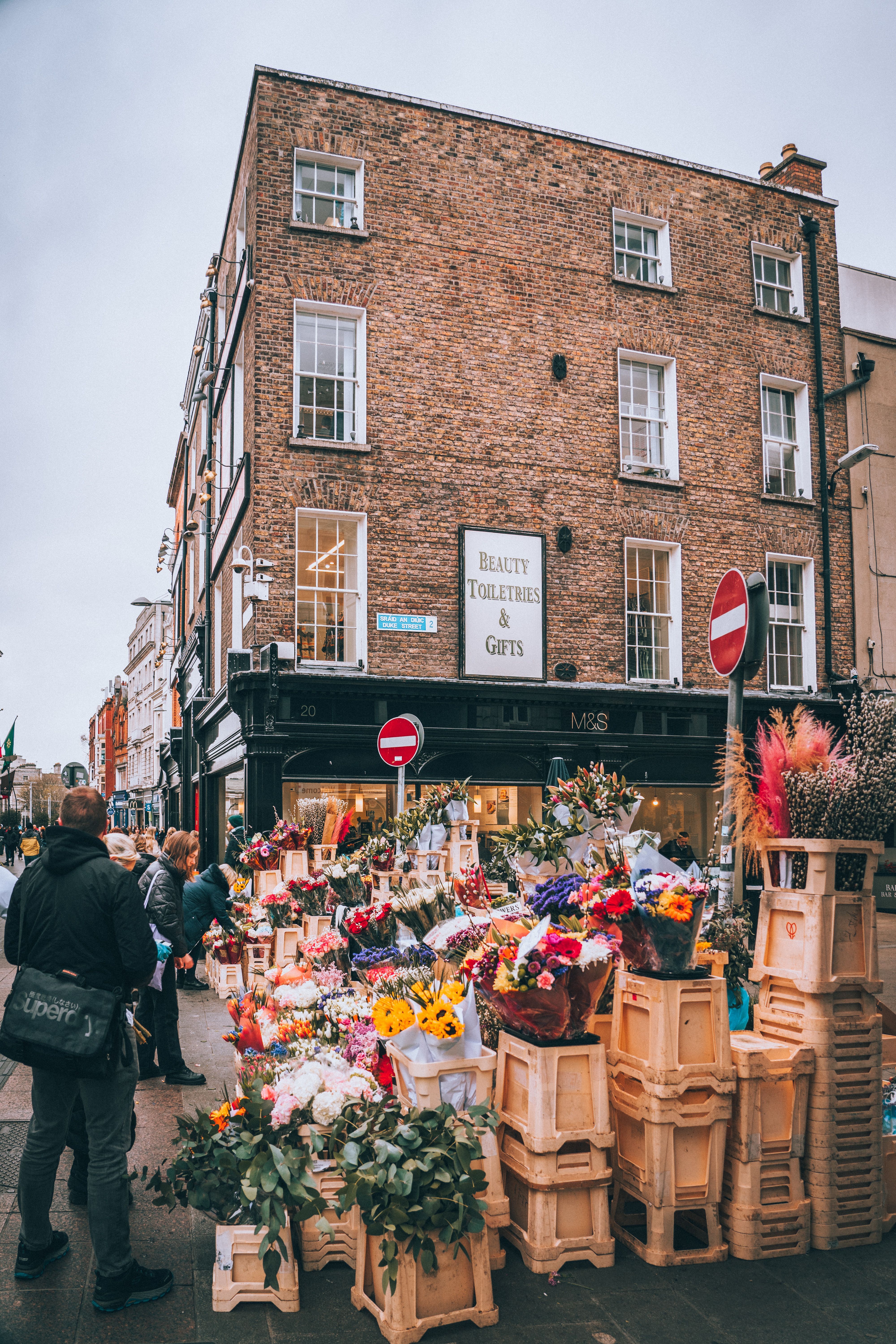
Columbia Road Flower Market takes over an East End street every Sunday, banked with cut flowers and potted plants and lined with independent galleries, delis and cafes. It is loud, fragrant and packed by late morning — arrive early or after 2pm for the calmer end of the day.
Brixton Village and the covered market
Brixton Village is where south London eats: covered Edwardian arcades full of independent kitchens serving food from across the African, Caribbean and Latin American diaspora, plus record shops and bakeries. It works for a long lunch and stays lively into the evening.
The stalls and venues worth your time here are the ones Travjoy has researched and had approved by local experts, so you are not gambling a weekend morning on a dud.
- Maltby Street: roughly Saturday 9am–4pm and Sunday 11am–4pm.
- Columbia Road: Sundays only, around 8am–3pm.
- Best time: before 11am for room to move; indicative hours — verify before publishing.
Local Experiences and Quiet Green Space
A few experiences give you the local side of London directly: walking or swimming on Hampstead Heath, a candlelit soak at Aire Ancient Baths, and immersive film nights at Secret Cinema. Two are free and spontaneous; the others need booking, sometimes weeks ahead.
Hampstead Heath
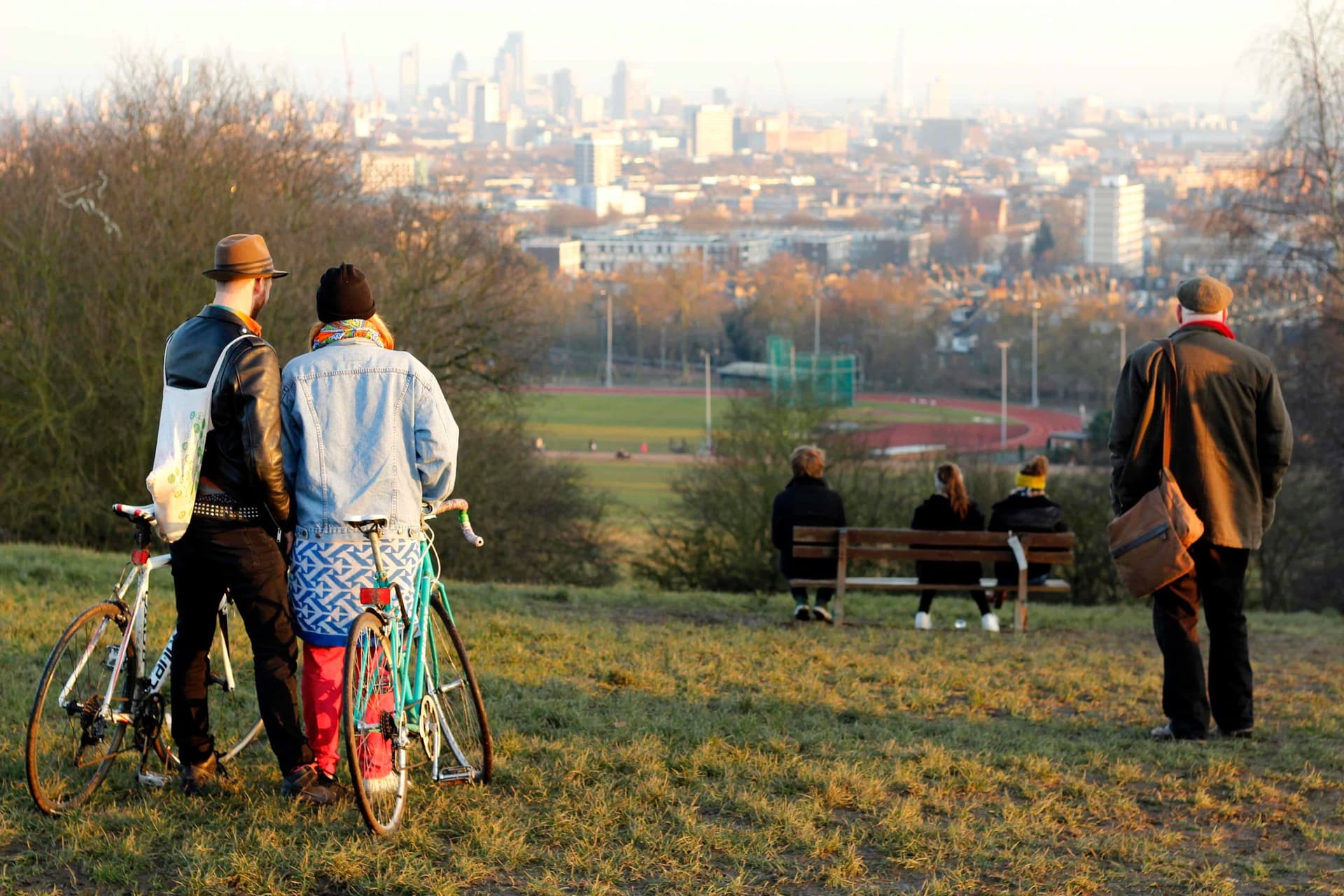
Hampstead Heath is 790 acres of meadow and woodland in north London, with three open-air bathing ponds (men's, ladies' and mixed), the Parliament Hill viewpoint over the skyline, and Kenwood House and its art collection at the northern edge. It is free and open daily — the closest London gets to countryside without leaving the city. Come on a bright weekday and whole stretches of it are yours; the swimming ponds run year-round, with hardy regulars in the water even in winter.
Aire Ancient Baths
Aire Ancient Baths is a candlelit thermal-bath complex set in an 18th-century townhouse near Covent Garden — once the home of J.M. Barrie — where you move between pools at different temperatures, a salt-flotation bath and a steam room. It is phone-free and adults-only, and weekend slots sell out, so book ahead.
Secret Cinema and a different night out
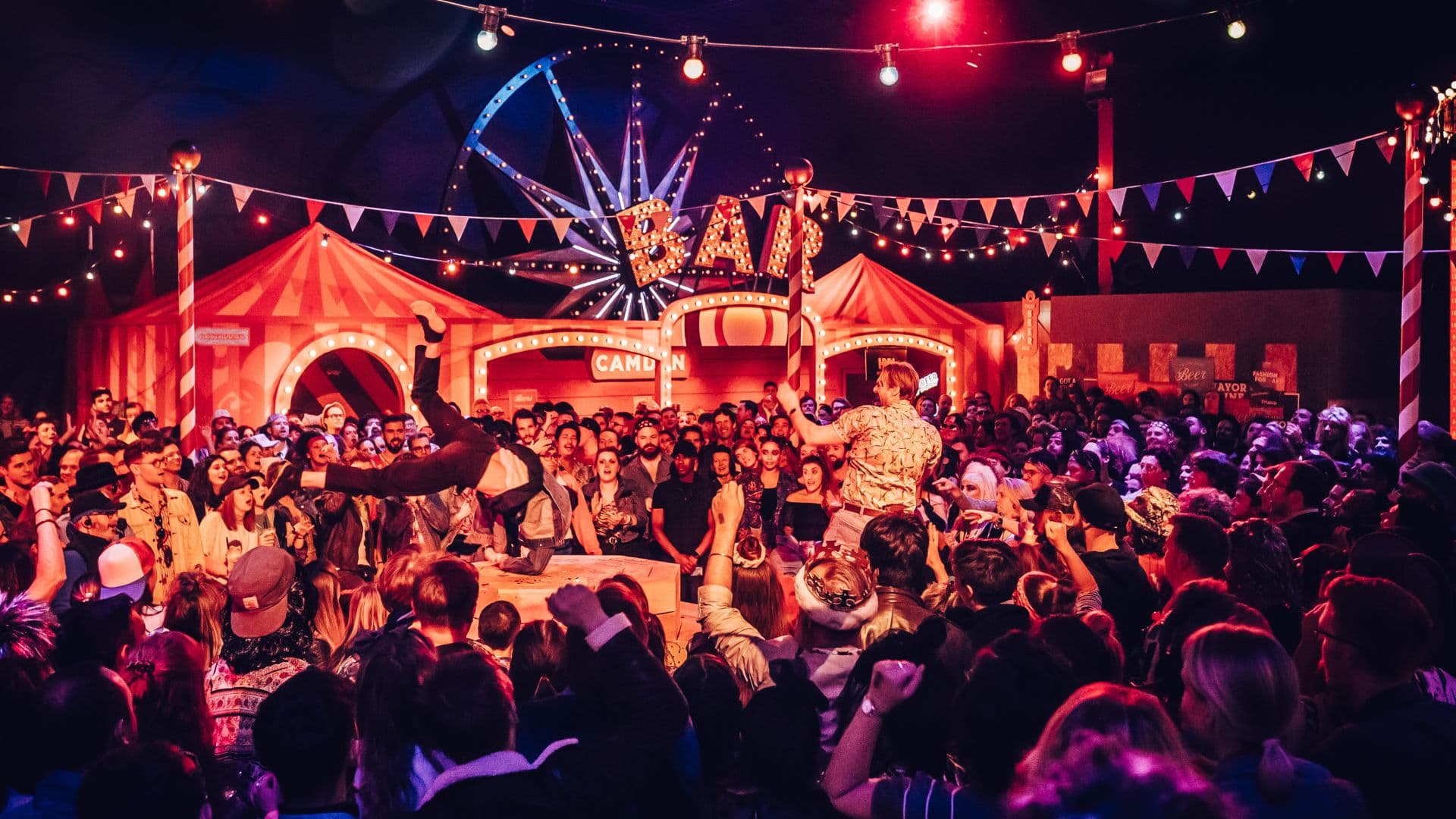
Secret Cinema stages immersive productions where a film is played out around you in a built set, with actors, food and a dress code tied to the title. Productions run in seasons and change through the year, so check what is on and book well before you travel.
What to book before you arrive
- Aire Ancient Baths — weekend slots sell out; book one to two weeks ahead (from around £85 / US$110 per person, indicative — verify).
- Secret Cinema — productions run in limited seasons and sell out; confirm dates before you fly.
- Day trips out of London — advance rail singles come with reserved seats and the best fares.
- Horniman Aquarium and Butterfly House — timed tickets during school holidays.
A Day Beyond the City
If you have a spare day, the most off-the-trail move of all is leaving London entirely. East Sussex — the South Downs, the town of Lewes and the coast around Brighton — is about an hour from the London terminals by train and swaps the crowds for chalk cliffs, country pubs and sea air.
East Sussex in a day
Brighton is roughly an hour from London Victoria, with its pier, the Lanes and the Royal Pavilion; Lewes adds a castle and independent shops; and the Seven Sisters cliffs and South Downs give you proper coastal and downland walks within easy reach.
Making it work
- Rail: London Victoria or London Bridge to Brighton in about an hour; book advance singles for the best fares.
- Best time: spring to autumn for the coast and the Downs walks.
- If it rains: Brighton's covered Lanes, the Royal Pavilion and indoor markets keep the day going.
Plan Your Quieter London
The most rewarding non-touristy things to do in London reward a plan built around one area at a time — a village morning, a small museum, a market, a stretch of green space — rather than a race across zones. Skip the recycled "secret" spots that are now firmly on the trail, favour weekday mornings and early weekends, and book the paid experiences ahead so the good slots do not vanish before you land.
When you are ready to pull it together, start planning your trip on Travjoy's London page, or browse the city's lesser-known experiences to see what is bookable before you go.


.svg&w=1920&q=75)