


Museums and Art Galleries in Bangkok: A Complete Guide to Which Ones Are Worth Your Time
10 min read
Key Highlights
- Bangkok's cultural institutions split into three geographies that behave very differently: a walkable central cluster, one major contemporary museum well north of the centre, and two large sites in Samut Prakan province that need their own day.
- Admission spans a wide band — the Bangkok Art and Culture Centre costs nothing to enter, Museum Siam is 100 THB (about USD 3), and Ancient Siam runs to 800 THB (about USD 24) for foreign visitors.
- Closing days catch more visitors out than anything else: most venues shut on Mondays, and the Bangkok National Museum closes Monday and Tuesday.
- The National Museum runs free volunteer-led tours in English, French, German and Japanese on Wednesdays and Thursdays at 9:30am — the single best-value hour of cultural context in the city.
- The contemporary scene has shifted sharply since 2024, with Bangkok Kunsthalle in a gutted Yaowarat printing house now leading a circuit that most guidebooks have not caught up with.
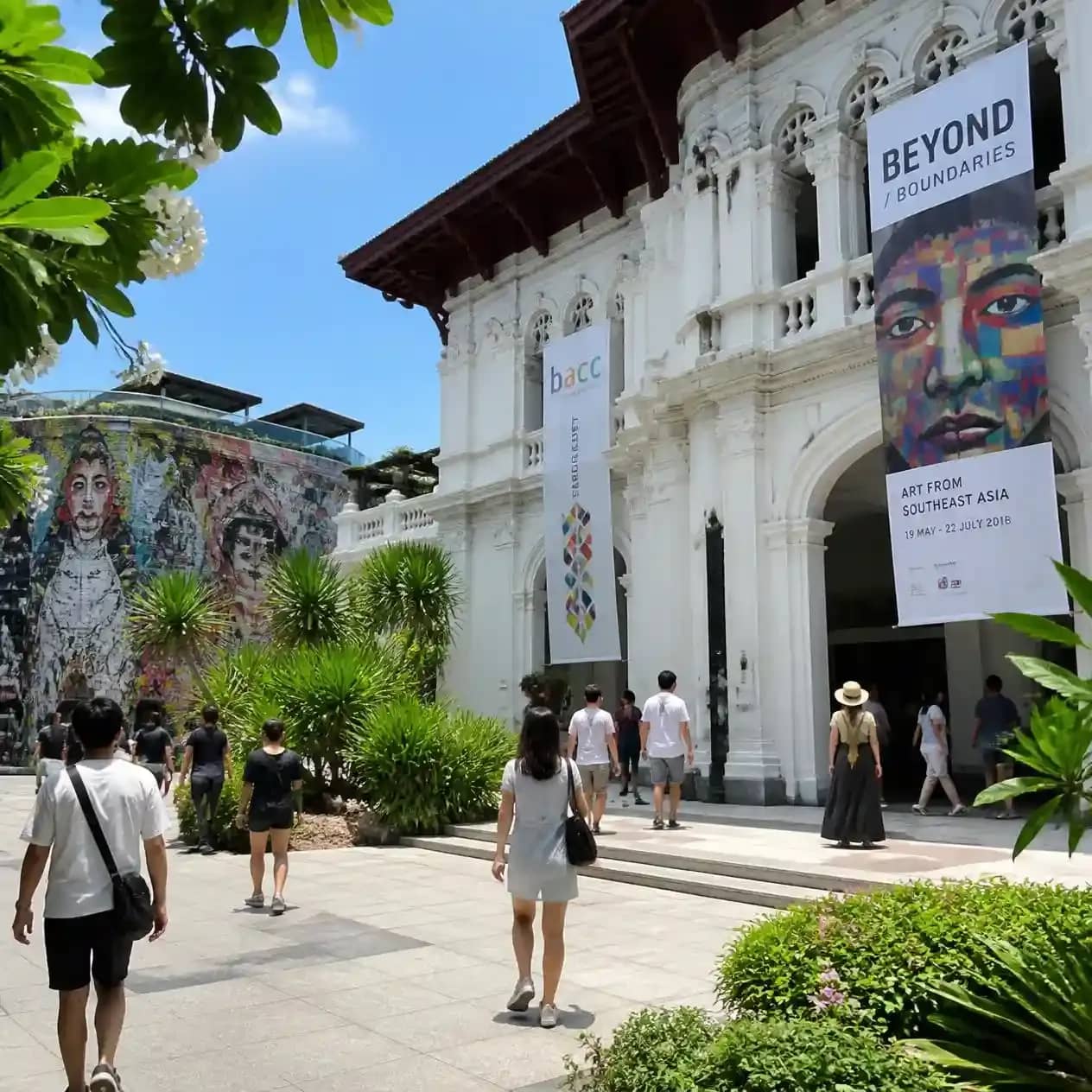
The best museums in Bangkok for a first cultural day are the Bangkok Art and Culture Centre for contemporary work, the Jim Thompson House for Thai architecture and Southeast Asian antiques, and the Bangkok National Museum for the country's royal and religious history. Admission ranges from nothing at BACC to 300 THB (about USD 9) at MOCA and 800 THB (about USD 24) at Ancient Siam. Nearly all of them close on Mondays, which is the detail that decides how you sequence a short trip.
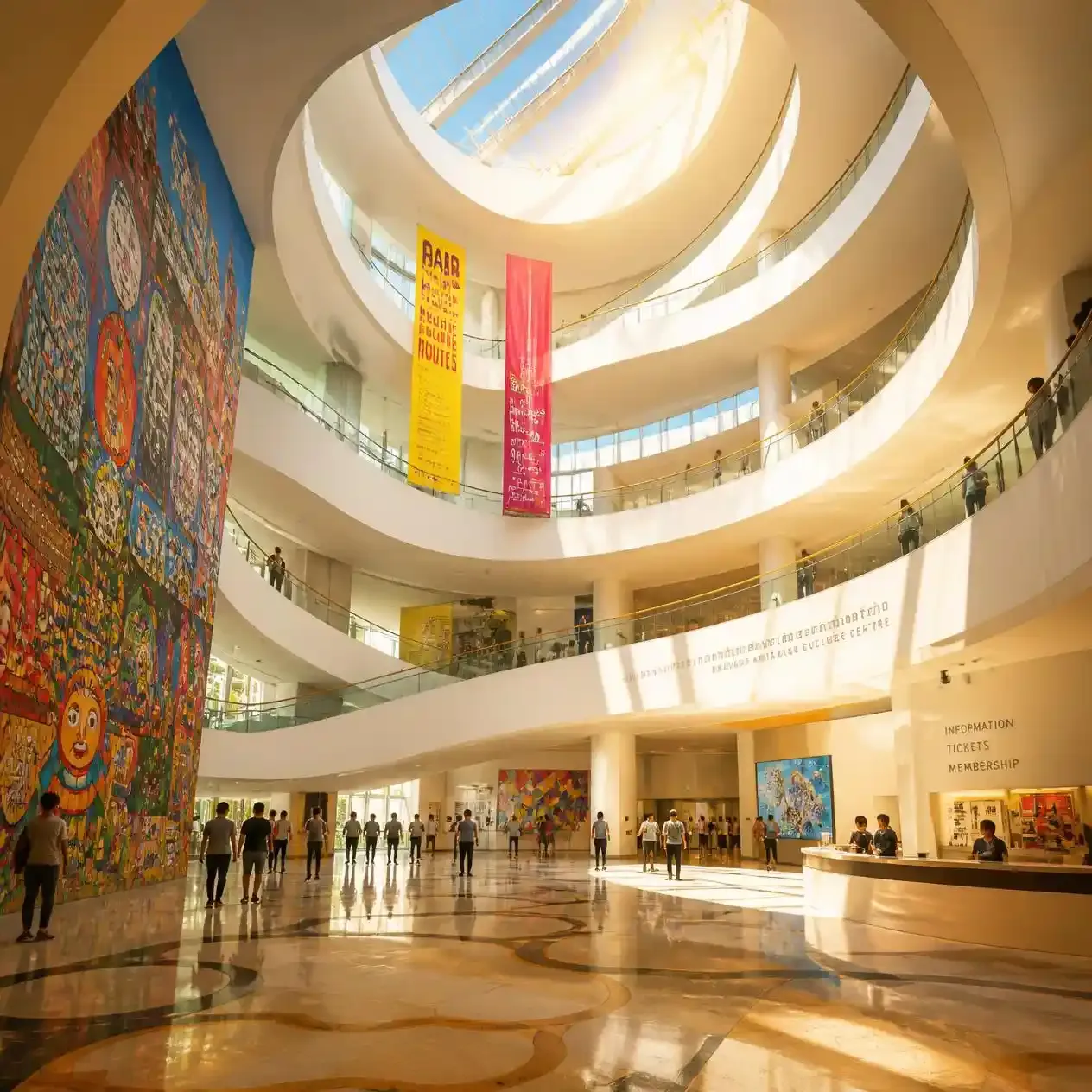
Bangkok has a reputation problem where culture is concerned. The city sells itself on temples, river light and food, and most visitors leave having seen the Grand Palace and nothing with a roof, air conditioning and a curator. That is a shame, because the museums in Bangkok have changed more in the past five years than in the previous thirty — a new kunsthalle in a burnt-out Chinatown printing plant, a purpose-built art centre beside a teak house museum, and a contemporary collection north of Chatuchak that would hold its own in any Asian capital.
The problem is not quality. It is geography and timing. Three of the most rewarding sites are nowhere near each other, two are not technically in Bangkok at all, and the closing-day pattern is inconsistent enough to cost you a morning if you plan on instinct.
This guide sorts the museums in Bangkok by what they actually deliver, what they cost in 2026, how long each one needs, and which ones suit a first visit against a third. Prices are given in Thai baht with US dollars alongside, converted at roughly 33 THB to the dollar as of July 2026.
Are the Museums in Bangkok Worth Your Time?
Yes — but not all of them, and not on every trip. Two or three well-chosen visits will change how you read the city; six will blur into a week of air-conditioned rooms. The museums in Bangkok reward selection far more than completeness, and the difference between a good cultural day and a wasted one is almost always sequencing rather than choice of venue.
What Bangkok does better than expected
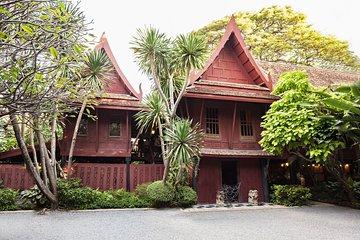
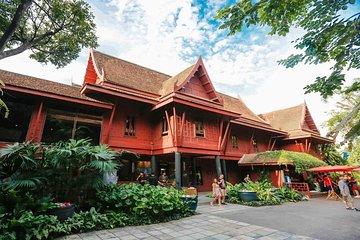
Two things stand out. The first is house museums — buildings that were somebody's home and still read that way, with the collection arranged as it was lived with rather than catalogued. The Jim Thompson House is the obvious example and deserves its reputation.
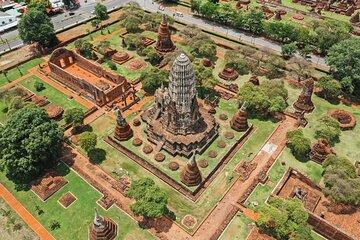
The second is scale. Ancient Siam covers roughly 200 acres of scaled reconstructions arranged in the shape of the country, and the Erawan Museum is built inside a 250-tonne bronze elephant. Neither is subtle, but neither has an equivalent anywhere else, and both are considerably more interesting in person than photographs suggest.
Where the city falls short
Bangkok has no single encyclopaedic art museum on the model of Singapore's National Gallery. The Bangkok National Museum holds the country's most important collection but presents it unevenly — some halls are beautifully lit and labelled, others feel like storage. Labelling in English is patchy across the older institutions generally, which is why guided context matters here more than in most cities.
Worth it if — and not ideal if
- Worth it if you are on a second or third visit and the temple circuit is behind you, you have a specific interest in textiles, Buddhist art or Southeast Asian contemporary work, or you want two or three hours out of the heat that are not a shopping mall.
- Worth it if you are travelling with teenagers — Ancient Siam and the Erawan Museum land far better with older children than a fourth temple will.
- Not ideal if you have three days and have never seen the Grand Palace, Wat Pho or Wat Arun. Those come first; the museums are the layer after.
- Not ideal if you want everything within one district. The strongest venues are deliberately spread out, and pretending otherwise produces a day spent in traffic.
Which Museums in Bangkok Are Worth Planning Around
Seven venues carry the weight among the museums in Bangkok. Below they are set against the four things that actually decide whether one fits your day — what kind of institution it is, how long it needs, what it costs, and who it suits. Everything else is detail.
| Venue | Type | Time needed | Admission (2026) | Best for |
|---|---|---|---|---|
| Bangkok Art and Culture Centre | Contemporary art, rotating exhibitions | 1–2 hours | No charge | A short cultural break in central Bangkok |
| Jim Thompson House | House museum, Southeast Asian antiques | 60–90 minutes | 250 THB / USD 8 | Thai architecture, textiles, a strong story |
| Bangkok National Museum | National collection, royal and religious | 2–3 hours | 200 THB / USD 6 | Historical grounding before the temples |
| MOCA Bangkok | Contemporary Thai art, permanent collection | 2–3 hours | 300 THB / USD 9 | Serious contemporary art interest |
| Museum Siam | Interpretive, interactive | 1.5–2 hours | 100 THB / USD 3 | Families and a fast read on Thai identity |
| Erawan Museum | Sacred art inside a monumental sculpture | 1.5–2 hours | 500 THB / USD 15 | Architecture and religious craft |
| Ancient Siam (Muang Boran) | Open-air architectural park | Half to full day | 800 THB / USD 24 | A full day out of the city with range |
The central cluster
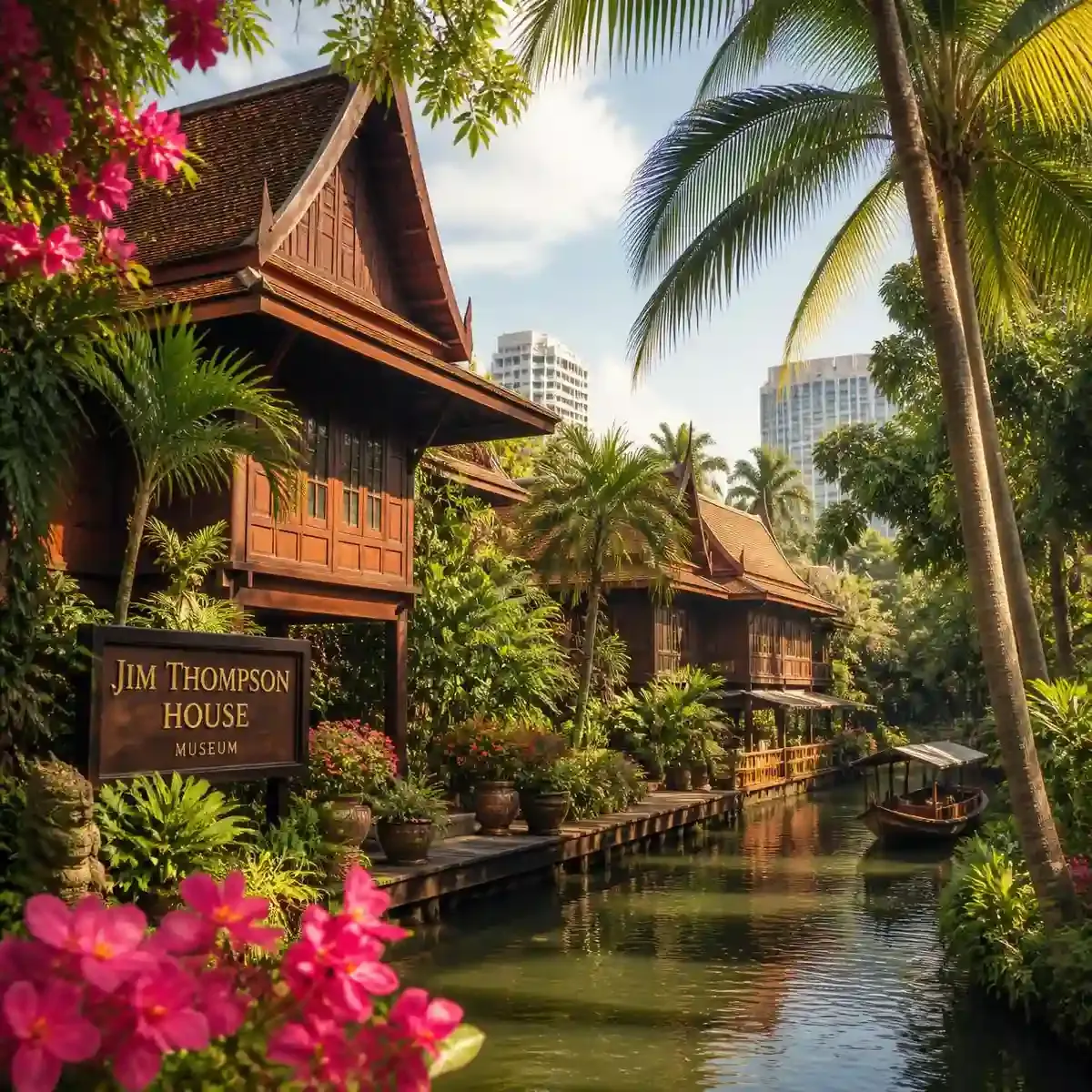
BACC, the Jim Thompson House and the Jim Thompson Art Center sit within a few hundred metres of BTS National Stadium, and Museum Siam is a short ride away on the MRT Blue Line at Sanam Chai. This is the only group you can treat casually — walk in, spend an hour, move on. The Bangkok National Museum sits north of the Grand Palace on Rattanakosin Island and pairs naturally with an Old City morning rather than with the Siam venues.
The northern outlier
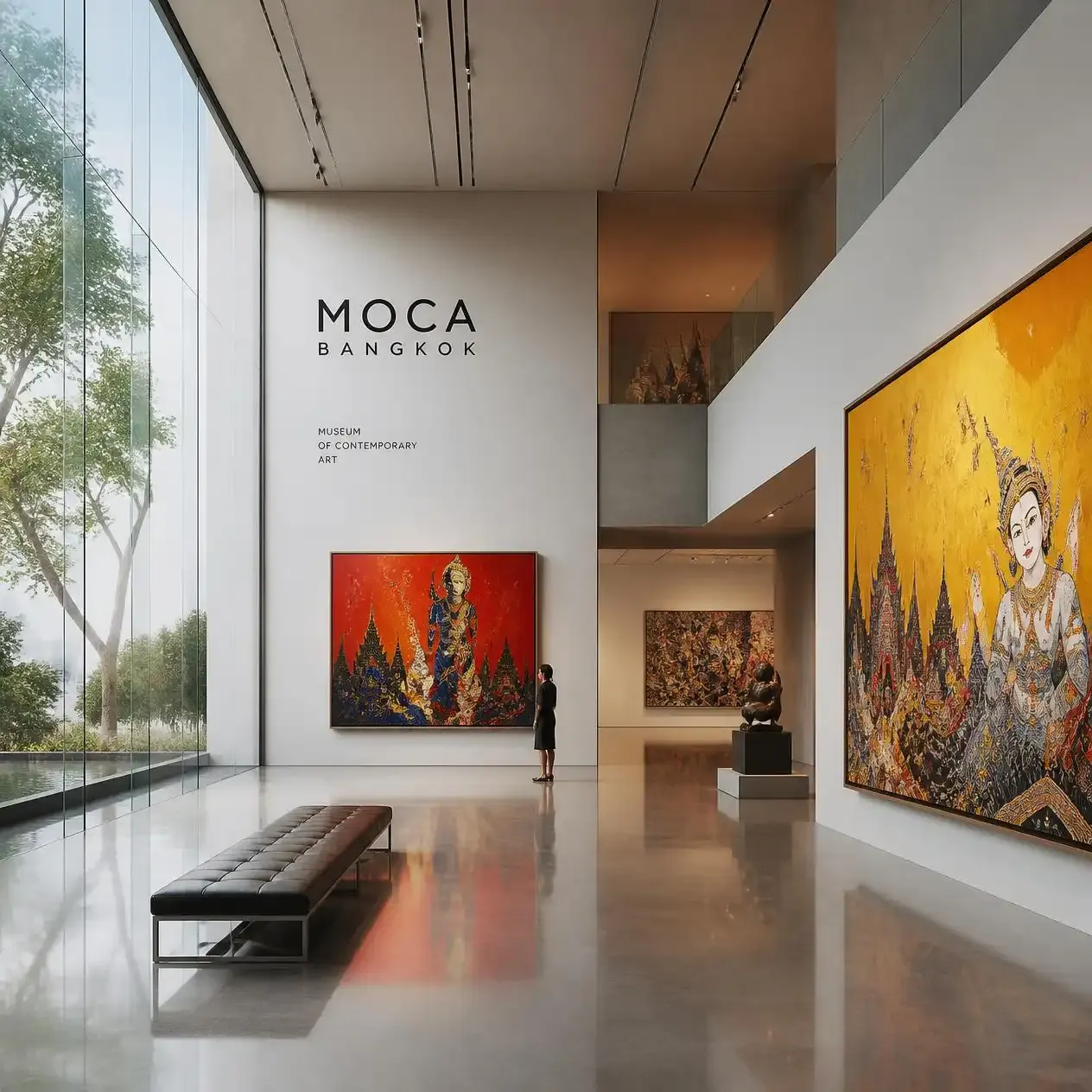
MOCA Bangkok holds six floors and several hundred works, mostly Thai, and it is the most substantial contemporary collection in the country. It is also in Chatuchak district, roughly 6.5 kilometres north of Mo Chit BTS, with no station of its own.
Reality check: MOCA is a half-day, not a drop-in
- Allow 45–60 minutes of travel each way from central Bangkok, plus 2–3 hours inside. That is most of an afternoon.
- Do not try to pair it with an Old City temple morning — the two sit on opposite sides of the city and the transfer eats the day.
- It pairs well with Chatuchak Weekend Market instead, if you are already heading north on a Saturday or Sunday.
- Closed Mondays. Open Tuesday to Sunday, 10:00 to 18:00.
The Samut Prakan pair
The Erawan Museum and Ancient Siam are both in Samut Prakan province, south-east of the city, and both were commissioned by the same collector, Lek Viriyaphant. They sit close enough to combine, and combining them is the sensible approach — a private car and driver for the day turns an awkward transfer into an easy one. Ancient Siam runs its own tram service from the Floating Market zone at 10:00, 13:00, 15:00 and 17:00, which matters on a 200-acre site. You can browse the full museums and galleries collection to see how these sit against the rest of the city's cultural options.
What the Museums in Bangkok Cost in 2026 — and What the Spend Buys
Admission to the museums in Bangkok runs from nothing to 800 THB (about USD 24), and the price tells you almost nothing about quality. What it does tell you is scale and ownership: the free venues are publicly funded, the mid-tier are foundation-run, and the expensive ones are privately built landmarks with grounds to maintain. All figures below are current as of July 2026 and converted at roughly 33 THB to USD.
The no-charge venues
- Bangkok Art and Culture Centre — open Tuesday to Sunday, 10:00 to 20:00. The late closing is the useful part: you can arrive at 6pm after a full day elsewhere.
- Bangkok Kunsthalle — the Yaowarat contemporary space, open since 2024.
- 100 Tonson Gallery — a small private space near Lang Suan showing Thai and international artists.
Where admission is not charged, the value is flexibility rather than saving. You can give BACC forty minutes and leave without feeling you have cut a visit short, which makes it the easiest cultural stop to slot into a day built around something else.
The 100–300 THB tier
- Museum Siam — 100 THB (USD 3). Open 10:00 to 18:00, closed Mondays.
- Bangkok National Museum — 200 THB (USD 6) for foreign visitors. Closed Monday and Tuesday.
- Jim Thompson House — 250 THB (USD 8) for adults, 150 THB (USD 5) for ages 10 to 21 with ID, no charge for under-10s with an adult. Open daily 10:00 to 17:00, with the last guided tour at 5pm.
- MOCA Bangkok — 300 THB (USD 9) for adults, 120 THB (USD 4) for students with valid ID. Note that most published guides still quote 280 THB; the museum's own current rate is 300.
The 500–800 THB tier
- Erawan Museum — the museum's own ticket page lists 500 THB (USD 15) for adults and 250 THB (USD 8) for children, open daily 9:00 to 18:00 with the ticket counter closing at 17:00. Secondary sources widely quote 400 THB, so confirm at the counter or through your operator.
- Ancient Siam — 800 THB (USD 24) for foreign adults, 400 THB (USD 12) for children aged 6 to 14. Open 9:00 to 19:00, ticket office closing at 18:00. Tram and bicycle hire are separate.
Both of these are priced as attractions rather than museums, and both justify it on grounds and scale rather than collection depth. Neither includes transport, and both sit outside the BTS network's convenient reach, so the transfer is the real cost to plan for.
Where a guide changes the visit
English labelling is inconsistent at the older institutions, and the difference a guide makes is larger here than in most cities. At the National Museum this is available at no extra cost, which almost nobody takes advantage of.
Reality check: the National Museum's free volunteer tours
- The National Museum Volunteers run free guided tours every Wednesday and Thursday, starting at 9:30am from the ticket office.
- Languages: English, French and Japanese on both days; German on Wednesdays only.
- The tours themselves carry no charge — you still pay the 200 THB (USD 6) museum entry.
- They cover pre-Thai and Thai art, Thai history and culture, and the Buddhaisawan Chapel, which is the single most rewarding room in the building and easy to walk past unexplained.
- This is the reason to schedule the National Museum for a Wednesday or Thursday rather than a Friday.



Which Museums in Bangkok Should You Choose?
Pick your museums in Bangkok by what you want from the afternoon rather than by ranking. Most travellers have room for two or three cultural visits across a week in Bangkok, and the right two depend entirely on whether you are orienting yourself, going deeper, or looking for something the city does that nowhere else does.
If this is your first cultural day
Choose the Bangkok National Museum, ideally on a Wednesday or Thursday morning for the volunteer tour, followed by the Grand Palace or Jim Thompson House in the afternoon. The National Museum gives you the chronology and the iconography — once you can read a Sukhothai Buddha against an Ayutthaya one, every temple you visit afterwards makes more sense.
If you have been to Bangkok before
Skip the national collection and go contemporary. MOCA Bangkok for a serious half-day, or the Yaowarat gallery circuit for an afternoon that mixes art with the best street food in the city. This is where the museums in Bangkok have moved fastest, and it is the layer that most repeat visitors have never touched.
If you want contemporary art specifically
MOCA holds the collection; Bangkok Kunsthalle and the Bangkok Art and Culture Centre hold the programme. Check what is currently showing at the latter two before committing an afternoon — both run rotating exhibitions rather than permanent displays, and the quality swings with the show.
If architecture is the draw
The Jim Thompson House and the Erawan Museum, in that order. Thompson reversed several of the teak houses' interiors so that decorative exterior panels face inward, a detail your guide will point out and which you would otherwise miss entirely. The Erawan Museum's interior staircase, spiralling up into the elephant's body, is worth taking on foot rather than by lift.
If you are travelling with children
Museum Siam is built for interaction and holds younger children well. For teenagers, Ancient Siam is the stronger option — bicycles, a tram, 200 acres and a hundred reconstructions give them something to do rather than look at. Neither the National Museum nor MOCA suits under-tens.
If you have one afternoon and nothing more
BACC. It is free to walk into, open until 8pm, sits directly at BTS National Stadium, and asks nothing of your schedule. Add the Jim Thompson House next door if you have three hours rather than two. Our top art and heritage picks for the city are researched and approved by local experts, which is a reasonable shortcut when you have one slot and want to spend it well.
Reality check: the Jim Thompson House is guided-tour-only
- You cannot walk the main house unaccompanied. Entry to the interior is by guided tour, which is included in the admission price.
- Tours run in Thai, English, French, Chinese and Japanese, departing regularly through the day. No reservation is required.
- The museum sells its own admission at the on-site ticket office rather than through resale sites, so if you want the visit handled as part of a wider arranged day, book it as a guided city itinerary rather than a standalone resale ticket.
- Photography is allowed in the gardens and courtyard but not inside the historic rooms.
- Allow 90 minutes including the grounds, shop and restaurant.
The Second-Visit Layer: Bangkok's Contemporary Gallery Circuit
Bangkok's commercial and independent gallery scene has expanded significantly since 2024, and it is now the most interesting thing happening culturally in the city. None of it appears on standard itineraries, and it sits outside the museums in Bangkok that guidebooks name. If you have done the temples and the national collection, this is where a third or fourth visit earns its keep.
Bangkok Kunsthalle
Opened in 2024 in the former Thai Wattana Panich printing house in Yaowarat — a building abandoned after a fire in 2001 and left deliberately raw, with exposed concrete and hanging cables across three connected structures. Programming has included Yoko Ono's participatory work and the black-and-white abstractions of Thai-Chinese painter Tang Chang. Admission is free, and it sits within walking distance of Chinatown's best evening eating, which makes the obvious plan a late-afternoon gallery visit followed by dinner on Yaowarat Road.
The Jim Thompson Art Center and 100 Tonson
The Art Center shares a compound with the house museum and opened its purpose-built home in 2022 — two galleries, a library, a café and roof terraces, with programming that leans toward textiles and Southeast Asian contemporary practice. It is open daily and free, and most visitors to the house museum walk past it without going in. 100 Tonson Gallery, off Lang Suan, is smaller and more focused, showing Thai and international artists in a compact space.
River City and the canal-side studios
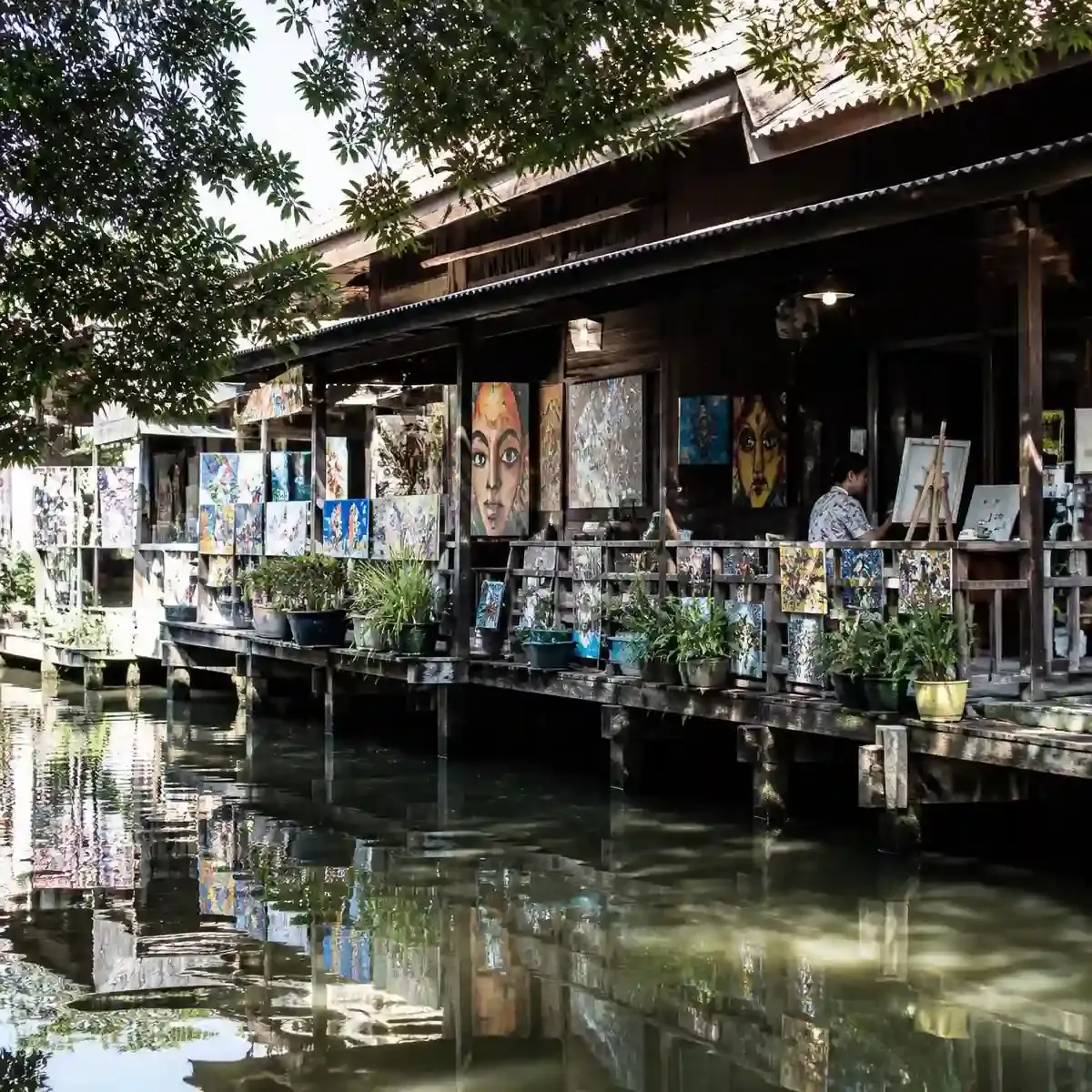
River City Bangkok, on the Chao Phraya, houses galleries and antique dealers under one roof and has hosted rotating international exhibitions since the 1980s. You can arrive by boat, which is the better approach. On the Thonburi side, the Khlong Bang Luang Artist House is a working studio in a century-old wooden house on the canal, with puppet performances and a resident painter — the least polished entry on this list and the one people remember.
Planning Your Museum Days in Bangkok: Timing, Transport and Etiquette
Three practical things decide whether a cultural day works: which venues are open, which ones share a district, and how you handle the heat between them. Get those right and two museums in a day is comfortable; get them wrong and one becomes a struggle.
The closing-day map
Reality check: Mondays are the problem
- Closed Mondays: Bangkok Art and Culture Centre, MOCA Bangkok, Museum Siam.
- Closed Mondays and Tuesdays: Bangkok National Museum.
- Open daily: Jim Thompson House (10:00–17:00), Erawan Museum (9:00–18:00), Ancient Siam (9:00–19:00).
- If Monday is your only flexible day, build it around the Jim Thompson House in the morning and the Samut Prakan pair in the afternoon, or move the cultural day entirely.
- Wednesday and Thursday are the strongest days overall, because the National Museum's volunteer tours run then.
Which venues actually pair
- BACC + Jim Thompson House — a few hundred metres apart at BTS National Stadium. The easiest pairing in the city.
- Bangkok National Museum + Grand Palace or Wat Pho — all on or beside Rattanakosin Island. Museum first, temples after.
- Erawan Museum + Ancient Siam — same province, same founder, one car and driver.
- Bangkok Kunsthalle + Yaowarat dinner — gallery at 5pm, street food from 7pm.
- Do not pair: MOCA with anything in the Old City, or Ancient Siam with a central afternoon.
Getting there
- BTS National Stadium — BACC, Jim Thompson House, Jim Thompson Art Center.
- MRT Sanam Chai — Museum Siam, and the closest rail access to the Old City.
- Chao Phraya river boat — River City, and the pleasant route to the Rattanakosin sites.
- MOCA — no station nearby; take a car from Mo Chit or arrange a driver.
- Erawan Museum — BTS Chang Erawan, then roughly 850 metres on foot, or a car door to door.
- Ancient Siam — a car is the practical option; the site itself needs the tram or a bicycle once you arrive.
Dress, heat and photography
Museums have no dress code beyond ordinary neatness, but if you are pairing one with a temple in the same day, dress for the temple — covered shoulders and knees — and you will be fine everywhere. Bangkok's heat between March and May makes midday outdoor sites punishing; Ancient Siam in particular is best started at opening or after 3pm. The cool, dry season from November to February is the comfortable window for anything with grounds.
Photography rules vary. MOCA allows personal photography but not flash, tripods or video. The Jim Thompson House prohibits it inside the historic rooms. Assume no flash anywhere and check signage at each gallery.
Planning Your Cultural Days in Bangkok
Three things to carry away. First, sequence beats selection — the closing-day map and the geography decide more about your cultural day than which venue you pick. Second, two or three visits across a week is the right number; the museums in Bangkok are best read as punctuation between temples, markets and river time rather than as a circuit to complete. Third, the contemporary layer is where the city has changed most, and it is still largely absent from published itineraries.
If you want the decisions made for you, the cultural experiences on Travjoy are researched and approved by local experts, with private guides and door-to-door transfers for the sites that need them. Start planning your cultural days in Bangkok on Travjoy.

.svg&w=1920&q=75)