



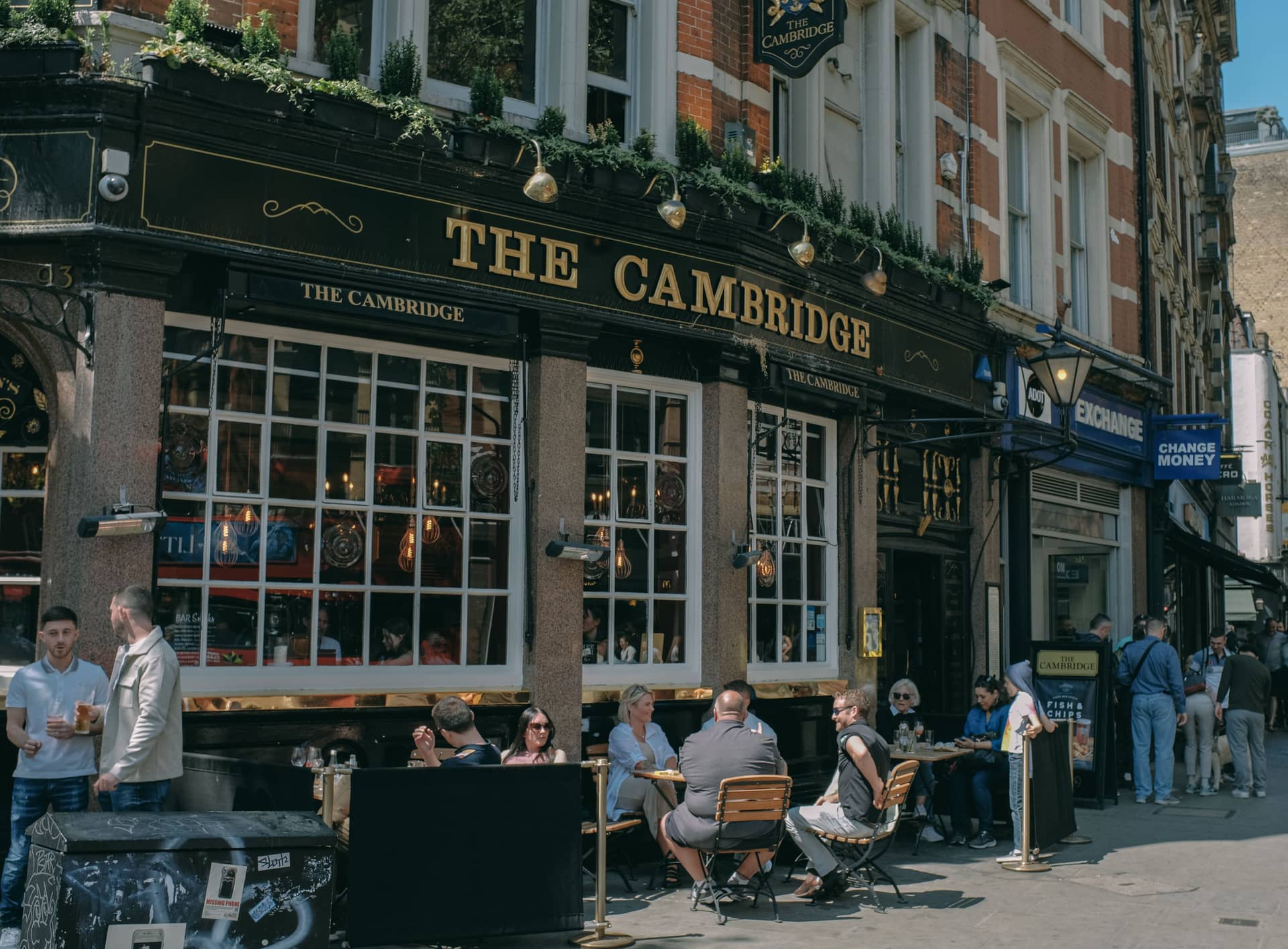
Foodie Places in London: A Complete Guide for Discerning Travellers — Markets, Neighbourhoods and Tables Worth Booking
8 min read
Key Highlights
- London's food markets — Borough, Maltby Street, Broadway and Old Spitalfields — are the fastest way to graze across a dozen cuisines in a single morning.
- Eating neighbourhoods read differently: Soho and Mayfair for polish, Hackney and Shoreditch for the newer kitchens, Borough and Bermondsey for market grazing.
- Afternoon tea at the grand hotels runs roughly £72–£95 per person (about $91–$121); the room you choose matters as much as the menu.
- London held 88 Michelin-starred restaurants in 2026 — second only to Paris in Europe — alongside Bib Gourmand tables that deliver the cooking without the tasting-menu spend.
The best foodie places in London fall into four camps: the food markets, where Borough and Maltby Street let you eat across cuisines in one walk; the eating neighbourhoods, from Soho and Mayfair to Hackney and Borough; the grand-hotel afternoon teas at the Ritz, Claridge's and Fortnum & Mason, from around £72–£95 (roughly $91–$121) per person; and the fine-dining scene, where the city held 88 Michelin-starred restaurants in 2026. Plan by category, book the marquee tables and teas ahead, and leave the markets for unhurried mornings.
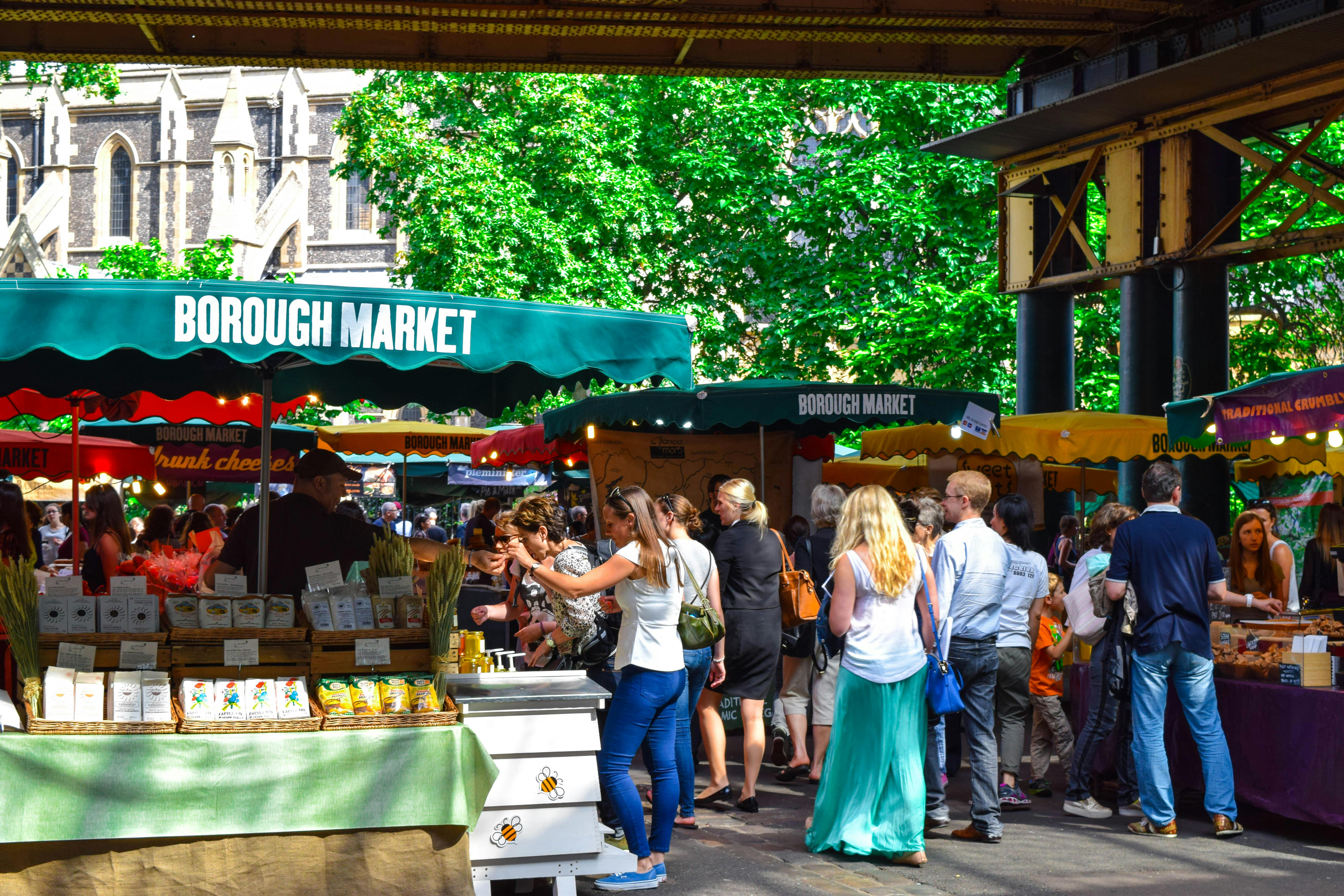
You can eat your way through ten countries in London before lunch — Sri Lankan hoppers at one market stall, a Bermondsey cheese toastie at the next, a flat white from a roaster that supplies half the city's restaurants. The problem was never finding a good meal. It is deciding which of the thousands of options actually deserves your appetite and your booking window.
This guide maps the foodie places in London the way a returning visitor would plan them: by what kind of eating you want on a given day, not by a single ranked list. It covers the markets worth a morning, the neighbourhoods that each have a distinct table to offer, the afternoon teas worth dressing for, and the fine-dining rooms that justify booking weeks ahead.
Where it helps, you'll find dual-currency cost ranges, opening days, and clear if-this-then-that guidance so you can match the city to the time and appetite you actually have. The experiences featured on Travjoy are researched and approved by local experts, so you can book the headline market tours and tasting tables with confidence rather than guesswork.
London's food markets: where to graze first
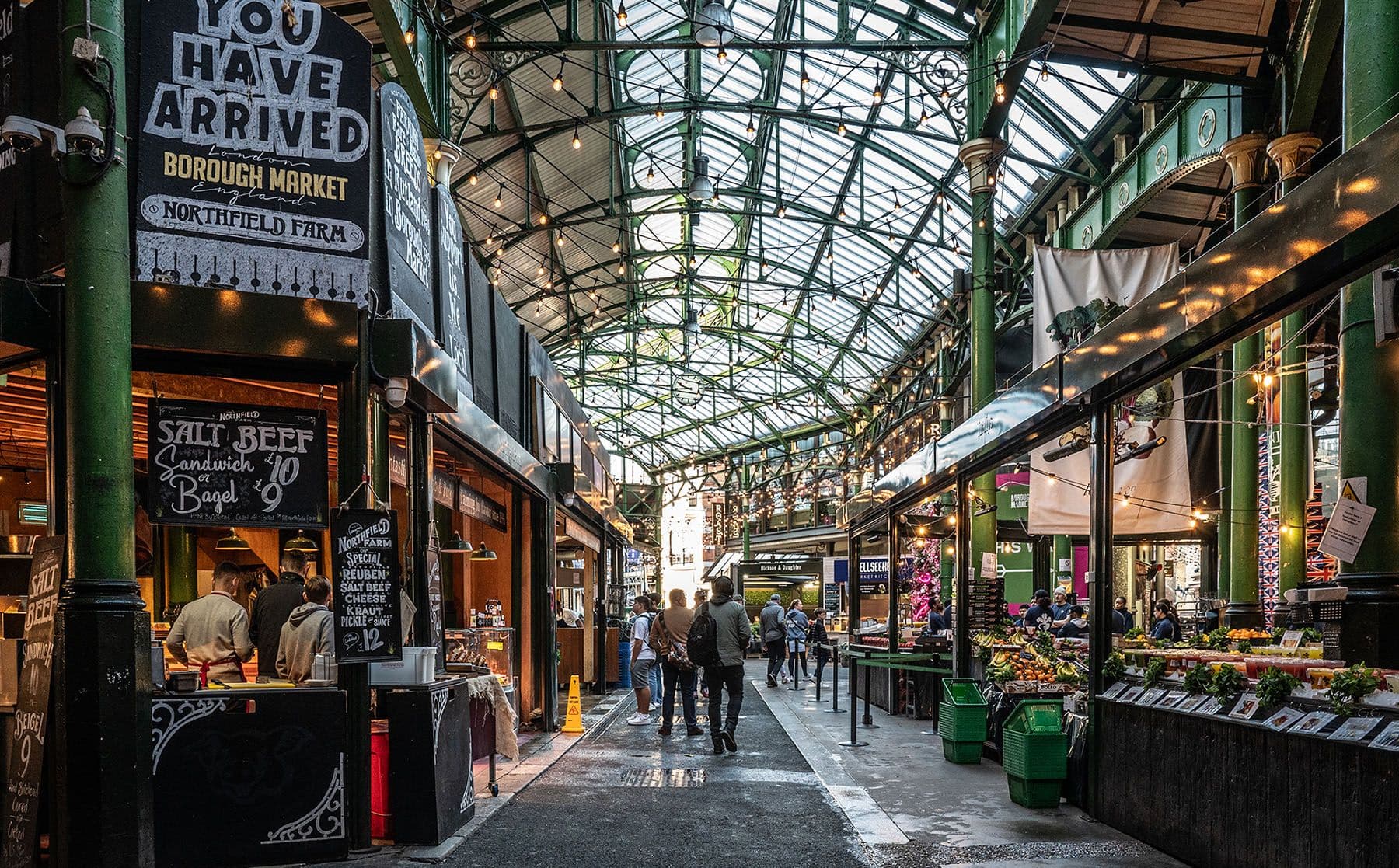
If you only have one food-led morning, spend it at a market — it is the quickest way to taste the breadth of the city, and the most rewarding of all the foodie places in London for sheer range in a short walk. London's markets range from millennium-old produce halls to weekend strips under railway arches, and the best of them are eating destinations in their own right, not just places to shop for dinner. The two that anchor any first plan are Borough and Maltby Street, both a short walk from London Bridge.
Borough Market — the headline act
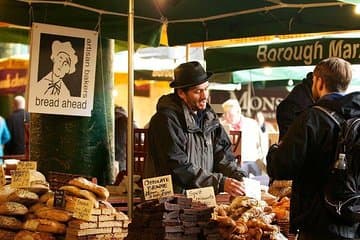
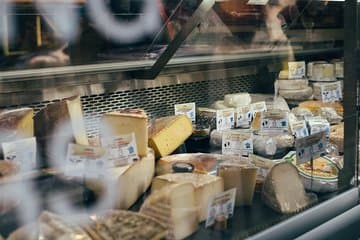
Borough Market is London's most famous food market and the natural first stop, with more than 100 traders gathered on a site where food has been sold for around a thousand years. Come hungry: you'll find British pies and cheeses, Spanish paella, Indian curries, fresh oysters, and bakeries worth queuing for. It is also the place to assemble a picnic of bread, cheese and pastries before walking the river.
- Open: Main market Wednesday to Saturday, with a lighter run of stalls Monday and Tuesday
- Where: Borough High Street, SE1 9DE — nearest station London Bridge
- Spend: Street-food plates around £8–£15 (about $10–$19); cheese and produce by weight
- Best for: Your first London market, picnic-builders, and anyone who wants range in one place
It is busiest from late morning on Fridays and Saturdays. If you'd rather browse at a calmer pace, arrive on a Wednesday or Thursday when traders are fully set up but the lunchtime crush has yet to build. You can see how Borough Market sits within the wider South Bank when you plan the rest of the day around it.
Maltby Street and the Bermondsey arches
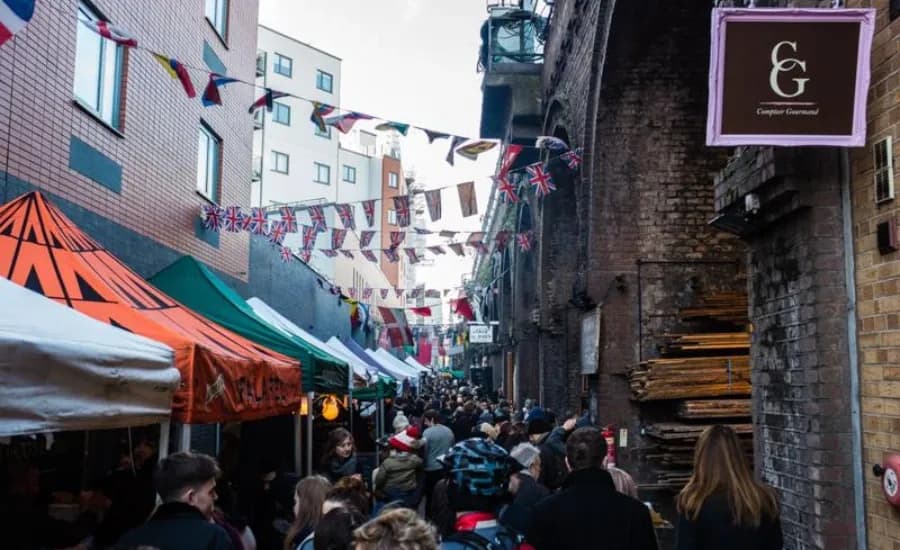
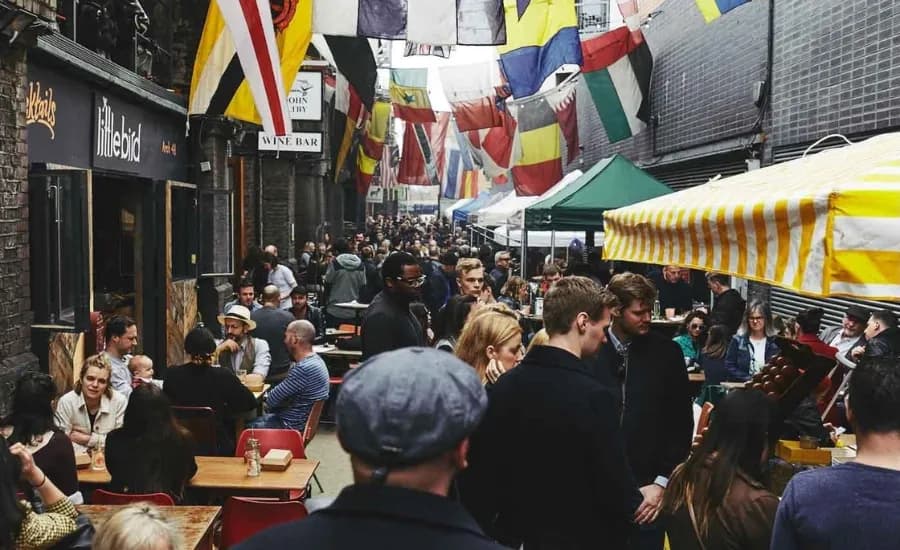
Maltby Street is the smarter choice if you want a market with local energy rather than a marquee crowd. Compact and weekend-only, it runs along the Ropewalk under the railway arches, a single narrow lane of independent traders that you can walk end to end in under ten minutes before doubling back to eat. It is the main challenger to Borough's crown, and for many returning visitors it has quietly become the better morning.
- Open: Saturday roughly 9am–4pm, Sunday roughly 11am–4pm
- Where: Ropewalk, Maltby Street, Bermondsey, SE1 3PA — nearest station London Bridge or Bermondsey
- Don't miss: Pick & Cheese and its rotating British-cheese conveyor; Duck Frites; charcoal-grilled steak from The Beefsteaks; oozing toasties
- Pair it with: The Bermondsey Beer Mile, a short stroll on from the arches
Because it sits away from the main tourist beat, the produce quality is comparable to Borough's but the queues are shorter and the mood more unhurried. Walk the strip first, decide where to commit, then settle in — the roster of traders rotates, so even a third visit turns up something new. Browse more on the Maltby Street Market page before you go.
Broadway, Old Spitalfields, Leadenhall and Mercato Metropolitano
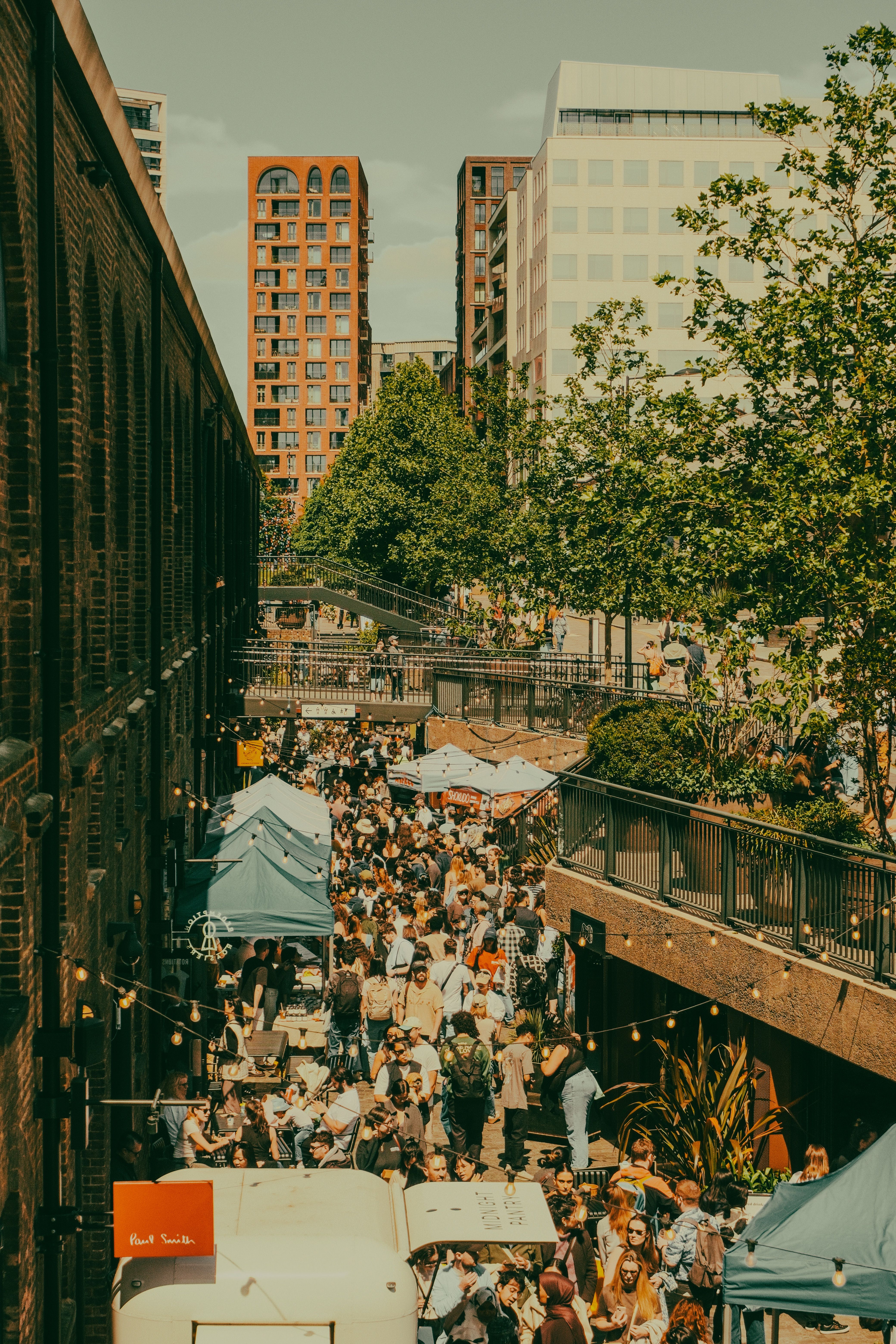
Beyond the Borough–Bermondsey pair, four more markets each justify a detour depending on where you're based and what you want. East London's Saturday institution, a seven-day covered hall, a Victorian arcade and an Italian-leaning food hall give you very different mornings — and together they show why London's market eating is among the best in the world.
- Broadway Market (Hackney, E8): A Victorian-era Saturday market, roughly 9am–5pm, with jerk chicken, gözleme and vegan bakes — grab food and picnic on nearby London Fields or the Regent's Canal towpath.
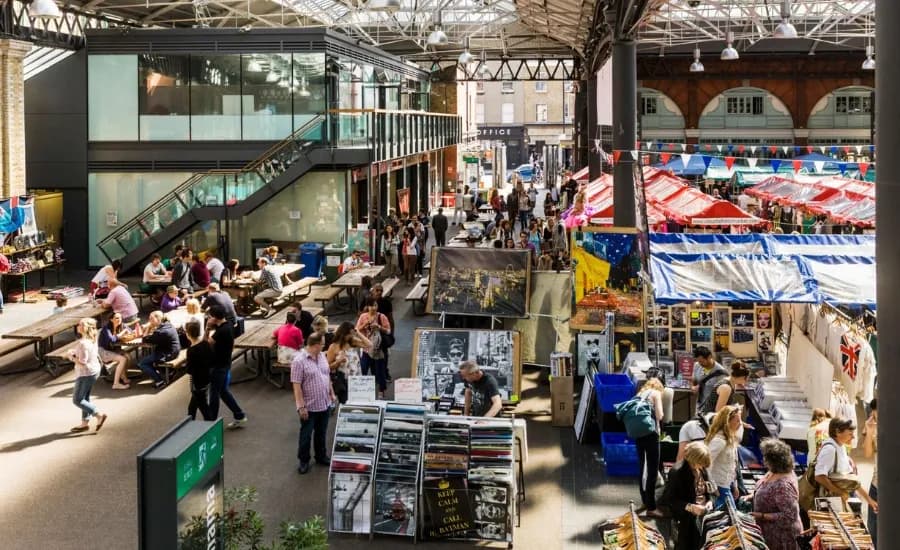
- Old Spitalfields Market (E1): Open seven days, a covered market near Brick Lane with Bleecker burgers, Sud Italia pizza and a deep run of street food — the most reliable option if your timing is awkward.
- Leadenhall Market (EC3): A covered Victorian arcade in the City, better for the architecture and a long lunch than for stalls — handsome and quiet at weekends.
- Mercato Metropolitano (Elephant & Castle): An indoor food hall built for lingering, with Italian leanings, wine and a sit-down feel rather than a grab-and-go one.
If you want to string several of these into one route, the hawkers and food markets collection groups them so you can see which cluster together by area and day. Match the market to your diary first — half of them are weekend-only — then build the neighbourhood around it.
| Market | Days & hours | Best for | Signature bites |
|---|---|---|---|
| Borough Market | Wed–Sat (lighter Mon–Tue) | Range in one place; picnics | Cheese, oysters, pies, paella |
| Maltby Street | Sat–Sun | Local feel; shorter queues | Pick & Cheese, Duck Frites, steak |
| Broadway Market | Sat | East London brunch; picnics | Jerk chicken, gözleme, vegan bakes |
| Old Spitalfields | Daily | Awkward timing; all-week visits | Bleecker burgers, Sud Italia pizza |
Eat by neighbourhood: Soho, Mayfair, Hackney, Shoreditch and Borough
London has no single food district — it has a dozen, each with a distinct register. The fastest way to choose where to eat is to match the neighbourhood to the meal you want, because Soho dinner and Mayfair dinner are different propositions even at the same price. These are the areas a returning visitor builds a day around when hunting down the better foodie places in London.
Soho and Chinatown — the all-hours centre
Soho is the city's densest eating quarter and the easiest to land in without a plan. Within a few streets you'll find late-night canteens, long-running trattorias, small-plates rooms and the noodle shops and bakeries of neighbouring Chinatown. It rewards walking: book one anchor table, then graze the rest on instinct.
Mayfair and St James's — the polished end
Mayfair is where London does occasion dining and grand-hotel rooms, from heritage British kitchens to chef-led tables that draw an international crowd. This is the neighbourhood for a celebration meal or a long lunch with a wine list to match — and the one where booking ahead matters most.
Hackney, Shoreditch and the East
East London is where the newer kitchens open and the market eating clusters. Hackney and Shoreditch carry much of the city's current energy — neighbourhood Italians, modern British rooms, wine bars and the markets at Broadway and Spitalfields all within a walkable spread. If you want what's opening now rather than what's already famous, start here.
If you have one evening — or one weekend
- One evening: Base in Soho. Book one table, walk the rest, finish with late noodles or a bar in Chinatown.
- One special meal: Go to Mayfair or St James's and reserve well ahead — this is the occasion-dining quarter.
- A full weekend: Pair a Saturday market morning (Maltby Street or Broadway) with an East London dinner, and save Sunday for a grand-hotel afternoon tea.


Afternoon tea: the grand London ritual, and which room to choose
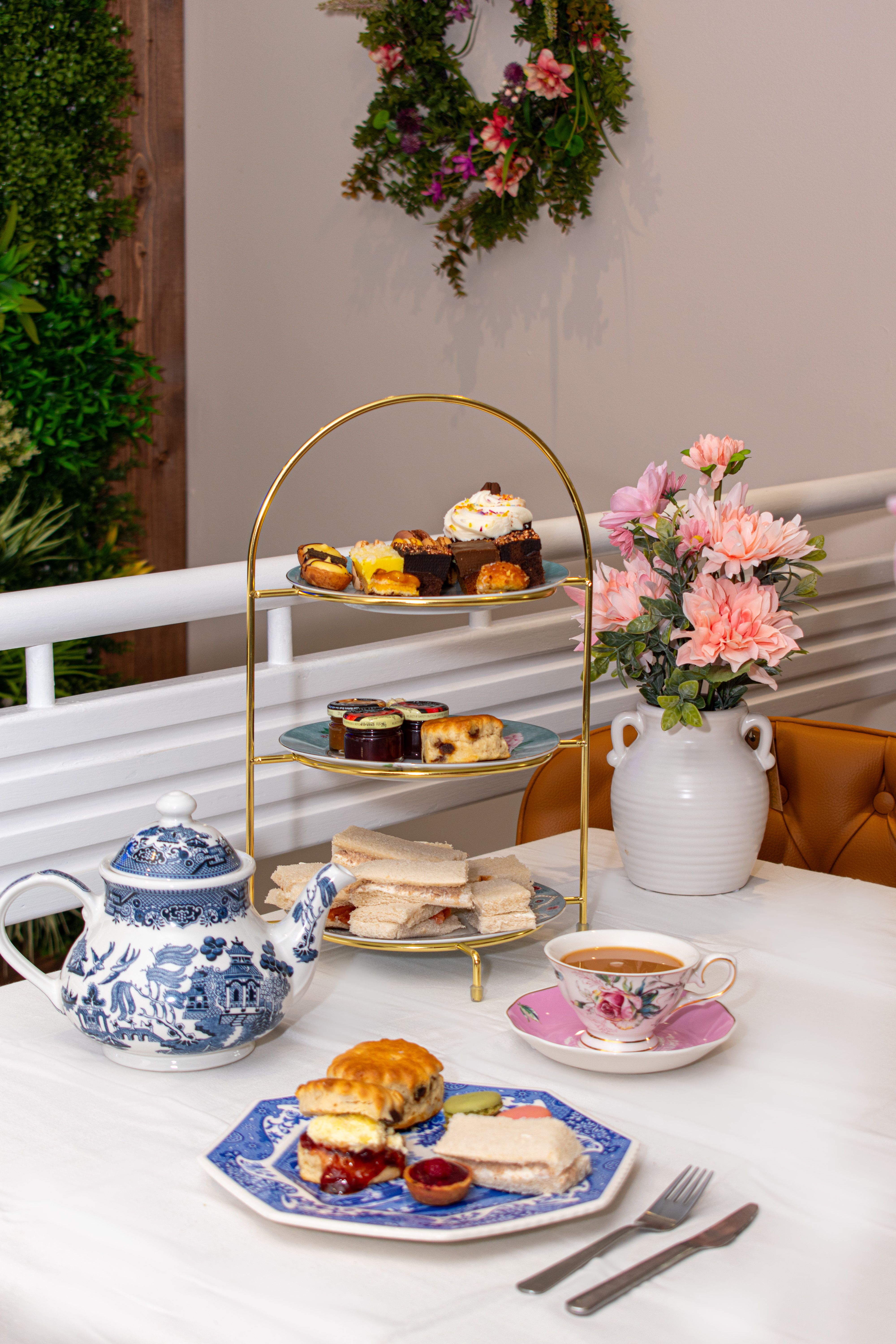
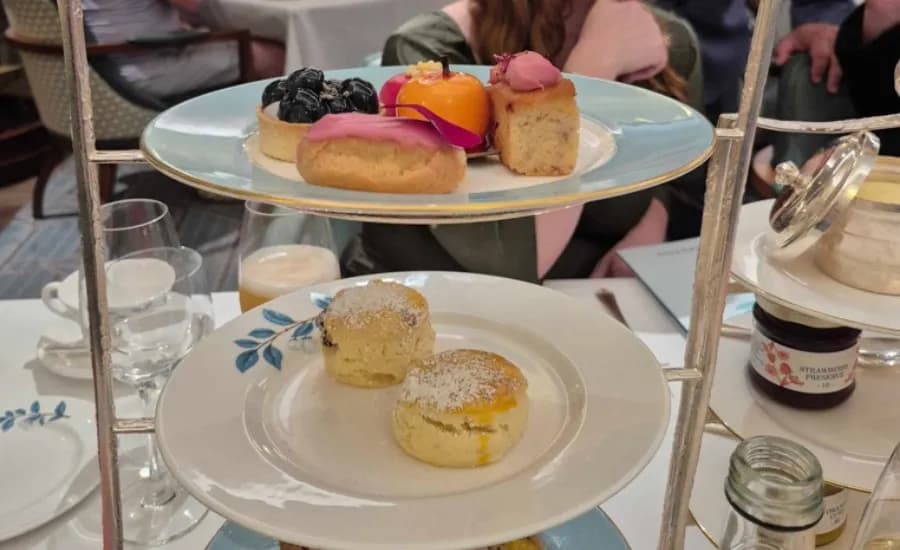
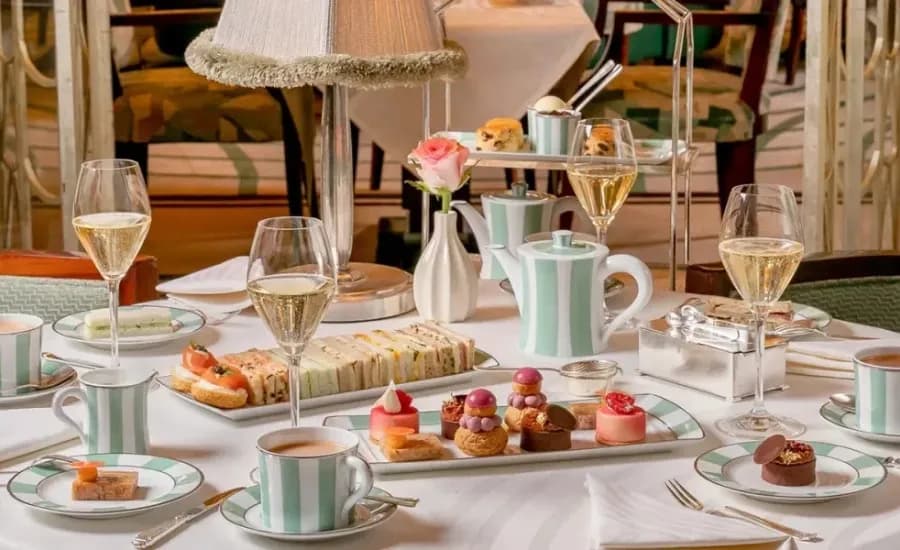
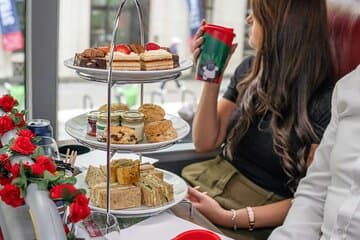
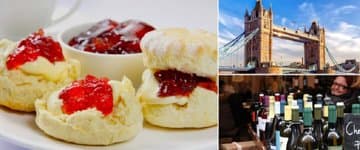
Afternoon tea is the one London food experience worth dressing for, and the room matters as much as the menu. The classic versions sit in grand-hotel salons and run roughly £72–£95 per person (about $91–$121), usually with a Champagne upgrade. The food — finger sandwiches, warm scones with clotted cream, a tier of pastries — varies less than the setting and the service, so choose by the atmosphere you want as much as the menu.
Here is how the marquee names compare, with 2026 starting prices (confirm directly before booking, as these move):
- The Ritz (Palm Court): from around £72–£76 (about $91–$97); the most theatrical room, with a dress code and a tea master — book weeks ahead
- Fortnum & Mason (Diamond Jubilee Tea Salon): from around £82–£84 (about $104–$107); the strongest tea selection, ideal to pair with Piccadilly shopping
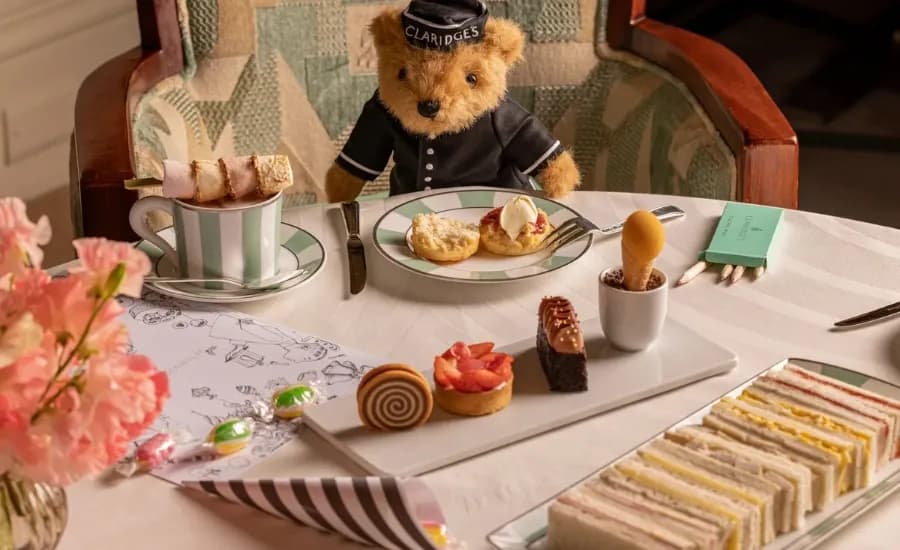
- Claridge's: from around £95 (about $121); the most refined and consistent service, art deco setting, a true occasion
- The Savoy (Thames Foyer): from around £90 (about $114); a piano-led room with river-side glamour
- Sketch: from around £90 (about $114); the design-led, playful alternative for those who want something less traditional
Choose the Ritz if you want the most photographed, ceremonial version and don't mind the dress code. Choose Fortnum & Mason if tea quality and a Piccadilly shopping afternoon are the point. Choose Claridge's if faultless service and art deco calm matter more than spectacle. Whichever you pick, reserve well ahead — the best rooms book out, and afternoon tea is among the most reliably sold-out of all foodie places in London. The afternoon tea at Fortnum & Mason is a sensible first booking if you want tradition done well.
| Venue | From (per person) | The room | Best for |
|---|---|---|---|
| The Ritz | £72–£76 ($91–$97) | Palm Court, dress code | The ceremonial classic |
| Fortnum & Mason | £82–£84 ($104–$107) | Diamond Jubilee Salon | Tea quality and shopping |
| Claridge's | £95 ($121) | Art deco, formal service | A true occasion |
| Sketch | £90 ($114) | Design-led, playful | The modern alternative |
Fine dining and the Michelin scene
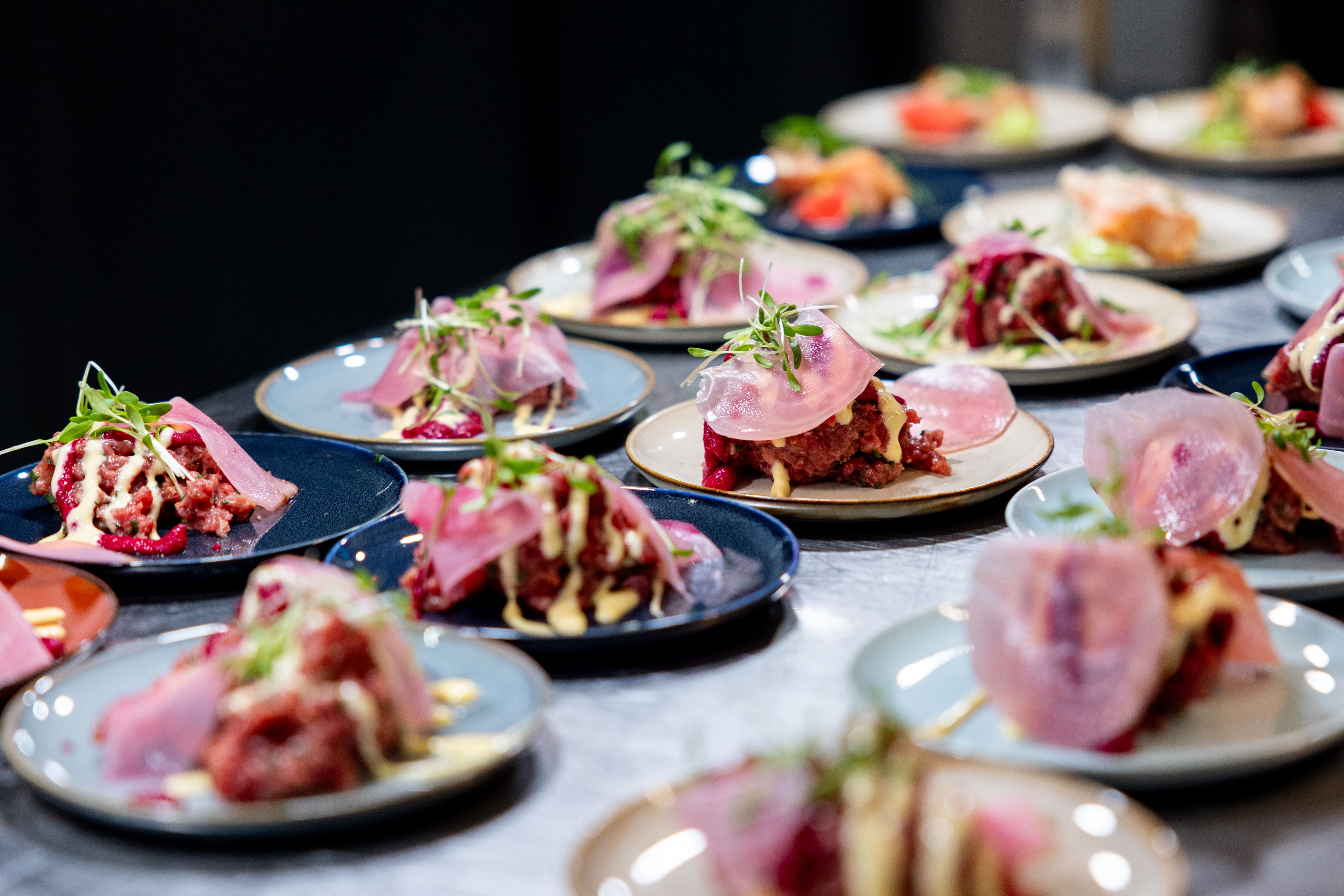
London is one of Europe's strongest fine-dining cities, with 88 Michelin-starred restaurants in 2026 — second only to Paris on the continent. The range runs from three-star tasting rooms in Mayfair to bistros and village pubs that hold a single star, so a starred meal here doesn't have to mean a four-figure evening. The Michelin Guide's Bib Gourmand award flags kitchens that deliver quality without the tasting-menu spend, which is the smarter target if you want the cooking more than the ceremony.
For a sense of how to choose:
- Tasting menus: Roughly £100–£300-plus per person (about $127–$380-plus) at the marquee rooms, often with a wine pairing on top — book weeks ahead
- Single-star and Bib Gourmand: The value end of the scene, where set lunches in particular can be the best-value serious meal in the city
- Experiential dining: Chef's-table formats, themed rooms and dining with a view, for when the setting is part of the booking
If you want occasion dining without scanning a dozen lists, the London dining collection gathers the standout rooms in one place. A practical tip for returning visitors: the lunch sitting at a starred restaurant is often half the price of dinner for much the same kitchen, which makes the most ambitious cooking in London far more accessible if you plan the timing.
Food tours and how to plan your eating
A guided food tour is the most efficient way to taste a neighbourhood you don't know, and the easiest way to eat well on your first day before you've found your feet. A good tour pairs four or five tastings with the context — who makes what, which stalls are worth returning to, how a market actually works — so you leave knowing where to come back without a guide. It is especially worth it for market-dense areas like Borough, Bermondsey and the East End.
To plan the eating side of a London trip without overthinking it:
- Book the fixed points first: Afternoon tea and any starred dinner are the things that sell out — lock those in before the trip
- Leave markets loose: Keep market mornings unbooked and weather-flexible, since most are weekend-only
- Use a tour to orient: A guided tasting tour early in the trip pays off across the days that follow
- Match area to meal: Soho for spontaneity, Mayfair for occasion, the East for what's new
The guided food tours and the wider food and drink experiences on Travjoy are researched and approved by local experts, so you can book the market walks and tasting tables knowing they've already been vetted — useful when your time in the city is limited and you'd rather not gamble a meal on a guess.
Plan your eating in London
The best foodie places in London aren't a single ranked list — they're a set of choices you make by appetite and time. Spend an unhurried morning at Borough or Maltby Street, let the neighbourhood decide your dinner, and save a grand-hotel afternoon tea or a starred lunch for the day you want to slow down and make an occasion of it. Book the teas and the marquee tables ahead, keep the markets flexible, and the city will feed you better than any one list can promise. Start planning your food-led trip to London on Travjoy.


.svg&w=1920&q=75)