



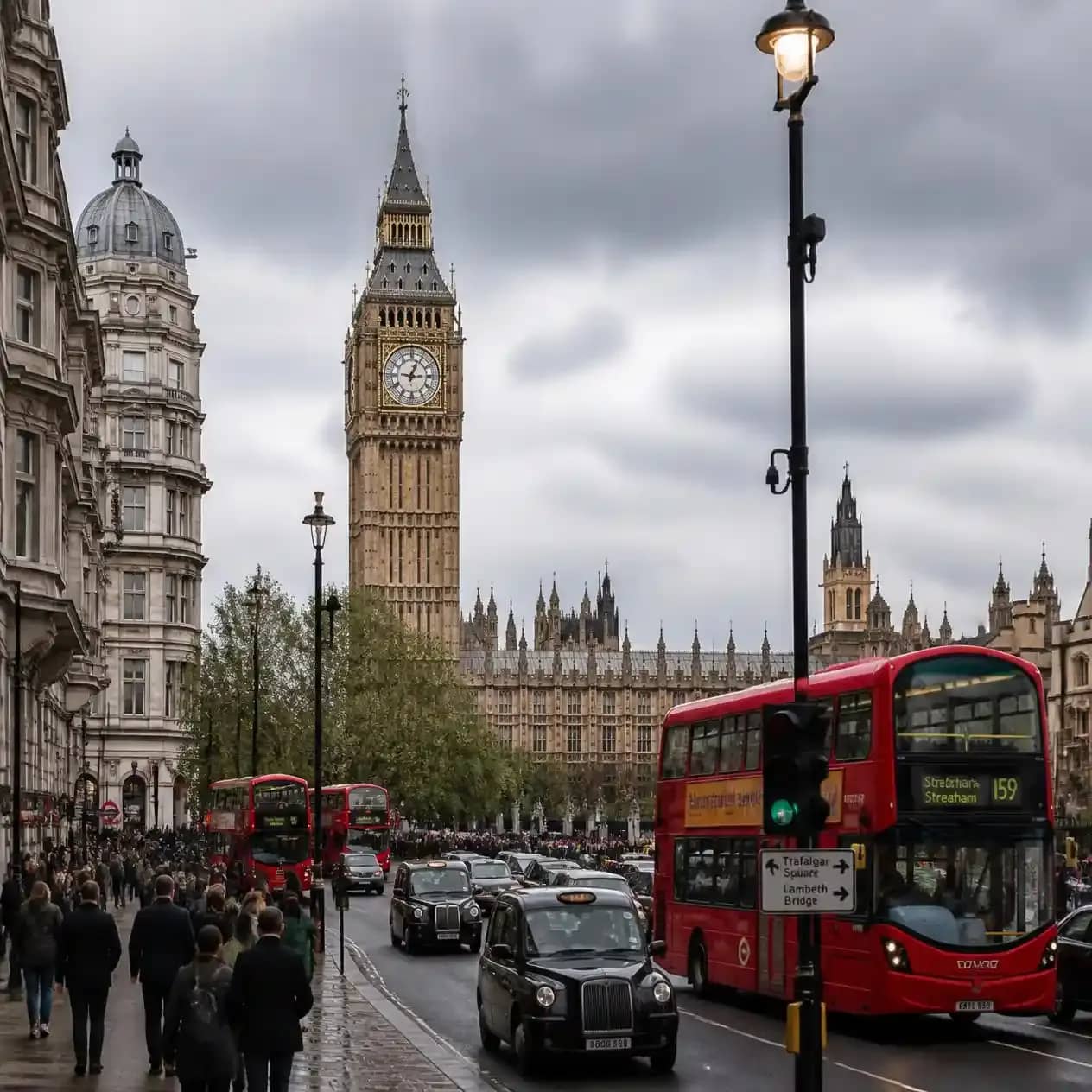
London Entry Requirements in 2026: The Complete Visa, ETA and Arrivals Guide for Discerning Travellers
8 min read
Key Highlights
- The UK Electronic Travel Authorisation (ETA) has been mandatory since 25 February 2026 for around 85 visa-free nationalities — including the US, Canada, Australia, the EU, Switzerland, Japan and the Gulf states.
- The ETA costs £20, covers multiple visits of up to six months each, and stays valid for two years or until your passport expires — whichever comes first.
- British and Irish passport holders need neither an ETA nor a visa; nationalities not on the visa-free list apply for a Standard Visitor Visa instead.
- Every traveller needs their own authorisation — babies and children included. There is no family application and no age exemption.
- Your passport must be valid for your whole stay, and UK customs set firm limits on the alcohol, tobacco, goods and cash you can carry in.
Most visitors now need to settle their London entry requirements before they fly. If you hold a passport from one of roughly 85 visa-free countries — the US, Canada, Australia, the EU, Japan, the Gulf states and others — you need a UK ETA, an online authorisation costing £20 that has been mandatory since 25 February 2026. Nationalities that are not visa-free apply for a Standard Visitor Visa instead, while British and Irish citizens need neither. These are UK-wide rules, and they apply the moment you land at any London airport.
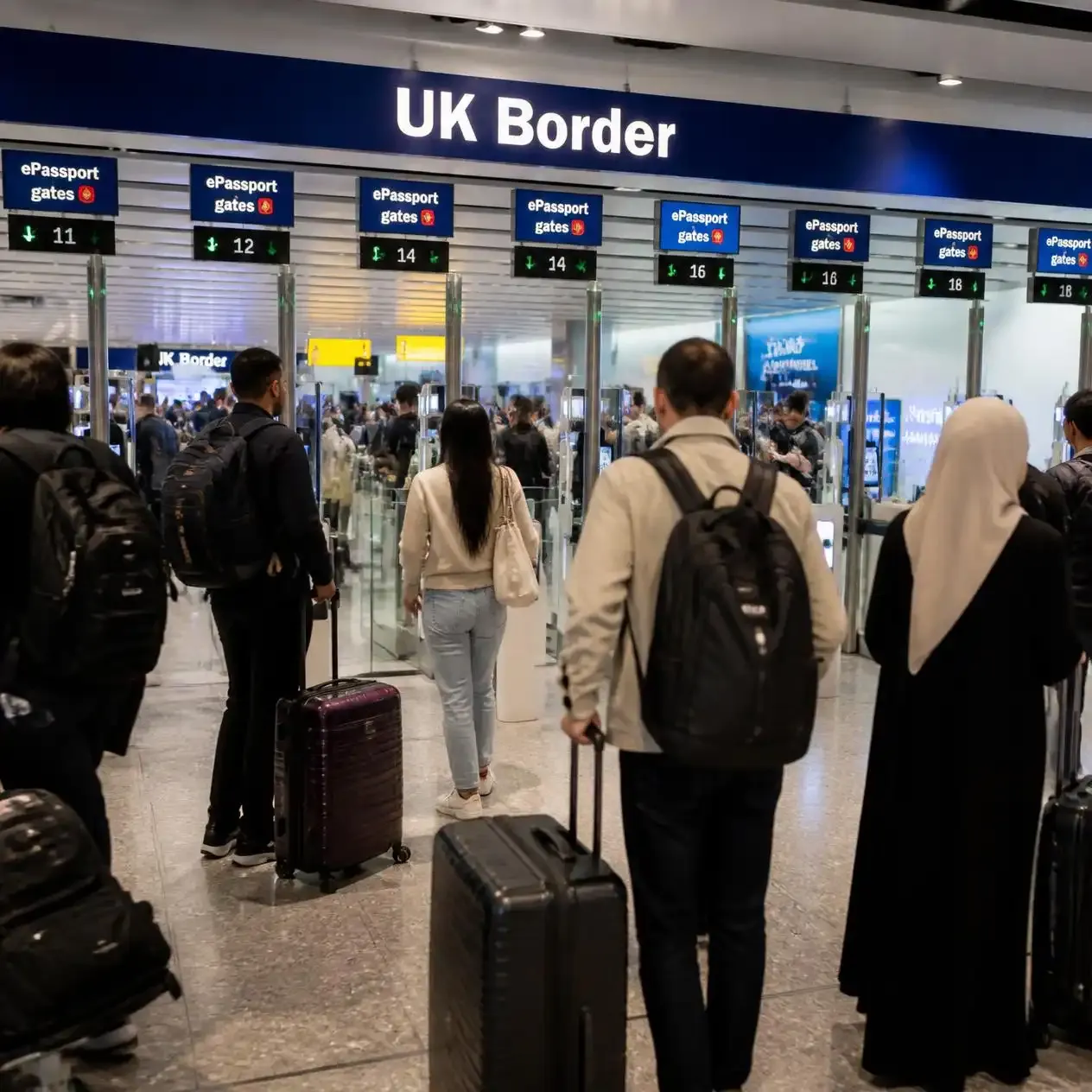
For decades, a trip to London meant turning up at the border with a passport and a smile. That has changed. The most consequential part of your London entry requirements now happens before you reach the airport, and if you skip it your airline will not let you board.
The shift is the UK Electronic Travel Authorisation, or ETA: a short online form and a £20 fee that most visa-free travellers must complete in advance. It sits alongside the rules that have always mattered — passport validity, what you may carry through customs, and the separate visa route for nationalities that need one.
This guide pulls the whole arrival picture into one place, with the current 2026 figures. You will find out whether you need an ETA, a visa, or nothing at all; how to apply and how long it takes; what an officer checks at the border; and exactly what you can bring into the country. Sort these early, and London becomes the easy, absorbing city it should be from the moment you land.
Do You Need a Visa, an ETA, or Nothing? London Entry Requirements at a Glance
Your London entry requirements come down to one question: which passport do you hold? British and Irish citizens travel freely. Around 85 visa-free nationalities now need a UK ETA. Everyone else applies for a visa before travelling. Because London is the UK's main gateway, these national rules are what you meet at Heathrow, Gatwick, Stansted, Luton, City and Southend alike.
The three groups, and where you fit
You need nothing extra if you are a British or Irish citizen, including dual British-Irish nationals, or if you already hold a valid UK visa or immigration status. You travel on the permission you already have and pass through control without an ETA.
You need a UK ETA if your passport is on the visa-free list of roughly 85 countries and territories. That includes the United States, Canada, Australia, New Zealand, all 27 EU member states, the wider EEA (Norway, Iceland and Liechtenstein), Switzerland, Japan, South Korea, Singapore and the Gulf states such as the UAE, Saudi Arabia and Qatar. European nationals have needed an ETA since 2 April 2025; full enforcement across every eligible nationality arrived on 25 February 2026.
You need a visa if your passport is not on the visa-free list. In that case the ETA is not an option — you apply for a Standard Visitor Visa before you travel. If you are unsure which group you fall into, check your nationality against the official UK list before booking non-refundable flights.
| Your passport | What you need | Cost (2026) | Maximum stay per visit |
|---|---|---|---|
| British or Irish citizen | Nothing — no ETA, no visa | Free | No limit as a citizen |
| Visa-free national (US, EU, Australia, Gulf, etc.) | UK ETA | £20 (approx. USD 26) | 6 months |
| Visa national (not on the visa-free list) | Standard Visitor Visa | £135 for six months (approx. USD 172) | Usually 6 months |
| Holder of an existing UK visa or status | Neither — travel on your current permission | Already paid | As set by your visa |
One point catches people out: your requirement follows your passport, not your residence. A US citizen living in Dubai still needs a UK ETA, not a Gulf-based exemption; an Australian resident in France still travels on Australia's visa-free rules. Work from the passport in your hand.
The UK ETA in 2026 — What It Is, Cost, and How to Apply
A UK ETA is a digital permission to travel linked to your passport, not a visa and not a tax. It authorises you to board a flight, ferry or train to the UK; the final decision to admit you still rests with a Border Force officer on arrival. Applying is quick, and for most travellers the answer comes back within minutes.
What the ETA covers, and what it costs
- Fee: £20 per person, paid once (it rose from £16 on 8 April 2026).
- Validity: two years, or until your passport expires — whichever is sooner.
- Visits: unlimited entries during that window, each stay up to six months, for tourism, visiting family, business meetings or short study.
- Who applies: every traveller individually, including infants. There is no family or group application.
Because the authorisation lasts two years and covers repeat trips, a frequent visitor is really paying around £10 a year for streamlined entry — modest set against the rest of a London itinerary. When you consider that the London entry requirements once meant queueing at a desk to be assessed on the spot, sorting a two-minute form at home is the easier trade.
How to apply, and the timing that matters
You apply through the official UK ETA app or on the government website, using the passport you intend to travel on. You will need a photo of that passport, a digital photo of your face, and a payment card. Most decisions land within minutes, but allow up to three working days in case yours needs a closer look.
Two timing rules are worth respecting. First, the rule is now "no ETA, no travel" — you can no longer set off with an application still pending, so apply before you book non-refundable flights, not the night before you fly. Second, the ETA is tied to the specific passport you applied with; if you renew that passport, you apply again. Dual nationals should travel on the same passport they used for the ETA.

ETA at a glance
- Cost: £20 per person, valid two years or until your passport expires.
- Apply via the official UK ETA app; most approvals arrive in minutes, but allow three working days.
- It permits travel but does not guarantee entry — an officer still decides at the border.
- Transit note: if you pass through UK passport control between flights you generally need one; airside transit through Heathrow or Manchester without clearing control currently does not.
When You Need a Standard Visitor Visa Instead
If your nationality is not on the visa-free list, you cannot use an ETA — you apply for a Standard Visitor Visa before you travel. It covers the same visitor purposes as the ETA route (tourism, family visits, business activity and short study) and, like the ETA, allows a stay of up to six months per visit.
Cost, timing and documents
- Fee: £135 for the six-month visa from 8 April 2026 (up from £127). Long-term multiple-entry versions cost more — £506 for two years, £903 for five and £1,128 for ten — though each individual stay is still capped at six months.
- When to apply: you can apply up to three months before you travel. Standard processing is about three weeks after you give your biometrics, so leave a comfortable margin.
- What you provide: an online application, biometrics (fingerprints and a photo) at a visa application centre, a passport valid for the length of your stay, and evidence you can support your trip.
- Health surcharge: visitors do not pay the Immigration Health Surcharge, but you are responsible for any NHS treatment you receive, so travel insurance is sensible.
If an ETA application is refused, there is no appeal — the route forward is to apply for a visa instead. For anyone in that position, the earlier you start, the more room you leave for biometrics appointments and processing before your departure date.












Your Passport, Your Documents, and the Border
Whichever route applies to you, your passport sits at the heart of the London entry requirements, and it must be valid for your entire stay. There is no separate six-month buffer rule for most visa-free visitors — the requirement is simply that the passport remains in date for as long as you are in the country. Visa nationals should hold a passport valid for at least six months, as their application will expect it.
Getting through control
Most visitors clear the border quickly. Eligible travellers from a long list of countries can use the eGates — the automated lanes that read your passport and photograph you — which keeps the arrivals hall moving. An officer or an eGate is still making a decision, so carry the basics that back up your visit: a return or onward ticket, your accommodation details, and enough to show you can support yourself. You will rarely be asked for them, but having them to hand turns a potential delay into a formality.
The Common Travel Area and Ireland
- There are no routine immigration controls on journeys within the Common Travel Area — the UK, Ireland, the Isle of Man and the Channel Islands.
- Legal residents of Ireland from a non-visa nationality can travel into the UK from within the area without a separate ETA, provided they can show proof of residence.
- Everyone still needs to meet the UK's rules on entry, so if you are flying in from outside the area, the ETA or visa question applies as normal.
What You Can (and Can't) Bring Into the UK
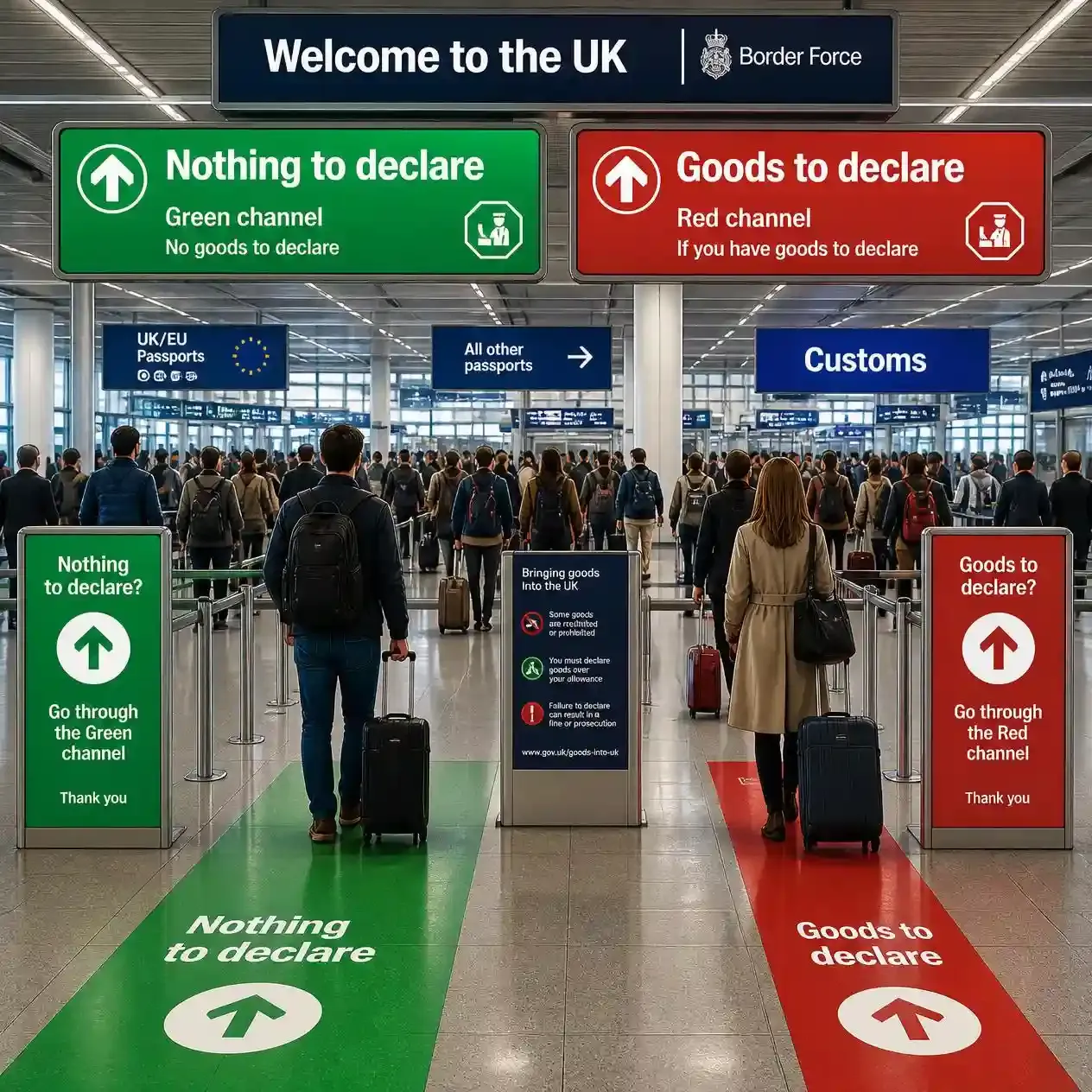
Once your paperwork is in order, customs is the second layer of the London entry requirements, and it is where confident travellers still slip up. Arriving into Great Britain, you have a personal allowance for alcohol, tobacco and goods; go over it, or carry something restricted, and you need to declare it. The rules are firm but easy to stay inside once you know the numbers.
Your duty-free allowances
For adults aged 17 and over arriving into Great Britain (England, Scotland and Wales), the personal allowances are generous by international standards:
- Alcohol: 42 litres of beer and 18 litres of still wine, plus either 4 litres of spirits or 9 litres of sparkling or fortified wine (you can split that last category — for example 2 litres of spirits and 4.5 litres of port).
- Tobacco: one category only — 200 cigarettes, or 100 cigarillos, or 50 cigars, or 250g of tobacco, or 200 sticks of heated tobacco. You can mix within the limit (say 100 cigarettes and 25 cigars), but not stack two full categories.
- Other goods: up to £390 worth of anything else — gifts, electronics, perfume, souvenirs — if you arrive by commercial flight, ferry or train. That drops to £270 if you arrive by private plane or boat.
The trap is the "all or nothing" rule. If you go over an allowance, you pay tax and duty on the full value of that category, not just the amount above the line — so a watch bought abroad at £450 is taxed on the whole £450, not the £60 over. Import VAT is charged at the standard 20%, and duty-free airport purchases count towards these limits too.
Declaring, and what is prohibited
At the border you choose a channel, and that choice is a legal declaration. The green channel means you have nothing to declare — you are within every allowance, carrying nothing restricted, and have less than £10,000 in cash. The red channel (or the red-point phone at smaller airports) is where you declare anything over the limits. The red channel is not a penalty; walking through green with undeclared goods is the serious mistake, and Border Force run checks on the green lane.
- Cash: £10,000 or more (or the equivalent) must be declared when you enter or leave Great Britain.
- Never pack: pepper spray and mace are treated as firearms under UK law — carrying them is a criminal offence, even in checked luggage. Flick knives, knuckledusters and similar offensive weapons are also banned.
- Also prohibited or restricted: controlled drugs, counterfeit goods, indecent material, and endangered-species products.
- Food: meat and dairy from outside the EU are not allowed, and since April 2025 most meat and dairy from EU countries are restricted too, following disease-control measures. Leave the cheese and cured meats behind.
Northern Ireland follows a different customs framework, so if your trip continues there, check those rules separately.
Arriving Smoothly in London — A Calm First Few Hours
Handled in advance, the London entry requirements turn into a short sequence rather than a source of anxiety: ETA or visa approved, passport in date, allowances respected. That is the whole point of doing the admin early — it buys you a calm arrival, which after a long-haul flight is worth more than any saving.
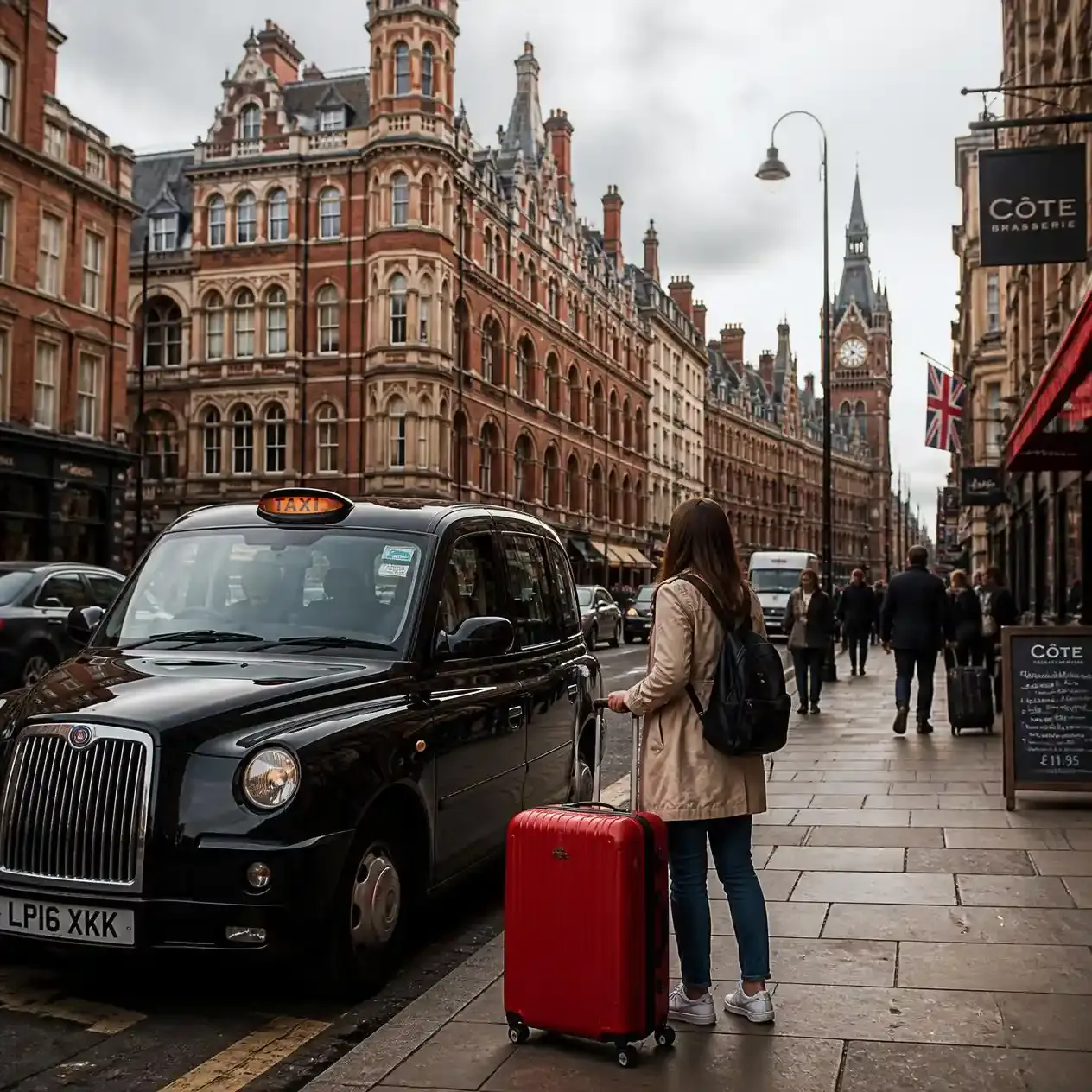
Picture the sequence. Your ETA is already linked to your passport, so at the eGate you simply look at the camera and walk through. Nothing to declare means the green channel and straight out to arrivals. From there, a pre-booked car takes the last decision off your plate at the tail end of a long journey. Travjoy's private airport transfers and car hire are researched and approved by local experts, with the fare fixed before you land — useful when you would rather step off the plane and straight into a waiting car than work out ticket machines with your bags.
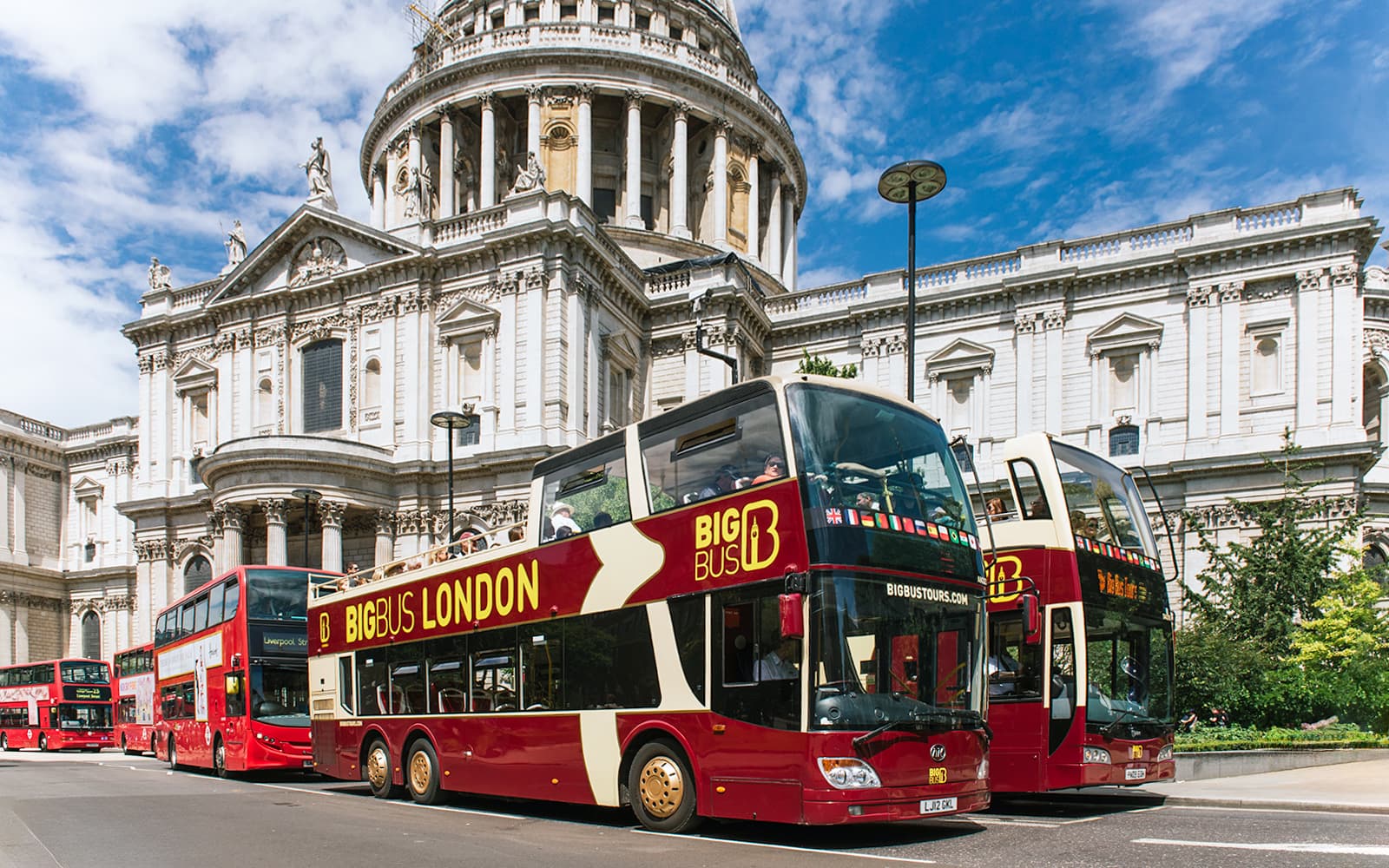
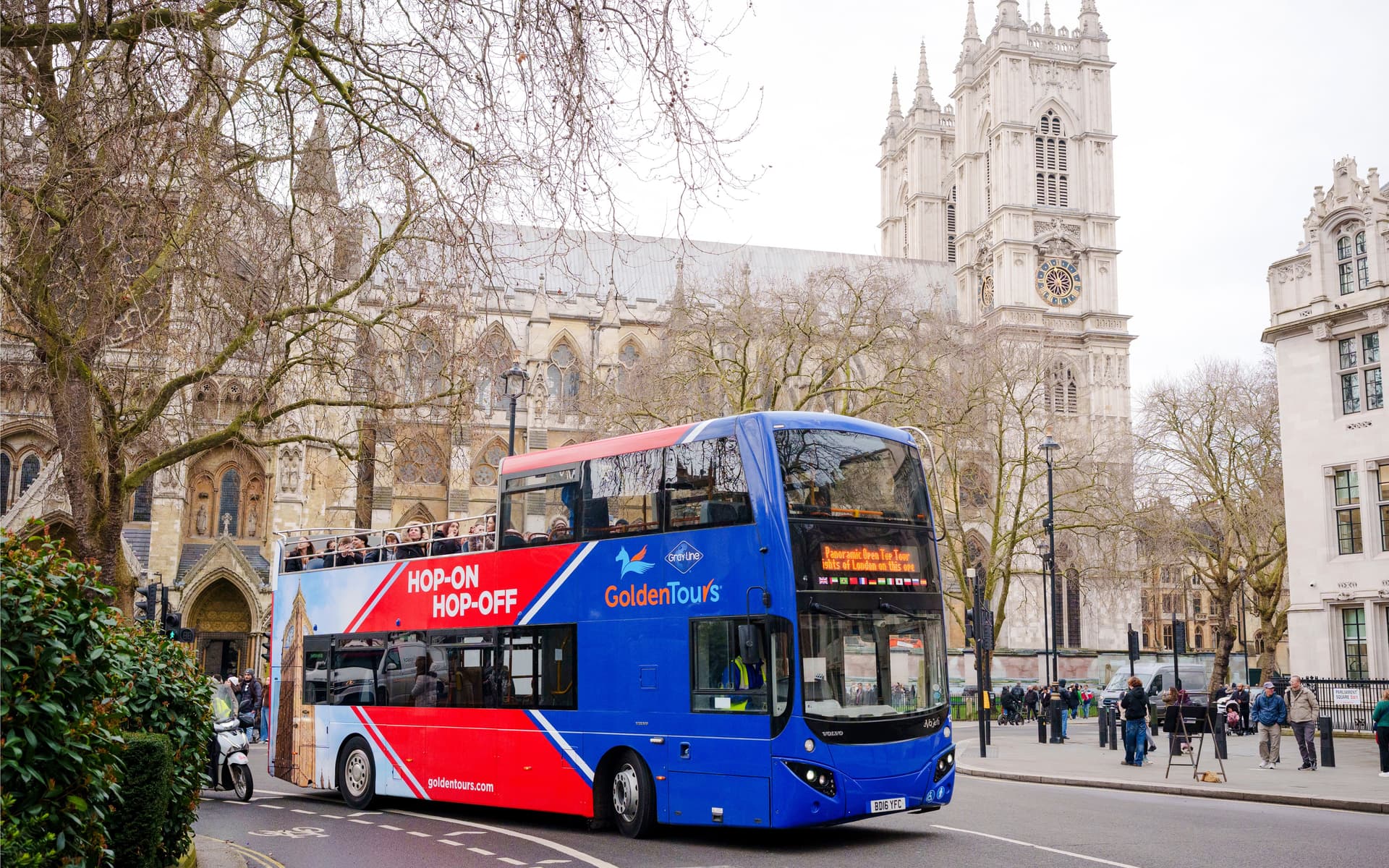
With the border behind you, the city opens up fast. Many visitors point their first afternoon at the landmarks that drew them here — the Tower of London for a thousand years of history in one walled site, or a loop on a hop-on hop-off tour to get your bearings before you commit to a plan. The paperwork is the dull part; it is also the part that, done right, you never think about again.
Plan Your London Trip With the Admin Behind You
The 2026 London entry requirements reward planning ahead. Confirm which group your passport puts you in, apply for your ETA or Standard Visitor Visa well before you book, and check your passport is valid for the whole stay. Note the £20 ETA fee (or £135 for a six-month visa), remember that every traveller needs their own, and keep your customs allowances in mind on the way in. Get those four things right and the border becomes a formality.
With entry sorted, the rest is the fun part — deciding what to see first. Browse experiences across the city on Travjoy's London page, or start with our top 20 London picks to build your first few days around the highlights worth booking ahead. Start planning your London trip on Travjoy, and let the city, not the paperwork, be the thing you remember.






.svg&w=1920&q=75)