




How to Get Around Singapore: MRT, Bus & Taxi Guide for Tourists
17 min read
- The MRT covers most major tourist attractions — it's the fastest and cheapest option for daytime travel across Singapore
- Buy an EZ-Link card on arrival; the Singapore Tourist Pass is only worth it if you're taking 5 or more rides a day
- Contactless Visa or Mastercard works at MRT gates and on buses — no local card needed if your bank supports it
- Grab is cheaper than street taxis in most scenarios — always compare before you flag one down
- Eating, drinking, and carrying durian are banned on all MRT trains and buses; fines can reach SGD 500 (~USD 370)
How to get around Singapore is simpler than it looks from the outside. The MRT covers the city's main tourist corridor efficiently, buses fill the gaps, and Grab handles everything else. For most trips, you'll spend between SGD 1 and SGD 3 (~USD 0.74–USD 2.22) per ride. This guide breaks down every option — with fares, operating hours, and specific advice for different types of trips — so you can move around the city without guesswork.
Singapore's Transport System at a Glance
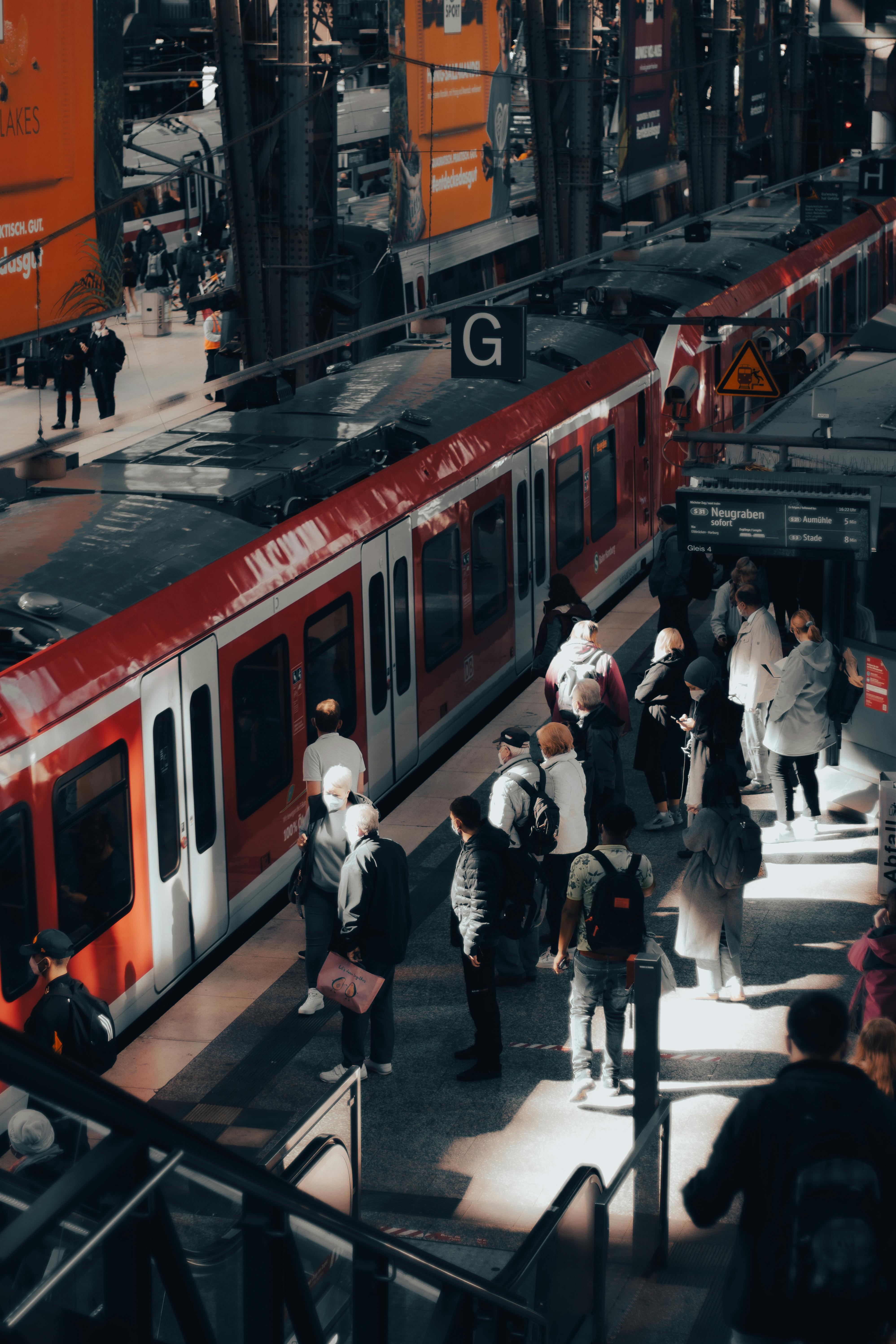
Singapore is compact — roughly 50 kilometres across at its widest point — and its transport network is built to match. The Land Transport Authority (LTA) runs an integrated system of MRT trains, public buses, and licensed taxis that covers every corner of the island. Ride-hailing apps layer on top of that. For most tourists, the answer to "how do I get there?" is almost always the MRT, a bus, or Grab.
Before diving into each mode, here's a quick reference to help you decide at a glance.
| Mode | Typical Cost (SGD) | Typical Cost (USD) | Best For | Limitations |
|---|---|---|---|---|
| MRT | SGD 0.92–2.20 | ~USD 0.68–1.63 | City-wide travel, daytime sightseeing | Doesn't cover all neighbourhoods; closes at midnight |
| Public Bus | SGD 1.00–2.20 | ~USD 0.74–1.63 | Local neighbourhoods, MRT gap routes | Slower in traffic; route research needed |
| Grab / Gojek | SGD 8–25+ | ~USD 5.93–18.55 | Late nights, luggage, groups, outer areas | Surge pricing during rain and peak hours |
| Street Taxi | SGD 10–35+ | ~USD 7.41–25.95 | Convenience, airport runs | Surcharges add up; app-booking usually cheaper |
| Sentosa Express | SGD 4 | ~USD 2.97 | Access to Sentosa from VivoCity | Only connects VivoCity to Sentosa |
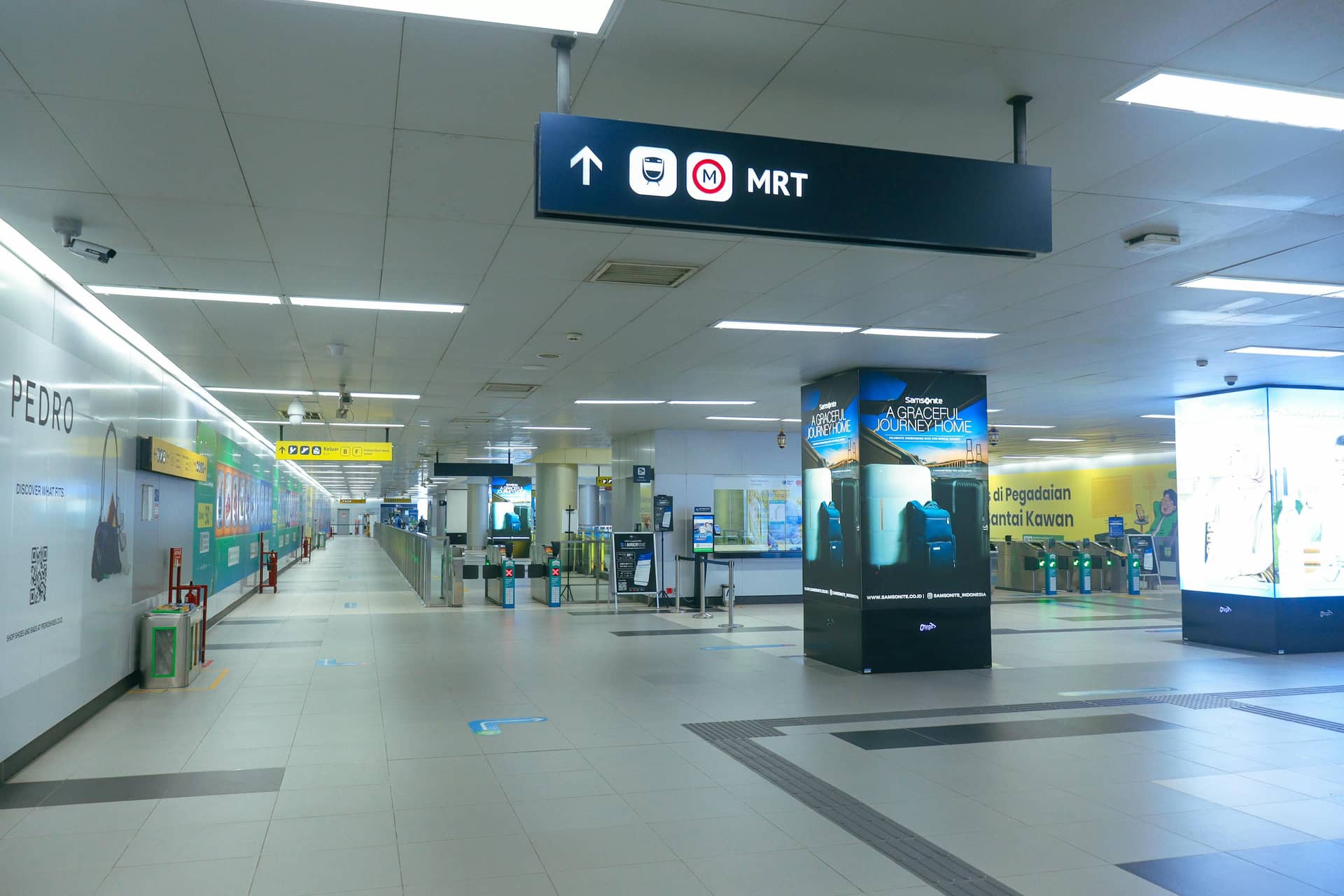
Singapore MRT Guide for Tourists
The Singapore MRT is the backbone of tourist transport on the island. It's air-conditioned, fast, and runs trains every two to three minutes during peak hours. Most of the city's major sightseeing zones — Marina Bay, Orchard Road, Chinatown, Little India, Kampong Glam — sit within a short walk of a station. If you're only doing standard tourist routes, you can cover the city almost entirely by train.
The six MRT lines and what they connect
Singapore currently has six main MRT lines, each colour-coded and numbered for easy identification. You don't need to memorise all of them — just know the three or four most relevant to your itinerary.
- North South Line (Red): Orchard Road, Somerset, Dhoby Ghaut, City Hall, Raffles Place, Marina Bay — the core tourist spine
- East West Line (Green): Changi Airport, Bugis, City Hall, Raffles Place, Tanjong Pagar, HarbourFront — your airport connection and waterfront access
- Circle Line (Yellow): Esplanade, Promenade, Bayfront (Gardens by the Bay / Marina Bay Sands), HarbourFront — key for bay-area attractions
- Downtown Line (Blue): Little India, Bugis, Chinatown, Telok Ayer, Bayfront — cuts across the civic and heritage districts
- North East Line (Purple): Little India, Clarke Quay, Chinatown, HarbourFront — useful for riverside and heritage routes
- Thomson-East Coast Line (Brown/Green TEL): Woodlands, Stevens, Orchard, Gardens by the Bay, Marine Parade — expanding coverage of the east and north
For Gardens by the Bay, alight at Bayfront on the Circle or Downtown Line. For Marina Bay Sands, same stop. The station exit you choose matters — Bayfront has four exits, and the wrong one adds a 10-minute walk in the heat.
How to read the MRT map and find the right exit
Every station is assigned a two-letter line code and a number (for example, NS22 for Orchard on the North South Line). When a station sits on two or more lines, it carries multiple codes. Interchange stations — where you transfer between lines — are the most important ones to know: City Hall, Raffles Place, Dhoby Ghaut, Outram Park, Bugis, and HarbourFront all handle high volumes of tourist transfers.
Inside each station, follow the exit signs labelled A, B, C, D and so on. Google Maps will tell you the exact exit for your destination — use it. Exiting at the wrong gate at a large interchange like Dhoby Ghaut or Bugis can mean a five-minute outdoor walk in humidity that feels much longer.
MRT fares, operating hours, and when to travel
- Fare range: SGD 0.92–2.20 (~USD 0.68–1.63) per trip with an EZ-Link card or contactless payment
- Airport fare (Changi to City Hall): approximately SGD 2.20 (~USD 1.63)
- Off-peak discount: travel before 7:45 AM Monday to Friday (excluding public holidays) and you receive a small fare discount — typically SGD 0.10–0.30 off
- Operating hours: approximately 5:30 AM to midnight daily; exact last-train times vary by station and direction
- Peak hours to avoid: 7:30–9:30 AM and 5:30–8:00 PM — trains are packed and standing room only on the core lines
Areas the MRT doesn't reach — and what to do
The MRT has gaps. Dempsey Hill, East Coast Park, and parts of Katong sit outside the MRT network, as do several outer nature reserves. For these areas, bus is the standard solution. Grab or a taxi is the faster alternative if you'd rather not deal with connections. The LRT (Light Rail Transit) serves residential townships like Bukit Panjang, Sengkang, and Punggol — useful if your accommodation is in those areas, but most tourists won't need it.
MRT Quick Tips for Tourists
- Always tap out — if you forget, you're charged the maximum fare for that line
- Stand on the left side of escalators; walk on the right
- Let passengers exit the train before you board — queuing markers on the platform floor show where to wait
- No food, drink, or durian anywhere in the station or on the train — fines start at SGD 500 (~USD 370)
- Download the MyTransport.SG app for real-time train status and platform changes
Paying for Transport — EZ-Link Card, Tourist Pass, and Contactless
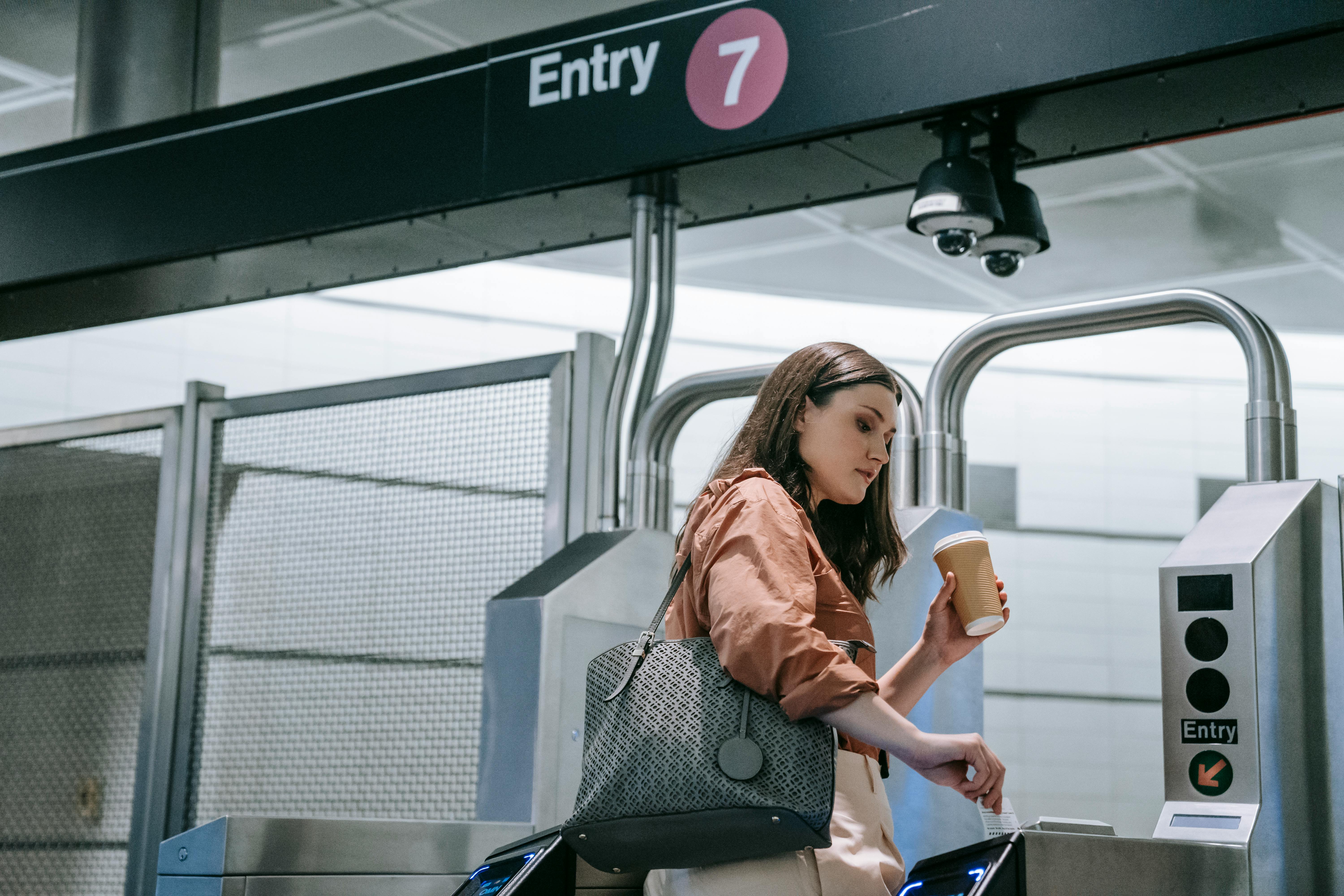
Singapore uses a tap-in, tap-out fare system across the entire public transport network. The fare is calculated by distance, so the longer your journey, the more you pay. You have three main ways to pay, and choosing the right one saves both time and money.
EZ-Link card — the standard choice for most visitors
The EZ-Link card is a stored-value smart card that works on MRT trains, all public buses, and even some taxis and vending machines. You buy it at any MRT station customer service office or TransitLink ticket machine, as well as at 7-Eleven stores. The card costs SGD 12 (~USD 8.90) upfront — SGD 5 of that is the non-refundable card cost, and SGD 7 (~USD 5.19) is loaded as travel credit.
- Where to buy: MRT station customer service offices, TransitLink ticket machines, 7-Eleven
- Where to top up: Same locations, plus the EZ-Link app and General Ticketing Machines (GTMs)
- Minimum balance to board: SGD 0.10 on buses; SGD 0.00 on MRT (system calculates on exit)
- Best for: Stays of three days or more, mixed MRT and bus use
Singapore Tourist Pass — only worth it for heavy users
The Singapore Tourist Pass offers unlimited rides on the MRT and standard public buses for a flat daily fee. It sounds attractive on arrival, but the maths only works in your favour if you're taking five or more rides a day — which is less common than it sounds when you factor in walking, meals, and time at attractions.
- 1-day pass: SGD 10 (~USD 7.41) + SGD 10 refundable deposit
- 2-day pass: SGD 16 (~USD 11.87) + SGD 10 refundable deposit
- 3-day pass: SGD 20 (~USD 14.84) + SGD 10 refundable deposit
- Note: Does not cover the Sentosa Express, Night Owl buses, or premium bus services
- Best for: Itinerary-heavy first days when you're crossing the city multiple times
If you're taking a relaxed pace — two or three attractions a day with a long lunch — pay-as-you-go on the EZ-Link card will cost you less.
Contactless bank card (SimplyGo) — for travellers without a local card
Singapore's SimplyGo system accepts contactless Visa and Mastercard directly at MRT gates and on buses. Tap your bank card or Apple/Google Pay the same way you would tap an EZ-Link card. Fares are billed to your bank account in SGD. This is genuinely convenient if your bank card is travel-enabled and doesn't charge foreign transaction fees — check before you travel. The downside: you can't see your balance in real time, and some foreign banks apply per-transaction fees that add up quickly over a week of transport use.
Getting Around Singapore by Bus
Singapore's public bus network covers more than 340 routes and reaches every part of the island the MRT misses. Buses share the same EZ-Link card payment system, and the 45-minute free transfer window means a connected MRT-to-bus journey often costs the same as a single-mode trip. For tourists, buses are most useful for covering the last mile to an attraction, exploring outer neighbourhoods, or reaching areas like East Coast Park that don't have a train station nearby.
When the bus beats the MRT
The MRT is always faster on distance, but buses win in specific situations. If you're in Orchard Road and need to reach Holland Village — a popular local dining and café neighbourhood — Bus 7 or 77 takes you there directly without a train transfer. If your accommodation is in Katong or Joo Chiat, buses connect you to the rest of the city without a detour through an interchange station.
How to find your bus stop and route
Every bus stop in Singapore has a five-digit stop code posted on a yellow pole. Key in that code in the MyTransport.SG app or Google Maps to see real-time arrivals for all routes serving that stop. Many stops also have electronic boards showing arrival times in minutes. Buses display route numbers on the front, side, and rear — and all boards and announcements are in English.
- Board from the front door; alight from the rear doors
- Tap your card on the reader when boarding and again when alighting — the same as the MRT
- If paying cash: have exact change, as no change is given; cash fares are also higher than card fares
- Buses run approximately 5:30 AM to midnight; frequency drops after 9 PM on many routes
The 45-minute free transfer rule
One of Singapore's most tourist-friendly transport features is its integrated fare system. If you tap out of an MRT train and tap into a bus (or vice versa) within 45 minutes using the same EZ-Link card or contactless payment, you receive a transfer rebate — effectively paying one combined fare rather than two separate ones. Plan your connections with this in mind: it makes mixed-mode trips significantly cheaper.
Night buses — getting home after midnight
The MRT stops running around midnight, but Singapore has two dedicated night bus services that cover the main corridors throughout the night. Night Owl buses run on Fridays, Saturdays, and the eve of public holidays from approximately midnight to 3 AM, covering key nightlife areas. NightRider buses operate on the same nights with limited stops at major interchange points. These are not included in the Singapore Tourist Pass — you pay per ride with your EZ-Link card or cash.
Taxis and Grab in Singapore
Singapore's taxis are metered, clean, and driven by licensed operators — there are no unmarked or unregulated vehicles to worry about. Ride-hailing apps, primarily Grab, have largely replaced street flagging for most tourists, and in most situations offer a more predictable fare upfront. The two modes co-exist: some apps like Grab let you book both private-hire cars and metered ComfortDelGro taxis from the same interface.
Street taxis vs ride-hailing
You can flag down a metered taxi on most roads in Singapore, or find a taxi stand outside major hotels, malls, and MRT stations. In the CBD, some streets restrict taxi pick-ups — Finlayson Green, High Street, and Esplanade Drive among them. If you're in the business district, head to a designated taxi stand rather than trying to flag from the kerb.
Grab, Gojek, and TADA all operate in Singapore with upfront pricing. You see the fare before you confirm the booking — a significant advantage over metered taxis during peak hours or rain, when surcharges apply without warning.
Singapore taxi fare breakdown (2025)
- Flag-down (metered taxis): SGD 3.90–4.30 (~USD 2.89–3.19) depending on taxi type and operator
- Per km rate: approximately SGD 0.55–0.65 (~USD 0.41–0.48)
- Peak hour surcharge (Mon–Fri 6–9:30 AM and 6–midnight; Sat–Sun midnight–6 AM): 25% on top of meter fare
- CBD surcharge (Mon–Sat 5–9:30 PM): SGD 3 (~USD 2.22) additional
- Airport surcharge: SGD 5–8 (~USD 3.71–5.94) depending on terminal and time
- Midnight to 6 AM surcharge: 50% on top of meter fare
- App booking fee (via Grab or Gojek): SGD 2.30–4.50 (~USD 1.71–3.34)
Grab, Gojek, and TADA — which app to use
Grab is the dominant platform and has the widest driver pool — useful during high-demand periods when other apps can't find you a car quickly. Gojek is often meaningfully cheaper for short to medium trips and worth opening as a comparison. TADA operates with no surge pricing and is a reliable option for straightforward point-to-point rides.
When Grab or a Taxi Makes More Sense Than the MRT
- You're travelling after midnight and night buses don't cover your route
- You have large luggage or are travelling with young children
- Your destination is in an MRT gap area (Dempsey Hill, East Coast Park, Pasir Ris)
- It's raining and you can't face a five-minute outdoor walk between a station and your destination
- You're in a group of three or four — splitting a Grab often costs less per head than four individual MRT trips
Getting to and Around Sentosa
Sentosa is Singapore's island resort destination, home to Universal Studios Singapore, beach clubs, the S.E.A. Aquarium, and multiple adventure parks. It sits off the southern tip of the main island and has several transport access points — the right one depends on where you're coming from and what you're doing.
Sentosa Express monorail
The most popular tourist access route is the Sentosa Express, a monorail that connects VivoCity mall at HarbourFront to three stops on Sentosa: Waterfront, Imbiah, and Beach Station. Take the MRT to HarbourFront (Circle or North East Line), head to Level 3 of VivoCity, and board from there. The fare is SGD 4 (~USD 2.97) each way. Trains run frequently from early morning until late night.
Bus to Sentosa
Bus 123 connects HarbourFront to Sentosa with stops across the island — it's included in standard EZ-Link fares and covers areas that the monorail doesn't reach directly, including the beach zones. For budget-conscious travellers doing a long Sentosa day, bus is the better all-round access option.
Sentosa Boardwalk and cable car
You can also walk to Sentosa via the Sentosa Boardwalk — a covered pedestrian walkway from VivoCity that's free to use. It takes about 10–15 minutes and is a pleasant option when the weather is clear. The cable car from Mount Faber offers a scenic aerial route and counts as an experience in itself — but it operates as a tourist attraction with a separate ticket price (SGD 35–45 per adult, ~USD 25.98–33.40), not as a commuter service.
Getting from Changi Airport to the City
Most visitors to Singapore land at Changi Airport — itself worth time to explore at Jewel Changi Airport — before heading to their hotel. You have three practical options for the city transfer, and the right one depends on your budget, group size, and how much luggage you're carrying.
MRT from Changi Airport — cheapest option
Changi Airport is connected directly to the MRT network. The East West Line (EWL) stops at Changi Airport station in Terminals 2 and 3; a free shuttle links Terminal 1 and 4. From the airport, take the EWL towards Tanah Merah, change trains there, and continue inbound. Alternatively, the Thomson-East Coast Line (TEL) now provides a direct connection without a change for some city destinations.
- Fare to City Hall / Raffles Place: approximately SGD 2.20 (~USD 1.63)
- Journey time: approximately 30–40 minutes to central Singapore
- Operating hours: 5:30 AM to approximately midnight
- Best for: Solo travellers and couples with compact luggage
Grab or taxi from Changi
Grab and taxis are available from all terminals at designated pick-up points. For Grab, follow the ride-hailing signs inside Arrivals to the app-based pick-up zone. For taxis, use the metered taxi stands at the ground floor of each terminal.
- Typical Grab fare to city centre hotels: SGD 20–35 (~USD 14.84–25.95) depending on destination and time of day
- Airport surcharge: SGD 5–8 (~USD 3.71–5.94) applied to all rides from Changi
- Journey time: 20–35 minutes depending on traffic
- Best for: Families with luggage, late-night arrivals, and groups of three or more splitting the cost
Private transfer — best for groups
Pre-booked private transfers provide a fixed rate, a meet-and-greet service, and a vehicle sized for your group. For a group of four with heavy luggage arriving after a long-haul flight, the per-head cost often works out comparable to splitting a Grab — and without the hassle of queuing or surge pricing. Travjoy's curated Singapore options include pre-vetted private transfer providers that have been reviewed and approved by local travel experts, giving you a reliable start to your trip.
Getting the Most Out of Singapore's Transport System
A few habits make the difference between frustrating transfers and smooth days of sightseeing. Singapore's network is efficient, but it rewards planning: knowing which exit to take, which card to carry, and which app to open before you need it removes the friction from every journey.
Use Google Maps or the MyTransport.SG app for real-time routing — both are accurate and updated. Download the Grab app before you land. Charge your EZ-Link card to at least SGD 15–20 (~USD 11.13–14.84) before starting a full sightseeing day so you don't need to top up mid-trip. And if you're heading to the top 20 experiences in Singapore, check the MRT station and nearest bus stop for each before you leave the hotel — it takes two minutes and saves considerably more.
Ready to start planning? Browse the full range of Singapore experiences on Travjoy — every option has been curated after extensive research and reviewed by local experts, so you can book with confidence and get straight to enjoying the city.

