



Borough Market: A Complete Guide for Discerning Food Lovers — What to Eat, When to Go and How to Plan Your Visit
7 min read
Key Highlights
- Free to enter and open six days a week — closed Mondays, with the full market running Wednesday to Sunday.
- Three trading areas — Three Crown Square, the Green Market and Borough Market Kitchen — each with a different reason to visit.
- Weekday mornings are the calm window to browse; Saturday afternoon is the busiest stretch of the week.
- What to eat: Kappacasein raclette, Richard Haward's oysters, Neal's Yard cheese, Padella pasta and Bread Ahead doughnuts.
- A two-minute walk from London Bridge station, next to the Shard and Southwark Cathedral.
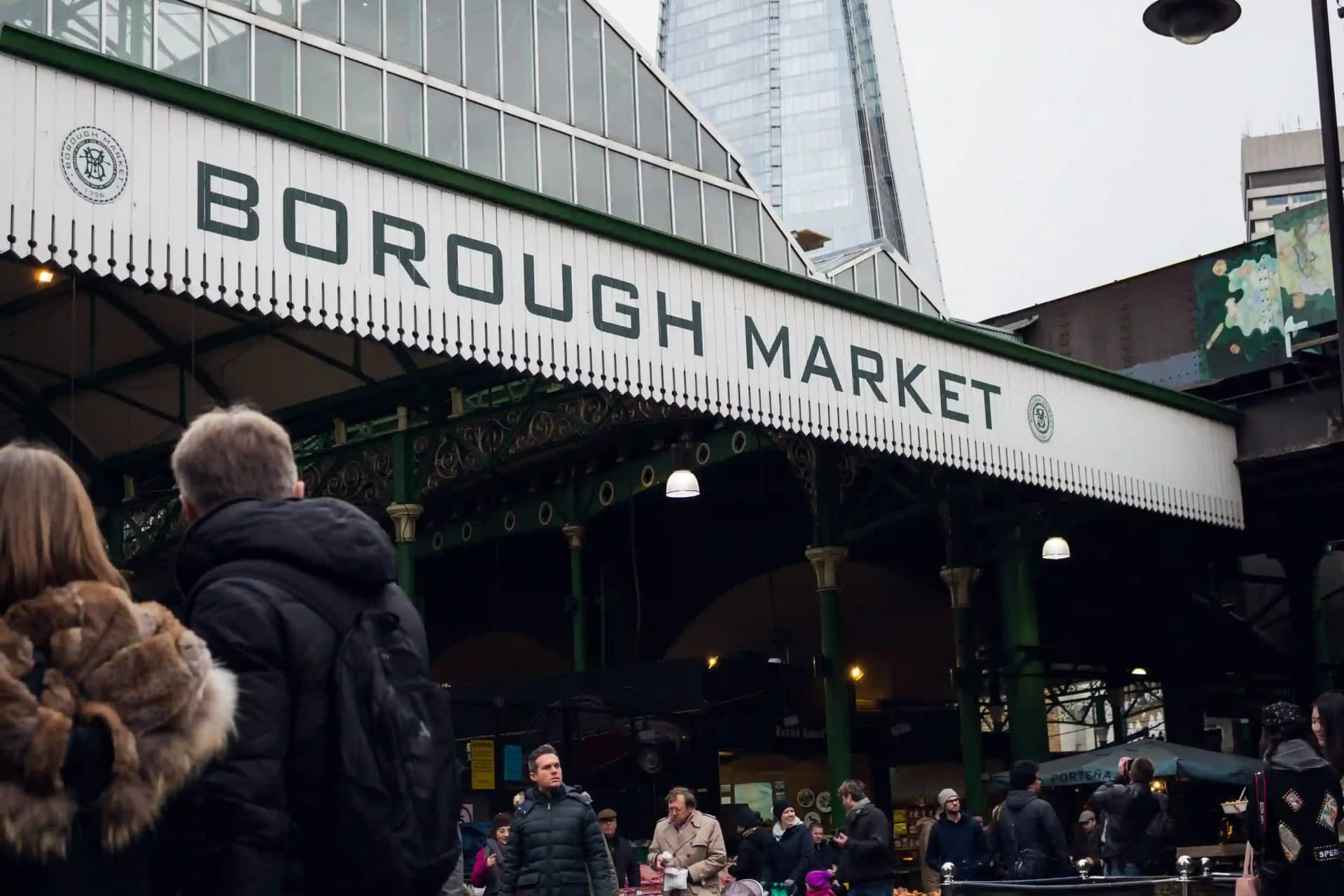
Borough Market is London's oldest food market, set beside London Bridge in Southwark and open to visitors free of charge from Tuesday to Sunday, closed Mondays. It spreads across three trading areas — Three Crown Square, the Green Market and Borough Market Kitchen — where more than a hundred traders sell produce, cheese, oysters, street food and coffee. Go on a weekday morning for room to browse; Saturday is the liveliest and most crowded day.
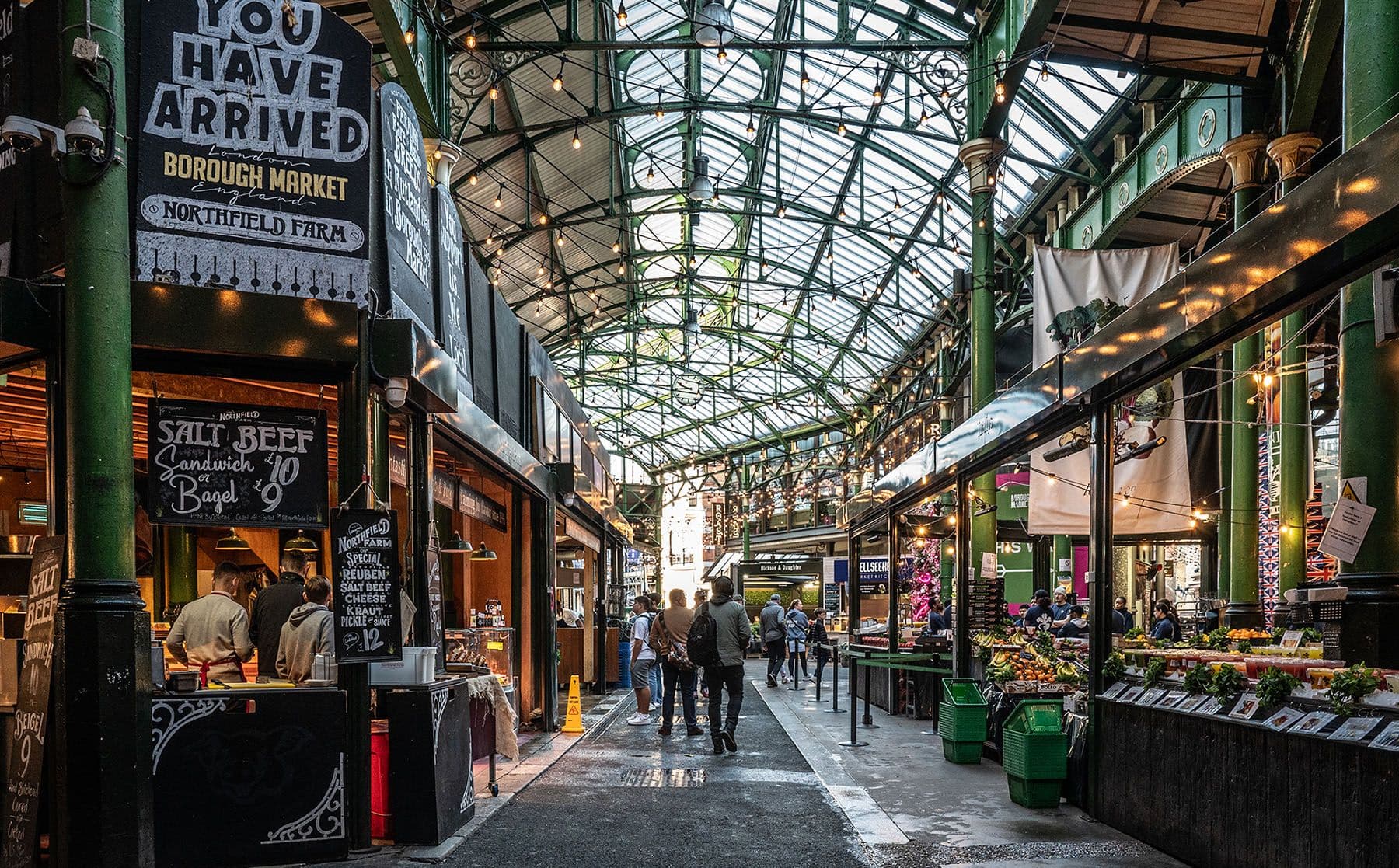
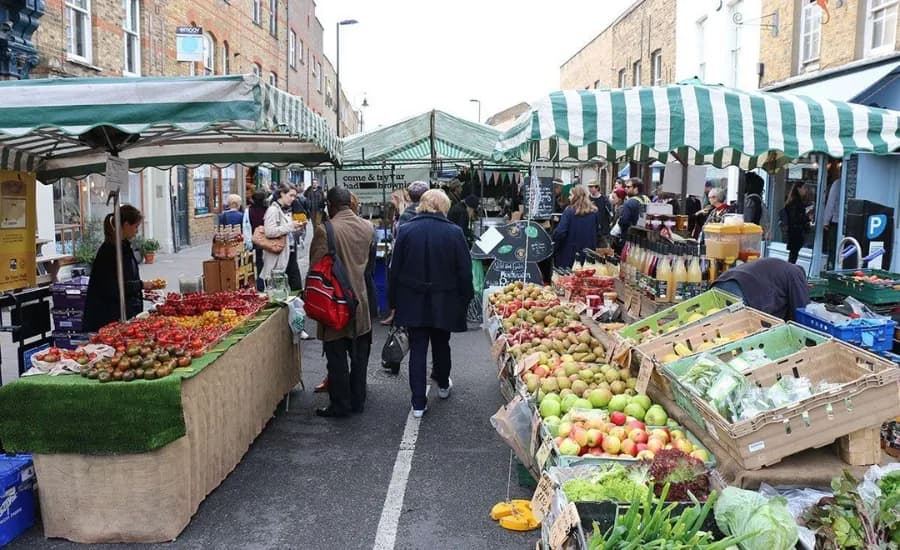
Most people arrive at Borough Market hungry and leave carrying more than they meant to. That is the market working as intended. Under a canopy of green Victorian ironwork, a few minutes from the Thames, more than a hundred traders lay out cheese, fish, cured meat, seasonal produce and street food that pulls in Londoners and visitors in roughly equal measure.
It is easy to treat the market as a single crowded space and graze whatever you walk past. You will eat well doing that. But the market rewards a little strategy — knowing which of its three areas to head for, what is worth eating on the spot versus carrying home, and which day and hour give you space to actually see the stalls.
This guide covers all of it: the history that explains why Borough Market feels the way it does, how the site is laid out, what to eat and buy, the best days and times to go, and how to fold a visit into the rest of a day in Southwark. Every experience Travjoy lists has been researched and approved by local experts, so you can plan around the market with confidence rather than guesswork.
What Borough Market Is — and Why It's Endured
Borough Market is a wholesale-turned-retail food market on the south bank of the Thames, and the oldest of its kind in London. There has been trading on this patch of Southwark for more than a thousand years — records point to a market here as far back as 1014 — and it has stood on its present site, in the streets around Southwark Cathedral, since 1756.
That longevity is not just trivia. It is the reason the market sits where it does, wedged beneath railway viaducts and threaded through narrow lanes, and the reason it has a density of specialist traders that newer food halls cannot replicate. This was the gateway to London Bridge — for centuries the only crossing into the City — so the produce came here first. Traders were selling on this ground long before refrigeration or supermarkets existed, and that near-unbroken continuity is part of what gives the market its authority today.
Two practical things follow from all this history, and both matter to how you plan:
- Entry is free. The market is open to everyone; you only pay for what you eat, drink or take home.
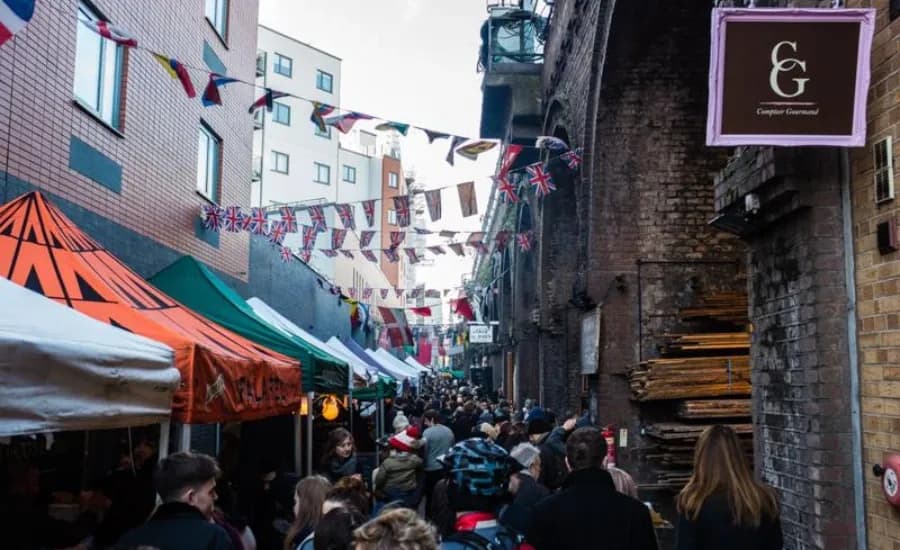
- The layout is historic, not designed. Cobbles, low arches and passageways that narrow to a metre and a half in places mean it can feel tight when busy — part of the character, but worth knowing if you are pushing a pram or prefer space.
How the Market Is Laid Out
Borough Market is not one hall but three connected trading areas, plus a demonstration space and a run of restaurants next door. Knowing which is which turns a crowded wander into a plan. Head for the area that matches what you came for.
The three trading areas
- Three Crown Square — the largest area, home to bigger producers and merchants. This is where the serious fruit and veg, cheese, meat and fish traders set up. Come here to shop properly and to take ingredients home.
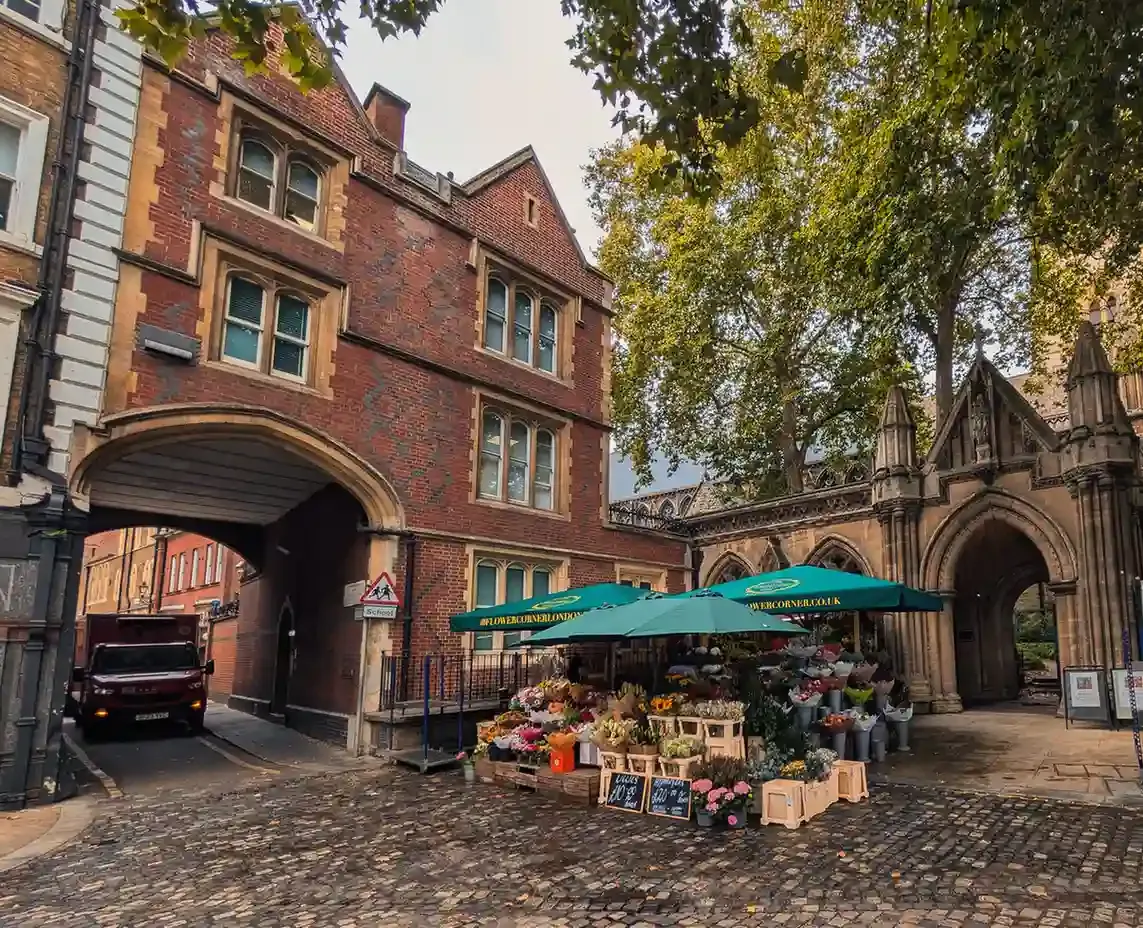
- The Green Market — smaller, specialist produce traders, and the area closest to Southwark Cathedral. If you are short on time, the stalls just south of the cathedral give you a concentrated hit of artisan food, chocolate and baked goods.
- Borough Market Kitchen — the street-food heart of the market. This is where you eat on the spot: hot plates, grills, and traders cooking to order rather than selling produce.
Quick orientation
- Here to eat now? Head straight for Borough Market Kitchen.
- Here to shop and cook later? Three Crown Square has the produce, fish and cheese.
- Short on time? The Green Market, by Southwark Cathedral, packs the most into the smallest walk.
Two more spaces are worth knowing. The Market Hall, which faces onto Borough High Street, works as a glass-roofed venue for tastings, demonstrations and food workshops rather than daily trading. And immediately next door, Borough Yards has filled a series of restored railway arches with restaurants and shops — a natural overflow if the market itself is heaving. For a sense of how Borough sits among the city's other food markets, the wider London food markets are grouped in one place.
What to Eat at Borough Market
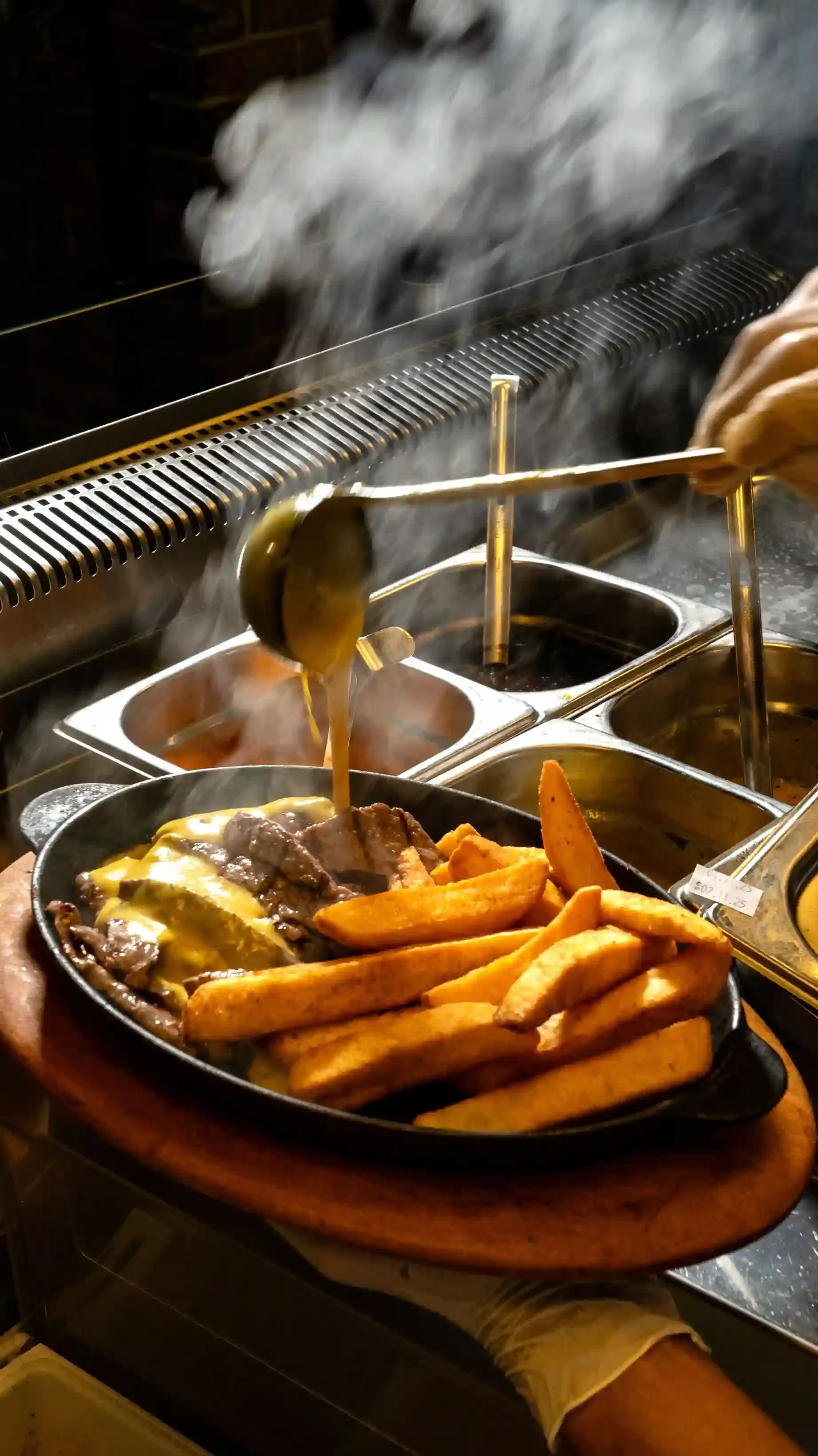
The honest advice is to arrive hungry and pace yourself. The best approach is to graze small plates across several traders rather than commit to one lunch. A street-food plate runs roughly £8–£12 (about $11–$16), so two or three tastes is a comfortable way to eat through the market. A few traders have earned their reputations and are worth seeking out.
What to eat on the spot
- Kappacasein raclette and toastie — melted raclette scraped over potatoes, and a griddled cheese toastie that has a queue for a reason. Around £8–£9 ($11–$12).
- Richard Haward's oysters — a long-standing oyster bar shucking Essex oysters to order, usually a few pounds each with a glass of wine alongside.
- Bread Ahead doughnuts — filled doughnuts made on site; the vanilla custard is the one people come back for.
- Monmouth Coffee — the corner coffee bar that set the standard for London's speciality scene; expect a short wait at peak.
What to buy and take home
- Neal's Yard Dairy — British farmhouse cheese sold by people who will cut and talk you through every wheel. A cornerstone of the market.
- Fish and seafood — traders such as Furness sell sustainably sourced fish and are generous with cooking tips.
- Seasonal produce — Three Crown Square is where to find the standout ingredient for a dinner you are cooking that week, from unusual mushrooms to whatever is at its best that month.
Around the edges of the market, sit-down options fill in the gaps: Padella for fresh pasta on Southwark Street, Arabica for Middle Eastern sharing plates, and Roast upstairs for a proper Sunday lunch. If you would rather have a market meal handed to you rather than hunt for it, that is exactly the kind of curated food experience Travjoy pulls together across the city's food and drink scene.


When to Go — Best Days and Times
The single most useful thing to get right at Borough Market is timing. The market is open six days a week, but the experience changes sharply depending on the day and hour. For room to browse and talk to traders, come on a weekday morning soon after it opens. Saturday is the most atmospheric day and, by early afternoon, the most crowded.
Opening days and hours
Regular Borough Market opening times run as below, though not every trader is present every day and hours shift around Bank Holidays and Christmas. In December the market opens seven days a week for festive shopping.
| Day | Hours | What to expect |
|---|---|---|
| Monday | Closed | Main market closed; some surrounding restaurants open |
| Tuesday–Wednesday | 10am–5pm | Quietest days; best for an unhurried browse |
| Thursday–Friday | 10am–5pm | Full market, busier over lunch |
| Saturday | 9am–5pm | Liveliest day; go early to beat the afternoon crush |
| Sunday | 10am–4pm | Relaxed pace; fewer traders than Saturday |
Hours are indicative and should be confirmed before publishing.
The best time to visit
- For a calm visit: arrive before 11am on a Tuesday or Wednesday, when the market is at its most relaxed.
- For atmosphere: Saturday morning gives you the full buzz before the shoulder-to-shoulder afternoon.
- Avoid, if you dislike queues: lunchtime between 12pm and 2pm, when popular stalls back up.
- For something seasonal: December, when the market decorates for Christmas and opens daily — the most festive time, and the busiest.
Getting There and What's Nearby
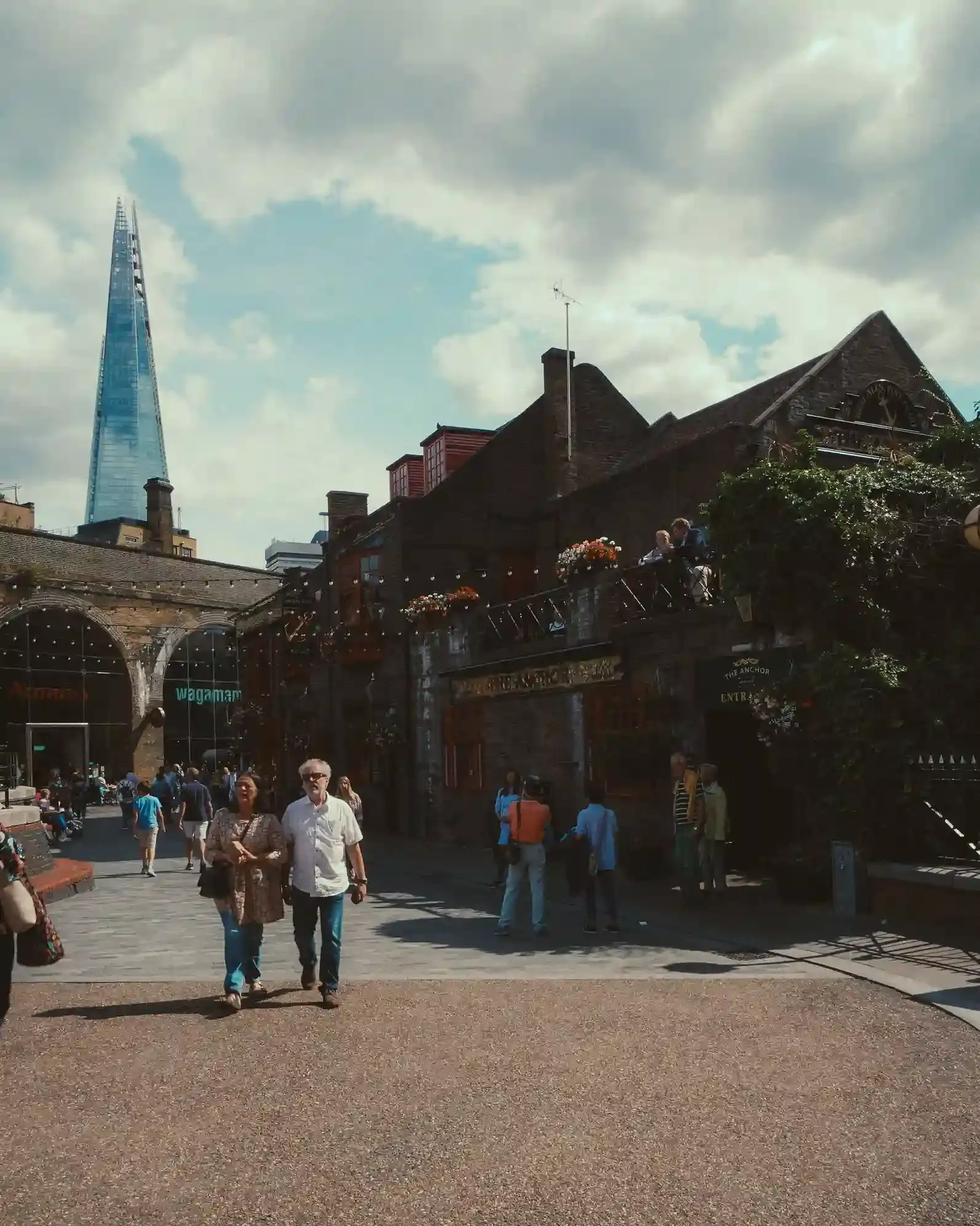
Borough Market could hardly be easier to reach: it sits directly beside London Bridge station, so most visitors are across the road from the entrance within a minute of leaving the platform. The address is 8 Southwark Street, London SE1 1TL.
How to get there
- Underground and rail: London Bridge station is on the Northern and Jubilee lines, plus mainline services from across London — the closest and simplest option.
- Bus: several routes stop within a five-minute walk.
- By bike: cycle racks sit within the Green Market and on Stoney Street, with hire docks nearby.
- By car: not recommended — this is the Congestion Charge zone, and there is no market car park, though pay car parks such as Snowsfields NCP sit a short walk away.
What to pair with your visit
Few London attractions cluster as neatly as those around Borough Market, which makes it a natural anchor for a half-day. Within a few minutes on foot:
- The Shard — the viewing gallery is a two to three-minute walk; book the timed slot ahead if the weather is clear.
- Southwark Cathedral — a two-minute walk and free to enter, one of London's oldest gothic churches.
- The George Inn — the last galleried coaching inn in London, a short stroll down Borough High Street for a pint in a genuine seventeenth-century courtyard.
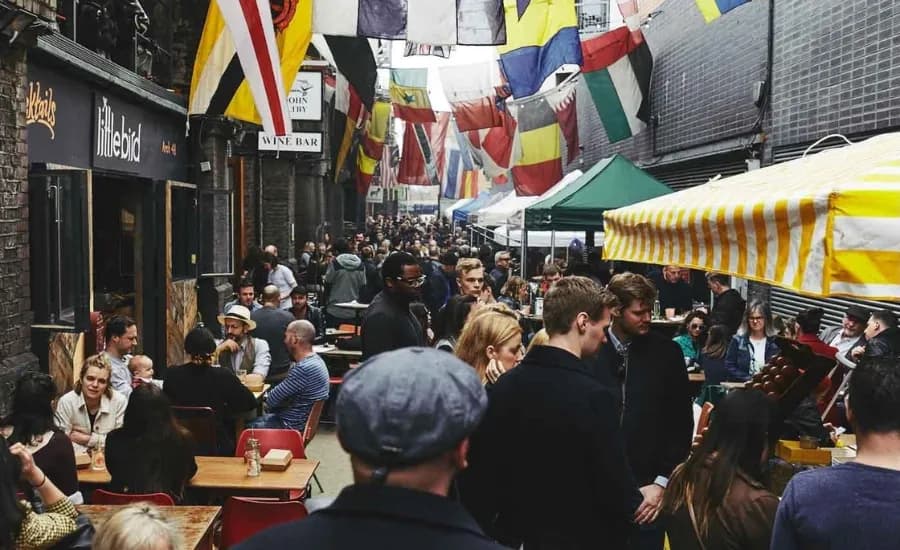
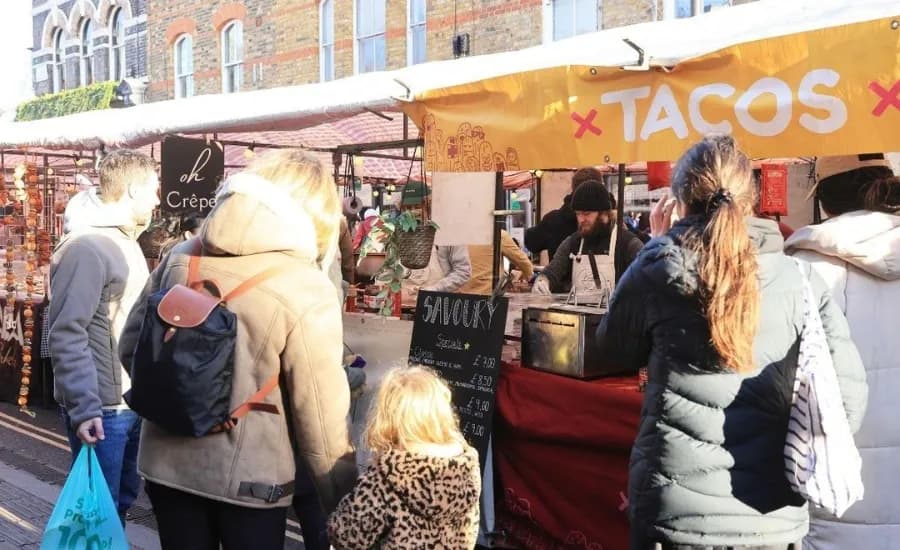
- Maltby Street Market — a smaller weekend market a ten-minute walk east in Bermondsey, best on Saturdays; the natural second market to pair with Borough. See Maltby Street Market.
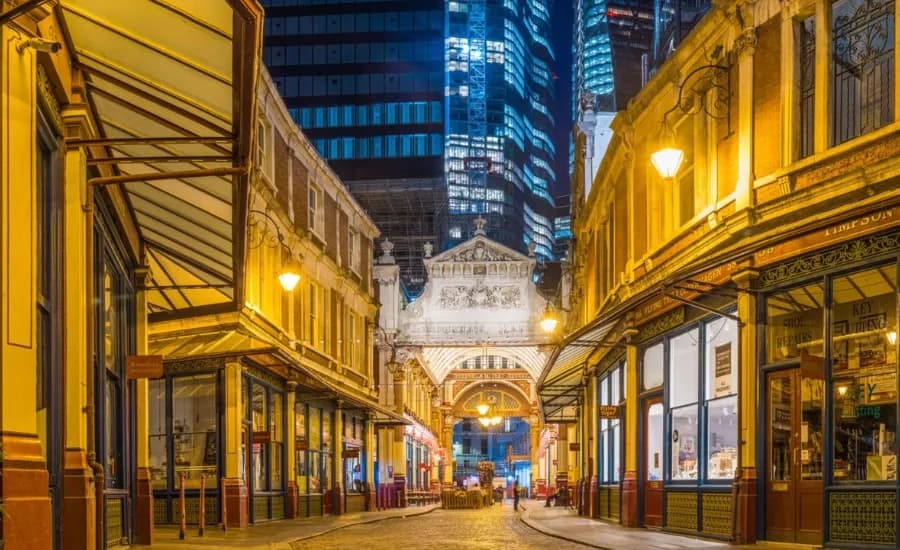
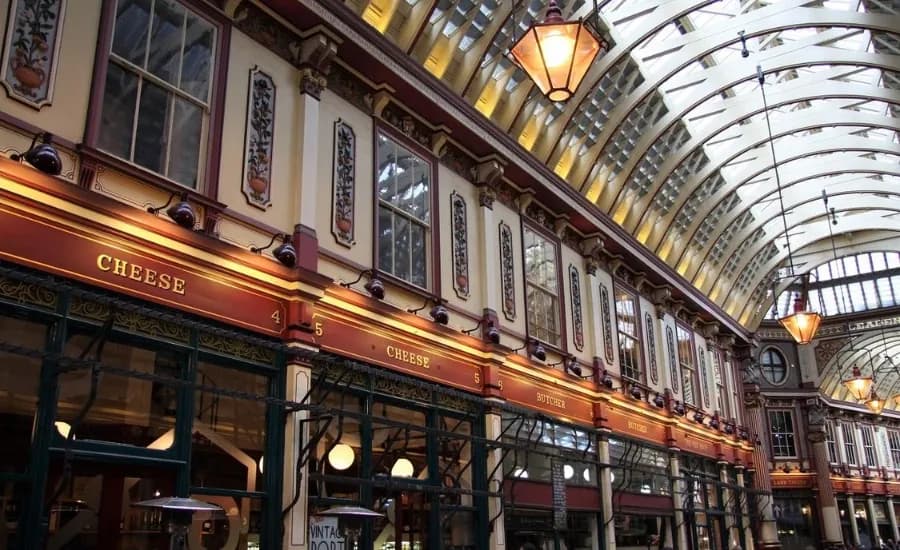
For a covered, historic contrast on a weekday, the Victorian ironwork of Leadenhall Market is a short trip across the river in the City.
Making the Most of a Visit
A first visit to Borough Market runs on instinct — follow your nose and eat what looks good. A second visit rewards a little more intent. If you want the stories behind the stalls, the market runs its own official, licensed tours led by expert guides, which is the most reliable way to understand what you are tasting and to meet the traders behind it.
At a glance — plan your visit
- Cost: free to enter; budget £15–£25 ($20–$33) per person to graze well.
- Best day: Tuesday or Wednesday morning for calm; Saturday morning for atmosphere.
- Time needed: 1–2 hours to browse and eat; longer if you add the Shard or a sit-down lunch.
- Come hungry: graze small plates across traders rather than committing to one meal.
- Bring: a tote for anything you buy, and small notes as backup, though most stalls take cards.
A few final pointers make the visit smoother. The market is a single ground-floor level, so it is largely step-free, though the cobbles are uneven in places. Dogs are welcome on a lead, and the whole site is smoke-free. At the busiest times, keep an eye on bags and phones, as any crowded market attracts the occasional pickpocket.
Plan Your Visit to Borough Market
Borough Market rewards the traveller who plans a little: pick a weekday morning for room to browse, head for the trading area that matches whether you are eating now or cooking later, and leave time to fold in the Shard, Southwark Cathedral or a nearby market. It is free, central and open six days a week — one of the easiest great experiences in London to build a day around.
Come hungry, graze widely, and carry home the one ingredient you cannot stop thinking about. Start planning your food-focused days in London with Travjoy's London experiences, all researched and approved by local experts so you spend your time enjoying the city rather than second-guessing it.

.svg&w=1920&q=75)