


Bangkok Tuk Tuk Night Tour: A Complete Guide to the Siam and Silom Route, With Costs and What to Book
10 min read
Key Highlights
- The Siam and Silom route runs about three and a half hours from a 7pm start: street-food dinner around Pratunam, a tuk-tuk transfer to Patpong, and a bar finish in Silom.
- Budget ฿1,800–2,700 (USD 52–78) per person in 2026, with food and four to five drinks normally included in the price.
- This is the drinks-led route. The Old City and Chinatown circuit is the temples-and-street-food one — choose by what you want the evening to be, not by review count.
- Alcohol sales stop nationwide on several Buddhist holidays each year, which quietly turns a drinks-included tour into a food tour.
- Tuk-tuks seat two, run open to the air, and are unsuitable for wheelchair users or anyone with back or spinal problems.
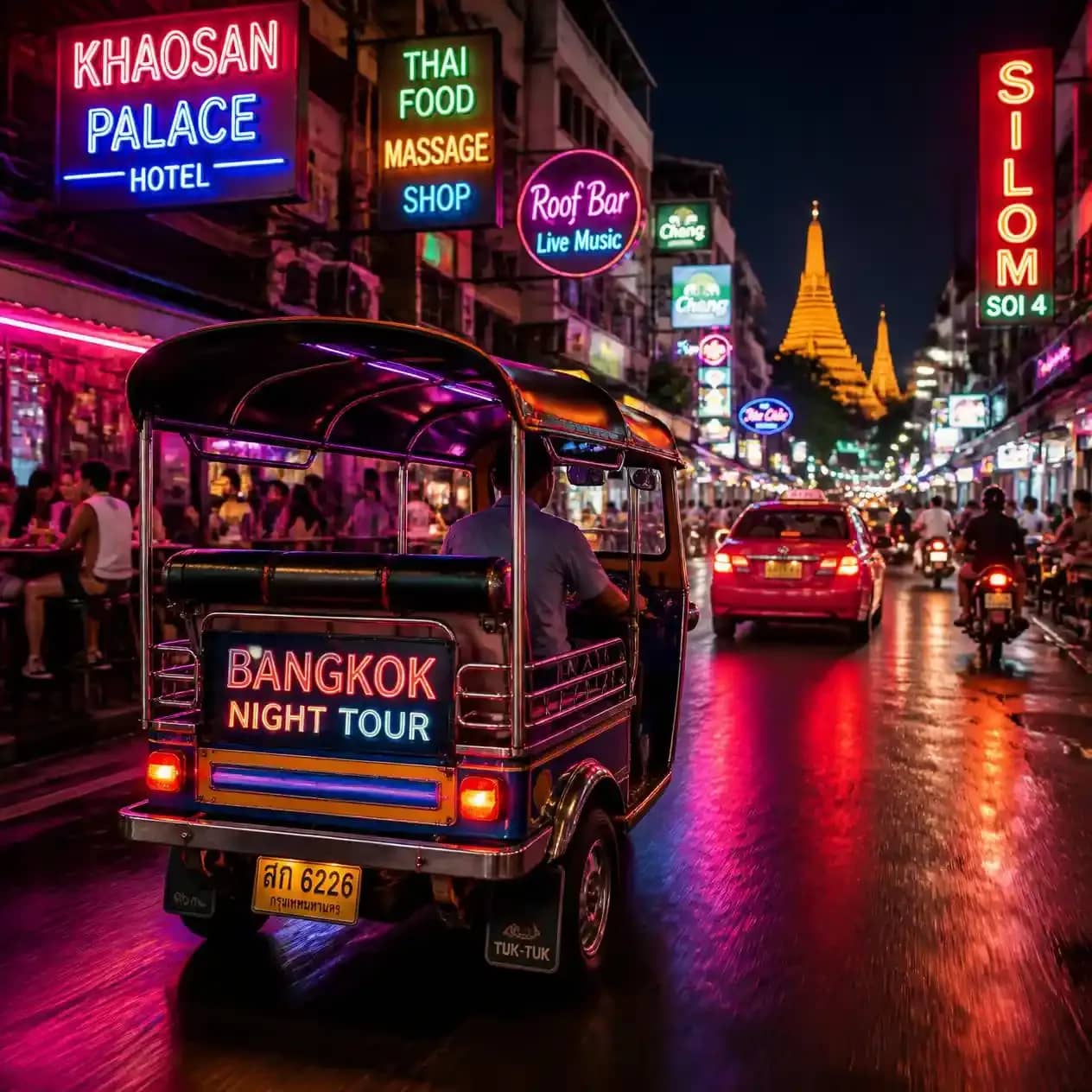
A Bangkok tuk tuk night tour through Siam and Silom takes roughly three and a half hours from a 7pm start and costs ฿1,800–2,700 (USD 52–78) per person in 2026, with food and four to five drinks usually included. The route pairs an open-air street-food dinner near Pratunam with a tuk-tuk ride to Patpong Night Market and a bar stop in Silom, which makes it the drinks-led alternative to the Old City and Chinatown temple circuit rather than a competing version of it.
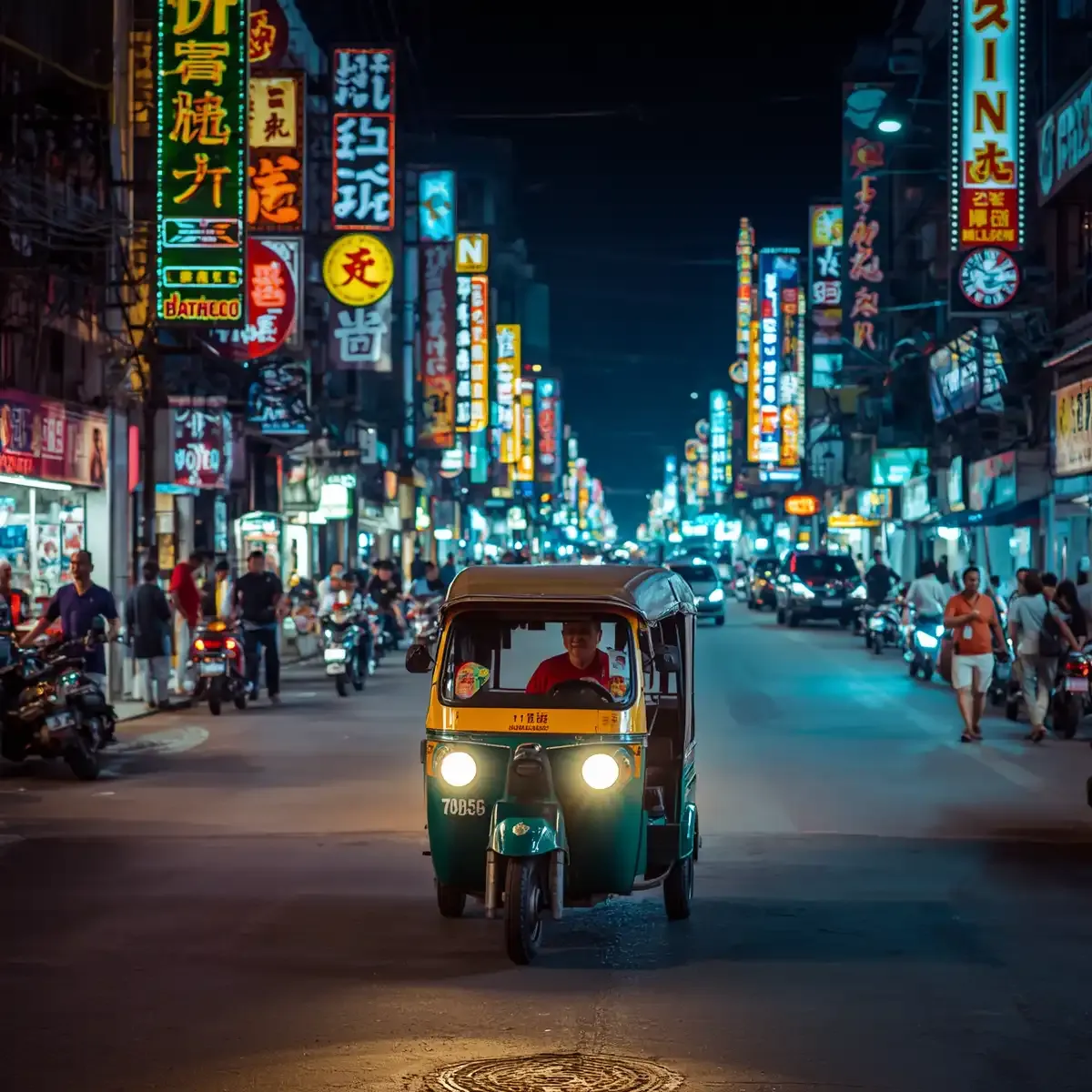
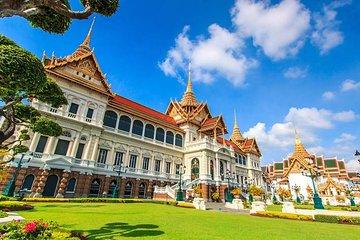
Bangkok has two after-dark tuk-tuk routes, and most travellers book the wrong one for the evening they actually want. The famous circuit runs west into the Old City and Chinatown: lit temple grounds, the 24-hour flower market, noodles on Yaowarat. It is a sightseeing evening with food attached, and it is superb if you have never seen the Grand Palace floodlit.
The Siam and Silom route does something else. It starts where you are probably already staying, in the retail belt around Chit Lom and Ratchaprasong, and works south into Silom — the district that flips from banking towers at six o'clock to street carts, neon and rooftop bars by eight. There are no temple queues on this one. It is dinner, a market, a bar, and a tuk-tuk connecting them.
This guide covers the route stop by stop, what the food and drinks actually amount to, 2026 pricing in baht and dollars, how it compares against the other night formats, and the practical details the booking pages leave out — including one that can remove the drinks from your drinks tour entirely.
Is a Bangkok Tuk Tuk Night Tour Worth It?
Yes, if you want a structured evening in a district you would otherwise skip, and no, if you mainly want transport. A tuk-tuk is not a good way to cross Bangkok — it is slower, hotter and usually dearer than a Grab. What a guided night tour buys is the sequencing: someone who knows which Pratunam stall is worth sitting at, which Silom bar has live music on a Tuesday, and how to get between them at nine at night without three separate fare negotiations.
Worth it if
- You have been to Bangkok before and have already done the Grand Palace, Wat Pho and Wat Arun in daylight. This route deliberately avoids all three.
- You are a couple with one free evening and want food and drinks settled in a single booking rather than assembled on the night.
- You are staying in Siam, Ratchaprasong, Pratunam or Sathorn, where the meeting point is a short walk or one BTS stop away.
- You want an introduction to Silom without arriving cold into Patpong on your own.
- You would rather drink Thai craft beer in a small bar than eat six courses standing up on a pavement.
Not ideal if
- You have back, spinal or mobility problems. Operators explicitly advise against tuk-tuk tours for spinal injuries and pregnancy, and none of these routes are wheelchair accessible.
- You are travelling with young children. The 7pm start and the Patpong stop make this an adults-and-teens evening.
- You want temples and heritage. Book the Old City route instead — it is the same vehicle doing a completely different job.
- You do not drink. You will be paying for four to five included drinks you will not use, and a food-first tour is better value.
- You want air conditioning between stops. There is none, by design.
Reality check: what open-air actually means
- Tuk-tuks seat two comfortably, three at a squeeze. A party of four will be split across two vehicles and will not be able to hear each other en route.
- You sit at exhaust height in traffic. Evenings are cooler than daytime, but Bangkok's air quality is at its worst in the January–March haze season.
- Conversation stops when the engine starts. Guides brief you at the stops, not on the move.
- Bring a light layer. The airflow is the point of a tuk-tuk, and it is stronger than you expect once you clear the traffic.
The Siam and Silom Route, Stop by Stop
The Siam and Silom Bangkok tuk tuk night tour follows a consistent three-part shape across operators: eat in the Siam–Pratunam retail belt, ride south to a Silom night market, finish in a bar. Most start at 7pm and run to about 10.30pm. Meeting points cluster around Chit Lom BTS — the Umadevi Shrine in front of Big C Ratchadamri is the most commonly used, five to ten minutes' walk from the station.
Stop one — dinner around Siam and Pratunam
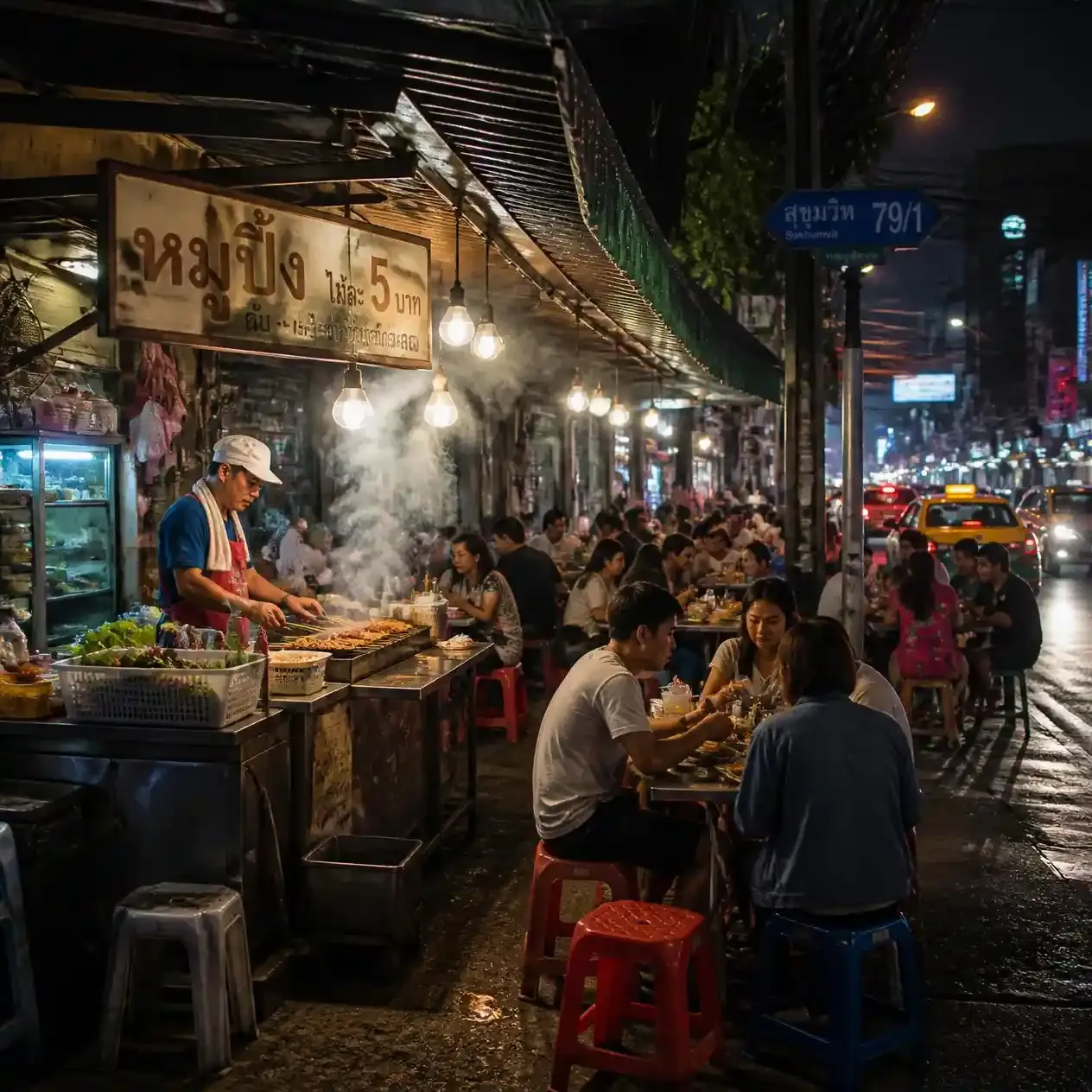
The evening opens at an open-air restaurant in the Pratunam area, which is where locals eat rather than where visitors shop. Expect a shared table under fans, a guide ordering across the menu rather than handing it to you, and a first cold Singha or Chang while the food arrives. This is the stop that does the most work: it is where you learn how Thai condiment trays are meant to be used and why nobody orders one dish per person.
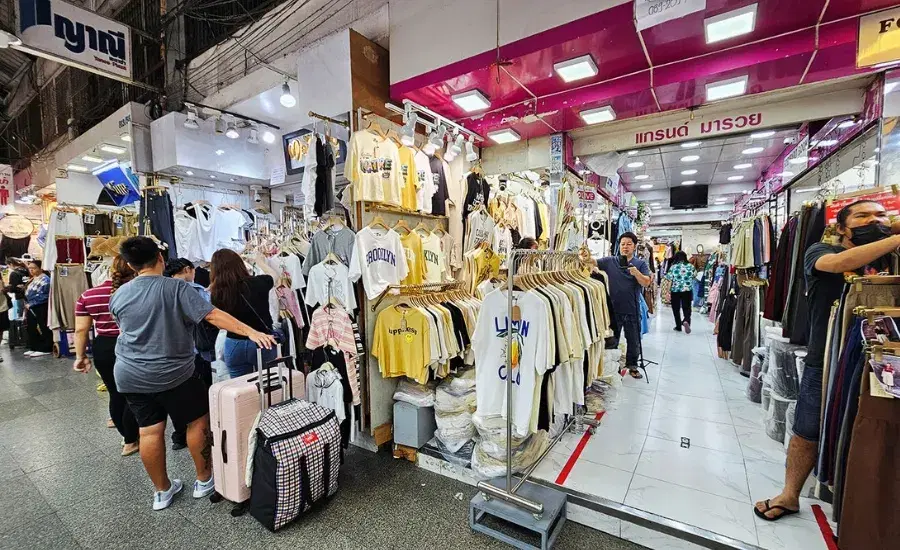
If you have time before the tour, the surrounding Ratchaprasong shrine circuit is worth the twenty minutes. The Erawan Shrine sits open around the clock at the Ratchadamri junction, with the Ganesha and Trimurti shrines outside CentralWorld a short walk away. Pratunam Market itself trades late, and the wholesale floors are a different proposition after dark than at midday.
Stop two — tuk-tuk south to Patpong
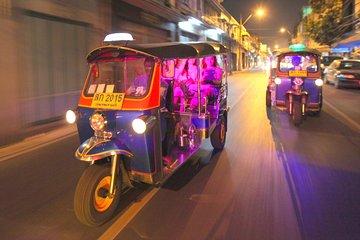
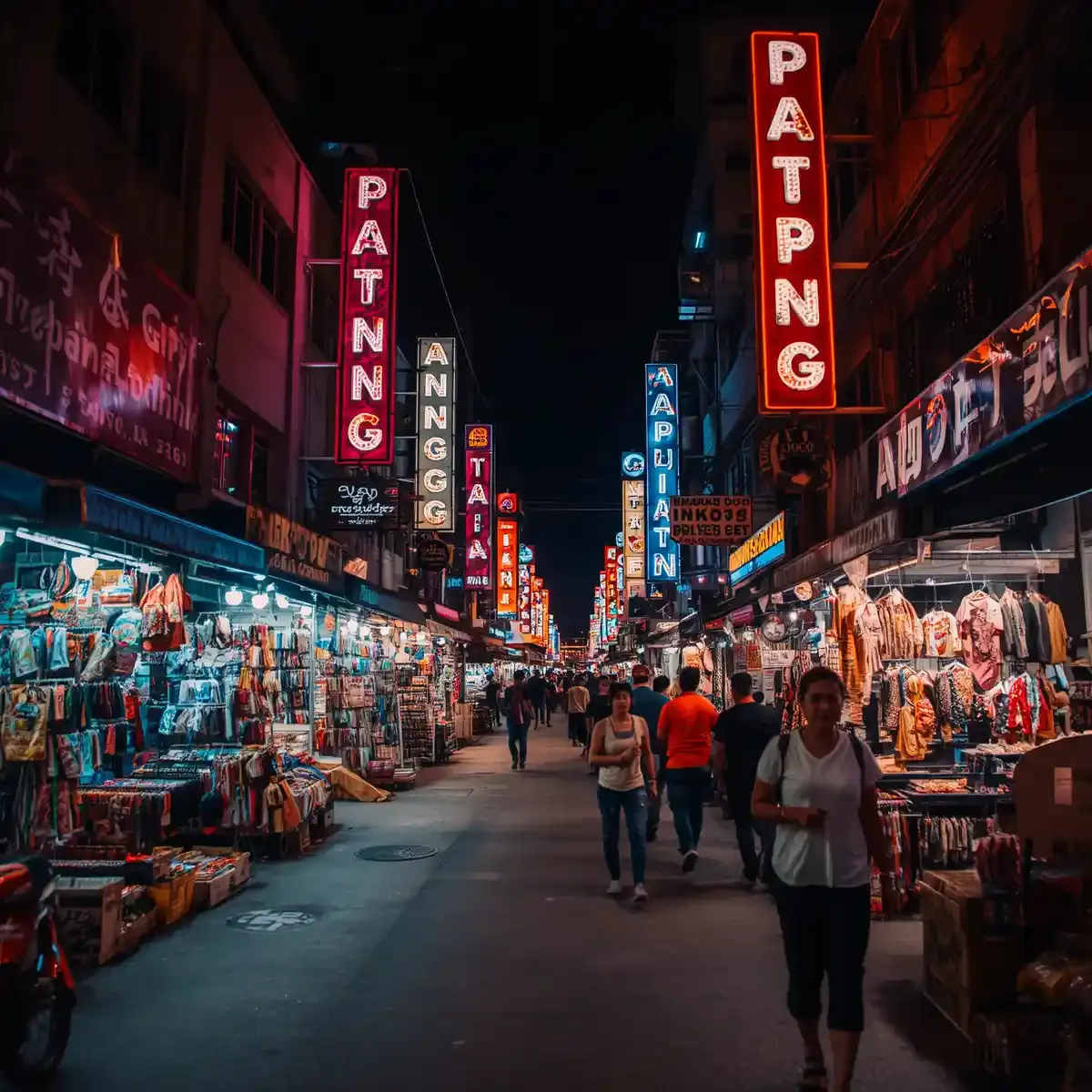
The ride from Ratchaprasong down to Silom takes fifteen to twenty-five minutes depending on traffic, and it is the part people book the tour for. You pass under the BTS line, along Rama IV, and into a district that looks nothing like the shopping belt you just left. Patpong Night Market runs down two parallel sois off Silom Road, stalls down the centre, bars either side.
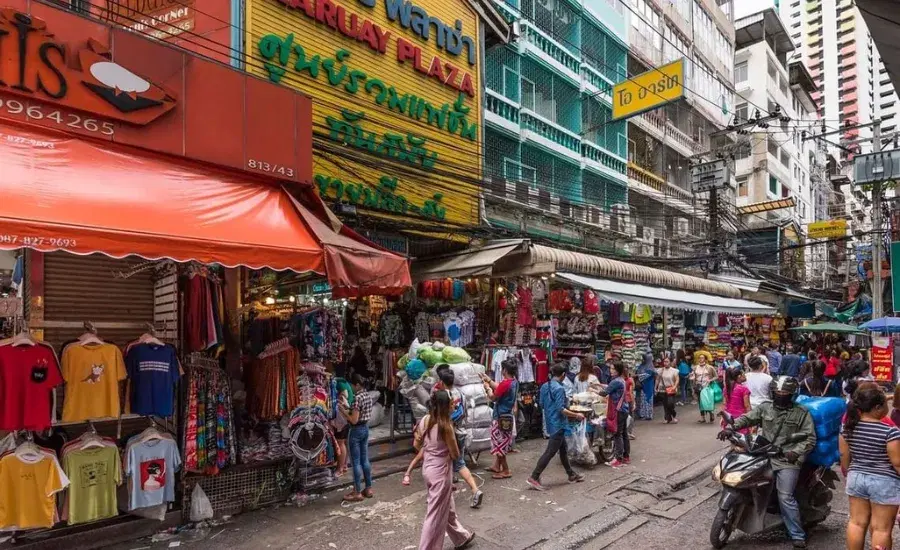
Be clear about what this stop is. Patpong is Bangkok's best-known red-light district, and the market that runs through it sells souvenirs, counterfeit watches and T-shirts, with a modest run of food and dessert stalls. Guided groups walk the market strip, buy sweets and a drink, and move on. The venues either side are not part of the itinerary and no reputable operator will take you into one.
Stop three — a Silom bar to finish
The evening ends in a small bar off Silom, usually one with Thai craft beer, house cocktails built on local spirits and lemongrass or tamarind, and live Thai music. This is the stop that separates the Siam and Silom route from every other tuk-tuk tour in the city — you finish sitting down, indoors, with a drink, rather than eating dessert on a Chinatown pavement at eleven.
A variant of the same route swaps the bar for a rooftop, typically the Baiyoke Sky observation floor in Pratunam. That version trades intimacy for altitude and adds an admission cost, and it comes with a dress code the street-food half of the evening does not.
Reality check: Patpong, honestly
- The market is safe to walk in a guided group and busiest between 7pm and 11pm.
- Touts outside the bars work on commission and will approach you. Keep walking; your guide will handle it.
- Nothing on the stalls is authentic. Price accordingly if you buy, and treat it as a market walk rather than shopping.
- If the district is not for you, say so at booking — several operators will substitute a Sala Daeng or Soi Convent street-food stretch instead.
What you actually eat and drink
The drinks are the headline inclusion on this route and the food is more moderate than a dedicated food tour. Typical listings include four to five drinks across the evening, spanning Thai lagers, craft beer and cocktails, plus dishes at the first stop and sweets at the market. If your priority is eating rather than drinking, a walking tasting tour through Yaowarat delivers considerably more food for similar money.
What tends to be included
- Four to five drinks per person across the three stops — Thai lager, local craft beer, and one or two cocktails
- A shared spread at the first restaurant: grilled pork skewers, som tam, pad krapao cooked to order, a curry or a seafood plate
- Dessert or sweets at the Patpong stop — mango sticky rice, coconut ice cream, or black sticky rice with custard
- All tuk-tuk transfers between stops
- An English-speaking guide throughout
What is not included
- Hotel pick-up on most join-in departures. You meet at Chit Lom; private bookings usually add collection.
- Anything you buy beyond the inclusions — extra rounds, souvenirs, market purchases. Street vendors are cash only.
- Rooftop admission on the Baiyoke variant, where it is priced separately.
- Tips. ฿200–500 (USD 6–15) split between guide and driver is the local norm for an evening of this length.
Dietary requirements are workable but need warning. Vegetarian, vegan and gluten-free are supported by most operators when flagged at booking, because the first stop is a sit-down restaurant where the order can be rebuilt. Flag it on the booking form, not on the night — the guide has usually pre-ordered.
Reality check: the day your drinks tour has no drinks
- Thailand suspends alcohol sales nationwide on several Buddhist holidays each year, including Makha Bucha, Visakha Bucha, Asanha Bucha and the start of Buddhist Lent, plus election days.
- The ban applies to bars, restaurants and shops alike. Tours still run on those dates — the drinks simply come out non-alcoholic.
- Operators publish the affected dates on the booking page, usually in small print near the cancellation terms. Check them before you pick your evening.
- If your dates collide, move the tour by a day rather than accepting the substitution. This route is built around the drinks.


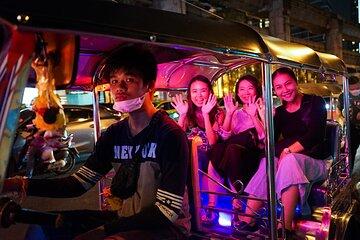

Siam and Silom or the Old City: Which Night Route to Book
Pick the route by the evening you want, not the rating. All four formats below score in the high fours, all run three to four and a half hours, and all involve a tuk-tuk at some point. They deliver completely different nights. The short version: Siam and Silom is the drinking and district evening, the Old City is the sightseeing evening, the midnight tour is the eating evening, and the river cruise is the sitting-down evening.
| Route | Duration | Price per person (2026) | Best for |
|---|---|---|---|
| Siam & Silom — food, market and bars, via nightlife tours | 3.5 hrs, 7pm start | ฿1,800–2,700 (USD 52–78) | Returning visitors, couples, anyone who wants drinks included |
| Old City & Chinatown — lit temples, flower market, street food, under Bangkok city tours | 4–4.5 hrs, 5.30pm start | ฿2,050–2,750 (USD 60–80) | A first Bangkok evening; anyone who wants sightseeing with the food |
| Midnight food tuk-tuk — Yaowarat and Chinatown | 4 hrs, from 9pm | ฿2,400–2,900 (USD 70–85) | Serious eaters and late starters; most food per booking |
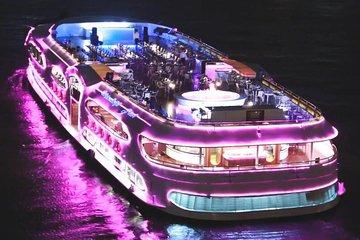
| Chao Phraya dinner cruise — no tuk-tuk | 2–2.5 hrs, 7pm boarding | ฿1,400–2,600 (USD 40–75) | Seniors, limited mobility, anyone who wants to stay seated |
One route detail worth knowing
Several Old City operators have suspended their night stop at Wat Pho and substituted Wat Arun or Wat Prayoon, and the substitutions have moved more than once as renovation and access schedules change. If a specific temple is the reason you are booking the Old City route, confirm the current stop list rather than trusting the listing photos. The Siam and Silom route sidesteps the problem entirely because it does not include a temple stop.
Bangkok Tuk Tuk Night Tour Prices in 2026
Expect ฿1,800–2,700 (USD 52–78) per person for the Siam and Silom route, and ฿860–1,550 (USD 25–45) for a shorter join-in tuk-tuk tour with no food or drink inclusions. The spread is almost entirely explained by two things: whether the vehicle is private, and how much of the eating and drinking is prepaid. Bangkok tuk tuk night tour prices also move with the season, and discounts of twenty to thirty per cent appear regularly outside November to February.
What each tier buys
- ฿860–1,550 (USD 25–45) — join-in sightseeing tuk-tuk tour, two to three hours, landmarks and a market walk. Food and drink at your own expense.
- ฿1,800–2,700 (USD 52–78) — the Siam and Silom evening. Guide, all transfers, a sit-down meal, four to five drinks, market stop and a bar.
- ฿2,050–2,900 (USD 60–85) — Old City and Chinatown night tours and midnight food tours. Longer, more stops, more tastings.
- Private, per vehicle — typically ฿4,500–9,000 (USD 130–260) for the tuk-tuk and guide, food and drink either included or extra depending on the operator.
- Full-day private — two to three times the half-day rate.
What sits outside the price
- Extra rounds beyond the included drinks — ฿100–250 (USD 3–7) for a beer, ฿250–450 (USD 7–13) for a cocktail in a Silom bar
- Rooftop admission on the Baiyoke variant
- Anything bought at the market — cash only, and no card readers on the stalls
- Tips of ฿200–500 (USD 6–15) split between guide and driver
- Getting to the meeting point: BTS fares run ฿16–52, with an unlimited day pass at ฿140
Reality check: private is not automatically the upgrade
- Private tuk-tuk tours are priced per vehicle, not per head. A couple absorbs the whole cost between two; a group of four splits it and the per-person figure roughly halves.
- If you are two people, compare the private rate against the join-in rate before assuming private is better value. It is often the same money for fewer inclusions.
- A standalone tuk-tuk city tour quoted unusually cheap is a commission route. The stops are gem shops and tailors, and they will take thirty to sixty minutes out of your evening.
- On a booked tour the fare is fixed in advance, which is precisely what you are paying for. Street tuk-tuks are unmetered and quote two to three times the going rate in tourist areas.
Which Should You Choose?
Match the format to your group and your evening. Four common situations cover most bookings.
If you are a couple on a second or third Bangkok trip
Take the Siam and Silom route. You have seen the floodlit temples, and this gives you a district you probably walked past on the way to a mall. The bar finish means the evening ends somewhere you can stay, rather than at a hotel drop-off at eleven.
If this is your first evening in the city
Take the Old City and Chinatown route instead. Seeing the Grand Palace and the flower market lit at night is the better orientation, and Yaowarat gives you more food. Save Silom for later in the trip.
If you are travelling with a parent or anyone with limited mobility
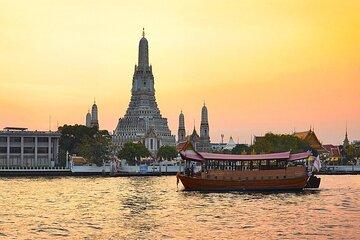
Book the river cruise. Tuk-tuks require climbing in and out at every stop, the market segments involve twenty to thirty minutes of walking on uneven pavement, and no operator on this route offers wheelchair access. The Chao Phraya boats seat everyone for the duration and pass the same illuminated landmarks.
If you want the elevated version
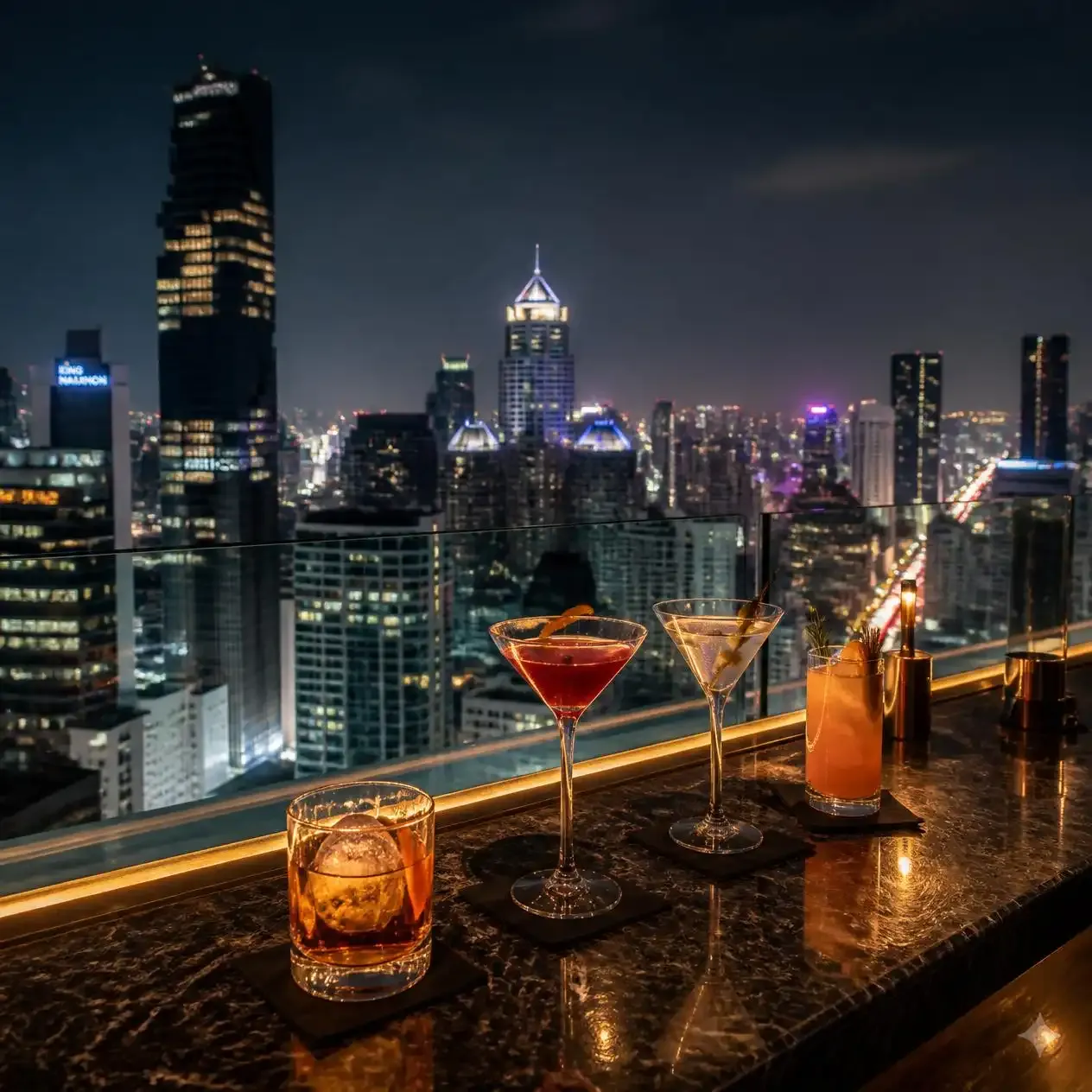
Pair a shorter tuk-tuk segment with a proper Silom rooftop rather than the observation-deck variant. The sky bars along Silom and Sathorn sit inside walking distance of the market strip, and a table booked in advance turns the last hour into the best part of the evening. Travjoy's rooftop and experiential dining options are researched and approved by local experts, which saves working out from a booking page which of the Sathorn towers actually has the view.
Timing, Dress and Practical Details
Book your Bangkok tuk tuk night tour for a weekday if you can, and dress for two different venues in one evening. The 7pm start is deliberate — it clears the worst of the evening traffic on Rama IV and puts you into Silom as the carts hit their stride, which is roughly 7pm to 9pm on the Sala Daeng stretch.
When to go
- Best months: November to February, when evenings sit in the mid-20s and humidity is manageable in an open vehicle.
- Hardest months: March to May, when even 7pm can hold 32°C, and June to October for afternoon storms that carry into the evening.
- Best nights: Tuesday to Thursday. Friday and Saturday put you into Patpong at its most crowded and the bars at their loudest.
- Book ahead: two to four days in high season is usually enough for join-in departures; a week for private.
What to wear
- Closed shoes with grip. Market pavements are uneven, and there are raised kerbs and street-food equipment underfoot.
- A light long-sleeve layer for the ride — insect cover and wind, not warmth.
- Nothing you mind smelling of charcoal smoke afterwards.
- Cash in small notes. Card acceptance drops to zero at stall level.
Reality check: the rooftop dress code clash
- Silom and Sathorn sky bars enforce smart casual: no shorts, no sleeveless tops, no open shoes or sandals for men.
- That is the exact opposite of what you would sensibly wear in an open tuk-tuk on a humid night, and it catches people out.
- If your tour ends at a rooftop, dress for the rooftop and accept being warm for the ride. If it ends at a street-level bar, dress for comfort.
- Check which finish your booking includes before you pack for the evening — the two variants of this route are sold under near-identical names.
Getting to the meeting point
- Chit Lom BTS on the Sukhumvit line is the closest station to the usual Ratchadamri meeting point — five to ten minutes on foot.
- Siam interchange is one stop away if you are coming from the Silom line.
- Allow twenty extra minutes if you are travelling by road. Ratchaprasong at 6.30pm is one of the slowest junctions in the city.
- Private bookings usually include hotel collection; join-in departures usually do not.
Planning Your Bangkok Evening
Three things decide whether a Bangkok tuk tuk night tour lands. Pick the route that matches your trip — Siam and Silom for a returning visitor who wants food, a market and a bar; the Old City for a first evening built around lit temples. Check the calendar for Buddhist holidays before you choose your date, because a drinks-included tour on a dry day is a different product. And be honest about mobility, because the tuk-tuk is the whole appeal and also the whole constraint.
Done right, it is one of the better-value evenings in the city: three and a half hours, a district most visitors never enter after dark, and the logistics handled by someone who does this five nights a week. Start planning your Bangkok evenings on Travjoy's Bangkok destination page, where every experience listed has been researched and approved by local experts.





.svg&w=1920&q=75)