


Ancient Siam Bangkok: A Complete Guide to Muang Boran for Discerning Travellers
9 min read
Key Highlights
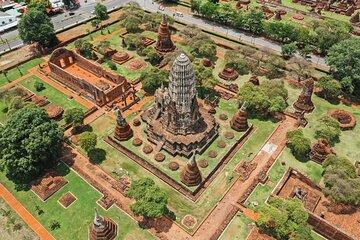
- Ancient Siam is an open-air museum of more than 116 Thai monuments laid out across roughly 200 acres, with each structure positioned to match its real geographic location within the country.
- Gate admission for foreign visitors is 800 THB (about $25) for adults and 400 THB (about $12) for children aged 6 to 14, with vehicle entry charged separately at 400 THB per car.
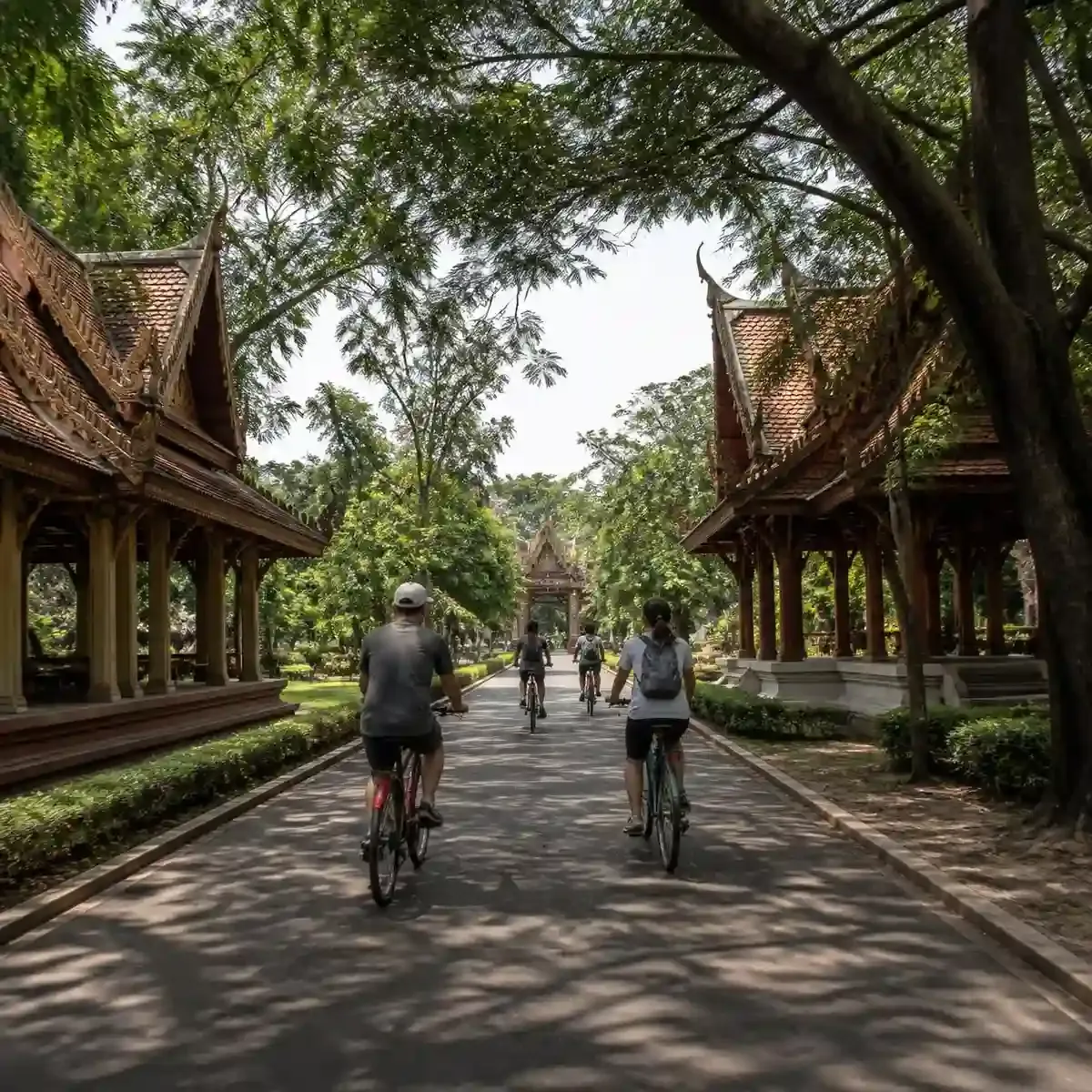
- A bicycle comes with your ticket; golf carts, the tram and the audio guide are all charged on top, and the tram only runs with a minimum group.
- Four hours is the working minimum, six is comfortable, and the park sits about 33 km south of central Bangkok in Samut Prakan.
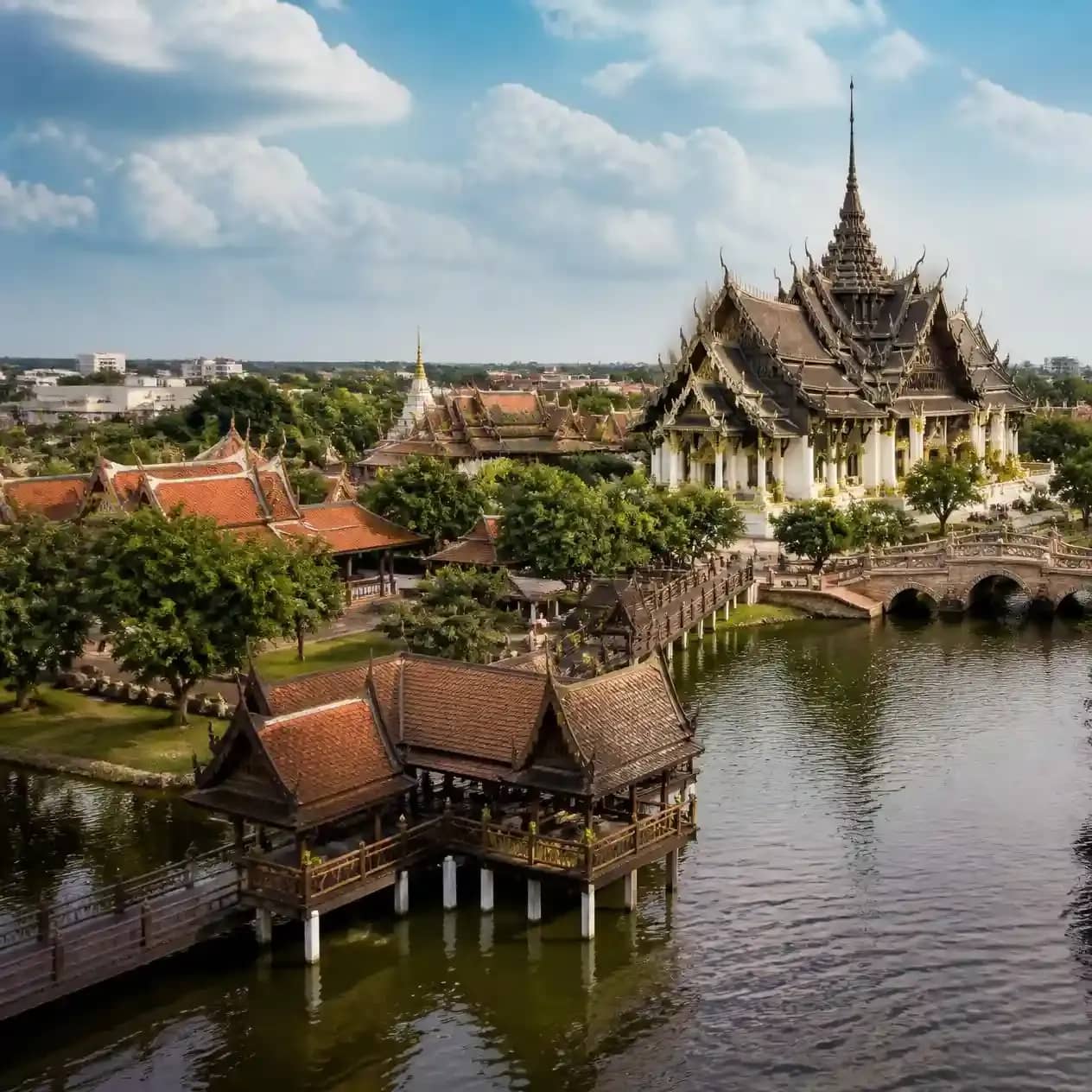
A visit to Ancient Siam Bangkok takes about half a day and costs 800 THB (roughly $25) for adult admission in 2026, plus transport of 40 to 60 minutes each way from the city centre. The park, known locally as Muang Boran, holds more than 116 reconstructed and relocated Thai monuments across roughly 200 acres of grounds shaped like the map of Thailand. It suits travellers interested in architecture, photography and cultural depth more than it suits anyone chasing a fast, high-energy attraction.
One man spent nearly four decades building a scale model of his own country. Lek Viriyaphant started in 1963 with a plan for a golf course dotted with miniature temples. He abandoned it when his research turned up how much of Thailand's built heritage was already lost, and instead began rebuilding the country — 116 structures and counting, laid out on grounds cut roughly to the shape of Thailand, with each monument standing where it would stand on a map.
What that produces is stranger and more absorbing than the phrase "open-air museum" suggests. Some pieces are scaled-down reconstructions built from historical records. Some are full-size. And several are the genuine article — original timber shophouses and halls, dismantled elsewhere in Thailand and rebuilt here to keep them standing.
This guide covers what the park actually holds, which zones justify your hours, 2026 admission and hire costs in full, how to get there from central Bangkok without the trip eating your day, and how Muang Boran compares to the real ruins ninety minutes north at Ayutthaya.
Is Ancient Siam Bangkok worth the trip?
Yes, if you care about Thai architecture, design or photography, and you have at least a half-day to spare. The park rewards slow looking and open space more than it rewards a checklist, and the 33 km journey south is the price of a quiet cultural site on a continent short of them. If your Bangkok time is measured in hours rather than days, it is the wrong first move.
Worth it if
- You have already done the Old City circuit. Returning visitors who have walked the Grand Palace and the riverside temples find this a different register entirely — quiet, green, and covering periods and regions the city itself does not represent.
- Sukhothai, Lanna and Isan are not on this trip. Ancient Siam is the only place you can read Thailand's regional architecture side by side in a single afternoon.
- You photograph seriously. Wide sightlines, water features positioned deliberately, and near-empty frames on a weekday morning.
- You are travelling with children. Open ground, boats, bicycles and a floating market give them something to do between buildings.
- You want a cultural day that is not a temple queue. The pace here is entirely your own.
Not ideal if
- You have 48 hours in Bangkok and have not seen the headline sights. Ancient Siam (Muang Boran) is a second-trip or third-day proposition, not a first-morning one.
- Heat and open ground are a problem. Shade exists but is intermittent, and the distances between clusters are real.
- You want authentic ruins. Most of what you see is reconstruction. If patina and weathered stone are the point for you, Ayutthaya Historical Park is the better day out.
- You are visiting during heavy rain. There is very little indoor refuge across the grounds.
Reality check: the elephant area
- One section of the park offers elephant rides and photo opportunities. Several recent visitors have described finding the animals chained between sessions.
- It is easy to route around — it sits away from the main architectural clusters and nothing else in the park depends on passing it.
- If animal welfare shapes your choices, ask at the ticket counter for its location on the map and plan your circuit to avoid it. Most guides do not mention this at all; you should know before you arrive rather than after.
What you are actually looking at: the zones and the man who built them
The grounds are divided into five zones — North, Northeast, Central, South, and Suvarnabhumi — arranged to mirror Thailand's real geography. Walk from the entrance towards the far end and you are travelling north up the country. That single design decision is what separates the park from a theme park: the layout teaches you where these traditions belong before you read a single label.
Lek Viriyaphant, who also created the Erawan Museum a short drive north and the Sanctuary of Truth in Pattaya, funded the project privately and worked with craftsmen and historians on each structure. Some were rebuilt from surviving architectural records after the originals were destroyed. For a fuller picture of how these periods fit together, Travjoy's culture and heritage guide to the city is worth reading before you go.
Central and Rattanakosin — start here
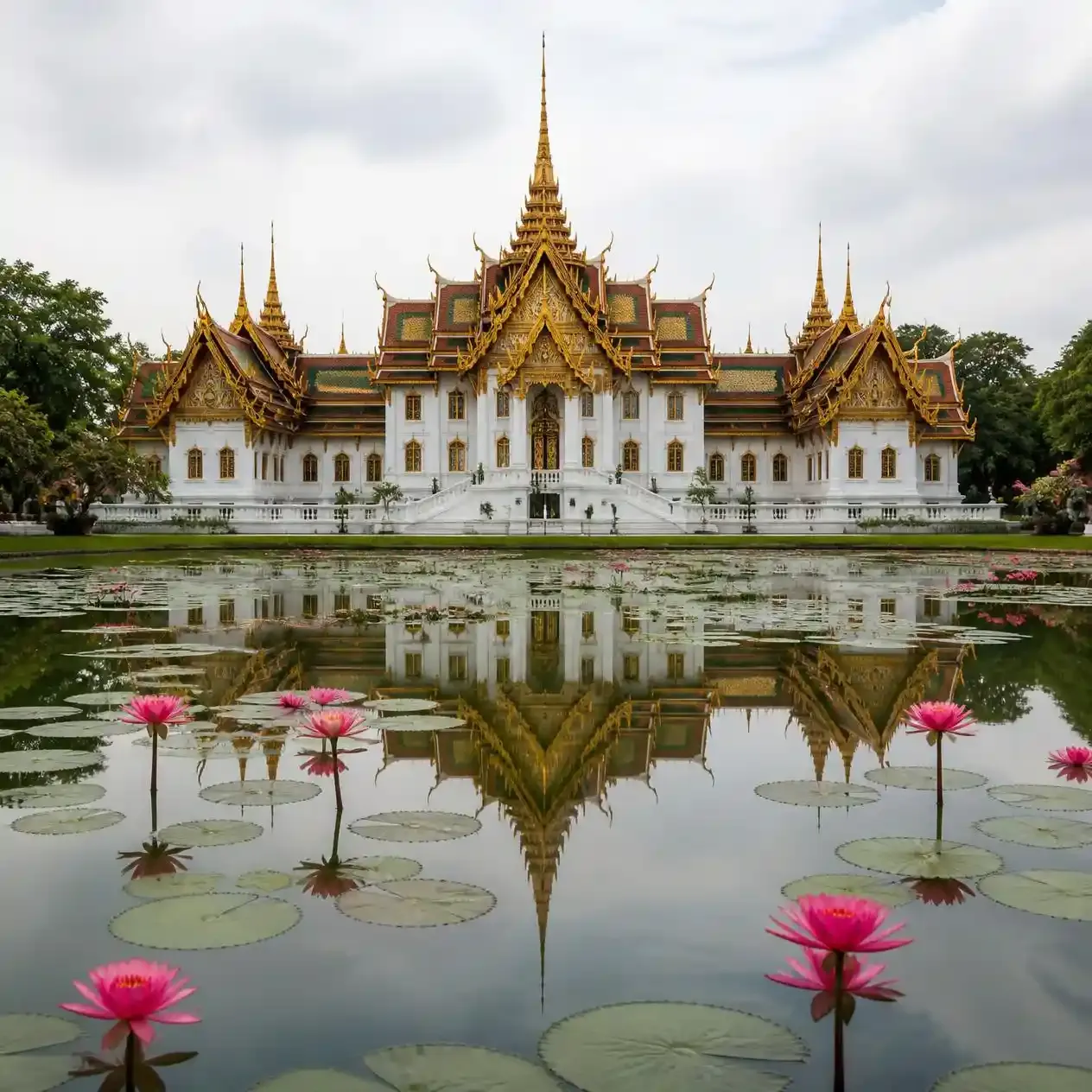
The Central zone sits closest to the entrance and holds the two buildings most visitors come for. Sanphet Prasat Palace is a reconstruction of the principal royal hall of early Ayutthaya, destroyed during the Burmese invasion of 1767 and rebuilt here from historical records — there is no surviving original anywhere. Nearby stands a version of the Dusit Maha Prasat, whose original you can see inside the Grand Palace complex in the city.
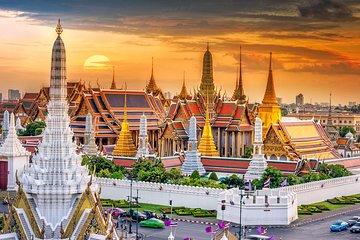
Seeing the two within a few days of each other is the most useful thing this park offers a returning visitor: the city version comes with crowds and a dress code, this one comes with a lotus pond and near-silence.
North and Northeast — Lanna and Isan
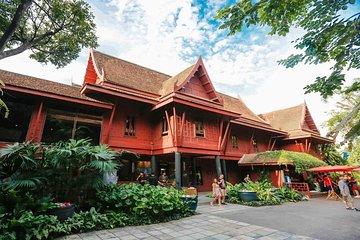
The northern zone gathers the steep-roofed timber halls and gilded chedis of the Lanna kingdom, including a version of Wat Phra That Doi Suthep above Chiang Mai. The Northeast holds Khmer-influenced sandstone sanctuaries — Phimai and the cliff-edge Khao Phra Viharn among them — which look nothing like the temples of central Thailand and are the single strongest argument for making the trip if the north-east is not on your itinerary.
South and Suvarnabhumi
The southern zone reflects the Thai-Malay cultural overlap of the peninsula, with architecture that carries Islamic and Chinese influence alongside Buddhist forms. Suvarnabhumi, the "golden land", is the most interpretive part of the park — sculpture gardens and pavilions drawn from mythology rather than direct reconstruction, including a Ramakien garden staging scenes from the Thai telling of the Ramayana.
The floating market and the old market town
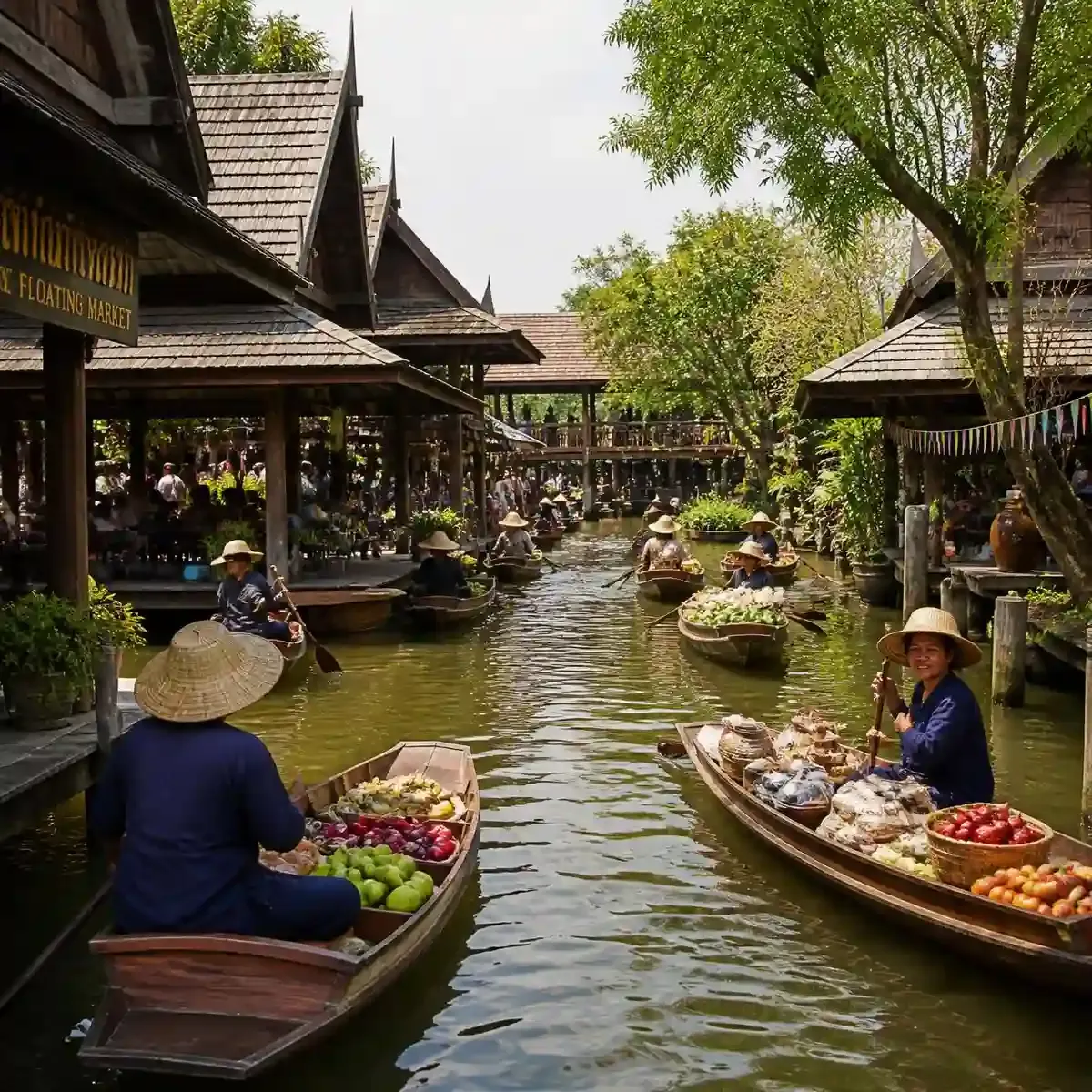
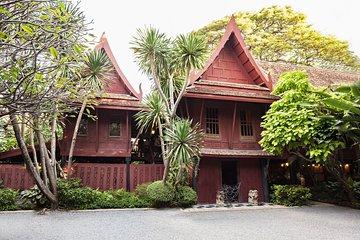
These two are the quiet surprise. The recreated floating market has boats, vendors and food, and it is a calmer proposition than the working markets outside the city. The old market town nearby is the detail almost every guide misses: those timber shophouses are not replicas. They were relocated from Yan Nawa, one of Bangkok's older riverside districts, and rebuilt on site to save them. You are walking through actual nineteenth-century Bangkok, moved 30 km south.
Zone triage: what to see in four hours, six hours or a full day
Four hours covers the Central zone, the floating market and one regional zone properly. Six hours covers everything worth stopping for. A full day only makes sense if you are photographing, or if you intend to sit and read somewhere for an hour, which is a perfectly good use of the place. Trying to see all 116 structures in one visit is how people end up remembering the heat rather than the buildings.
Distances are the thing to plan around. The park is long rather than wide, and the gap between clusters is often several hundred metres of open ground.
If you have four hours
- Sanphet Prasat Palace and the Central zone royal halls
- The old market town and the floating market — best before midday, when food is being cooked
- One regional zone, chosen by what your trip does not otherwise cover: Northeast for Khmer sandstone, North for Lanna timber
- The Ramakien sculpture garden on the way back if time holds
If you have six hours or more
- Everything above, plus both remaining regional zones
- Lunch at the Thai restaurant near the entrance rather than pushing through
- The far northern end, which is the emptiest part of the park on any given day
- A second pass through the Central zone in late-afternoon light, when the roof tiles change colour
Reality check: the clock runs out before the gate closes
- The park is open 09:00 to 19:00 daily, but the ticket counter closes at 18:00 — arriving at 18:15 means no entry, whatever the posted closing time says.
- Arriving after 16:00 gives you the best light and the coolest air, but not enough hours to justify the fare unless you are combining it with somewhere else nearby.
- Re-entry is generally not permitted, so treat lunch as an inside-the-park decision.
- The most reliable window is a weekday arrival between 09:00 and 10:00 — cooler, quieter, and it leaves the option of staying into the afternoon light.



Ancient Siam tickets, hire and 2026 costs
Adult admission for foreign visitors is listed at 800 THB (about $25) on the museum's own ticket page in 2026, with children aged 6 to 14 at 400 THB (about $12) and vehicle entry charged separately. A bicycle is included with your ticket; anything motorised is extra. Foreign residents holding a Thai work permit or driving licence are charged the Thai rate, which is substantially lower.
One thing to know before you plan: published prices for Ancient Siam Bangkok do not agree with each other. The official site gives 800 THB, while several long-standing Bangkok guides still list 700 THB with a half-price window in the late afternoon. Resellers advertise bundles well below both. Budget for the official figure and treat anything cheaper as a bonus rather than an entitlement.
Admission (2026)
- Adult, foreign visitor: 800 THB (about $25)
- Child aged 6 to 14: 400 THB (about $12)
- Children under 6: free
- Vehicle entry, driver excluded: 400 THB (about $12) per car
- Thai nationals and foreign residents with a work permit or Thai driving licence: Thai rate, roughly a third of the foreign price
Getting around inside the park
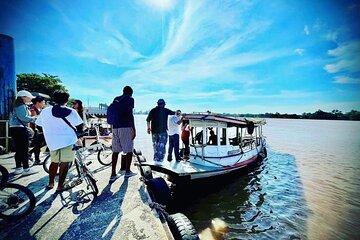
- Bicycle: included with admission, released against an ID or passport as a deposit
- Golf cart, four-seater: from around 350 THB (about $11) for the first hour, then roughly 200 THB (about $6) per additional hour
- Golf cart, six-seater: from around 500 THB (about $15) for the first hour, then roughly 300 THB (about $9) per additional hour
- Tram: charged separately and requires a minimum group to run — do not build your plan around it
- Audio guide: charged separately, also held against an ID deposit
- Your own vehicle: driven inside once the 400 THB entry is paid
Extras worth knowing
- Thai costume hire is available on site; bringing your own is not permitted and carries a surcharge of around 600 THB (about $18) per outfit
- Drones are banned outright, with a posted fine of 40,000 THB (about $1,230)
- Tripods require prior permission
- Combined Ancient Siam and Erawan Museum entry is commonly sold at around 600 THB (about $18) per person, against roughly 800 THB and 500 THB bought separately — the combination only works if you do both on the same day
Comparing your options
| Option | Time needed | Cost per person (2026) | Best for |
|---|---|---|---|
| Ancient Siam alone, bicycle only | 4–6 hours plus transfers | 800 THB / about $25 | Architecture and photography visitors happy to cycle |
| Ancient Siam with a golf cart | 3–4 hours plus transfers | 1,150–1,550 THB / about $35–48 | Families, seniors, anyone visiting in peak heat |
| Ancient Siam plus Erawan Museum | Full day | From about 600 THB combined / about $18 | Design-led travellers wanting the full Viriyaphant story |
| Private car and driver for the day | Full day, door to door | Admission plus roughly 2,500–4,000 THB / about $77–123 per vehicle | Couples and small groups wanting no transfers |
| Ayutthaya instead, as a full-day trip | Full day, 8–10 hours | Varies by format | Visitors who want original ruins and UNESCO context |
Reality check: what your ticket does and does not cover
- Included: entry, a park map, and use of a bicycle against an ID deposit.
- Not included: golf cart, tram, audio guide, costume hire, food, and vehicle entry if you drive in.
- Online tickets bought through third parties are frequently cheaper than the gate, but several exclude the tram that gate tickets have historically covered — read the inclusions rather than the headline price.
- A four-seat cart for three hours costs roughly as much as a second admission. If two of you are reasonably mobile, the bicycles are the better call and the more enjoyable one.
Getting to Ancient Siam from central Bangkok
The park sits in Samut Prakan, about 33 km south-east of central Bangkok, and the journey takes 40 to 60 minutes by road depending on traffic. There are three sensible ways to do it, and the difference between them is transfers rather than time. Whichever you choose, plan the return leg before you set off — that is the part that catches people out.
By BTS and a short transfer
- Take the BTS Sukhumvit line south to Kheha, the final station on the line — around 45 minutes from Siam
- From Kheha, a metered taxi or Grab covers the last few kilometres in under ten minutes for roughly 50–80 THB (about $1.50–2.50)
- Shared songthaew number 36 runs the same route from the foot of the station stairs for 10–20 THB (about $0.30–0.60), taking around 15 minutes
- Returning, cross via the pedestrian bridge near the park exit to pick up the songthaew heading back towards the station
By private car or Grab
- Door to door from central Bangkok in 40 to 60 minutes via the expressway
- A one-way Grab or metered taxi runs roughly 350–450 THB (about $11–14); a return with waiting time costs more and is worth agreeing in advance
- A car and driver held for the full day removes both transfers and lets you add the Erawan Museum without renegotiating anything
- Vehicle entry into the park itself is 400 THB (about $12) if you want to drive the grounds
By public bus
- Air-conditioned bus 511 runs down Sukhumvit Road towards Paknam, where minivan 36 continues past the park entrance
- The cheapest route by a distance, and the slowest — allow well over 90 minutes each way from the city centre
Reality check: the return leg is the one to plan
- Songthaews continue running past closing time, so a late exit is not the problem people expect — but Grab availability out in Samut Prakan thins noticeably after dark.
- Some listings still advertise a free shuttle from BTS Bearing departing around 11:00 and returning mid-afternoon via the Erawan Museum. It appears on older sources only. Confirm it directly before building your day around it.
- If you are heading straight to dinner in the city, the expressway back into central Bangkok between 17:00 and 19:00 is slow. Leaving at 16:00 or after 19:30 saves genuine time.
Which visit should you choose — and what to pair it with
Choose the bicycle-only visit if you are two reasonably mobile adults with a free morning. Choose a golf cart if you are travelling with children, older parents, or visiting between March and May when the heat is at its hardest. Choose a private car for the day if you want the Erawan Museum in the same outing without negotiating transfers twice.
By traveller type
- Couples and solo cultural travellers: weekday arrival at opening, bicycles, four to five hours, and the far northern zones to yourselves for much of it.
- Families with children: a six-seat cart, the floating market before lunch, and the Ramakien sculpture garden — the boats and open ground carry the day better than the buildings do.
- Photographers: two windows rather than one — 09:00 to 11:00 for the Central zone, then late afternoon when the light comes in low across the water features.
- Seniors and anyone with limited mobility: a cart is not optional, and the Central zone alone makes a satisfying visit without crossing the whole park.
- Returning visitors: pair it with Bang Krachao across the river for a full day on Bangkok's southern edge that touches almost nothing on a standard itinerary.
What pairs well — and what does not
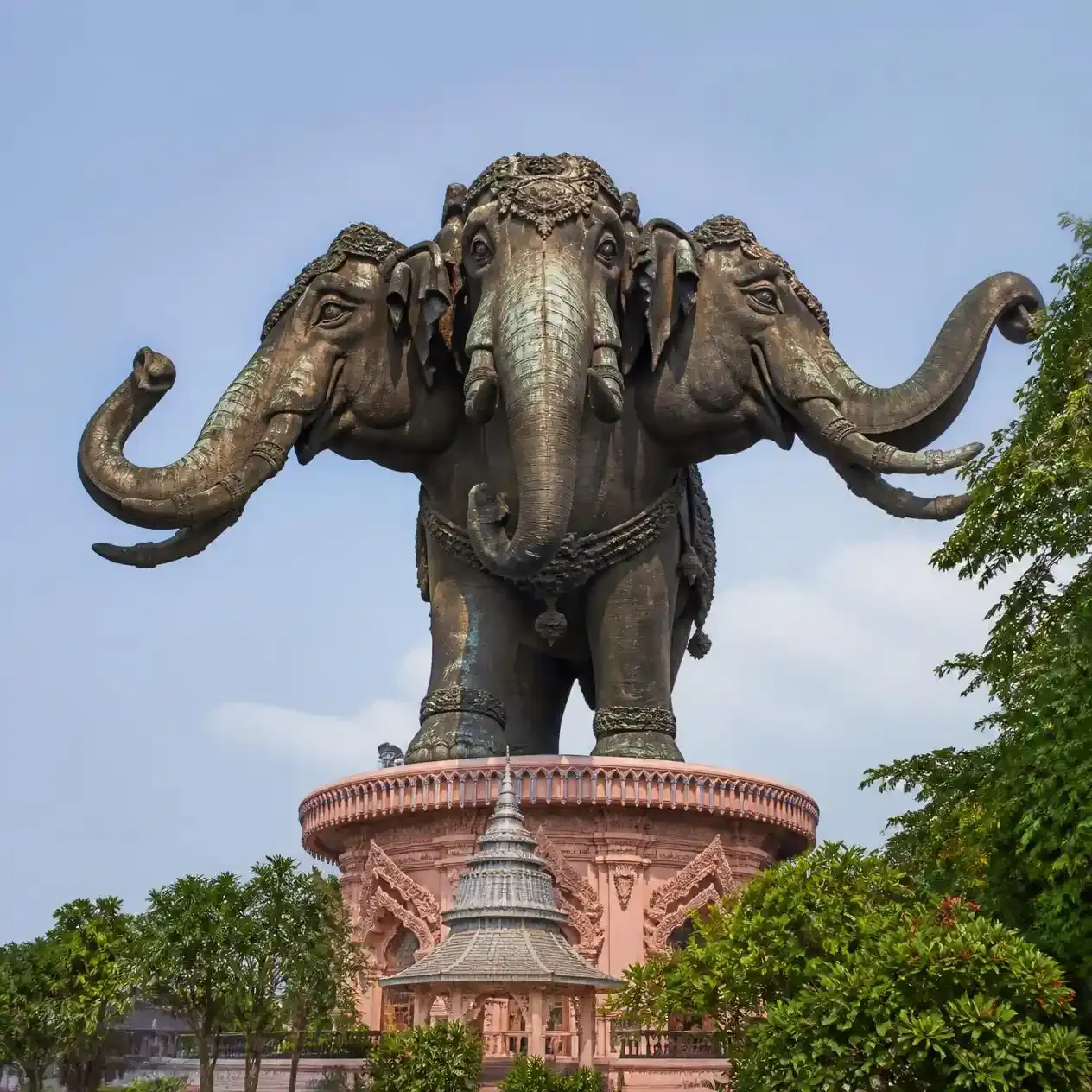
The Erawan Museum, three kilometres north, is the natural companion. Same founder, same design sensibility, and an interior of stained glass and staircases beneath a sixteen-storey bronze elephant that reads as the indoor counterpart to the park's open ground. Half a day at Ancient Siam and two hours at the museum makes a well-balanced day.
Ayutthaya does not pair with it. They sit in opposite directions from the city, and beyond that the pairing dulls both — the reconstructions at Muang Boran land harder before you have seen the originals, not after. Give Ayutthaya its own full day and treat this as a separate outing. The options on Travjoy for both are researched and approved by local experts, so you can compare formats and timings without piecing the logistics together yourself.
Reality check: the two-site day, done properly
- Do the museum first and the park second. Erawan opens earlier in practical terms, and Ancient Siam is the one that rewards afternoon light.
- Erawan enforces a dress code — covered shoulders and long trousers or skirts. Ancient Siam does not, but you will be dressed for both if you plan for the stricter of the two.
- Buy the combined ticket only if both are certain on the same day; the bundle does not carry over.
- Three kilometres apart sounds walkable on a map. It is not, in that heat, along that road — hold your car or take a short Grab between them.
Planning your Samut Prakan day
Ancient Siam Bangkok is not a substitute for Ayutthaya and does not try to be. It is a single-sitting reading of Thai architecture across five regions and a thousand years, on grounds quiet enough to hear the birds — and for a returning visitor who has already worked through the Old City, that is a rarer thing than another temple queue. Budget 800 THB and half a day, arrive by ten on a weekday, take the bicycles unless heat or mobility argues otherwise, and leave the Erawan Museum in reserve as the natural second stop.
Start planning your Bangkok trip on Travjoy, where the city's experiences are researched and approved by local experts so you can book with confidence and spend your hours looking rather than organising.


.svg&w=1920&q=75)