




Bangkok Vibe
A Glimpse into the Past
Bangkok became the capital of Siam in 1782 under King Rama I, moving the royal court from nearby Thonburi. Modeled on the old capital Ayutthaya, the new city was built with canals and walled defenses. Many of today’s historic temples and city districts trace their roots to that era, giving Bangkok its mix of royal heritage and city life.
Interesting Titbit
Bangkok’s full ceremonial name is 168 letters long – the longest place name in the world. Another fun fact: the Chatuchak Weekend Market sprawls over 35 acres with some 15,000 stalls, making it one of the largest markets on the planet.

Recommended Days
Spend 3 to 4 days here to explore Bangkok’s main attractions, from its temples and palaces to markets and nightlife. This allows time for a day trip and to enjoy river cruises without rushing.
Top Interests
Culture & Heritage
-
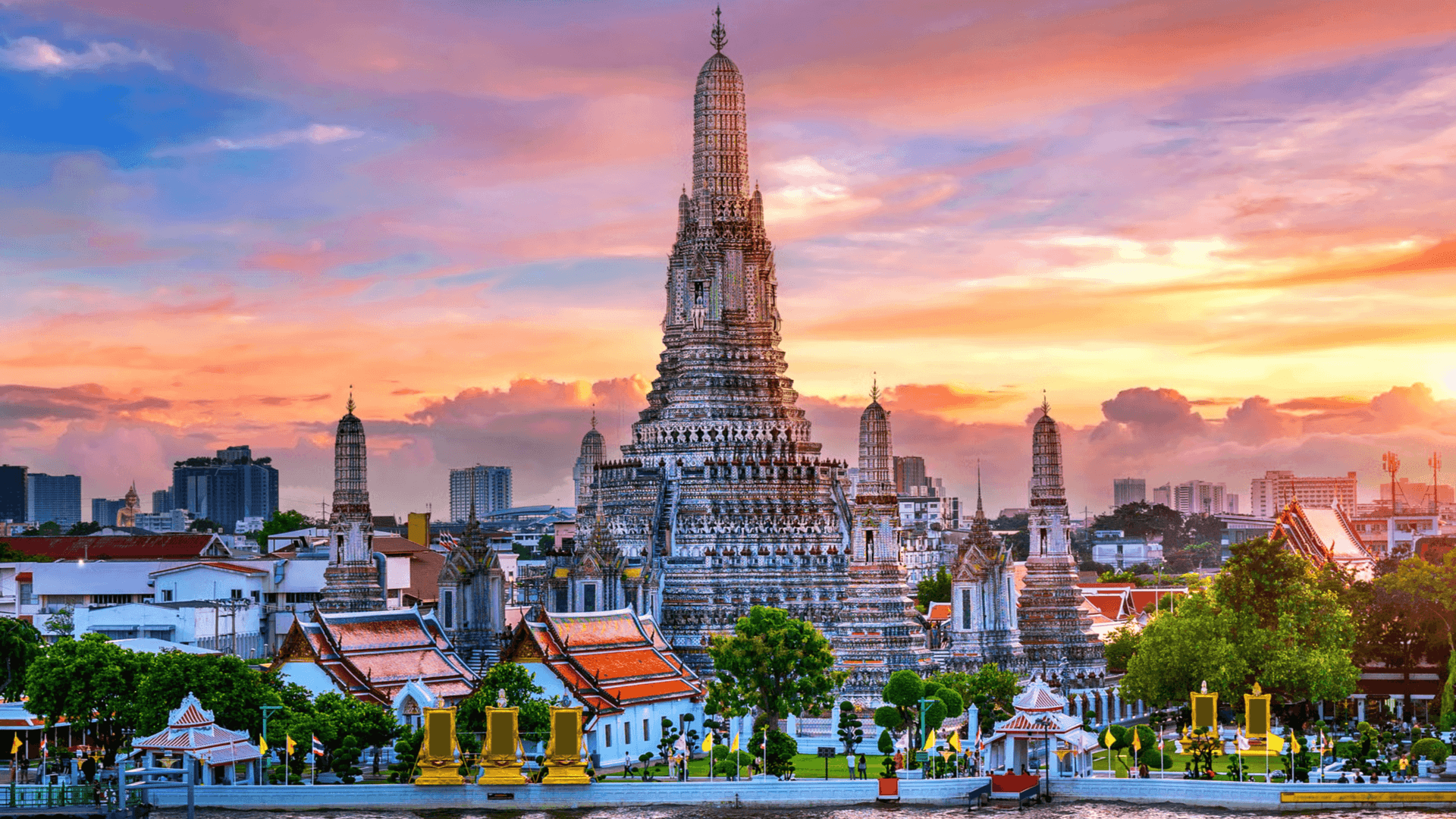
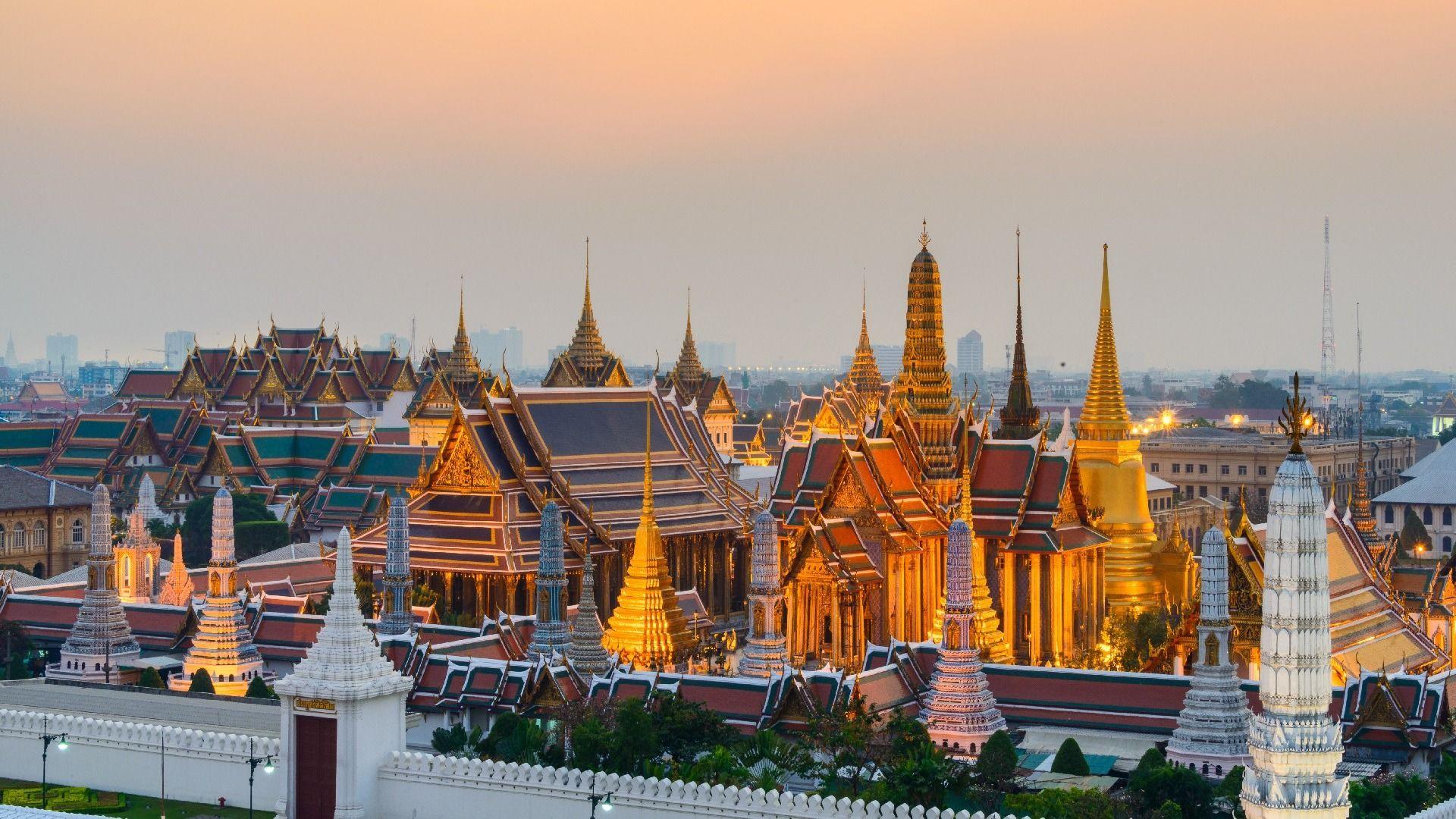
Bangkok’s grand temples and palaces tell its story. Visit the gilded Grand Palace and Wat Pho (Reclining Buddha) in the Old City. Many temples are on the Chao Phraya River, reflecting the city’s royal history.
-
Traditional performances and museums add depth. See a Muay Thai boxing match or cabaret show, or explore the Bangkok National Museum. We list guided cultural tours that give insider stories of each site.
-
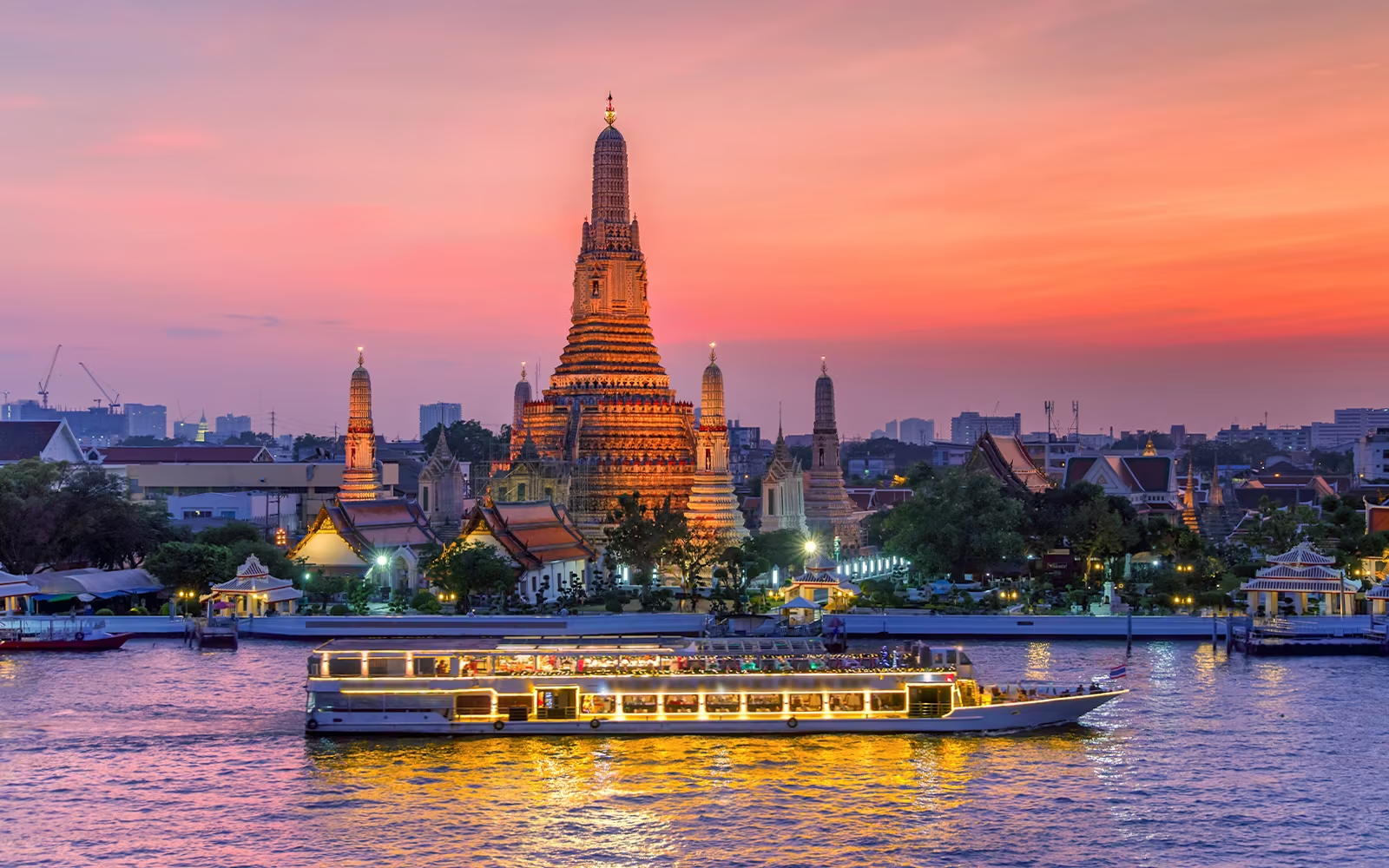
Cruise the canals (khlongs) for an old-town perspective. We recommend boat tours on the Chao Phraya and Tonle Sap rivers – our Activities include river cruises and neighborhood walks that highlight Bangkok’s heritage.
Food & Drink
-
Bangkok is world-famous for its cuisine. From bustling street stalls serving pad Thai and mango sticky rice to elegant Thai restaurants, the choices are endless. Spicy curries, fresh seafood, and exotic fruits await food lovers.
-
Street food markets are a must-see: sample noodle soups in Chinatown or grilled meats on Yaowarat. We’ve listed many street-food tours and cooking classes in our Food section, so you can learn to make Thai favorites with local chefs.
-
The city also has international dining. You’ll find everything from food courts in megamalls to fine-dining rooftop bars. Check our listings for curated food tours (market walks, cooking demos) to taste Bangkok like a local.
Shopping
-
Shopping in Bangkok ranges from luxury malls to bustling markets. The Chatuchak Weekend Market alone has over 15,000 stalls of clothing, crafts and antiques. You can haggle for souvenirs in Chatuchak or Pratunam, and bargain in night markets like Patpong.
-
For air-conditioned shopping, head to Siam Paragon, MBK Center or ICONSIAM, offering everything from designer goods to electronics. We have listings for mall tours and shopping excursions if you prefer guided experiences.
-
Don’t miss local specialties: Jim Thompson silk, traditional textiles, handcrafted jewelry and streetwear fashion. Our Activities include shopping tours that take you to the best markets and boutiques for a curated experience.
Nightlife & Entertainment
-
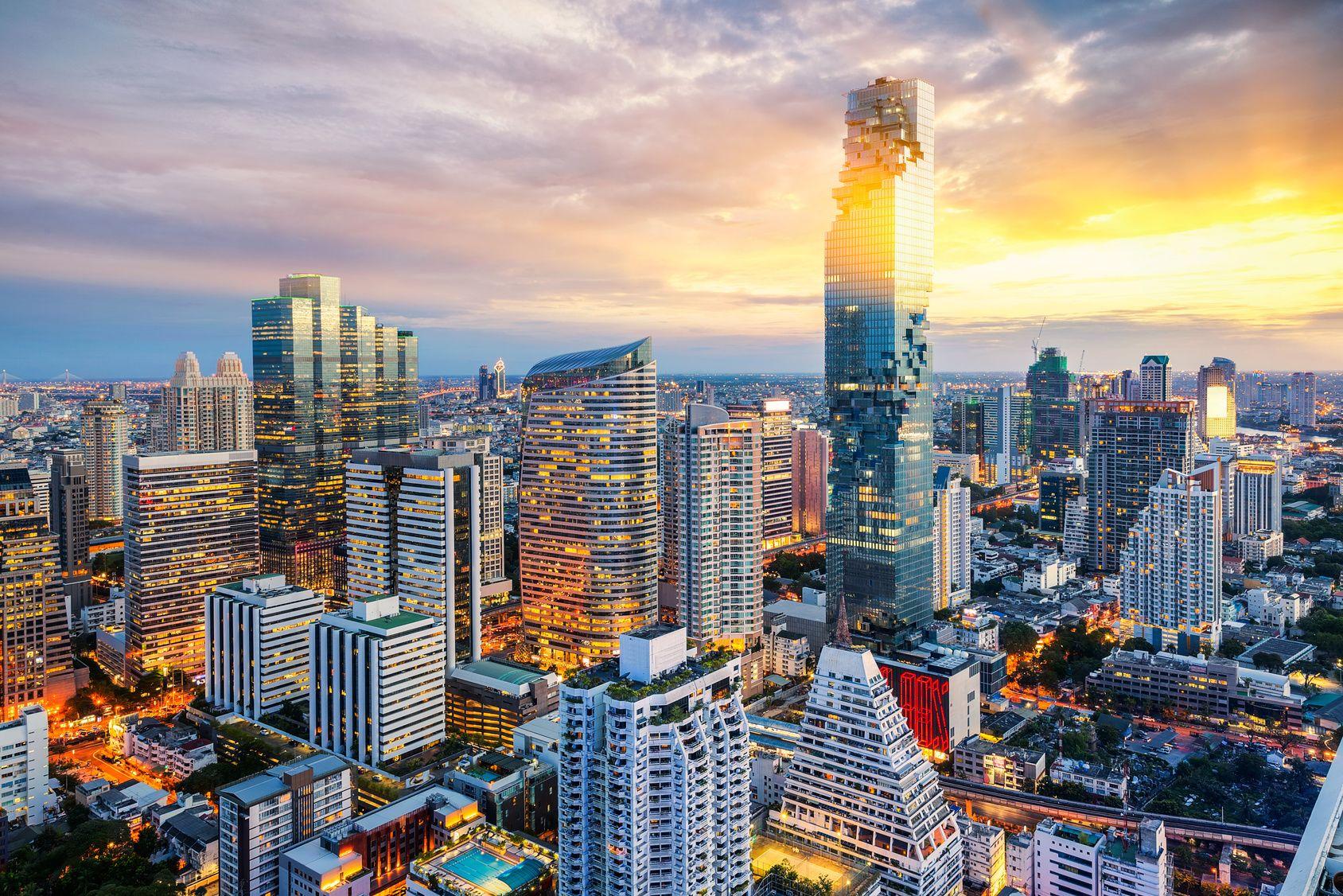
Bangkok’s nightlife is legendary. Enjoy cocktails on rooftop bars like Lebua Sky Bar (Stata Tower) with city views. Nightclubs and live music venues span Sukhumvit and RCA, while Khao San Road remains popular for backpacker bars.
-
Evening markets and shows add to the fun. Night bazaars (e.g. Asiatique) and late-night street food are musts, as are cabaret shows (Calypso) or Muay Thai events. Our site offers nightlife tours and events – check out listings for rooftop bar crawls and cultural night shows.
-
Each district has its vibe: Silom’s Patpong for a lively scene, Thonglor for chic lounges, or Chinatown at night for street eats. We highlight the top night spots in our Entertainment section to help plan your evenings.
Best Neighborhoods to Stay
Our Bangkok Specialist...

Tom Vater

Tom Vater is a writer based in Thailand with long-standing experience covering Bangkok, Phuket, and the surrounding region. He has spent years exploring the country’s cities, coastlines, and everyday life, writing with a strong interest in local communities, culture, and the environment. As a guidebook author and destination expert, Tom brings depth and context to travel stories, helping travellers better understand Thailand beyond the usual highlights.
Tom Vater is a writer based in Thailand with long-standing experience covering Bangkok, Phuket, and the surrounding region. He has spent years exploring the country’s cities, coastlines, and everyday life, writing with a strong interest in local communities, culture, and the environment. As a guidebook author and destination expert, Tom brings depth and context to travel stories, helping travellers better understand Thailand beyond the usual highlights.
Travel Tips.
Local Transport
Car Rentals or Sharing
-
Car rentals: Available at airports and city agencies; require an international driver’s license and credit card deposit. Driving in Bangkok is challenging due to heavy traffic and parking difficulty.
-
Car-sharing: Apps like Grab (bike/taxi) dominate over car-sharing. For short trips, GrabCar is convenient. Traditional rental agencies (Hertz, Avis, local) also have cars, but traffic often makes public transit easier.
Ride Hailing Apps
-
Grab – The most popular ride-hailing app (cars and bikes). Available across the city. Typical base fares start around 50–60 THB (≈$2), then a few THB per km.
-
LINEMAN – A local app integrated with LINE (the chat app), useful for food and parcel delivery, and now expanding ride services.
-
Bolt and Ola – Also available but less common than Grab. Payment is digital through the app (credit card).
Travel Cards
-
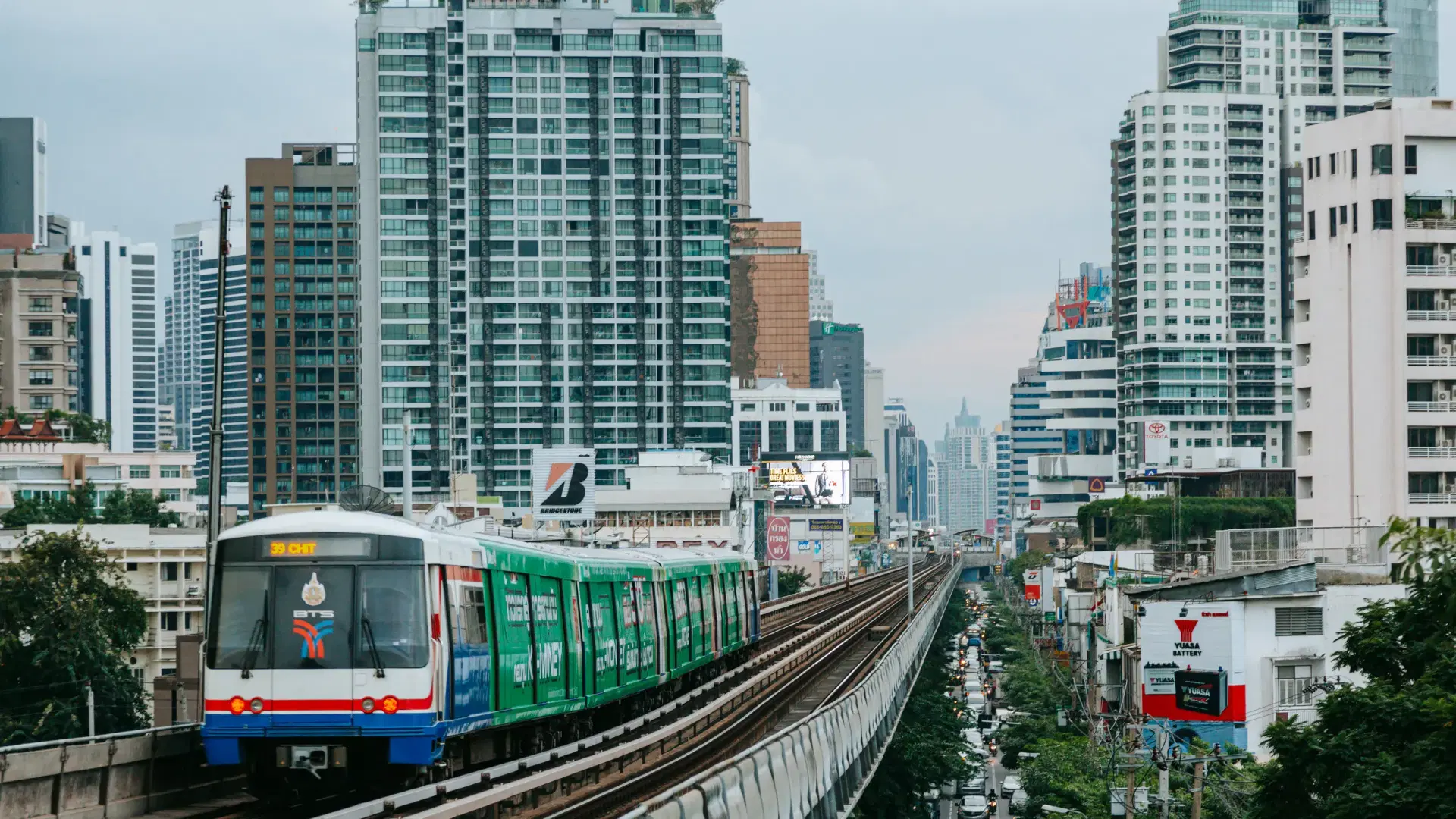
Rabbit Card (BTS) – Tap to pay on Skytrain, MRT and some buses. Available at BTS stations and 7-Elevens.
-
MRT Stored Value Card – Similar card for Metro if you will use it heavily.
-
Airport Rail Link Card – Stored value card for the Airport Express train (also usable on BTS/MRT).
Google Maps
Google Maps is generally reliable in Bangkok for directions and public transit schedules. It includes real-time updates for BTS/MRT. However, traffic is unpredictable, so leave extra time for road travel.
Payments
Pro Insights
Heads Up !
Safety
-
Bangkok is generally safe for tourists; violent crime is rare. Petty theft or pickpocketing can occur in crowded places, so keep an eye on belongings.
-
Road safety: Traffic can be hectic. Be cautious when crossing streets or riding motorbikes. Always use crosswalks or overpasses when possible.
-
Emergency numbers: Dial 191 for police, 1669 for medical emergency. Tourist Police (1155) can help with scams or lost passports.
VAT Refunds
-
Yes – tourists can claim a 7% VAT refund on purchases over 2,000 THB at stores displaying “VAT Refund for Tourists”.
-
Keep tax invoices and get form P.P.10 from the store. The total must exceed 2,000 THB per store per day.
-
At the airport (BKK or DMK) before departure, present passport, receipts and goods to customs to process the refund.
Local Etiquettes
-
Dress Code: Cover shoulders and knees when visiting temples or religious sites; remove your shoes before entering homes or temples.
-
Respect: Never point your feet at people or religious objects, and avoid touching someone’s head.
-
Behavior: Keep quiet and polite. Avoid loud arguments or public displays of affection. Stand quietly if the national anthem is played in public areas.
Weather
-
Summer (Mar–May): Very hot (often 35–40°C) and humid. Bring light cotton clothing, a hat, sunglasses, and plenty of water. Protect skin with sunscreen and seek shade mid-day.
-
Monsoon (Jun–Oct): Frequent heavy rain and high humidity. Pack a travel umbrella or raincoat and quick-dry clothing. Plan some indoor activities for rainy afternoons.
-Winter (Nov–Feb): Cooler (20–30°C) and dry – this is peak tourist season. Mornings/evenings can be cool, so bring a light jacket. Great time for outdoor sightseeing.
-
- Shoulder Seasons (Feb-Mar, Oct-Nov): Mixed conditions – early spring can still be hot, late autumn brings occasional showers. Layered clothing is ideal for changing weather.
Health
Drink only bottled or purified water and avoid tap water. Bring medications for common issues (stomach upset, headache). Eat freshly prepared, hot food; be cautious with raw foods or ice if you have a sensitive stomach. Use insect repellent in parks or rural areas. Ensure routine vaccines are up-to-date; consider Hepatitis A/B and typhoid depending on travel plans.
Connectivity
-
Mobile
-
SIM cards from AIS, dtac or TrueMove are available at airports and city shops. Tourist packages (with data) are affordable. You need your passport to register. Coverage is extensive (4G/5G in city and most tourist areas).
-
WiFi
-
Widely available in hotels, restaurants, malls and cafes. Many venues offer free Wi-Fi (often password-protected). Download offline maps if venturing outside big cities, as connectivity can be spotty in rural areas.
Festivals & Events
Interesting Extras

Scams
